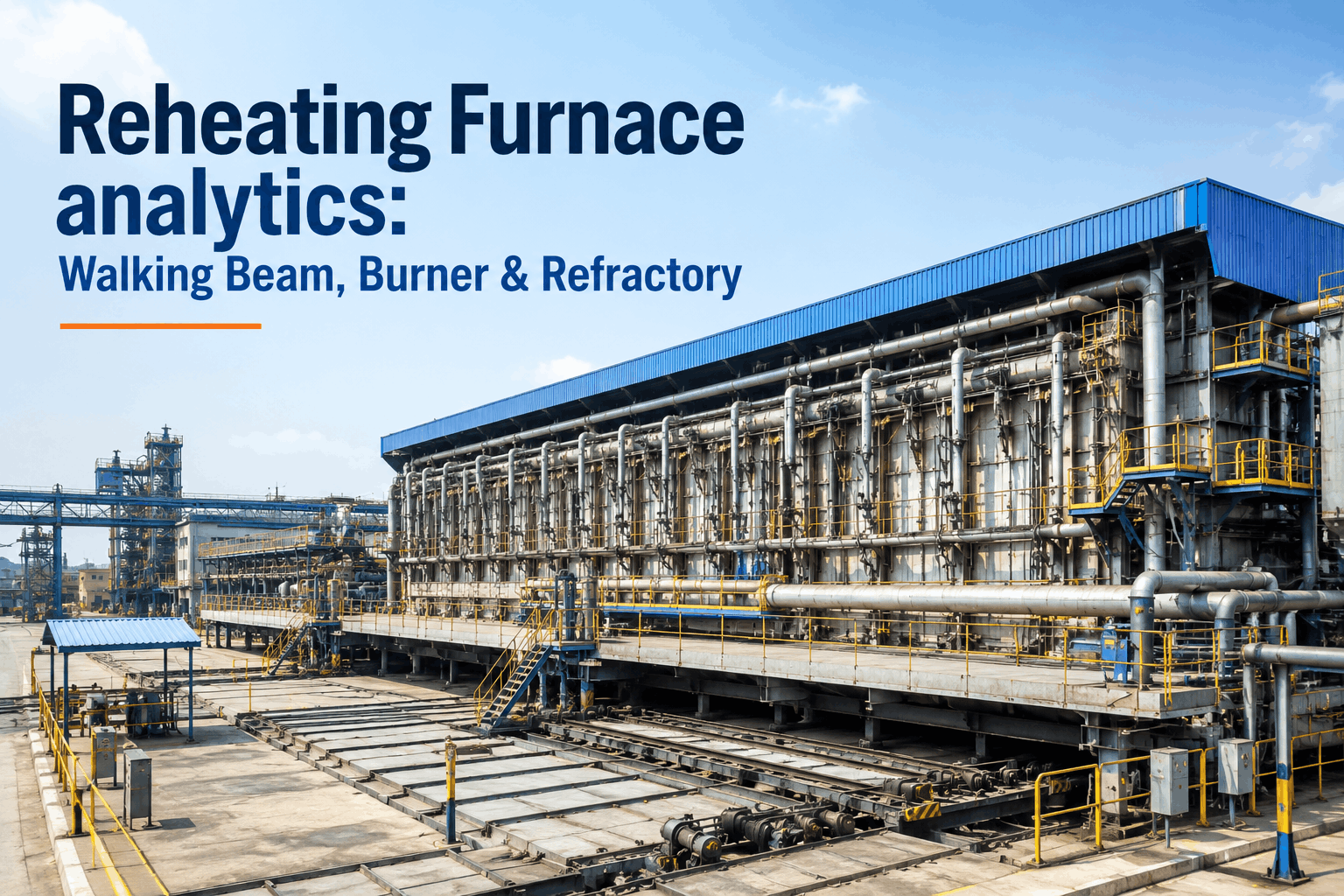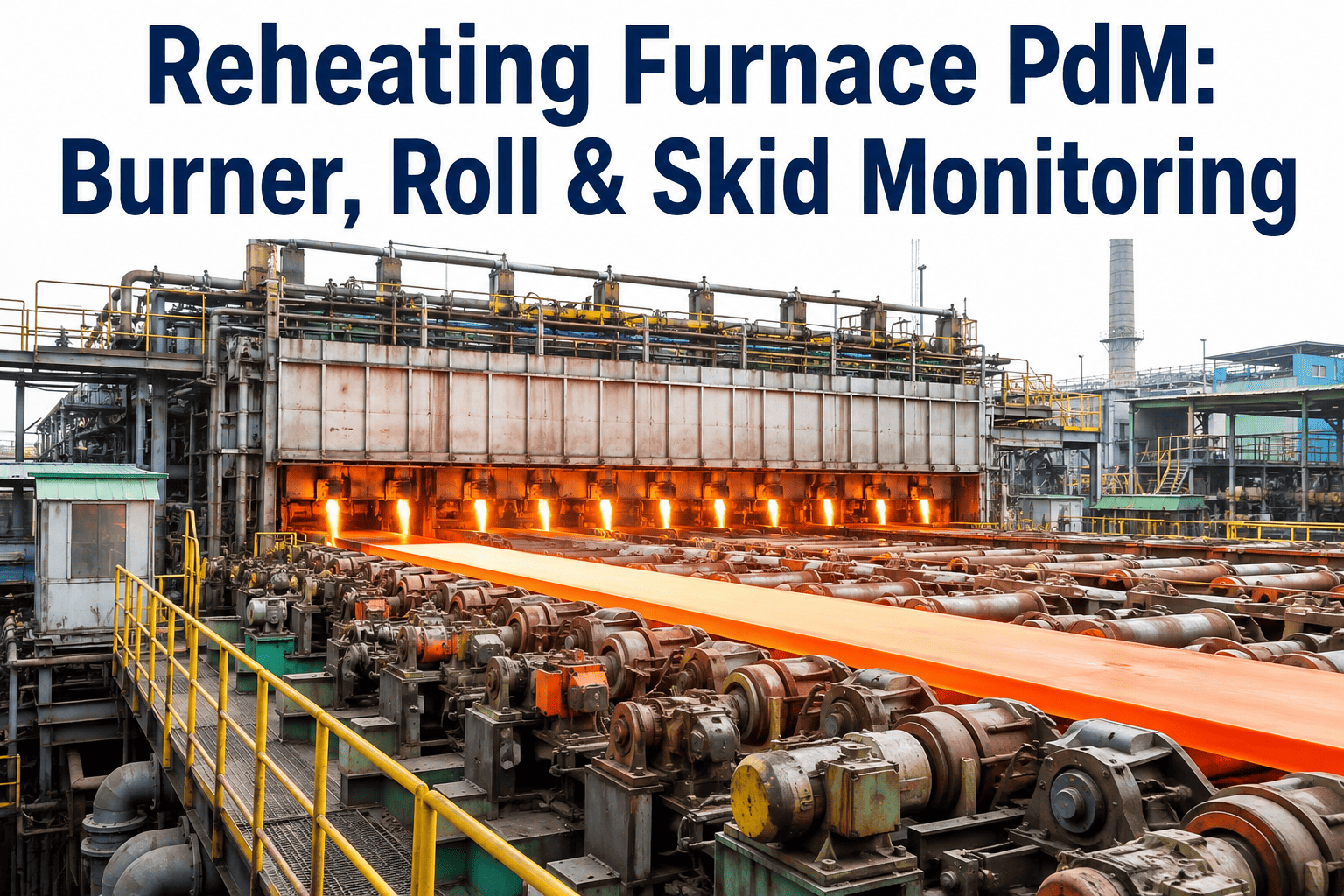
A reheating furnace runs at over 1200 degrees Celsius, moves slabs on water-cooled skid pipes for weeks or months at a stretch without stopping, and burns roughly a third of a rolling mill's entire energy budget, yet most plants still inspect its critical components the same way they did thirty years ago: a visual walkaround during a planned shutdown. By the time a skid button failure or a burner tip clog is visible to the naked eye during that walkaround, it has usually been quietly degrading fuel efficiency or marking slab surfaces for weeks already. iFactory's furnace monitoring platform tracks burner performance, walking beam condition, and skid pipe integrity continuously, catching degradation long before it ever shows up as scrap, wasted fuel, or a forced outage, and you can book a demo to see it running against your own reheat furnace data.
The Most Expensive Furnace Problems Never Look Urgent Until They Force a Shutdown
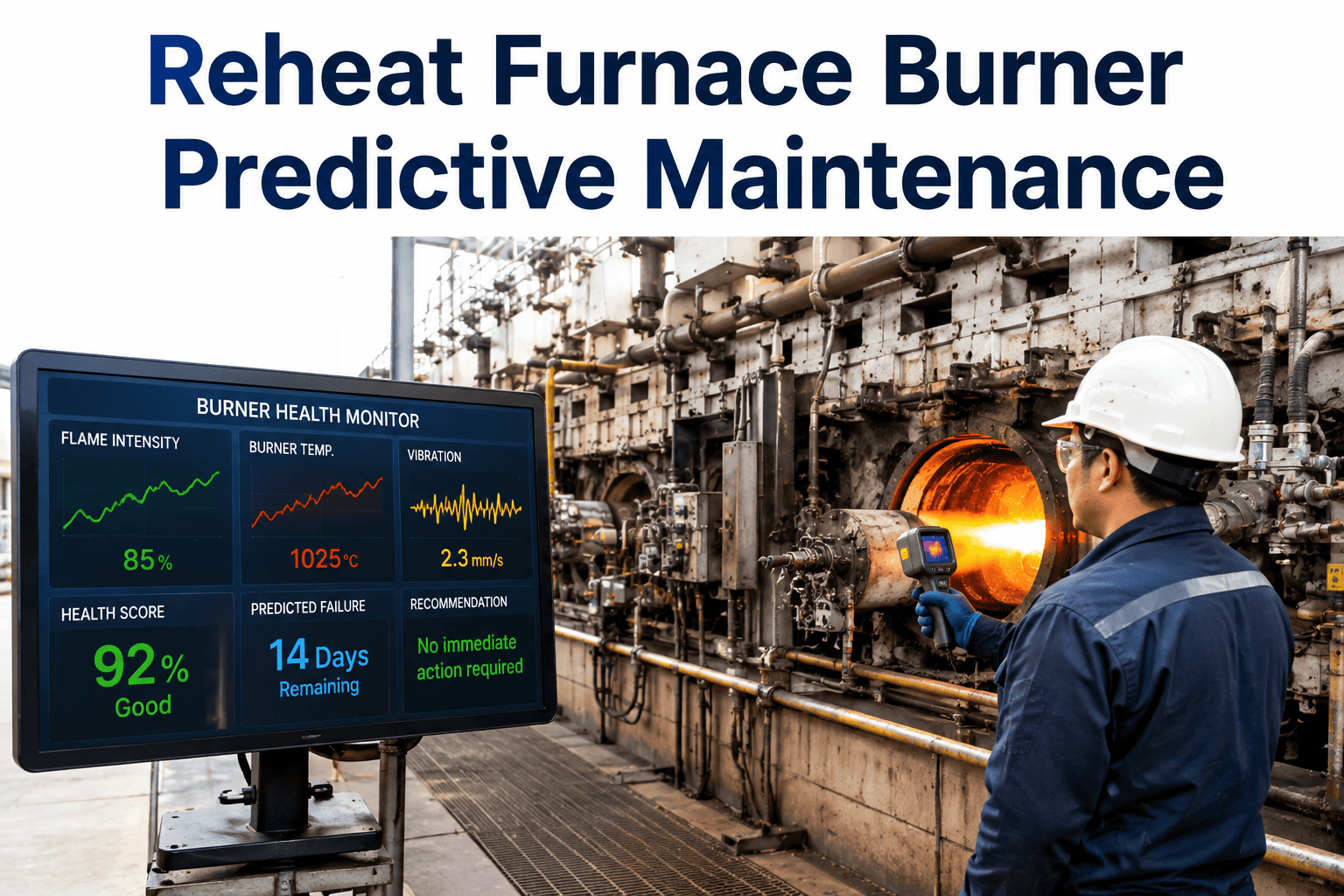
iFactory continuously tracks burner flame pattern, walking beam hydraulics, and skid pipe cooling flow across every zone of your reheating furnace, converting slow degradation into an early, actionable alert your team can plan around instead of discovering it during a shutdown inspection.
Every Reheat Furnace Problem Traces Back to One of Three Systems
Reheating furnace reliability issues cluster around three physically distinct systems, each with its own failure signature, its own detection method, and its own cost profile once it goes unaddressed for long enough. Burners drive fuel consumption and, when misfiring or poorly trimmed, waste energy continuously without ever triggering an obvious alarm. The walking beam mechanism executes a precise lift-advance-lower-return cycle inside the furnace at extreme temperature, and any hydraulic seal wear or bearing degradation there risks jerky slab movement that marks the steel surface. Skid pipes carry the full weight of every slab through the furnace length while being actively water-cooled, and a blocked cooling circuit or a failed insulating button turns a support structure into a heat sink that leaves cold marks on the product and accelerates pipe oxidation. Treating these three systems as a single undifferentiated "furnace maintenance" bucket, which is how most plants still approach it, means the specific degradation pattern in each one gets lost in a generic inspection checklist rather than tracked with the precision each failure mode actually requires.
Component-Level Tracking Across Burners, Beam, and Skid System
A furnace-wide average temperature reading hides exactly the kind of localized degradation that causes the most expensive failures. iFactory registers each burner, each skid pipe section, and the walking beam mechanism as individually tracked components with their own trend history.
Burner Flame Pattern
UV flame sensors and fuel flow correlation identify lazy burners and tip clogging before they force a costly zone-wide air-fuel imbalance.
Walking Beam Hydraulics
Cylinder pressure and cycle time are tracked against baseline, since rising pressure at constant speed signals guide wear or seal degradation.
Skid Pipe Cooling Flow
Water flow and thermocouple data per skid section reveal insulation button failure and blocked circuits weeks before a visible slab mark appears.
Refractory Shell Temperature
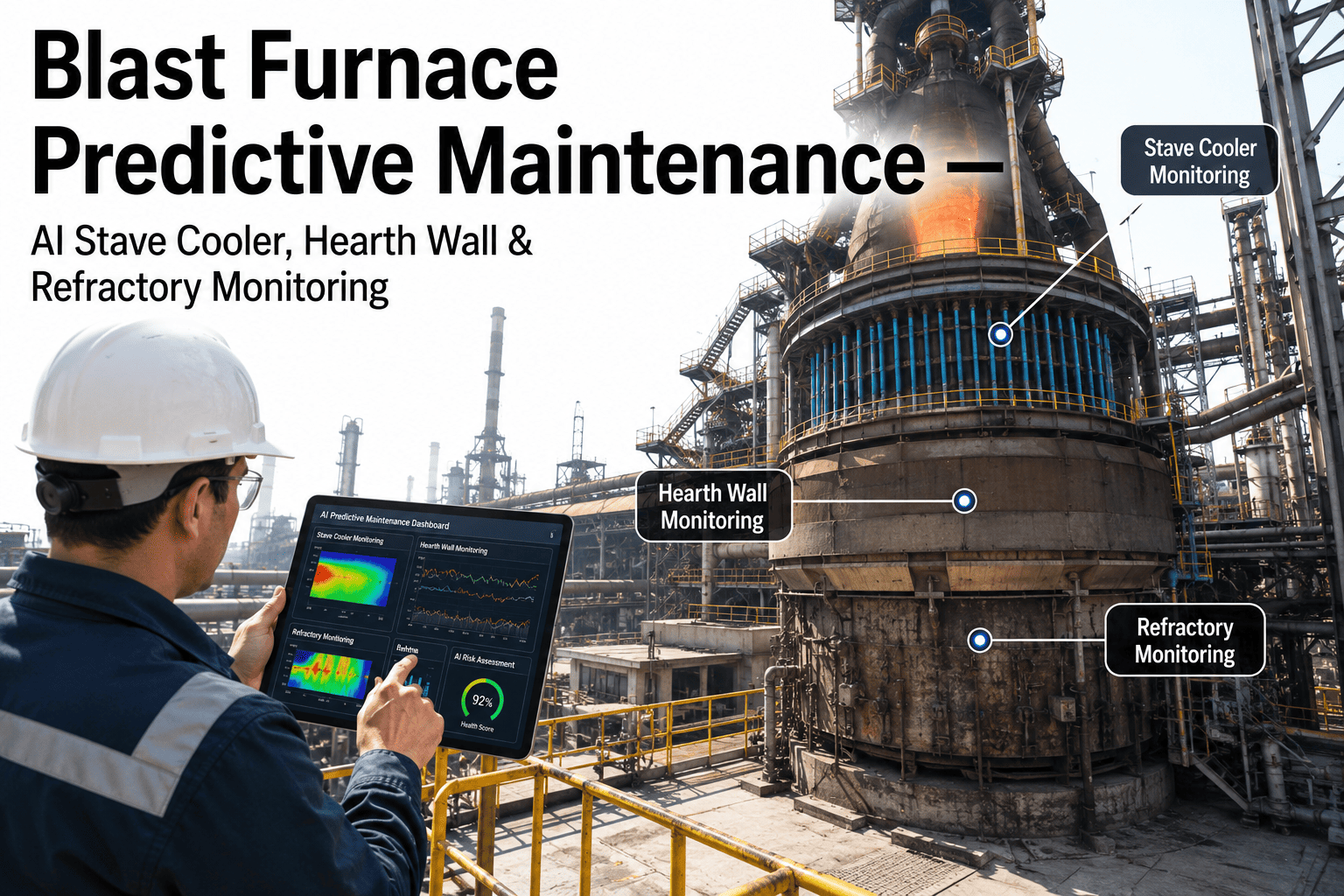
External thermal imaging tracks shell hotspots that indicate lining thinning, allowing a targeted patch repair instead of a full unplanned reline.
A Rollout That Starts With the Zone Carrying the Highest Fuel and Quality Risk
Most furnace monitoring programs do not need every zone instrumented on day one to start delivering value. The soaking zone, where slabs spend the final and most temperature-critical portion of their time before discharge, is typically where combustion inefficiency and skid mark risk compound most visibly in the finished product, and it is the natural starting point for a phased rollout. From there, most plants extend coverage back through the heating zone and finally to the preheat zone, following the same logic of prioritizing where a failure or inefficiency carries the highest downstream cost. Because the platform ingests existing thermocouple, flow meter, and pressure data before recommending new instrumentation, the first weeks of a deployment are typically spent establishing a clean baseline against your furnace's actual campaign history rather than installing new hardware, which means most plants see their first meaningful insights well before any physical retrofit work begins.
Once burner and combustion data is flowing reliably, the walking beam and skid pipe monitoring layers are added next, since these depend on establishing a mechanical baseline across a range of production speeds and slab weights that only becomes meaningful after a few weeks of operating history. Throughout the rollout, iFactory's team works with your furnace engineers to calibrate alert thresholds against your specific refractory grade, fuel blend, and production mix, since a threshold tuned for a different furnace configuration or a different steel grade rarely transfers cleanly. This calibration period is also when the platform starts surfacing its first genuinely actionable recommendations, which is typically the point where skeptical furnace operators become the program's strongest internal advocates.
Furnace Degradation Is Slow, Which Is Exactly Why It Stays Invisible
Most maintenance organizations are built around detecting and responding to events: a machine trips, an alarm fires, a bearing seizes. Reheat furnace degradation rarely presents itself that way. A burner losing trim efficiency does not stop the furnace from running; it simply requires more fuel to hold the same zone temperature, and that extra consumption gets absorbed into the plant's overall energy bill without ever being attributed to the specific burner responsible. A skid button wearing down does not cause an immediate failure either; it produces a gradually worsening cold mark that might not be flagged as a quality issue until a customer complaint arrives weeks after the underlying cause began. This is the core reason furnace reliability programs benefit disproportionately from continuous, component-level monitoring compared to other plant equipment: the failure modes are inherently gradual, they rarely produce a dramatic event that forces attention, and they compound quietly across an entire production campaign before anyone connects the dots back to a root cause.
Stop Losing Fuel Efficiency and Yield to Problems Nobody Can See
iFactory tracks burner, beam, and skid condition continuously so degradation shows up on a dashboard weeks before it shows up on the slab.
Why Skid Pipe Condition Is a Quality Problem, Not Just a Maintenance One
Skid marks are the cold spots that form on a slab's underside where it rests on water-cooled skid pipes, and they are often treated as an unavoidable feature of walking beam furnaces rather than a condition that can be actively managed. That assumption becomes expensive at the rolling stand: a skid mark that has not fully re-equalized in temperature by the time the slab reaches the roughing mill produces gauge variation and, in more severe cases, requires the affected section to be downgraded or scrapped entirely. Insulating buttons wrapped around each skid pipe exist specifically to reduce this heat loss, but they degrade gradually under continuous thermal cycling, and a failing button is invisible during a normal shutdown inspection because the pipe still looks physically intact from the outside. Thermal flux modeling that tracks the temperature differential across the skid pipe surface catches this degradation as a trend long before the mark becomes severe enough to affect rolled product, giving the maintenance team a genuine planning window instead of discovering the problem through a customer quality complaint.
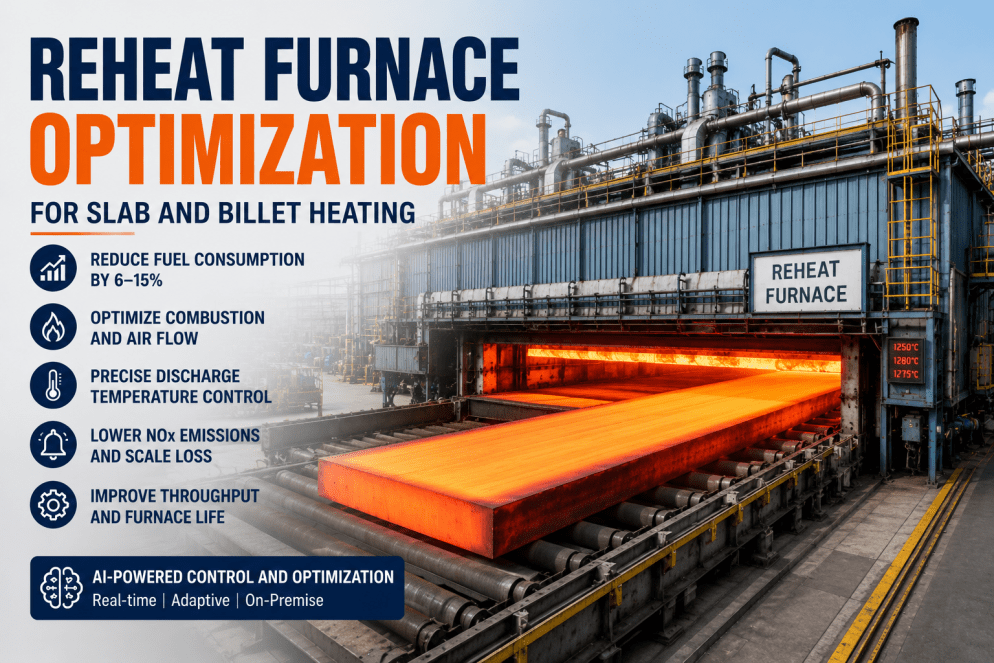
The same logic extends to the broader furnace atmosphere question, since skid mark severity and scale formation are closely linked. A furnace running with excess combustion air does not just waste fuel; the additional oxygen accelerates primary scale formation on the slab surface, and that scale can roll into the steel at the roughing stand as a surface defect distinct from a skid mark but driven by the same underlying combustion control problem. Furnaces that maintain a properly balanced, neutrally reducing atmosphere based on live charge-grade data see measurably better surface quality outcomes alongside the fuel savings, which is why iFactory ties burner trim data and atmosphere control into the same monitoring view as the mechanical condition of the beam and skid system rather than treating combustion efficiency as a separate energy-only concern.
Reline planning benefits from this same continuous view in a different but related way. Refractory lining loss is traditionally assessed through periodic visual inspection during a planned shutdown, which means the actual condition between inspections is essentially unknown, and a reline decision often ends up being made conservatively early to avoid the risk of an unplanned structural failure mid-campaign. External shell thermal imaging tracked continuously against a baseline gives furnace engineers a much more precise picture of where lining loss is actually occurring and how quickly, which allows reline timing to be planned against real degradation data rather than a calendar-based conservative estimate. The practical effect is twofold: campaigns can often be extended safely beyond what a conservative fixed schedule would allow, and when a reline is genuinely needed, it can be scheduled to align with an already-planned mill outage instead of forcing a dedicated furnace shutdown that disrupts the broader production schedule.
Furnaces That Do Not Talk to the Mill Waste Gas Every Time the Line Stops
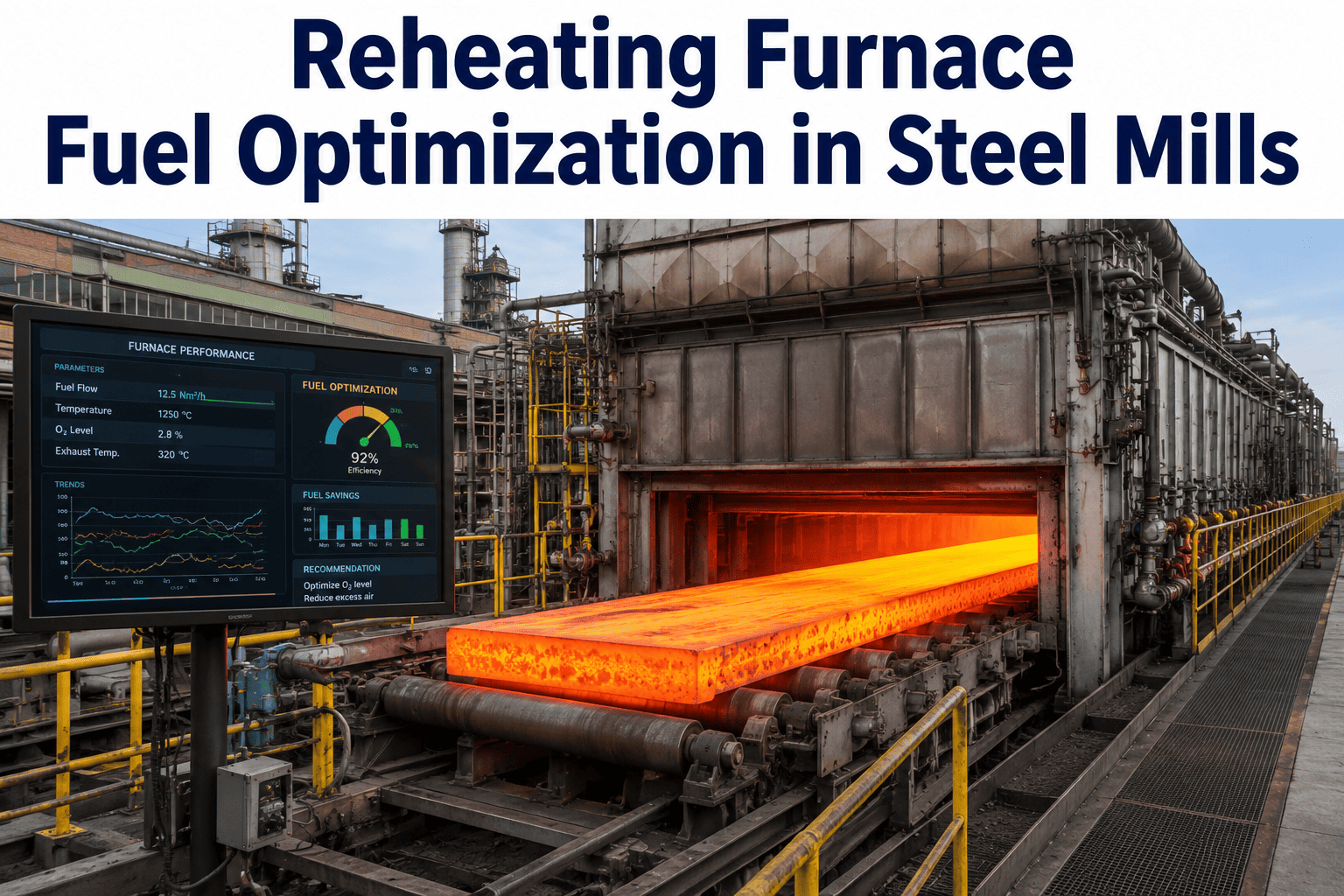
One of the most overlooked sources of waste in reheat furnace operation has nothing to do with equipment failure at all. When a downstream rolling mill stops for a roll change, a coil transfer, or an unplanned delay, a furnace that keeps firing at full rate during that gap is venting fuel as pure waste heat with no slab there to absorb it. iFactory's monitoring layer correlates furnace firing rate with real-time mill status, automatically flagging opportunities to turn burners down predictively during known delay windows rather than relying on an operator to notice and react manually. Over a full production campaign, these synchronization gaps add up to a meaningful share of total furnace fuel waste, and closing that gap is often one of the fastest payback items in a furnace reliability program because it requires no capital equipment change, only better visibility into the relationship between furnace state and mill schedule.
The reason this synchronization gap persists at so many plants is structural rather than technical: furnace control systems and mill scheduling systems are typically managed by different teams using different software, and neither side has a clear, real-time view into the other's operating state. An operator managing burner setpoints is focused on maintaining zone temperature within a target band, not on monitoring the mill's roll change schedule several hundred meters down the line. By pulling both data streams into a single correlated view, iFactory removes the need for that manual cross-referencing entirely, turning what used to require constant attention from an experienced operator into an automated recommendation that fires the moment a delay window is detected, whether that operator is watching closely at that particular moment or not.
What Rolling Mills Report After Deploying Reheat Furnace Monitoring
These figures reflect outcomes reported by plants that added continuous burner, beam, and skid pipe monitoring to a furnace previously managed on visual inspection and calendar-based PM alone.
Questions Furnace Engineers Ask About Continuous Monitoring
Do we need to install new sensors on the furnace, or can this use existing instrumentation?
Most reheat furnaces already have thermocouples, flow meters, and pressure transducers in place for combustion control, and iFactory typically starts by ingesting that existing instrumentation before recommending any additional sensors for gaps such as skid pipe surface temperature or UV flame monitoring. The goal is to extract more value from data you are already generating rather than requiring a full instrumentation overhaul, and most plants are surprised by how much of the necessary data is already flowing into a control system that nobody has connected to a dedicated reliability analysis layer before now. Book a demo to review what your current furnace control system already provides.
How does the system distinguish a lazy burner from a normal zone temperature swing?
The platform correlates fuel flow rate against the temperature response of the specific zone thermocouples, so a burner that needs significantly more gas than historical norms to maintain the same temperature is flagged as a likely tip clogging or trim issue rather than being confused with a routine load-driven temperature change that any operator would expect to see. Ambiguous cases are held for a brief trend confirmation before an alert is raised. Contact our support team for burner diagnostic accuracy data from comparable furnace configurations.
Can this work with any fuel type, including blast furnace gas blends?
Yes, the combustion analytics are fuel-agnostic and map the calorific value and stoichiometric requirements of your specific fuel source, whether natural gas, coke oven gas, blast furnace gas, or a blended mix, into the burner optimization model so trim recommendations stay accurate regardless of fuel blending strategy or how frequently that blend ratio shifts across a production week. Book a demo to see the platform configured for your plant's actual fuel mix.
How far in advance can skid pipe or refractory failures actually be predicted?
Thermal flux and shell temperature monitoring typically identifies insulation button failure and refractory lining thinning weeks to months before either becomes a structural risk, which is enough lead time to schedule a targeted patch repair or skid section replacement during a planned mill outage rather than forcing an unplanned furnace shutdown that disrupts the entire production schedule. Contact our support team to see typical lead-time data by failure mode.
Does furnace monitoring integrate with our rolling mill's production schedule?
Yes, iFactory correlates furnace firing state with real-time mill status so burner turn-down can be recommended automatically during known delay windows, and predictive maintenance events for beam or skid work are scheduled against your actual planned downtime rather than an arbitrary calendar interval that has no relationship to your real production rhythm. Book a demo to see how mill-sync recommendations are generated for your line.
Your Furnace Is Telling You Something. Most Plants Just Are Not Listening Yet.
iFactory turns burner, beam, and skid pipe data into an early warning your team can act on before fuel waste, scrap, or an unplanned outage forces the issue. Book a demo to see it running on your own furnace.