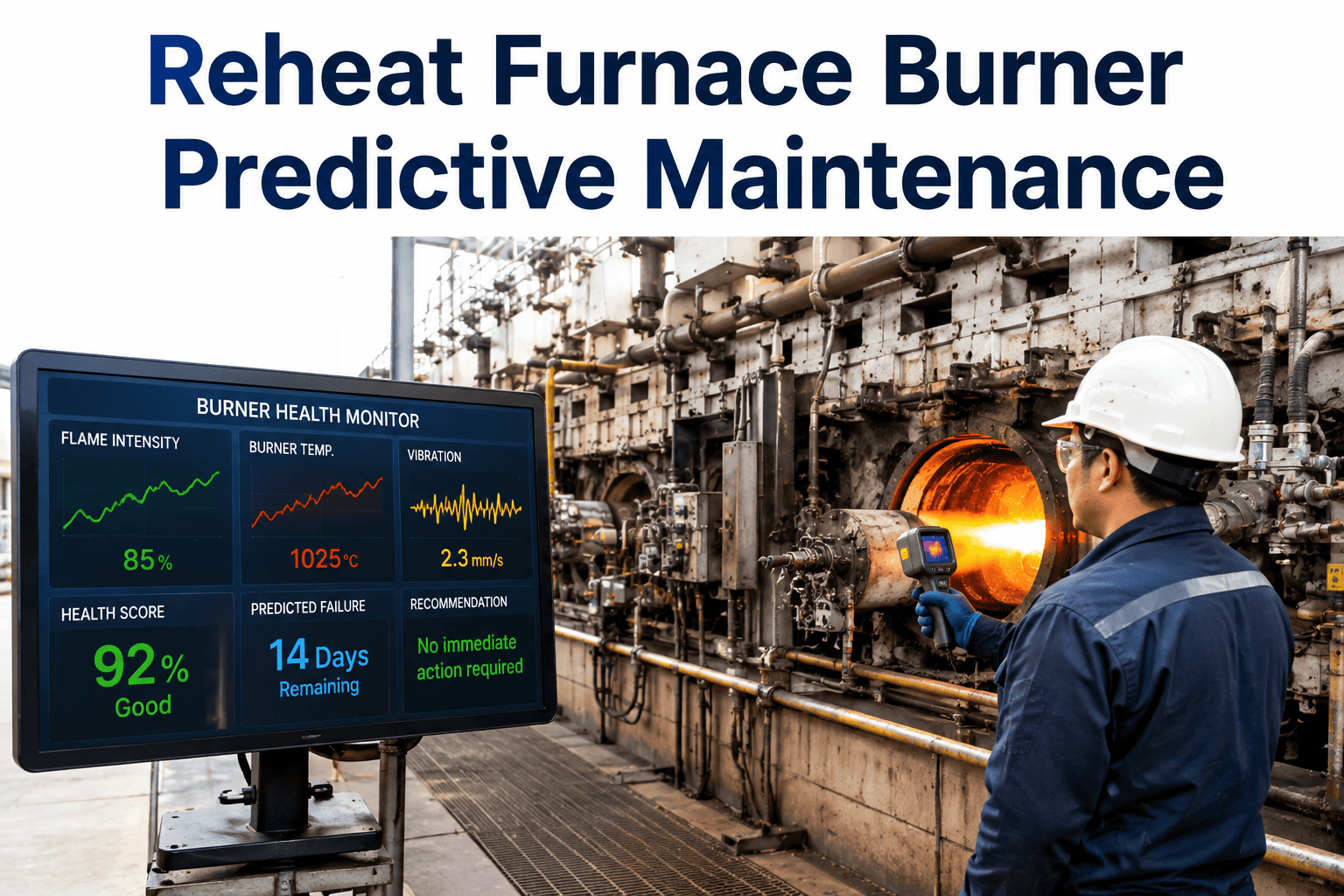
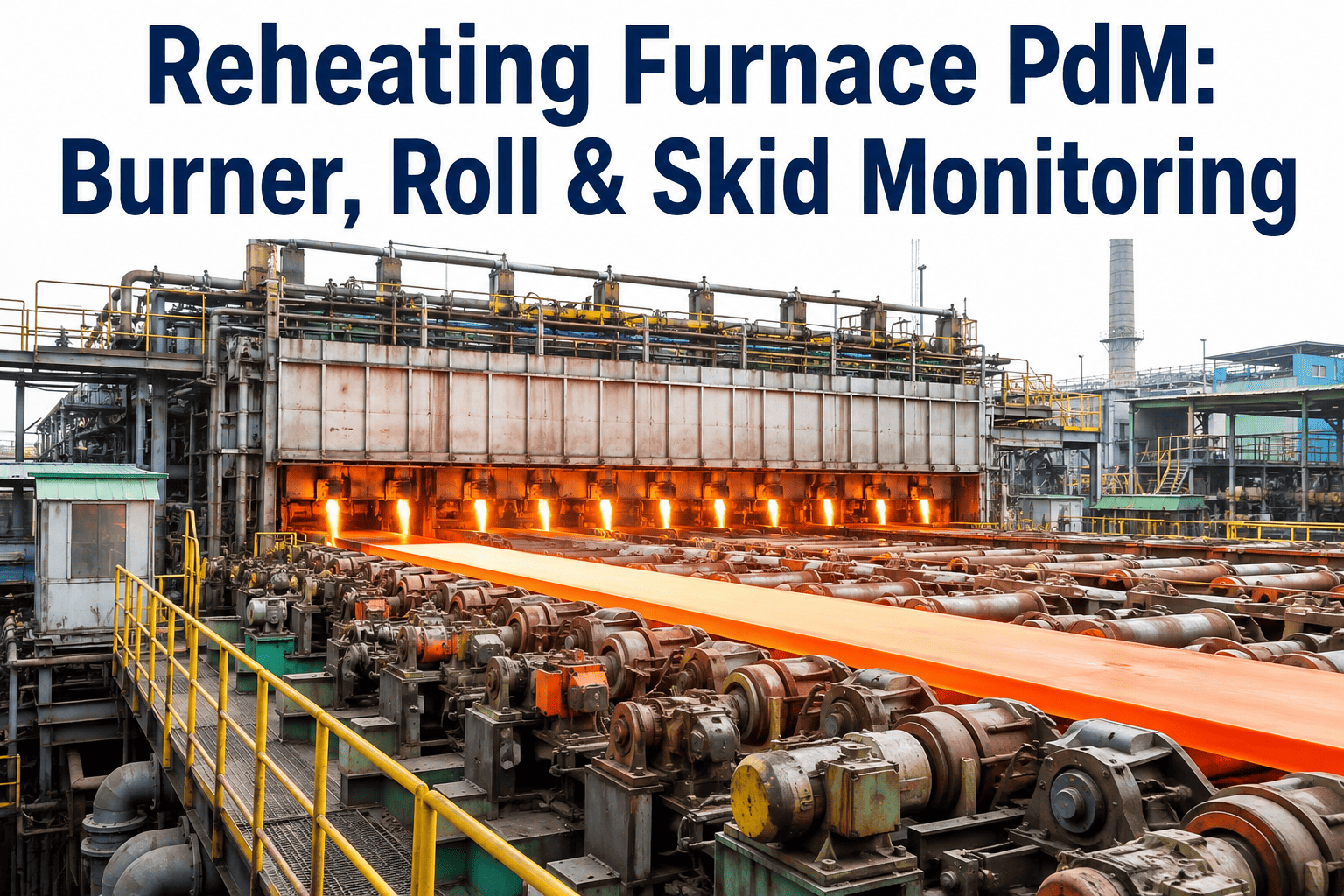
A reheat furnace with one burner running slightly rich and its neighbor running slightly lean doesn't trip an alarm, it just quietly produces a hot slab next to a cold one, and that unevenness only becomes visible once the rolling mill starts fighting inconsistent temperature across the strip. Burner imbalance builds gradually through fouling, air-fuel ratio drift, and nozzle wear, well before it crosses a threshold that a standard combustion control system would flag as a fault. Our furnace maintenance specialists can review your current burner performance data against what an anomaly detection model would have caught earlier.
Predictive Maintenance — Reheat Furnace
Catch Burner Drift Before It Becomes a Cold Slab
Burner imbalance builds slowly through fouling and air-fuel drift, long before it trips a fault alarm. AI-based anomaly detection flags the drift while it's still small, before flame quality affects rolled product temperature uniformity.
Why Burner Imbalance Hides From Standard Fault Detection
Combustion control systems on most reheat furnaces are built to catch discrete faults: a flame-out, a gas pressure excursion, an air-fuel ratio well outside its configured range. Gradual drift, where a burner's flame quality degrades slowly over weeks from nozzle fouling or slight air-fuel ratio creep, rarely crosses those hard fault thresholds until the imbalance has already been affecting slab temperature uniformity for some time.
The downstream cost shows up at the rolling mill, where a slab that entered the furnace on spec but exits with an uneven internal temperature profile creates rolling force variation, dimensional inconsistency, and in some cases a downgraded product that has to be reworked or sold at a lower grade.
Gradual
burner drift typically builds over weeks, not a single shift
Below Threshold
most drift stays inside standard fault detection limits until advanced
4-6
signal types that together reveal drift standard alarms miss
The Signals That Reveal Drift Before It's a Fault
Rather than watching a single air-fuel ratio number against a fixed threshold, an anomaly detection model tracks how a group of related signals moves together over time, since drift shows up first as a subtle shift in the relationship between signals rather than any one of them individually crossing a hard limit.
Air-Fuel Ratio Trend
Gradual drift from setpoint over days to weeks, well before it trips a hard alarm.
Flame Signal Stability
Flicker pattern and intensity variation that shifts subtly as nozzle condition degrades.
Zone Temperature Spread
Widening variation between adjacent zone readings that should normally track closely.
Fuel Consumption Rate
A burner working harder to hit setpoint often shows a small but real consumption increase.
Want to see what your own combustion data already shows about burner drift?
Book a walkthrough and we'll review a sample of your recent furnace logs.
From Signal Drift to a Maintenance Work Order
The model's job isn't to replace the combustion control system, it's to catch the slow-building pattern that control system isn't designed to see. When a group of signals for a specific burner starts trending away from its established baseline together, that combination gets flagged well before any individual signal would trip a standard alarm.
1
Continuous monitoring of air-fuel ratio, flame signal, and zone temperature per burner
2
Model compares current trend against each burner's own established baseline
3
Correlated drift across signals flagged as an anomaly before threshold breach
4
Maintenance scheduled during normal preventive window, not an emergency stop
| Detection Method | What It Catches | Typical Timing |
|---|
| Standard fault alarm | Hard threshold breach on a single signal | After imbalance has advanced significantly |
| Manual combustion audit | Snapshot condition at time of audit | Periodic, gap between audits can miss drift |
| Continuous anomaly detection | Correlated multi-signal drift from baseline | Days to weeks before threshold breach |
Why Early Detection Matters More Than It Looks
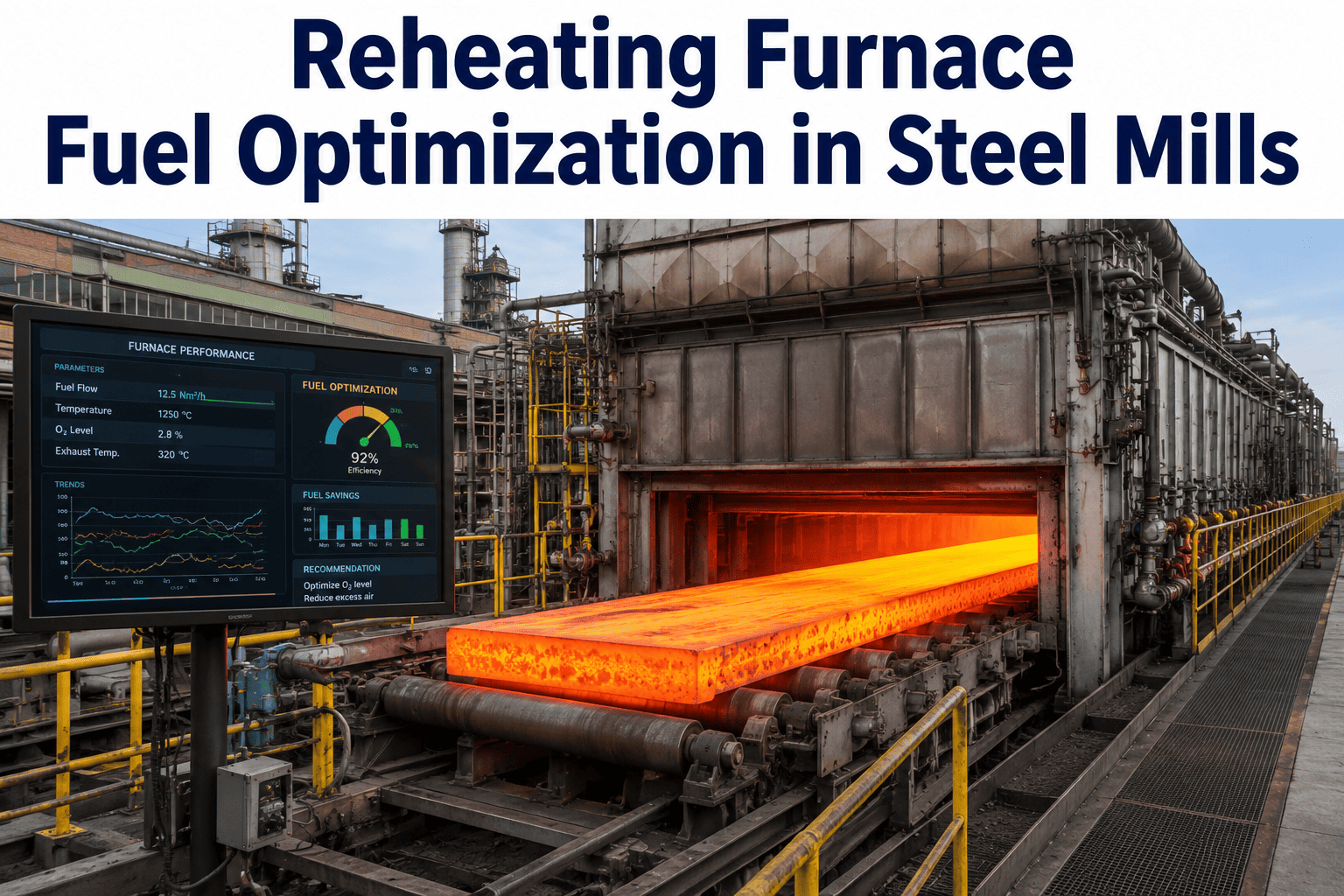
Catching burner drift while it's still small means a maintenance team can schedule a cleaning or adjustment during a normal preventive maintenance window rather than reacting to a quality problem that's already showing up on rolled product. It also means the furnace runs closer to its designed thermal efficiency for longer, since a drifting burner working harder to compensate for fouling is also a burner consuming more fuel than necessary for the same output.
Fewer Cold Slabs
Temperature uniformity issues caught before they reach the rolling mill.
Planned Maintenance
Burner service scheduled proactively instead of reactively.
Better Fuel Efficiency
Drifting burners caught before they're consuming excess fuel to compensate.
Frequently Asked Questions
Does this require new sensors on our reheat furnace burners?
Most reheat furnaces already have the core signals needed for anomaly detection, including air-fuel ratio, flame scanner output, and zone temperature readings, captured through their existing combustion control system, which means an initial model can typically be built from data the furnace already logs. Adding more granular flame imaging or additional temperature measurement points can improve detection sensitivity further, but it's an enhancement rather than a starting requirement.
Reach out to our team to review what your current combustion control system already captures.
How does the model tell the difference between normal operating variation and actual drift?
The model establishes a baseline pattern of normal signal relationships specific to each burner, since every burner has some inherent variation in how its signals move together under normal operation, and flags deviations from that burner's own established pattern rather than applying one fixed threshold across all burners. This per-burner baselining is what allows the model to distinguish a genuinely drifting burner from one that's simply operating within its normal, slightly different, range compared to its neighbors.
Book a demo to see how baseline establishment works during initial deployment.
Can this help decide which burner to service first when maintenance time is limited?
Anomaly severity and trend rate are both surfaced as part of the flagging output, which gives maintenance planners a way to prioritize burners showing faster or more advanced drift over those showing an early, slow-moving trend when service capacity during a maintenance window is limited. This turns a maintenance schedule that previously treated all burners on a fixed interval into one that can weight attention toward the burners actually showing a problem.
Talk to our team about how prioritization would work for your maintenance schedule.
Does this integrate with our existing furnace combustion control system?
Anomaly detection is generally designed to sit alongside the existing combustion control system, reading the same data streams that system already has access to rather than requiring a separate control layer, since the goal is early warning and maintenance flagging rather than taking over real-time combustion control itself. The furnace's existing safety and control functions remain unchanged, with the anomaly detection output surfaced as an additional maintenance planning signal.
Book a walkthrough to see how this would connect to your specific control system.
How much lead time does this typically give before a burner needs service?
Lead time depends on how quickly a specific burner is drifting, since some fouling-driven drift builds gradually over several weeks while other causes can progress faster, but the general goal of continuous trend monitoring is to surface the pattern early enough to schedule service during a normal preventive maintenance window rather than reacting to a quality issue already showing up on rolled product. This lead time tends to improve as the model accumulates more historical drift-to-failure examples specific to your furnace and burner type.
Reach out to discuss typical lead times for furnaces similar to yours.
Stop Waiting for the Fault Alarm
Catch Burner Drift While It's Still an Early Signal
Share a sample of your recent combustion control logs and we'll show you what an anomaly detection model would have flagged, and when.