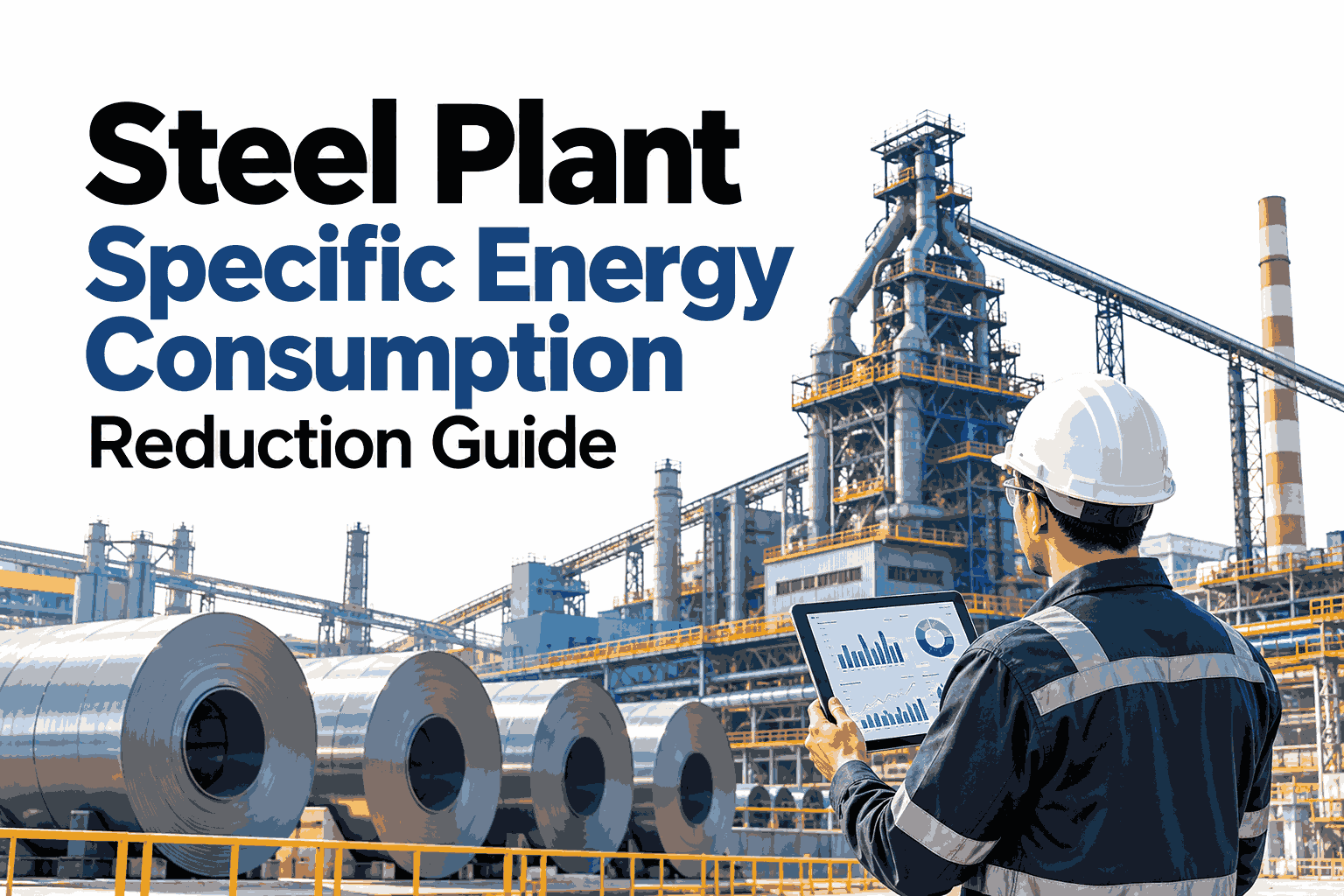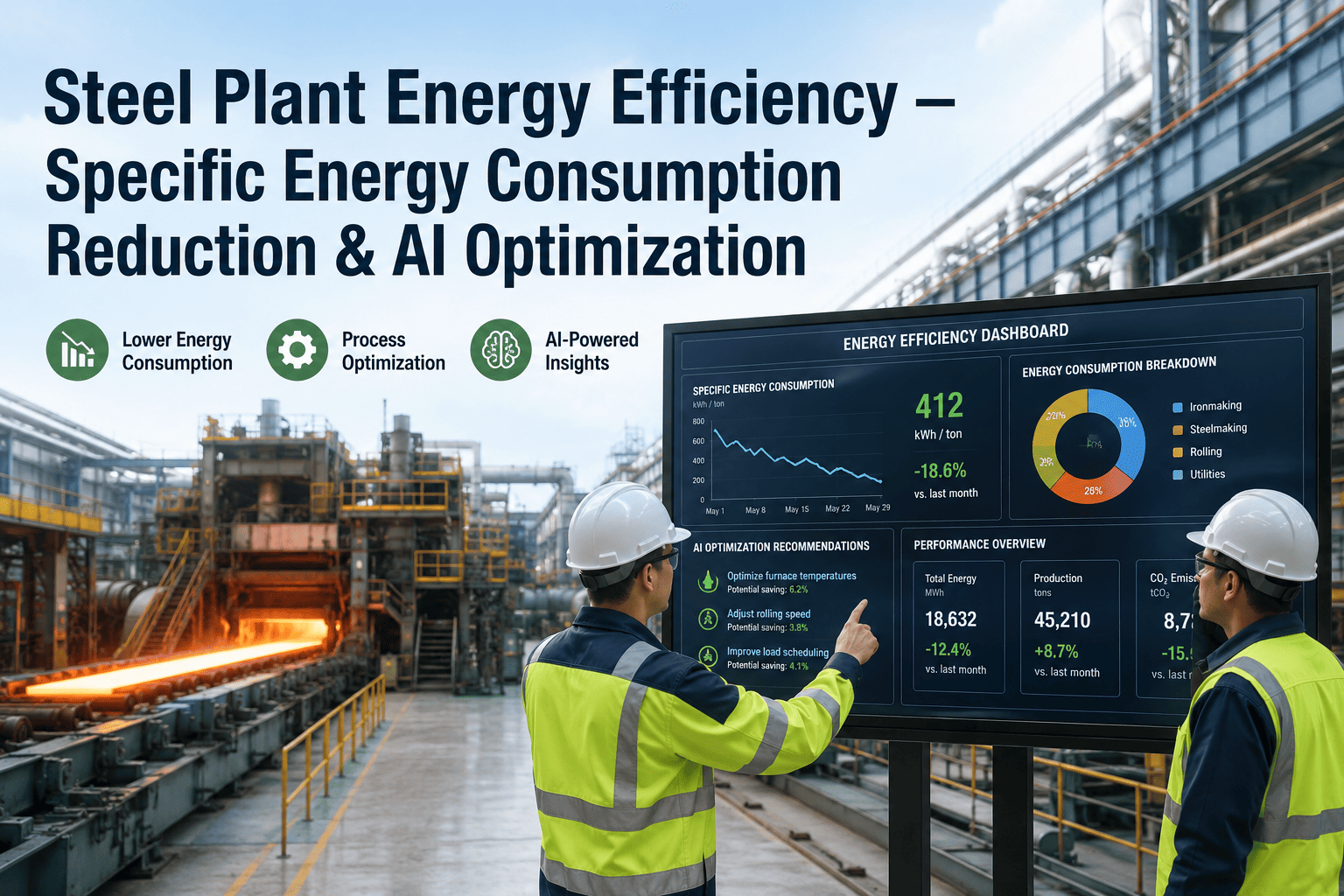
In the hyper-competitive landscape of modern steel manufacturing, energy costs represent the single largest variable expenditure, often accounting for 25% to 40% of total operational expenses. The specific energy consumption (SEC), measured in gigajoules per tonne of crude steel (GJ/t), is the definitive metric for operational efficiency and environmental stewardship. Reducing SEC by even 0.5 GJ/t in a 3-million-tonne-per-year integrated plant translates to annual savings exceeding $15 million and a reduction of over 50,000 tonnes of CO2 emissions. This comprehensive guide dissects every energy-intensive process—from coke making and sintering to blast furnace ironmaking, basic oxygen steelmaking, continuous casting, and hot rolling—providing granular benchmarks, AI-driven optimization strategies, and a clear roadmap to achieve world-class energy performance. Whether you are a process engineer, plant manager, or CTO, you will find actionable insights to slash energy costs, improve yield, and meet stringent decarbonization targets. Book a Demo to explore how iFactory's AI platform can transform your energy management.
Benchmark Your Steel Plant's Specific Energy Consumption Against World-Class Performance
Discover AI-driven insights to reduce GJ/tonne across ironmaking, steelmaking, and rolling processes.
Ironmaking Energy Benchmark
The blast furnace route consumes 11-14 GJ/t of hot metal, with top-performing plants achieving 11.2 GJ/t through optimized burden distribution, high PCI rates, and advanced process control. Sintering adds 1.8-2.2 GJ/t, while coke making contributes 2.5-3.0 GJ/t of coke. AI models predict and optimize these parameters in real-time.
Steelmaking Energy Benchmark
Basic oxygen steelmaking (BOS) consumes 0.8-1.2 GJ/t of liquid steel, while electric arc furnace (EAF) routes require 3.5-5.5 GJ/t. Ladle refining and vacuum degassing add 0.3-0.5 GJ/t. Advanced AI optimizes scrap mix, oxygen lancing, and power input to minimize SEC.
Rolling Energy Benchmark
Hot rolling consumes 1.5-2.5 GJ/t, with world-class mills achieving 1.6 GJ/t through efficient reheating furnace operation, optimized rolling schedules, and waste heat recovery. Cold rolling adds 0.5-1.0 GJ/t. AI-driven scheduling reduces energy spikes and improves throughput.
AI-Powered Energy Optimization Framework
iFactory's AI platform integrates with your existing DCS, MES, and ERP systems to create a digital twin of your energy flows. The system uses machine learning models trained on historical data to predict SEC for each production unit and recommend real-time adjustments. Key optimization levers include:
Blast Furnace Stave Cooling Optimization
AI models analyze stave temperature gradients and adjust cooling water flow to reduce heat losses by 5-8%, saving 0.3-0.5 GJ/t.
Reheating Furnace Combustion Control
Predictive algorithms optimize air-fuel ratios and zone temperatures based on slab tracking, reducing fuel consumption by 10-15%.
EAF Power Demand Management
AI schedules power input to avoid peak tariffs and minimize electrode consumption, cutting EAF SEC by 0.4-0.6 GJ/t.
Waste Heat Recovery Integration
Real-time optimization of heat exchangers and ORC systems to maximize recovery, adding 0.2-0.3 GJ/t of usable energy.
Step-by-Step Energy Reduction Roadmap
Baseline Assessment & Benchmarking
Conduct a comprehensive energy audit across all production units. Compare your SEC against industry benchmarks (world-class, average, and bottom quartile). Identify top 5 energy-consuming processes.
Data Integration & AI Model Deployment
Integrate real-time data from sensors, PLCs, and historians into iFactory's AI engine. Train models to predict SEC under varying operating conditions. Validate against historical data.
Real-Time Optimization & Control
Deploy AI recommendations to operators via dashboards and closed-loop control for critical parameters. Monitor SEC deviations and adjust setpoints automatically.
Continuous Improvement & Reporting
Track SEC trends, generate daily energy reports, and identify new opportunities. Use AI to simulate the impact of process changes before implementation.
Specific Energy Consumption Benchmarks (GJ/t Crude Steel)
| Process | World Class | Average | Bottom Quartile | AI Reduction Potential |
|---|---|---|---|---|
| Ironmaking (BF) | 11.2 | 13.5 | 15.8 | 0.8-1.2 |
| Sintering | 1.8 | 2.1 | 2.5 | 0.2-0.3 |
| Coke Making | 2.5 | 3.0 | 3.5 | 0.2-0.4 |
| BOS | 0.9 | 1.1 | 1.3 | 0.1-0.2 |
| EAF | 3.8 | 4.5 | 5.2 | 0.4-0.6 |
| Hot Rolling | 1.6 | 2.0 | 2.5 | 0.2-0.4 |
| Cold Rolling | 0.5 | 0.7 | 1.0 | 0.1-0.2 |
| Total Integrated Route | 20.5 | 24.9 | 29.8 | 2.0-3.5 |
Key Energy Reduction Levers
Optimized Burden Distribution
AI models recommend coke-to-ore ratios and burden layer thickness to minimize fuel rate and maximize gas utilization in BF.
Advanced Process Control
Model predictive control (MPC) for BOS and EAF reduces oxygen consumption and power usage by 5-10%.
Waste Heat Recovery
Integration of heat exchangers and ORC systems can recover up to 30% of waste heat, reducing overall SEC.
Energy-Efficient Drives
Variable frequency drives (VFDs) on pumps and fans can cut electricity consumption by 20-30%.
Heat Recovery Steam Generation
Capture waste heat from flue gases to generate steam for downstream processes, reducing fuel demand.
AI-Powered Scheduling
Optimize production sequences to minimize idle time and reheating, reducing energy spikes.
Ready to Slash Your Energy Costs?
Discover how AI optimization can reduce your SEC by 10-15% within 6 months. Schedule a personalized demo with our experts.
Detailed Analysis of Energy Losses in Ironmaking
The blast furnace is the largest energy consumer in an integrated steel plant, accounting for 50-60% of total SEC. Major energy losses include:
Top Gas Heat Loss
Approximately 15-20% of input energy leaves as top gas. AI can optimize burden distribution and blast conditions to minimize this loss.
Stave Cooling Losses
Cooling water removes 8-12% of heat. AI adjusts flow rates based on thermal load to reduce losses.
Slag Sensible Heat
Slag carries 3-5% of energy. Dry slag granulation with heat recovery can capture 60% of this energy.
Incomplete Combustion
Poor oxygen distribution leads to 2-4% fuel waste. AI-driven lance positioning improves combustion efficiency.
Steelmaking Energy Optimization
In BOS, AI models predict end-point temperature and carbon content, reducing reblows and oxygen consumption by 8-12%. For EAF, AI optimizes scrap mix and power input to minimize SEC.
Rolling Mill Efficiency
Reheating furnaces are the primary energy consumer in rolling. AI-based combustion control reduces fuel consumption by 10-15% while maintaining slab temperature uniformity.
Utilities Optimization
Compressed air, steam, and water systems account for 10-15% of plant energy. AI identifies leaks and optimizes distribution to reduce losses by 15-20%.
Frequently Asked Questions
What is the typical SEC for an integrated steel plant?
The global average specific energy consumption for integrated steel plants is approximately 24-26 GJ per tonne of crude steel. World-class plants achieve below 21 GJ/t through advanced process control, waste heat recovery, and AI optimization. iFactory's AI platform can help reduce SEC by 10-15% within 6-12 months, targeting the world-class benchmark. Book a Demo to see how.
How does AI improve energy efficiency in steelmaking?
AI models analyze vast amounts of real-time data from sensors, process historians, and production schedules to identify inefficiencies and recommend optimal operating parameters. For example, in a blast furnace, AI can adjust burden distribution and blast conditions to reduce fuel rate by 5-8%. In EAF, AI optimizes scrap mix and power input, cutting SEC by 0.4-0.6 GJ/t. These improvements are achieved through predictive analytics, model predictive control, and closed-loop automation. Contact support for more details.
What is the ROI of implementing AI for energy optimization?
For a typical 3 million tonne per year integrated steel plant, a 10% reduction in SEC (from 24 to 21.6 GJ/t) saves approximately 7.2 million GJ annually. At an average energy cost of $8/GJ, this translates to $57.6 million in annual savings. The implementation cost for iFactory's AI platform is typically recovered within 6-12 months. Book a Demo to calculate your specific ROI.
How long does it take to deploy an AI energy optimization system?
Typical deployment timelines range from 3 to 6 months, depending on data availability and plant complexity. The process includes data integration, model training, validation, and operator training. iFactory's pre-built connectors to major DCS and MES systems accelerate deployment. Get support to start your journey.
Can AI help with Scope 1 and Scope 2 emissions reduction?
Yes, reducing specific energy consumption directly lowers both Scope 1 (direct emissions from fuel combustion) and Scope 2 (indirect emissions from purchased electricity). For every 1 GJ/t reduction in SEC, CO2 emissions decrease by approximately 0.1 tonnes per tonne of steel. AI optimization also enables better integration of renewable energy sources. Book a Demo to align with your decarbonization goals.
Transform Your Energy Management Today
Join leading steel manufacturers who have reduced SEC by 15% with iFactory's AI platform. Schedule your demo now.