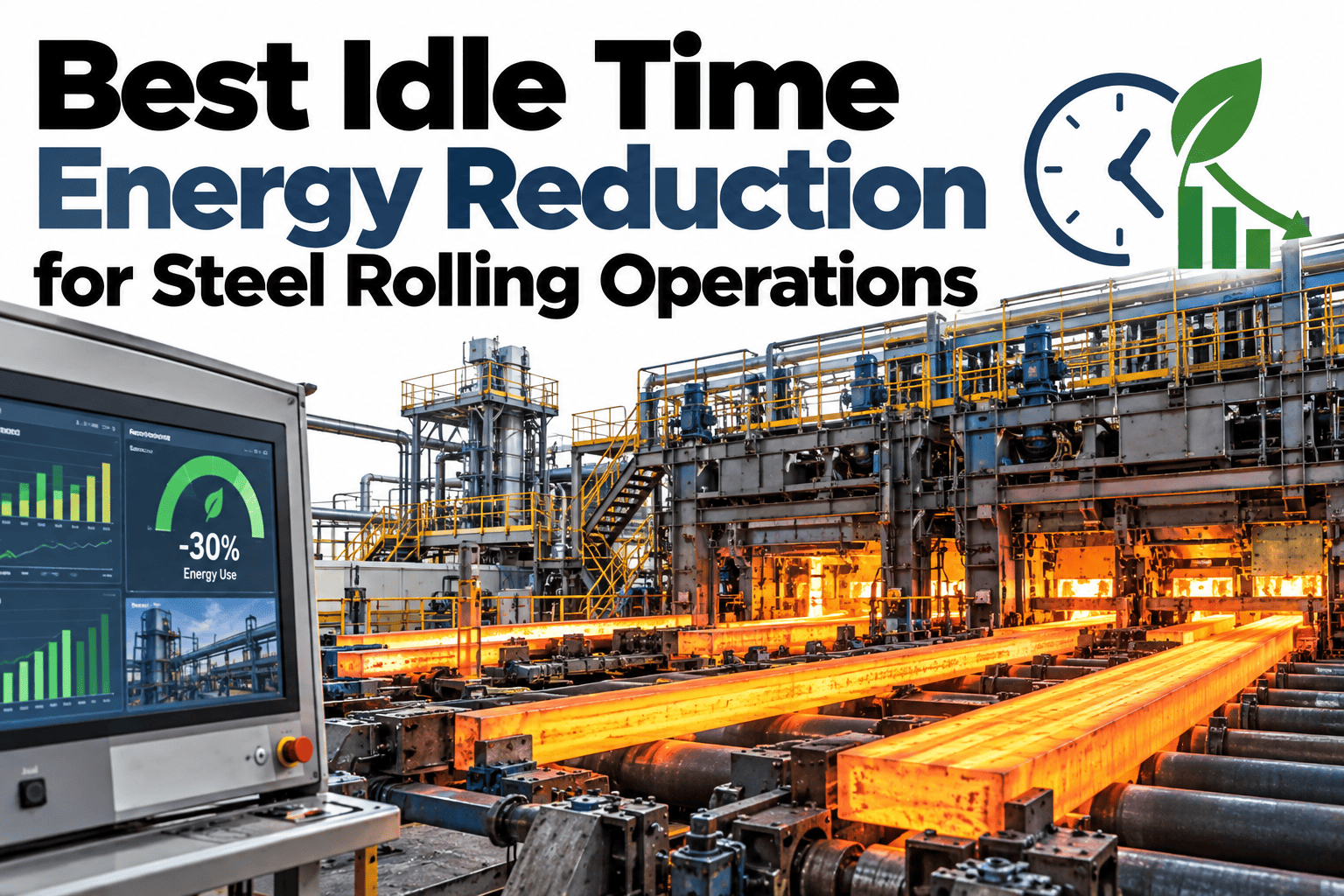
The most expensive hour in a rolling mill is often the one in which nothing is rolled. Drives stay magnetised, pumps keep circulating, fans keep running and the furnace keeps holding temperature, so the mill draws power while producing no steel. Because the draw is steady and each stop is short, idle energy hides inside daily averages and never appears as an event. Cutting it takes three things working together: seeing every idle minute, a standby design that matches how long the stop will last and a roster that coordinates crews around it. Mill teams that want their own idle hours counted can review an idle-hour map of their mill built from their rolling log in a short session.
Find the Hours Your Mill Draws Power and Rolls Nothing
iFactory AI counts every idle minute, links it to the energy still being drawn and recommends standby and shutdown rules that fit each kind of stop.
Five Kinds of Idle, Five Different Fixes
Idle is not one problem. The right response depends on how long the stop lasts and what causes it.
| Idle Type | Typical Length | What Keeps Running | Best Response |
|---|---|---|---|
| Micro-stop between bars | Seconds to minutes | Everything | Leave alone and reduce frequency |
| Changeover | Tens of minutes | Pumps, fans, furnace | Short standby on non-critical loads |
| Waiting for billets or downstream | Minutes to hours | Auxiliaries and holding fuel | Coordinate furnace and mill timing |
| Unplanned downtime | Hours | Most utilities | Extended standby once the stop is confirmed |
| Planned long stop | Shifts to days | Little if shut down well | Controlled shutdown and warm restart plan |
What an Idle Hour Still Draws
Idle does not mean zero. The bars show an illustrative share of idle-hour power for a typical mill, which together can reach a large fraction of a rolling hour.
Count Every Idle Hour Before You Design a Fix
Share a month of rolling and power records. iFactory AI will map each idle hour to the energy it burned, so rules target the stops that matter.
The Standby Ladder
Deeper standby saves more energy but takes longer to leave. The columns show an illustrative saving against restart time for three levels, which is why the level must follow the expected stop length.
Pumps and fans reduced
Furnace held lower
Most loads off
Auto-Shutdown Rules With Guards
A rule that switches equipment off must also know when not to. Each rule below pairs a trigger with an action and the guards that keep it safe.
Idle by Shift: A Roster Problem as Much as a Machine One
Idle often clusters around crew changes, meal breaks and the night shift. The bars show the illustrative share of each shift with no rolling.
Plan Stops Together
Share planned stops with furnace, utilities and maintenance, so standby starts on time.
Stagger Breaks
Cover meal breaks and crew changes so the mill is not left waiting on one person.
Hand Over the State
Pass the standby level and restart plan to the next crew as part of the handover.
A Composite Scenario: A Week of Idle Energy
A mill applied short standby on changeovers and a controlled extended standby on confirmed long stops. The columns show illustrative idle energy per day before and after, with the same schedule.
Where iFactory AI Fits
The rolling log, power meters and utility data each show part of an idle hour. iFactory AI joins them.
Idle Detection
Every idle minute is detected from rolling and power signals, and classified by type.
Standby Recommendations
The right standby level is suggested from the expected stop length and restart cost.
Guarded Rules
Shutdown and restart rules carry the guards operations and maintenance agree.
Shift Coordination
Planned stops and standby states are visible to furnace, utilities and crews.
Expert Review: Standby Without Surprises
Idle reduction is simple on paper and risky when rushed. This review sets out how experienced mill engineers judge a standby plan.
Frequently Asked Questions
How much of our mill energy is really idle?
It varies widely, from a few percent in a busy mill to a double-digit share where schedules are thin. The way to find out is to measure power during every non-rolling period and total it. The result often surprises teams, because the draw is steady and was never separated. Our analysts can total it from a month of your logs.
Is automatic shutdown safe?
It is when it is built with guards and tested. Rules should respect interlocks, billet protection and maintenance permits, and they should start in an advisory mode where operators confirm each action. Automation is added only for steps that have proven reliable. Equipment limits set by suppliers remain the final authority on what may be switched off and for how long.
What about the furnace during a stop?
The furnace is usually the largest energy user during a stop, so it matters most. Options include lowering the hold temperature, adjusting burner firing and, for long stops, a controlled cool-down. Each has billet quality and refractory implications. See a furnace standby rule worked through in a short session with your own stop patterns.
Won't standby slow our restart?
Only if the level is wrong for the stop. Short standby has almost no restart cost, while deep standby needs time and sequence. The system predicts stop length and recommends the level that saves energy without delaying the next bar. Scheduled restarts begin warm-up early, so crews are not left waiting for equipment to come back.
How is the saving verified?
By comparing idle-hour energy before and after for the same type of stop, normalised for schedule. The same rolling log and power meters supply both numbers, so the method is transparent. Ask how verification is reported in your energy scorecard.
Switch Off the Energy That Never Rolled a Single Bar
See every idle hour, the standby level that fits it and the savings, on your own mill. Book a working session with a mill operations specialist.