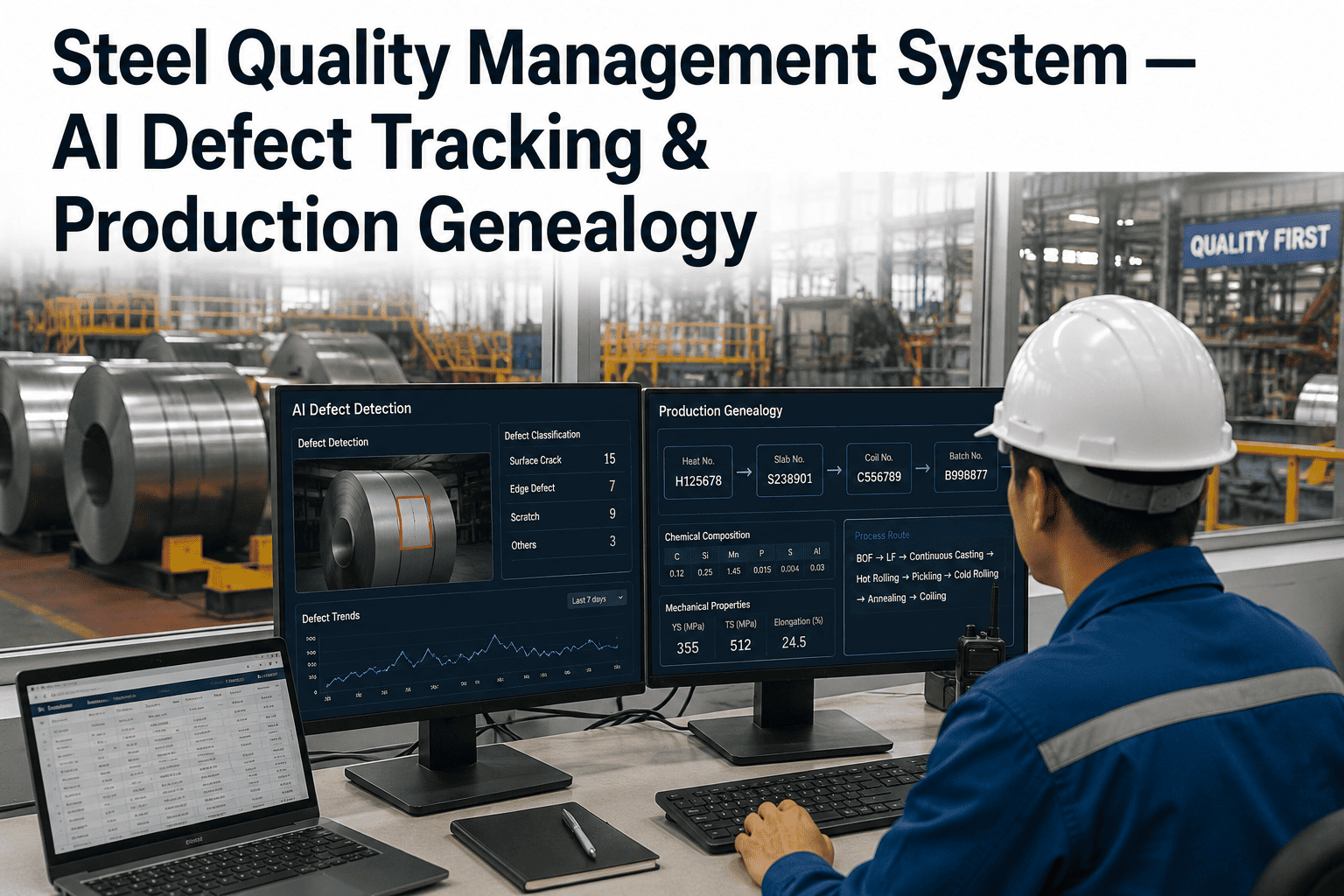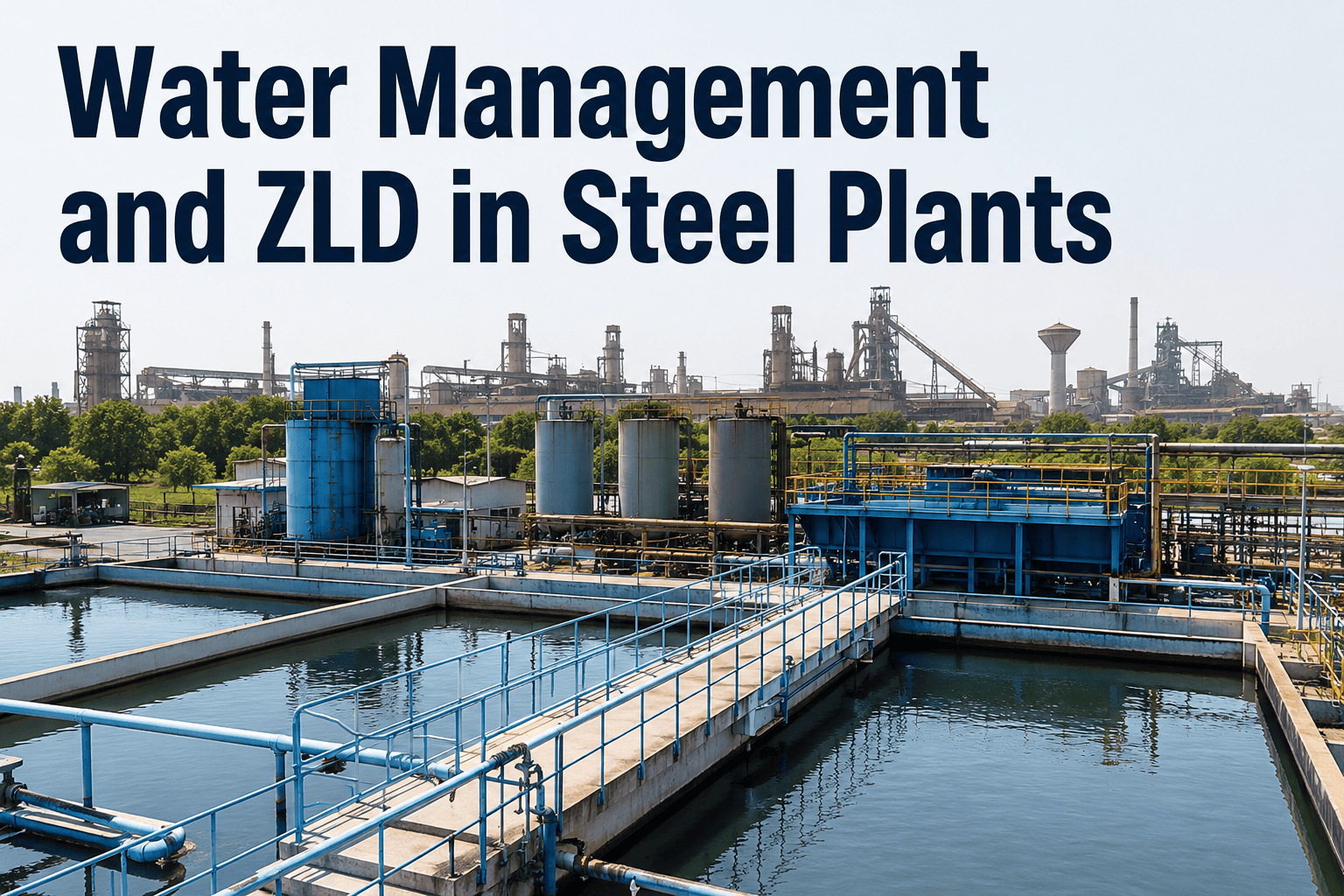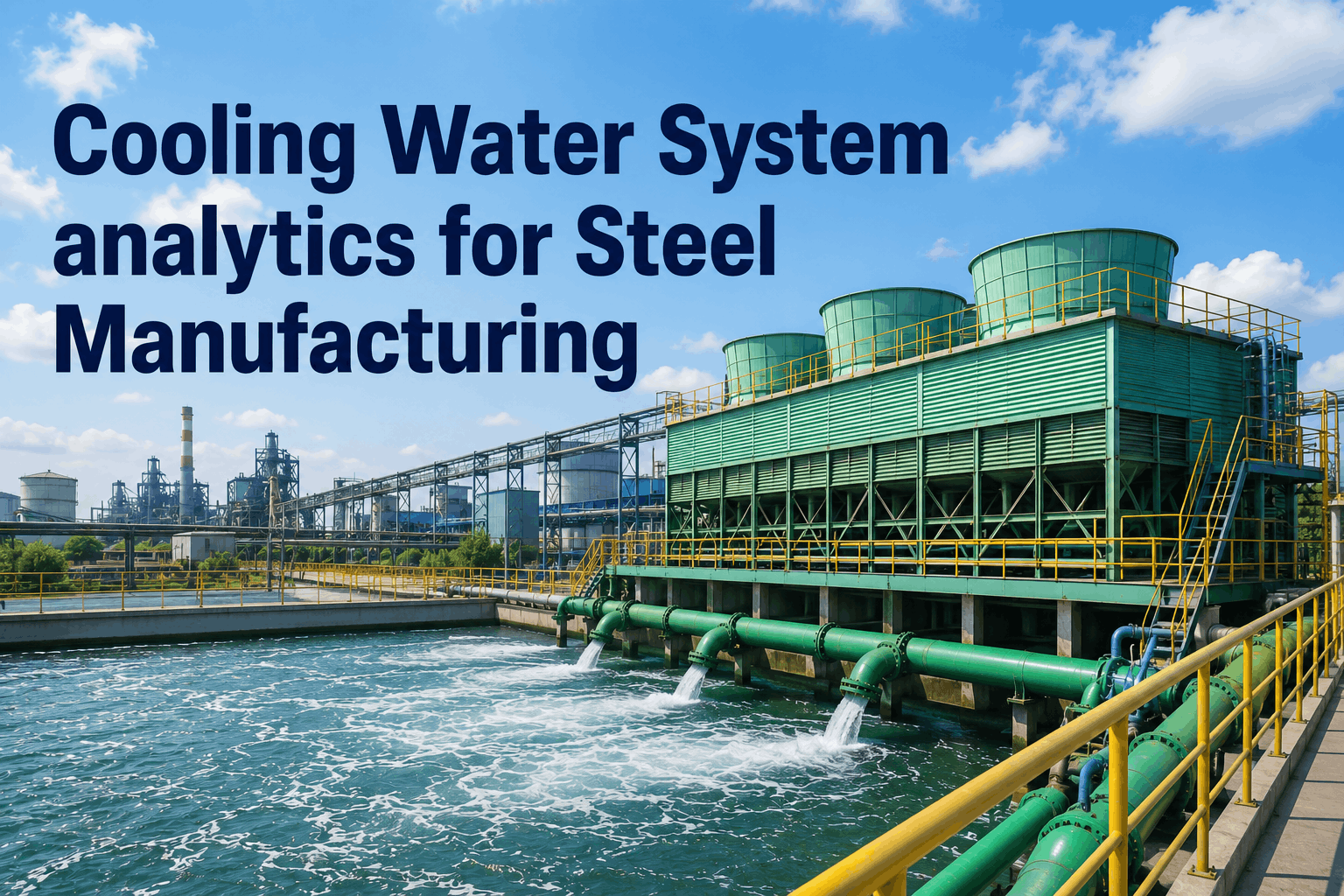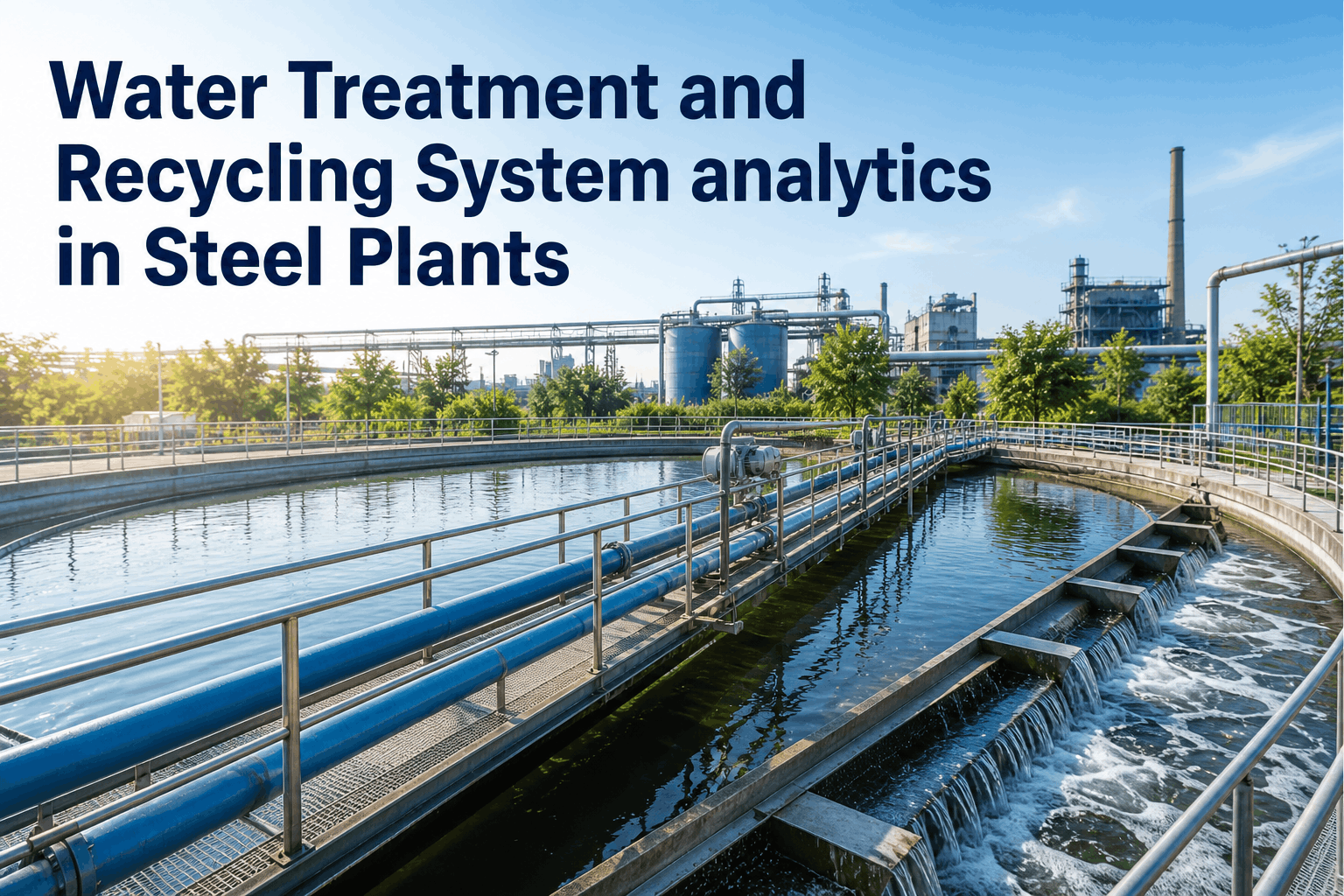
Sustainable water management in the steel industry has shifted from a utility function to a core environmental mandate. In 2026, the push for Zero Liquid Discharge (ZLD) and the reduction of specific water consumption (m3/tcs) are the primary benchmarks for world-class steel operations. With integrated plants requiring up to 28,000 cubic meters of water per hour, even a minor deviation in cooling water chemistry or a failure in the RO membrane can lead to massive production losses and environmental penalties. Schedule a Water Audit to see how iFactory's Water Control Tower uses AI-driven predictive dosing and real-time ETP analytics to achieve 100% recycling and regulatory compliance.
1. The Integrated Water Cycle: Cooling, Process & Treatment
Steel plant water systems are among the most complex industrial networks, spanning indirect cooling circuits (heat exchangers), direct cooling (spray cooling), and highly contaminated process water from coke-making and blast furnaces. iFactory's Water Network Analytics provides a real-time mass-balance across these circuits, identifying leaks and evaporation losses that traditional meters miss. By correlating water consumption with production tonnage, we provide the Specific Water Consumption metric required for global ESG reporting.
Traditional water management relies on periodic lab tests—a reactive approach that fails to catch "slug" loads of contaminants or rapid scaling events. iFactory moves you to Continuous Chemistry Profiling, where AI-driven sensors monitor pH, conductivity, ORP, and turbidity in real-time. Optimize your cooling circuits today to prevent unplanned downtime and extend equipment life.
2. Heat Transfer Efficiency & Scale Monitoring
The cooling system's performance is ultimately measured by its ability to transfer heat. iFactory's Thermal Integrity Analytics monitors the Heat Transfer Coefficient (U) across critical exchangers in the Blast Furnace and Cold Rolling Mill. By correlating water flow-rate with temperature differentials, the system identifies the exact moment scale formation begins to insulate the tubes.
This move to "Soft-Fouling" detection allows maintenance teams to adjust antiscalant dosing in real-time, preventing the need for mechanical tube cleaning or acid washes. Baseline your heat transfer efficiency with our integrated thermal modeling tool.
The Strategic Water Distribution & Treatment Lifecycle
Achieving Zero Liquid Discharge (ZLD) requires a modular approach to water treatment, ensuring that each "waste" stream is treated and cascaded back into the process. iFactory's Water Lifecycle Analytics tracks every drop from intake to the crystallizer. Book a Demo to see this lifecycle in action.
Intake & Cooling Tower Optimization
Monitor intake water quality and cooling tower "Cycles of Concentration" (COC). iFactory optimizes blow-down schedules to minimize makeup water while preventing scale formation on critical heat exchangers. Predictive fouling alerts trigger before thermal efficiency drops.
Effluent Treatment (ETP) & Phenolic Removal
Focus on the most hazardous streams. iFactory monitors the biological treatment of phenolic water from the coke plant, tracking MLSS, DO, and COD/BOD levels. Automated alerts identify toxic surges that could kill the bacterial population, ensuring constant treatment integrity.
RO & Ultrafiltration Recovery
The heart of the ZLD system. iFactory tracks Reverse Osmosis (RO) membrane differential pressure and flux. AI predicts membrane fouling 48 hours in advance, allowing for scheduled CIP (Cleaning in Place) instead of emergency shutdowns and membrane replacements.
MEE & Crystallizer Brine Management
The final stage. iFactory optimizes the energy consumption of Multi-Effect Evaporators (MEE) and Crystallizers, ensuring that the remaining brine is converted into solids for disposal or sale, achieving the 100% Zero Liquid Discharge mandate. Finalize your ZLD strategy here.
Steel Plant Water Chemistry & Deviation Matrix
| Circuit Group | Critical Metric | Risk Threshold | AI-Driven Action |
|---|---|---|---|
| Cooling Tower (Indirect) | LSI (Langelier Saturation Index) | LSI > 2.0 (Scaling) | Auto-adjust inhibitor dosing; trigger blow-down cycle |
| Coke Plant ETP | Phenol Concentration | > 0.5 mg/L in outlet | Recycle effluent to aeration tank; alert ETP supervisor |
| Blast Furnace Circuit | Suspended Solids (TSS) | > 50 ppm in spray supply | Trigger clarifier sludge blow-down and polymer dosing |
| RO Plant | Membrane Differential Pressure | > 1.5 bar increase | Schedule predictive CIP; check antiscalant dosing pump |
| MEE / Crystallizer | Specific Steam Consumption | > 0.35 t/t evaporation | Check for heat exchanger fouling and vacuum leaks |
Clarifier & Clariflocculator Analytics
Before water reaches the RO membranes, it must be clarified of suspended solids. iFactory's Clarifier Analytics Module monitors the "Sludge Blanket" level and the turbidity of the overflow water. By using AI-Vision to analyze the floc formation, the system optimizes the dosing of coagulants and flocculants (polymers) in real-time.
This ensures that the Clariflocculator consistently delivers water with an SDI (Silt Density Index) below 3.0—the critical requirement for RO membrane health. Optimize your settling tanks to reduce sludge-handling costs and protect your downstream membranes.
Zero Liquid Discharge (ZLD): Economics & Compliance
ZLD is often viewed as a cost-center, but iFactory's Economic Recovery Module identifies the ROI in water sustainability. By recovering 100% of the water and minimizing the discharge of hazardous brine, steel plants reduce their vulnerability to local water scarcity and regulatory closures. Furthermore, the recovery of chemicals from the crystallizer stage can create new revenue streams for the facility.
iFactory provides the CPCB-Ready Compliance Dashboard (for Indian operations) and international environmental reporting tools, ensuring that your plant is always audit-ready with real-time discharge data. Audit your ZLD performance today.
The iFactory Steel Water Digital Maturity Matrix
Identify your current state and map your path to a fully optimized, zero-discharge Control Tower.
The Strategic Roadmap to 100% Water Recycling
Phase 1: Water Network Instrumentation
Deploy high-accuracy flowmeters and chemistry sensors at intake, cooling towers, and ETP. Establish a unified IoT water network dashboard. Output: Total water visibility.
Phase 2: Cooling Tower & ETP Stabilization
Implement AI-driven COC optimization and biological treatment monitoring for coke plant water. Output: 30% reduction in discharge volumes.
Phase 3: RO & Membrane Health Optimization
Enable the predictive CIP engine and automated antiscalant dosing. Output: 50% increase in membrane life and water recovery.
Phase 4: Full ZLD Integration (MEE/Crystallizer)
Link the RO brine to the crystallizer control loop, achieving zero liquid discharge. Output: 100% regulatory compliance.
Phase 5: Autonomous Water Control Tower
Full closed-loop chemistry automation and ESG reporting integration. Output: World-class specific water consumption benchmarks. Start your water roadmap today.
"The implementation of iFactory's Water Control Tower has been a cornerstone of our ESG strategy. We achieved 100% Zero Liquid Discharge in just 14 months, while simultaneously reducing our specific water consumption by 22%. It's no longer just a compliance tool; it's a strategic energy asset."
Frequently Asked Questions — Steel Plant Water Management
What is Zero Liquid Discharge (ZLD) in a steel plant?
ZLD is a process where all wastewater is treated and recycled back into the plant, with the remaining brine evaporated and crystallized into solids. No liquid waste is discharged into the environment.
How does iFactory improve RO membrane life?
We use AI to predict membrane fouling based on feed water chemistry and differential pressure trends. This allows for proactive 'Soft CIP' before the fouling becomes permanent, extending life by up to 50%.
Why is specific water consumption (m3/tcs) important?
It is the primary metric for water efficiency in steelmaking. Reducing this number lowers costs, satisfies ESG requirements, and ensures the plant can operate during seasonal water shortages.
Can analytics reduce the chemical costs of water treatment?
Yes. iFactory's predictive dosing engine eliminates 'safety margin' over-dosing, ensuring chemicals are used only when the real-time chemistry (LSI, ORP) requires it.
How do you treat phenolic water from a coke plant?
We monitor the health of the biological ETP, tracking DO and MLSS levels. AI predicts 'toxic shocks' from upstream deviations, allowing operators to divert hazardous water to holding tanks before it kills the bacteria.
What is "Cycles of Concentration" (COC) in cooling towers?
COC represents the ratio of dissolved solids in the cooling water to those in the makeup water. iFactory maximizes COC to minimize blow-down and freshwater makeup without causing scaling.
Does iFactory support CPCB compliance reporting?
Yes. Our platform generates automated, audit-ready reports that meet CPCB (India) and global environmental standards for industrial water discharge.
How does water temperature affect steel quality?
In direct cooling (like CCM or Hot Strip Mill sprays), inconsistent water temperature or scale-blocked nozzles lead to non-uniform cooling, causing surface cracks and internal stress in the steel.
Can you monitor water leaks in the distribution network?
Yes. We use mass-balance analytics to identify discrepancies between water sent from the pump house and water received at the consumer nodes, pinpointing leaks in real-time.
What is the ROI of a ZLD project?
ROI is achieved through (1) Lower freshwater purchase costs, (2) Elimination of environmental fines, (3) Continuity of operations during droughts, and (4) Recovery of valuable salts from the crystallizer.
What is the role of MLSS in coke plant water treatment?
Mixed Liquor Suspended Solids (MLSS) measures the concentration of biomass in the aeration tank. iFactory optimizes MLSS levels to ensure complete degradation of phenols and cyanide while minimizing aeration energy.
How does iFactory detect silica scaling in RO plants?
By correlating silica levels in the feed water with reject-stream flux and pressure-drop, iFactory identifies silica-specific fouling patterns, which require unique high-pH cleaning protocols compared to organic fouling.