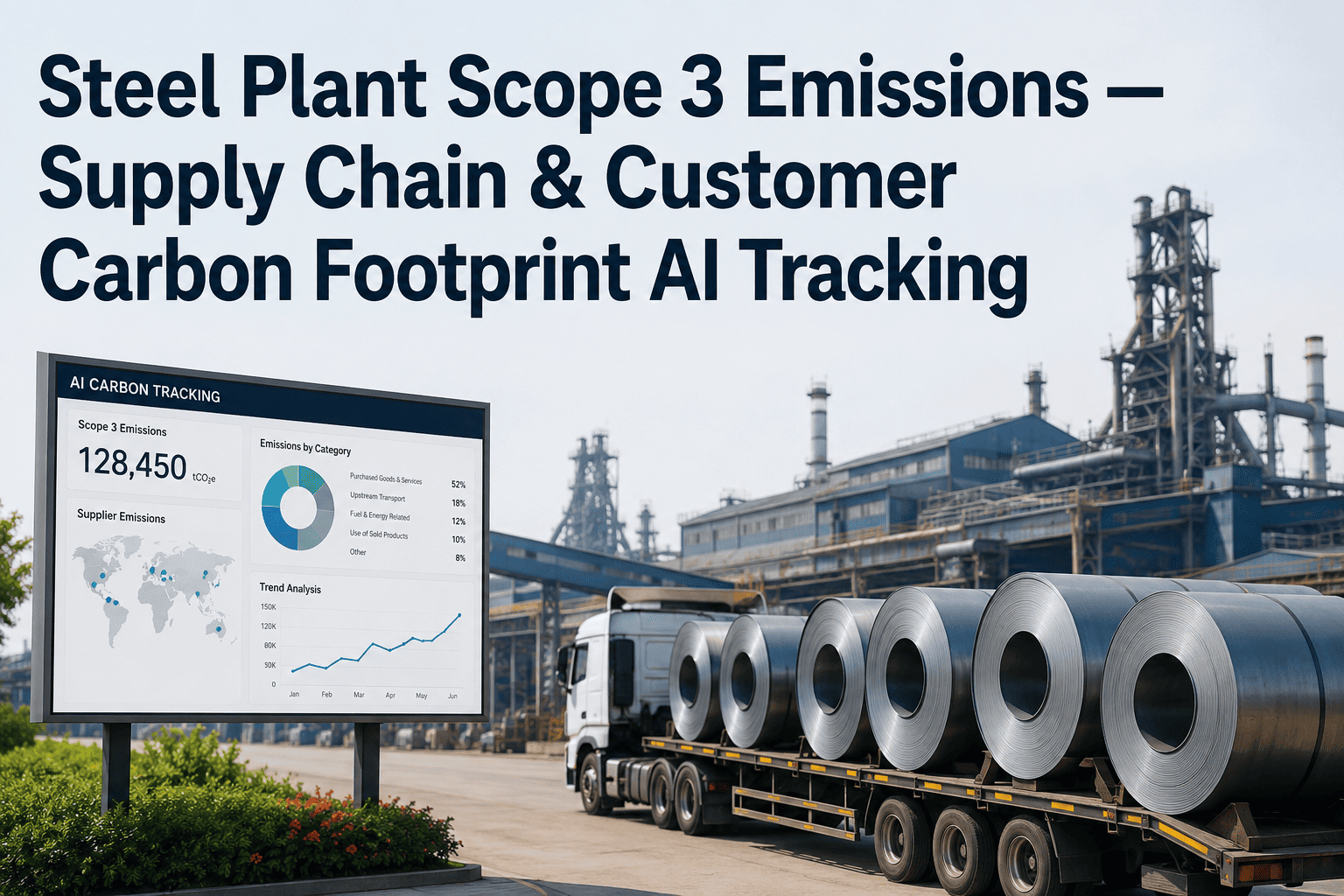
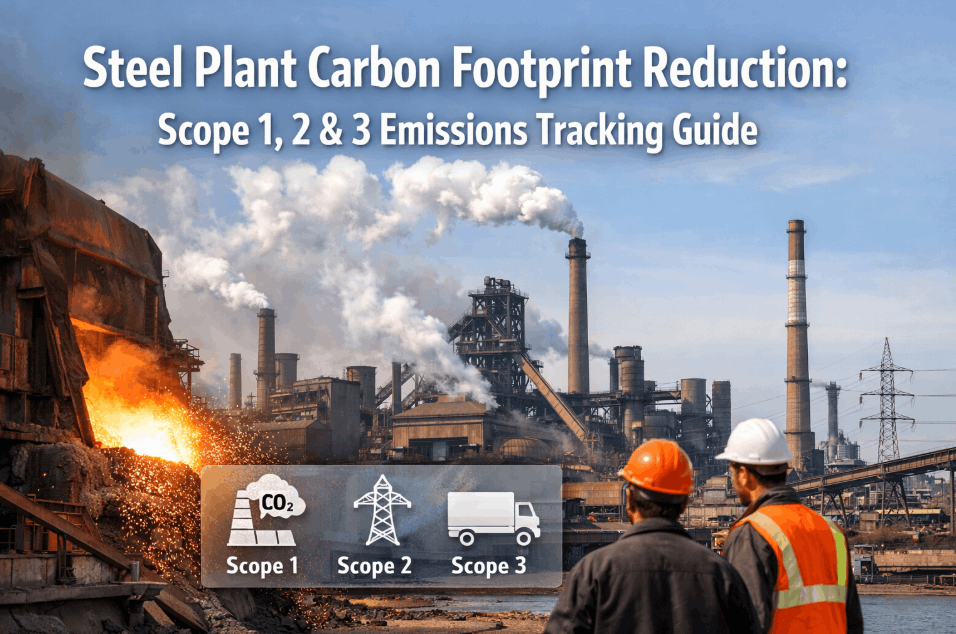
Steel production is directly responsible for approximately 2.6 gigatonnes of CO₂ annually — roughly 7% of global emissions — with an additional 1.0 Gt from the sector's electricity usage. For steel companies navigating EU CBAM (fully operational January 2026), ETS free allowance phase-out, Science Based Targets initiative (SBTi) commitments, and buyer Scope 3 procurement requirements, accurate emissions measurement across all three scopes isn't optional — it's the foundation of every compliance obligation and commercial relationship. In 2023 the global steel industry average was 1.92 tonnes CO₂ per tonne of crude steel cast. But this average masks enormous variation: US EAF steelmakers average 0.37 tCO₂/t crude steel (Scope 1+2), while traditional BF-BOF steelmakers average 1.67 tCO₂/t — a 78% difference. At the hot-rolled phase including Scope 3, traditional steelmakers emit 2.4 tCO₂/t versus 0.83 tCO₂/t for EAF producers — 189% higher. WorldSteel's 2025 Sustainability Indicators now include upstream Scope 3 emissions from mining operations (including methane from metallurgical coal mining) for the first time, expanding coverage to align with the GHG Protocol and ISO standards. 75 steel companies contributed data across 19 indicators. For steel companies, measuring emissions accurately across Scope 1 (direct process emissions), Scope 2 (purchased electricity and energy), and Scope 3 (upstream raw materials and downstream product use) determines CBAM certificate costs, SBTi pathway compliance, customer qualification, and access to green steel premium markets. iFactory's carbon accounting platform helps steel companies measure, track, report, and reduce emissions across all three scopes with automated data collection, regulatory-aligned calculation methodologies, and audit-ready documentation. Book a free demo and get your emissions measurement right.
Scope 1, 2, and 3 Emissions Measurement for Steel Companies
Measure What Matters. Report What's Required. Reduce What Counts.
This guide breaks down exactly what falls into each scope for steel manufacturing, how to measure it, which frameworks and regulations require it, and how accurate measurement drives both compliance and competitive advantage.
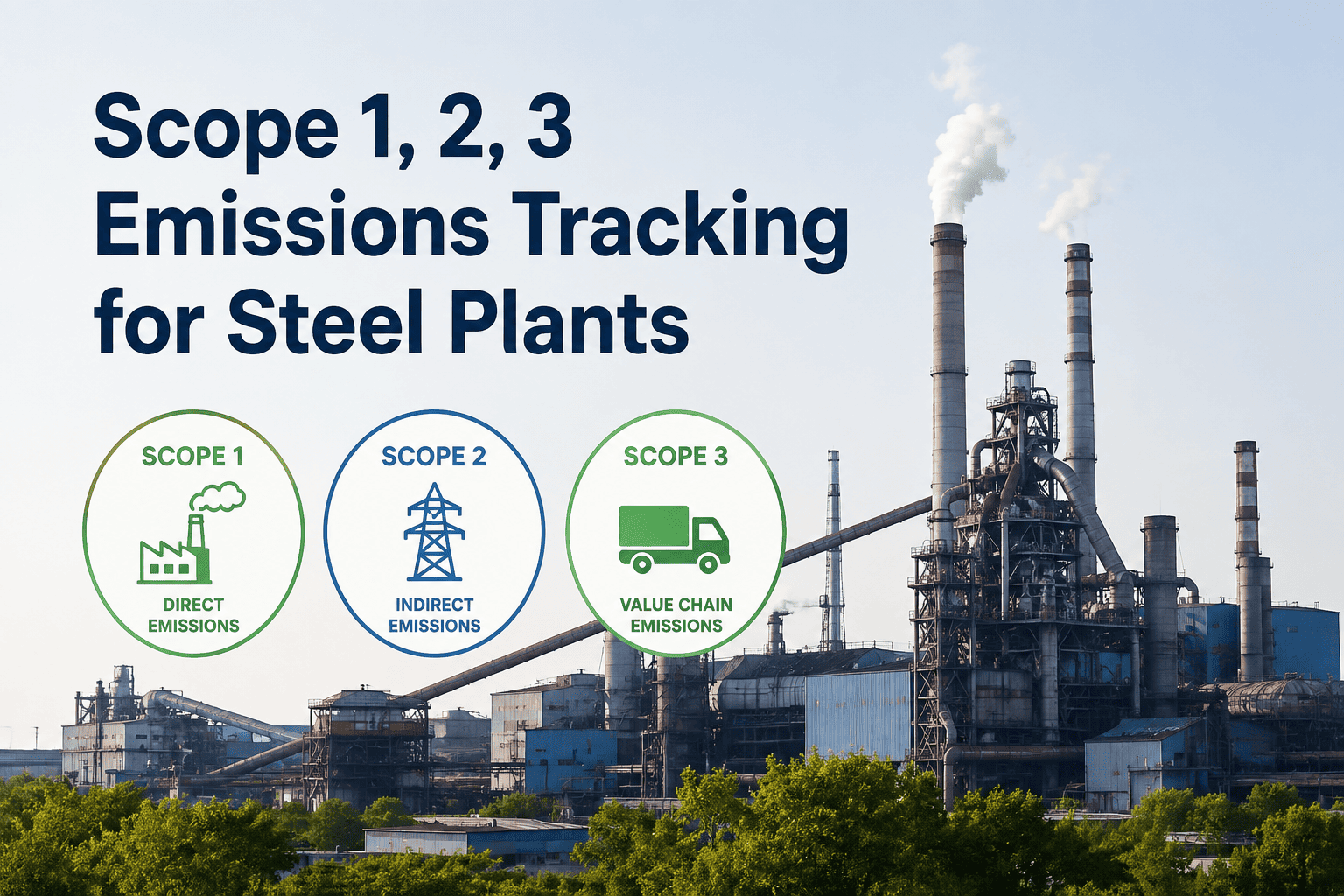
Scope 1, 2, and 3 Emissions — Defined for Steel Manufacturing
Each scope covers different emission sources. For steel companies, understanding which emissions fall where is the foundation of accurate carbon accounting.
Direct Emissions — From Your Operations
Emissions from sources owned or controlled by the steel company. In steelmaking, Scope 1 is typically the largest category for BF-BOF producers.
Indirect Energy Emissions — From Purchased Power
Emissions from purchased electricity, steam, heating, and cooling consumed by the steel company. Scope 2 is the largest category for EAF producers who buy grid electricity.
Value Chain Emissions — Upstream & Downstream
All other indirect emissions across the value chain. Scope 3 is the most complex to measure but increasingly required by regulators and buyers. WorldSteel now includes upstream mining emissions for the first time in 2025 reporting.
BF-BOF vs. EAF — Emissions Intensity Comparison
The production route fundamentally determines emissions intensity. Data from the Steel Manufacturers Association (CRU-validated) reveals the scale of difference.
Five Regulatory and Commercial Drivers Demanding Accurate Emissions Data
EU CBAM — Carbon Border Adjustment
Fully operational from January 2026. Importers of steel into the EU must purchase CBAM certificates reflecting embedded emissions at EU ETS prices. Your reported Scope 1 and 2 emissions per tonne of steel directly determine the cost your EU customers pay. Inaccurate measurement means either overpaying (if emissions are overstated) or non-compliance penalties at €100/tonne (if understated).
EU ETS Free Allowance Phase-Out
EU steel producers lose free carbon allowances progressively from 2026–2034. Each tonne of CO₂ emitted above free allocation requires purchasing EUAs at market price. Accurate Scope 1 measurement determines your actual carbon cost exposure — and drives the investment case for abatement technologies.
SBTi & Net-Zero Commitments
Science Based Targets initiative requires steel companies to set reduction targets aligned with 1.5°C pathways. This demands comprehensive Scope 1, 2, and 3 baselines, annual progress tracking, and verified reporting. SBTi uses the Sectoral Decarbonization Approach (SDA) with steel-specific intensity benchmarks. Set SBTi targets
Buyer Scope 3 Requirements
Automotive OEMs, construction firms, and infrastructure developers setting Scope 3 reduction targets require verified emissions data from steel suppliers. Your Scope 1+2 emissions become your customer's Scope 3. Suppliers who can't provide product-level emissions data lose qualification for green procurement programs.
Green Steel Premium Markets
Verified low-emission steel commands premiums of €20–80+ per tonne in European markets. Accessing these premiums requires product-level emissions data calculated with primary data and aligned with RMI, WorldSteel, or ResponsibleSteel methodologies. Accurate measurement isn't just compliance — it's revenue.
Which Framework Applies to Your Steel Company?
EU CBAM
Requires embedded emissions data per product for steel imports to the EU. Covers Scope 1 direct emissions and Scope 2 indirect emissions. Uses EU-prescribed calculation methodology with default values for unverified data (which are intentionally high to incentivize actual measurement).
EU ETS / MRV
Monitoring, Reporting, and Verification regulation for EU-based steel producers. Scope 1 emissions from all installations above threshold. Annual verification by accredited third parties. Underpins both ETS compliance and CBAM reference pricing.
GHG Protocol
The global standard for corporate GHG accounting. Defines Scope 1, 2, and 3 categories. Provides location-based and market-based methods for Scope 2. The foundation that all other frameworks build upon. WorldSteel's 2025 reporting now aligns with GHG Protocol and ISO standards. See GHG Protocol alignment
SBTi Steel Pathway
Sectoral Decarbonization Approach with steel-specific intensity benchmarks. Requires Scope 1+2 near-term targets and Scope 3 screening/targets. Uses emissions intensity (tCO₂/t steel) aligned with IEA scenarios. Verified by SBTi against 1.5°C and well-below 2°C pathways.
WorldSteel CO₂ Methodology
Industry-specific data collection methodology covering all scopes. 75 companies contributed data in 2025 across 19 indicators. Now includes upstream Scope 3 from mining operations. Production-weighted averages for BF-BOF, EAF, and DRI-EAF routes.
RMI Steel Emissions Guidance
Product-level emissions reporting guidance for steel purchasing decisions. Three key principles: use primary data, create consistent comparison boundaries, and report at asset/product level. Enables buyer comparison across steel suppliers and production routes.
How iFactory Automates Steel Emissions Measurement and Reporting
Automated Data Collection
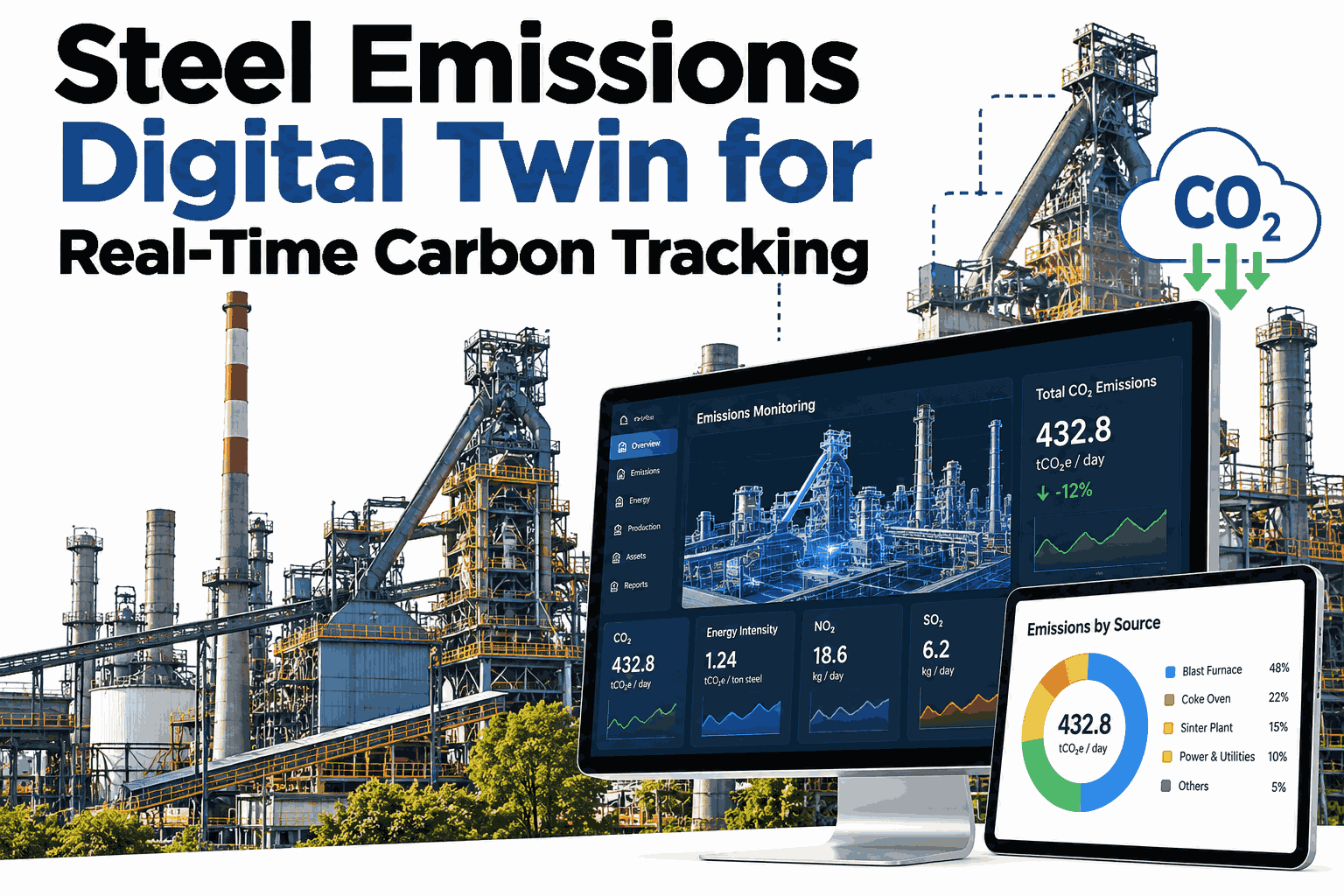
Connect directly to energy meters, production systems, fuel consumption records, and purchased electricity data. Eliminate manual spreadsheet-based carbon accounting. Real-time emissions tracking per production line, furnace, and product.
Multi-Framework Reporting
Generate emissions reports aligned with CBAM, EU ETS MRV, GHG Protocol, SBTi, WorldSteel, and RMI methodologies from a single data set. Switch between location-based and market-based Scope 2 calculations. Product-level and facility-level reporting. See multi-framework reports
Scope 3 Supplier Engagement
Collect, verify, and aggregate upstream emissions data from iron ore suppliers, coal producers, scrap dealers, and alloy providers. Distinguish primary data from estimates. Track supplier emission reduction progress against your Scope 3 targets.
Audit-Ready Documentation
Maintain complete audit trails connecting activity data to emission factors to calculated emissions. Third-party verifiers access structured data packages that reduce verification time and cost. Meet MRV and CBAM documentation requirements automatically.Full Scope
Complete Steel Emissions Measurement Coverage
Frequently Asked Questions — Steel Emissions Measurement
What's the difference between Scope 1, 2, and 3 for a steel company?
Scope 1 covers direct emissions from your steelmaking operations — blast furnaces, coke ovens, BOF converters, EAF electrode consumption, natural gas combustion, and on-site power generation. Scope 2 covers indirect emissions from purchased electricity and energy — the dominant emission source for EAF producers. Scope 3 covers all value chain emissions: upstream (iron ore mining, coal extraction, scrap processing, inbound logistics) and downstream (outbound transport, customer fabrication, end-of-life recycling). For BF-BOF producers, Scope 1 dominates. For EAF producers, Scope 2 and Scope 3 (scrap sourcing) are proportionally larger. WorldSteel's 2025 methodology now includes upstream mining emissions including methane from met coal mines. See scope mapping for your operations
Which emissions scopes does EU CBAM cover?
CBAM covers direct emissions (Scope 1) and indirect emissions from electricity (Scope 2) for steel products imported into the EU. For the steel sector specifically, both are included because electricity-intensive processes like EAF steelmaking have significant Scope 2 emissions. If you cannot provide verified actual emissions data, CBAM applies default values based on the exporting country's average or the worst-performing 10% of EU installations — which are intentionally punitive to incentivize actual measurement. Accurate measurement almost always results in lower CBAM costs than defaults.
How do we measure Scope 3 upstream emissions for steel?
Scope 3 upstream measurement requires engaging with suppliers. The GHG Protocol defines 15 categories — for steel, the most material upstream categories are purchased goods (iron ore, coal, scrap, alloys), upstream transportation, and fuel-and-energy-related activities. Start by identifying your top 5 suppliers by spend volume — they likely represent 80%+ of upstream emissions. Request primary emissions data where available; use industry average emission factors (from WorldSteel, IPCC, or regional databases) where primary data isn't available. Track the fraction calculated from primary vs. estimated data, as frameworks increasingly require primary data. Build supplier engagement program
Should we use location-based or market-based Scope 2 reporting?
Report both — the GHG Protocol requires dual reporting. Location-based uses grid-average emission factors and reflects the physical reality of your electricity consumption. Market-based uses contractual instruments (renewable PPAs, green certificates, supplier-specific emission factors) and reflects your purchasing decisions. For CBAM purposes, the specific methodology depends on the exporting country's grid factor or facility-specific data. For marketing green steel, market-based reporting with verified renewable PPAs demonstrates the actual clean electricity sourcing. The gap between your location-based and market-based numbers quantifies the impact of your renewable energy procurement strategy.
How does WorldSteel's 2025 reporting change affect our numbers?
WorldSteel's 2025 Sustainability Indicators expanded coverage to include methane (CH₄) and nitrous oxide (N₂O) beyond just CO₂, and added upstream Scope 3 emissions from mining operations including methane from metallurgical coal mining. This means reported emissions per tonne of steel are higher under the new methodology — but this reflects improved accounting, not an actual increase in emissions. The change aligns WorldSteel reporting with the GHG Protocol, ISO standards, and SBTi guidance. Applying the revised factors across the full time series doesn't change the industry's long-term improvement trajectory. 75 companies contributed 2025 data across 19 indicators.
What's the business case for investing in better emissions measurement?
Accurate measurement drives value in five ways: lower CBAM costs (actual data almost always beats punitive default values), carbon market optimization under EU ETS (accurate monitoring identifies cheapest abatement opportunities), SBTi compliance (required for many customer qualification processes), green steel premium access (verified low emissions data commands €20–80+/tonne premiums), and investor relations (ESG ratings and sustainable finance terms depend on verified emissions data). The cost of measurement systems is typically 1–2% of the carbon cost exposure they help optimize. Calculate your measurement ROI
You Can't Reduce What You Don't Measure — And You Can't Comply Without It
CBAM, ETS, SBTi, and buyer requirements all converge on one truth: steel companies need accurate, auditable emissions data across all three scopes. iFactory delivers it — automated, multi-framework, and audit-ready.