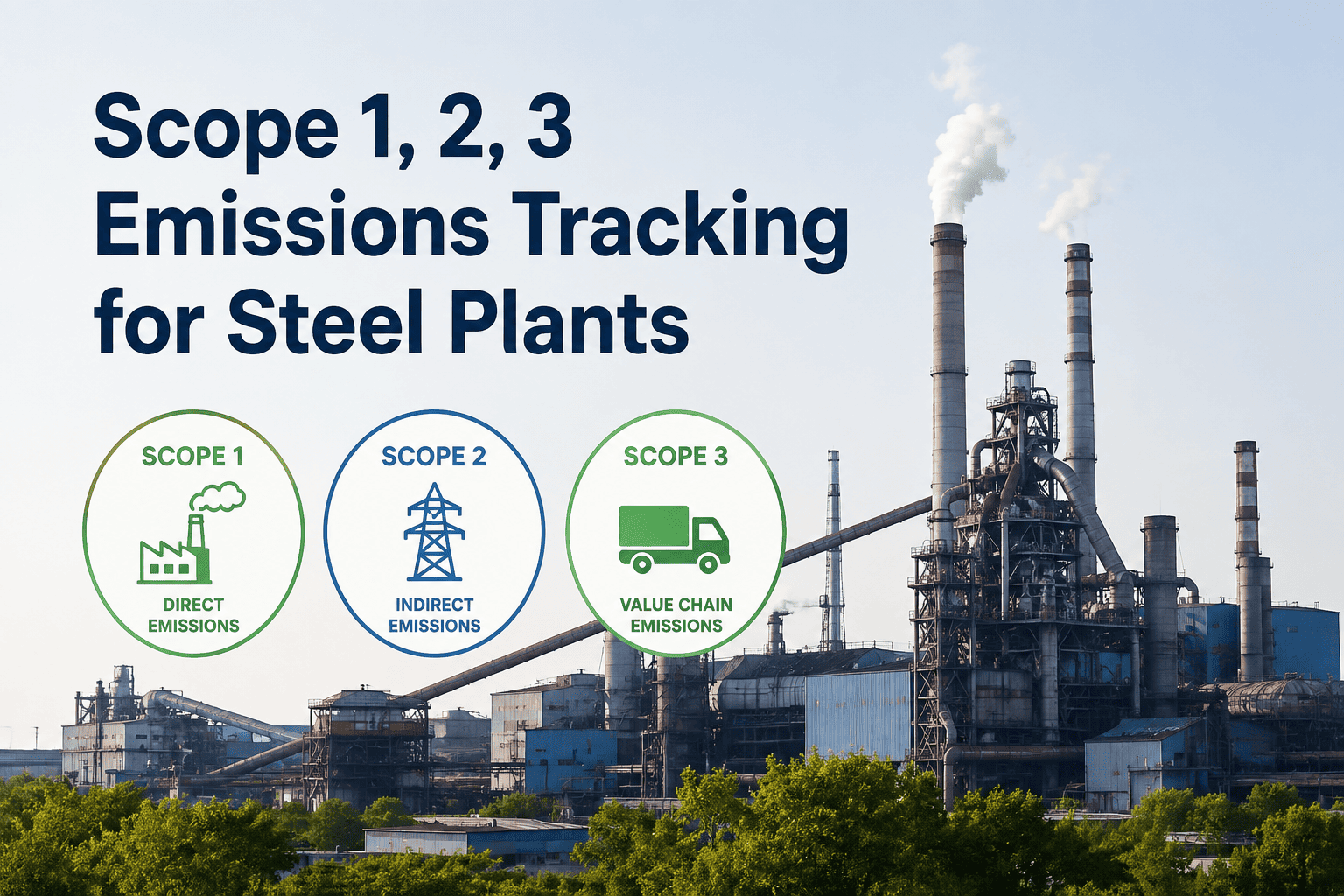
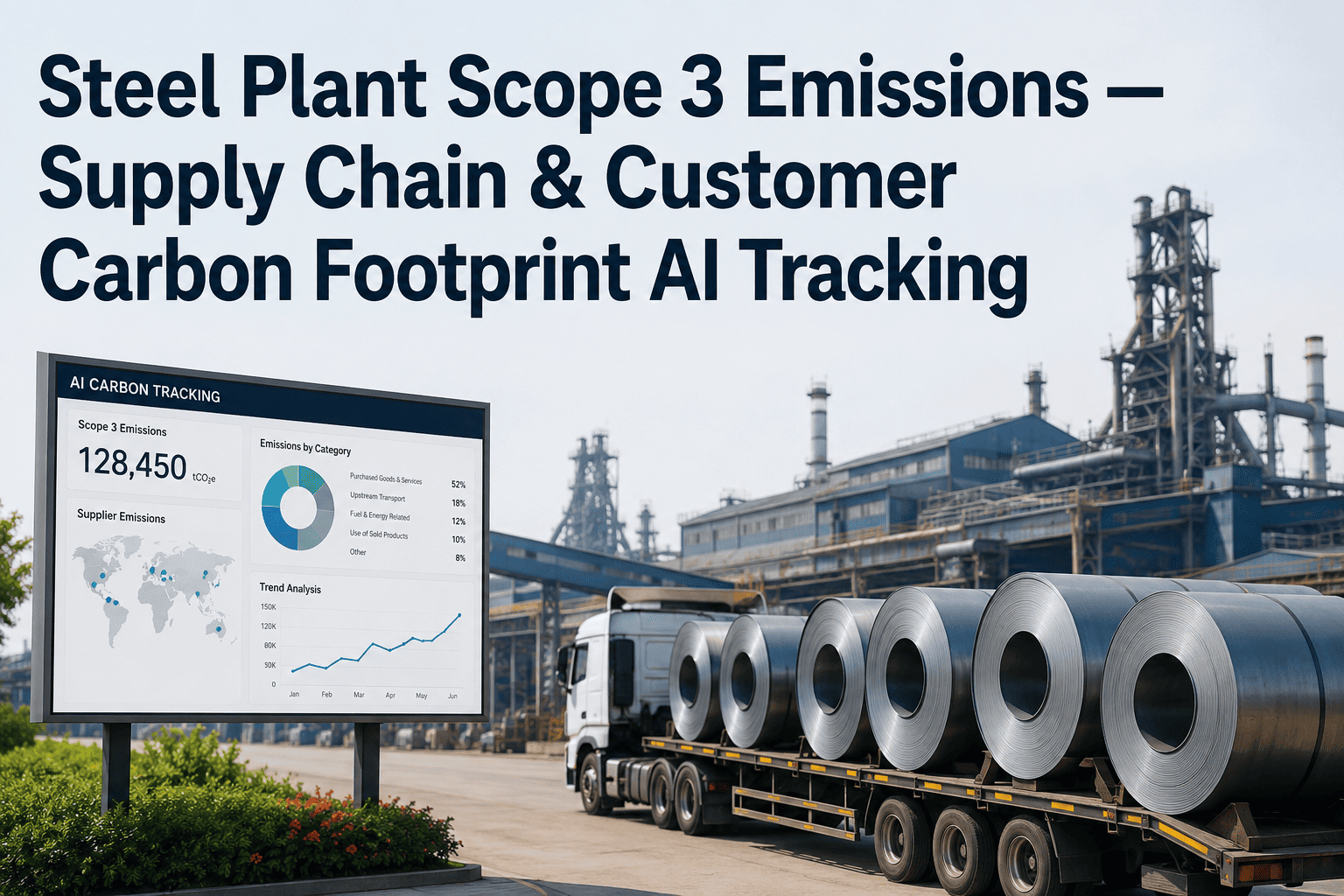
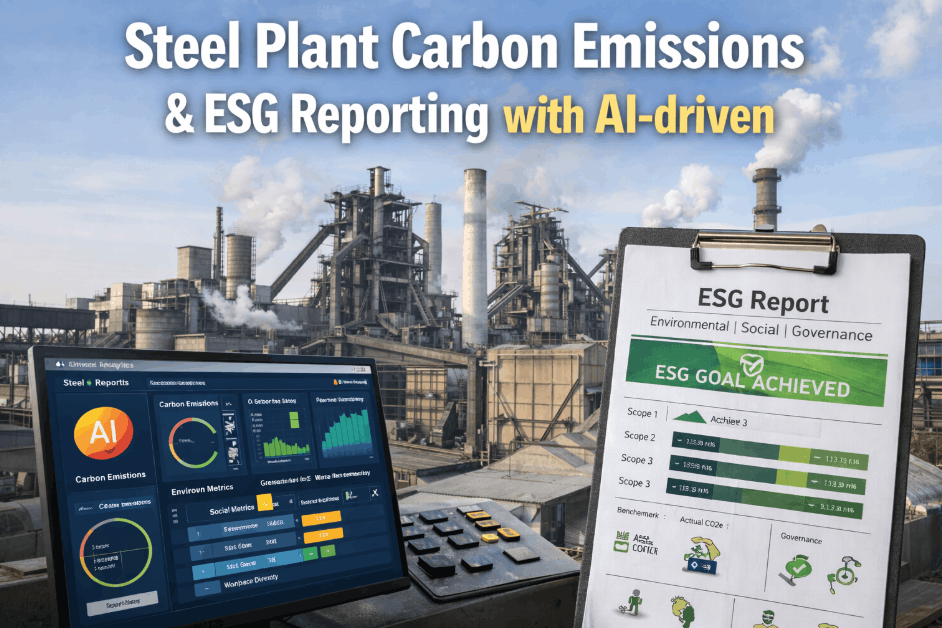
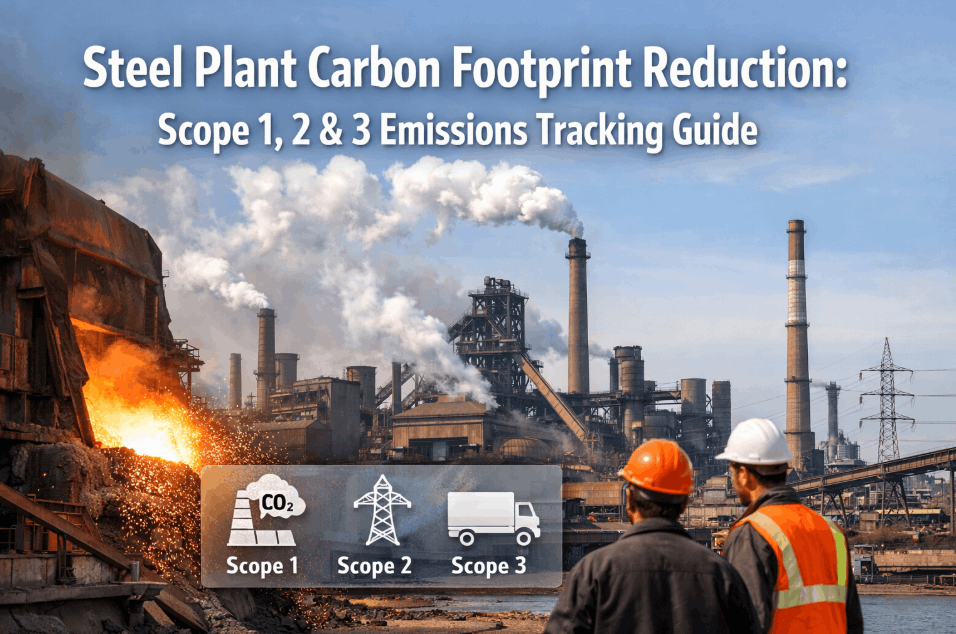
Scope 1, 2, and 3 disclosure has moved from a voluntary sustainability report exercise to a mandatory requirement across several major markets a steel producer is likely selling into, which means the spreadsheet-based emissions tracking that worked for an annual CSR report is no longer built for the audit scrutiny and reporting cadence regulators and customers now expect. Assembling accurate Scope 3 figures in particular requires pulling data from suppliers, logistics providers, and downstream product use assumptions that most plants have never had to formally track before. Our sustainability reporting team can review what your current emissions tracking setup would need to meet audit-ready disclosure standards.
Energy & Decarbonization — Emissions Reporting
From Annual Spreadsheet to Audit-Ready Disclosure
Scope 1, 2, and 3 disclosure is now mandatory across major markets, not a once-a-year sustainability report exercise. AI automates the data capture from plant floor to audit-ready reporting.
Why Scope 3 Is Where Most Steel Producers Get Stuck
Scope 1 emissions, from direct combustion and process sources on-site, and Scope 2, from purchased electricity, are relatively contained to track since the source data lives inside the plant's own metering and fuel purchase records. Scope 3 is a different problem entirely, since it covers everything from purchased raw materials and inbound logistics to, in many disclosure frameworks, the downstream use and end-of-life of the steel product itself once it leaves the mill.
Assembling Scope 3 data means either collecting emissions figures directly from suppliers and logistics partners, many of whom have their own immature reporting capabilities, or relying on industry-average emissions factors as a reasonable proxy where direct data isn't available. Doing this manually, supplier by supplier, shipment by shipment, is where most emissions reporting programs run into real capacity constraints.
Mandatory
across major disclosure frameworks now covering steel producers
3 Scopes
each with a fundamentally different data collection challenge
Multiple
external parties typically involved in a complete Scope 3 picture
What Each Scope Actually Requires to Report Accurately
Treating all three scopes as one undifferentiated reporting task is part of why so many programs stall. Each scope draws on a different data source and requires a different collection strategy.
Scope 1: Direct
Fuel combustion, process emissions, and on-site sources tracked from internal metering data.
Scope 2: Purchased Energy
Electricity and steam purchases matched against grid mix or contract-specific emissions factors.
Scope 3: Upstream
Raw material sourcing, inbound logistics, and purchased goods emissions from supplier data or proxies.
Scope 3: Downstream
Product transport, use, and end-of-life emissions, often estimated against category-standard assumptions.
Not sure how complete your current Scope 3 picture actually is?
Book a walkthrough and we'll map the gaps against your current supplier and logistics data.
How Automated Capture Changes the Reporting Cycle
Rather than a team manually compiling spreadsheets once a year ahead of a disclosure deadline, an automated emissions data pipeline pulls from operational systems continuously, converting metering, procurement, and logistics data into emissions figures as the underlying activity happens rather than reconstructing it retroactively from records that weren't captured with reporting in mind.
1
Continuous capture from fuel, electricity, and process metering for Scope 1 and 2
2
Automated ingestion of supplier and logistics data where available for Scope 3
3
Standard emissions factors applied consistently where direct data has gaps
4
Audit-ready reporting package generated aligned to the required disclosure framework
| Scope | Manual Approach | Automated Approach |
|---|
| Scope 1 | Periodic manual metering rollups | Continuous metering data capture |
| Scope 2 | Annual electricity bill reconciliation | Automated contract and grid factor matching |
| Scope 3 | Manual supplier survey once a year | Ongoing data ingestion with proxy fallback |
Why Reporting Maturity Is Becoming a Commercial Factor
Beyond regulatory compliance, customers in sectors like automotive and construction are increasingly asking suppliers for emissions data as part of their own Scope 3 disclosure obligations, which means a steel producer's reporting maturity now directly affects how easy or hard it is for downstream customers to work with them. Producers who can supply verified, timely emissions figures reduce friction in that customer relationship in a way that's becoming a real differentiator in competitive bids.
Audit-Ready
Reporting packages generated continuously, not reconstructed under deadline pressure.
Fuller Scope 3
Automated ingestion closes gaps manual supplier surveys tend to miss.
Customer Confidence
Verified data reduces friction in customer Scope 3 disclosure requests.
Frequently Asked Questions
Which disclosure frameworks does automated emissions tracking need to align with?
The relevant frameworks depend on which markets a producer sells into and which customers are requesting disclosure, but commonly referenced standards for steel producers include the GHG Protocol as the underlying methodology, along with market-specific requirements like CSRD in the EU and various national mandatory disclosure regimes elsewhere. An automated reporting pipeline is generally built to map its underlying data capture to whichever specific frameworks apply to a given producer's markets, since the raw activity data is largely the same even when the reporting format requirements differ.
Reach out to our team to confirm coverage of the specific frameworks relevant to your markets.
What happens when suppliers can't provide their own emissions data for Scope 3?
This is a common situation, since many suppliers, particularly smaller ones, don't yet have mature emissions reporting capability of their own, and the standard practice in this case is to apply industry-average or category-specific emissions factors as a reasonable proxy for that portion of Scope 3 until better supplier-specific data becomes available. A well-built reporting pipeline tracks which figures come from actual supplier data versus proxy factors, which matters for both accuracy improvement over time and for transparency with auditors about data quality.
Book a demo to see how proxy factor application is handled and documented.
How does this integrate with our existing plant historian and ERP systems?
Automated emissions capture is generally designed to pull from the metering, procurement, and production systems a plant already operates, since building a duplicate data entry process specifically for emissions reporting tends to be both slower to implement and more prone to inconsistency than integrating with systems already capturing the underlying activity data. Integration specifics depend on which historian, ERP, or procurement systems are already in use at your facility.
Talk to our team about your specific systems landscape.
Can this handle reporting across multiple plants or business units with different processes?
Multi-facility reporting is a common requirement, and the approach generally involves configuring each facility's specific process routes and data sources separately, since emissions intensity and available data quality often differ meaningfully between an EAF-based facility and a BF-BOF facility within the same company. The consolidated reporting output aggregates across facilities as needed for corporate-level disclosure while still preserving the facility-level detail an auditor would need to trace figures back to their source.
Book a walkthrough to discuss your specific facility portfolio.
How long does it take to move from spreadsheet-based to automated emissions reporting?
Timeline depends primarily on how much of the needed Scope 1 and 2 data is already flowing into existing plant systems versus captured manually, since that data tends to be faster to automate than Scope 3, which often requires establishing new data-sharing arrangements with suppliers and logistics partners who may not have provided this information before. Most producers see Scope 1 and 2 automation deliver value first, while Scope 3 completeness improves gradually as more supplier relationships mature into direct data sharing rather than proxy factors.
Reach out to get a realistic timeline based on your current data maturity.
Stop Reconstructing Emissions Data Once a Year
Build Continuous, Audit-Ready Scope 1, 2, and 3 Reporting
Share your current reporting process and we'll show you where automated capture would close the biggest gaps in your Scope 1, 2, and 3 picture.