A steel producer in Europe received a CBAM compliance notice in early 2026. The regulation required them to declare the embedded carbon emissions of every tonne of steel they exported — traceable back to the exact raw materials, production routes, and energy sources used. Their procurement team spent 11 weeks manually chasing data from 47 suppliers across 8 countries. Three suppliers couldn't provide the data at all. The penalty exposure: €1.7 million on a single 10,000-tonne shipment using default emission values, versus €450,000 with verified actual data. The difference between those two numbers is the difference between a plant that knows its supply chain and one that doesn't.
AI-Powered Traceability
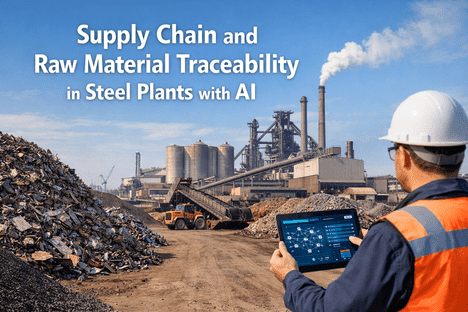
Supply Chain and Raw Material Traceability in Steel Plants with AI
From scrap yard to shipping bay — how AI creates end-to-end visibility that cuts costs, ensures compliance, and eliminates blind spots
47
Average suppliers per steel plant requiring traceability data
12%
Improvement in on-time delivery with AI-optimized logistics
10%
Forecast accuracy gain from AI demand prediction models
Why Steel Supply Chains Are Breaking
Steel plants operate some of the most complex supply chains in manufacturing. A single EAF facility may source scrap from dozens of suppliers, manage alloy additions from multiple vendors, track in-process material across furnaces, casters, and rolling mills, and deliver finished products to customers with exacting quality and documentation requirements. Most of this is still managed with spreadsheets, phone calls, and fragmented ERP systems that weren't designed for real-time visibility.
01
Scrap Quality Uncertainty
Scrap is the single largest input cost for EAF operations, yet most plants cannot trace the composition, origin, or contamination risk of incoming loads until after they've been charged into the furnace. Poor scrap quality drives excess energy consumption, off-spec heats, and costly rework.
02
Inventory Black Holes
Raw materials, work-in-progress, and finished goods exist in disconnected systems. Plants frequently discover they have too much of what they don't need and not enough of what they do — leading to production delays, emergency purchases at premium prices, and tied-up capital.
03
Compliance Data Gaps
EU CBAM now requires steel exporters to declare embedded emissions with verified supplier data. Without automated traceability, gathering this data from dozens of suppliers across multiple countries is a manual nightmare that exposes plants to penalty defaults costing millions.
04
Demand Forecasting Failures
Steel demand is volatile, driven by construction cycles, automotive production, and economic conditions. Traditional forecasting methods miss shifts by 15–30%, leading to either overproduction (excess inventory and tied-up capital) or underproduction (missed sales and strained customer relationships).
How visible is your supply chain right now? Book a demo to see what AI-powered traceability reveals.
What AI-Powered Traceability Looks Like
AI transforms steel supply chains from reactive, fragmented operations into predictive, connected systems. Instead of discovering problems after they've disrupted production, you see them forming — and prevent them. Here's the architecture of a modern AI-enabled steel supply chain.
The AI-Connected Steel Supply Chain
Inbound
Raw Material Intelligence
Scrap origin tracking
Composition prediction
Supplier quality scoring
Delivery ETAs
In-Process
Production Traceability
Heat-level tracking
Chemistry correlation
Quality disposition
Energy accounting
Inventory
Smart Warehousing
Real-time stock levels
Demand-driven reorder
Grade optimization
Safety stock AI
Outbound
Delivery Optimization
Route optimization
Load planning
Customer ETAs
Documentation auto-gen
Five Ways AI Transforms Steel Supply Chains
From Scrap Yard to Shipping Bay — Full Visibility
iFactory connects every material flow, every process step, and every quality data point into a single AI-powered traceability platform — so you always know where your material is, where it came from, and where it's going.
The CBAM Compliance Imperative
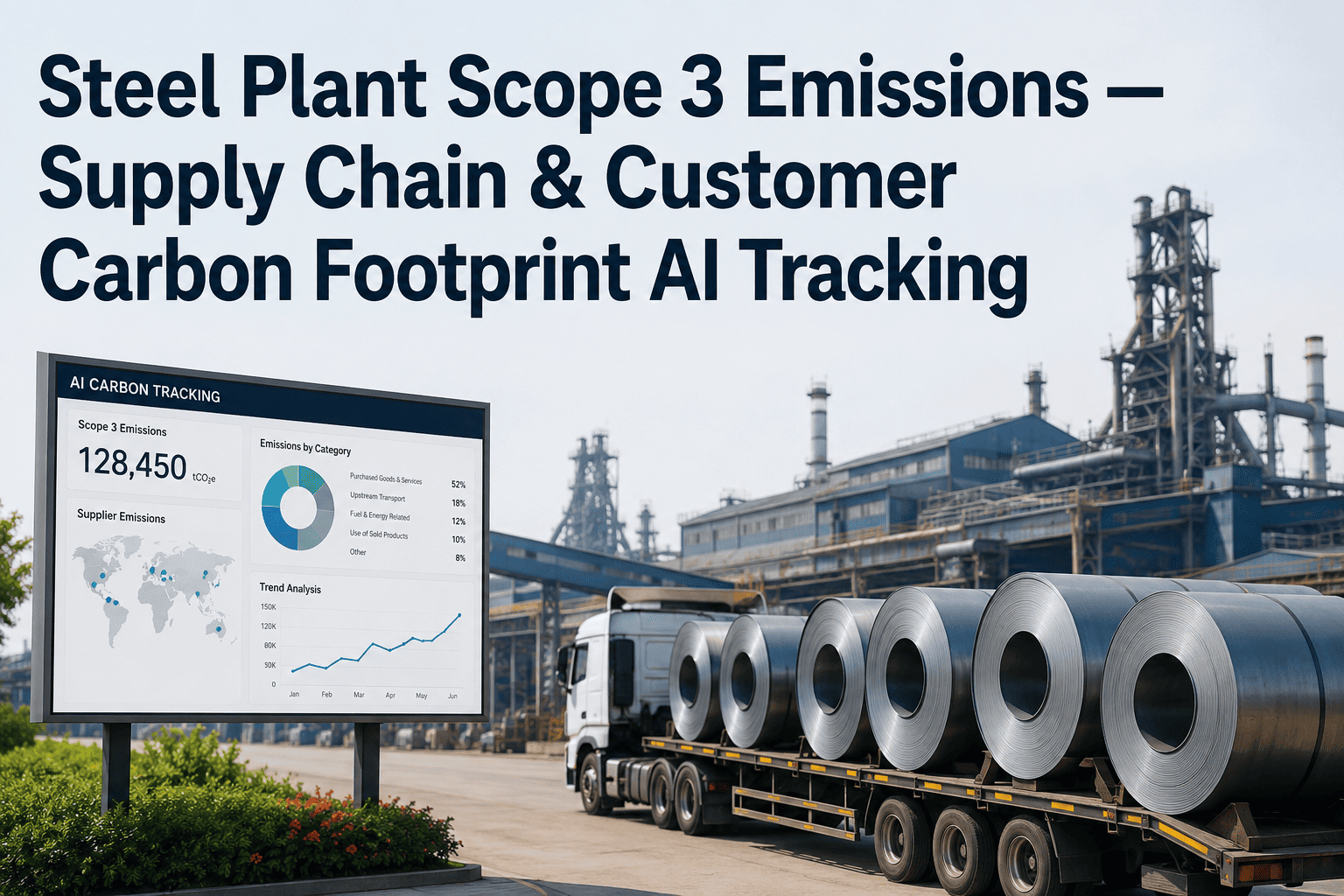
As of January 2026, the EU's Carbon Border Adjustment Mechanism entered its definitive compliance phase. For steel producers exporting to the EU, this means every tonne shipped must have verified embedded emissions data — traceable back to raw materials, production routes, and energy sources. The financial stakes are enormous.
CBAM Cost Exposure: The Traceability Difference
Without Verified Data
Default emission values applied — typically 10–30% higher than actual. No supplier-level data to offset.
10,000t HRC shipment at default 3.5 tCO₂/t
€1.7M in CBAM certificates
vs
With AI-Powered Traceability
Verified actual emissions from every installation. Full audit trail from raw material to finished product.
Same shipment at verified 1.9 tCO₂/t
€450K in CBAM certificates
Traceability saves €1.25 million on a single shipment
And the pressure is increasing. Default values will rise by 10% in 2026, 20% in 2027, and 30% from 2028 onwards. Plants without automated traceability will face compounding cost penalties that make their products progressively uncompetitive in the EU market.
What Data Gets Tracked — And How
AI-powered traceability captures and correlates data across the entire material lifecycle. Here's what a complete digital thread looks like for a single heat of steel.
Raw Material Receipt
Supplier ID and origin country
Scrap grade and classification
Weight and composition estimate
Delivery timestamp and vehicle
Carbon footprint per supplier
Furnace Processing
Heat number and recipe
Input materials per heat
Energy consumption kWh/t
Alloy additions and timing
Temperature and chemistry logs
Casting & Rolling
Slab/billet tracking ID
Process parameters per piece
Quality inspection results
Defect classification data
Dimensional verification
Finished Product
Coil/product ID
Complete material certificate
Embedded emissions calculation
Customer specification compliance
CBAM-ready documentation
Need CBAM-ready traceability for your steel exports? See how iFactory automates compliance data collection.
Measurable Results from AI Supply Chain Optimization
12%
Improvement in on-time delivery rates through AI-optimized logistics and production scheduling
10%
Gain in demand forecast accuracy — reducing both excess inventory and missed sales opportunities
25%
Increase in customer conversion rates from AI-powered segmentation and personalized sales strategies
69%
Of steel companies cite customer demands for customization as a key driver for digital transformation
78%
Of steel companies have adopted digital transformation initiatives — but maturity levels vary enormously
$12B
Projected value of digital transformation in the steel industry by 2026, growing at 14% annually
Implementation Roadmap
Phase 1
Connect & Capture
Week 1–3
Integrate with existing ERP, weighbridge, and Level 2 systems. Begin capturing inbound material data, supplier information, and production parameters automatically. No rip-and-replace required — AI layers on top of your current infrastructure.
Phase 2
Trace & Correlate
Week 4–8
Establish end-to-end digital threads linking raw materials to finished products. AI begins correlating input quality with process outcomes and identifying supplier performance patterns. Compliance data collection becomes automated.
Phase 3
Predict & Optimize
Month 3–5
Demand forecasting, inventory optimization, and logistics intelligence go live. AI models improve with every transaction, delivering increasingly accurate predictions for procurement, production scheduling, and delivery planning.
Phase 4
Scale & Compound
Month 6+
Expand across product lines and facilities. When furnace optimization feeds quality prediction, which feeds procurement strategy, which feeds delivery scheduling — the integrated savings far exceed the sum of individual improvements.
Frequently Asked Questions
How does AI improve scrap quality management?
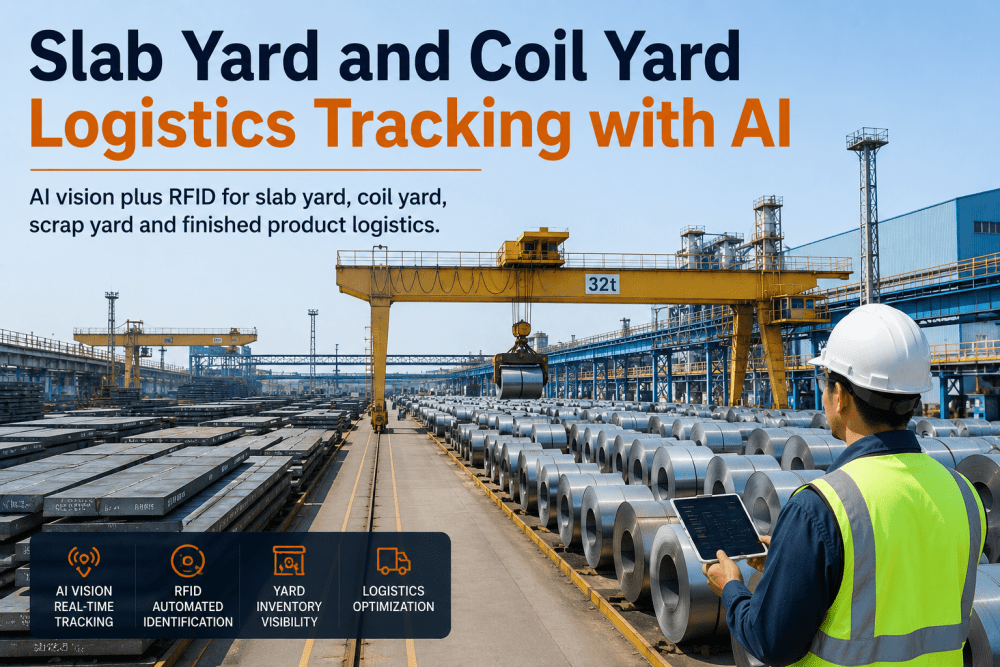
AI analyses historical data on scrap sources, supplier performance, composition results, and downstream quality outcomes to predict the likely chemistry and contamination risk of incoming loads. Computer vision can classify scrap grades at the weighbridge, and ML models recommend optimal scrap mixes for specific steel grades — reducing off-spec heats and energy waste.
Does this system work with our existing ERP?
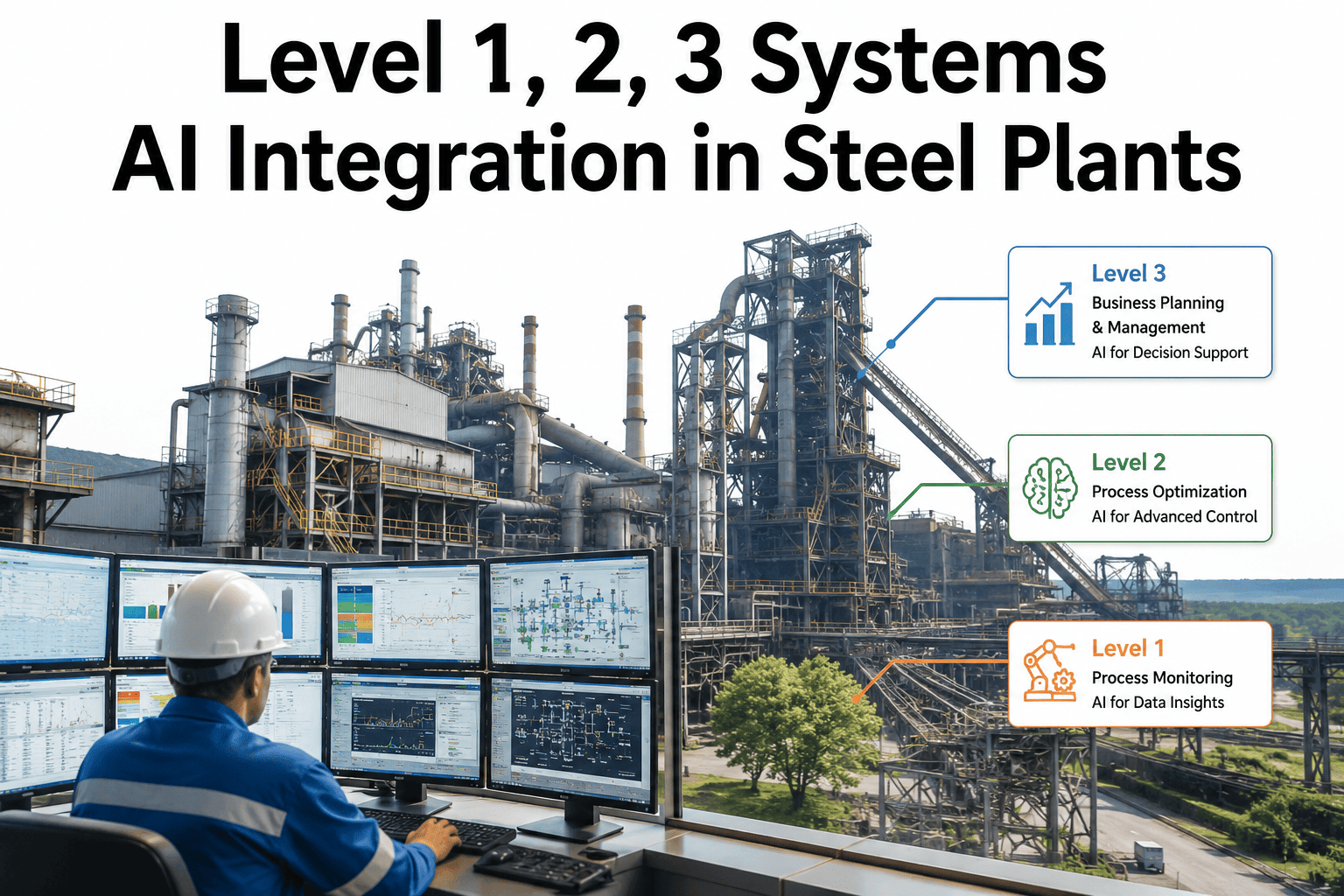
Yes. AI-powered traceability is designed to layer on top of your existing ERP, MES, and Level 2 systems — not replace them. The platform integrates via standard APIs and data connectors, pulling information from your current infrastructure and adding intelligence on top. Most plants are fully connected within 2–3 weeks.
How does traceability help with CBAM compliance?
CBAM requires verified embedded emissions data for every tonne of steel exported to the EU — traceable to specific installations, production routes, and energy sources. AI automates the collection of this data from your suppliers and production systems, generates verification-ready documentation, and calculates embedded emissions per product. This prevents you from falling back to default values that can cost millions more in certificate purchases.
What ROI can we expect from supply chain AI?
ROI comes from multiple streams: reduced inventory holding costs through better demand forecasting, fewer emergency purchases through predictive procurement, lower CBAM certificate costs through verified data, improved customer retention through reliable delivery, and reduced quality costs through input material traceability. Most plants see measurable impact within the first 3 months and full ROI within 12 months.
Can AI predict supply chain disruptions before they happen?
Yes. AI monitors supplier performance patterns, logistics conditions, market price movements, and external risk factors to flag potential disruptions days or weeks in advance. This gives procurement and logistics teams time to source alternatives, adjust production schedules, or reroute deliveries before customers are affected.
Know Your Supply Chain. Control Your Costs. Prove Your Compliance.
Every tonne of steel has a story — from the scrap yard it came from to the customer it ships to. AI traceability captures every chapter automatically, giving you the visibility to optimize costs, predict disruptions, and meet compliance demands without manual data chasing.