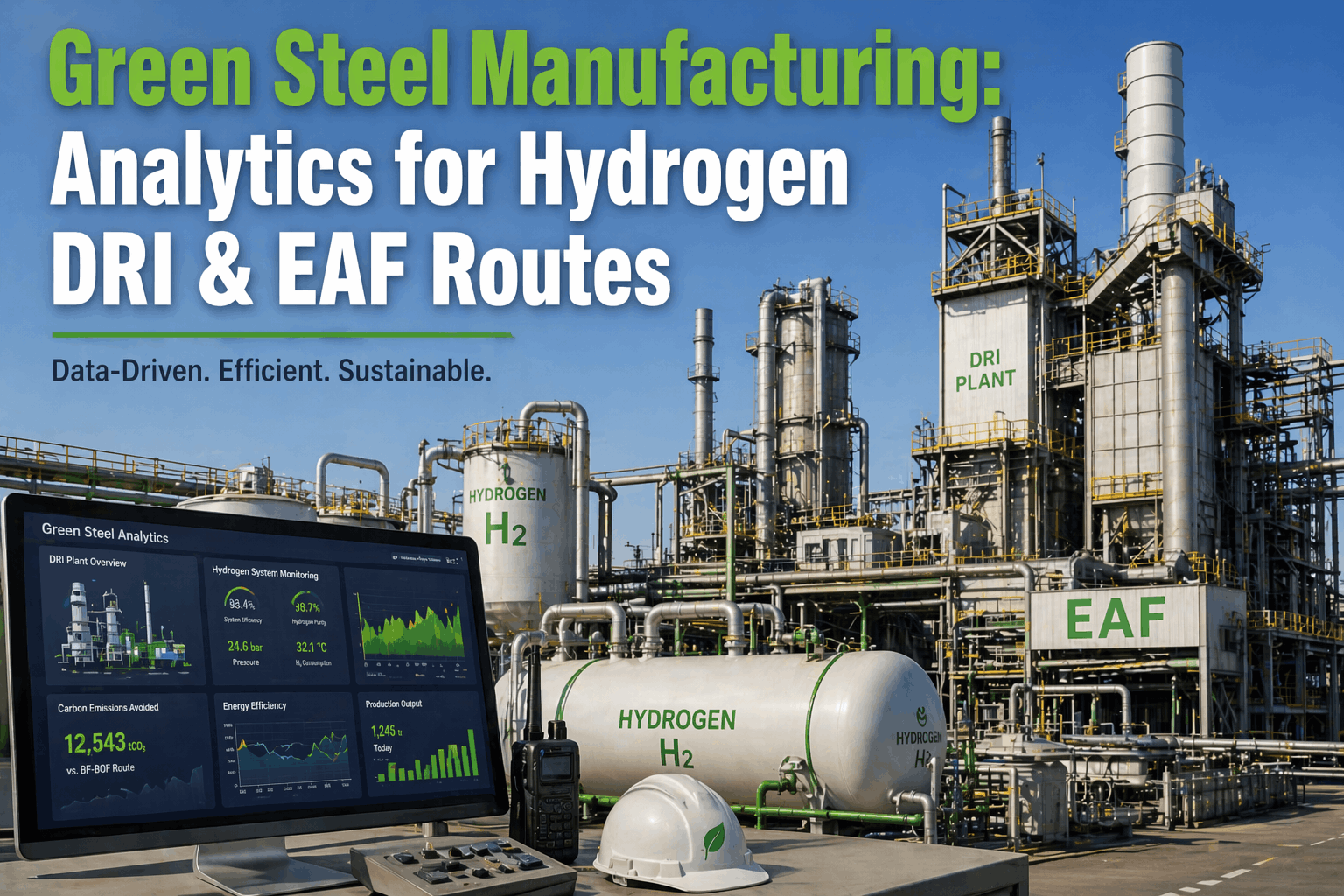
The era of carbon-unrestricted steelmaking is over. With free EU ETS allowances phasing out by 2034 and CBAM implementation accelerating, the path to survival lies in Hydrogen-Based Direct Reduced Iron (H2-DRI) and modified Electric Arc Furnaces (EAF). However making the transition from coke-fed blast furnaces to hydrogen-fed reactors is not just a fuel swap—it is a fundamental physics shift that requires a new breed of industrial analytics. iFactory's Green Steel Analytics engine provides the digital skeletal system for this transition, monitor hydrogen purity in real-time, optimizing DRI reactor thermal profiles, and measuring the carbon-abatement ROI per tonne of liquid steel. Schedule a Green Steel Strategy Session.
Green Steel Manufacturing: Analytics Strategies for Hydrogen-Based Steelmaking
The transition to hydrogen-based steelmaking demands ultra-precise monitoring of DRI reactors and hydrogen storage. iFactory provides the data-driven framework to bridge the gap between grey and green steel.
Green Steel Asset Impact Map — Assessing Your Technical Readiness
Hydrogen-based production introduces new critical assets into the steel plant ecosystem. This impact map identifies the analytics priority level for each new or modified system, ensuring your decarbonization strategy focuses on the highest ROI assets first. Request your custom readiness map.
Reduction Temp
Purity Log
Reactor PSI
Refractory
Arc Stability
Slag Foam
Electrode Wear
Leak Detection
Vessel PSI
Cycle Count
Cooling
H2/O2 Sep
Feedwater PSI
Stack Health
The Green Steel Roadmap — 8 Steps to Net-Zero Steelmaking
The transition from carbon-based to hydrogen-based steelmaking is a multi-year journey. iFactory supports each stage of this maturity roadmap with specific analytics modules designed to de-risk each investment phase.
Carbon Baseline Assessment
Phase 1 · AuditHydrogen-Ready Infrastructure
Phase 2 · ReadinessPartial H2-Injection Pilot
Phase 3 · ExecutionFull Hydrogen-DRI Operations
Phase 4 · Net-ZeroTraditional BF-BOF vs H2-DRI Steelmaking — Analytics Comparison
The move to Green Steel isn't just a sustainability win; it's a massive operational shift. Our comparison table shows how iFactory's analytics requirements change as you transition from coal-based to hydrogen-based production.
| Operational Factor | Traditional BF-BOF | iFactory Green H2-DRI | Economic Impact |
|---|---|---|---|
| Primary Reducing Agent | Metallurgical Coke (Coal) | Green Hydrogen / Natural Gas | ~95% Decarb |
| Energy Source Monitoring | Manual fuel delivery logs | Real-time Renewable Grid balancing | Cost Optimization |
| Byproduct Management | High Slag & CO2 handling | Water Vapor & Low Slag DRI | Lower Waste Fees |
| Product Differentiation | Standard Commodity Steel | Certified "Green Steel" Premium | Higher Margins |
| Audit Compliance | Annual static reports | Instant Digital Carbon Passport | CBAM Ready |
Where Your Carbon Savings Come From — Sector Impact Breakdown
By transitioning the primary iron production phase to Hydrogen-DRI, steel plants can eliminate the vast majority of their Scope 1 emissions. This donut chart represents the average decarbonization potential enabled by iFactory Hydrogen Analytics.
Reduction
Frequently Asked Questions — Analytics in Hydrogen Steelmaking
How does iFactory monitor Hydrogen purity for DRI reactors?
Our system integrates with high-speed gas chromatographs to monitor H2 purity 24/7, alerting when moisture or impurities exceed critical thresholds.
This real-time visibility prevents embrittlement in pipelines and ensures that iron ore reduction kinetics remain consistent throughout the production shift.
Can existing EAF analytics handle high-percentage DRI feedstock?
Traditional EAF analytics focus on scrap-heavy feeds; DRI-heavy operations require modified slag chemistry and arc stability models which iFactory provides out-of-the-box.
Our H2-DRI EAF module optimizes electrode consumption and power arcs based on the specific carbon content of your incoming green iron feedstock.
What is a "Green Steel Passport" and how is it generated?
It is a digital document created by iFactory that tracks the carbon genealogy of a specific steel batch from iron ore pellet to the final finished coil.
These passports allow you to sell your product as certified "Green Steel," commanding a market premium and simplifying compliance with Scope 3 reporting requirements.
Does the platform manage the safety risks associated with H2 storage?
Yes, iFactory includes a specialized Hydrogen Safety Analytics suite that monitors vessel pressure, cycle counts, and high-sensitivity leak detection sensors.
The system leverages predictive models to identify potential seal failures or micro-cracks before they reach the critical danger zone, ensuring 100% operational safety.
How do we calculate the ROI on a Green Steel transition?
iFactory's Green ROI Calculator factor in avoided carbon taxes (EU ETS/CBAM), energy efficiency gains, and the market premium of green-certified products.
Most clients see a positive ROI within 36 months when accounting for the rapidly rising carbon costs and the increasing demand from automotive and construction sectors.
Future-Proof Your Steel Mill with H2-Based Analytics.
Maximize carbon abatement, de-risk your hydrogen transition, and generate certified green steel documentation with iFactory's industry-leading analytics platform.