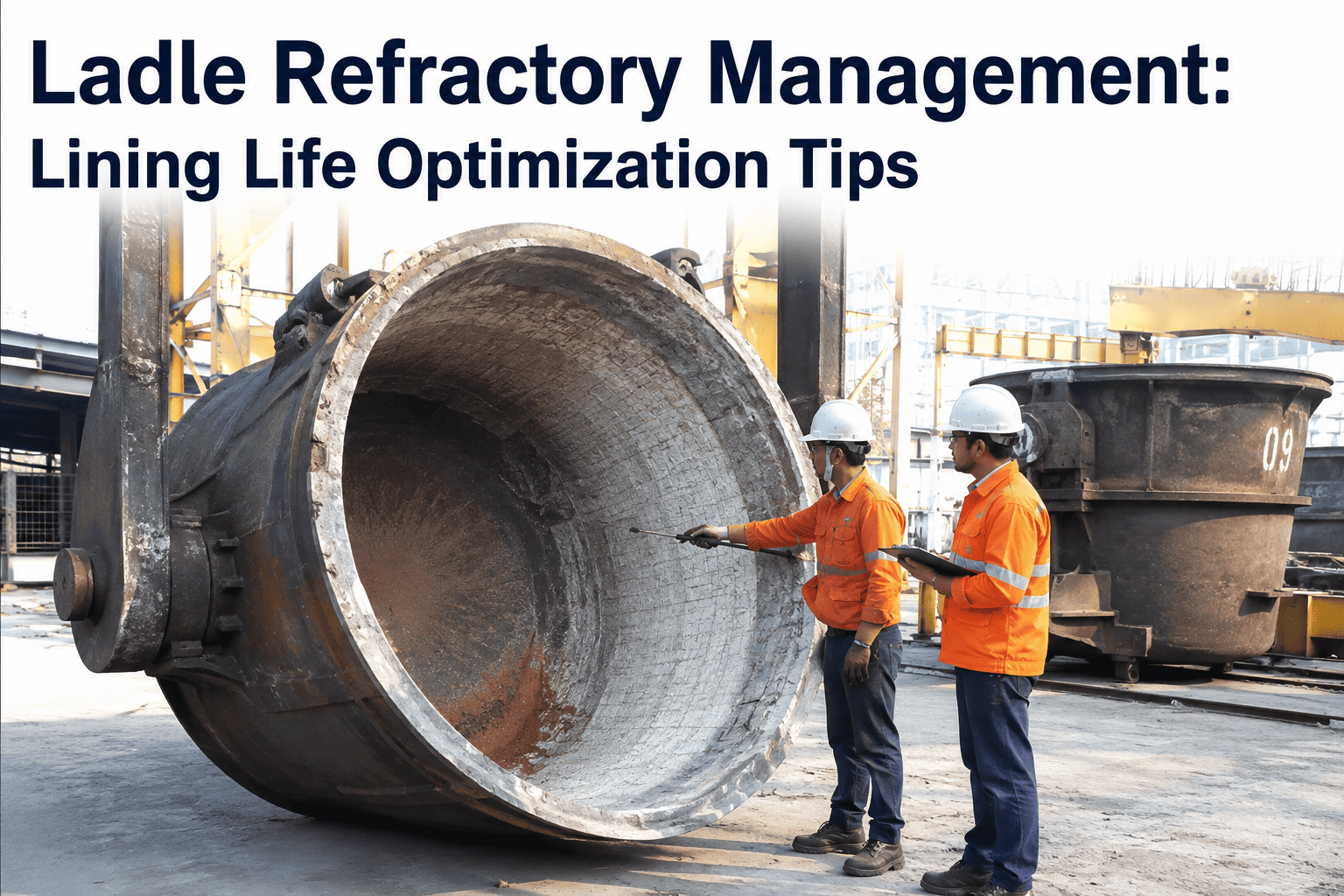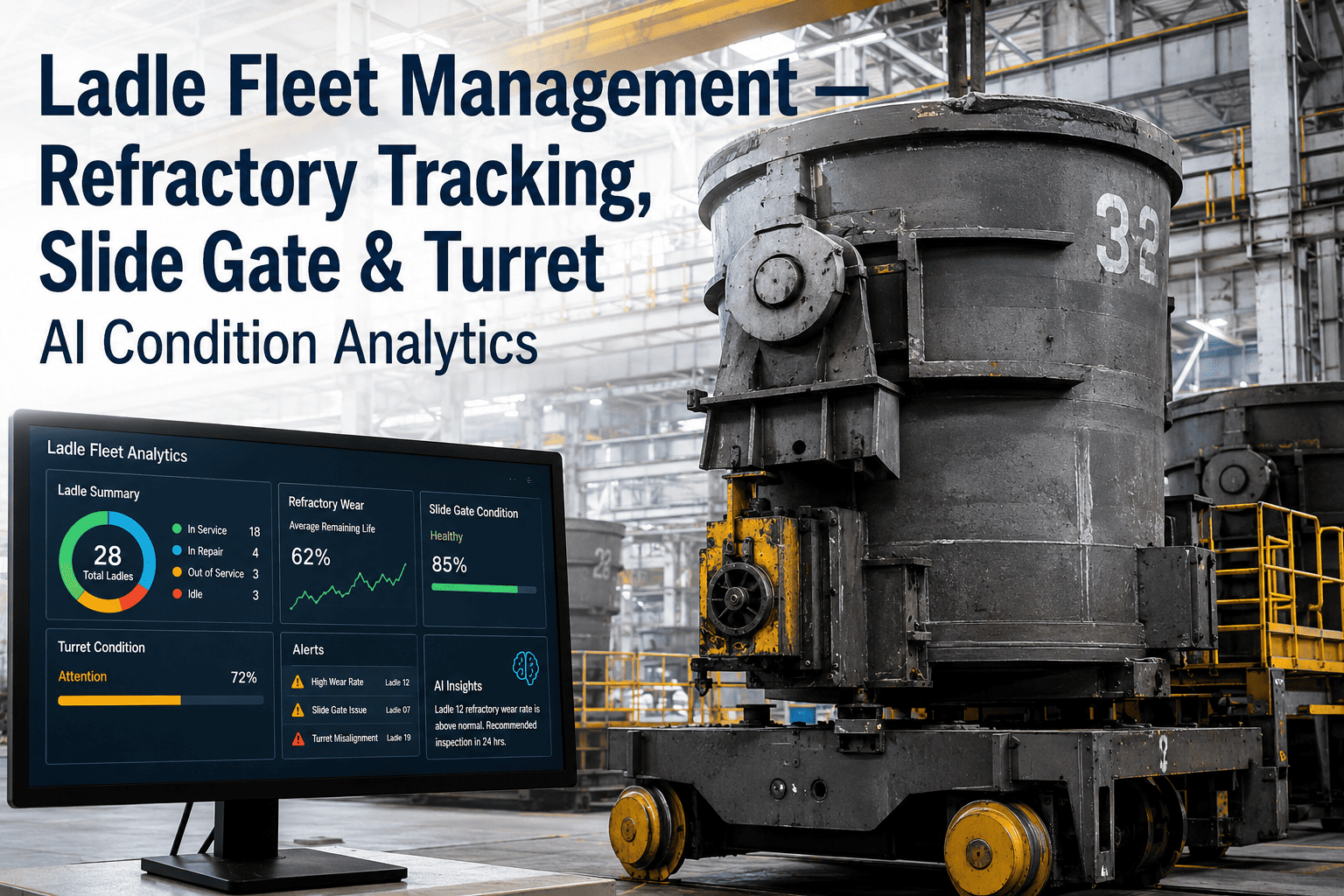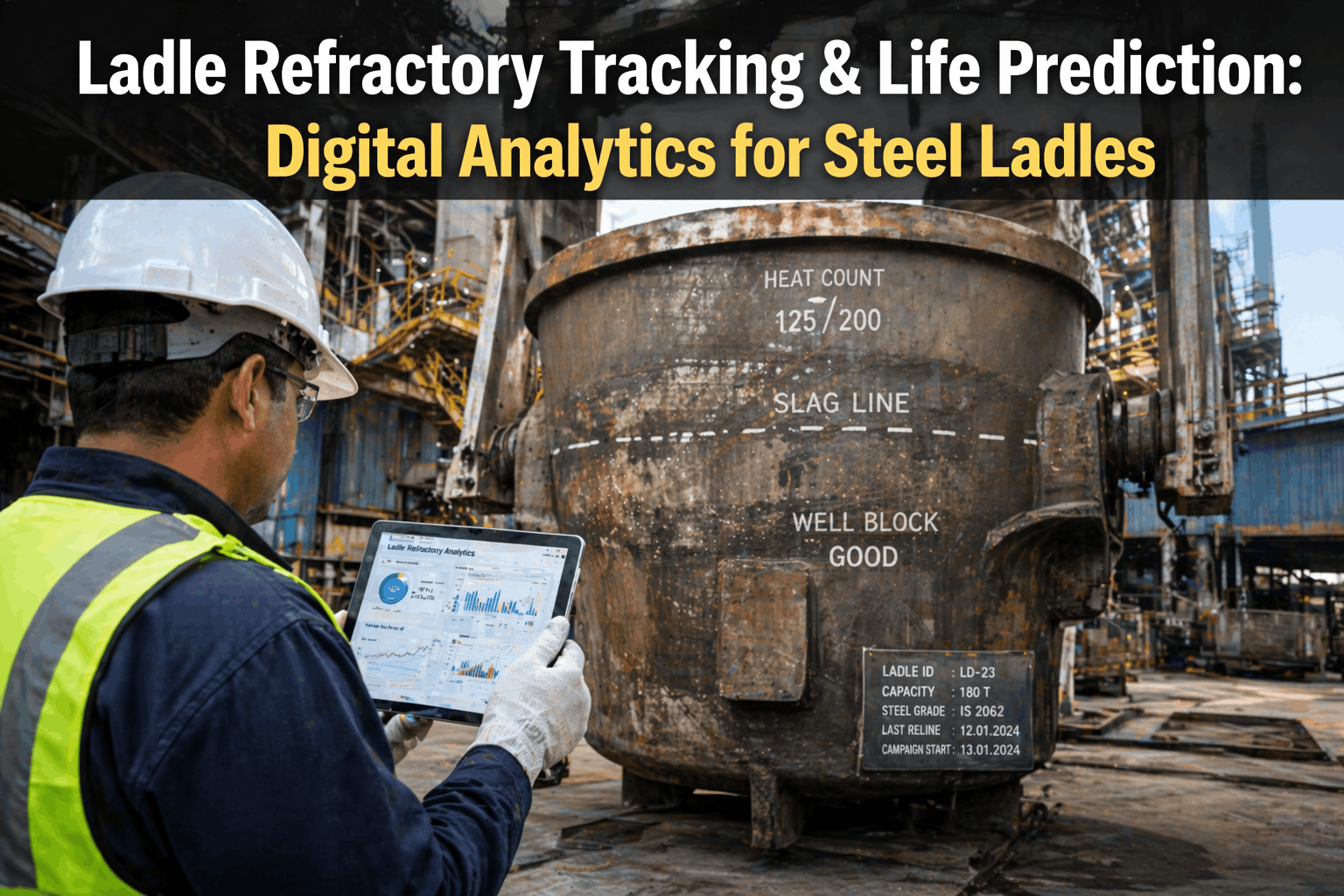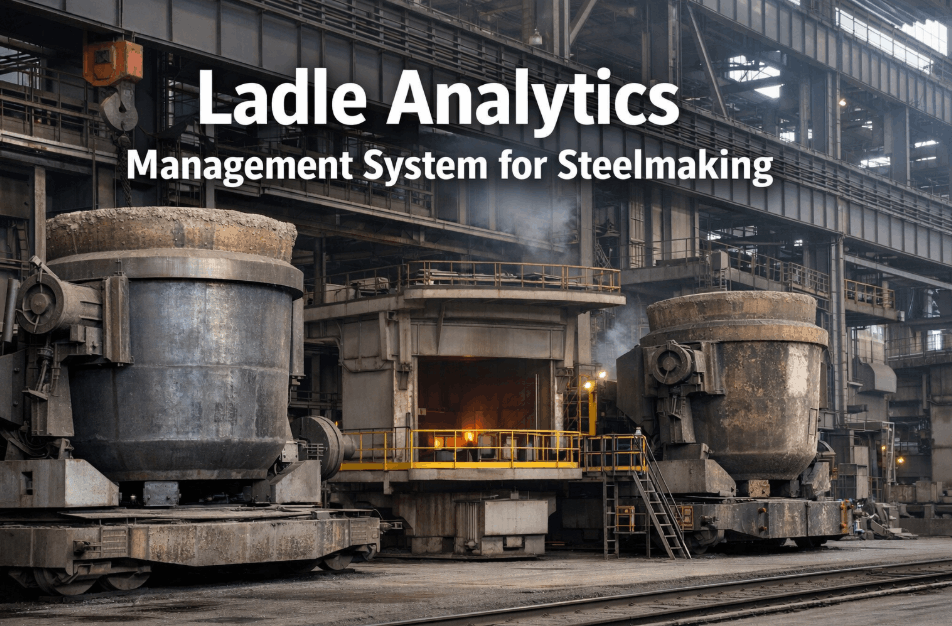
Steel ladles are among the most intensively used and most safety-critical assets in a steelmaking facility. A 300-tonne steel ladle undergoes thermal cycling from ambient temperature to 1,650°C and back, every 4–6 hours, day after day — carrying liquid steel through tapping, secondary metallurgy, and casting operations where any lining failure means a molten metal spill with catastrophic consequences. The ladle management challenge in a steel plant is not simply maintaining the refractory — it is optimising the entire ladle lifecycle simultaneously across a fleet of 12–24 ladles in circulation: ensuring every ladle is preheated correctly before steel tapping, tracking refractory heat count against the safe campaign limit, scheduling slide gate maintenance on the right cycle, managing ladle preparation so no casting sequence is delayed waiting for a ready ladle, and coordinating skull removal and reline activities within the production schedule without creating a bottleneck. iFactory's Refractory Tracking and Asset Management platform brings all these disciplines into one connected system — giving ladle metallurgists, maintenance planners, and production schedulers a shared real-time view of every ladle's condition, location, and readiness.
Ladle Maintenance Management System for Steelmaking — Refractory, Preheat & Slide Gate Tracking
Track ladle refractory heat count, preheat cycle compliance, slide gate condition & turret maintenance — optimise ladle circulation to protect casting quality and eliminate heat loss.
The Ladle Lifecycle — 8 Stages iFactory Tracks Per Ladle
Every steel ladle cycles through the same 8 stages — from refractory preparation through tapping, casting, deskulling, and back to preparation again. iFactory assigns a digital record to each ladle, tracking its stage, heat count, refractory condition, and readiness status in real time. See your ladle fleet dashboard — live tracking from Day 1.
Ladle Refractory Heat Count Tracking — Per Ladle, Per Zone
iFactory maintains a real-time heat count for every ladle across three distinct refractory zones — slag line, side wall, and bottom. Each zone wears at a different rate. iFactory tracks zone-specific wear and alerts the refractory team when any zone approaches its safe limit — eliminating emergency relinings and extending overall campaign life. See the live refractory dashboard for your ladle fleet.
Technologies That Power iFactory Ladle Management
AI Camera Lining Inspection
Fixed cameras at ladle preparation bays inspect lining condition after each skull removal — AI identifies crack patterns, refractory erosion, and hot spots that determine whether the ladle is ready for the next heat or requires attention.
Digital Twin Wear Prediction
iFactory's ladle digital twin models refractory wear from steel grade chemistry, oxygen content, and temperature profile — predicting remaining lining life per zone, allowing the maintenance team to plan relinings 20–30 heats in advance.
PLC Preheat Monitoring
iFactory reads ladle preheat stand temperatures from PLC in real time — confirming target temperature is achieved before ladle release for tapping. Any ladle that fails the preheat temperature check is automatically blocked from the tapping sequence.
SAP PM Refractory Cost Tracking
Every reline — material consumed, contractor hours, and ladle downtime — is recorded in SAP PM against the ladle asset. iFactory calculates refractory cost per heat, per steel grade, and per supplier — driving material selection optimisation from actual performance data.
Results — 16-Ladle Fleet · 2.8 MTPA Minimill · 12 Months
What a Ladle Metallurgist Said
We had a shift supervisor manually tracking heat counts on a whiteboard — 16 ladles, 3 zones each, updated by hand between heats. We had emergency relinings every month because the board was wrong or nobody noticed a ladle approaching the limit. iFactory shows every ladle's status on one screen, updated automatically from the PLC. Our emergency reline rate dropped by 28% in the first quarter. More importantly, we have not had a single cold-tap incident since iFactory blocked that first ladle that was 120°C below preheat target.
Ladle Preheat Requirements — Why Temperature at Tapping Matters
A cold ladle causes thermal shock to the refractory — accelerating wear — and drops steel temperature by 30–80°C during tapping, risking solidification at the slide gate. iFactory enforces minimum preheat temperatures per steel grade and ladle age, blocking any ladle that fails the temperature check from entering the tapping sequence.
Slide Gate Maintenance — The Critical Control Point at Every Cast
The slide gate mechanism controls the flow of liquid steel from ladle to tundish at the caster. A slide gate that fails to open costs the entire sequence. A gate that fails to close after casting causes a runout. iFactory tracks every slide gate component — plate wear, hydraulic cylinder condition, and frame integrity — with a maintenance record per ladle, per cast.
Slide Gate Plates
Upper and lower plates replaced on a set cycle — typically every 6–10 heats for upper, 3–5 for lower. iFactory tracks plate heat count per ladle and raises a replacement WO automatically when the limit approaches.
Hydraulic Actuator
Hydraulic cylinder condition, seal integrity, and operating pressure checked at each ladle preparation. PLC pressure data fed to iFactory — seal degradation detected from pressure drop trends before seal failure.
Frame & Spring Assembly
Gate frame clamping force and spring tension checked at each reline. Loss of clamping force causes steel leakage between plates. iFactory inspection checklist captures clamping force measurement per ladle with pass/fail against minimum specification.
SAP PM Plate Cost Tracking
Every plate change is logged in SAP PM against the ladle asset — supplier, material grade, heat count achieved. iFactory calculates cost per heat per plate type across suppliers, driving material selection from actual performance data rather than price alone.
Frequently Asked Questions
How does iFactory track heat count automatically — does it require manual entry?
iFactory integrates with the EAF or BOF PLC to detect each tapping event automatically — incrementing the heat count for the ladle in use without any manual input. Ladle assignment to each heat is confirmed by the operator scanning the ladle QR code at the beginning of the tapping sequence.
Can iFactory track different heat count limits for different steel grades?
Yes — aggressive steel grades (high-alloy, high-oxygen) wear ladle linings faster than standard grades. iFactory applies grade-weighted heat counts — each heat is recorded with its steel grade, and the system adjusts the equivalent heat count based on the wear factor for that grade relative to the standard lining spec.
How does iFactory manage ladle circulation to avoid production delays?
iFactory's ladle scheduling module shows which ladles are available, which are in preparation, and when each will be ready — giving the production planner a real-time ladle availability map. Relinings are scheduled to avoid simultaneous outages that would reduce ladle fleet below minimum casting requirement.
Can iFactory track slide gate plate consumption and schedule plate changes?
Yes — iFactory logs every slide gate operation cycle per ladle. When cumulative cycles reach the plate change limit, a work order is created automatically in SAP PM for the next ladle preparation window. Plate supplier, material grade, and cost per plate are recorded for supplier performance benchmarking.
Optimise Your Ladle Fleet with iFactory
Live ladle dashboard on your fleet — heat counts from Day 1, reline predictions from Week 2.