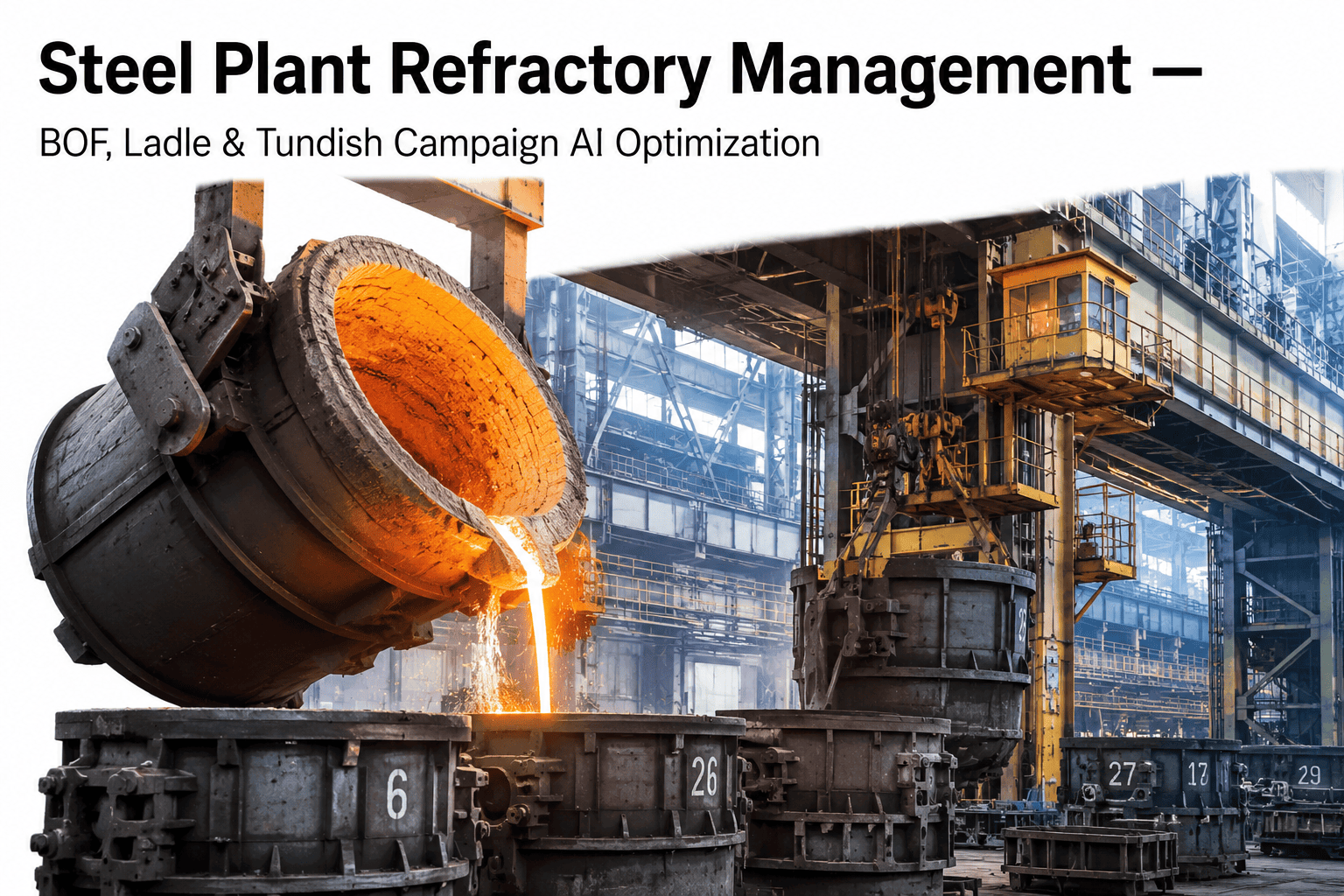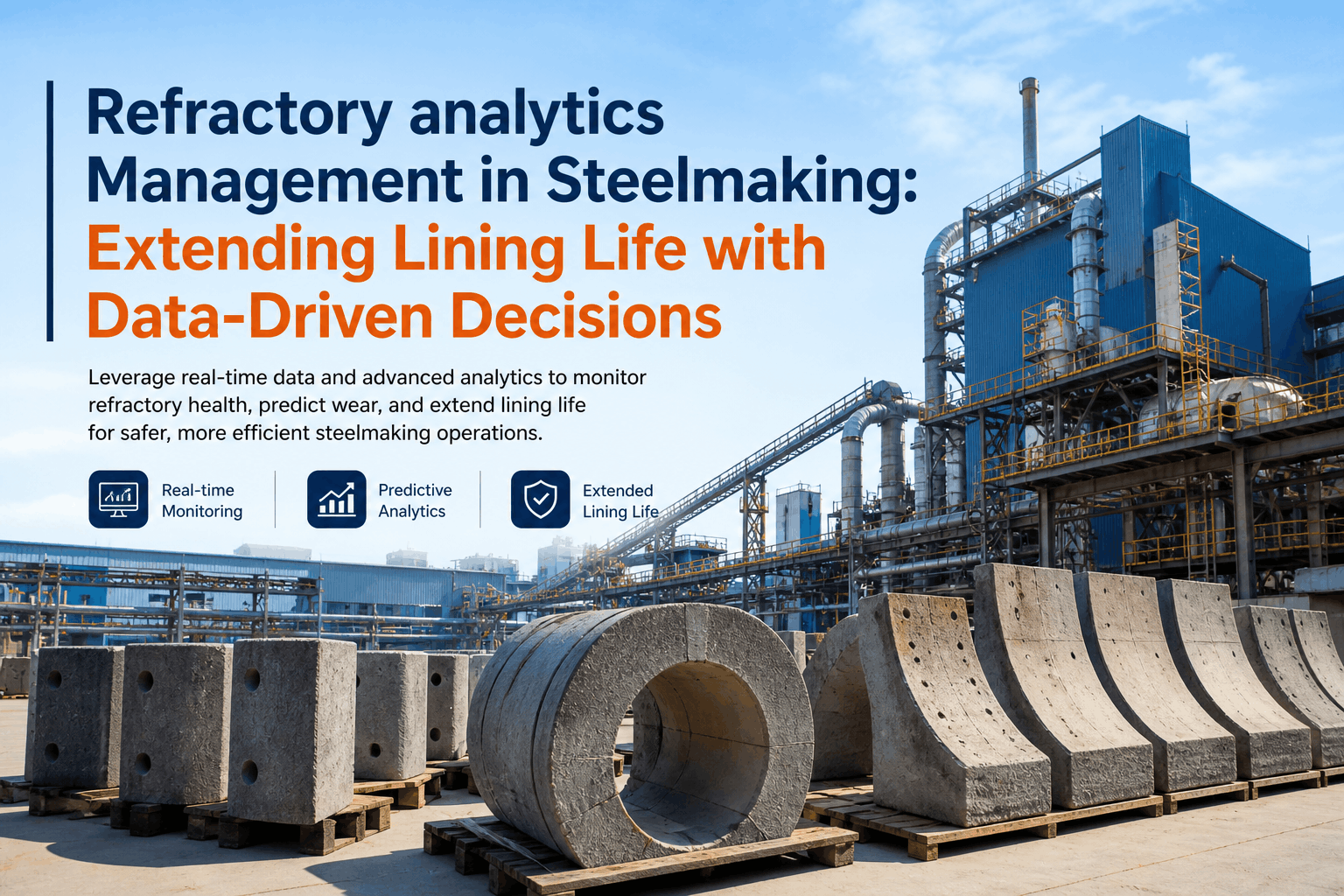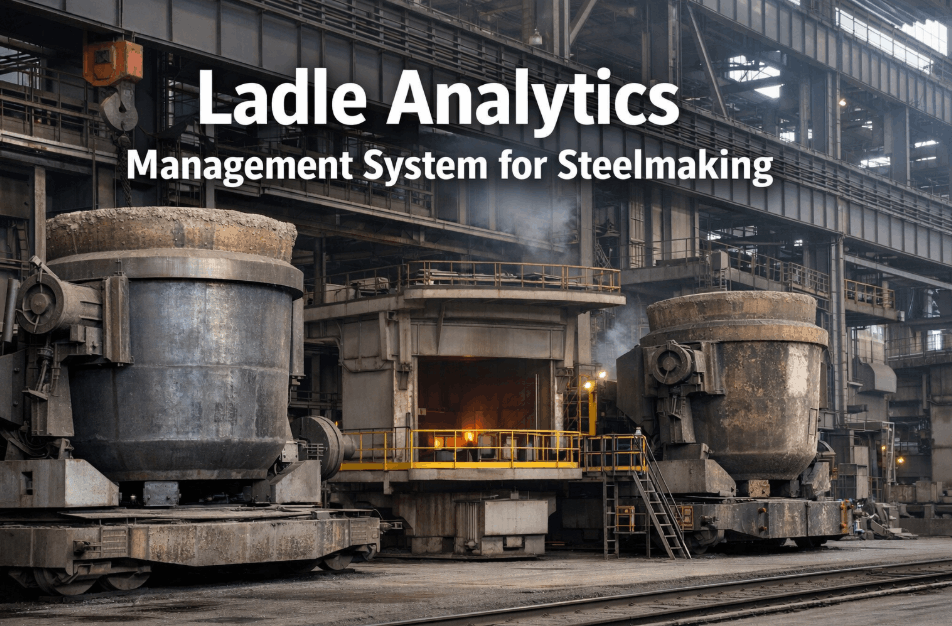
Refractory bricks represent one of the heaviest recurring operational expenditures in any steel manufacturing facility. Every ton of liquid steel produced steadily degrades the internal silica, magnesia, and alumina linings across the melting and casting sequence. Operating a campaign too long risks a catastrophic breakout, but wrecking a vessel prematurely wastes hundreds of thousands of dollars in viable refractory material. Today, leading melt shops are abandoning disconnected spreadsheets and embracing unified refractory management AI-driven platforms. By aggregating laser drops, thermal imaging, and chemical slag profiles into a single predictive model, plants can dynamically track BOF refractory, EAF refractory, ladle lining life, and tundish wear in real time. Book a Platform Demo to witness how our steel refractory AI-driven dashboards harmonize multi-vessel campaign planning and slash specific refractory costs per ton starting in week one.
Extend Refractory Campaign Life by Up to 15%
Discover how iFactory's refractory management AI-driven platform predicts optimal relining schedules, isolates excessive wear zones, and optimizes gunning consumption across all steelmaking operations.
What Is Refractory Cost Optimization?
Refractory management across steelmaking requires precise coordination of varying vessel lifecycles. An Electric Arc Furnace (EAF) delta might last 150 heats, while a Basic Oxygen Furnace (BOF) lining targets 4,000+ heats. Meanwhile, transit assets like ladles and the tundish cycle continuously. Refractory cost optimization leverages machine learning to ingest chemistry data, mechanical wear profiles, and historical repair logs to maximize the "campaign life tracking" of every individual unit. When a single mm of saved working lining translates to massive annual savings, adopting an AI-driven multi-vessel refractory dashboard is the fastest route to reducing your total cost of ownership per ton.
Steel Refractory AI-Driven Features: The 6 Tracking Pillars
Effective steelmaking refractory optimization with AI covers six primary vessel profiles. Replacing fragmented inspection records with a unified view prevents catastrophic failures while driving maximum efficiency during the teardown and bricking phases.
BOF Refractory Tracking
Integrates post-blow laser scans and thermal camera feeds to map the BOF vessel contour dynamically. It identifies trunnion wear and bottom build-up to prescribe precise slag splashing routines.
4k+ Campaign HeatsEAF Refractory Diagnostics
Correlates arc length, burner profiles, and chemistry with sidewall wear patterns. Predicts precise hot-spot erosion near tap holes and eccentric bottom tapping (EBT) blocks before the water-cooled panels are exposed.
Balanced Delta WearLadle Refractory Life
Continuous thermography scans empty ladles returning from the caster. AI predicts the exact heat remaining before the slag line compromises the safety lining, maximizing transit asset utilization securely.
Maximized Ladle TurnsTundish Refractory Flow Dynamics
Assesses turbulence and wear across furniture (weirs and dams) inside the tundish. Tracking impact pad erosion reduces inclusions and guarantees clean steel delivery to the caster mold.
Extended Tundish SequenceAutomated Gunning Supervision
Using laser contour differencing, the system outputs the exact volume and coordinate location for gunning repairs. This eliminates operator over-spraying, saving immense amounts of expensive monolithic material.
-30% Repair MaterialJust-In-Time Brick Inventory
Because the AI knows the exact end-of-life dates for your BOF, Ladles, and EAF simultaneously, it automates brick purchasing pipelines to minimize capital tied up in warehouse refractory stock.
Optimized Cash FlowRefractory Campaign Management: A Predictive Workflow
Tracking lining life requires fusing multiple complex variables—from initial brick grade to final corrosive slag chemistry. For a live walkthrough of how this multi-vessel data converges into actionable commands, Book a Demo with our metallurgical specialists.
Ingestion & Contour Baselining — Day 0
As a newly relined vessel enters service, the AI ingests the 3D laser profile of the fresh brickwork along with supplier specifications. This initial geometry acts as the absolute baseline for all future erosion algorithms.
Zero-State Geometric MappingThermodynamic & Chemical Degradation — Mid-Campaign
During each heat, the AI consumes scrap mix data, oxygen lance velocity, tap temperatures, and slag basicity. It actively calculates the chemical dissolution rate of the MgO/C bricks, flagging aggressive operational chemistries that accelerate wear.
Live Process IntegrationLaser Inspection Fusion — Intermittent Checks
When intermediate laser drops or thermographic camera scans occur, the exact physical measurement is cross-referenced with the AI's predictive model. The system automatically highlights localized deep gouges for immediate gunning intervention.
Sub-millimeter PrecisionAutomated Wrecking & Relining Triggers — End of Life
The system predicts the precise week the vessel will breach its safety threshold. It coordinates automatically with production planning to schedule the wrecking machine, confirming masonry teams and brick sets are pre-staged.
Seamless Asset TurnaroundRefractory Diagnostic Maturity: From Paper to AI Simulation
Most steel facilities languish in Stage 2, destroying viable refractory based on fixed schedules to avoid breakouts. Schedule an architectural review to benchmark your current refractory campaign tracking strategies and unlock massive material savings.
Visual Checks & Fixed Schedules
Operators rely purely on visual flame observation during tapping and fixed heat counts. Triggers immense premature refractory wrecking due to extreme fear of breakouts.
Isolated Laser Scanning
Operators perform multi-point laser drops, but the data is reviewed in isolation. Repair locations are left up to raw human judgment resulting in heavy over-consumption of spray materials.
Connected Dashboards
Vessel profiles are logged historically against chemistry batches. The multi-vessel refractory dashboard highlights high-wear areas universally across BOF, EAF, Ladle, and Tundish.
AI-Driven Optimization Models
Full integration with scrap charging and slag builders. AI algorithms optimize the blow profile and chemical additions to actively preserve the specific brick chemistry currently in service.
Hardware & Data Sources Powering Modern Lining Life Tracking
Achieving true prediction requires fusing thermodynamic metadata with hyper-accurate imaging technology. Consolidating these streams yields immediate ROI via avoided outages and brick savings. Learn how effortlessly your SCADA can ingest this by connecting with us.
| Source Integration Layer | Application in Steelmaking | Analytical Output |
|---|---|---|
| LIDAR & Scanner Drops | Direct physical mapping inside empty BOF & EAF vessels | 3D volumetric wear profiles |
| Infrared Thermography | Scanning external ladle shells during transit cycles | Hidden internal "hot spot" detection |
| Level-2 Chemistry Feeds | Evaluating slag basicity and FeO content per heat | Chemical dissolution rate predictions |
| Argon & Burner SCADA | Tracking arc lengths and argon stirring kinetics | Mechanical erosion forecasting |
Preventing Catastrophic Shell Breakouts
A refractory failure means 1,600°C liquid steel breaches the water-cooled panels or safety shell, causing unimaginable safety hazards and devastating mill downtime. Continuous AI monitoring protects personnel and assets flawlessly.
Chemical Prevention
Excessively acidic slag dissolves magnesia-carbon bricks rapidly. The AI cross-references the initial brick installation grade with real-time continuous flux additions, preventing operators from running chemically destructive sequences.
Optimized Slag BasicityThermal Detection
Infrared thermal cameras constantly monitor the external steel shell of ladles and BOF vessels. AI establishes a secure thermal map and instantly flags micro-deviations before a red-hot localized breach ever penetrates the safety lining.
Pre-Breach IdentificationMechanical Documentation
The system archives exact multi-vector laser profiles of tapping holes and trunnions alongside batch data. Generating automated relining logs ensures the masonry teams install the right zonal upgrades during the next scheduled rebuild.
Verified Zonal Mapping12-Month Multi-Vessel Refractory Savings Projection
Implementing cross-vessel tracking generates compounding financial returns. The following matrix illustrates the progression from manual visual oversight directly to algorithmic refractory optimization, recovering immense working limits per ton. Book a Demo to run your plant's specific tonnage variables through our models.
Steelmaking Refractory Tracking Coverage
Because variables like extreme slag attack, thermal shock, and liquid turbulence impact different vessels uniquely, the AI applies distinct, tailored thermodynamic algorithms across your entire melt shop.
Basic Oxygen Furnace (BOF)
Tracking severe mechanical trunnion wear, bottom gas purging erosion, and analyzing slag splashing routines for maximum coating retention over 4,000+ heats.
Electric Arc Furnace (EAF)
Diagnosing massive thermal footprints. Balancing the delta wear against sidewall hot spots resulting from multi-electrode arching and eccentric bottom tap holes.
Transit Ladle Life Network
Tracking the extreme turbulence from tapping, argon porous plug erosion, and continuous tracking of the vulnerable slag line utilizing continuous external thermography.
Tundish & Continuous Casting
Maintaining clean steel pathways via tracking of the impact pad and furniture erosion, guaranteeing continuous inclusion-free casting sequences throughout the sequence.
Financial Impact of AI Refractory Cost Optimization
The business case for integrating a smart refractory tracking console yields phenomenal, immediate structural savings directly injected back into the operational budget.
Campaign Extension Value
Preventing just one unnecessary bricking re-line per year by confidently extending the campaign life limit delivers hundreds of thousands of dollars in preserved monolithic brick.
Gunning Material Reduction
By transitioning from blind, habitual gunning sprays to algorithmically guided, exact-coordinate repairs, total consumption of highly expensive spray mass drops instantly.
Zonal Brick Purchasing
AI models pinpoint exactly which zones experience preferential wear, allowing buyers to optimize refractory grades (using high-cost bricks only where actually required) instead of over-speccing the entire vessel.
Zero Shell Breakouts
By securing steel refractory AI-driven alerts against high-wear areas before the outer safety lining is compromised, multi-million dollar disaster cleanups and structural repairs are thoroughly prevented.
What Steelmaking Engineering Managers Are Saying
"Before adopting the multi-vessel refractory dashboard, we were flying blind between laser drops, constantly over-gunning the BOF just to sleep at night. Feeding our slag chemistry and laser readings into iFactory allowed us to extend our BOF lining life by 420 heats while dropping our ladle spray costs by 28%. The AI tells us exactly where the brick is failing mechanically versus dissolving chemically."
Frequently Asked Questions: Multi-Vessel Refractory Analytics
Does the AI platform replace our existing laser scanning equipment?
No, the platform is hardware-agnostic. We ingest raw point clouds and thermal images generated by your existing boom lasers, scanning carts, or external plant thermography systems natively into our AI hub for deeper analysis.
How does EAF refractory tracking differ from standard ladle tracking?
EAF refractory requires complex overlay modeling—integrating electrode arc flare dynamics and multi-burner localized heating arrays—whereas transit ladles are mostly compromised by thermal cycling and the aggressive mechanical sheer of emptying.
Will this system identify precisely where operators need to apply gunning?
Yes, the AI generates high-contrast visual topographic maps of the steelmaking refractory immediately after laser ingestion. It pinpoints the exact azimuthal angle and height dimensions needing repair, calculating required material tonnage automatically.
How long does it take for the AI to train on our vessel campaigns?
By uploading your last 3 to 5 vessel tear-down logs, laser histories, and heat batch chemistries, the model adapts extremely fast. Refractory cost optimization insights typically generate actionable intelligence securely within the very first active campaign cycle. Book a review of your current setup.
Stop Wrecking Your Operations Prematurely
Join premier global melt shops relying on AI networks to extract every ounce of value from their brick linings without touching the catastrophic safety barrier.