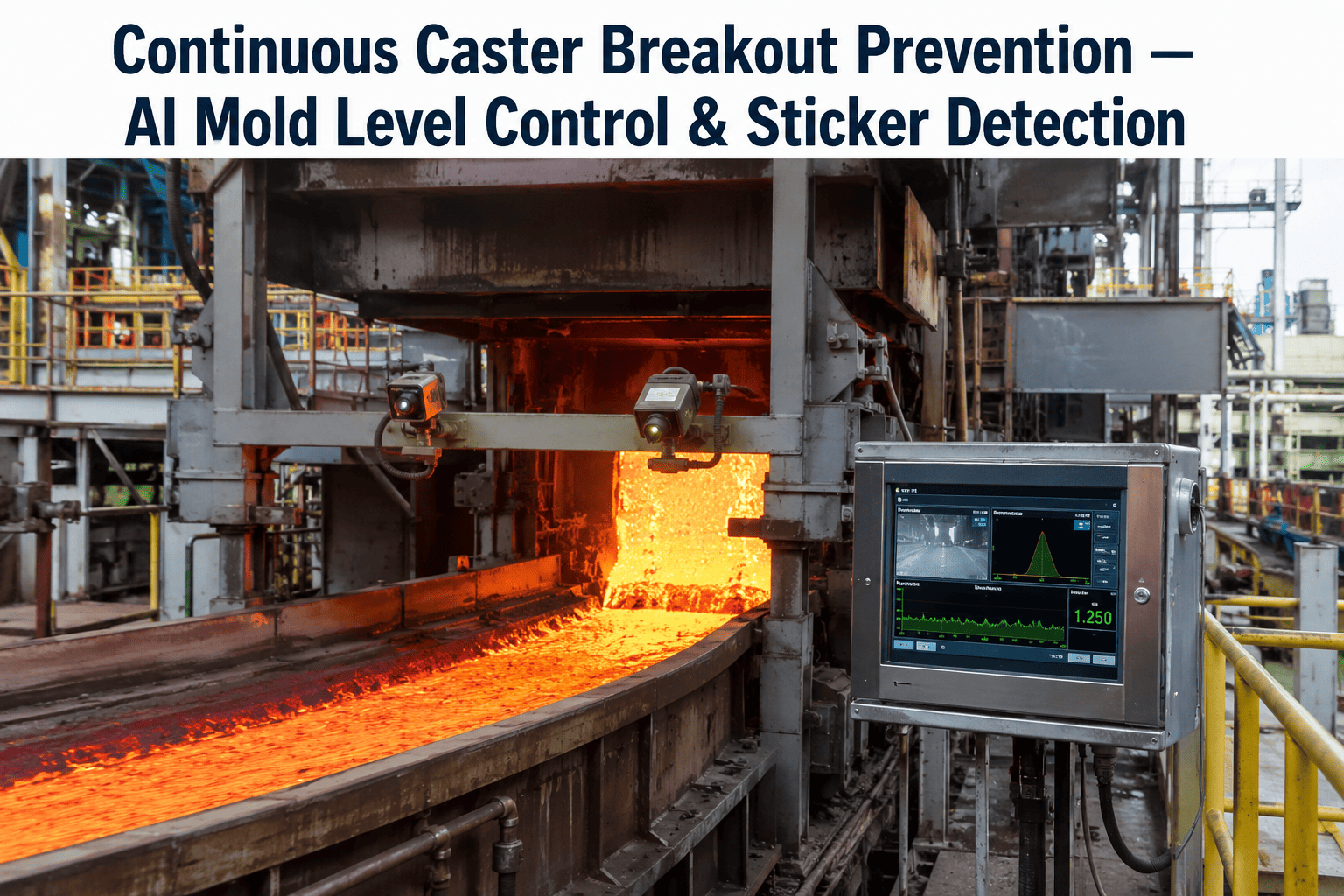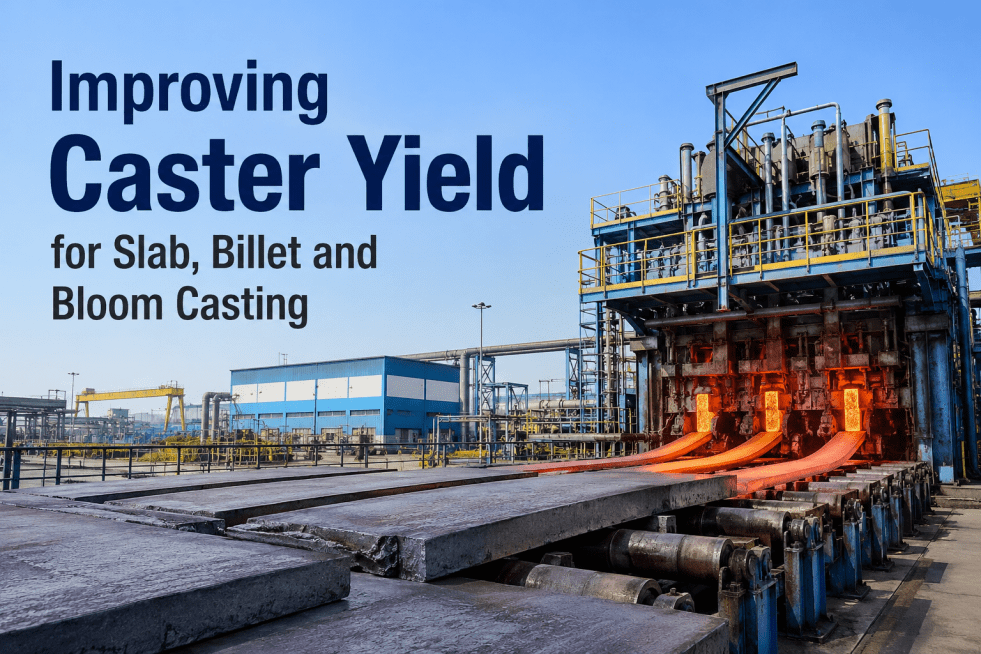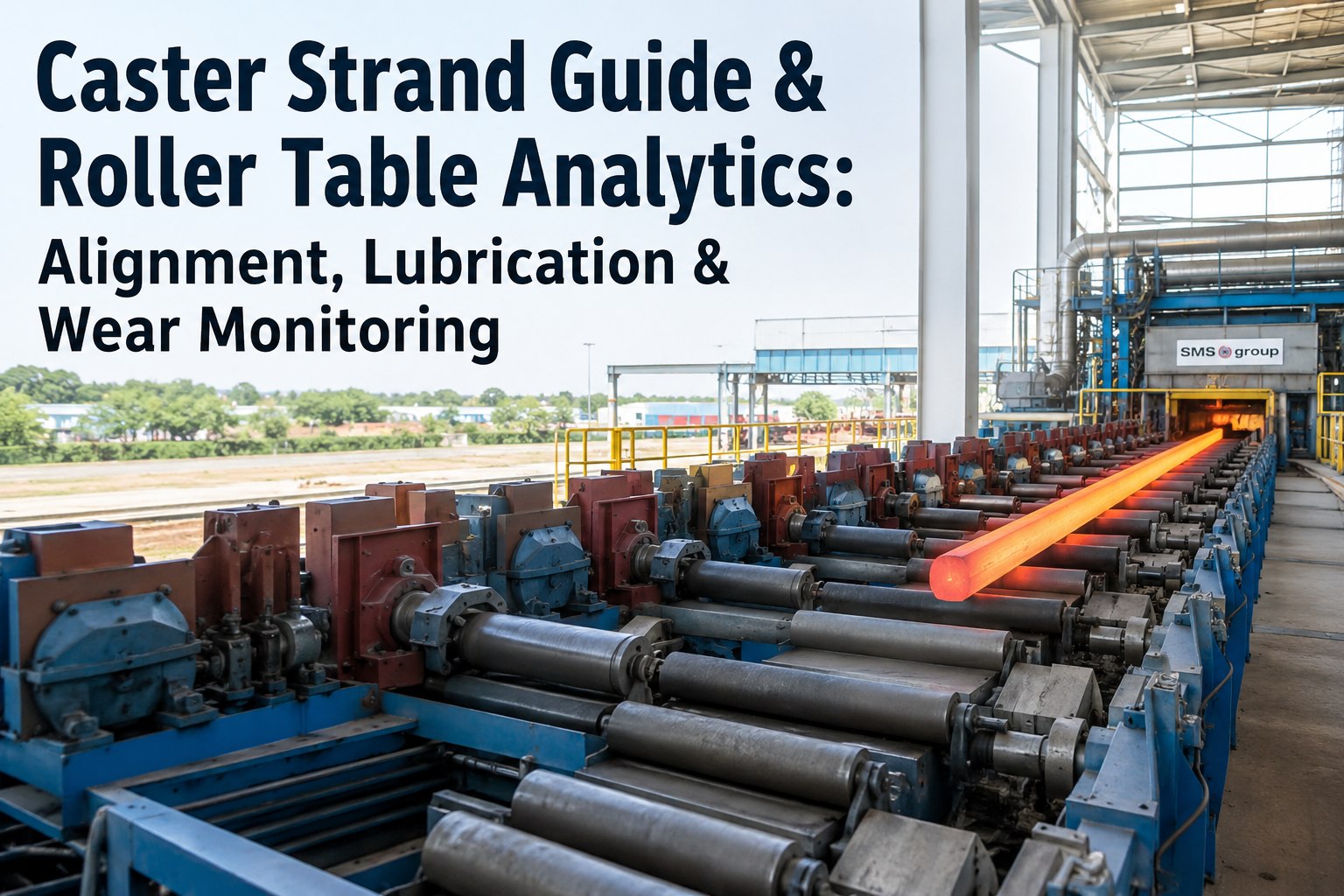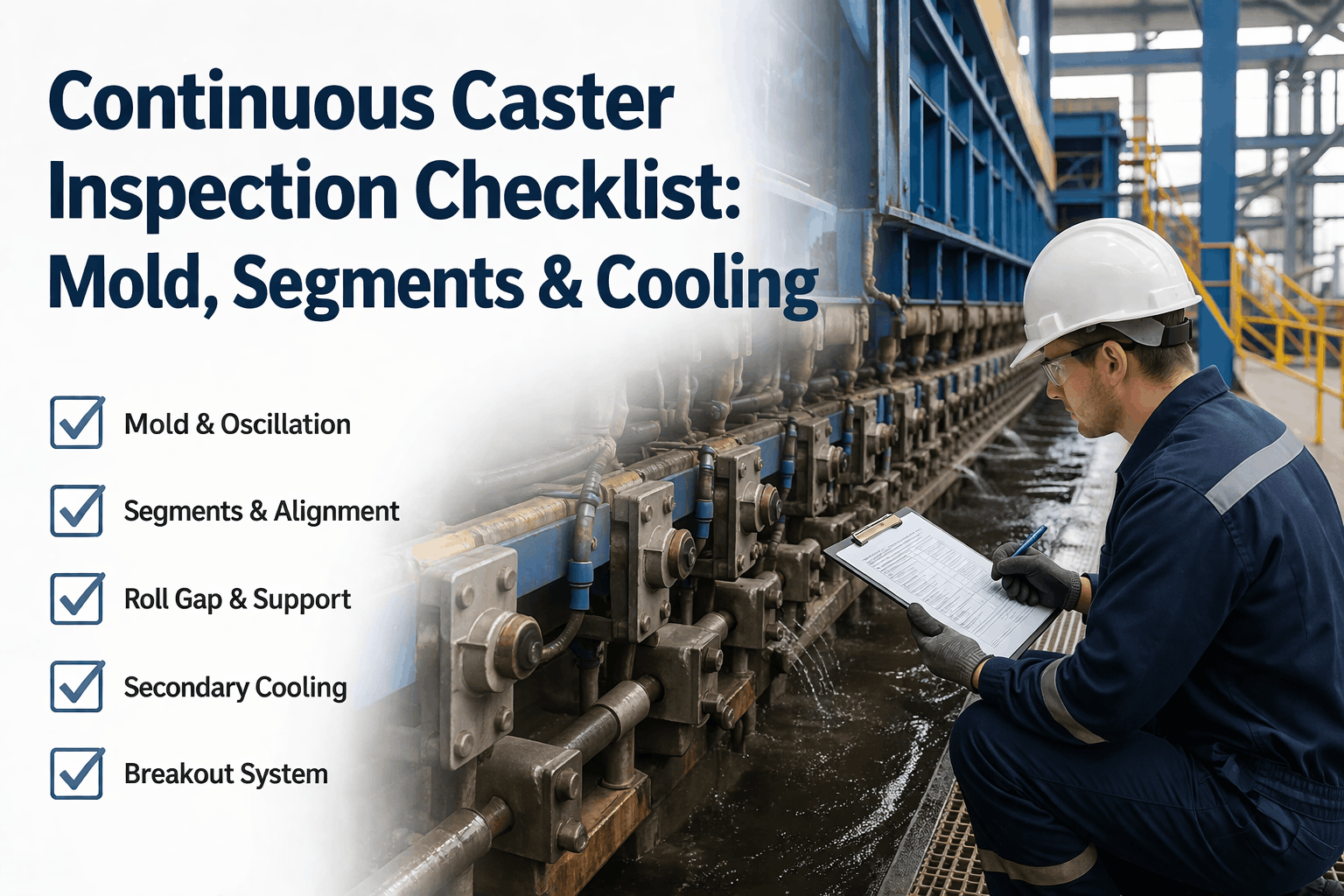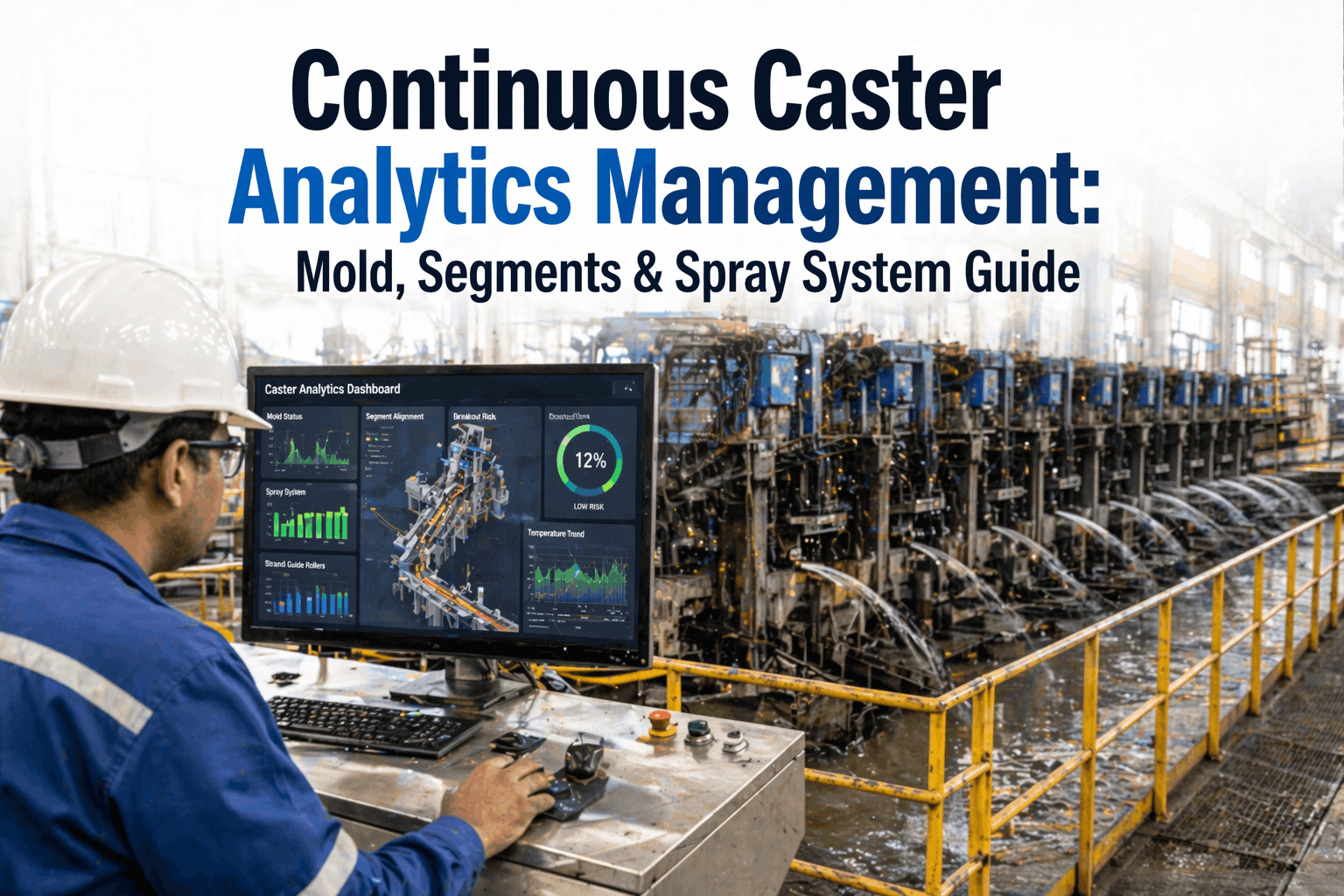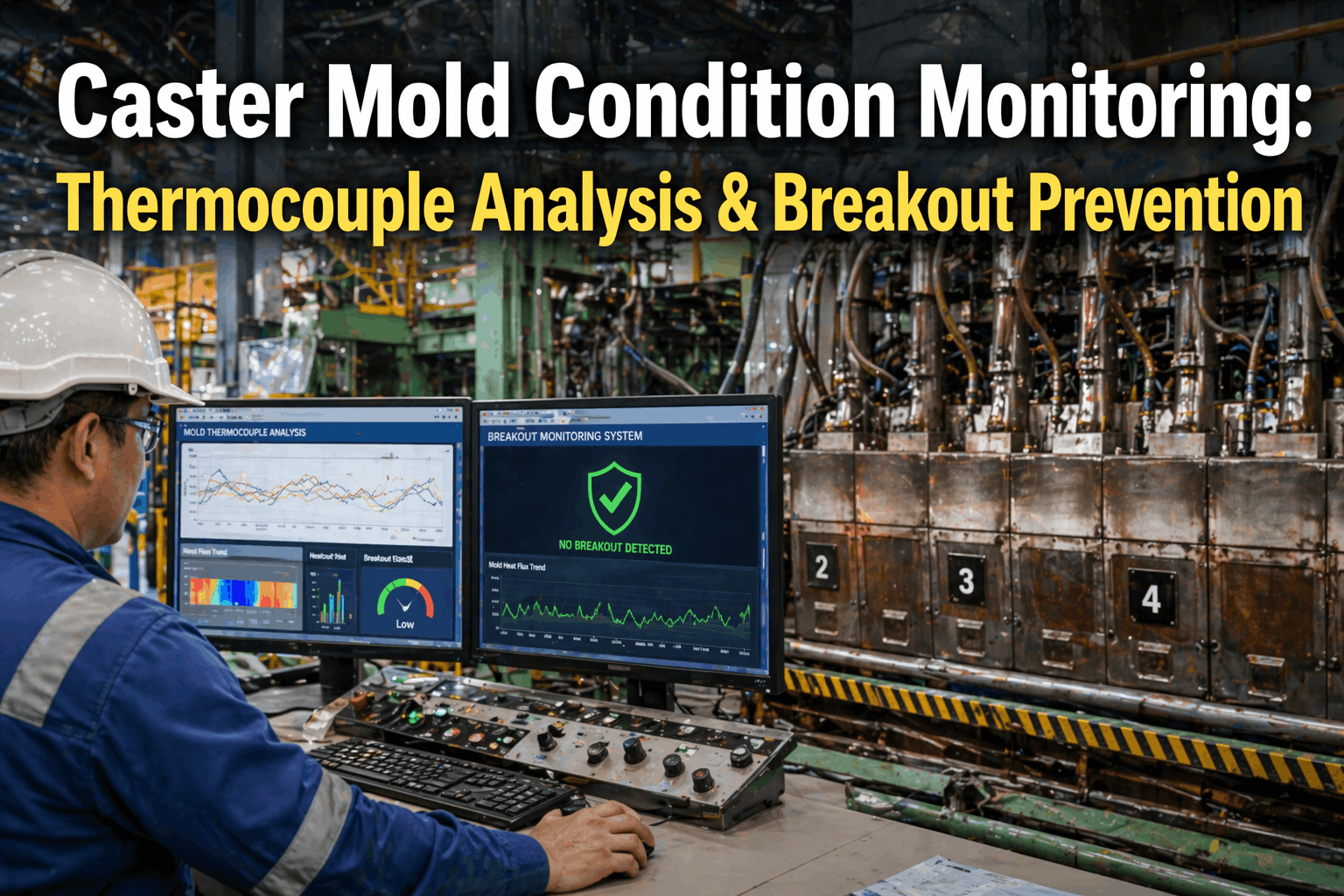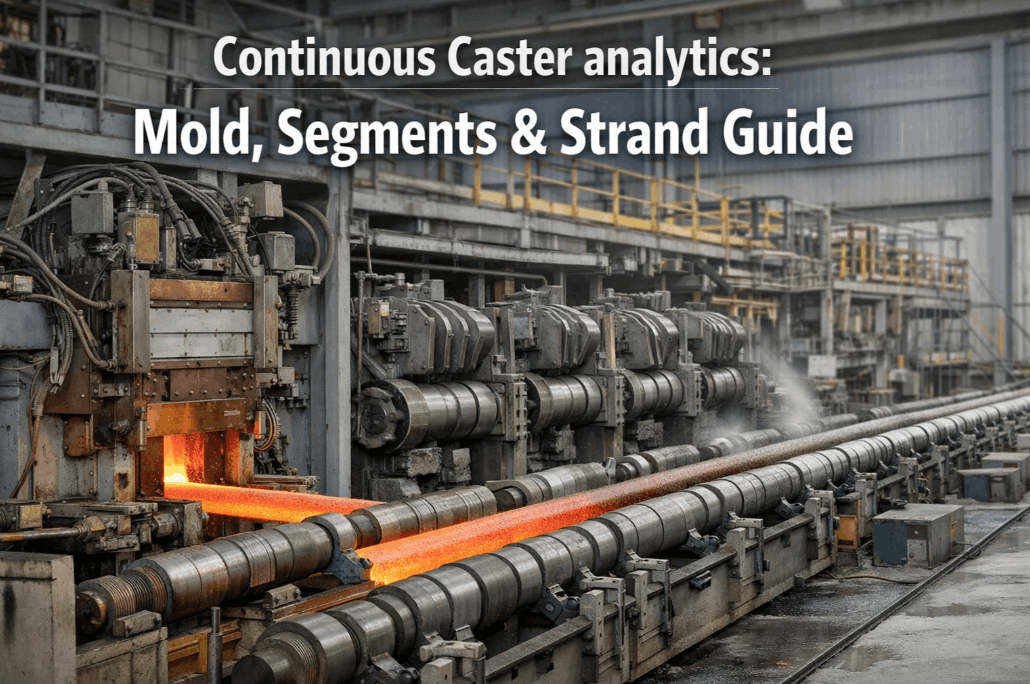
In any integrated steel plant, the continuous caster is the ultimate bottleneck. Liquid steel enters, and solid slabs, blooms, or billets emerge—but this delicate state-change brings extreme thermo-mechanical volatility. If the frozen steel shell ruptures inside the mold, the resulting liquid breakout causes catastrophic equipment damage and days of lost casting time. Modern melt shops rely heavily on continuous caster analytics to execute perfect caster breakout prevention algorithms. By fusing thousands of mold thermocouples with real-time hydraulic pressures, a true caster AI-driven architecture protects the strand guide and ensures flawless surface quality. From monitoring primary mold oscillation to active caster segment tracking deeper downstream, our platform maps absolute metallurgical integrity. Book an Infrastructure Review to learn how slab caster AI-driven dashboards replace chaotic reactive maintenance with predictive certainty.
Real-Time Caster Mold & Strand Guide Analytics
Empower your casting operators with a unified predictive platform to track caster mold analytics, prevent breakouts, and monitor segment alignment precisely.
Why Deep Strand Guide Analytics Dictate Final Coil Quality
Once liquid steel exits the tundish via the Submerged Entry Nozzle (SEN), it hits the water-cooled copper mold. If the heat transfer is uneven, the developing steel shell will stick, tear, and bleed out. Relying on basic Level 1 PLC alarms alone often alerts operators too late—right as the breakout is already breaching the secondary cooling zones. Caster mold analytics fundamentally solve this by mapping thermal gradients millisecond by millisecond.
But freezing the shell is only phase one. Pushing that heavy slab through the curved sections requires intense structural containment. Poor caster roll analytics or neglected hydraulic cylinders cause severe bulging, internal cracking, and center segregation. Implementing automated caster segment tracking guarantees that every roller stays perfectly aligned against the metallurgical length. The result is zero longitudinal cracking, whether you are running massive slab caster AI-driven pipelines or high-speed billet caster analytics.
The Six Core KPIs Every Caster AI-Driven Engine Must Track
Tracking standard tonnages isn't enough. Breakout prevention and pristine surface quality exist at the intersection of thermal heat fluxes and micro-mechanical force. Process engineers executing bloom caster analytics must watch these core variables continuously. You can explore how each signal triggers a live interlock by reviewing our predictive tools.
Mold Heat Flux & Thermal Profiling
By polling dense arrays of copper mold thermocouples, caster mold analytics dynamically map the heat removal rate across the broad and narrow faces. Sharp asymmetrical drops in local heat flux directly indicate a "sticker" forming, activating the automatic breakout prevention logic instantly.
Mold Oscillator Friction Tracking
The mold must oscillate smoothly to continuously heal the frozen steel shell. Tracking hydraulic actuator pressures versus displacement captures the 'negative strip time'. High friction values indicate severe mold powder starvation or mechanical binding.
Secondary Cooling Zone Analytics
Water spray density below the mold governs the final metallurgical properties. Caster segment tracking algorithms monitor spray manifold pressures against zone casting speeds, assuring the solidifying strand is never over-chilled (causing cracks) or under-cooled (causing bulging).
Caster Roll Analytics & Alignment
A misaligned strand guide segment forces the hot slab to bend unnaturally, crushing internal core quality. Live caster roll analytics watch the hydraulic clamping cylinders on individual segments. Sudden pressure spikes indicate the strand is pushing apart misaligned containment rollers.
Roll Bearing Fatigue Monitoring
Each caster segment contains dozens of critical rollers sitting in intense heat and steam. Using condition-based monitoring, vibration and rotational torque data flag failing bearing housings before a seized roll carves massive longitudinal scratches down the entire slab length.
Mold Level Fluctuation Index
The liquid meniscus must be precisely maintained by the stopper rod or slide gate. Erratic mold level waves drag liquid slag inclusions deep into the strand. Caster AI-driven modules stabilize this loop by predictively filtering out sensor noise.
Constructing a Pre-Emptive Caster Analytics Pipeline
Continuous casting data moves at incredible speeds; thermal deviations that cause breakouts develop in under five seconds. A true steel continuous caster analytics deployment securely hooks straight into the rapid SCADA tier to beat this tight physics clock.
How iFactory Protects the Strand Guide Live
High-Bandwidth Edge Harvesting
Because a breakout develops in seconds, the platform deploys Edge IPCs to poll mold thermocouples and segment hydraulics natively in sub-second intervals. We never wait for delayed relational databases to process signals directly controlling the caster breakout prevention systems.
Machine Learning Thermal Topography
The AI engine visualizes a full 3D contour map of the heat flux inside the copper plates. It differentiates between normal meniscus level washing and high-risk "V-shaped" sticking patterns that tear the solidifying shell apart at the corners.
Automated Caster Slow-Down Interlocks
When sticking behavior is confirmed, the caster AI-driven module automatically issues a command to momentarily plunge the casting speed—giving the thin steel shell critical seconds to re-heal and detach from the mold wall before total rupture. Want to see this trigger? Book a technical walk-through.
Strand Condition & Mechanical Degradation Alerts
While casting continues safely, deeper strand guide analytics continuously tally roll bearing fatigue and hydraulic pressures across the segments. Prior to a scheduled shutdown, maintenance teams receive exact schematic pinpoints indicating which segment rollers must be swapped.
Caster AI Diagnostics Benchmark
Whether you govern high-throughput slab caster AI-driven platforms or precise billet caster analytics, eliminating defects inside the mold drastically minimizes expensive slab grinding and scarfing yards downstream.
| Metallurgical Domain | Lagging (Conventional Alarms) | Industry Average Standard | AI-Predicted Benchmark | Yield Defect Penalty |
|---|---|---|---|---|
| Breakout Prevention | High False-Positive Rate | Thermocouple Delta T Alarms | 100% Pattern-Based ML Accuracy | Massive structural liquid wipeouts |
| Segment Bulging | Visual inspection of cold slabs | Periodic gap meter drops | Live Segment Hydraulic Modeling | Internal macroscopic cracking |
| Mold Level Hunting | Sluggish Level Tracking | Basic PID Tuning | Advanced Noise Filtering AI | Heavy slag entrapment; surface slivers |
| Secondary Cooling | Static Spray Profiles | Speed-Based Curves | Live Real-Time Enthalpy Trace | Transverse corner cracking |
Maturity Matrix for Caster Analytics
Progressing a casting floor from reactive alarm firefighting into an AI-orchestrated predictability zone increases casting sequence lengths safely. When maintenance teams trust the predictive segment intelligence, sequence breaks for "precautionary roll checks" are virtually eliminated.
Frequently Asked Questions
Does it work equally well on Slab, Bloom, and Billet Casters?
Yes. While slab caster AI-driven models map immense broad-face thermal footprints, our bloom caster analytics and billet caster analytics engines tune the heat flux and mold-level algorithms for the high-speed, smaller-profile tube assemblies perfectly.
How accurately can the AI track misaligned segments?
By continuously graphing the hydraulic clamping forces acting on each separate caster segment along the strand guide analytics view, the system flags exact points where the bulging steel is overpowering standard gap clamping pressure, directing crews exactly where to re-align.
Will these mold analytics stop false-positive alarms?
Absolutely. Standard threshold systems typically trip on noisy splashing or harmless crusting. Modern caster mold analytics use algorithmic pattern profiling (looking at 3D shapes of heat flux dropping) to confirm a true localized sticking shell, vastly reducing annoying false-alarm slow-downs.
Can this system monitor the mold oscillator?
Yes, tracking the oscillation mark frequency against actuator phase pressures is vital. Friction alarms will trigger if the mold starts 'crab-walking' or if lubrication powder becomes starved, saving the bearing sleeves on the eccentric drives. Schedule a diagnostic review of your oscillator.
Safeguard Your Most Critical Downstream Asset
iFactory's Continuous Caster module locks in predictive safety—ending catastrophic liquid breakouts while mapping perfect containment alignment from menisus to unbending roll.