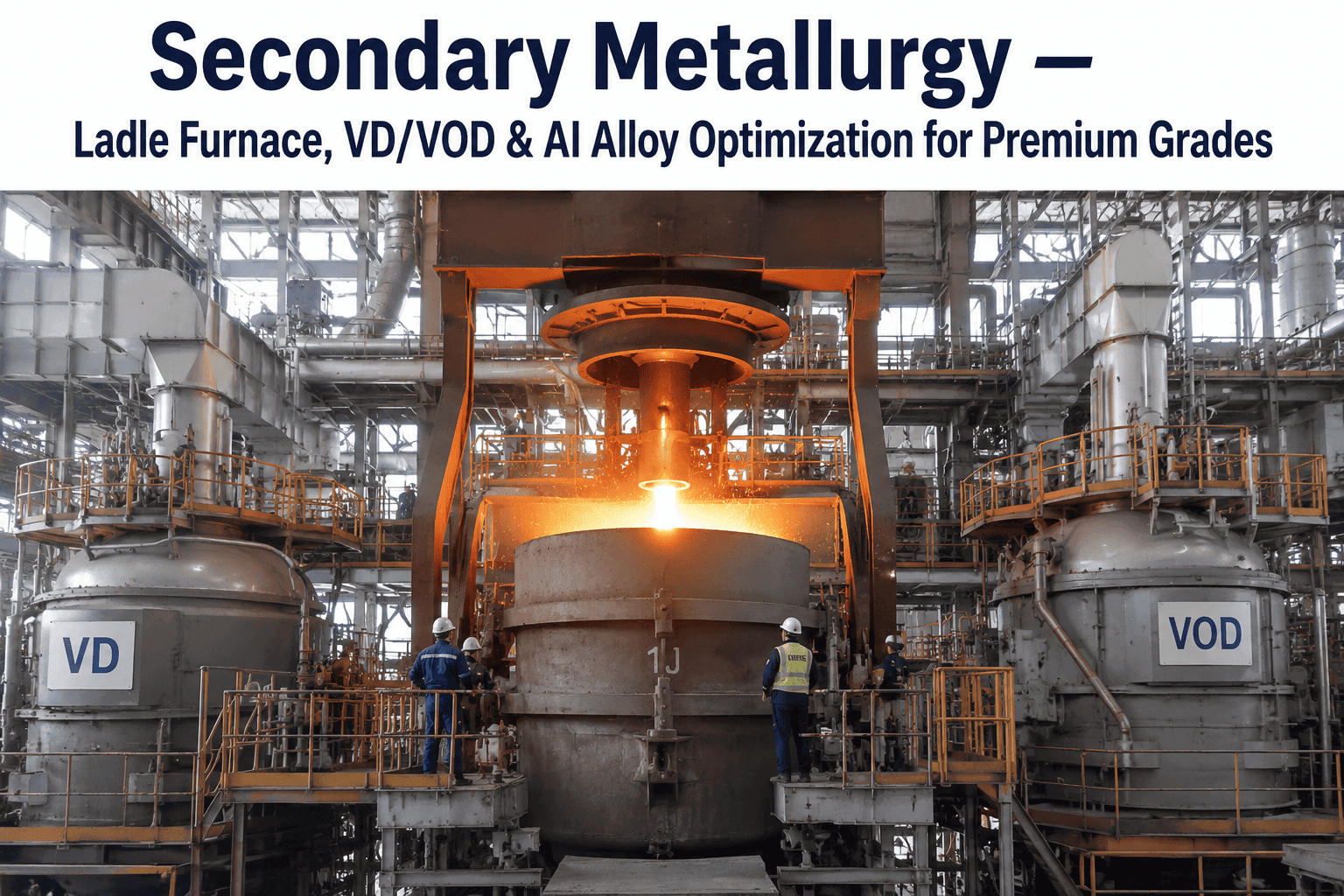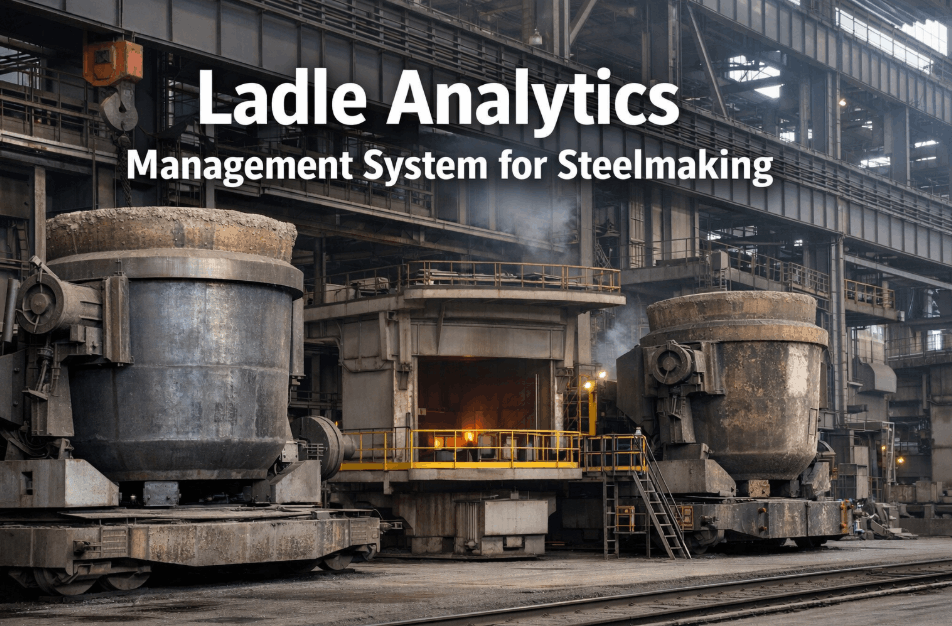
In primary steelmaking, the converter sets the pace, but the Ladle Furnace (LF) and secondary metallurgy stations determine the final grade and absolute quality of the slab. Managing temperature homogenization, precise chemistry fixes, and aggressive inclusion removal demands flawless execution. As plants push for tighter impurity tolerances, relying on reactive maintenance for stirring systems or slide gates becomes extremely hazardous. The most competitive mills operate using advanced ladle furnace analytics—tracking everything from porous block efficiency to vacuum degasser analytics. By executing continuous secondary metallurgy AI-driven models, operators protect critical assets like the ladle turret while predicting ladle refractory wear down to the millimeter. Book a Platform Demo to discover how steel refining AI-driven dashboards convert raw SCADA tag data into actionable metallurgical insights.
Real-Time Ladle Furnace & Secondary Analytics
iFactory empowers melt-shop teams with a unified predictive layer to track ladle analytics, slide gate analytics, and alloy addition systems—automatically, heat after heat.
Why Deep Ladle Analytics Anchor High-Grade Steel Production
Secondary metallurgy analytics are not just about tracing chemistry—they map the physical deterioration of the equipment processing the steel. Ladles transport 150+ tons of liquid steel ranging structurally from the slag line all the way to the slide gate mechanism. Plants that fail to implement continuous ladle turret analytics or neglect predictive tracking of porous plug flows face severe penalties, including disastrous steel washouts or missed temperature windows at the continuous caster.
A well-structured secondary metallurgy framework captures thermal trends, mechanic stress variables, and metallurgical gas injections simultaneously. Tracking advanced slide gate analytics alongside live ladle stirring behavior allows maintenance teams to swap refractory components precisely when needed, rather than throwing away viable material on fixed-time schedules. We seamlessly overlay AI-driven intelligence onto your existing PLCs to yield these powerful metrics without hardware disruptions.
The Six Core KPIs Every Steel Refining AI-Driven Engine Must Track
These six secondary metallurgy metrics represent the highest-impact measurement variables across your LF, VD (Vacuum Degasser), and transfer cars. Melt shop managers who transition from static reports to establishing live limits around these numbers observe a measurable lift in clean-steel output ratios. You can explore how each metric integrates directly into your pulpit by connecting with our engineers.
Ladle Refractory Wear Rate
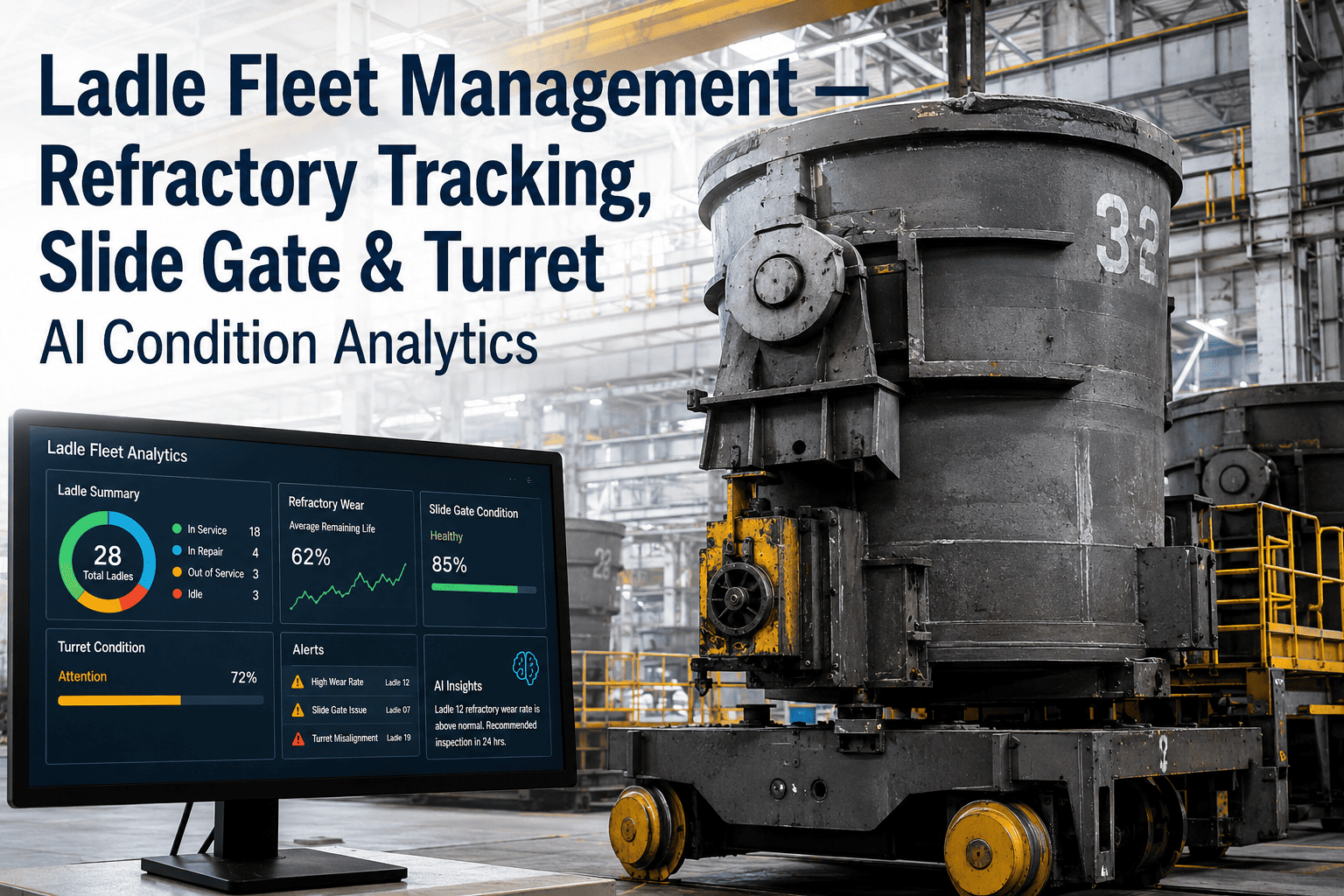
Using thermal scanning combined with historical heat exposure, ladle furnace analytics accurately calculates structural wear of the slag line and working lining. Predicting remaining thickness in real-time avoids both dangerous breakouts and premature refractory wrecking.
Slide Gate Analytics & Friction Profiles
Slide gate failures lead to uncontrolled pours. By tracking the hydraulic cylinder pressure against the stroke position, we calculate friction variance across the refractory plates, alerting teams to excessive plate wear or spring tension loss before a hot metal leak.
Ladle Stirring & Porous Plug Flow
Efficient argon gas stirring is mandatory for temperature homogenization. By comparing back-pressure against gas flow setpoints, ladle analytics detect clogged porous plugs or compromised piping, prompting immediate cleaning cycles before the chemistry goes off-spec.
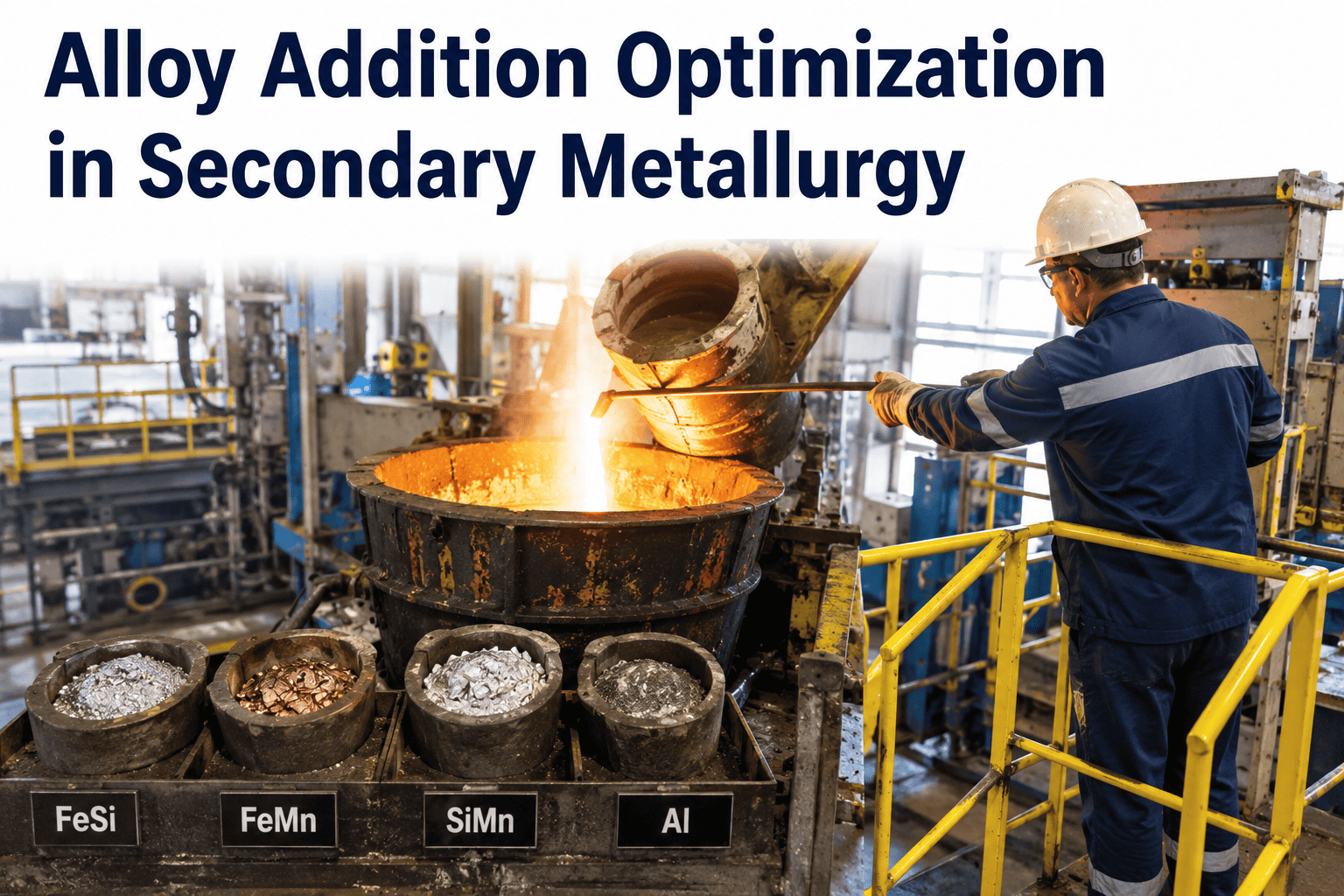
Alloy Addition System Accuracy
Variances in vibratory feeders or jammed hoppers ruin alloy recoveries. Continuous monitoring of the alloy addition system weight cells ensures exact doses of Ferro-Silicon or Manganese hit the bath at the exact right second, minimizing costly raw material wastage.
Vacuum Degasser Analytics
For hydrogen and nitrogen removal, exact vacuum pressures are non-negotiable. Vacuum degasser analytics track steam ejector pressures, cooling water return temperatures, and the time-to-vacuum-target curve. Sluggish pump-down times instantly isolate steam valve faults.
Ladle Turret Analytics
Supporting massive rotating deadweight at the caster requires absolute bearing integrity. Ladle turret analytics map high-frequency harmonic vibration data and hydraulic lifting pressures to detect internal roller fatigue before the turret siezes entirely.
Building the AI-Driven Ladle & Refining Data Pipeline
Conventional data collection in the melt shop is deeply fragmented across isolated PLCs—one for the ladle transfer car, another for the alloy additive hoppers, and another for the degasser pumps. A steel refining AI-driven superstructure seamlessly merges these boundaries into one fluid, predictive asset model.
How iFactory Executes Secondary Metallurgy Pipelines
Unified Connectivity Over Level-1 SCADA
The platform bypasses historical data silos. We install edge gateways pulling dense continuous traces—capturing argon flow rates, electrode transformer currents, slide gate hydraulics, and turret bearing accelerometers—perfectly synchronized with Level-2 heat tracking systems.
Automated Metallurgical Threshold Computations
Using thermodynamic AI models, iFactory actively evaluates specific energy calculations per ton and measures true alloy recovery rates. Instead of static alarm bands, the system floats dynamic warning lines based on the exact steel grade being treated in the Ladle Furnace.
Predicting Equipment Failures Before The Casting Stage
When tracking slide gate analytics dictates that the spring tension is wearing down rapidly across heats, or when vacuum degasser analytics identify a slight leak in the steam ejectors, the system pushes alerts upstream—preventing the ladle from being sent to the caster and causing a stranded sequence. Learn more via a live pipeline tour.
Shift Validation & Predictive Maintenance Off-Ramps
As operations proceed normally, actionable triggers for ladle refractory gunning or localized repairs are fed into your CMMS. Refractory bricklayers and millwrights get automated work packages detailing exactly which ladles require attention in the preparation bay.
Refining Diagnostics Benchmark: Where Does Your Plant Stand?
Tracking deep secondary metallurgy anomalies dictates your ultimate first-class yield percentage at the continuous caster. This matrix aligns operational readiness using ladle furnace analytics against industry standards.
| KPI Domain | Blind Operations (No AI) | Average Mill Standard | AI-Optimized Benchmark | Hidden Defect Cost |
|---|---|---|---|---|
| Ladle Refractory Life | Fixed Time Replacements | Laser Drop Scanning | 100% Thermal & Chemical Wear Models | Premature bricking expenses |
| Slide Gate Stroke Variance | Post-Cast Visuals Only | Basic Limit Switches | Live P/V Hydraulic Curve Mapping | Unexpected Liquid Steel Leaks |
| Ladle Stirring Argon Flow | Manual Rotameters | Set Point Matching | Backpressure AI Analytics | Temperature Stratification & Non-Metallic inclusions |
| Degasser Pump-Down | Visual Target Tracking | PLC Level 1 Alarms | Predictive Steam Ejector Monitoring | Off-spec Hydrogen levels; rejected heats |
Building a Secondary Metallurgy Analytics Roadmap
Transforming a conventional refining bay into a highly monitored, steel refining AI-driven node is a step-by-step process. Plants traversing from Level 2 to Level 3 achieve unparalleled recovery of trapped capabilities—reducing tap times, slicing energy consumption, and locking in caster continuity.
Frequently Asked Questions
How does ladle furnace analytics improve porous plug efficiency?
The AI integrates argon mass flow controllers with supply gas pressure transmitters. Any deviation outside the standard resistance threshold flags the system that the plug is either mechanically sheared off or clogged with frozen steel/slag, so ladle stirring is fully validated.
Can you track the health of a slide gate mechanism directly?
Yes, advanced slide gate analytics use hydraulic line transducers to monitor opening/closing pressures and cycle speeds against a baseline established for perfect refractory plates. Spring stress relaxation and excessive tar build-up are flagged immediately before sending the ladle to casting.
Does vacuum degasser analytics cover the steam piping network?
Absolutely. Deep vacuum relies entirely on steam velocity. We correlate ejector chest pressures with temperature loops across the condenser columns to locate cooling blockages or leaks inside the vacuum degasser network that ruin final vacuum pump-down curves.
Can we monitor the continuous caster's ladle turret with this?
Yes, our ladle turret analytics append high-bandwidth vibration accelerometers at the main slewing bearing alongside lift-cylinder pressure monitoring. It prevents the unimaginable hazard of a jammed turret harboring two full ladles of liquid steel. Schedule a review of our turret safety features.
Stop Processing Second-Grade Steel Due to Refining Failures
iFactory's Secondary Metallurgy module gives your melt-shop an unbreakable analytical spine—perfecting temperature homogenization, assuring alloy addition systems, and eliminating slide-gate leak events.