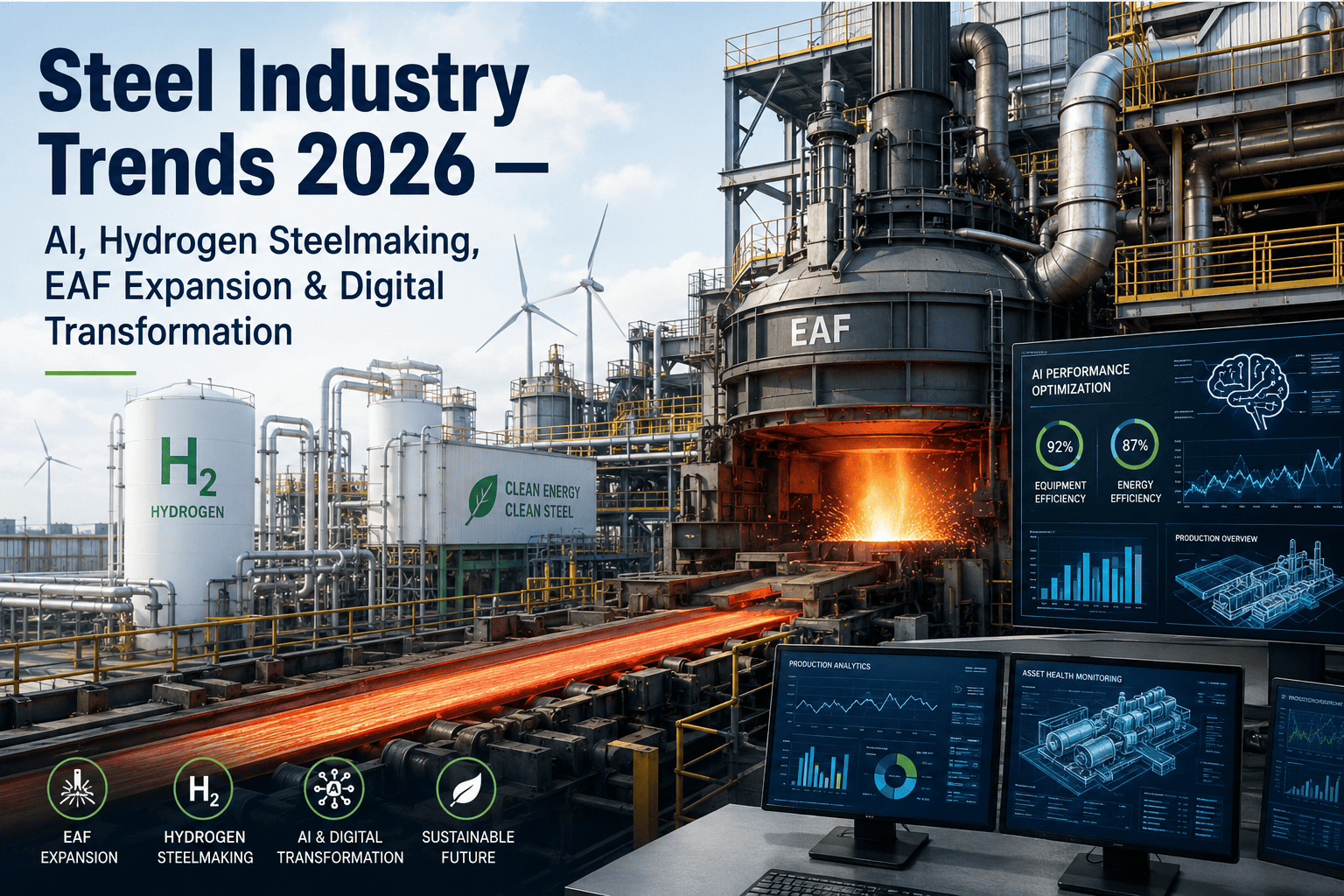
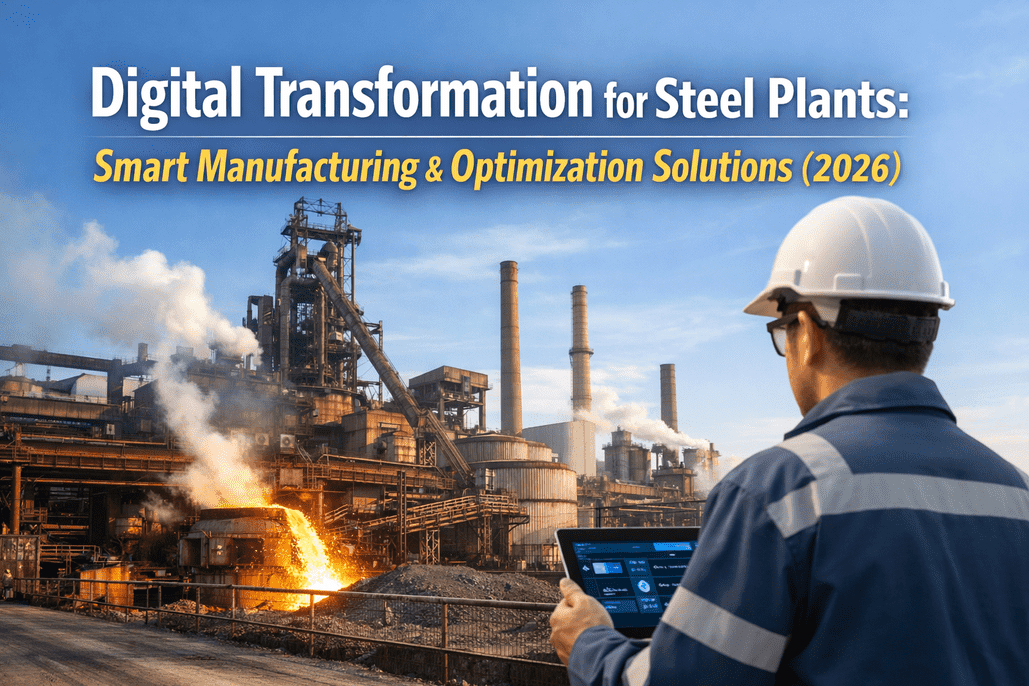
The steel industry is entering a period of accelerated transformation that will define competitive positioning for the next decade. Between 2024 and 2026, global steelmakers are navigating simultaneous shifts in decarbonization policy, electrification of production, and AI-driven operational intelligence that collectively rewrite how plants plan capacity, manage energy, and control quality. Operations leaders who treat these as separate initiatives rather than an integrated strategy risk falling behind competitors who are already connecting the dots between hydrogen readiness, EAF conversion, and digital infrastructure. Understanding how these trends intersect is the difference between a capital plan that future-proofs your operation and one that requires costly rework within three years.
STEEL INDUSTRY OUTLOOK 2026
Four Forces Reshaping Global Steel Operations by 2026
AI intelligence, hydrogen steelmaking, EAF capacity expansion, and full-stack digital transformation are converging into a single competitive equation that operations leaders cannot afford to address piece by piece.
01
AI-Powered Process Control
From predictive maintenance to real-time quality classification, AI is moving from pilot to production across integrated and mini-mill operations globally, delivering measurable returns within the first quarter of deployment.
02
Hydrogen-Based Steelmaking
Direct reduction with hydrogen is progressing from demonstration to commercial pilot scale, with first-mover plants breaking ground in Europe and Asia targeting premium green steel markets by 2026.
03
EAF Capacity Expansion
Electric arc furnace capacity is growing at three times the rate of blast furnace investment, driven by carbon pricing mechanisms, scrap infrastructure maturity, and reshoring demand in key markets.
04
Digital Infrastructure Layer
Plants are building unified data platforms connecting shop floor sensors to enterprise planning systems, replacing the fragmented legacy point solutions that have blocked previous digital transformation attempts.
Where AI Is Delivering the Fastest Returns in Steel
The highest-ROI AI applications in steel right now are not experimental. Quality inspection, predictive maintenance, and energy optimization have moved past proof of concept into production deployments that generate measurable savings within the first quarter. Operations leaders who start with these high-impact use cases build the data infrastructure and organizational confidence needed to tackle more complex applications like autonomous process control later. The key is sequencing: solve the visible, quantifiable problems first to fund the longer-horizon capabilities.
40%
Reduction in unplanned downtime reported by early AI adopters in steel operations
3-6 Mo
Typical payback period on AI-powered quality inspection systems in finishing lines
15%
Improvement in energy intensity per ton through AI-optimized production scheduling
The Hydrogen Transition: What Changes and What Stays the Same
Traditional BF-BOF Pathway
Carbon Intensity
1.8 - 2.2 tCO2 per ton
Primary Energy Source
Metallurgical coal
Green Premium
Baseline cost
Regulatory Trajectory
Increasing carbon costs year over year
Hydrogen DRI-EAF Pathway
Carbon Intensity
0.1 - 0.4 tCO2 per ton
Primary Energy Source
Green hydrogen and renewable electricity
Green Premium
20-40% above BF-BOF currently
Regulatory Trajectory
Policy-supported and heavily incentivized
EAF Capacity Growth by Region Through 2026
Electric arc furnace share is expanding across every major steel-producing region, but the pace and primary drivers vary significantly based on regulatory environment, scrap availability, and existing infrastructure base.
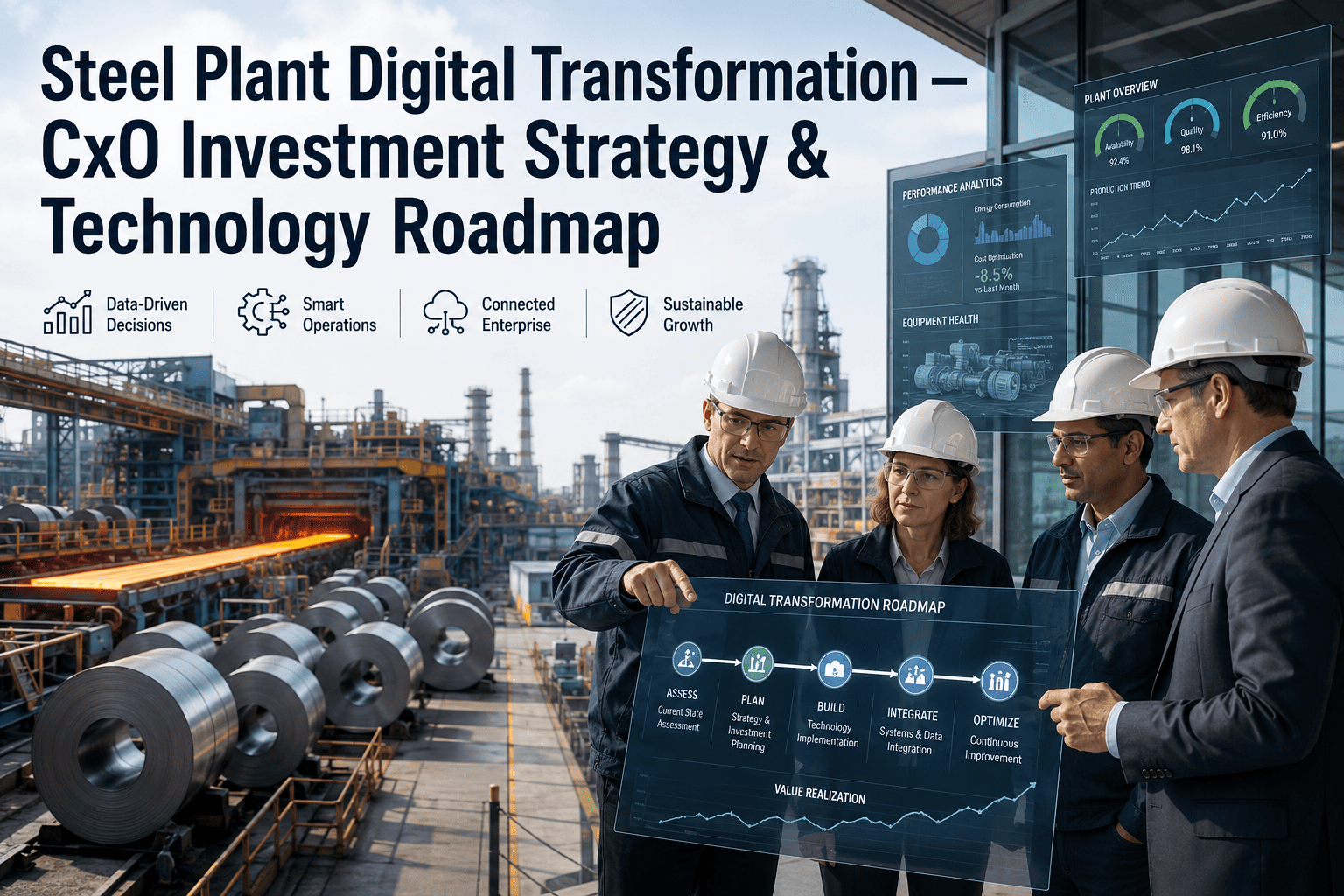
Digital Transformation Roadmap for Steel Operations
Successful digital transformation in steel follows a predictable maturity sequence. Plants that skip steps or try to deploy AI before building the data foundation consistently underperform those that follow the progression below, where each stage generates its own ROI while laying the groundwork for the next.
1
Unified Data Foundation
Connect PLC, SCADA, and MES systems into a single data lake that breaks down silos between melting, rolling, and finishing operations with consistent time-stamping.
2
Real-Time Operational Visibility
Deploy live dashboards showing production throughput, quality yield, energy consumption, and equipment health across every line in the plant without manual data gathering.
3
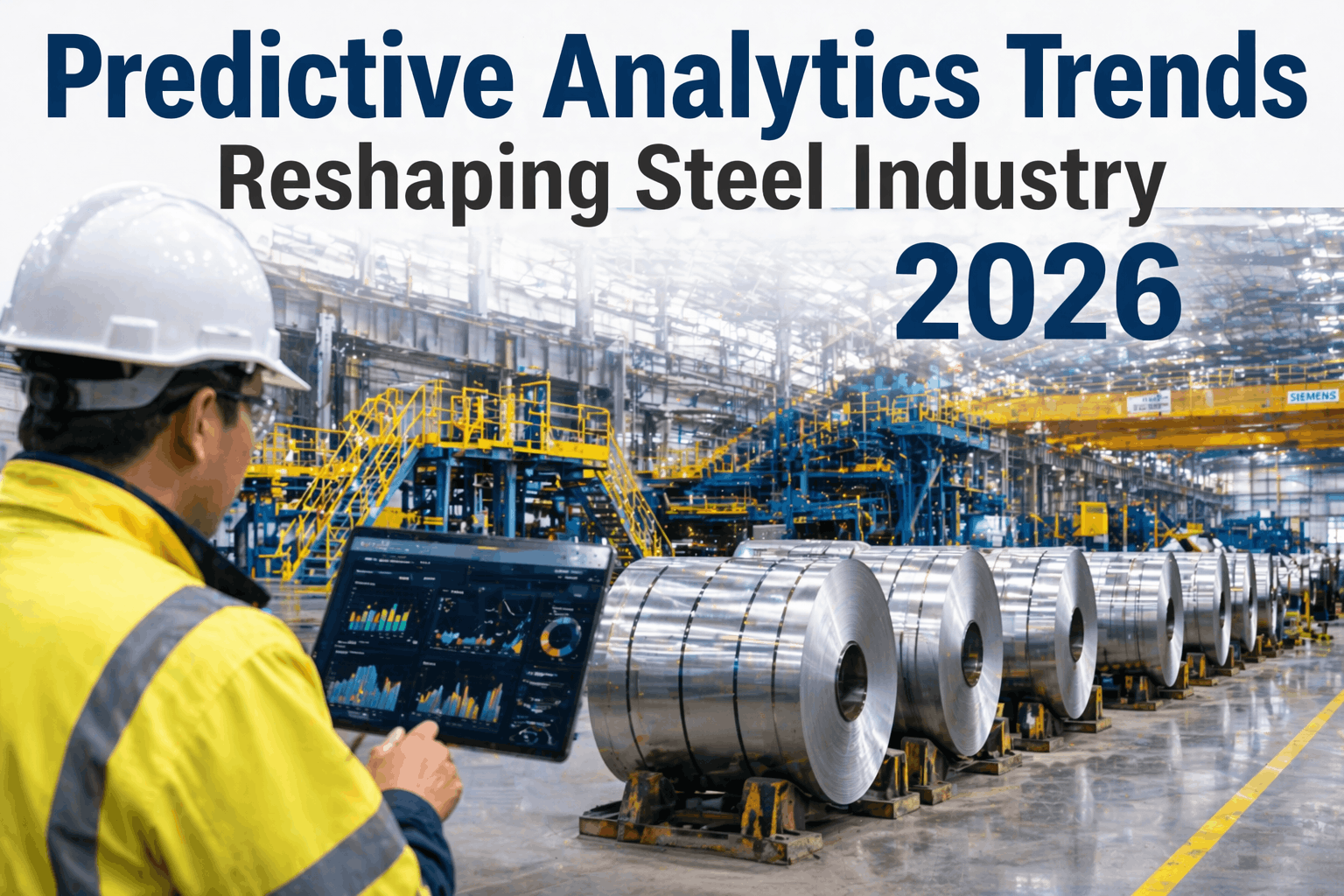
Predictive Analytics Layer
Apply machine learning models for maintenance prediction, quality forecasting, and process optimization using the unified data foundation built in the first two stages.
4
Autonomous Decision Support
Move from passive alerts to AI-recommended actions that operators can accept, modify, or override based on their operational judgment and real-time conditions.
5
Closed-Loop Process Control
Enable AI systems to make micro-adjustments to process parameters in real time within defined safety and quality boundaries, reducing human response latency.
Regional Competitive Landscape in 2026
Europe
Policy-Led
+9% EAF Share
CBAM is forcing rapid decarbonization decisions. Plants without a clear hydrogen or EAF transition plan face structural cost disadvantages as carbon pricing escalates through 2026.
North America
Market-Led
+5% EAF Share
IRA incentives and established scrap networks are accelerating EAF investment without the regulatory pressure seen in Europe, driven by pure economics and reshoring demand.
Asia Pacific
Scale-Led
+6% EAF Share
The largest absolute capacity shifts are happening here. Government industrial policy and automotive sector green steel requirements are creating entirely new demand patterns.
Middle East
Advantage-Led
+2% EAF Share
Already dominant in gas-based DRI production, the region is positioning as a green steel exporter to Europe and Asia as hydrogen infrastructure develops over the next decade.
Frequently Asked Questions
STEEL INDUSTRY TRENDS 2026
Map Your 2026 Steel Strategy With a Live Walkthrough
See how AI-driven intelligence fits into your steel operation's digital roadmap with a personalized demo using your own production data and defect standards.