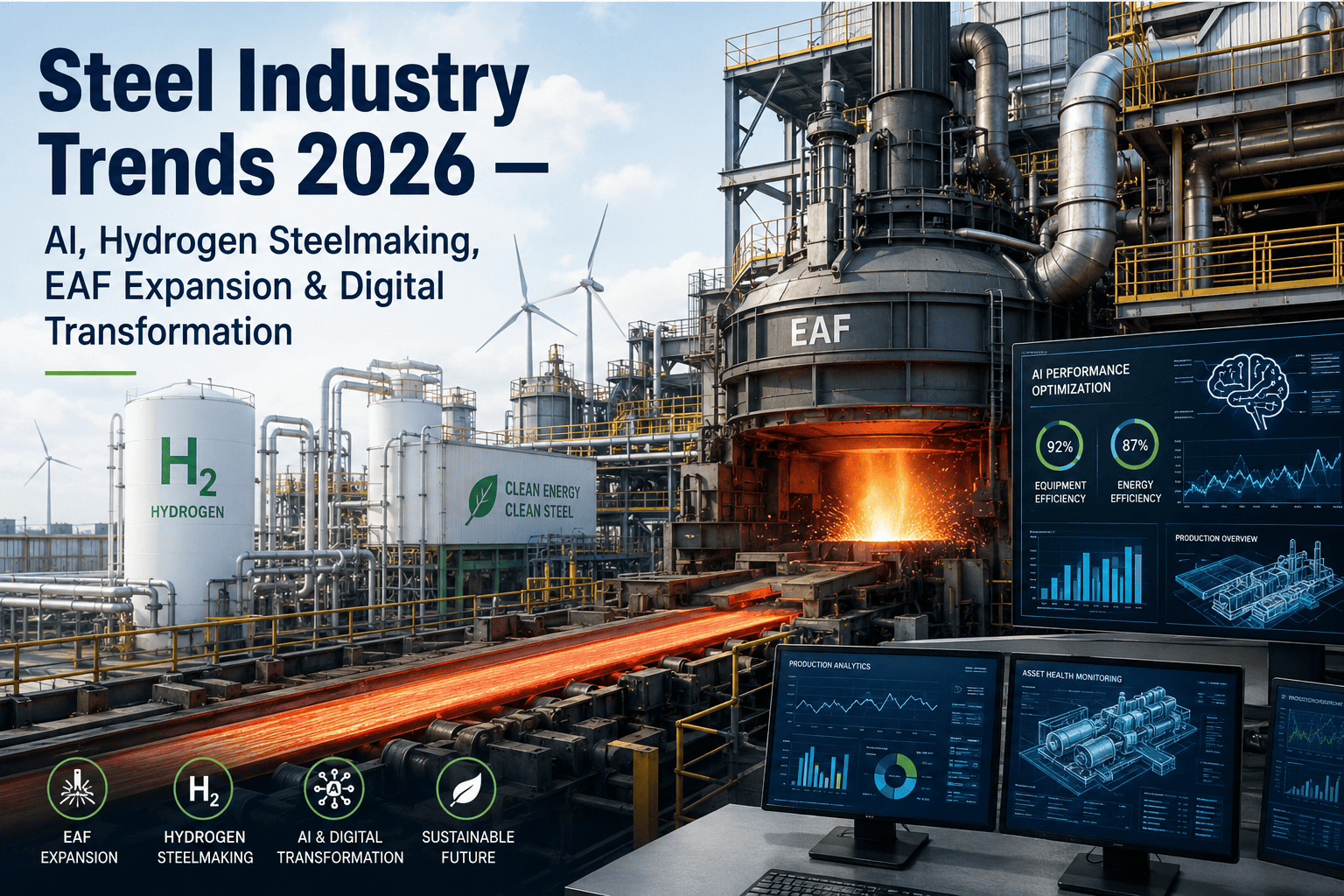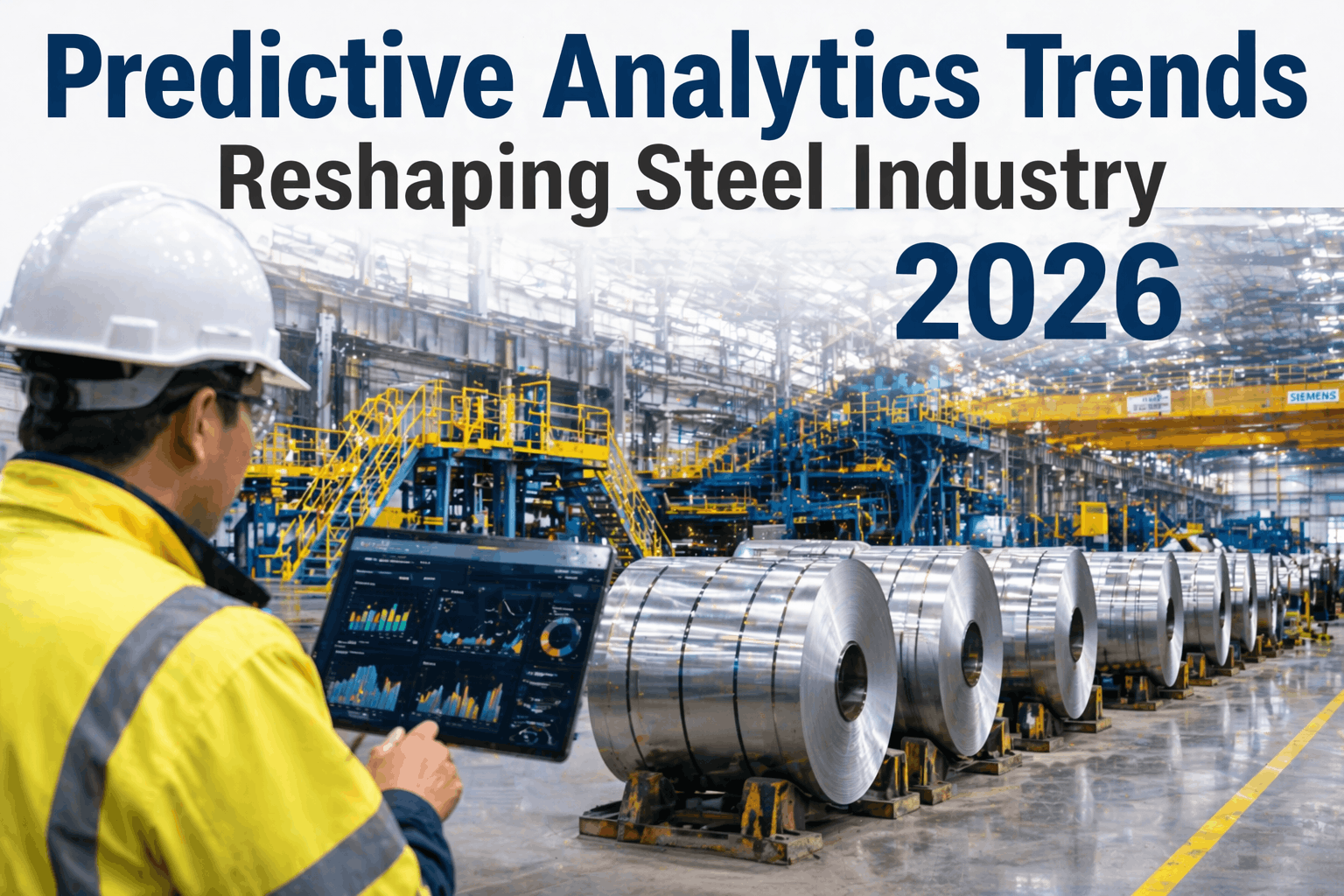
Steel manufacturing is one of the most energy-intensive industries on the planet — consuming 21.27 GJ per tonne of crude steel and contributing 7-9% of global CO₂ emissions. Yet only a fraction of the world's steel plants have embraced the Industry 4.0 technologies that are delivering 20-25% equipment uptime improvements, 12% energy savings, and 25% efficiency boosts for early adopters. With the global steel market projected to surpass $1.89 trillion in 2025 and digital transformation in the steel industry expected to reach $12 billion by 2026 (14% CAGR), the gap between digitally advanced plants and laggards is widening fast. This guide maps the technologies, ROI data, and implementation path for steel plant operators ready to close that gap. Book a free demo to see how iFactory powers the connected steel plant.
The Steel Industry Digital Landscape: 2026
78% of steel companies have adopted digital transformation initiatives — but maturity levels vary enormously. Here's where the industry stands:
| Digital Indicator | Adoption Rate | What It Means |
|---|---|---|
| Digital transformation initiatives adopted | 78% | Most steel firms have started, but depth and maturity vary widely |
| Prioritize digital for operational efficiency | 70% | Efficiency is the primary driver — ahead of growth or compliance |
| Integrated energy management solutions | 65% | Digital energy management delivering avg. 12% energy savings |
| Believe IIoT will fundamentally change operations | 60% | IoT adoption is seen as a structural shift, not incremental improvement |
| Adopted remote monitoring & control systems | 59% | Real-time plant management replacing shift-end reporting |
| Cloud computing adoption since 2020 | +55% | Accelerating shift from on-prem to cloud-based analytics |
| Invested in automation for safety & labor | 45% | Robotics and automated processes reducing hazardous manual tasks |
| Plan to increase digital investment (5 years) | 80% | Budget commitment signals long-term strategic priority |
6 Critical Zones Where Digital Transforms Steel Operations
A steel plant is a chain of interconnected thermal and mechanical processes. Digital optimization in any zone creates cascading benefits across the entire operation.
Blast Furnace & BOF / EAF Optimization
The blast furnace is the single largest energy consumer and emissions source in integrated steel plants. AI-driven process control optimizes charge mix, hot blast temperature, oxygen injection, and slag chemistry in real time. ArcelorMittal's "Smart Steel" digital twin technology optimizes blast furnace operations for improved output and lower carbon emissions. For EAF-based plants, AI optimizes electrode positioning, power profiles, and scrap mix to reduce energy per heat by 5-15%.
Rolling Mill & Finishing Lines
Hot and cold rolling mills determine product quality and yield. ML models predict the impact of parameter changes on final product quality — enabling operators to maximize yield while maintaining standards. AI scheduling algorithms optimize production sequences to minimize changeover times and reduce energy consumption. Computer vision for real-time defect detection during hot rolling reduces scrap and rework.
Predictive Maintenance Across All Assets
Steel plants deploy thousands of sensors monitoring vibration, temperature, pressure, and acoustic signatures on critical assets — ladles, furnace components, rolling mill bearings, drives, and cranes. Tata Steel's AI-driven predictive maintenance achieved 20% reduction in unplanned downtime. Industry-wide, AI predictive maintenance has increased equipment uptime by 20-25% and reduced downtime by an average of 18 hours per month.
Energy & Emissions Management
65% of steel companies have integrated digital energy management solutions, resulting in an average 12% energy savings. Real-time monitoring of blast furnace gas recovery, waste heat utilization, and power consumption across all processes enables continuous optimization. IoT-powered energy control systems measure and lower carbon emissions output in real time — critical as carbon regulations tighten globally.
Quality Control & Defect Detection
AI-powered computer vision systems inspect products at every stage — from slab surface quality through strip finishing — identifying defects with accuracy rates exceeding 99%. Problems are caught immediately, not after an entire coil is processed. Predictive quality models correlate process parameters with final product properties, enabling real-time adjustments that maximize first-pass yield and reduce customer claims.
Supply Chain & Logistics Optimization
AI-driven analytics optimize inventory levels, logistics, and procurement — improving on-time delivery rates by 12%. 69% of steel companies see customer demands for customized products as a driver for digital transformation. Digital platforms streamline order-to-delivery workflows, and predictive demand models reduce safety stock while maintaining service levels. ArcelorMittal launched a digital supply chain platform in September 2025 to enhance responsiveness.
Every zone compounds. When furnace optimization feeds quality prediction, which feeds maintenance scheduling, which feeds energy management — the integrated savings far exceed the sum of individual improvements. Book a demo to see the integrated platform.
See All 6 Zones Connected — In 30 Minutes
Our steel industry specialists will demo live monitoring, predictive maintenance alerts, and AI optimization tailored to your plant's equipment and process flow.
Documented ROI from Steel Plant Digital Transformation
Real results from leading steel manufacturers — not projections.
| Technology / Initiative | Documented Impact | Source / Example |
|---|---|---|
| AI Predictive Maintenance | 20-25% equipment uptime increase; 18 hrs/month downtime reduction | Industry benchmarks; Tata Steel |
| Digital Energy Management | 12% average energy savings; 10% efficiency improvement | 65% of steel companies; ZipDo data |
| AI Blast Furnace / EAF Optimization | 5-15% energy reduction per heat; improved output consistency | ArcelorMittal "Smart Steel"; Baosteel |
| Computer Vision Quality Control | Real-time defect detection; reduced scrap and rework | Industry 4.0 implementations |
| Predictive Demand Analytics | 12% improvement in on-time delivery; 18% better demand forecasting | Data-driven production planning |
| Overall Digital Transformation | 20% average ROI in first year; up to 25% efficiency boost | Steel industry digital project benchmarks |
Before & After: What Digital Transformation Changes
Industry Leaders Setting the Pace
ArcelorMittal
World's Largest Steel Producer"Smart Steel" strategy with digital twins for blast furnace optimization, ML-powered hot rolling defect prediction, and AI logistics for real-time delivery optimization. Launched digital supply chain platform in September 2025.
Tata Steel
AI Pioneer in Indian ManufacturingAI-driven predictive maintenance achieved 20% reduction in unplanned downtime. Aims to become leader in digital steelmaking. Improved energy efficiency, resource utilization, and product quality through enterprise-wide digital programs.
JSW Steel
Targeting Most Digitally Advanced by 2026Digital twins at Vijayanagar plant for real-time production optimization. Predictive analytics for raw material usage. AI chatbots for maintenance support. Aims to be India's most digitally advanced steel business by 2026.
Baosteel (China Baowu)
AI at ScaleIoT-powered energy control systems for real-time emissions monitoring. Fully automated warehousing with robotics and ML. Partnered with Siemens Energy in 2025 for hydrogen-based steelmaking. Setting digital standards for China's steel industry.
Implementation Path: 3 Phases to a Connected Steel Plant
Layer intelligence on top of existing infrastructure — no rip-and-replace.
Connect & Monitor
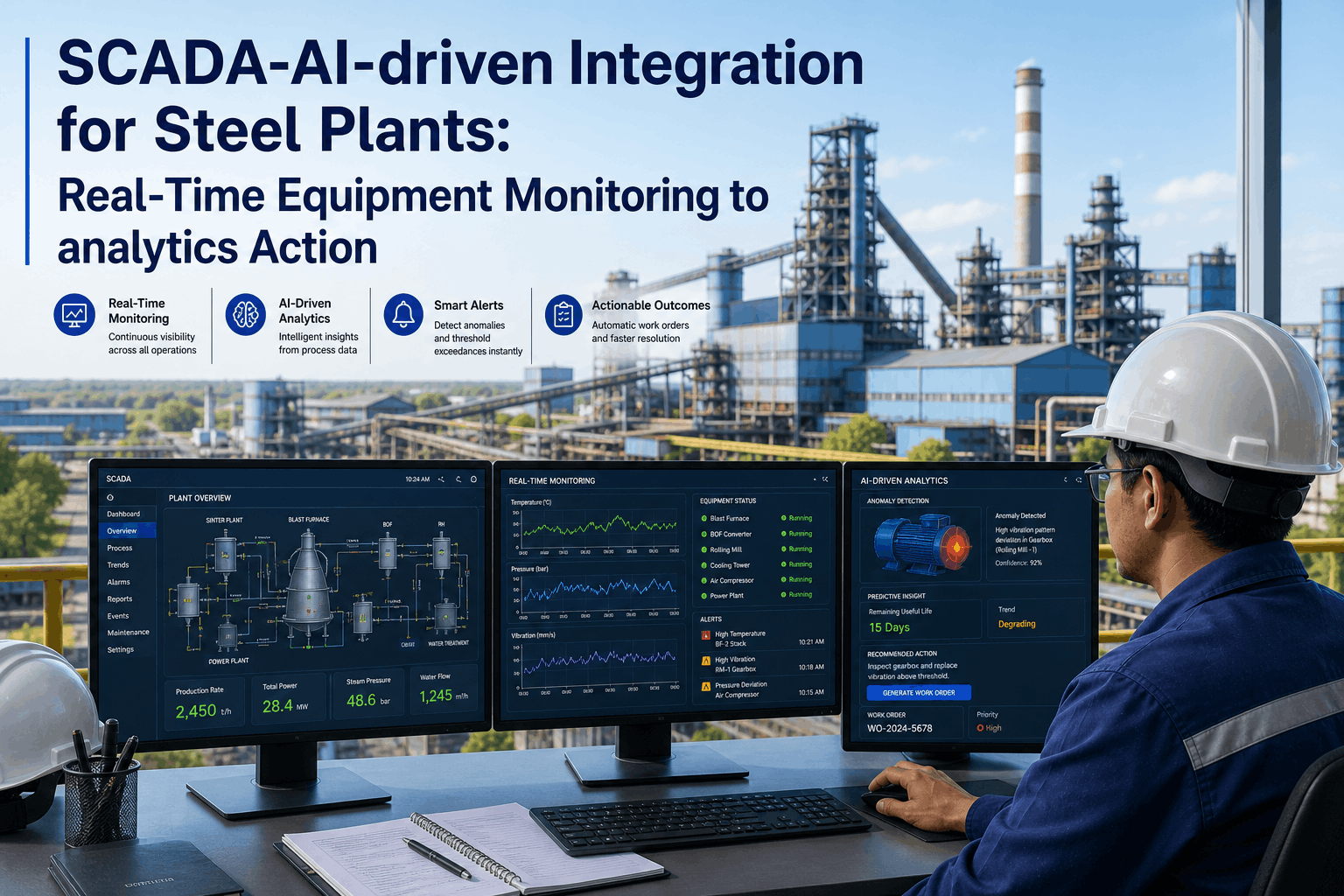
Deploy IoT sensors on critical assets — furnaces, rolling mills, drives, cranes. Establish real-time data connectivity from PLC/SCADA/DCS to cloud. Launch monitoring dashboards for energy, OEE, and equipment health. First predictive maintenance alerts go live within 60 days.
Predict & Optimize
Activate AI models for furnace optimization, energy management, and predictive quality. Deploy computer vision for in-line defect detection. Expand sensor coverage to all critical and semi-critical assets. Launch digital energy management across all processes.
Scale & Integrate
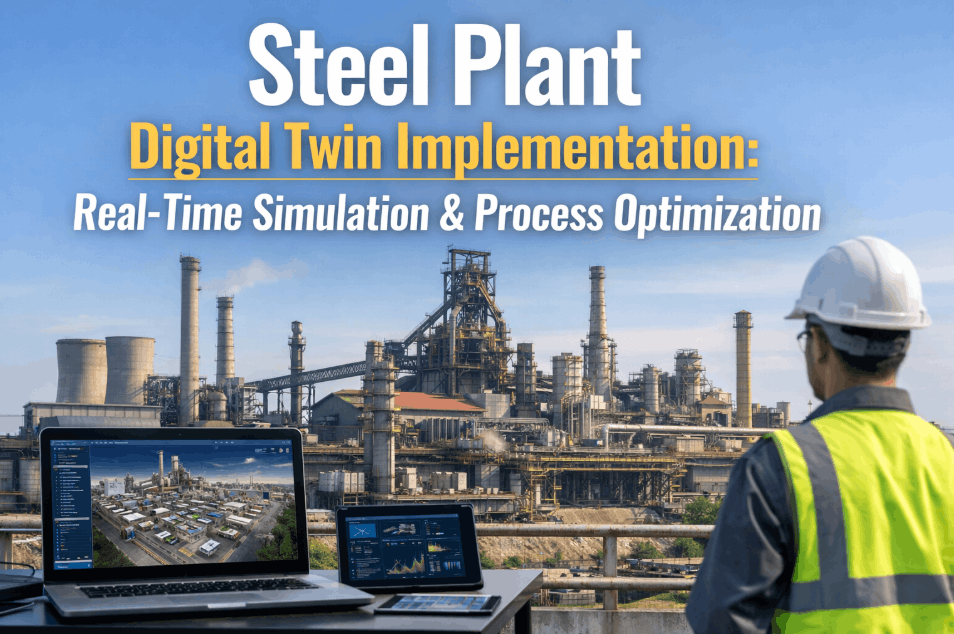
Deploy digital twins for furnace and rolling simulation. Integrate supply chain and logistics optimization. Roll out across multiple lines and plants. Enable enterprise-level benchmarking and continuous improvement. Target autonomous operations for select processes.
Your Steel Plant, Digitally Connected — Demo in 30 Minutes
Our team will walk you through live sensor monitoring, AI predictive maintenance, and furnace optimization tailored to your specific equipment — blast furnace, EAF, rolling mills, or finishing lines.