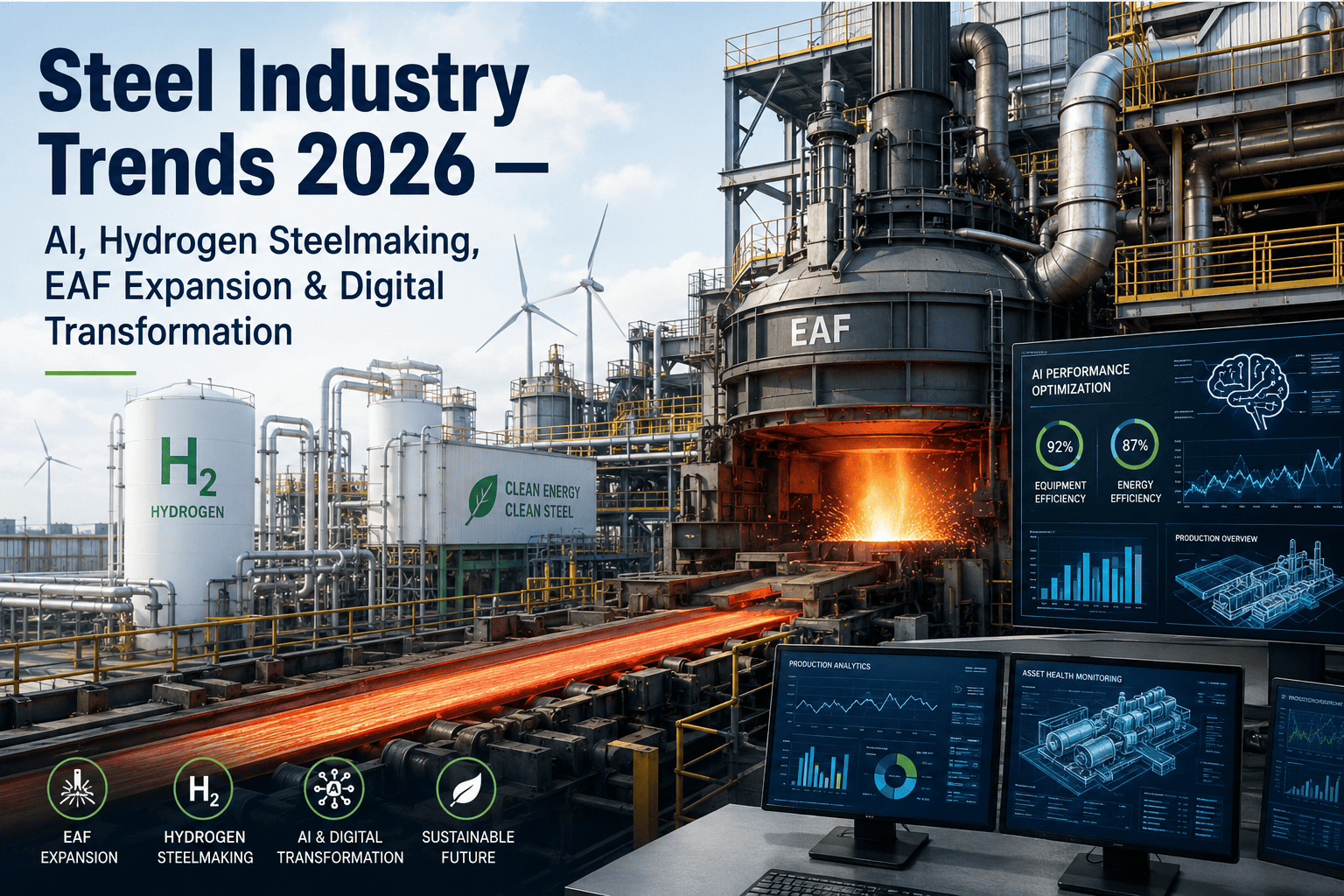
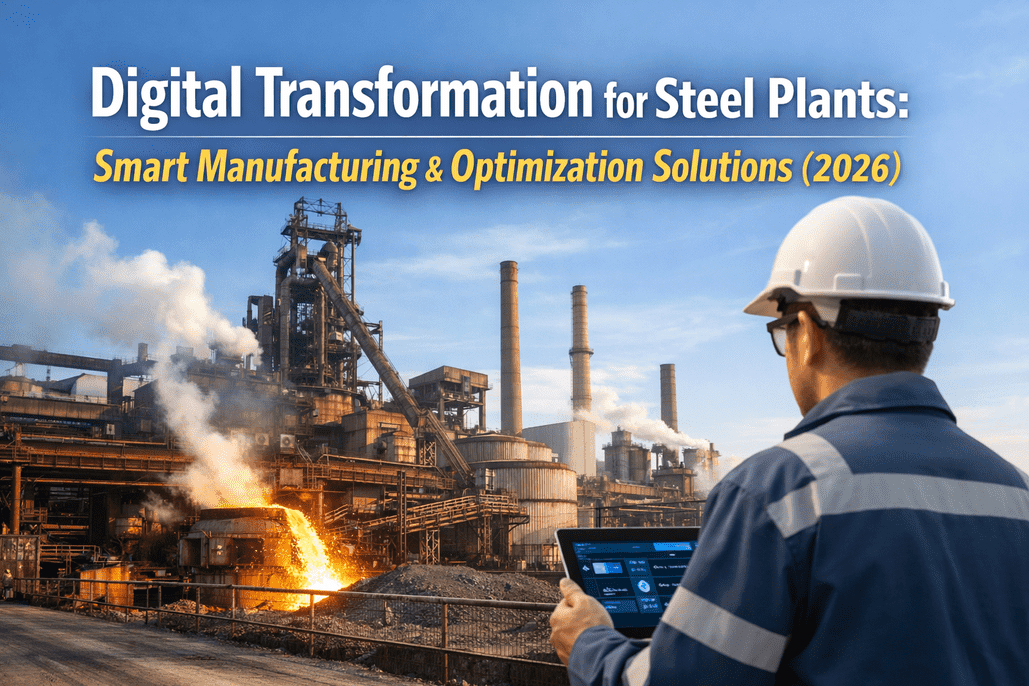
Artificial intelligence is fundamentally reshaping steel manufacturing — from blast furnace optimization and predictive quality control to autonomous crane operations and real-time energy dispatch. The global AI in steel market was valued at $1.8 billion in 2024 and is projected to surpass $6.4 billion by 2030 at a CAGR of 22.3% driven by mounting pressure to cut CO₂ emissions, reduce energy intensity, and compete against lower-cost producers. AI-enabled steel plants report energy reductions of 8–15% per ton, yield improvements of 2–5%, and unplanned downtime reductions of up to 45%. In 2026, early adopters across integrated mills, electric arc furnace (EAF) operations, and downstream rolling and coating lines are deploying machine learning, computer vision, and digital twin technology across every stage of production — and the results are widening the performance gap between AI-driven leaders and laggards still relying on manual process control. iFactory is the AI-powered manufacturing intelligence platform purpose-built for heavy industry, integrating sensor data, equipment maintenance, production analytics, and process optimization into a single operational backbone for your steel plant. Schedule a free steel plant demo and see the transformation in action.
AI in Steel Manufacturing
Complete Transformation
Guide 2026
How machine learning, computer vision, and digital twins are rewriting the economics of integrated mills, EAF operations, and downstream processing lines.
Eight Domains Where AI Transforms Steel Production
From raw material intake through hot rolling, coating, and dispatch — AI drives measurable improvement at every stage.
Blast Furnace & EAF Optimization
AI models trained on thousands of heats predict optimal burden composition, injection rates, and tap timing — reducing energy consumption by 8–12% per heat while maintaining target chemistry. Reinforcement learning agents continuously tune operating parameters in response to raw material variability, scrap mix changes, and demand shifts. Real-time recommendations surface on operator HMIs, closing the loop between data and action.
Computer Vision Surface Inspection
High-speed line scan cameras and deep learning models detect surface defects — slivers, scales, cracks, inclusions — at rolling speeds of 1,200+ meters per minute with sub-millimeter precision. Classification accuracy exceeds 95%, vs. 70–80% for manual inspection. Defect maps are generated in real time and linked to process parameters, enabling root cause identification and upstream correction rather than downstream scrap.
Predictive Maintenance for Critical Equipment
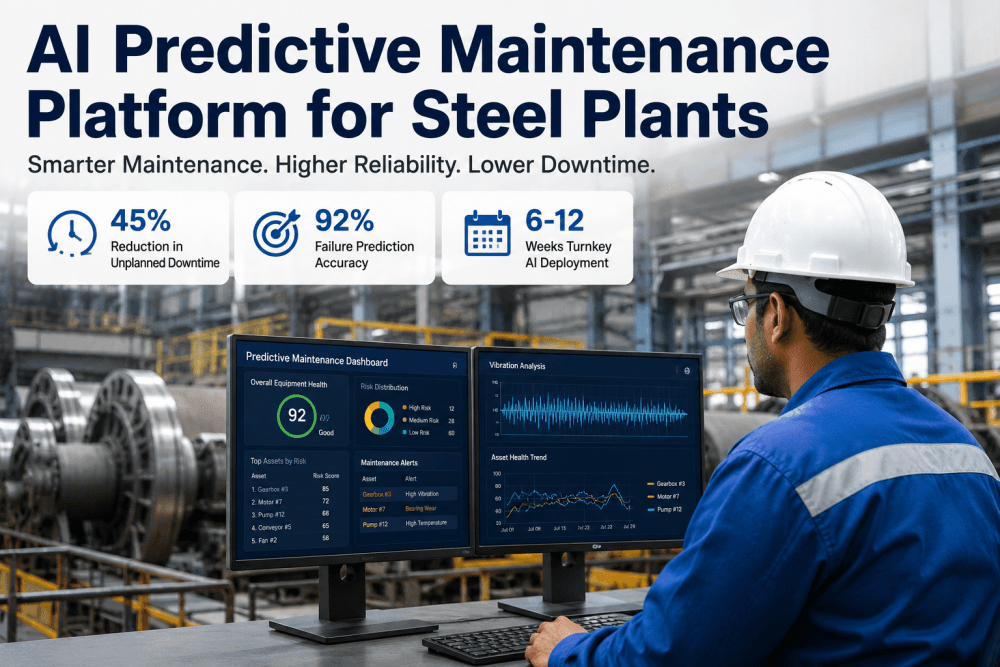
Vibration, thermal, and acoustic sensors on rolling mills, continuous casters, pumps, and compressors feed ML models that predict failures 2–6 weeks before occurrence. Planned replacements replace emergency breakdowns. Mean time between failures (MTBF) improves 40–60% in the first year of deployment. See predictive maintenance →
Energy Intelligence & Carbon Management
AI dispatches energy across the plant to minimize peak demand charges, optimize load scheduling against electricity tariffs, and reduce CO₂ intensity per ton. Dynamic load balancing between EAFs, rolling mills, and utility infrastructure achieves 10–18% reduction in energy cost per ton while generating auditable carbon accounting reports for CBAM and ESG disclosure. See energy platform →
Digital Twin for Process Simulation
High-fidelity digital twins replicate blast furnace thermodynamics, caster solidification, and rolling mill deformation in real time — allowing operators to simulate process changes before implementing them on live equipment. "What-if" scenarios that previously required physical trials (with associated yield loss) can now be validated in minutes. New product development cycles shrink from months to weeks. Leading steel producers report 20–35% reduction in new grade development time with digital twin workflows.
Worker Safety & Hazard Detection
Computer vision monitors safety compliance across high-hazard zones — PPE detection, hot zone intrusion, crane proximity alerts, and unsafe behavior flagging. AI safety systems reduce recordable incidents by 25–40% compared to manual observation. Real-time alerts are pushed to supervisors and safety officers within seconds of detection.
Scrap & Raw Material Optimization
AI vision systems classify scrap grades at the yard in real time — eliminating manual sorting errors that contaminate heats. Blend optimization models select the lowest-cost scrap mix that meets chemistry targets, incorporating spot prices, logistics costs, and inventory levels. Typical yield from scrap optimization: $8–$15 per ton in raw material savings. See material intelligence →
Production Planning & Scheduling AI
AI-driven production scheduling optimizes order sequences across casting, rolling, and finishing lines to minimize changeovers, balance furnace loads, and meet delivery commitments — simultaneously. Constraint-based solvers handle thousands of variables (grade transitions, equipment availability, customer priorities, energy windows) that are impossible to manually optimize. Plants using AI scheduling report 15–25% improvement in on-time delivery and 10–20% reduction in work-in-progress inventory.
Steel Plant Operations: Before vs. After AI
The gap between AI-enabled and traditional steel operations is widening every quarter.
Your AI Transformation Journey — Four Phases
Start with high-ROI use cases, prove the business case, then expand systematically across your plant.
Data Foundation & Infrastructure
Connect existing sensors to a unified IoT data platform. Audit data quality and fill gaps. Deploy edge computing nodes for low-latency sensor processing. Establish data historian and time-series database. Map equipment assets into CMMS. Define data governance and cybersecurity framework (IEC 62443).
Quick-Win AI Deployments
Deploy predictive maintenance models on highest-criticality equipment (rolling mill drives, continuous caster, pumps). Launch computer vision quality inspection on one rolling line. Activate energy monitoring and basic demand management AI. Each deployment builds the internal AI capability and organizational confidence needed for Phase 3. Plan Phase 2 →
Process Optimization & Scale
Deploy furnace optimization AI across all furnaces. Roll out computer vision to all production lines. Activate safety AI system campus-wide. Launch production scheduling AI and integrate with ERP. Expand predictive maintenance to full asset portfolio. Begin digital twin development for blast furnace or primary caster.
Autonomous Operations & Intelligence
Full digital twin spanning primary to finishing operations. Closed-loop AI control with human-in-the-loop override. Scrap optimization AI in the raw material yard. Carbon management system with automated CBAM reporting. Continuous model improvement through production feedback loops. Certification as an AI-enabled smart steel facility.
The ROI of Steel Plant AI — By the Numbers
For a 1Mt/year integrated mill, AI-driven improvements typically generate $12–22M annual EBITDA improvement within 24 months of full deployment.
Get Your Steel Plant ROI Assessment ↗How iFactory Powers Steel Plant AI Transformation
One platform connecting sensors, maintenance, production, and intelligence — not a collection of point solutions.
Integration
Optimization
Maintenance
Intelligence
Management
Analytics
Sensor & IIoT Integration
Native connectors for OPC-UA, MQTT, Modbus, BACnet, and SCADA historians. Connect 1,000+ sensors across your plant without custom integration work. Real-time streaming data pipeline with edge processing for sub-100ms latency where it matters.
AI Work Order & Maintenance Engine
Sensor anomalies automatically generate prioritized work orders with diagnostic context, spare parts requirements, and suggested repair procedures. Maintenance scheduling integrates with production plans to minimize impact. Full asset lifecycle tracking from commissioning to replacement.
Production Intelligence Dashboard
Plant-wide operational visibility with KPI dashboards for shift managers, production planners, and plant directors. Real-time OEE, yield, quality, and energy metrics. Drill from plant summary to machine-level data in two clicks. Configurable alerts for any threshold. See the dashboard →
ERP & MES Integration
Pre-built connectors for SAP S/4HANA, Oracle Manufacturing, and leading MES platforms. Production actuals flow back to ERP automatically. Quality records, material certs, and traceability data generated without manual entry. Closes the loop between process data and business systems.
Carbon & Compliance Reporting
Automated CO₂ intensity calculation per heat, per order, per product grade. CBAM-ready reporting structure. ISO 50001 energy management data collection built in. Scope 1, 2, and 3 emissions tracking with audit trail for ESG disclosure and customer decarbonization commitments.
Frequently Asked Questions — AI in Steel Manufacturing
Your Competitors Are Already Deploying Steel Plant AI.
The performance gap between AI-enabled steel producers and traditional operators is growing by 3–5% per year in energy, yield, and quality metrics. Every quarter without AI is a quarter of margin left on the table. iFactory makes enterprise-grade steel plant AI accessible, deployable, and ROI-proven.