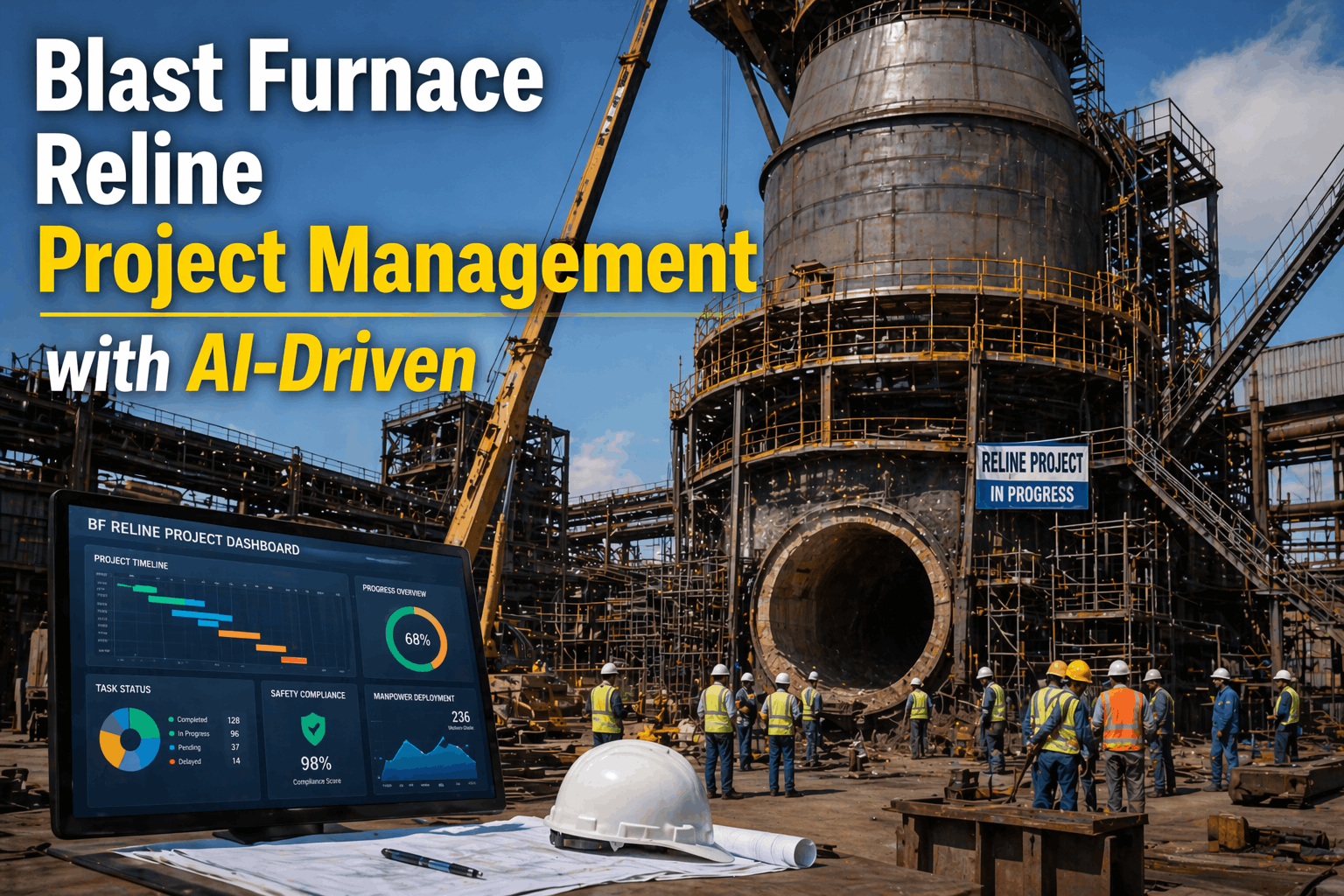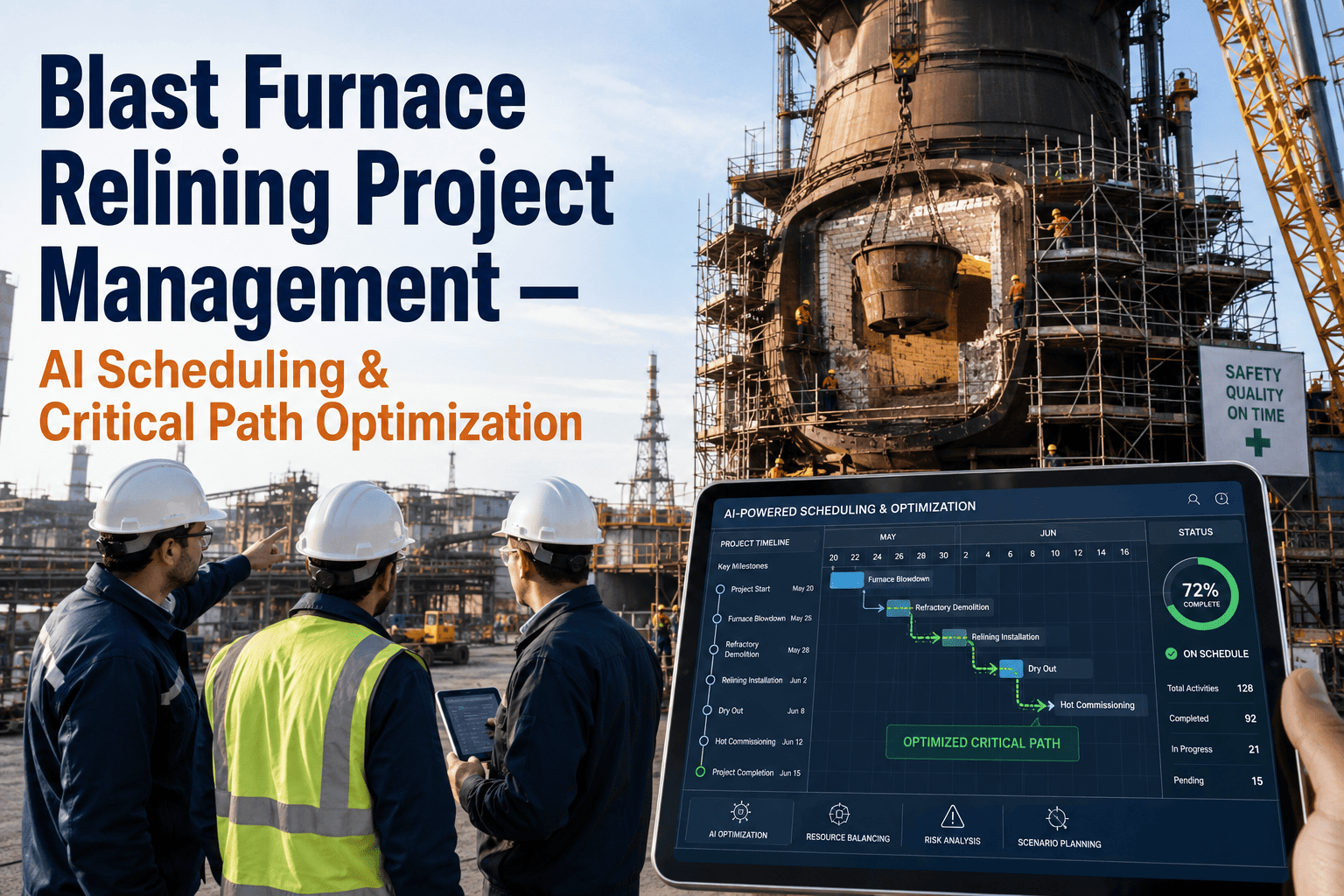
Blast furnace relining is one of the most capital-intensive and time-sensitive projects in heavy industry. A single relining event can cost upwards of $50 million and require shutting down production for 100 to 120 days, directly impacting revenue and market share. Plant managers and maintenance directors face immense pressure to complete relining within tight windows while coordinating dozens of contractors, managing thousands of tasks, and ensuring zero safety incidents. Traditional project management tools like Gantt charts and spreadsheets are no longer sufficient to handle the complexity of modern relining projects. This is where AI-driven scheduling and critical path optimization transform the landscape. By leveraging machine learning algorithms and real-time data, enterprises can now predict bottlenecks, dynamically adjust resource allocation, and compress project timelines by up to 20%. In this comprehensive guide, we explore how AI-powered project management redefines blast furnace relining, from initial planning to final commissioning. Book a Demo to see how iFactory can optimize your next relining project.
Ready to Transform Your Relining Project?
Leverage AI-driven scheduling and critical path optimization to complete relining within 100 days. Minimize downtime, reduce costs, and enhance safety.
85% On-Time Completion
AI-optimized scheduling helps achieve on-time delivery for 85% of relining projects, compared to industry average of 60%.
70% Cost Reduction
Enterprises report up to 70% reduction in unplanned overtime and material waste through AI-driven resource allocation.
95% Safety Compliance
Real-time risk monitoring and predictive analytics ensure 95% compliance with safety protocols during relining.
Understanding Blast Furnace Relining Complexity
Blast furnace relining involves replacing the refractory lining, cooling systems, and often upgrading ancillary equipment. The process typically spans 12 to 16 weeks and encompasses over 500 distinct activities, from demolition and refractory installation to tuyere replacement and hearth cooling system testing. Each activity has dependencies that create a complex network of critical paths. A single delay in refractory delivery can cascade into weeks of downtime. Traditional project management relies on static schedules that cannot adapt to real-world disruptions like weather, labor shortages, or material quality issues. AI-driven systems ingest historical data, supplier performance metrics, and real-time sensor feeds to continuously update the critical path, enabling proactive decision-making.
AI Scheduling Optimization
Machine learning models analyze thousands of past relining projects to identify optimal task sequences and resource allocations. The system automatically adjusts schedules based on real-time progress and external factors, reducing idle time by 30%.
Contractor Coordination
Centralized platform manages up to 50 contractors simultaneously, tracking certifications, availability, and performance. AI predicts potential conflicts and suggests alternative assignments to maintain workflow continuity.
Critical Path Tracking
Real-time dashboards highlight the critical path and flag any activity that risks delaying the project. AI calculates float times and recommends expediting measures, such as parallel tasking or resource reallocation.
Risk Mitigation
Predictive models identify high-risk activities based on historical data, weather forecasts, and supply chain reliability. Early warnings allow teams to implement contingency plans before issues escalate.
Step-by-Step AI Implementation for Relining Projects
Implementing AI for relining project management follows a structured approach that integrates with existing ERP and CMMS systems. The first step is data ingestion: historical schedules, contractor performance records, material lead times, and sensor data from previous relines are consolidated into a unified data lake. Next, machine learning models are trained to recognize patterns that lead to delays or quality issues. The AI then generates an optimized baseline schedule that respects all dependencies and resource constraints. During execution, the system continuously monitors progress via IoT sensors, manual check-ins, and contractor updates, automatically recalibrating the schedule as needed. Finally, post-project analytics provide insights for continuous improvement, feeding back into the model for future projects.
Phase 1: Data Consolidation
Aggregate all historical relining data, contractor records, and real-time sensor feeds into a centralized platform. Ensure data quality and completeness.
Phase 2: Model Training
Train machine learning models on past projects to identify patterns that cause delays, cost overruns, or safety incidents. Validate model accuracy with cross-validation.
Phase 3: Baseline Schedule Generation
AI generates an optimized baseline schedule that minimizes duration while respecting all constraints. The schedule is reviewed by project managers and adjusted for local conditions.
Phase 4: Real-Time Monitoring & Adjustment
During execution, the AI continuously monitors progress and updates the schedule dynamically. Alerts are sent when deviations threaten the critical path.
Phase 5: Post-Project Analytics
After completion, the system analyzes performance data to generate insights for future relining projects, closing the loop on continuous improvement.
Optimize Your Relining Schedule with AI
Reduce project duration by up to 20% and minimize cost overruns. Our AI-powered platform integrates seamlessly with your existing systems.
Key Performance Indicators for Relining Projects
Measuring success in relining projects requires tracking a set of KPIs that go beyond simple schedule adherence. The most critical metrics include critical path index (CPI), which measures how closely activities follow the planned critical path; schedule performance index (SPI); cost performance index (CPI); and safety incident rate. AI systems can predict these KPIs in real time, allowing managers to intervene before targets are missed. For example, if the CPI drops below 0.9, the system might recommend adding a second shift to critical activities or expediting material deliveries. Historical benchmarks from similar projects provide context, enabling data-driven decisions that balance speed, cost, and safety.
| KPI | Target | AI Prediction Accuracy |
|---|---|---|
| Critical Path Index (CPI) | > 0.95 | 92% |
| Schedule Performance Index (SPI) | > 1.0 | 88% |
| Cost Performance Index (CPI) | > 0.95 | 90% |
| Safety Incident Rate | < 0.5 per 100k hours | 85% |
Contractor Coordination Best Practices
Coordinating multiple contractors is often the biggest challenge in relining projects. Each contractor brings specialized skills—demolition, refractory installation, mechanical fitting, electrical work—and their schedules must be tightly interleaved. AI-driven platforms provide a single source of truth for contractor availability, certifications, and performance history. The system can automatically assign tasks based on skill sets and proximity, reducing travel time and idle periods. Real-time communication features ensure that all contractors receive instant updates when schedules change. Additionally, the platform tracks contractor compliance with safety protocols, automatically flagging any violations and triggering corrective actions. This level of coordination reduces conflicts and ensures that work progresses smoothly.
Unified Contractor Portal
All contractors access a single portal to view schedules, submit progress reports, and receive notifications. Reduces miscommunication and administrative overhead.
Skill-Based Task Assignment
AI matches tasks to contractors with the right certifications and experience, improving quality and reducing rework.
Dynamic Resource Pooling
When a contractor falls behind, the system automatically reallocates resources from less critical tasks to maintain the critical path.
Compliance Monitoring
Real-time tracking of safety certifications, equipment inspections, and incident reports ensures all contractors meet enterprise standards.
Cost Optimization Through AI
Relining projects often exceed budgets due to unplanned overtime, expedited shipping, and rework. AI-driven cost optimization addresses these issues by predicting cost overruns before they occur. The system analyzes historical cost data, supplier pricing trends, and labor rates to generate accurate cost estimates. During execution, it tracks actual spending against the budget and alerts managers when variances exceed thresholds. Machine learning models identify the root causes of cost overruns, such as inefficient task sequencing or supplier delays, and recommend corrective actions. For example, if a refractory supplier is consistently late, the system might suggest switching to an alternative supplier or ordering materials earlier. These proactive measures can reduce total project costs by 10-15%.
Quality Assurance and Safety Management
Quality and safety are non-negotiable in blast furnace relining. Defective refractory installation can lead to premature failure, causing unplanned outages and safety hazards. AI systems enhance quality assurance by analyzing sensor data from installation processes, such as torque values, temperature profiles, and vibration patterns, to detect anomalies in real time. If a refractory brick is installed with insufficient mortar coverage, the system immediately flags it for inspection. Safety is managed through predictive analytics that identify high-risk activities based on historical incident data. The system can also monitor worker fatigue by analyzing shift patterns and break times, alerting supervisors when workers are at risk of overexertion. These capabilities create a safer work environment and reduce the likelihood of costly rework.
Frequently Asked Questions
How does AI improve scheduling for blast furnace relining?
AI improves scheduling by analyzing historical project data to identify optimal task sequences and resource allocations. Machine learning models predict potential delays based on factors like weather, supplier performance, and labor availability. The system continuously updates the schedule in real time, allowing project managers to adjust resources dynamically. This reduces idle time and ensures that critical path activities stay on track. For example, if a refractory delivery is delayed, the AI can automatically reschedule less critical tasks to keep the project moving. Book a Demo to see how AI scheduling can compress your relining timeline.
What are the key challenges in contractor coordination during relining?
The main challenges include managing schedules for multiple specialized contractors, ensuring they have the right certifications, and maintaining clear communication. Contractors often work in overlapping areas, creating conflicts that can delay the project. Additionally, contractor performance varies, and poor work quality can lead to rework. AI platforms address these challenges by providing a centralized portal for scheduling, compliance tracking, and real-time communication. The system can automatically reassign tasks when a contractor falls behind, ensuring that the critical path is maintained. Contact Support for more information on contractor coordination features.
How can AI reduce costs in relining projects?
AI reduces costs by predicting and preventing cost overruns through real-time budget tracking and variance analysis. The system identifies inefficiencies in task sequencing and resource allocation, suggesting changes that reduce overtime and material waste. For instance, AI can optimize the ordering of materials to avoid expedited shipping fees. It also analyzes supplier performance data to recommend reliable vendors, minimizing delays and rework. Overall, AI-driven cost optimization can reduce total project costs by 10-15%. Book a Demo to learn how our platform can optimize your relining budget.
What safety benefits does AI provide during relining?
AI enhances safety by analyzing historical incident data to predict high-risk activities and alerting supervisors to potential hazards. Real-time monitoring of worker fatigue, equipment condition, and environmental factors helps prevent accidents. For example, sensors can detect abnormal vibrations in cooling systems, indicating a potential failure. The system also tracks safety certifications and ensures that only qualified personnel perform critical tasks. These proactive measures reduce incident rates and create a culture of safety. Contact Support to discuss safety features tailored to your facility.
How long does it take to implement AI for relining project management?
Implementation typically takes 4 to 8 weeks, depending on the complexity of existing systems and data availability. The first phase involves data integration from ERP, CMMS, and IoT sources. Next, machine learning models are trained on historical data, which can take 1-2 weeks. After validation, the system is deployed in a pilot project to fine-tune performance. Full rollout follows, with training for project managers and contractors. Ongoing support ensures continuous improvement. Book a Demo to get a customized implementation timeline for your plant.
Transform Your Relining Project Today
Harness the power of AI to complete relining within 100 days, reduce costs by 15%, and achieve zero safety incidents. Our experts are ready to guide you.