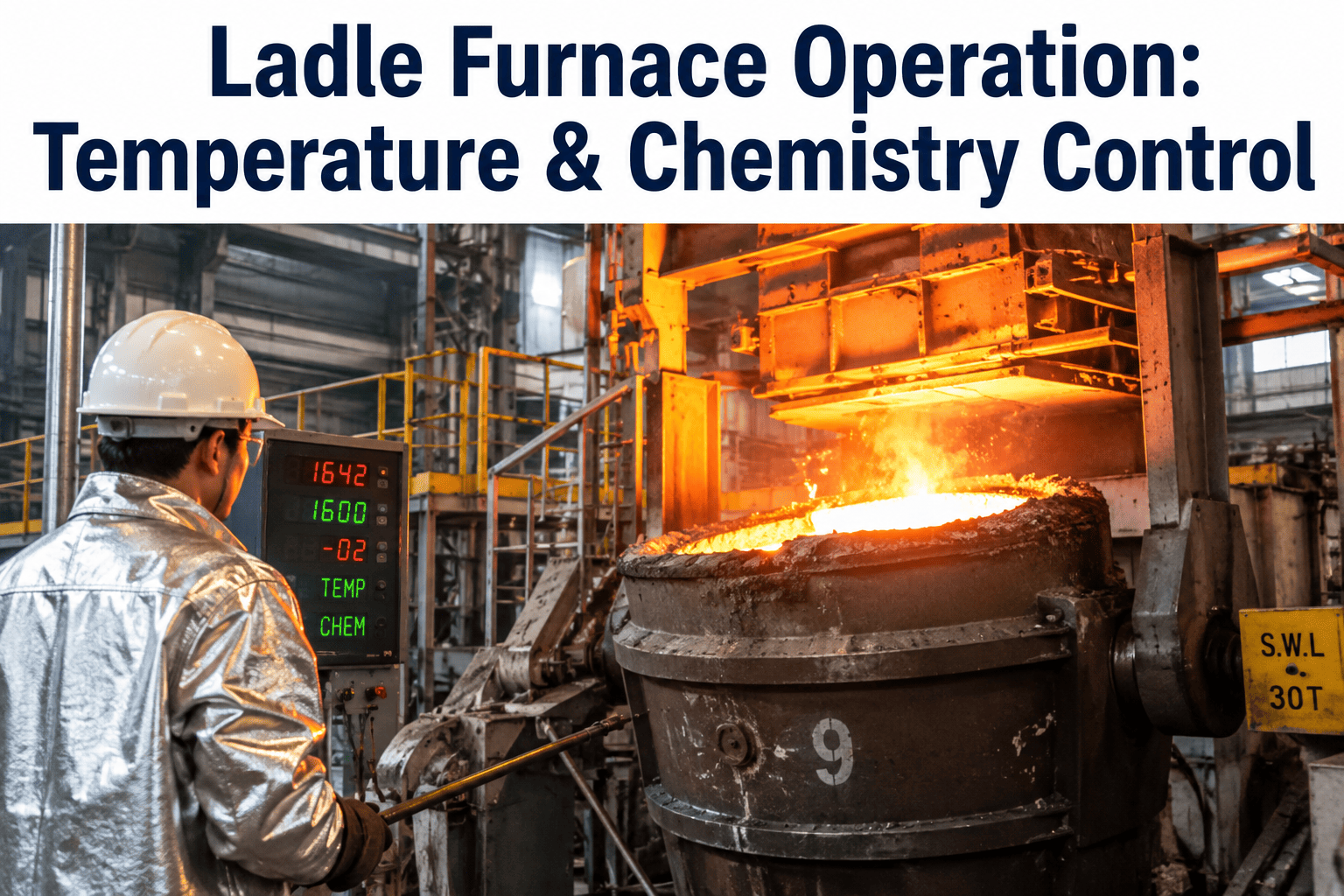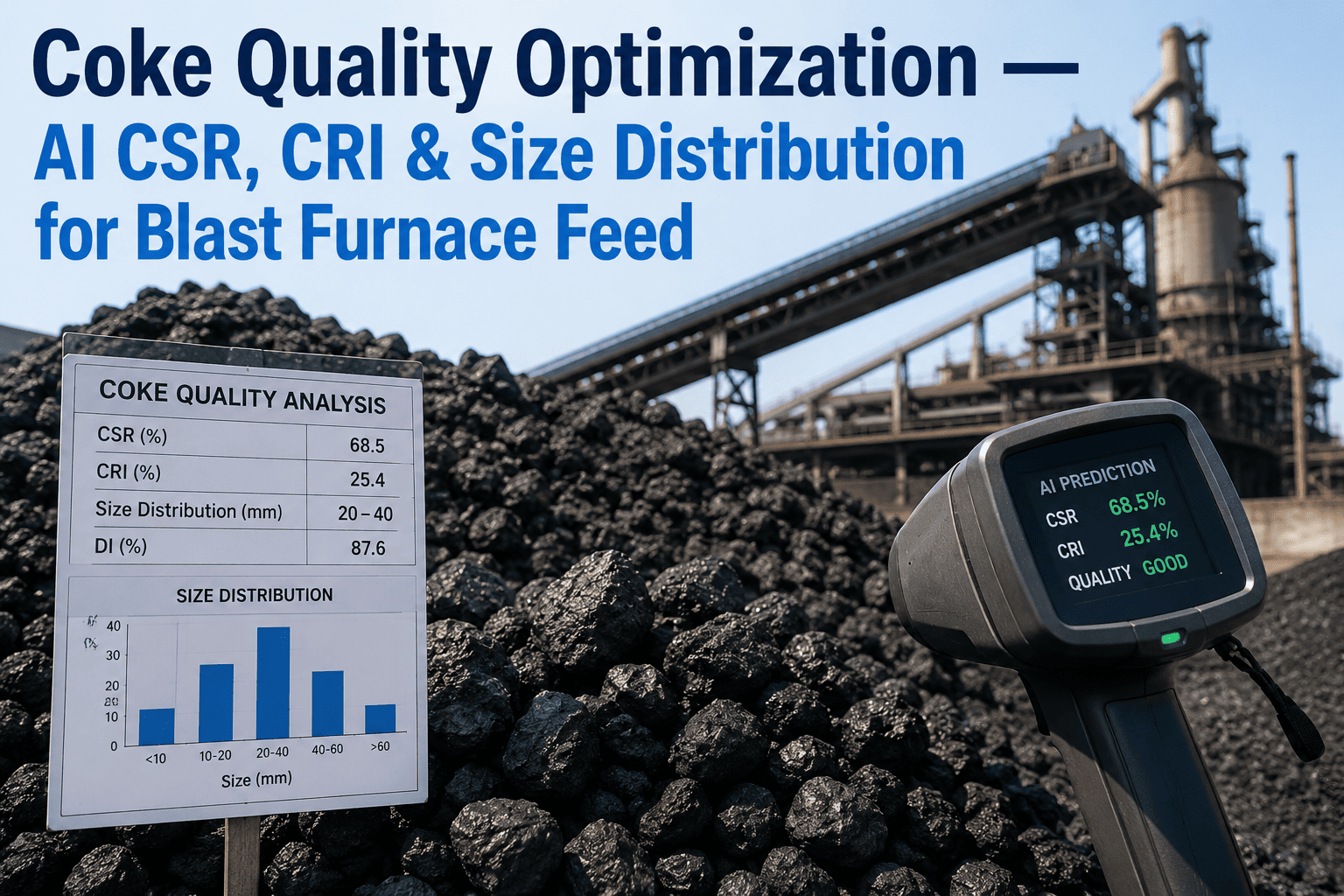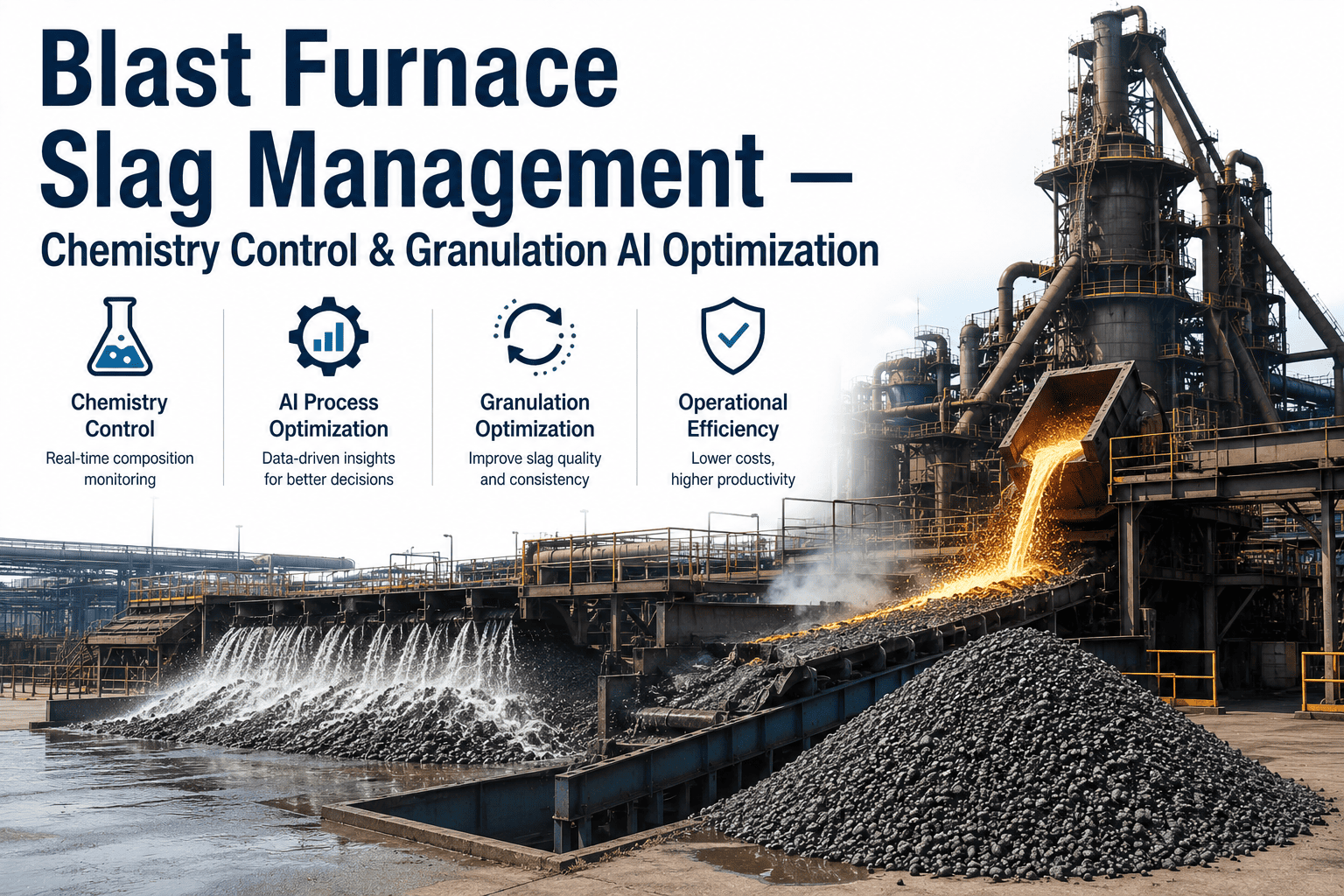
Blast furnace slag management has evolved from a reactive byproduct handling task to a strategic, data-driven discipline that directly impacts steel quality, furnace longevity, and downstream profitability. In modern integrated steel mills, the chemistry of molten slag — particularly its basicity, alumina content, and viscosity — must be precisely controlled to ensure optimal desulfurization, stable hearth drainage, and consistent granulation for high-value GGBS production. Traditional manual adjustments based on periodic lab samples introduce latency and variability that erode efficiency. Artificial intelligence now enables real-time slag chemistry prediction, adaptive flux dosing, and autonomous granulation optimization, transforming slag from a disposal liability into a revenue-generating asset. This comprehensive guide explores the technical depths of AI-driven slag management, covering advanced control algorithms, sensor fusion strategies, and economic impact analysis. For a tailored implementation roadmap, Book a Demo with our industry experts.
Transform Your Slag Management Today
Leverage AI to cut variability by 40% and boost GGBS yield. Schedule your personalized consultation now.
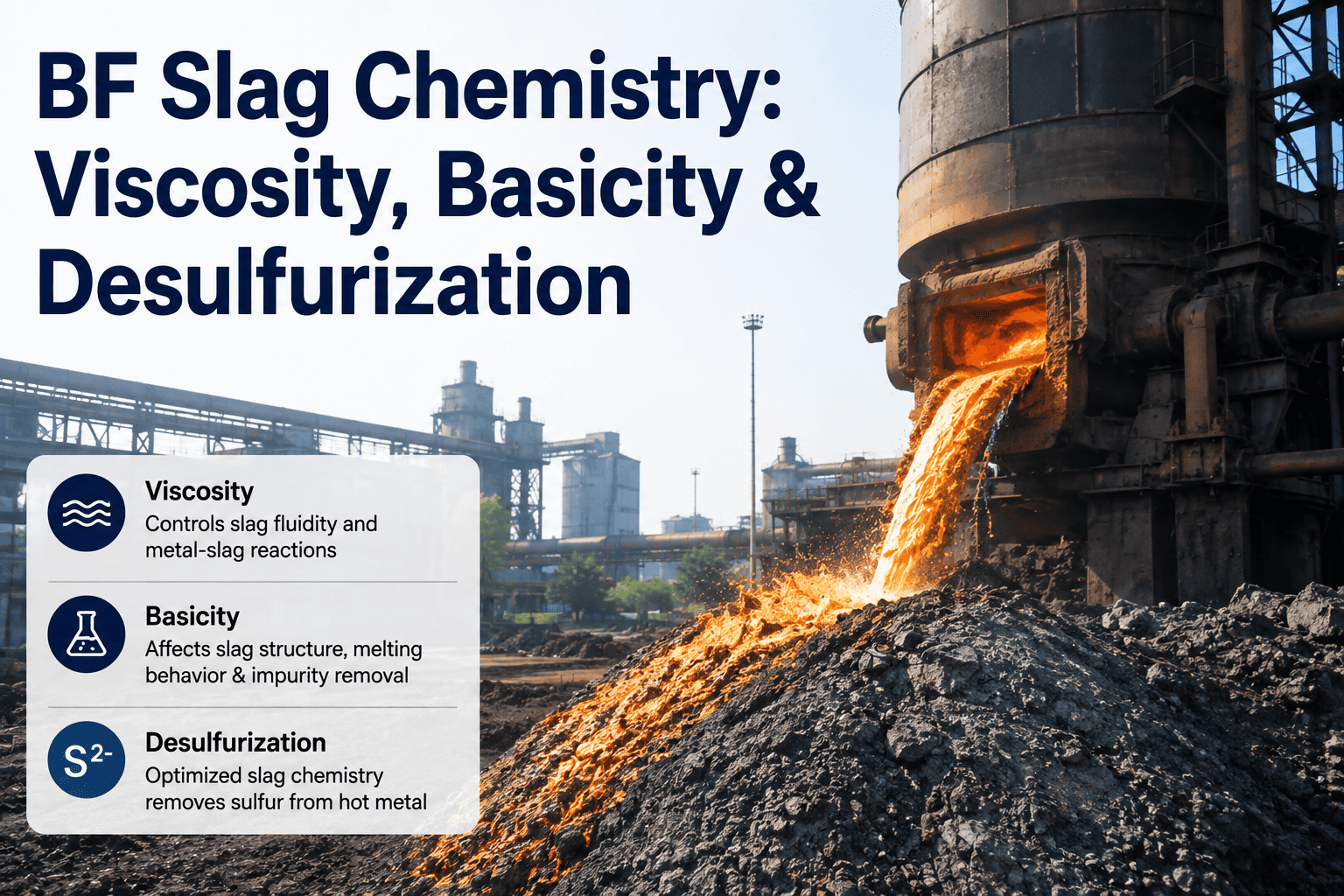
Basicity Control
Maintain target CaO/SiO2 ratio within ±0.02 using predictive models that adjust flux rates 15 minutes ahead of actual need.
Alumina Management
Keep Al2O3 below 18% to preserve fluidity and desulfurization capacity, with real-time alerts for raw material swings.
Viscosity Optimization
Target 5-10 Poise at 1500°C for smooth tapping and granulation, using AI to preemptively adjust slag modifiers.
The Chemistry of Slag Control: Why Basicity, Alumina, and Viscosity Matter
Slag chemistry is the single most influential factor in hot metal desulfurization, hearth refractory wear, and slag granulation quality. The binary basicity (CaO/SiO2) determines the slag's sulfide capacity and liquidus temperature. At basicity below 1.0, slag becomes acidic and loses its ability to absorb sulfur; above 1.3, it becomes too viscous and traps iron droplets, reducing yield. Alumina (Al2O3) from iron ore gangue and coke ash acts as a network former, increasing viscosity exponentially above 18%. Viscosity itself governs tapping flow, slag-metal separation, and granulation droplet size. AI models trained on historical slag composition, burden data, and tapping parameters can predict these properties 30-60 minutes in advance, enabling proactive corrections. This eliminates the reactive 'sample-analyze-adjust' cycle that introduces 2-3 hours of lag. The result is tighter control windows and fewer off-spec casts.
Real-Time Sensor Fusion
Integrate data from online XRF analyzers, slag temperature pyrometers, and tapping stream cameras into a unified AI engine. The system fuses these signals with burden calculation outputs to generate a continuous slag chemistry estimate, updated every 30 seconds. Any deviation triggers an automatic flux adjustment recommendation or direct injection control.
Predictive Granulation Control
Granulation water pressure, temperature, and slag flow rate are dynamically optimized using reinforcement learning. The AI learns the relationship between slag viscosity and granule size distribution, maintaining >95% glass content for GGBS. This reduces water consumption by 12% and eliminates manual trial-and-error.
Implementation Roadmap: From Assessment to Autonomous Control
Data Audit & Sensor Gap Analysis
Survey existing instrumentation (XRF, pyrometers, flow meters) and identify missing data streams. Install low-cost slag temperature sensors and camera systems if needed.
Model Training & Calibration
Train AI models on 12+ months of historical slag chemistry, burden, and tapping data. Calibrate using 4 weeks of parallel online and lab measurements to achieve <0.01 basicity error.
Advisory Mode Deployment
Deploy the AI system in advisory mode, providing operators with recommended flux adjustments and granulation setpoints. Monitor operator acceptance and model accuracy over 8 weeks.
Closed-Loop Autonomous Control
Enable direct control of flux injection systems and granulation water valves. Implement safety limits and manual override protocols. Achieve full autonomy within 3 months.
Comparative Analysis: Traditional vs. AI-Driven Slag Management
| Parameter | Traditional Approach | AI-Driven Approach |
|---|---|---|
| Basicity Control Accuracy | ±0.08 | ±0.02 |
| Alumina Alert Latency | 4 hours (lab) | Real-time |
| Viscosity Adjustment Time | 2-3 hours | 15 minutes |
| GGBS Glass Content | 88-92% | 95-98% |
| Water Consumption (granulation) | Baseline | -12% |
| Hearth Drainage Events | 3-5 per month | 1-2 per month |
Ready to Optimize Your Slag Chemistry?
Our AI platform delivers measurable ROI within 6 months. Book a demo to see live results from your data.
Economic Impact of AI-Controlled Slag Granulation for GGBS Production
Ground Granulated Blast Furnace Slag (GGBS) commands a premium price as a cement replacement due to its superior durability and lower carbon footprint. However, GGBS quality is directly tied to slag granulation efficiency: glass content must exceed 90% to meet ASTM C989 standards. AI optimization of granulation parameters — water-to-slag ratio, impeller speed, and cooling rate — consistently achieves 95-98% glass content, compared to 88-92% with manual control. For a typical 2 million ton/year blast furnace, this translates to an additional 120,000 tons of premium-grade GGBS annually. At a price differential of $30/ton, the revenue uplift exceeds $3.6 million per year. Additionally, reduced water consumption and lower maintenance costs from stable granulation add another $500,000 in savings. The total ROI for the AI system is typically achieved within 4-6 months.
Hearth Protection
Stable slag chemistry prevents skull formation and refractory erosion. AI predicts hearth drainage issues 2 hours before they occur, allowing preventive tapping adjustments.
Desulfurization Efficiency
Maintain slag sulfide capacity above 0.02 to achieve hot metal sulfur below 0.03%. AI optimizes flux addition to balance basicity and MgO content for maximum sulfur removal.
Energy Savings
Reduced slag viscosity lowers tapping temperature by 20°C, saving 5% in furnace energy. Granulation water pumping power drops by 10% due to optimized flow rates.
Advanced AI Algorithms for Slag Chemistry Prediction
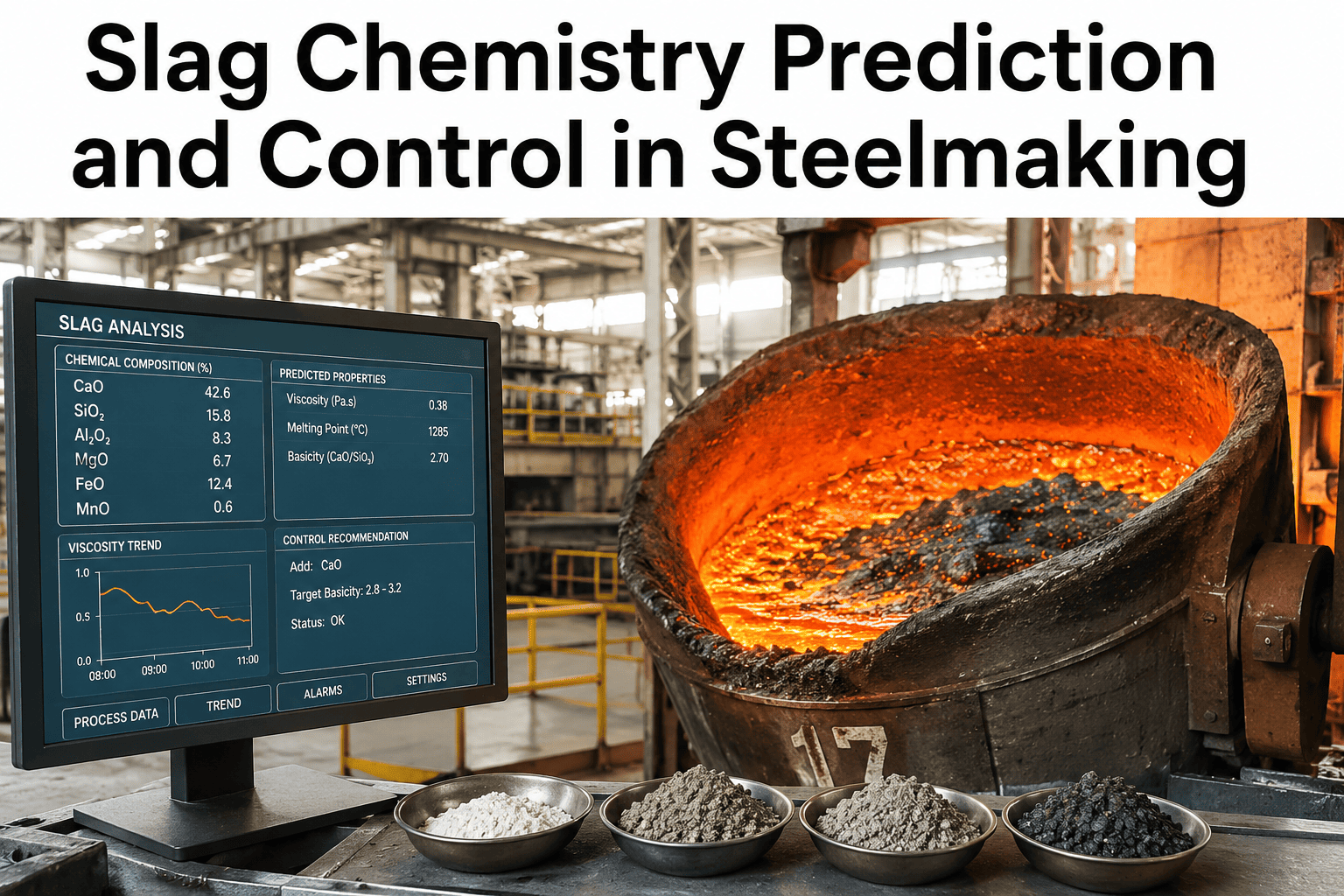
The core of the iFactory slag management module is a hybrid model combining a physics-informed neural network (PINN) with a long short-term memory (LSTM) recurrent network. The PINN enforces thermodynamic constraints — such as mass balance and phase equilibrium — while the LSTM captures temporal dependencies in burden composition and furnace operation. The model takes as input 20+ variables: burden weights, coke rate, blast temperature, oxygen enrichment, hot metal temperature, and slag temperature. It outputs predicted slag basicity, Al2O3, MgO, and viscosity at 1-minute intervals for the next 60 minutes. The model is retrained weekly using recent data to adapt to raw material changes and furnace aging. During deployment, it runs in an edge server at the furnace, ensuring sub-100ms inference latency. Operators see a dashboard with real-time predictions and recommended actions.
Data Quality & Governance
Ensure data integrity through automated validation rules: range checks, rate-of-change limits, and cross-sensor consistency. Any anomalous reading triggers a re-calibration request or sensor maintenance alert.
Integration with MES & ERP
The AI system pushes slag chemistry forecasts and granulation quality metrics to the plant MES for production planning. GGBS inventory and quality data are automatically synced with ERP for sales and logistics.
Frequently Asked Questions
How does AI handle sudden changes in iron ore quality?
The AI model is trained on historical data that includes significant raw material variability. When a sudden change occurs, the predictive model detects the deviation in slag chemistry within 2-3 minutes using real-time XRF and temperature data. It then recomputes the optimal flux addition trajectory and displays it to the operator. If the change exceeds a predefined threshold, the system automatically adjusts the flux injection rate to maintain basicity within target. Additionally, the model updates its internal state to reflect the new ore characteristics, ensuring continued accuracy. For extreme cases, the system alerts the raw material procurement team to adjust sourcing. Book a Demo to see this in action.
What is the typical implementation timeline for slag AI?
A full deployment typically spans 12-16 weeks. The first 4 weeks focus on data audit, sensor installation, and model training using historical data. The next 4 weeks involve parallel running with manual control to validate model accuracy and build operator trust. Weeks 9-12 are dedicated to advisory mode, where operators follow AI recommendations but retain final control. The final 4 weeks transition to closed-loop autonomous control, with safety limits and manual override in place. Throughout the process, iFactory provides on-site support and training. The timeline can be accelerated to 8 weeks for plants with existing high-frequency slag chemistry analyzers. Contact Support for a detailed project plan.
Can the AI system work with existing slag granulation equipment?
Yes, the iFactory AI platform is designed to interface with any granulation system — INBA, RASA, or custom designs. It connects to existing PLCs and DCS via OPC-UA or Modbus TCP, requiring no hardware replacement. The AI outputs setpoints for water flow, pressure, and impeller speed that are compatible with standard actuators. In cases where the existing instrumentation is insufficient, iFactory recommends cost-effective retrofits such as non-contact slag temperature sensors and online viscosity meters. The platform also includes a digital twin of the granulation process for offline what-if analysis. Book a Demo to discuss your specific setup.
How does the system ensure slag chemistry accuracy during furnace tapping?
During tapping, the AI system uses a combination of slag temperature measurements from a continuous pyrometer and visual analysis of the slag stream via a high-speed camera. The camera captures droplet shape and flow rate, which are correlated with viscosity through a pre-trained computer vision model. Simultaneously, the LSTM network predicts the slag chemistry evolution based on the pre-tap burden and recent flux additions. The system fuses these data streams using a Kalman filter to produce a real-time estimate of basicity and alumina content. If the estimate deviates from target, the system can adjust the tapping rate or recommend a flux injection into the runner. This multi-sensor fusion approach achieves accuracy within ±0.015 basicity. Contact Support for technical specifications.
What are the cybersecurity measures for the AI system?
The iFactory platform follows ISA-99/IEC 62443 standards for industrial cybersecurity. All communications between sensors, edge servers, and the cloud are encrypted using TLS 1.3. The edge server runs in a hardened Linux environment with application whitelisting and intrusion detection. Access to the AI dashboard requires multi-factor authentication and role-based permissions. Data at rest is encrypted with AES-256. The system undergoes annual penetration testing and vulnerability assessments. For air-gapped installations, the entire platform can be deployed on-premises without any cloud connectivity. Book a Demo to learn about our security architecture.
Take Control of Your Slag Quality
Join industry leaders who have reduced slag variability by 40%. Book your demo today and start optimizing.