Slag chemistry rarely gets the attention it deserves until something goes wrong with either steel cleanliness or refractory life, and by the time either shows up as a customer complaint or an unplanned relining, the slag that caused it was formed heats earlier. Basicity, FeO content, and viscosity all shift together as lime dissolves, oxygen blows, and temperature climbs through a heat, and getting the balance right by eye or by fixed addition schedule leaves a lot of value on the table. iFactory predicts how slag chemistry will evolve through the heat and recommends lime and flux additions to keep it in the right range, and the model is best understood through Book a Demo.
The Slag You Can't See Is Deciding Your Steel Cleanliness And Refractory Life Together
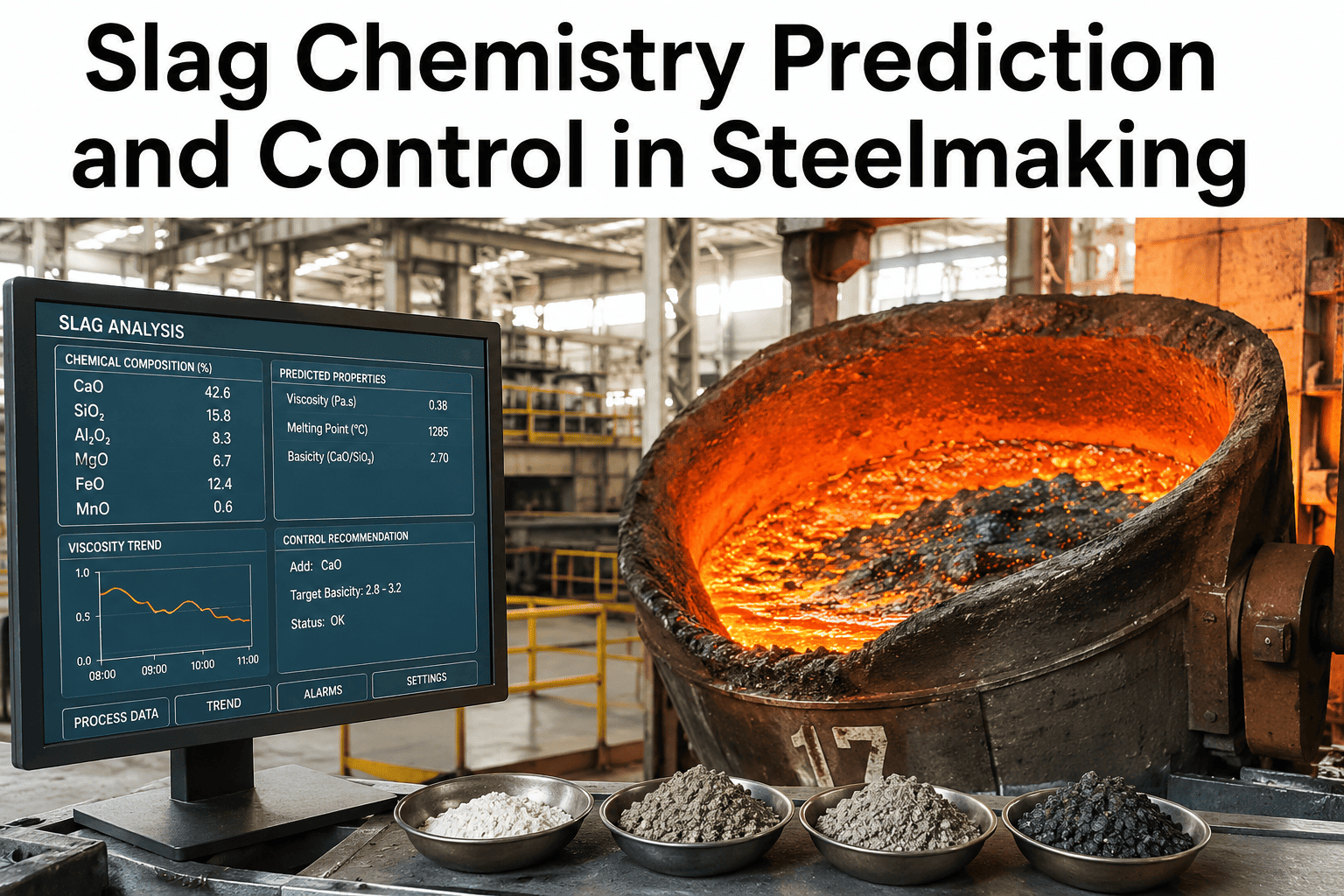
Basicity, FeO, and viscosity interact in ways that are difficult to track by manual sampling alone, especially since each shifts at a different rate as the heat progresses. iFactory predicts the slag's trajectory through the heat and recommends lime and flux timing to keep basicity, FeO, and viscosity in the range that protects both the steel and the lining.
Basicity, FeO, and Viscosity Move Together, Not Independently
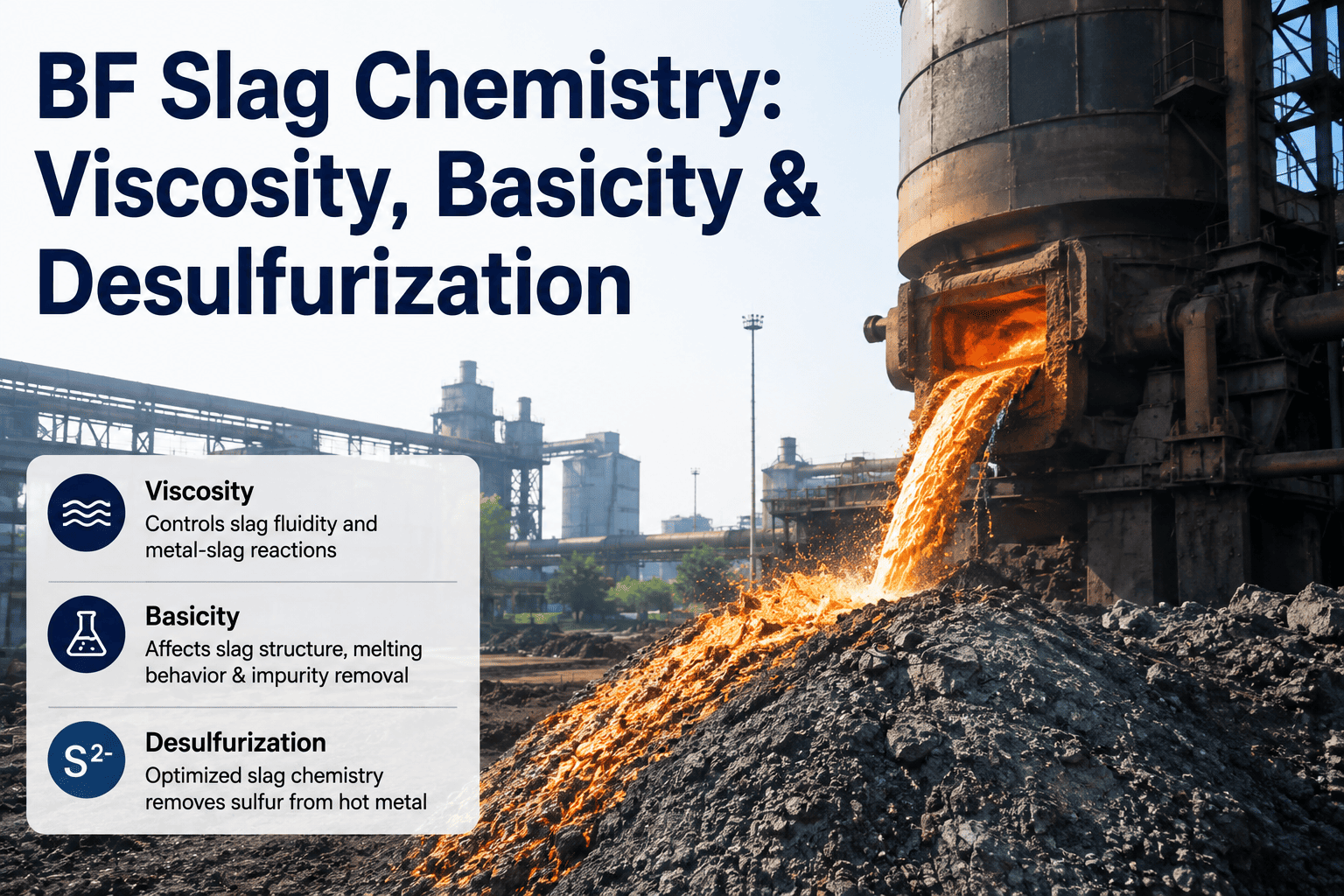
Slag chemistry is often discussed as three separate numbers, but in practice they are tightly coupled. Basicity, the ratio of basic to acidic oxides in the slag, determines how effectively the slag can absorb sulfur and phosphorus from the steel. FeO content reflects how oxidizing the bath currently is, which affects both refining reactions and how aggressively the slag attacks refractory lining. Viscosity determines how well the slag can actually do its job of absorbing impurities and floating inclusions, since a slag that is chemically correct but too viscous or too fluid at the current temperature won't perform the reactions it's meant to.
Governs sulfur and phosphorus removal capacity; too low limits desulfurization, too high risks slag that won't melt properly at operating temperature.
High FeO accelerates refractory wear and can cause reversion of phosphorus back into the bath; too low can stall oxidation reactions the process needs.
Determines how effectively the slag absorbs inclusions and reacts with the bath; strongly dependent on both basicity and temperature at any given moment.
Sampling Tells You Where The Slag Was, Not Where It's Going
Most plants rely on periodic slag sampling and lab analysis to check basicity and FeO, but by the time a sample is pulled, analyzed, and reported back, the slag chemistry has already moved on, especially during a fast-progressing heat. Lime and flux additions are typically scheduled against a standard recipe rather than the specific trajectory of that heat's slag, which works reasonably well for average conditions but leaves a gap for heats with unusual scrap mix, hot metal ratio, or oxygen blow pattern.
Sampling Lag
Lab turnaround on a slag sample often takes longer than the remaining treatment time, meaning the result confirms what already happened rather than informing what to do next.
Fixed Addition Schedules
Standard lime and flux recipes assume typical starting conditions, so heats with atypical scrap chemistry or hot metal sulfur levels drift away from target basicity without the addition schedule adjusting to compensate.
Refractory Wear Blind Spot
FeO-driven refractory attack accumulates gradually across many heats, so a slag practice that's slightly too oxidizing doesn't show up as a problem until relining frequency starts trending upward months later.
Inconsistent Desulfurization
When basicity and viscosity aren't both in range simultaneously, desulfurization performance becomes unpredictable heat to heat, forcing downstream LMF treatment to compensate for what should have been handled earlier.
Stop Reacting To A Lab Result That's Already Behind The Heat
iFactory predicts slag basicity, FeO, and viscosity trajectory in real time and recommends lime and flux timing to match.
Inputs Feeding The Slag Chemistry Prediction
The model builds its prediction from measurements most plants already collect, correlating them against the slag chemistry outcomes recorded from historical heats.
| Input Data | What It Reflects |
|---|---|
| Charge mix and hot metal analysis | Starting silicon, sulfur, and phosphorus load entering the vessel |
| Lime and flux addition log | Cumulative basic oxide contribution through the heat |
| Oxygen blow profile | Rate of FeO generation and bath oxidation state over time |
| Bath temperature trend | Effect on slag viscosity and melting behavior at each stage |
| Periodic slag sample results | Calibration point to correct the running prediction against actual lab values |
We had a slow, steady increase in refractory wear that nobody could quite pin down to one cause, and it turned out our slag practice was running slightly more oxidizing than the standard recipe assumed for a portion of our heats. Since iFactory started predicting FeO trajectory and adjusting our lime timing per heat, our relining frequency has noticeably improved, and desulfurization performance has become far more consistent heat to heat.
What Plants Report After Adopting Predictive Slag Control
These figures reflect typical ranges reported after adopting slag chemistry prediction, varying with existing sampling frequency and process consistency.
What Limits The Value Of Predictive Slag Models
Plants introducing slag chemistry prediction tend to encounter a specific set of issues that reduce accuracy if not addressed early.
Inconsistent Sample Point Timing
If slag samples are pulled at inconsistent points in the heat cycle across shifts, the calibration data the model learns from becomes noisy, weakening how well predictions track actual lab results.
Incomplete Charge Mix Records
Predictions depend heavily on accurate starting charge composition, so gaps or estimates in scrap and hot metal chemistry records weaken the model's starting assumptions for that heat.
Ignoring Lining Condition Differences
A newer refractory lining and a near-end-of-campaign lining interact with the same slag chemistry differently, and models that don't account for lining age can misjudge how aggressive current slag practice actually is.
Treating Recommendations As Rigid Recipes
The value of predictive slag control comes from adjusting to each heat's specific trajectory, so operators who apply recommendations mechanically without noting unusual heat conditions lose part of that benefit.
Frequently Asked Questions
Q: How does the model stay accurate without lab results throughout the whole heat?
The model builds a running prediction from charge composition, addition history, oxygen blow profile, and bath temperature trend, then recalibrates each time an actual lab sample result becomes available, correcting any drift between predicted and measured values. Over time, as the model accumulates more calibration points across a wider range of heat conditions, its predictions between sample points become increasingly reliable for that specific furnace and grade mix. Reach out through Support Contact to review your current sampling frequency and how it would feed the model.
Q: Can this help reduce lime and flux consumption, or is it mainly for quality?
Both benefits typically show up together, because a slag practice that's timed more precisely against the heat's actual trajectory tends to need less total addition to reach and hold the target basicity range compared to a fixed recipe designed to cover a wide range of starting conditions. Plants often see the consumption reduction as a secondary benefit that follows naturally once addition timing improves, rather than something that needs to be pursued as a separate initiative.
Q: Does the model account for differences between refractory lining age?
Yes, lining age and campaign history are tracked as part of the model's context for that vessel, since a slag chemistry that is acceptable early in a refractory campaign can become more aggressive to a lining nearing the end of its service life. This allows the model to recommend a slightly different FeO target range as a lining ages, balancing process performance against remaining refractory life.
Q: How long before the model's predictions are reliable for our specific furnace?
Reliability builds as the model accumulates calibration points from lab samples across a representative range of heat conditions for that furnace, so most plants see solid predictive accuracy within the first several weeks of consistent sampling and logging. Furnaces running a wider variety of grades and charge mixes take somewhat longer to reach full coverage than those running a narrower, more consistent product mix. A Book a Demo can walk through what to expect for your specific operation.
Q: Does this integrate with our existing lime and flux addition equipment?
The model outputs a recommended addition timing and quantity that feeds into your existing addition system or is confirmed manually by the operator, rather than requiring new material handling equipment. This keeps the physical addition process unchanged while improving the decision of when and how much to add at each stage of the heat.
Keep Basicity, FeO, And Viscosity In Range Together
iFactory predicts slag chemistry trajectory through the heat so lime and flux timing protects both steel quality and refractory life.