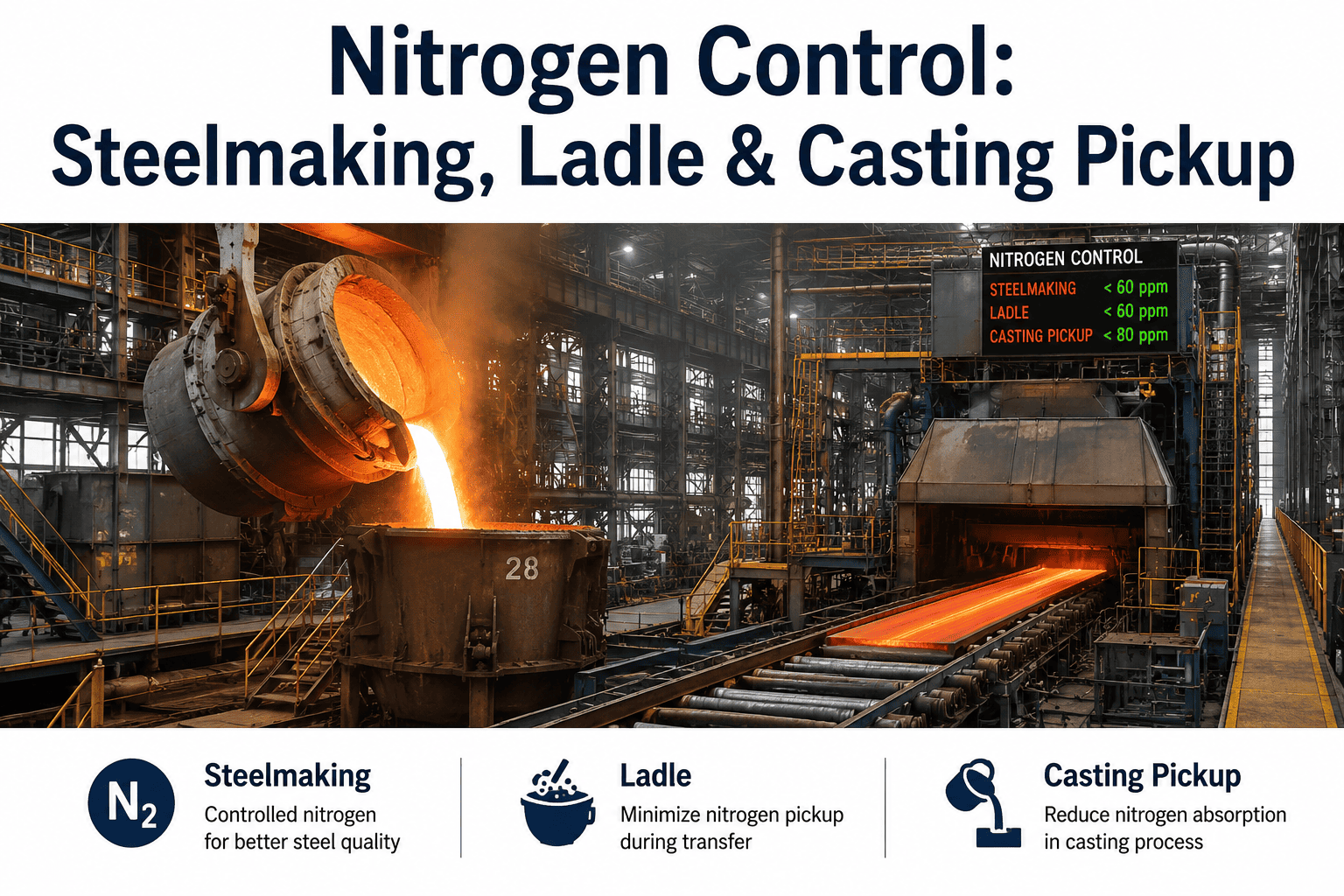
Steel leaves the converter with nitrogen levels as low as 15 parts per million, and by the time it reaches the caster it can carry nearly three times that amount without a single deliberate nitrogen addition ever being made. Every transfer, every tap, every minute of ladle exposure is a fresh opportunity for atmospheric nitrogen to dissolve into the melt, and because none of those pickups are intentional, they rarely get tracked with the same discipline as a chemistry addition would be. For grades with a hard nitrogen ceiling, that untracked pickup between converter and caster is very often the difference between a heat that passes specification and one that gets downgraded, and the only reliable way to close that gap is tracking nitrogen exposure stage by stage rather than only at final chemistry.
Nitrogen Doesn't Enter Your Steel At One Point — It Accumulates Across Every Stage
Converter tap nitrogen can run as low as 15 ppm, but ladle treatment and casting exposure routinely push it toward 40 ppm or higher before a single alloy addition is even considered. Controlling that accumulation requires stage-by-stage visibility, not a single end-of-process check.
Tracking Nitrogen From Converter To Caster Shows Exactly Where It Accumulates
Nitrogen pickup is rarely a single dramatic event. It is a series of small additions at each process stage, and understanding where each addition happens is the first step toward controlling the total. The stages below reflect commonly observed nitrogen levels tracked across a typical converter-to-caster route, showing how the number climbs well before any deliberate nitrogen-bearing addition is made.
Converter Tap
~15 ppm average
Nitrogen is at its lowest point directly at converter tap, before any exposure to ambient air during transfer has occurred.
Ladle Heating Furnace
~27-33 ppm average
The sharpest single jump typically happens between tapping and ladle furnace treatment, driven by air entrainment during tapping and further absorption during arcing.
Caster
~41 ppm average
A further, smaller increase typically occurs during casting exposure, meaning total pickup from converter to final cast product often lands well above 20 ppm even under otherwise normal operating conditions.
Your Deoxidation Practice Changes How Much Nitrogen You Pick Up During Tapping
Not every steel absorbs nitrogen at the same rate during the same exposure window. Deoxidation practice has a measurable effect on tapping nitrogen pickup, which means two heats tapped under identical physical conditions can end up with meaningfully different nitrogen results purely based on their oxygen chemistry at the moment of tap.
Deoxidized Steel At Tap
Steels that have already been deoxidized before or during tapping generally show considerably higher average nitrogen pickup during the tapping event itself compared to steel that still carries dissolved oxygen, an effect observed consistently across both electric arc furnace and basic oxygen furnace tapping data.
Oxygen-Bearing Steel At Tap
Steel with residual dissolved oxygen at the point of tap tends to show comparatively lower nitrogen pickup during the same tapping event, which is one reason nitrogen control strategy has to be considered alongside deoxidation timing rather than treated as an entirely separate variable.
Stage-Level Nitrogen Data Beats A Single Final Chemistry Check
iFactory tracks tap events, ladle furnace arcing duration, and casting exposure time against your chemistry results, so nitrogen pickup gets attributed to the specific stage that caused it instead of showing up as an unexplained final result.
Six Common Entry Points For Unwanted Nitrogen Pickup
Because nitrogen pickup happens through ordinary process events rather than a single identifiable failure, it is easy for a plant to overlook how many separate entry points actually exist across a normal heat. Recognizing each one individually is what makes a targeted reduction plan possible instead of a vague directive to "watch nitrogen more closely."
Tap Stream Air Entrainment
Air bubbles get pulled into the steel where the tap stream enters the ladle bath, a well-documented and largely unavoidable pickup point tied directly to tapping practice.
Extended Arcing Duration
Longer arcing time at the ladle heating furnace correlates directly with higher nitrogen absorption, making arc time itself a controllable nitrogen variable, not just an energy one.
Reblow Air Exposure
During reblows, the furnace can fill with air that is then entrained into the metal once the oxygen blow restarts, creating a nitrogen pickup event tied specifically to reblow frequency.
Moisture In Ladle Additions
Ferro-alloys and ladle additions frequently carry residual moisture, and the resulting reaction with liquid steel is a secondary but measurable contributor to overall gas pickup.
High-Nitrogen Ferro-Alloys
Certain alloy additions, including ferro-titanium, ferro-vanadium, and some ferro-chromium grades, carry meaningfully higher nitrogen content than others and contribute proportionally to final chemistry.
Slag Cover During Waiting Time
Extended waiting time under certain slag conditions allows continued atmospheric exposure, meaning idle ladle time is not a neutral period from a nitrogen control standpoint.
Nitrogen Specification Windows Vary Sharply By Furnace Route And Grade
What counts as an acceptable nitrogen level depends heavily on which furnace route produced the steel and which grade is being cast. A number that would be considered excellent for one route can be a routine rejection risk for another, which is why nitrogen targets have to be set per grade and per route rather than against a single plant-wide number.
| Route Or Grade Class | Typical Nitrogen Range | Primary Control Focus |
|---|---|---|
| Basic Oxygen Furnace (BOF) steel | Roughly 30-70 ppm | Tap oxygen level and tap stream practice |
| Electric Arc Furnace (EAF) steel | Roughly 70-110 ppm | Arcing duration and scrap-to-DRI ratio |
| Ultra-low nitrogen grades | Below 30-35 ppm target | Raw material nitrogen limits and minimized ladle exposure time |
| Certain stainless steel grades | Up to roughly 3000 ppm (intentional) | Deliberate nitrogen alloying, an inverse control problem |
Four Practical Levers For Reducing Unwanted Nitrogen Pickup
Because vacuum degassing removes less than roughly 20 percent of dissolved nitrogen and heavy slag conditions can make removal even harder, prevention is consistently more effective than after-the-fact correction for nitrogen control. The levers below focus on preventing pickup at its source rather than trying to strip it out once it has already dissolved.
Control Raw Material Nitrogen Content
Setting a nitrogen ceiling on scrap, DRI, and ferro-alloy inputs directly limits how much nitrogen enters the process before any process-stage pickup even begins.
Minimize Time At Each Stage
Since exposure duration correlates with pickup at both the ladle furnace and during waiting time, reducing unnecessary dwell time at each stage directly reduces cumulative nitrogen absorption.
Standardize Tapping Practice
Consistent tap stream control and minimized reblow frequency reduce the two largest single-event pickup sources identified across converter and EAF tapping data.
Coordinate Deoxidation Timing With Nitrogen Targets
Because deoxidized steel shows different tapping pickup behavior than oxygen-bearing steel, aligning deoxidation timing with nitrogen targets for a given grade prevents the two objectives from working against each other.
Common Questions On Nitrogen Control In Steelmaking
Stop Guessing Which Stage Is Driving Your Nitrogen Results
iFactory correlates tapping events, ladle furnace timing, and casting exposure against your chemistry data, so nitrogen pickup gets traced to its actual source instead of being discovered only at final inspection. Book a demo to see it mapped against your own process route.