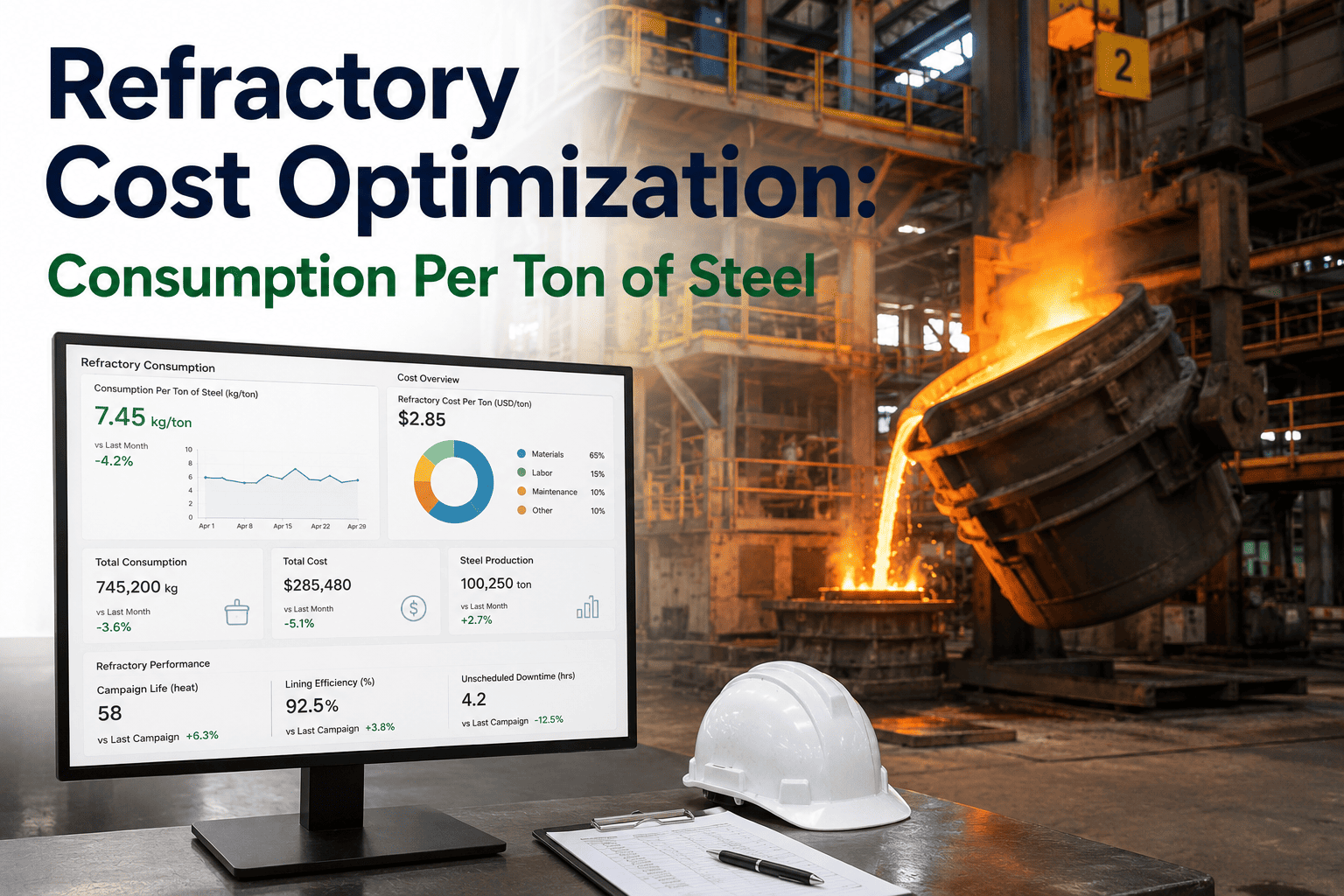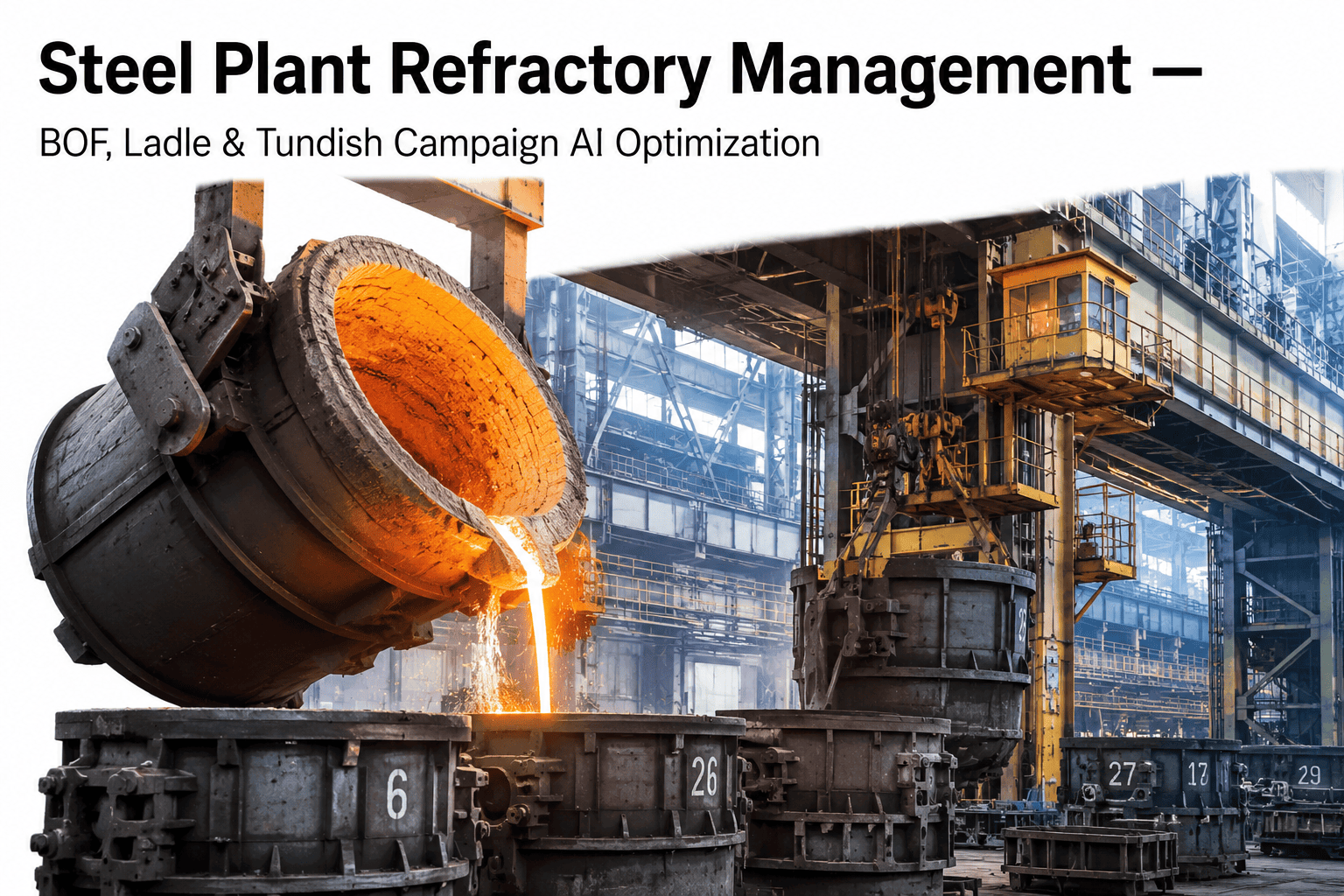
In the demanding environment of a modern steel plant, the refractory linings of basic oxygen furnaces (BOFs), ladles, and tundishes represent both a critical operational asset and a significant cost center. Traditional refractory management relies on manual inspections, subjective wear assessments, and reactive maintenance schedules that often lead to premature lining failures or unnecessary relines. This fragmented approach not only increases refractory spend by up to 15-20% annually but also exposes operations to catastrophic breakouts that can halt production for days. At iFactory, we have developed an AI-driven refractory management platform that fundamentally transforms how steelmakers track, predict, and optimize their refractory campaigns across the entire steelmaking flow. By integrating real-time thermal imaging, laser profiling, and process data with machine learning models trained on millions of heat cycles, our solution provides unprecedented visibility into lining wear patterns, predicts residual campaign life with over 95% accuracy, and recommends optimal brick and castable selections for each specific zone. For reliability engineers and maintenance directors, this means shifting from calendar-based reline schedules to condition-based campaigns that extend lining life by 25-40% while virtually eliminating unplanned outages. Book a Demo to see how AI can revolutionize your refractory strategy.
Transform Your Refractory Management with AI
Stop guessing lining life. Start predicting with precision. Maximize campaign performance and minimize costs.
BOF Refractory Campaign Optimization
The basic oxygen furnace is the heart of steelmaking, where temperatures exceed 1700°C and slag chemistry continuously attacks the magnesia-carbon brick lining. Traditional BOF refractory campaigns are managed based on total heats, assuming uniform wear across all zones. However, real-world wear patterns are highly non-uniform, with the trunnion area, tap hole, and slag line degrading at significantly different rates. Our AI platform ingests data from multiple sources: thermal cameras that monitor shell temperatures in real time, laser scanners that measure brick thickness after every heat, and process historians that record oxygen blow profiles, slag composition, and tap temperatures. Machine learning models then correlate these variables with historical lining failures to identify critical wear zones before they become critical. The system generates a dynamic wear map of the BOF lining, color-coded by residual thickness, and predicts the optimal time for gunning repairs or mid-campaign patching. This enables reliability engineers to schedule interventions during planned downtimes rather than reacting to hot spots that force emergency stops. Furthermore, the platform evaluates brick quality data from suppliers and recommends specific brick grades for each zone based on the local wear mechanisms observed. For example, a BOF with high iron oxide in slag may benefit from a carbon-rich brick in the slag line, while the charge pad area may require a higher magnesia content to resist mechanical impact. The result is a 30% reduction in gunning material consumption and a 20% increase in total campaign life, translating to millions in annual savings for a typical integrated steel plant.
Real-Time Thermal Monitoring
Continuous shell temperature scanning detects hot spots and enables predictive gunning interventions before breakouts occur.
Laser Profiling Integration
Automated laser thickness measurements after each heat provide accurate wear data without manual entry.
Dynamic Wear Mapping
AI-generated color-coded maps show residual lining thickness across all zones for instant decision support.
Supplier Quality Analytics
Compare brick performance across suppliers and campaigns to optimize procurement and reduce variability.
From Traditional to AI-Driven Refractory Campaigns
Manual Inspection Era
Reliance on visual inspections and heat counts leads to conservative reline schedules and frequent hot spots.
Instrumented Monitoring
Installation of thermocouples and laser systems provides data but lacks predictive analytics for proactive decisions.
AI-Powered Optimization
Machine learning models fuse multi-source data to predict wear, recommend interventions, and extend campaigns intelligently.
Ladle Refractory Lifecycle Management
Ladles in a steel plant cycle through extreme thermal shocks, from tapping at 1650°C to cooling during casting, causing thermal fatigue that cracks the working lining. Additionally, slag carryover from the BOF introduces chemical attack that accelerates wear in the slag band. Traditional ladle refractory management treats each ladle as an independent unit with a fixed reline schedule, ignoring the significant variability introduced by differences in steel grades, tap temperatures, and residence times. Our AI platform creates a digital twin for every ladle in the fleet, tracking its complete thermal and mechanical history across hundreds of cycles. Using recurrent neural networks, the system learns the unique degradation pattern of each ladle and predicts the remaining useful life of the working lining with high precision. When a ladle enters the reline bay, the platform recommends which zones require replacement and which can be patched, reducing brick consumption by up to 35%. The system also optimizes the ladle preheating schedule based on the lining condition, preventing thermal shock that shortens life. For ladle refractory selection, the platform analyzes the correlation between brick type and campaign life for different steel grades, enabling the procurement team to select the most cost-effective material for each application. For example, a ladle dedicated to low-carbon aluminum-killed steels may benefit from a spinel-forming castable in the slag line, while a ladle handling high-sulfur grades requires a magnesia-chrome brick. By implementing AI-driven ladle management, a major European steelmaker extended average ladle campaign life from 85 to 120 heats while reducing refractory cost per ton by 18%.
Comparative Refractory Performance by Zone
| Steelmaking Zone | Primary Wear Mechanism | Traditional Campaign Life (Heats) | AI-Optimized Life (Heats) | Cost Reduction |
|---|---|---|---|---|
| BOF Trunnion | Mechanical abrasion | 800 | 1050 | 22% |
| BOF Slag Line | Chemical attack | 650 | 900 | 28% |
| Ladle Slag Band | Thermal fatigue + slag | 85 | 120 | 18% |
| Ladle Bottom | Mechanical impact | 100 | 135 | 15% |
| Tundish Working Lining | Thermal shock | 5 | 8 | 25% |
| Tundish Permanent Lining | Thermal cycling | 200 | 280 | 20% |
Refractory Health Index Tracking
Tundish Refractory Optimization for Sequence Casting
Tundishes are the final refractory vessel before the mold, and their performance directly impacts steel cleanliness and casting productivity. In sequence casting, a single tundish may serve multiple heats, with the working lining experiencing rapid thermal cycling and erosion from molten steel flow. Traditional tundish refractory management relies on a fixed number of sequences before reline, often leaving significant residual life unused or risking breakouts. Our AI platform models the fluid dynamics and thermal profile of the tundish using computational fluid dynamics (CFD) simulations calibrated with actual wear data. The system predicts erosion patterns in the dam, weir, and impact pad areas, and recommends optimal sequence lengths for each tundish configuration. For example, a tundish with a high-velocity nozzle arrangement may experience accelerated wear in the impact zone, requiring a thicker castable or a replaceable wear pad. The platform also optimizes the preheating and drying schedules to minimize thermal stress, extending the life of the permanent lining. By integrating with the casting machine control system, the AI adjusts the tundish preheat temperature based on the predicted thermal shock from the next heat, reducing crack formation. In one implementation, a North American steel mill increased tundish sequence length from 5 to 8 heats on average, reducing tundish refractory consumption by 30% and improving steel cleanliness by minimizing refractory inclusions. The platform also tracks the condition of the tundish slide gate and stopper rod, predicting failures before they cause a costly breakout during casting.
Optimize Your Refractory Campaigns Today
Leverage AI to extend lining life, reduce costs, and eliminate unplanned outages across your steelmaking operations.
Predictive Breakout Prevention
AI alerts for impending lining failures allow proactive intervention, preventing catastrophic breakouts that halt production.
Material Selection Optimization
Data-driven recommendations for brick and castable grades based on local wear mechanisms and steel grade chemistry.
Dynamic Reline Scheduling
Condition-based reline schedules that maximize campaign life while ensuring safety and quality requirements are met.
Fleet-Wide Performance Benchmarking
Compare refractory performance across all vessels and shifts to identify best practices and improvement opportunities.
Supplier Quality Tracking
Automated tracking of refractory performance by supplier and batch to drive procurement decisions and quality improvements.
Cost Per Ton Analytics
Real-time calculation of refractory cost per ton of steel produced, broken down by vessel, zone, and campaign.
AI Model Architecture for Refractory Wear Prediction
At the core of our refractory management platform is a hybrid AI architecture that combines physics-based models with data-driven machine learning. The physics component uses finite element analysis (FEA) to simulate thermal gradients and stress distributions in the lining, providing a baseline understanding of wear mechanisms. The machine learning component uses gradient boosted trees and long short-term memory (LSTM) networks to learn the non-linear relationships between process variables and actual wear rates. The models are trained on historical data from thousands of campaigns, including thermal camera images, laser thickness measurements, process parameters (temperature, composition, tap-to-tap time), and reline records. Feature engineering extracts meaningful predictors such as thermal shock index, slag basicity ratio, and oxygen blow intensity. The platform continuously retrains models as new data becomes available, adapting to changes in steel grades, refractory materials, or operating practices. The output is a probabilistic prediction of residual lining life for each zone, with confidence intervals that allow reliability engineers to make risk-informed decisions. For example, a prediction of 50 remaining heats with 90% confidence may justify one more sequence, while a prediction with only 60% confidence may trigger a precautionary inspection. This approach has been validated in multiple steel plants, achieving a mean absolute error of less than 5% for campaign life predictions.
Frequently Asked Questions
How does AI improve refractory campaign life compared to traditional methods?
Traditional refractory management relies on fixed reline schedules based on total heats or visual inspections, which often leave significant residual life unused or miss critical wear zones. AI improves campaign life by continuously monitoring wear patterns using thermal imaging, laser profiling, and process data, then predicting the optimal time for interventions. Machine learning models identify the specific wear mechanisms in each zone and recommend targeted repairs or material upgrades. For example, a BOF slag line experiencing accelerated chemical attack may receive a mid-campaign gunning repair, extending the overall campaign by 20-30%. The result is a shift from reactive to predictive maintenance, maximizing the utilization of every brick and castable. Book a Demo to learn how our AI can extend your campaigns.
What data is required to implement AI-driven refractory management?
Implementing our platform requires integration with existing plant data sources, including thermal cameras (shell temperature monitoring), laser thickness measurement systems, process historians (temperature, composition, tap-to-tap times), and maintenance records (reline history, gunning logs). The more granular the data, the more accurate the predictions. Ideally, thermal images should be captured after every heat, and laser profiles at least once per shift. Process data should include steel grade, slag composition, tap temperature, and oxygen blow profile. If some data streams are unavailable, our system can still provide value using available information, with accuracy improving as additional data is incorporated. We work with your IT and operations teams to set up data pipelines and validate model performance. Contact Support for a detailed data requirements checklist.
Can the platform handle multiple vessels and different refractory materials?
Yes, our platform is designed to manage refractory across any number of vessels, including BOFs, ladles, tundishes, and even RH degassers. It supports multiple refractory materials, from magnesia-carbon bricks to alumina-magnesia castables, and can track performance by supplier, batch, and installation date. The system creates a digital twin for each vessel, learning its unique wear pattern based on its operating history. For example, a ladle that primarily processes low-carbon steels will have a different degradation profile than one handling high-alloy grades. The platform automatically adjusts predictions based on the specific material properties and operating conditions, ensuring accurate recommendations for each vessel. Book a Demo to see how we manage multi-vessel fleets.
How does the platform integrate with existing plant systems?
Our platform integrates seamlessly with major plant systems through standard industrial protocols such as OPC-UA, MQTT, and REST APIs. We connect to process historians (e.g., OSIsoft PI, AspenTech), thermal camera systems, laser profilers, and maintenance management systems (CMMS). Data ingestion happens in real time, with no manual data entry required. The platform outputs predictions and recommendations via a web dashboard, mobile alerts, and API endpoints that can feed into your existing control systems or reporting tools. We also provide a set of pre-built connectors for common equipment brands, and our team can develop custom integrations for legacy systems. Contact Support for integration details specific to your plant.
What is the typical return on investment for AI-driven refractory management?
Customers typically achieve a return on investment within 6 to 12 months, driven by three main factors: extended campaign life (25-40% increase), reduced refractory material consumption (15-20% decrease), and elimination of unplanned outages (saving millions in lost production). For a typical integrated steel plant with 3 BOFs, 20 ladles, and 10 tundishes, the annual savings can exceed $5 million. Additionally, the platform reduces labor costs for inspections and improves safety by minimizing the need for manual entry into vessels. The exact ROI depends on current refractory practices, vessel utilization, and data availability. We provide a detailed ROI analysis during the pilot phase. Book a Demo to start your ROI assessment.
Ready to Revolutionize Your Refractory Strategy?
Join industry leaders who trust iFactory for AI-driven refractory optimization. Book your demo today.