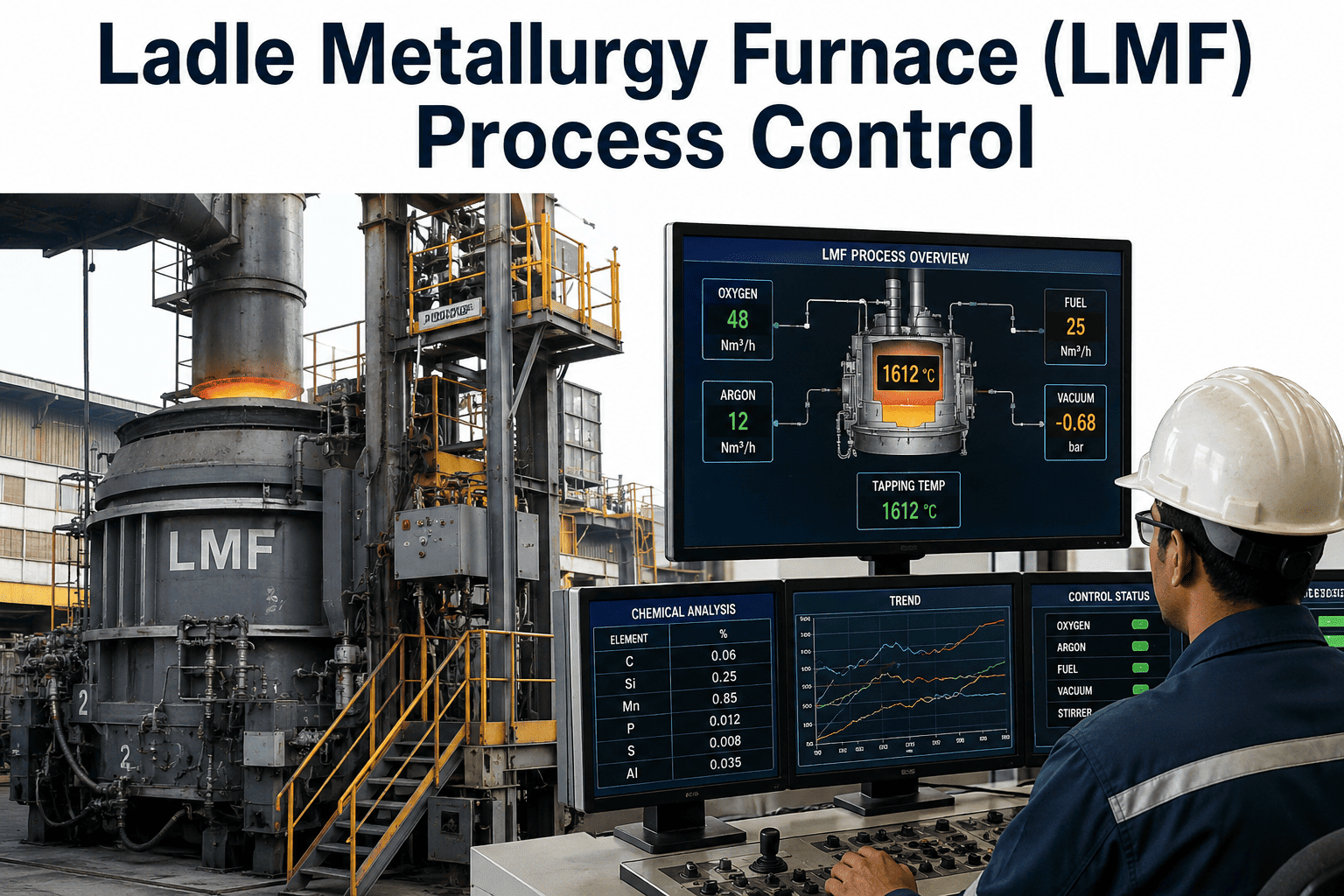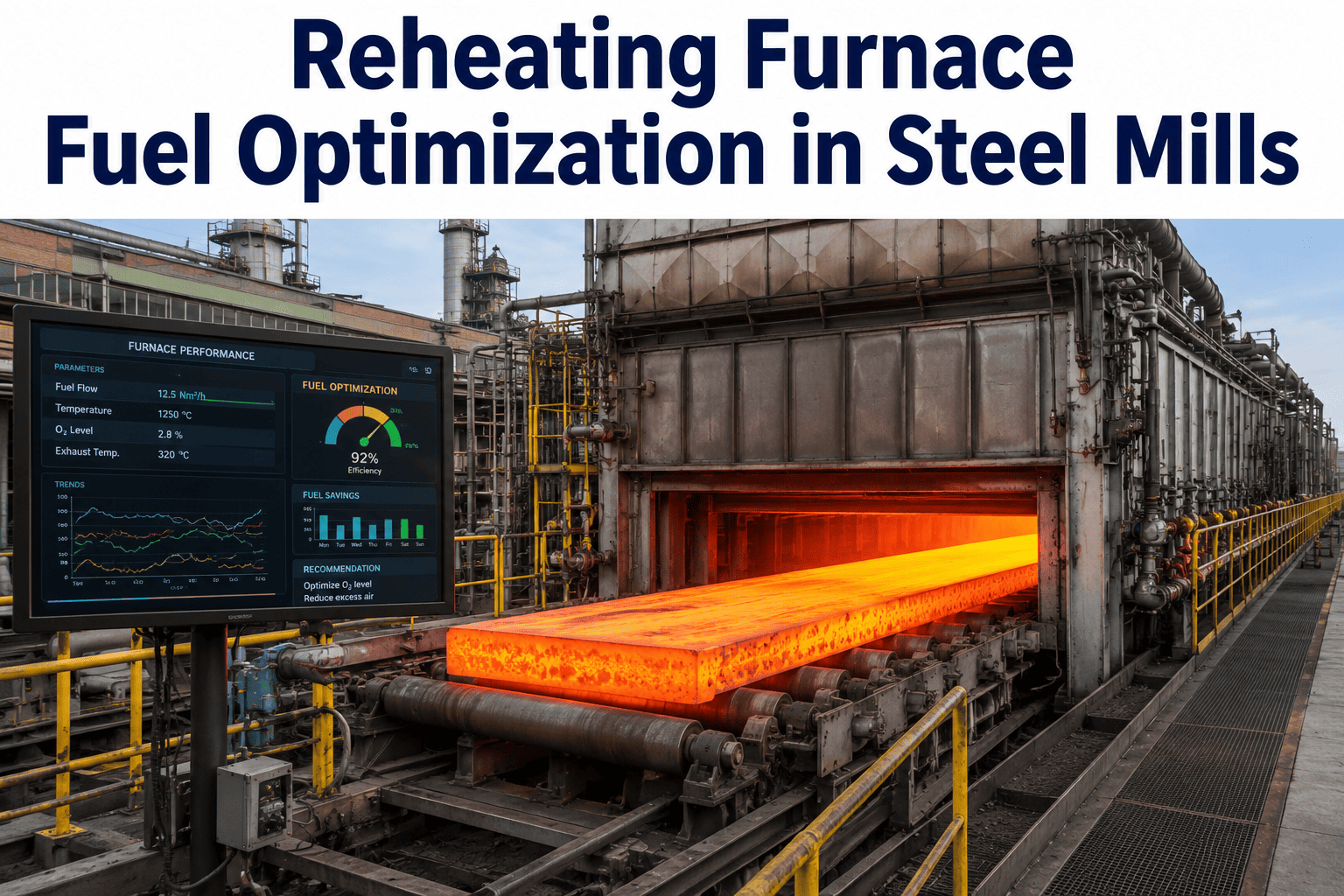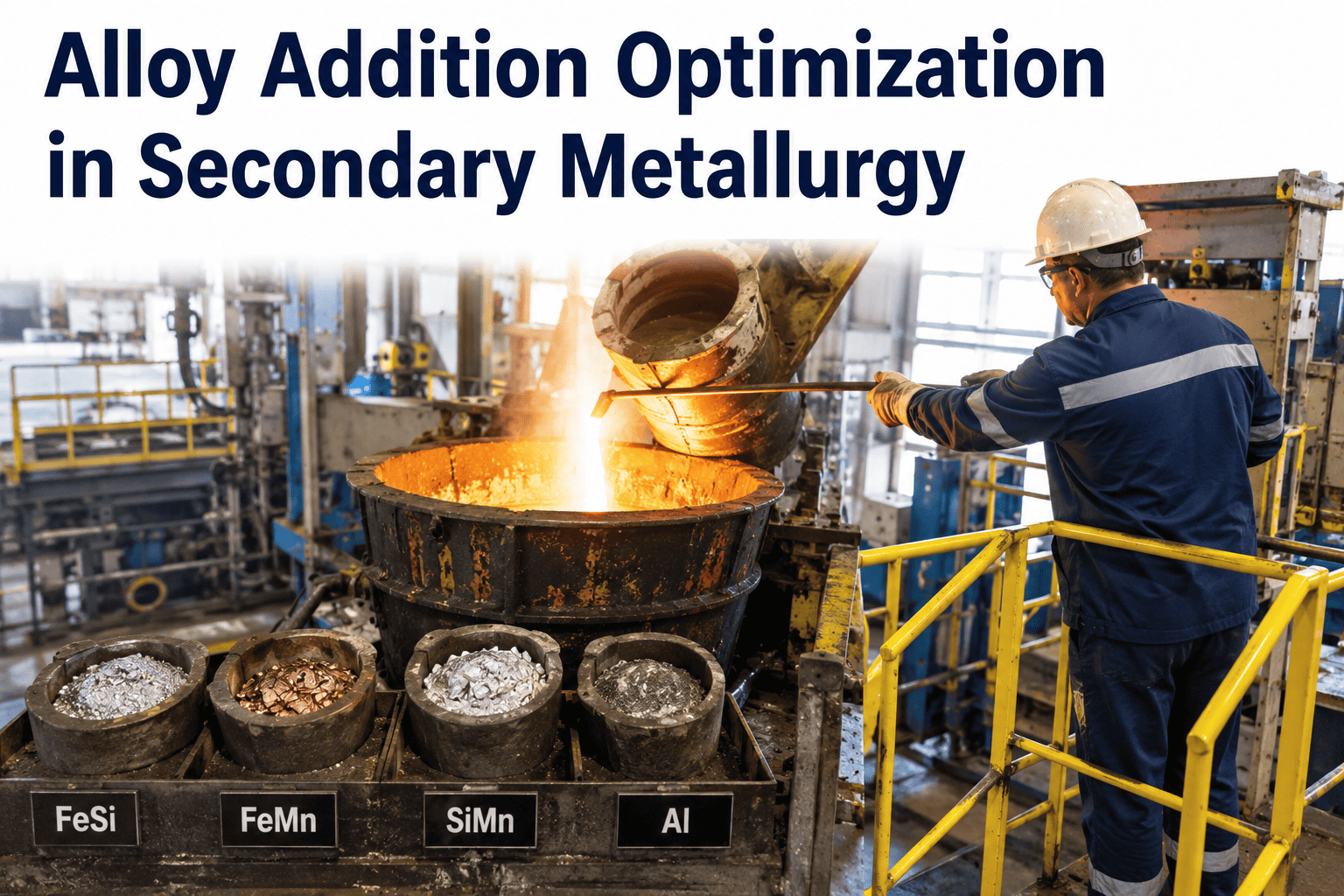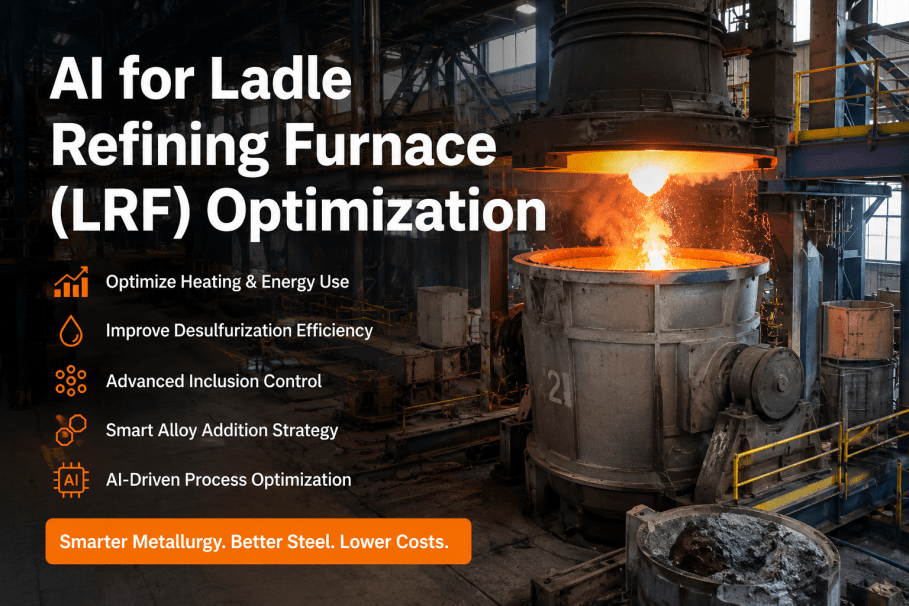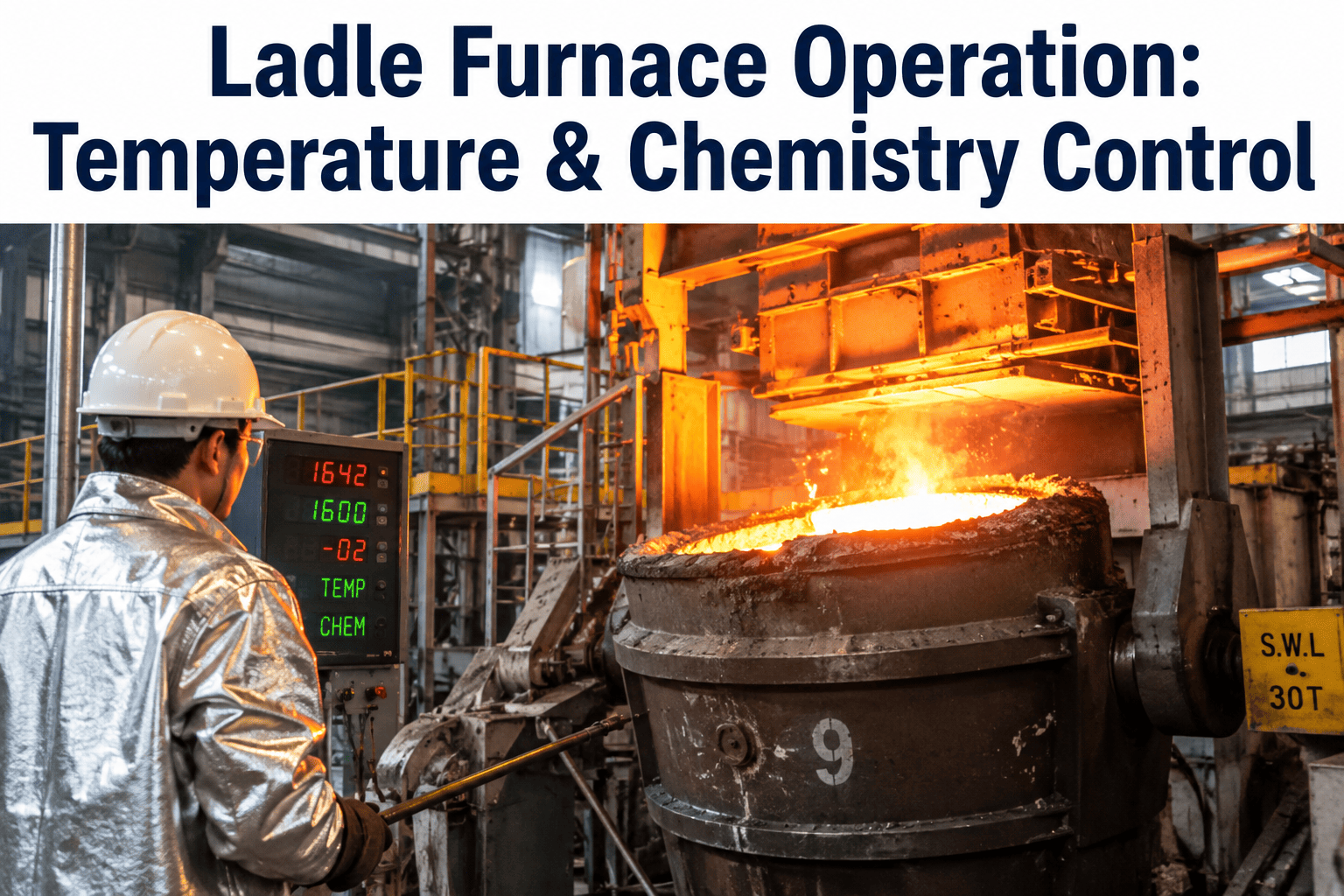
A ladle furnace has one job that sounds simple and rarely is: bring the heat to the exact temperature and chemistry the caster needs, at the exact moment the caster needs it. Arc heating that overshoots wastes electrode and refractory life, stirring that runs too weak leaves chemistry uneven, and an alloy addition made a few minutes late can push a heat outside specification entirely. Getting all three variables to land together consistently is a coordination problem as much as a metallurgical one, and it is the specific problem iFactory's process platform is built to help secondary metallurgy teams solve.
SECONDARY METALLURGY · LADLE FURNACE
Ladle Furnace Operation Optimization for Temperature and Chemistry Control
Arc heating efficiency, stirring intensity, and alloy addition timing brought together into one view, so every heat reaches the caster on target and on time.
The Cost of Missing Target at the Ladle Furnace
±5°C
is a common tap temperature tolerance, yet arc heating overshoot regularly exceeds it without close monitoring
10-15%
of alloy cost can be wasted through re-addition caused by imprecise chemistry tracking during treatment
Caster wait
time is one of the most expensive downstream consequences of a ladle furnace running behind schedule
Electrode wear
accelerates measurably when arc heating profiles are not tuned to actual heat requirements
The Core Variables of Ladle Furnace Control
01
Arc Heating Profile
Power input matched to the actual heat size and starting temperature, rather than a fixed profile applied regardless of variation, avoids both overshoot and slow heats.
02
Stirring Intensity
Argon stirring intensity strong enough to homogenize temperature and chemistry throughout the ladle, without excessive turbulence that promotes reoxidation at the surface.
03
Alloy Addition Timing
Additions timed against real-time chemistry readings and stirring state, rather than a fixed schedule, hit target composition with fewer costly correction additions.
04
Tap-to-Cast Coordination
Treatment finishing time synchronized with the caster's actual readiness avoids both a rushed final adjustment and an idle, cooling heat waiting in the bay.
Hit Target Temperature and Chemistry, Every Heat
iFactory brings arc power, stirring, and chemistry data into one live view so ladle furnace operators can adjust in real time instead of reacting after a sample result comes back.
Ladle Furnace Parameters and What They Signal
LF Process Parameter Reference
| Parameter | What It Indicates | Typical Adjustment |
|---|---|---|
| Arc power draw trend | Heating rate versus target curve | Power step adjustment mid-treatment |
| Bath temperature readings | Progress toward tap temperature target | Arc time extension or reduction |
| Argon flow rate | Stirring intensity and bath homogenization | Flow adjustment by treatment stage |
| Chemistry sample results | Composition deviation from grade target | Targeted alloy addition |
| Electrode consumption rate | Arc efficiency and electrode condition | Profile review if trending high |
Common Sources of Off-Target Heats
Fixed Arc Profiles for Variable Heats
Applying the same heating curve to heats with different starting temperatures produces inconsistent tap temperatures, especially at shift changes when starting conditions vary most.
Delayed Chemistry Feedback
A lag between sample collection and result availability means alloy additions are made against outdated information, increasing the chance of a costly correction addition.
Stirring Set-and-Forget
Stirring intensity left unchanged across treatment stages either under-mixes early additions or over-agitates the bath during final adjustment, risking reoxidation.
Poor Caster Synchronization
Without visibility into actual caster readiness, treatment either finishes too early, cooling in the bay, or too late, holding up the sequence downstream.
Steps Toward More Consistent LF Performance
Step 1
Track Actual Versus Target for Every Heat
Build a baseline of tap temperature accuracy and chemistry hit rate across recent heats to understand where the real variation is occurring.
Step 2
Segment by Heat Size and Grade
Performance patterns often differ by grade and heat size, so identifying which combinations struggle most focuses improvement effort where it matters.
Step 3
Adjust Arc Profiles to Real Starting Conditions
Move from a single fixed heating curve to profiles that account for starting temperature variation, reducing both overshoot and slow heats.
Step 4
Close the Loop With the Caster Schedule
Give LF operators live visibility into caster readiness so treatment finish time is coordinated rather than estimated.
Ladle Furnace Operation — Common Questions
What is a realistic tap temperature accuracy target for a ladle furnace?
Many operations target within 5 to 10 degrees Celsius of the caster's required tap temperature, though the achievable tolerance depends on furnace design, heat size consistency, and how well arc profiles are tuned to actual starting conditions. Tracking hit rate against your own historical baseline is more useful than chasing a generic industry number.
How does stirring intensity affect chemistry accuracy specifically?
Insufficient stirring leaves alloy additions unevenly distributed through the bath, meaning a sample taken from one location may not represent the true average composition, leading to unnecessary correction additions. Properly tuned stirring intensity ensures a representative sample and a more accurate first-pass chemistry result.
Can real-time monitoring actually reduce alloy costs?
Yes, primarily by reducing the frequency of correction additions caused by late or inaccurate chemistry feedback. When arc power, stirring state, and chemistry trends are visible together, operators can time additions more precisely and avoid the overcorrection that drives excess alloy consumption.
How does this connect ladle furnace performance to caster scheduling?
iFactory's platform gives LF operators visibility into actual caster sequence timing, so treatment can be paced to finish exactly when the caster is ready rather than guessed based on a fixed schedule, reducing both bay idle time and rushed final adjustments.
Is arc profile optimization something that needs to be redone for every grade?
Grades with meaningfully different starting temperatures, heat sizes, or chemistry targets typically benefit from their own tuned profile, while similar grades can often share a profile with minor adjustment. The goal is matching the profile to actual starting conditions rather than creating an unnecessarily large number of variants.
SECONDARY METALLURGY · LF OPTIMIZATION
Bring Every Heat to Target, On Time
See how iFactory unifies arc heating, stirring, and chemistry data for more consistent ladle furnace performance.