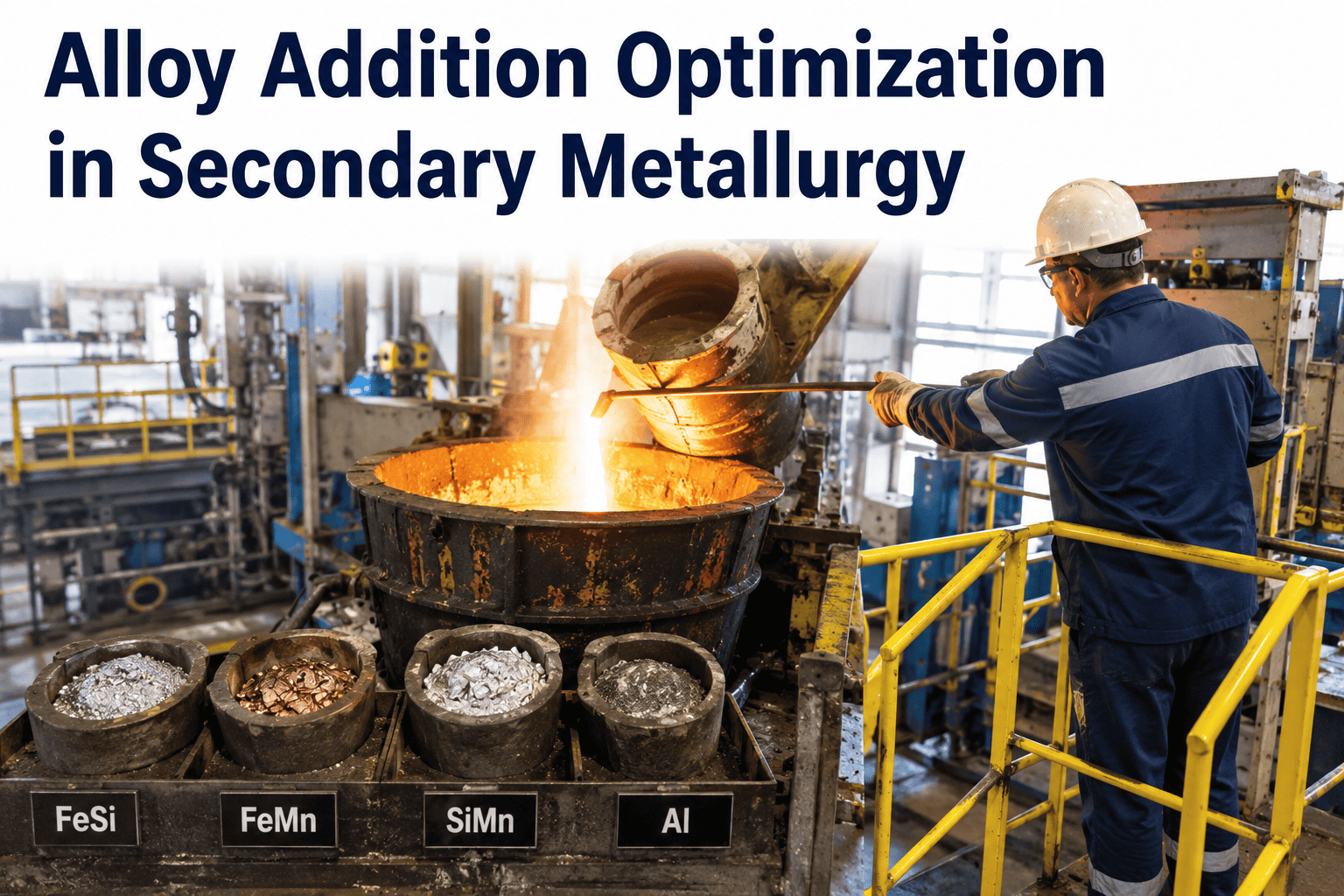
Ferroalloys are one of the largest line items on a steel shop's cost sheet, often running 5–12% of total production cost, and yet most plants still add them the same way they did twenty years ago: a fixed addition table by grade, adjusted occasionally when a metallurgist notices recovery rates drifting. The problem is that recovery isn't fixed. It moves with bath temperature, oxygen activity, slag chemistry, and even how the alloy was fed into the ladle, and a table built on averages quietly overspends on every heat that doesn't match the average. Multiply that gap across thousands of heats a year and the number gets large fast. iFactory's alloy addition module was built to close that gap heat by heat instead of guessing at the plant average.
Stop paying for ferroalloy your steel never actually keeps
iFactory predicts recovery rate heat by heat and tunes addition timing and quantity to hit chemistry targets with less alloy and tighter, more repeatable results.
Fixed recipes were built for a bath that doesn't exist
Standard addition tables assume constant recovery rate for each alloy and grade. In reality, recovery swings heat to heat for reasons that have nothing to do with the target chemistry, and every swing either wastes alloy or forces a costly reblow to correct a miss.
Oxygen activity shifts recovery
Higher dissolved oxygen at tap oxidizes more of the alloy addition before it dissolves, especially for silicon and manganese, so identical additions produce different final chemistry heat to heat.
Temperature changes dissolution behavior
Cooler taps slow alloy dissolution and can leave undissolved material at the bottom of the ladle, understating true recovery and triggering unnecessary trim additions later.
Slag chemistry absorbs part of the addition
Basic slags with high FeO content reclaim more alloy into the slag phase before it reports to the bath, a loss that fixed tables don't account for at all.
Feed method changes yield
Wire-fed, block, or briquette additions all dissolve differently, and plants running mixed feed methods on the same grade see recovery scatter that a single recipe number can't capture.
Trim additions compound the cost
When the first addition misses target, a second trim addition is made under time pressure with even less certainty about recovery, often overshooting the correction.
Nobody closes the loop
Without heat-by-heat recovery tracking, the same misses repeat indefinitely because there's no data trail connecting addition practice to final chemistry outcome.
Fixed-table addition
- One recovery rate per alloy, regardless of heat conditions
- Trim additions decided by operator instinct
- Chemistry misses discovered after tap, not before
- Alloy cost varies heat to heat with no visibility why
- No record connecting addition method to outcome
iFactory-guided addition
- Recovery predicted per heat from live oxygen, temperature, and slag data
- Addition quantity and timing recommended before the miss happens
- Chemistry target hit range shown before tap decision
- Alloy spend tracked and trended by grade and shift
- Every addition logged against actual chemistry result
Ferroalloy markets have gotten harder to plan around
Ferrochrome, ferromanganese, and ferrosilicon prices have all become more volatile in recent years, driven by energy cost swings at alloy smelters and shifting trade flows between major producing regions. When alloy prices move 15–20% within a quarter, a shop's ability to control consumption efficiency becomes a much bigger lever on total cost than it was when prices were stable. Fixed-table addition practices that quietly overspend by even a few percent on every heat compound into a meaningfully larger number when the underlying alloy price itself is already elevated.
There's also a growing quality dimension to alloy discipline. As more automotive and energy-sector customers move toward tighter chemistry specification windows to support higher-strength grades, the margin for imprecise alloy additions shrinks. A shop that can consistently land chemistry inside a tighter band on the first addition, rather than relying on a second trim addition under time pressure, has a real advantage when bidding on chemistry-sensitive contracts.
Finally, alloy addition data has value well beyond the immediate cost savings. Once a shop has heat-by-heat recovery data tied to bath conditions, that same dataset becomes useful for supplier negotiations, since a shop that can demonstrate actual realized yield by alloy source has real leverage in ferroalloy procurement conversations that most shops simply can't back up with data today.
From tap decision to logged outcome
iFactory's alloy module sits alongside your existing ladle furnace or converter control system, adding a recovery-prediction layer without replacing what your team already relies on.
Read live bath conditions
Temperature, oxygen activity, and slag basicity are pulled from existing sensors and lab inputs as the heat approaches tap or trim.
Predict recovery per alloy
The model estimates expected recovery for each ferroalloy being considered, based on current bath state and feed method.
Recommend addition quantity
Operators see a recommended addition amount and timing designed to land inside the chemistry target band on the first addition.
Confirm and log the outcome
Final chemistry is logged against the prediction, continuously improving the recovery model for your specific furnace and alloy sources.
Most shops don't realize how wide their real recovery scatter is until they see it charted heat by heat. Book a walkthrough and we'll show you the pattern in your own data.
What shops recover within one quarter
What a pilot looks like
Works with your current alloy sources
Model calibrates to the specific ferroalloy grades and suppliers you already use, no change to procurement required.
Connects to existing sensors
Uses temperature probes, oxygen sensors, and lab chemistry data already present at your ladle furnace or converter.
6–10 week pilot
Includes historical heat data calibration and live shadow-mode validation before operators act on recommendations.
On-premise, no cloud dependency
Runs on an NVIDIA appliance inside your plant network, keeping process and cost data on site.
Grade-by-grade rollout
Start with your highest-alloy-cost grades and expand coverage as the model proves out on your furnace.
24x7 managed service
iFactory's team monitors model performance and alloy-spend trends so your metallurgists aren't managing software on top of the shop.
The case for starting with alloy addition
Of all the process areas a melt shop could target for a first AI pilot, alloy addition is one of the fastest to show a defensible dollar return, because the cost baseline is already sitting in your existing purchasing records. Most metallurgy teams can pull a year of ferroalloy spend by grade within an afternoon, which means the pilot's success criteria can be set against real historical numbers rather than an estimate, and the resulting savings are easy to defend to plant leadership because they show up directly on a cost line everyone already tracks.
It's also a low-disruption starting point operationally. Unlike control-loop changes at the caster or furnace automation upgrades, alloy addition guidance sits alongside the existing tap and trim decision process rather than replacing it, so operators keep full authority over the final addition call while gaining a data-backed recommendation they didn't have before. Many shops use a successful alloy pilot as the proof point that builds internal confidence for expanding AI-assisted decision-making into other parts of the melt shop, from vacuum treatment to caster control, once the first result is on the board.
Alloy addition AI, explained plainly
Find out what your recovery scatter is actually costing
iFactory shows you, heat by heat, where fixed-table alloy additions are overspending. Book a demo and we'll walk through it on your own furnace data.