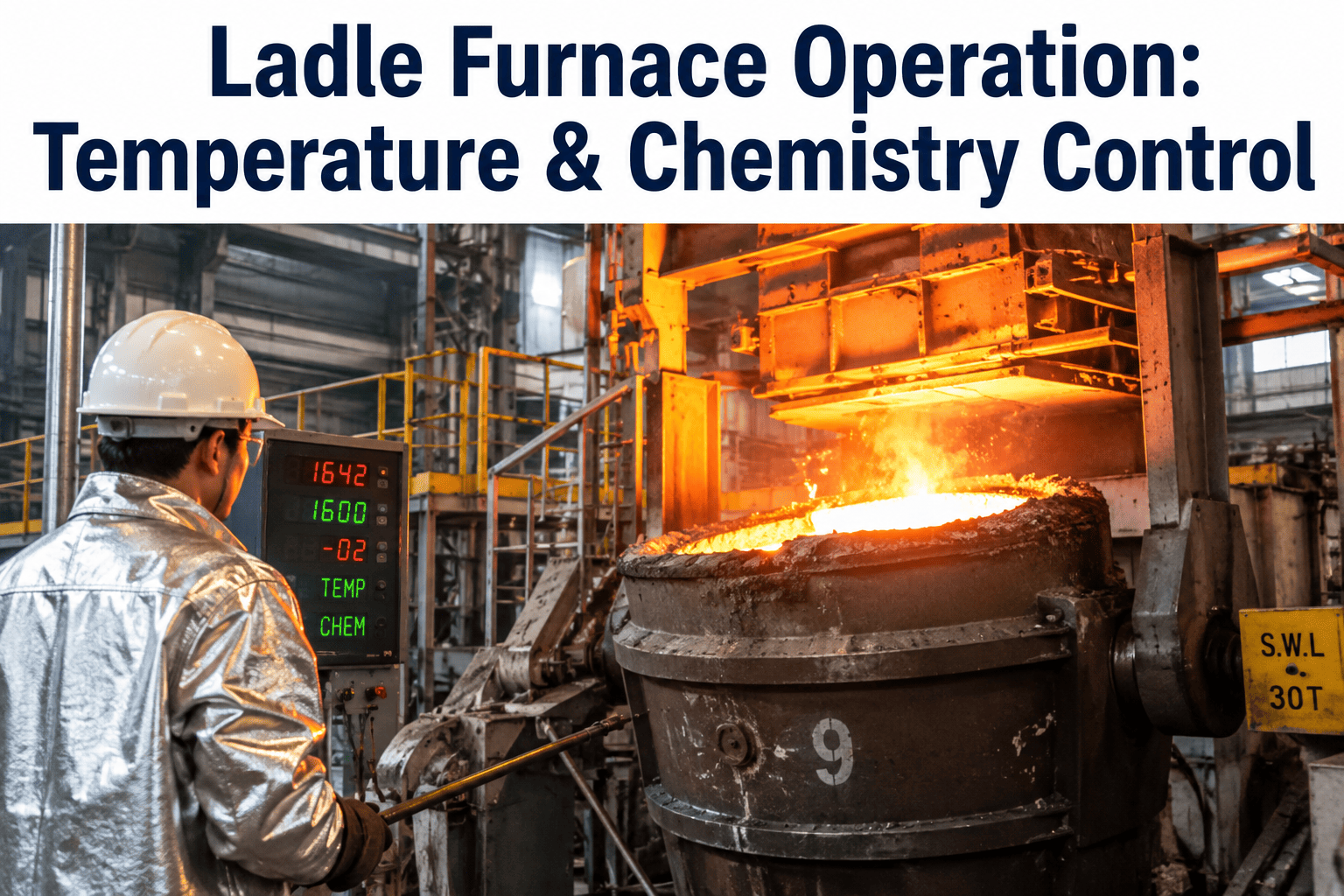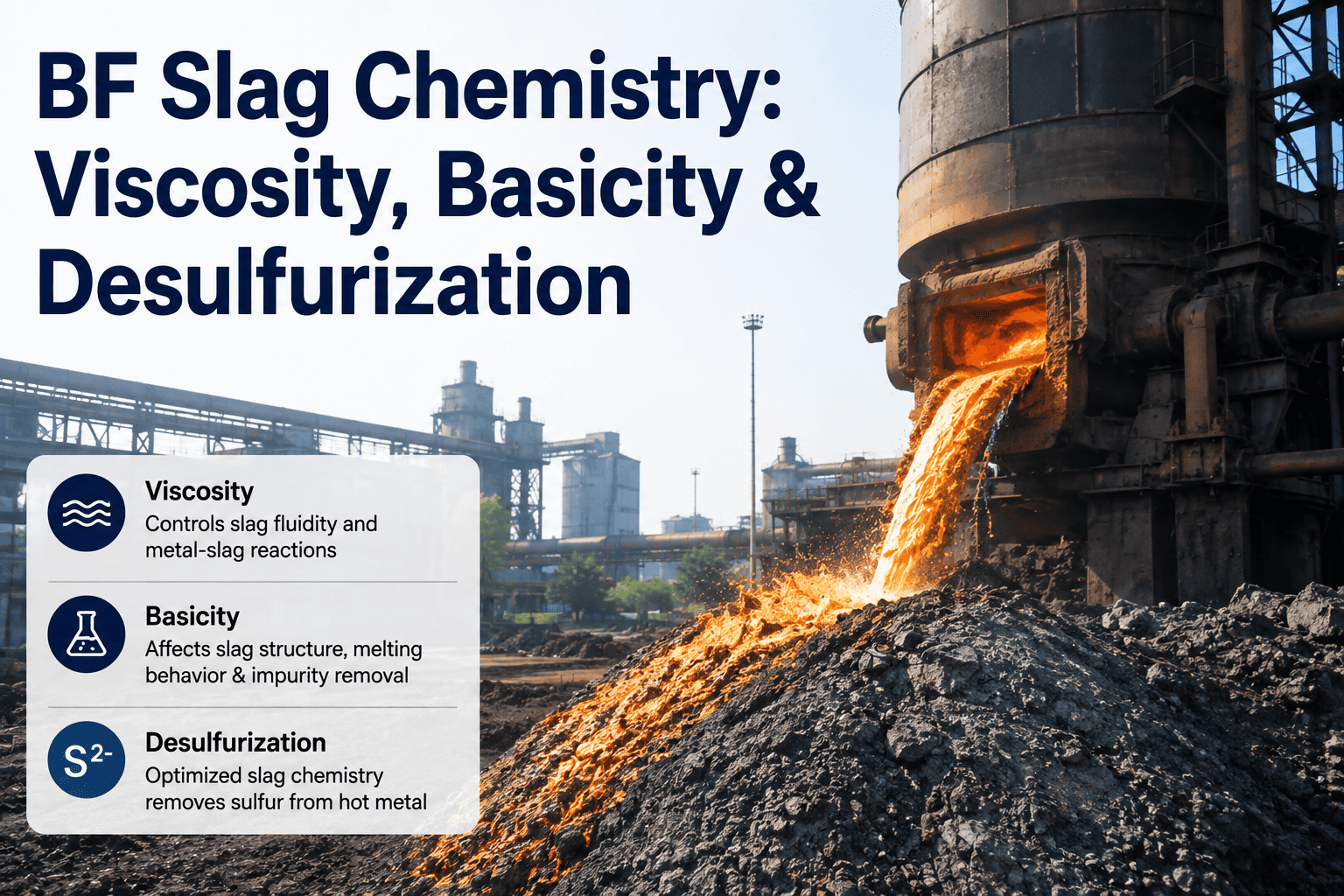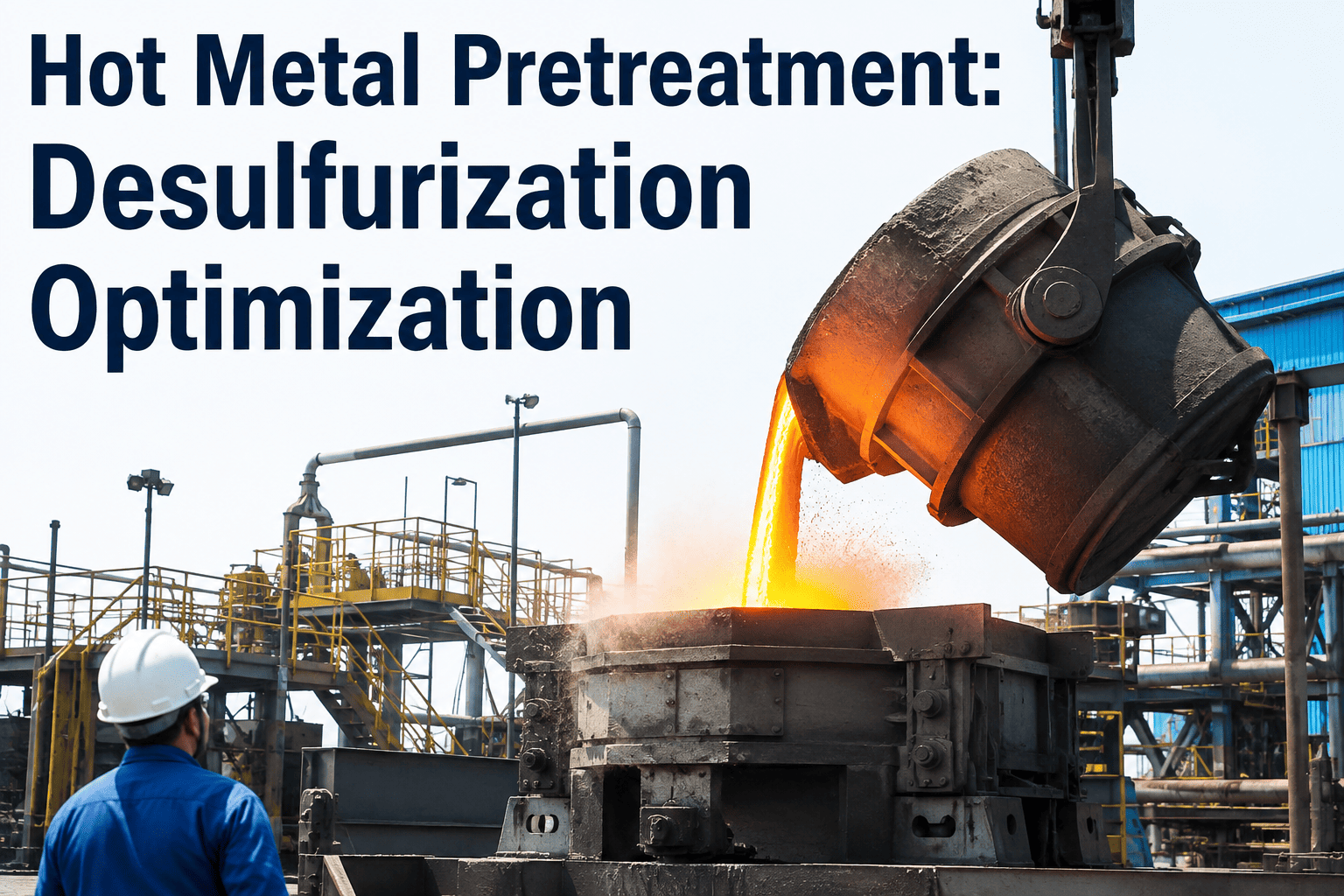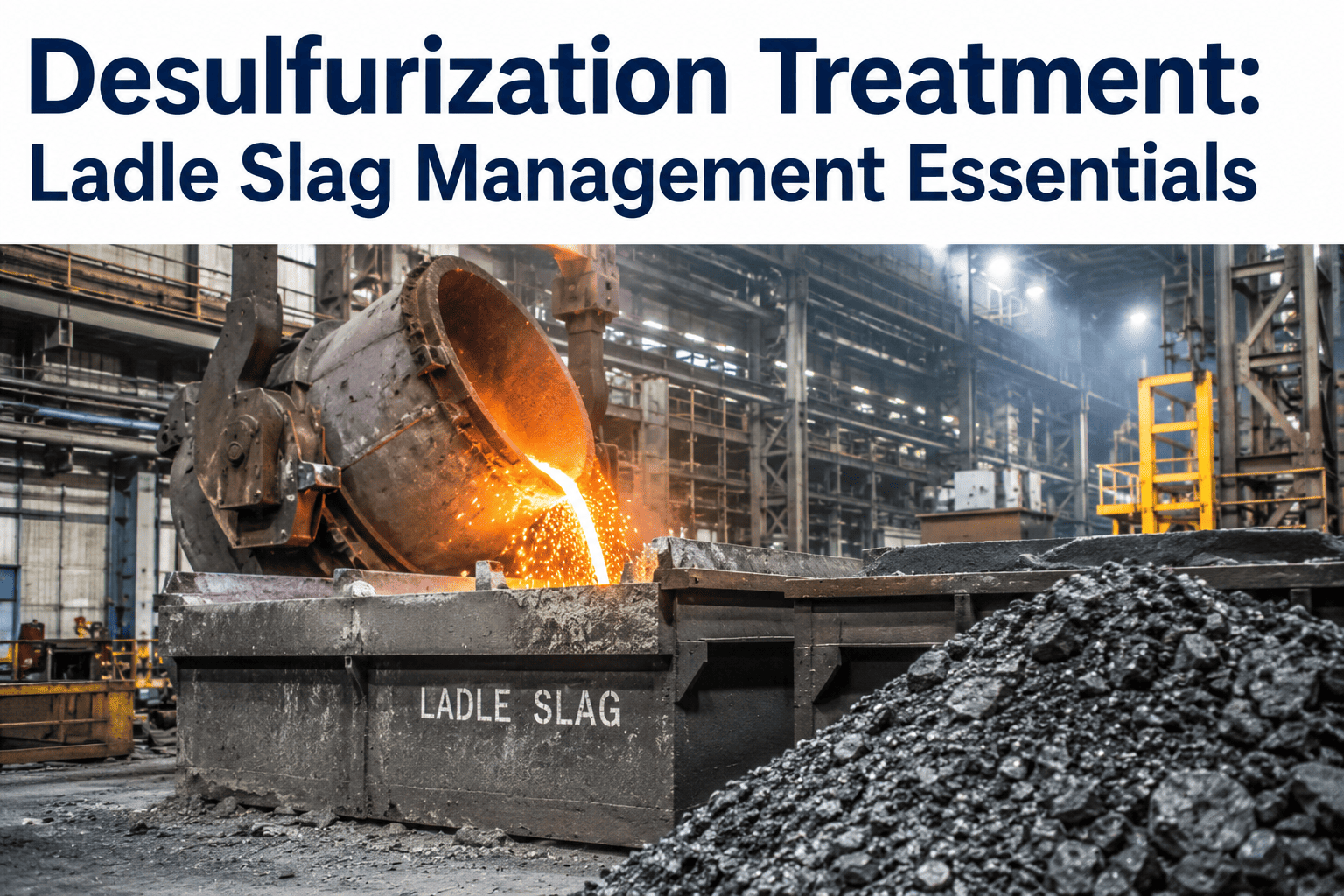
Ultra-low sulfur specifications leave very little margin for a slag chemistry that drifts off target or a deoxidation practice applied inconsistently between heats. Sulfur removal happens almost entirely through the slag-metal interface, which means the slag itself, not just the steel, has to be actively managed throughout treatment for desulfurization to actually work. Mills chasing tight sulfur specs for pipeline, offshore, or heavy plate grades increasingly need that slag chemistry visible in real time rather than confirmed only after a final sample comes back, and that visibility is what iFactory's process platform is built to provide.
SECONDARY METALLURGY · DESULFURIZATION
Desulfurization Treatment and Ladle Slag Management Essentials
Slag composition, deoxidation practice, and stirring intensity working together to consistently hit ultra-low sulfur targets, heat after heat.
The Slag-Metal Reaction Behind Every Ppm of Sulfur Removed
<0.005%
is a common ultra-low sulfur target for pipeline and offshore steel grades
Basicity ratio
slag basicity is one of the strongest levers controlling how much sulfur the slag can absorb
Low oxygen needed
effective desulfurization requires a well-deoxidized bath before the reaction can proceed efficiently
Stirring dependent
sulfur removal rate is directly tied to how effectively slag and metal are brought into contact
What Effective Desulfurization Actually Requires
01
High Basicity, Low Oxidation Slag
A slag chemistry with the right lime-to-silica ratio and low iron oxide content creates the thermodynamic conditions sulfur needs to transfer from steel into slag.
02
Well-Deoxidized Bath
Residual oxygen in the steel competes with sulfur for the same slag capacity, meaning deoxidation practice directly determines desulfurization ceiling.
03
Sufficient Stirring Intensity and Time
Sulfur transfer happens at the slag-metal interface, so stirring that maximizes contact area and renewal rate directly accelerates the reaction.
Track Slag Chemistry the Same Way You Track Steel Chemistry
iFactory brings slag basicity trends, deoxidation practice, and stirring data together so ultra-low sulfur targets are hit predictably, not by trial and error.
Desulfurization Parameters and Targets
Desulfurization Practice Reference
| Parameter | Role in Sulfur Removal | Common Issue |
|---|---|---|
| Slag basicity (CaO/SiO2) | Sulfur absorption capacity of the slag | Drift below target reducing removal efficiency |
| Slag FeO content | Competing oxidation reaction with sulfur | Elevated levels from insufficient deoxidation |
| Bath dissolved oxygen | Determines desulfurization reaction ceiling | Incomplete deoxidation before treatment start |
| Stirring energy and duration | Slag-metal contact and reaction rate | Cycle ended before equilibrium approached |
| Slag volume and coverage | Total sulfur absorption capacity available | Insufficient slag addition for heat size |
Common Reasons Sulfur Targets Are Missed
Slag Basicity Not Verified Before Treatment
Assuming lime addition achieved target basicity without confirming actual slag composition can leave the reaction thermodynamically limited from the start.
Deoxidation Sequence Out of Order
Attempting desulfurization before the bath is adequately deoxidized wastes treatment time fighting a competing reaction instead of removing sulfur efficiently.
Stirring Cut Short of Equilibrium
Ending treatment on a fixed clock rather than confirming the reaction has approached equilibrium leaves achievable sulfur removal on the table.
Insufficient Slag Volume for Heat Size
A slag addition sized for an average heat can fall short of the absorption capacity a larger or higher-sulfur heat actually requires.
Improving Desulfurization Consistency
1Verify slag basicity and FeO content before starting desulfurization treatment, not after
2Confirm adequate deoxidation is complete before treatment begins
3Size slag additions to actual heat sulfur load rather than a single standard quantity
4Track sulfur removal rate against historical trend to confirm treatment is approaching equilibrium
5Log slag and deoxidation practice per heat to support root cause review of any missed target
Desulfurization and Slag Management — Common Questions
What slag basicity ratio is generally targeted for effective desulfurization?
Many desulfurization practices target a CaO to SiO2 ratio in the range of 2.5 to 4, though the optimal value depends on slag volume, temperature, and the specific grade's sulfur target. What matters most operationally is verifying the actual achieved ratio rather than assuming a lime addition automatically produced the intended basicity.
Why does deoxidation need to happen before desulfurization rather than at the same time?
Sulfur and oxygen both compete for the same slag capacity through similar thermodynamic pathways, so a bath with high residual oxygen limits how much sulfur the slag can absorb regardless of otherwise favorable basicity. Completing deoxidation first allows the desulfurization reaction to proceed toward its full achievable extent.
How long does effective desulfurization treatment typically take?
Treatment duration varies with starting sulfur level, target specification, slag chemistry, and stirring intensity, so there is no single universal time. Tracking the rate of sulfur removal against a historical baseline for similar heats is a more reliable way to judge whether a treatment has approached its practical equilibrium than relying on a fixed clock time alone.
Can slag chemistry data actually be tracked in real time during treatment?
Direct real-time slag composition measurement is limited in most operations, so practices typically combine addition tracking, historical correlation, and periodic sampling. iFactory's platform helps by tracking lime and deoxidizer additions against heat history, giving a strong practical estimate of slag state throughout treatment.
What happens if slag volume is too low for the sulfur load in a heat?
Insufficient slag volume means the slag reaches its sulfur absorption capacity before the steel reaches its target level, leaving the heat above specification even with otherwise correct basicity and stirring practice. Sizing slag addition to the specific heat's starting sulfur content, rather than a fixed standard quantity, helps avoid this outcome.
SECONDARY METALLURGY · ULTRA-LOW SULFUR
Hit Your Sulfur Target Without the Guesswork
See how iFactory brings slag chemistry, deoxidation, and stirring data together to make desulfurization results predictable.