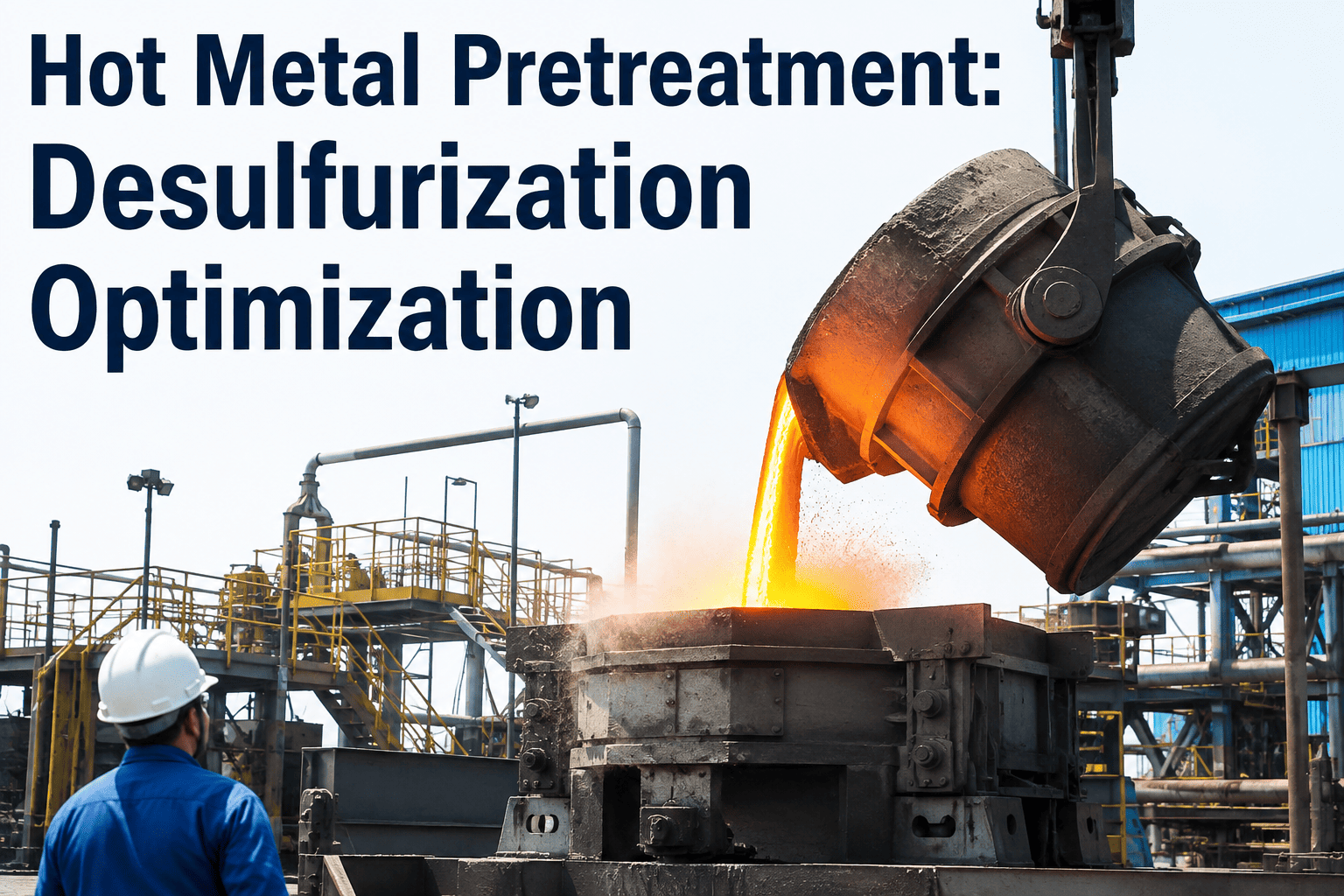
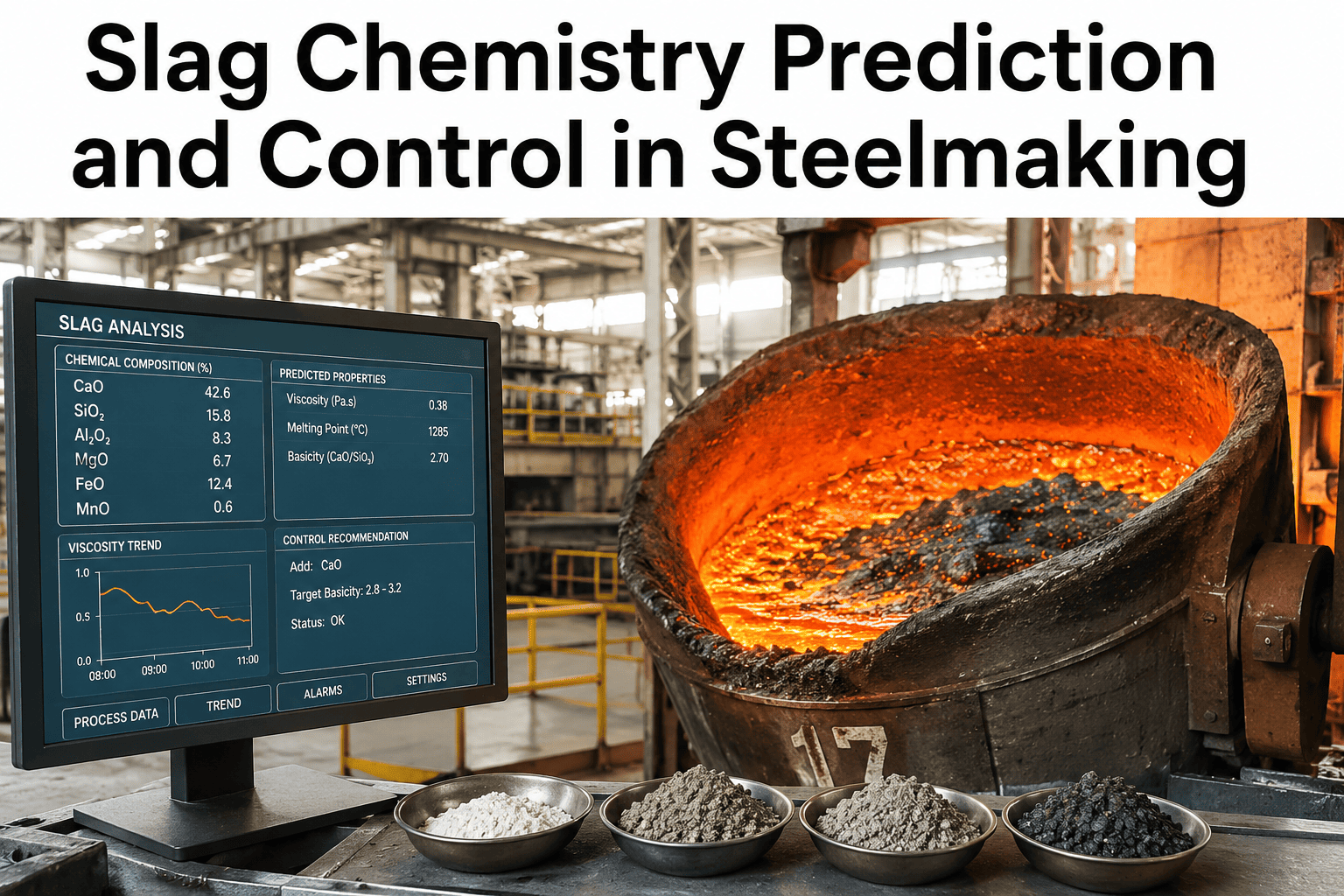
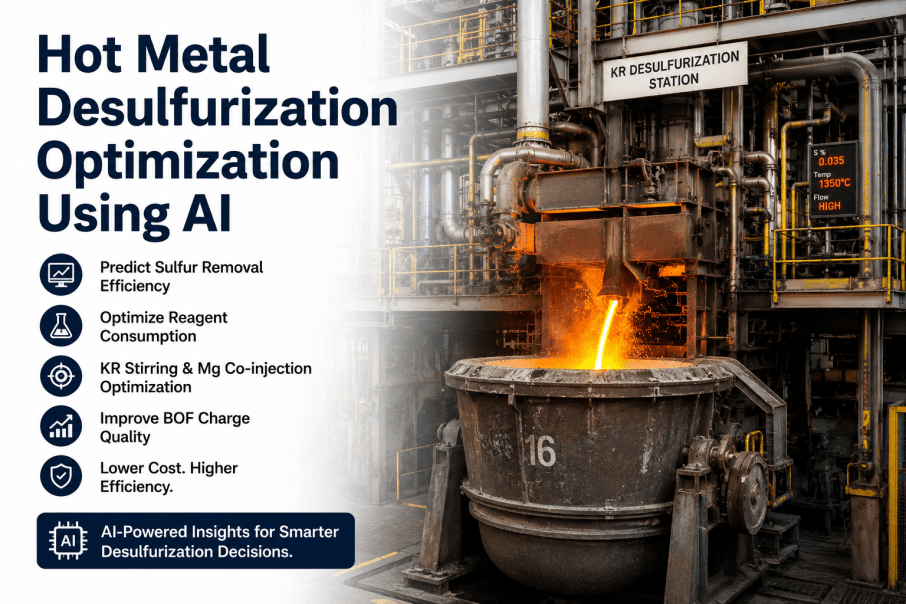
Hot metal desulfurization sets the chemistry table for everything that follows in the BOF, and it's also one of the more expensive reagent-consuming steps in the whole steelmaking chain. Calcium carbide and lime additions are typically dosed against a fixed recipe keyed to incoming sulfur level, which works reasonably well on average but leaves real money on the table on the heats where actual hot metal chemistry, temperature, and slag carryover differ from the assumption the recipe was built around. Our process metallurgy team can review your current desulfurization reagent consumption against what a dynamic dosing model would recommend heat by heat.
Steel Making — Hot Metal Pretreatment
Dose Reagent to the Heat, Not the Average
Incoming sulfur, temperature, and slag carryover shift heat to heat. A fixed dosing recipe built for the average case overtreats some heats and undertreats others. An AI model adjusts the recommended dose for each one.
Reagent Dosing Funnel
Incoming Chemistry + Temp
Target Sulfur Level
Model-Recommended Dose
Actual Reagent Added
Why a Fixed Recipe Leaves Reagent Cost on the Table
A typical desulfurization station operates against a lookup table or a simplified formula that dispenses calcium carbide and lime based mainly on incoming sulfur level and hot metal weight, with maybe a coarse temperature adjustment layered in. That approach handles the average heat reasonably well, but hot metal chemistry doesn't arrive in averages: silicon and manganese content, temperature at the point of treatment, and slag carryover from the blast furnace all shift the actual desulfurization efficiency achievable from a given reagent dose.
When the fixed recipe doesn't account for these shifts, the station either overtreats heats that would have hit target sulfur with less reagent, wasting calcium carbide and lime unnecessarily, or undertreats heats where the actual efficiency was lower than assumed, requiring a second treatment pass that costs both reagent and processing time.
10-20%
typical reagent overconsumption from fixed-recipe dosing on off-average heats
3-4
key variables that shift real desulfurization efficiency heat to heat
5-8 min
typical added processing time from a required second treatment pass
The Variables That Actually Drive Desulfurization Efficiency
Desulfurization efficiency, meaning how much sulfur removal a given reagent dose actually achieves, depends on more than just the target sulfur level. A dynamic dosing model treats these variables jointly rather than applying a single correction factor to a base recipe.
Incoming Sulfur Level
Sets the baseline reagent requirement, but the relationship to dose isn't perfectly linear.
Hot Metal Temperature
Lower temperature at treatment generally improves desulfurization thermodynamics but affects mixing.
Silicon Content
Higher silicon competes with sulfur removal reactions, reducing effective reagent efficiency.
Slag Carryover
Carryover slag from the blast furnace can reduce desulfurization efficiency if not accounted for.
Curious how much reagent your current fixed-recipe dosing is losing to off-average heats?
Book a walkthrough and we'll run your recent treatment data through the model.
How Dynamic Dosing Actually Gets Recommended
Rather than starting from a fixed lookup table, the model is trained on historical treatment data that links incoming chemistry, temperature, and slag condition to actual achieved sulfur removal for a given reagent dose. For each new heat, it predicts the dose needed to hit target sulfur with the specific chemistry and temperature that heat is arriving with, rather than the shop's historical average.
| Heat Condition | Fixed Recipe Dose | Model-Adjusted Dose |
| Low silicon, low carryover slag |
Standard dose from lookup table |
Reduced dose, efficiency higher than average |
| High silicon, elevated carryover |
Standard dose from lookup table |
Increased dose to avoid second pass |
| Cooler than typical temperature |
Standard dose with coarse temp adjustment |
Dose tuned to actual thermodynamic advantage |
What This Means for the Treatment Station Operator
The operator still controls the treatment process and makes the final call on dosing, but the recommendation they're working from reflects the specific heat in front of them rather than a shop-wide average. This tends to reduce the frequency of second treatment passes, since heats that would have been undertreated by the fixed recipe get flagged for a higher initial dose rather than requiring a follow-up correction after the first pass comes back off target.
1
Hot metal chemistry and temperature captured at pretreatment station
2
Model predicts dose needed to hit target sulfur for this specific heat
3
Operator reviews and confirms dosing recommendation before treatment
4
Actual result logged, feeding back into model accuracy over time
Reagent Savings Compound Across a Melt Shop
A few percentage points of reagent savings per heat looks modest in isolation, but calcium carbide and lime consumption scale directly with hot metal throughput, so a shop treating dozens of heats a day sees that saving compound into a meaningful materials cost line item over a month. Reducing second-pass frequency has a similar compounding effect on treatment station throughput and BOF scheduling predictability.
Lower Reagent Cost
Dose matched to actual heat chemistry instead of a shop-wide average.
Fewer Second Passes
Undertreated heats flagged before they miss target sulfur the first time.
Steadier Handoff
BOF receives more consistent starting sulfur level heat to heat.
Frequently Asked Questions
What data does the dosing model need from our pretreatment station?
A useful starting model draws on historical treatment records that include incoming hot metal chemistry, temperature at treatment, reagent dose applied, and the resulting sulfur level achieved, ideally covering a range of chemistry conditions rather than a narrow band. Shops that already log this data through their process historian for other reasons typically have what's needed to get started without new instrumentation, while shops with less consistent logging start with a shorter historical window and improve as more heats are captured going forward.
Reach out to our team to review what your current station already records.
Does this change our physical reagent injection equipment?
The dosing model changes the recommended quantity of reagent to inject, not the physical injection method itself, so existing calcium carbide and lime injection equipment typically continues operating as installed. The recommendation is surfaced to the operator as a target dose before treatment begins, which they apply through the same injection process already in use, making this primarily a change to the dosing decision rather than a hardware change at the station.
Book a demo to see how the recommendation would appear in your station's workflow.
How does the model handle a shift in blast furnace hot metal quality over time?
Because the model is trained on an ongoing basis using recent treatment history rather than a single fixed calibration, gradual shifts in typical hot metal chemistry or slag carryover from changes in blast furnace practice tend to be absorbed into the model's predictions as new heats are logged. A sudden, significant shift, such as a burden change or major blast furnace campaign transition, would generally warrant a manual review of dosing recommendations during the transition period until enough new heats establish the updated baseline.
Talk to our team about how a major burden change would be handled.
Can this also help with dephosphorization dosing, not just desulfurization?
The same dynamic dosing approach applies to dephosphorization pretreatment, since it depends on a similar set of incoming chemistry and temperature variables that shift heat to heat in ways a fixed recipe doesn't fully capture. Shops running both desulfurization and dephosphorization pretreatment steps typically see the two modeled separately, since the reagents and target endpoints differ, but the underlying data and workflow approach carries over directly.
Book a walkthrough to discuss your specific pretreatment sequence.
How much reagent savings is realistic to expect in the first few months?
Savings in the first few months tend to come primarily from reducing the heats that were being significantly overtreated under the fixed recipe, since those are the most straightforward for a model to identify with limited historical data. Full savings potential, including the reduction in second-pass frequency from better first-time dosing accuracy, typically builds over a longer period as the model accumulates more heats across a wider range of chemistry conditions specific to your hot metal source.
Reach out to discuss realistic savings timelines based on your current treatment volume.
Stop Dosing to the Average Heat
Match Reagent Dose to Actual Chemistry, Heat by Heat
Share your recent pretreatment logs and we'll show you what a dynamic dosing model would have recommended against your actual reagent consumption.