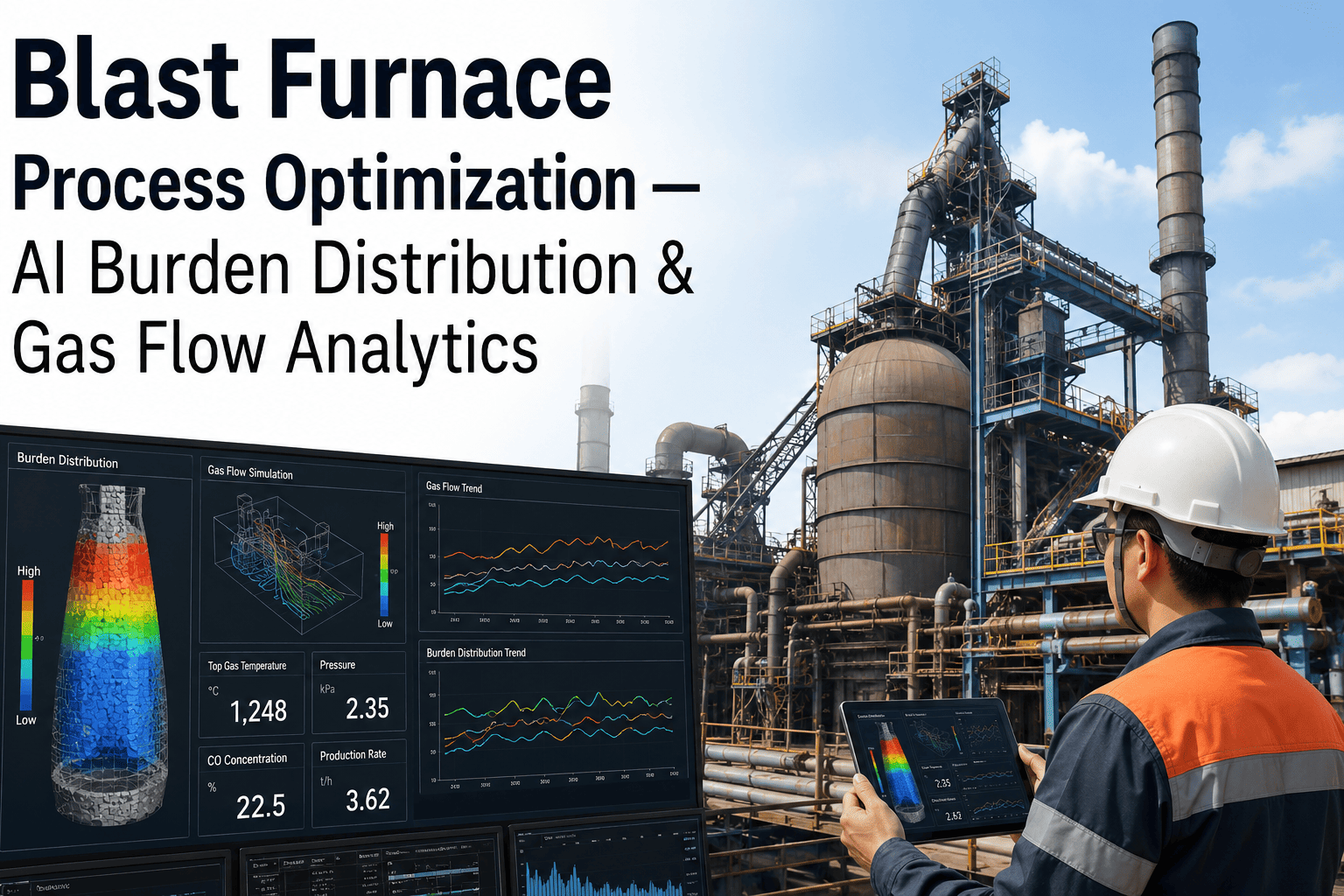
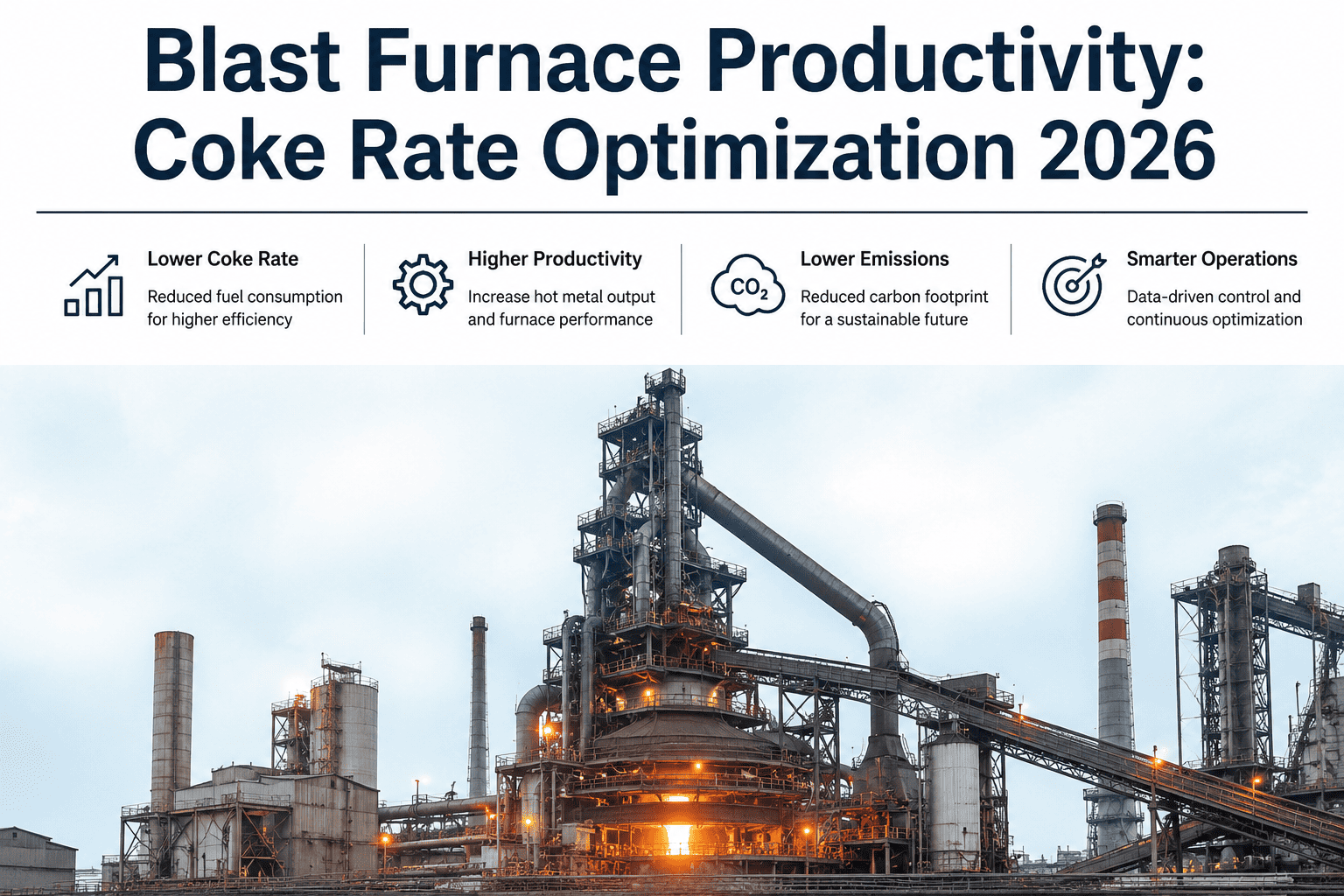
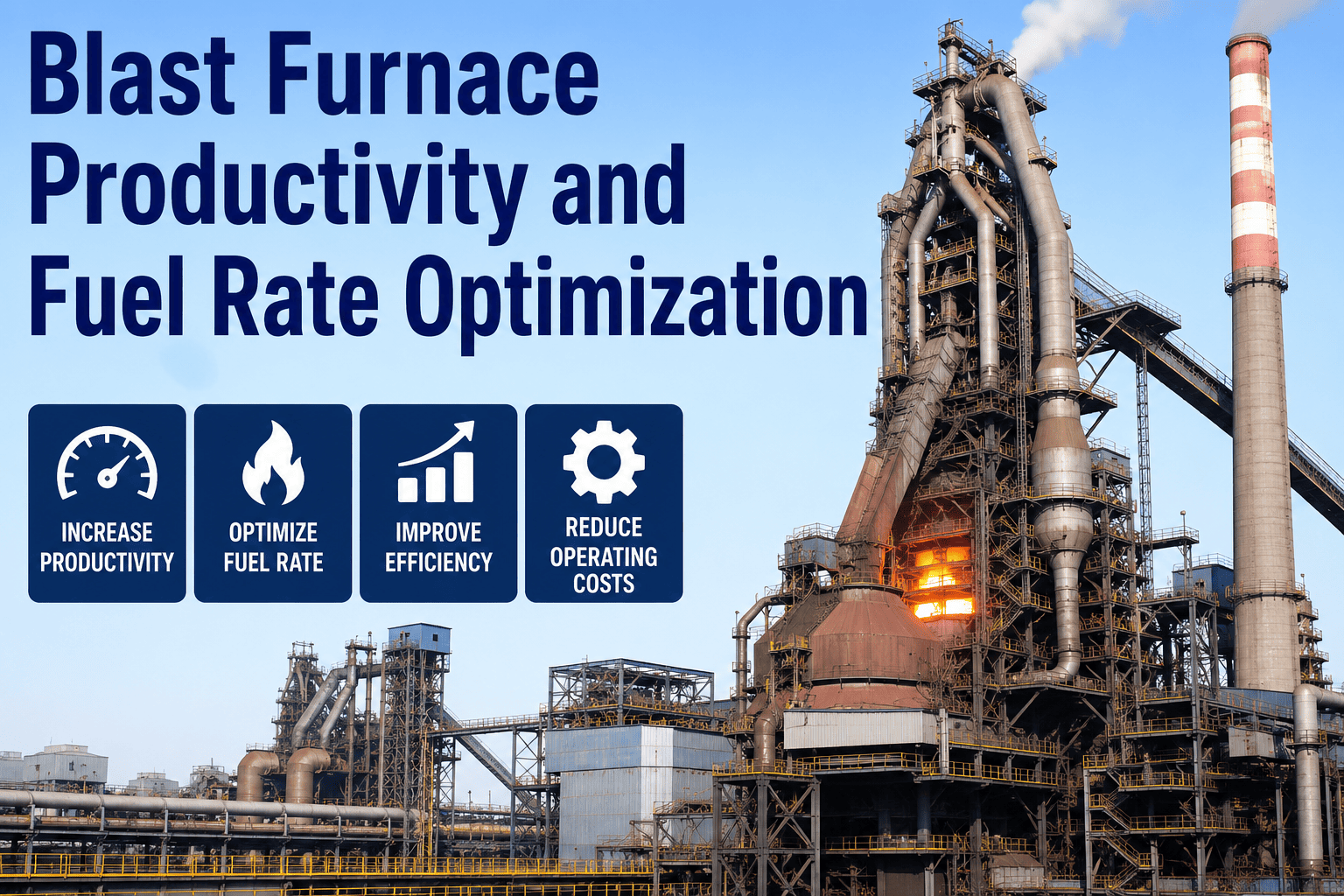
Every blast furnace process engineer knows the frustration of watching coke rate creep upward while gas utilization refuses to stabilize, even when burden charging looks textbook-correct on paper. The real culprit is usually invisible to manual review: subtle radial gas flow imbalances, uneven burden descent, and thermal drift that build up over hundreds of charges before anyone notices the trend. AI-driven burden distribution and gas flow analytics now give process engineers an 8-hour-ahead view of hot metal temperature and silicon, tightening control bands that manual operation simply cannot match. Plants applying this approach are documenting 2 to 4 percent coke rate reduction and 5 to 8 percent throughput improvement without touching a single mechanical component on the furnace. Engineers who want to see this modeled against their own furnace's charge data can book a demo before the next campaign review.
BLAST FURNACE ANALYTICS · PROCESS OPTIMIZATION · 2026
Turn Burden Distribution Into a Precision Instrument
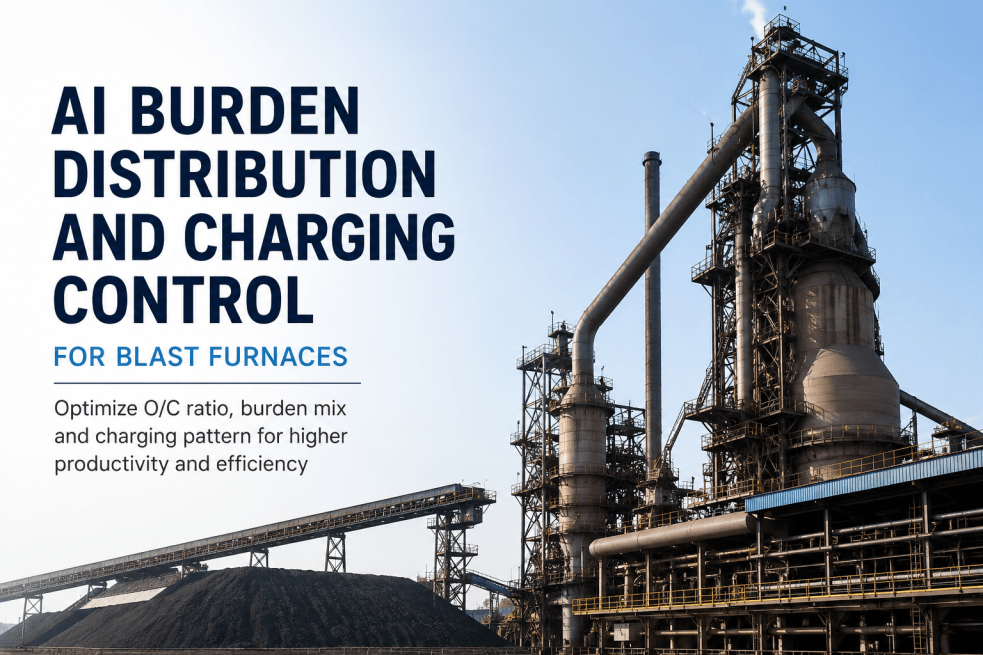
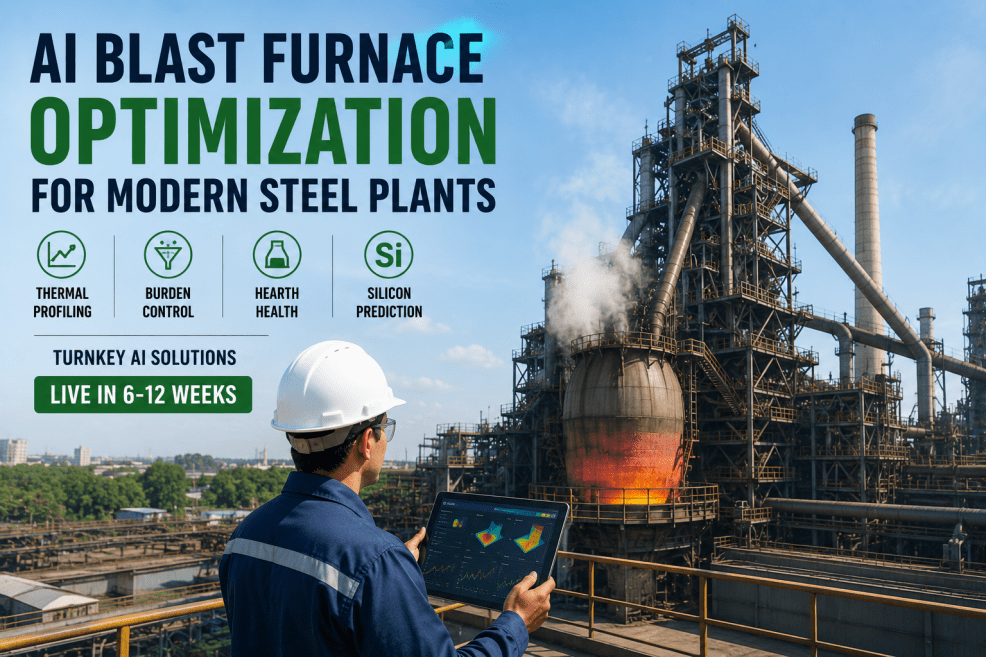
AI models trained on your radar probes, stockline data, and gas flow sensors predict hot metal temperature and silicon hours ahead, so charging adjustments happen before instability starts, not after.
2-4%Coke rate reduction from AI-optimized burden and blast parameters
5-8%Throughput improvement documented at major steelmakers
1.6°CReduction in hot metal temperature control deviation vs manual operation
90-120Days to reach full multi-objective optimization maturity
Why Burden Distribution Quietly Erodes Furnace Performance
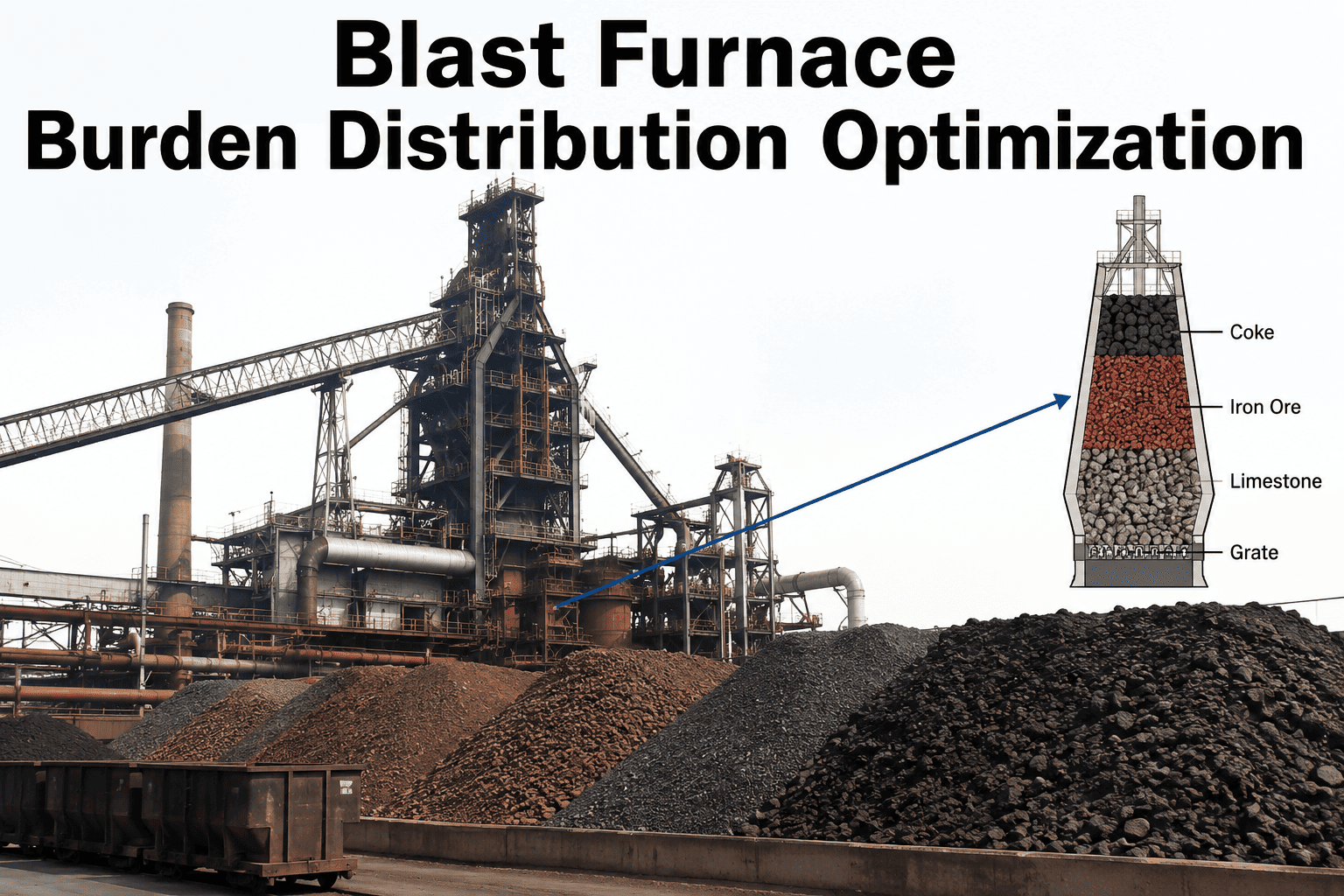
Uneven ore and coke layering does not announce itself with an alarm. Instead it shows up as gradual channeling, scaffolding risk, and silicon variability that process engineers spend hours chasing across shift logs. Left uncorrected, poor burden distribution wastes reducing agent, destabilizes gas flow through the stack, and forces conservative operating margins that quietly cap productivity.
Manual Burden Control
Charging sequence set by fixed practice, adjusted reactively after silicon drifts
Radial gas flow imbalance detected only during periodic sampling
Wide thermal control bands to compensate for uncertainty
AI-Optimized Burden Control
Charging sequence adjusted continuously from radar and stockline data
Gas flow and wall heat load monitored every cycle, channeling flagged early
Tight thermal bands held automatically, freeing up productivity headroom
How the Prediction Loop Runs on Every Cast
01
Sensor Ingestion
Radar probes, stockline profilers, and top gas analyzers stream burden and gas composition data continuously into the model.
02
8-Hour-Ahead Forecast
Predictive models project hot metal temperature and silicon trends, flagging drift before it reaches the tap.
03
Charging Adjustment
Recommended changes to ore-coke ratio and distribution chute angle are surfaced to the control room in real time.
04
Outcome Verification
Actual hot metal chemistry is compared against the forecast, continuously sharpening the model for your specific furnace.
Documented Coke Rate Impact Across Operating Levers
PROCESS ENGINEERING · BLAST FURNACE
See Your Furnace's Coke Rate Headroom
Bring your last 90 days of charge data to a live session and see where AI-driven burden distribution would have changed your numbers.
What a Tata Steel-Scale Furnace Gains From 2.5% Coke Reduction
Baseline Coke Consumption
AI-Optimized Consumption (2.5% lower)
A 2.5% coke rate reduction on a single large furnace has been documented at roughly ₹45 crore in annual savings, and every additional 1% reduction compounds that figure further. The gains come without capital expansion, since the improvement lives entirely in how existing burden and blast parameters are sequenced.
The Sensor Inputs Behind Every Prediction
Process engineers often assume this kind of modeling needs a full instrumentation overhaul, but most furnaces already generate the majority of the data the model needs. The platform's accuracy comes from fusing existing signals rather than adding new hardware everywhere.
Burden Distribution Mistakes That Quietly Cost Coke Rate
1
Fixed Charging Sequence Regardless of Raw Material Batch
Treating every shipment of sinter or pellets the same way ignores real shifts in reducibility and strength that change how the burden should be layered.
2
Reacting to Silicon Drift Instead of Preventing It
Waiting for a high-silicon cast before adjusting the ore-coke ratio means the correction always arrives at least one cast too late.
3
Wide Thermal Control Bands as a Safety Margin
Conservative bands built to compensate for uncertainty also cap the productivity and coke savings that tighter, data-backed control would unlock.
4
Periodic Rather Than Continuous Gas Flow Sampling
Spot-checking radial gas distribution misses the gradual channeling patterns that a continuous model catches within hours, not shifts.
Engineers Ask Before Rolling This Out
How fast do we see the first predictive model working?
First predictive models for hot metal temperature and silicon are typically operational within 60 days of connecting to your radar, stockline, and gas analysis sensors. Full multi-objective optimization across coke rate, throughput, and stability usually reaches production maturity within 90 to 120 days as the model learns your furnace's specific behavior. Most process engineers report measurable coke rate reduction within the first quarter of use, well before the model reaches full maturity.
Does this replace our existing burden distribution equipment?
No, the platform works with your existing distribution chutes, bell or bell-less top equipment, and radar systems rather than replacing them. It analyzes the data those systems already generate and recommends adjusted charging sequences, ore-coke ratios, and blast parameters that your operators execute through the existing control interface. Teams evaluating compatibility with a specific top-charging system can reach out through
support for a technical review.
Can the model handle variable raw material quality?
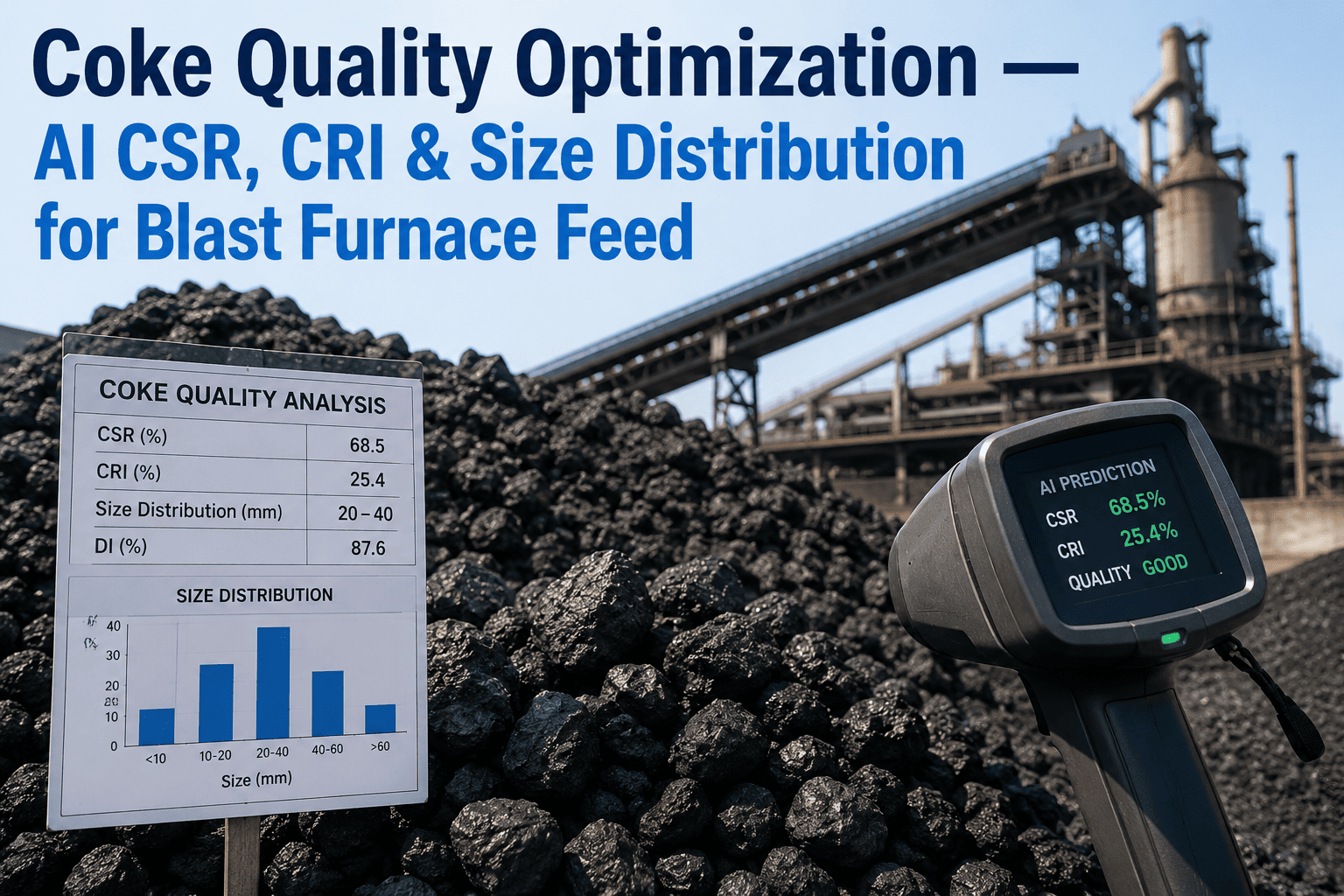
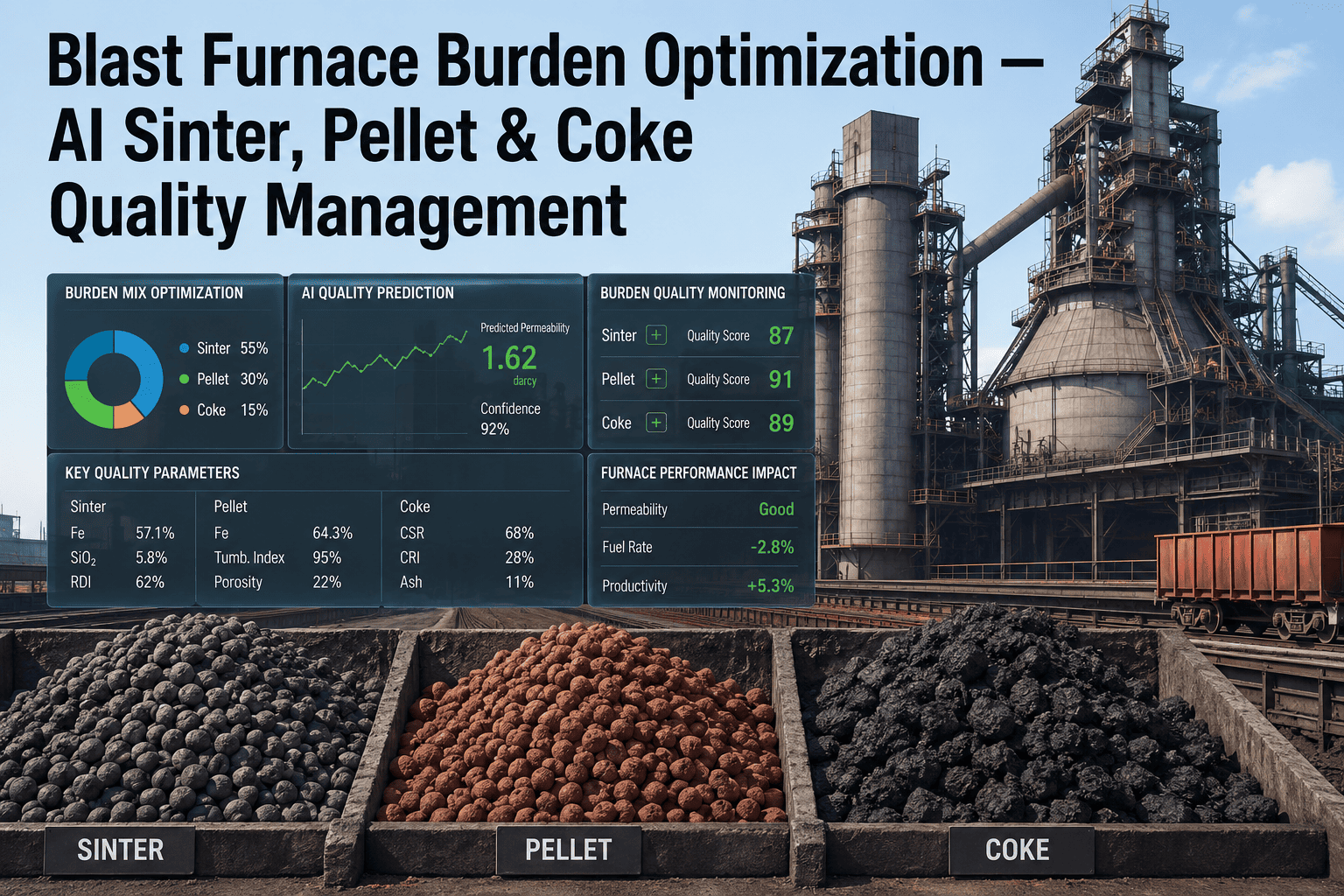
Yes, this is one of the strongest use cases for AI in blast furnace operation. Iron content, gangue composition, coke strength, and sinter reducibility vary by shipment and by season, and the model learns how your specific furnace responds to each type of variation. Over time it adjusts burden composition and blast parameters preemptively rather than waiting for a chemistry deviation to show up at the tap.
What happens to furnace stability during the rollout period?
Stability is protected by design, since recommendations are surfaced to operators as advisory guidance during the initial weeks rather than automated control changes. Process engineers review and approve suggested charging adjustments before they are applied, building trust in the model's accuracy before shifting to more autonomous operation. This phased approach means production risk stays low while the coke rate and throughput benefits accumulate.
How is this different from a standard blast furnace level-2 control system?
Traditional level-2 systems apply fixed physical and thermodynamic models that do not adapt to your furnace's unique behavior over time. This platform continuously retrains on your operating data, capturing the specific relationships between burden composition, blast parameters, and hot metal chemistry that are unique to your furnace geometry and raw material mix. Engineers curious about the technical architecture can
book a demo to see the model training process directly.
BLAST FURNACE · BURDEN DISTRIBUTION · GAS FLOW
Bring Precision to Your Next Campaign
Join process engineers already running AI-optimized burden distribution to cut coke rate, lift throughput, and hold tighter thermal control.