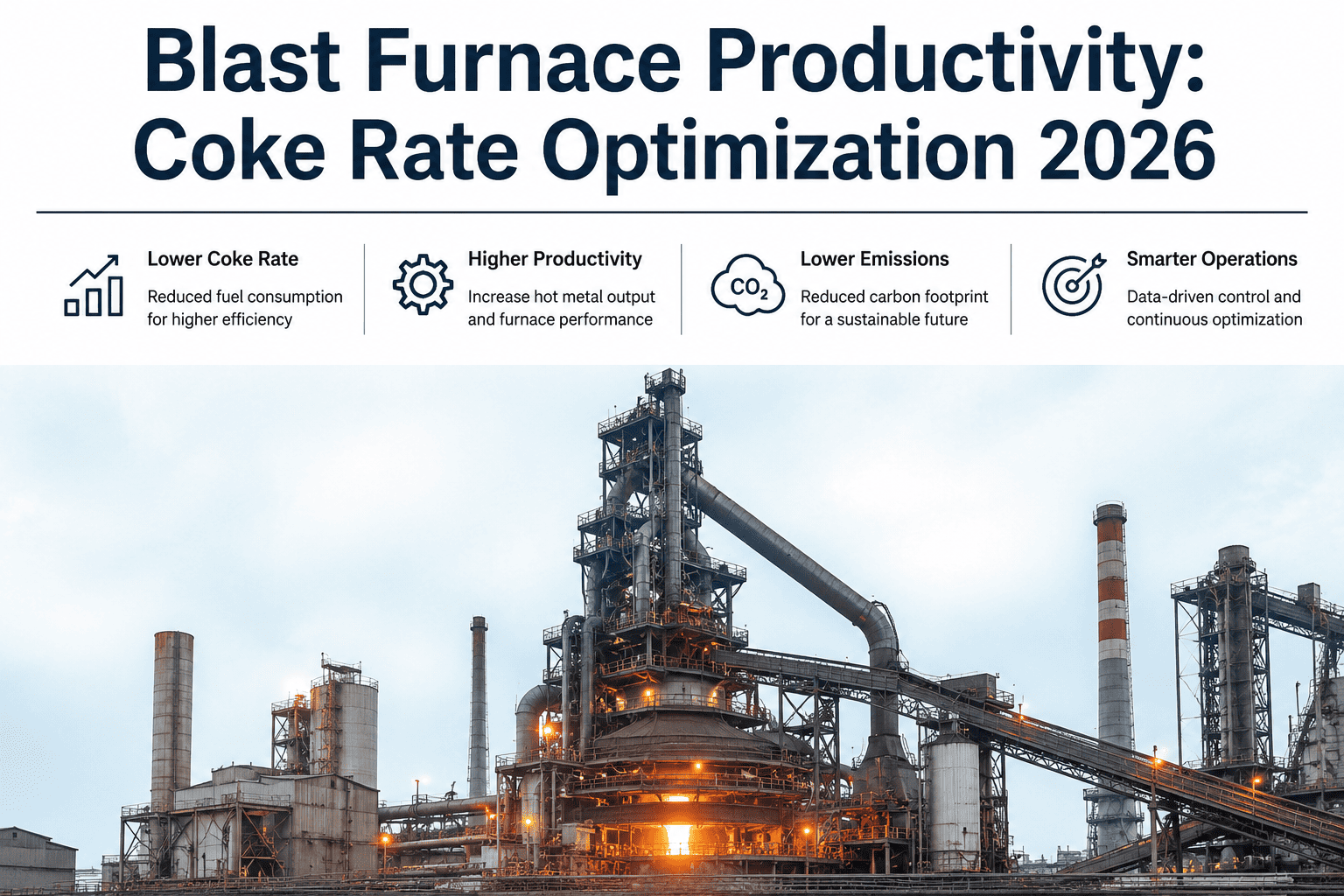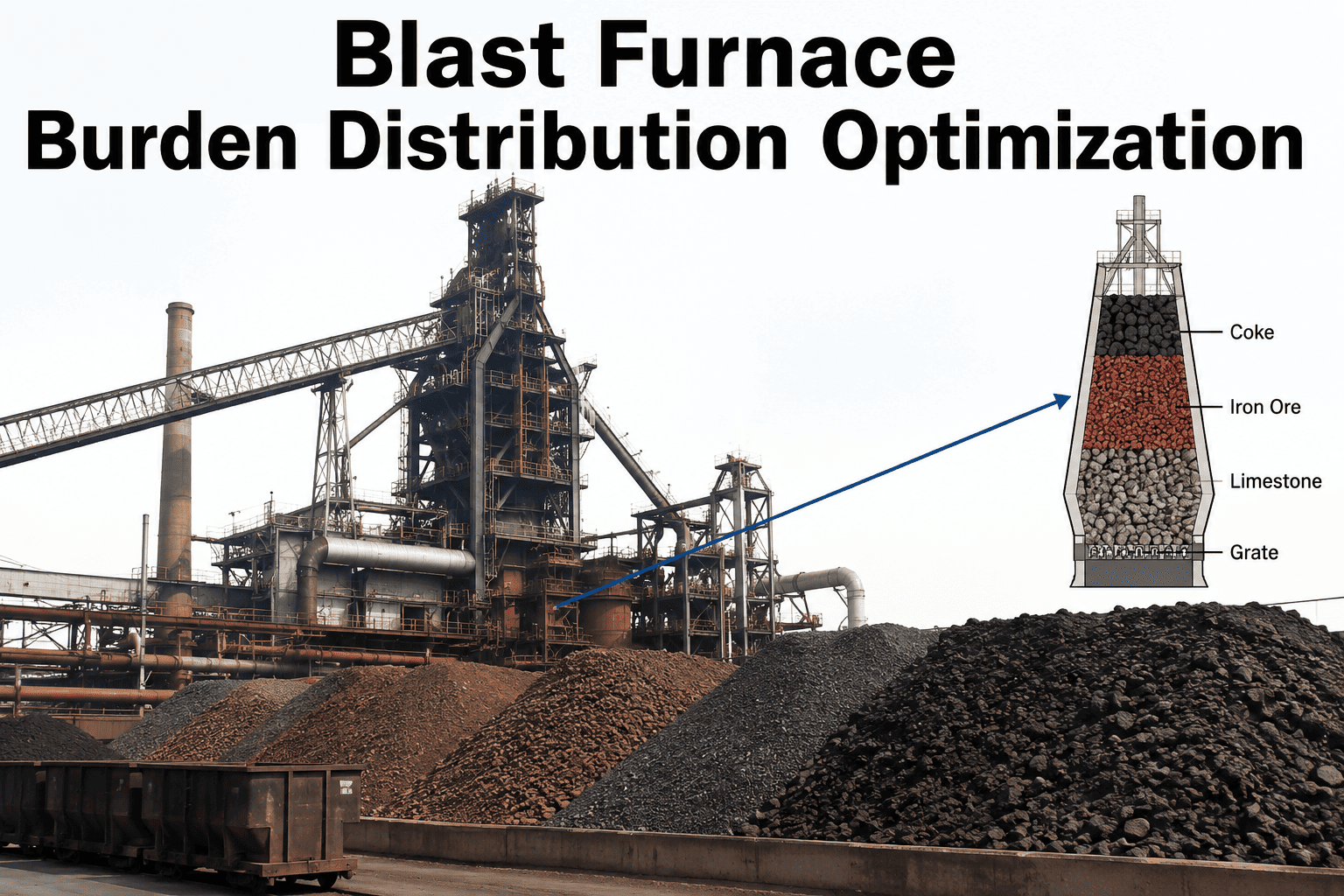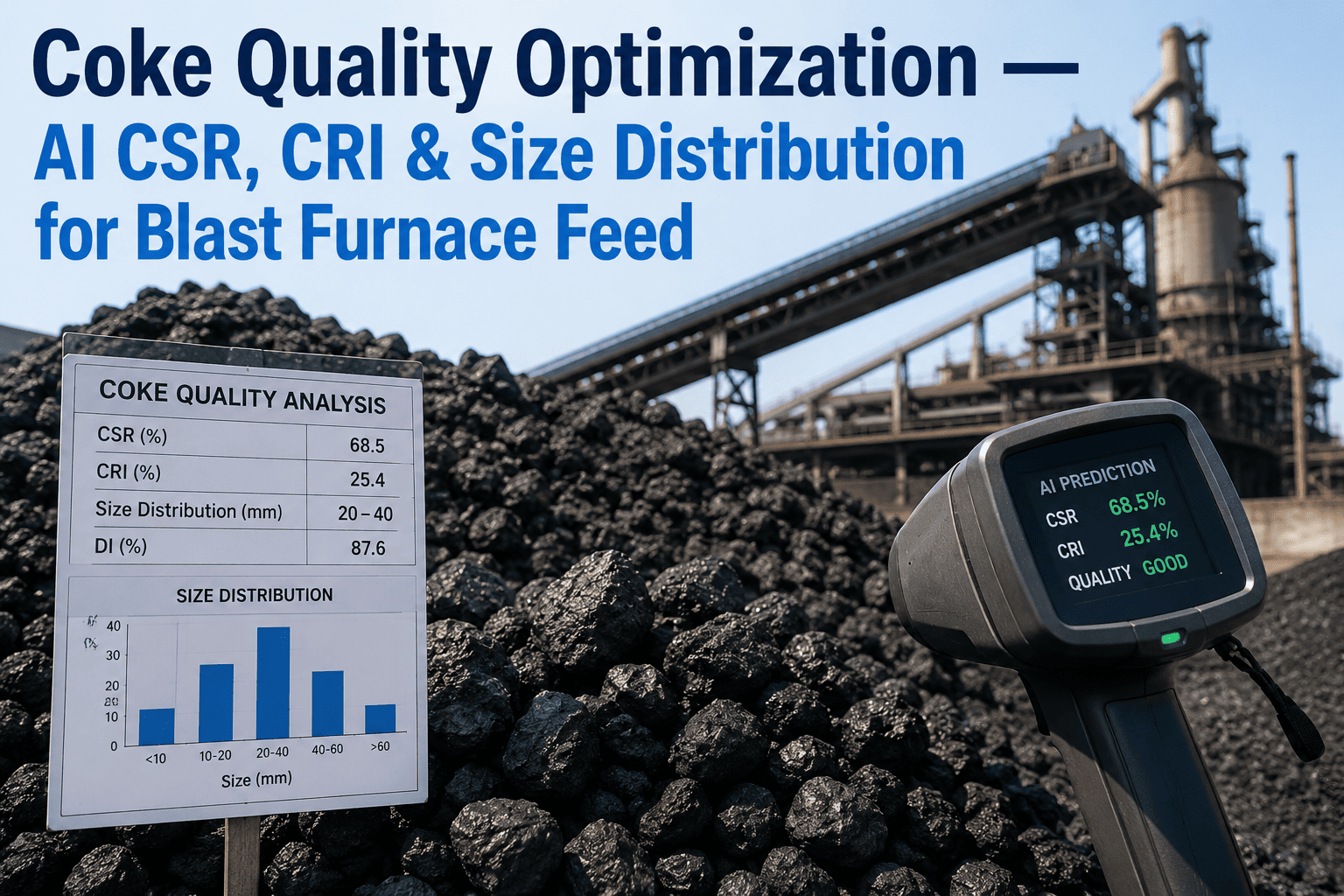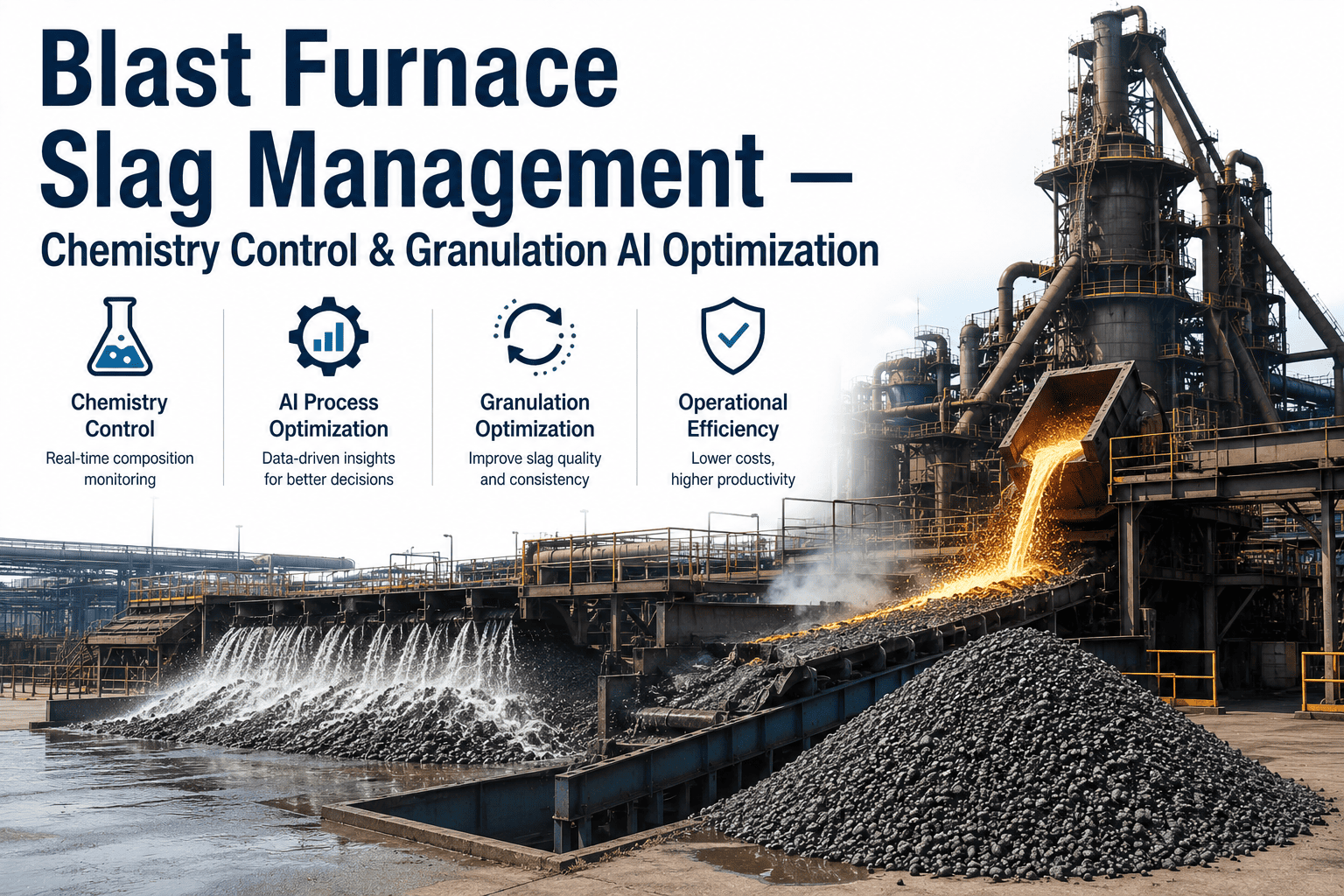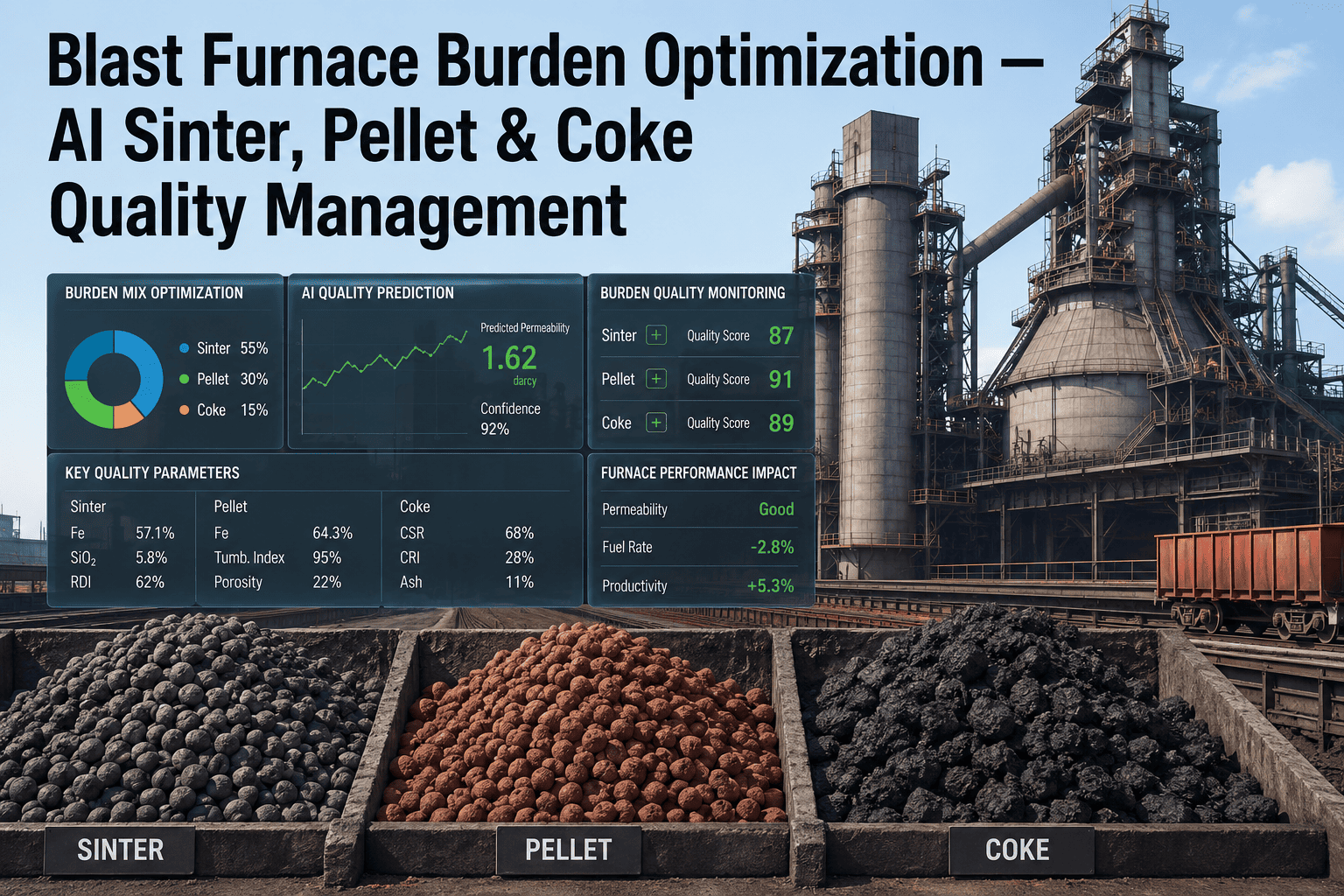
Coke rate is the single largest controllable cost lever on a blast furnace, and burden quality — sinter reducibility, pellet strength, coke properties, and alkali load — determines how much of that cost is actually within reach on any given day. Most operations directors review burden quality reports after the fact, once coke rate has already moved, rather than seeing the compositional trends that predict the shift before it happens. iFactory's Burden Optimization AI continuously models sinter, pellet, and coke quality against furnace performance to recommend burden mix adjustments before coke rate and productivity are affected. Book a demo to see live burden optimization analytics on a furnace comparable to yours.
Three Raw Material Streams, One Performance Outcome
Burden quality decisions are typically made by separate teams evaluating sinter, pellets, and coke against their own individual specifications. Furnace performance, however, responds to how these three streams interact together — a decision made in isolation on any one stream can offset gains made on another.
This organizational separation is not a design flaw so much as a natural consequence of how large steel operations structure procurement and quality functions. Each stream has its own supplier relationships, its own specification history, and its own team accountable for meeting cost and quality targets. The challenge is that furnace performance does not respect these organizational boundaries — coke rate and productivity respond to the combined burden as charged, regardless of which team sourced which component.
How iFactory Builds a Unified Burden Optimization Model
Rather than optimizing sinter, pellet, and coke procurement decisions separately, iFactory models their combined effect on furnace performance as a single system. Talk to our team about how the model incorporates your specific raw material sourcing constraints.
Manual Burden Review vs. Continuous Optimization Modeling
Most operations already receive quality certificates for every sinter, pellet, and coke shipment. The gap is in how consistently that data gets synthesized into a single burden mix recommendation before charging decisions are made.
| Capability | Manual Burden Review | iFactory Burden Optimization AI |
|---|---|---|
| Data Synthesis | Sinter, pellet, and coke quality reviewed separately against individual specifications. | All three streams modeled together against actual furnace performance outcomes. |
| Recommendation Timing | Burden mix decisions often finalized before full quality synthesis is complete. | Daily recommendations delivered before charging decisions are finalized. |
| Coke Rate Attribution | Coke rate shifts identified after the fact, often weeks after the causal burden change. | Coke rate impact projected in advance for each candidate burden mix. |
| Alkali Load Management | Tracked periodically, often reactively once refractory risk indicators appear. | Continuously tracked across the full burden mix against long-term thresholds. |
| Sourcing Flexibility | Alternative raw material sourcing decisions made without full performance impact visibility. | Sourcing scenarios scored for performance impact before procurement commitment. |
Why Operations Directors Need a Unified View, Not Three Separate Reports
An operations director overseeing a furnace typically receives separate quality reports from sinter plant, pellet procurement, and coke supply teams — each optimized for their own specification compliance rather than combined furnace performance. This structure makes sense organizationally, since each team is responsible for their own material stream, but it creates a coordination gap at exactly the point where the real cost impact is decided: the burden mix that actually gets charged.
A sinter batch that meets specification on tumbler strength but trends slightly lower on reducibility might be perfectly acceptable on its own. Paired with a pellet batch also trending toward the lower end of its own specification range, the combined burden permeability effect can be meaningfully worse than either material's individual quality report would suggest. This compounding effect is difficult to catch through three separate compliance reviews, and it is exactly the kind of interaction iFactory's combined model is built to surface before the burden is charged.
For an operations director balancing cost, productivity, and refractory risk across the full furnace, having this synthesis available daily — rather than reconstructed after a coke rate shift already occurred — changes burden mix decisions from reactive cost management into proactive performance optimization.
This also changes how sourcing negotiations get approached. When an operations director can quantify the specific coke rate and productivity impact of a proposed alternative sinter or pellet source before committing to it, procurement conversations shift from a pure cost-per-tonne comparison to a total performance cost comparison. A slightly higher-priced raw material source that improves burden permeability enough to reduce coke rate meaningfully can represent a better total outcome than the lowest-cost option evaluated on price alone — but making that case convincingly requires the kind of quantified performance impact data that manual burden review rarely produces in time for the sourcing decision.
Fits Into Existing Procurement and Raw Material Management Systems
iFactory connects to the quality data systems your sinter plant, pellet suppliers, and coke supply chain already use to issue certificates and lab results, rather than requiring a new parallel data entry process. Integration is completed via standard REST APIs and file-based imports compatible with most raw material management and ERP platforms already in use across steel operations.
For procurement teams, this means the performance impact scoring used in burden mix recommendations is grounded in your actual available inventory and sourcing agreements, not a theoretical ideal that ignores real supply chain constraints. Recommendations are structured to work within the sourcing flexibility your operations actually has, which is part of why adoption tends to move quickly once the model is live — the recommendations reflect decisions your team can genuinely act on.
Deployment Timeline for Burden Optimization Analytics
Deployment integrates with your existing raw material quality data systems and furnace performance historian.
Results from Furnaces Running iFactory Burden Optimization
The following outcomes reflect operations teams that adopted unified burden mix modeling across sinter, pellet, and coke quality streams. Request the detailed performance data for a furnace comparable to yours.