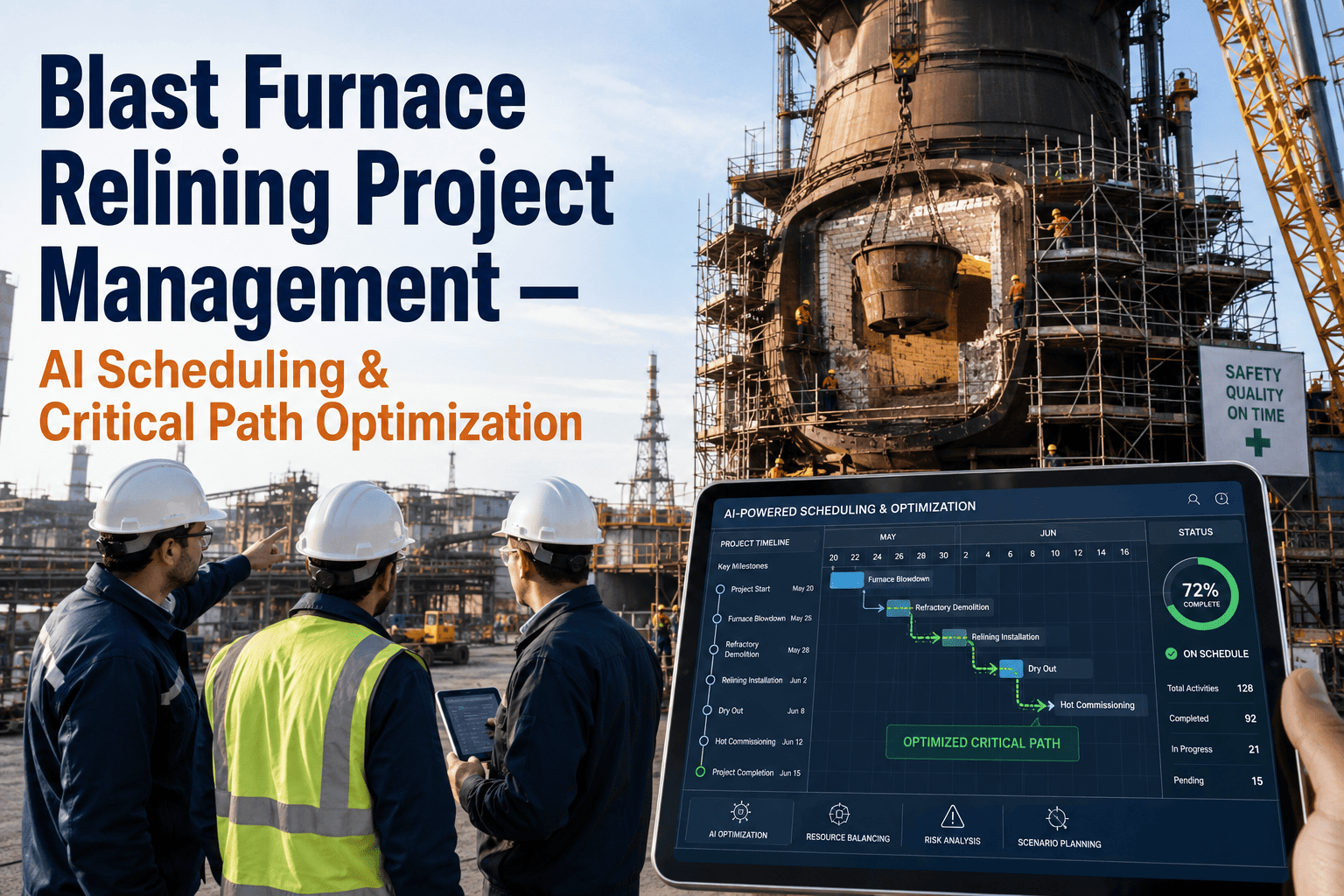
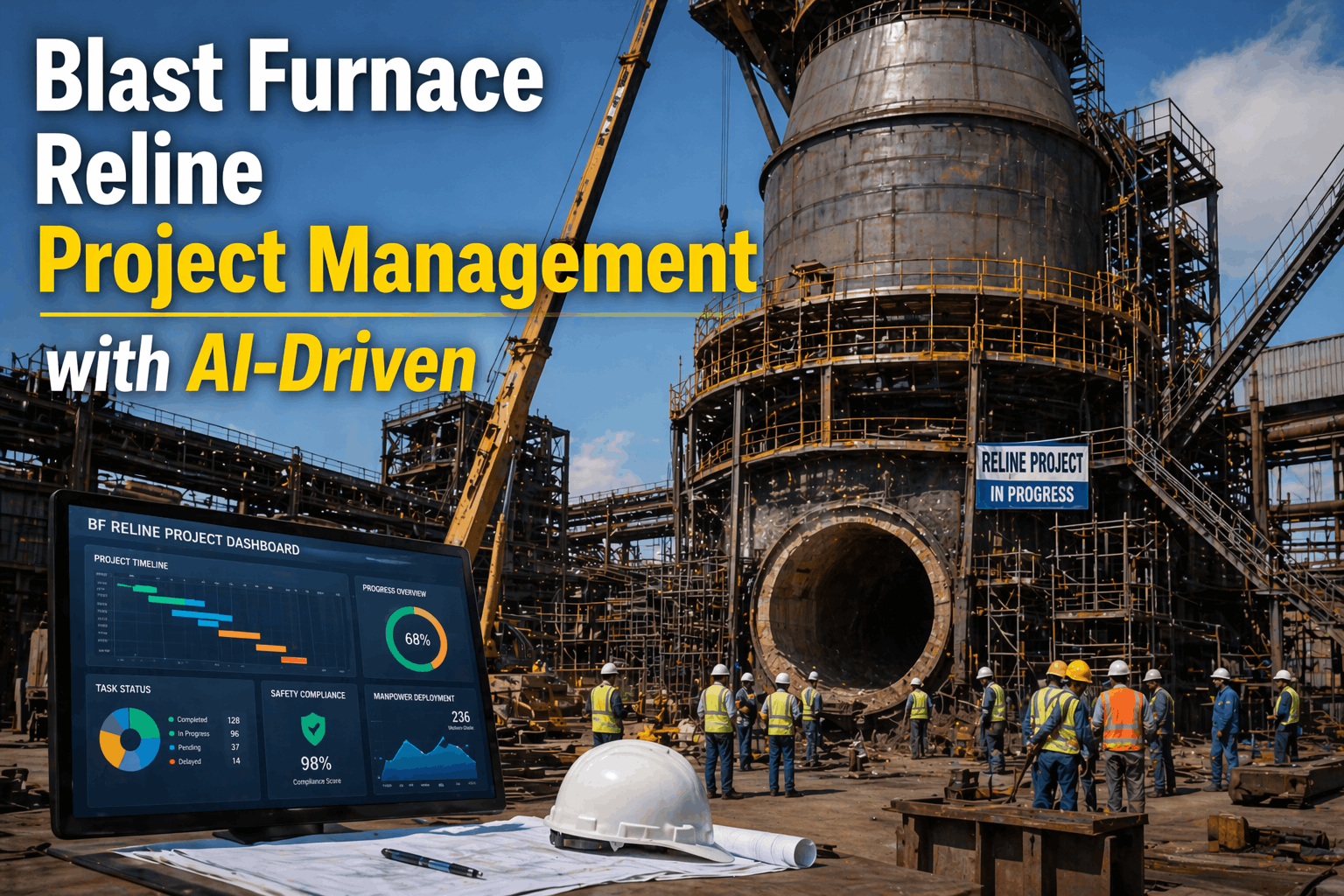
Ten days. That's the entire window most plants get for a BOF vessel reline before liquid steel production has to resume, and every one of those days is accounted for before the first brick comes out of the old lining. Demolition has to clear the vessel completely before installation crews can even start, brick installation has to cure and pass inspection before the vessel can be pressure tested, and any delay in one stage pushes every stage after it by the same number of hours. Plant managers running this project know that the real risk isn't the relining work itself, it's losing a day somewhere in the sequence that never gets recovered. iFactory built AI scheduling specifically for this kind of hard-deadline, sequential-dependency project, and you can see it mapped against your own vessel's history at this link.
A 10-Day Relining Window Has No Room for a Lost Day
AI-optimized scheduling, demolition sequencing, and brick installation quality tracking keep BOF vessel relining projects inside their production-critical window.
days typical relining window before liquid steel production must resume
commonly cited cost of a single extra day of lost BOF production
Four Sequential Phases, Zero Slack Between Them
Unlike maintenance work that can run in parallel across multiple crews, BOF relining is almost entirely sequential. Each phase gates the next, which means a scheduling model has to treat the whole project as one continuous critical path rather than a collection of independent tasks.
Vessel prep and demolition
Old refractory is fully removed and the vessel shell inspected for structural issues before any new brick can go in, typically the highest-variance phase of the whole project.
Brick installation
Refractory brick is installed course by course with quality checks at each layer, since a defect caught after the fact means tearing back out completed work.
Curing and drying
New refractory requires a controlled heat-up curing cycle before it can safely hold liquid steel, a fixed-duration step that can't be compressed without risking premature lining failure.
Inspection and handover
Final dimensional and thickness checks confirm the vessel is ready for production, with sign-off required before operations can schedule the first heat.
Get Your Vessel's History Modeled Against a Tighter Window
Bring your last two or three relining project timelines to a scoping call and see exactly where days were lost and how a tighter model would have caught it earlier.
Where Relining Projects Actually Lose Their Days
Pre-Relining Project Readiness Checklist
Brick and refractory materials confirmed on-site and inspected before demolition begins, not ordered on a hope-it-arrives timeline
Prior campaign's shell condition reviewed to flag likely structural repair needs before they're discovered mid-demolition
Installation crew schedule confirmed with buffer built in for course-by-course quality inspection, not assumed to run at maximum pace
Curing cycle temperature logging equipment tested and confirmed operational before heat-up begins
Production scheduling aligned with a realistic handover date, not the optimistic best-case project timeline
Static Gantt Chart Versus AI-Adjusted Scheduling
A traditional project plan assumes each phase runs at its estimated duration. AI-adjusted scheduling updates the remaining timeline continuously as real progress data comes in from the vessel floor.
Static Gantt chart
Built once before the project starts and rarely updated in real time, so a one-day demolition delay isn't reflected in the downstream schedule until someone manually revises it, often after the delay has already compounded.
AI-adjusted scheduling
Recalculates the remaining critical path automatically as actual progress data comes in, flagging as soon as a phase is trending behind so the project team can react within hours instead of days.
A Plant Manager on What Changed
We found shell damage on the last three relines that pushed us a full day over every time, always discovered mid-demolition with no way to plan around it. Reviewing prior campaign inspection data ahead of time let us flag the risk before demolition even started and build in the buffer we actually needed.
Frequently Asked Questions
How does the scheduling model account for shell damage that can't be predicted?
While shell damage can't be predicted with certainty, prior campaign inspection history and vessel age data provide a reasonable risk estimate that the model factors into the initial schedule as contingency buffer rather than assuming a best-case demolition timeline. This tends to produce more realistic project plans than a fixed Gantt chart built on optimistic assumptions.
Can this integrate with our existing project management or CMMS tools?
Yes, the scheduling platform is designed to connect with common project management and CMMS systems so progress updates flow in both directions rather than requiring duplicate manual entry. Talk to support about your specific project management setup before the first relining project is scheduled.
What happens when the schedule shows we're going to miss the production date?
Early detection of schedule risk is the core value of continuous tracking, since it gives the project team days of lead time to make decisions like adding a crew shift, expediting a material delivery, or communicating a realistic revised handover date to production planning, rather than discovering the miss on the final day of the window.
Does the quality tracking slow down the installation crew?
Course-by-course quality checks are typically already part of a well-run relining process, and the tracking layer digitizes documentation the crew is largely already doing rather than adding new inspection steps. Book a demo to see how quality data capture fits into an existing installation workflow without adding crew time.
How many relining projects does the model need to see before its predictions are reliable?
A single well-documented prior relining project provides a useful starting baseline, though prediction accuracy improves meaningfully after two to three projects as the model learns your specific vessel's typical demolition and curing behavior. Most plants see the clearest value starting from their second AI-scheduled reline onward.
Don't Let Your Next Reline Run Past Its Window
Book a 30-minute call and bring your last relining project's timeline. iFactory will show you where the risk points were and how they'd be flagged earlier.