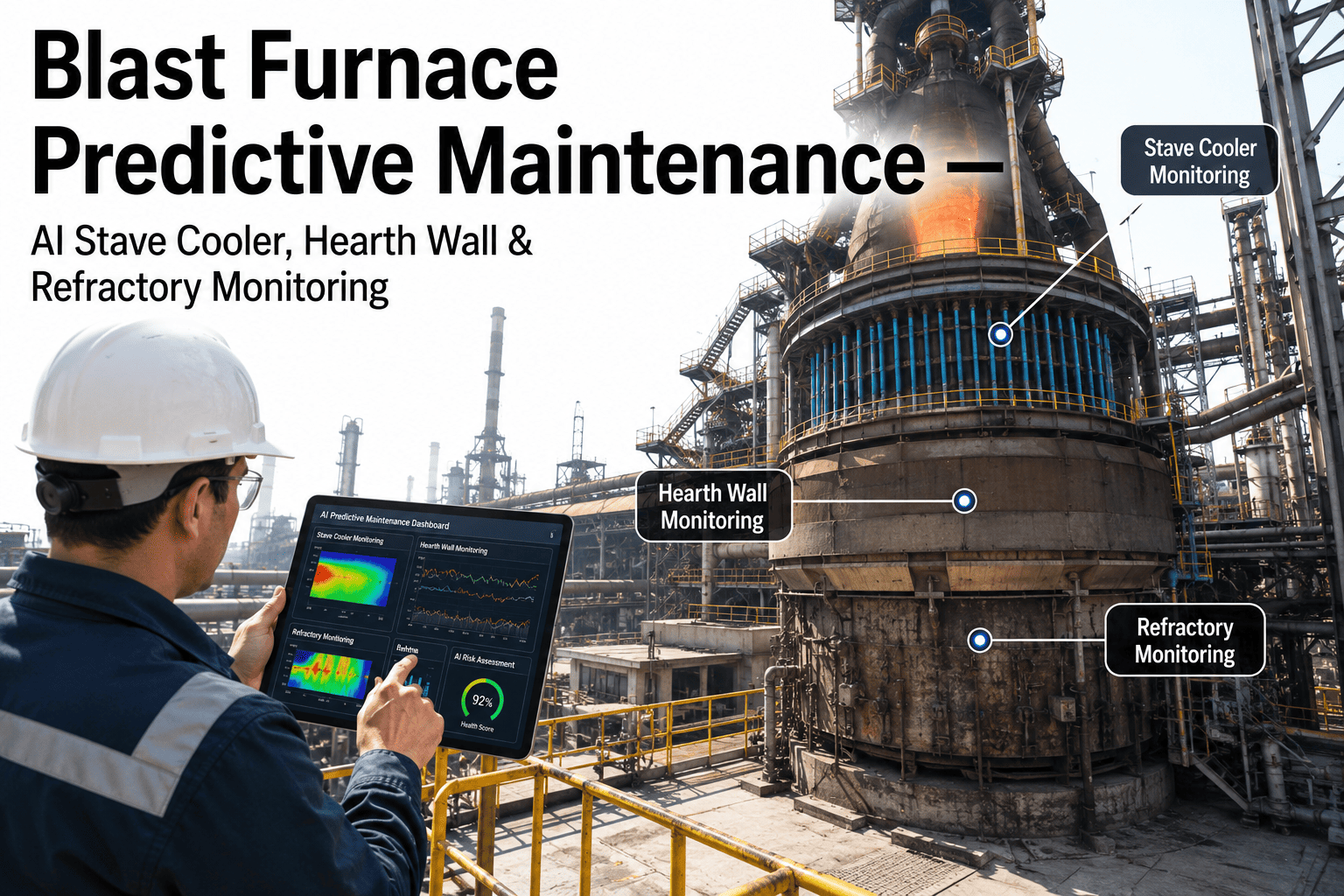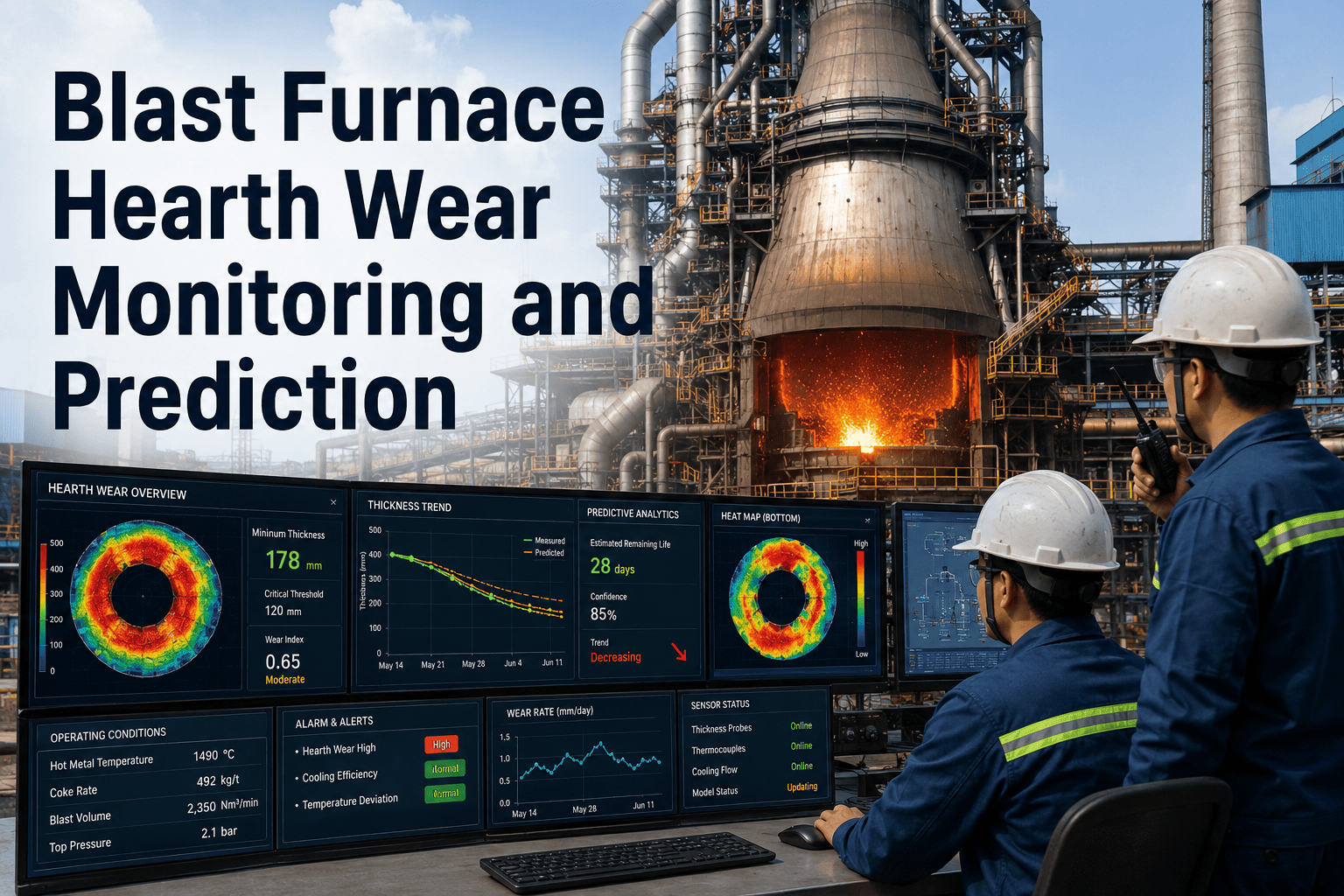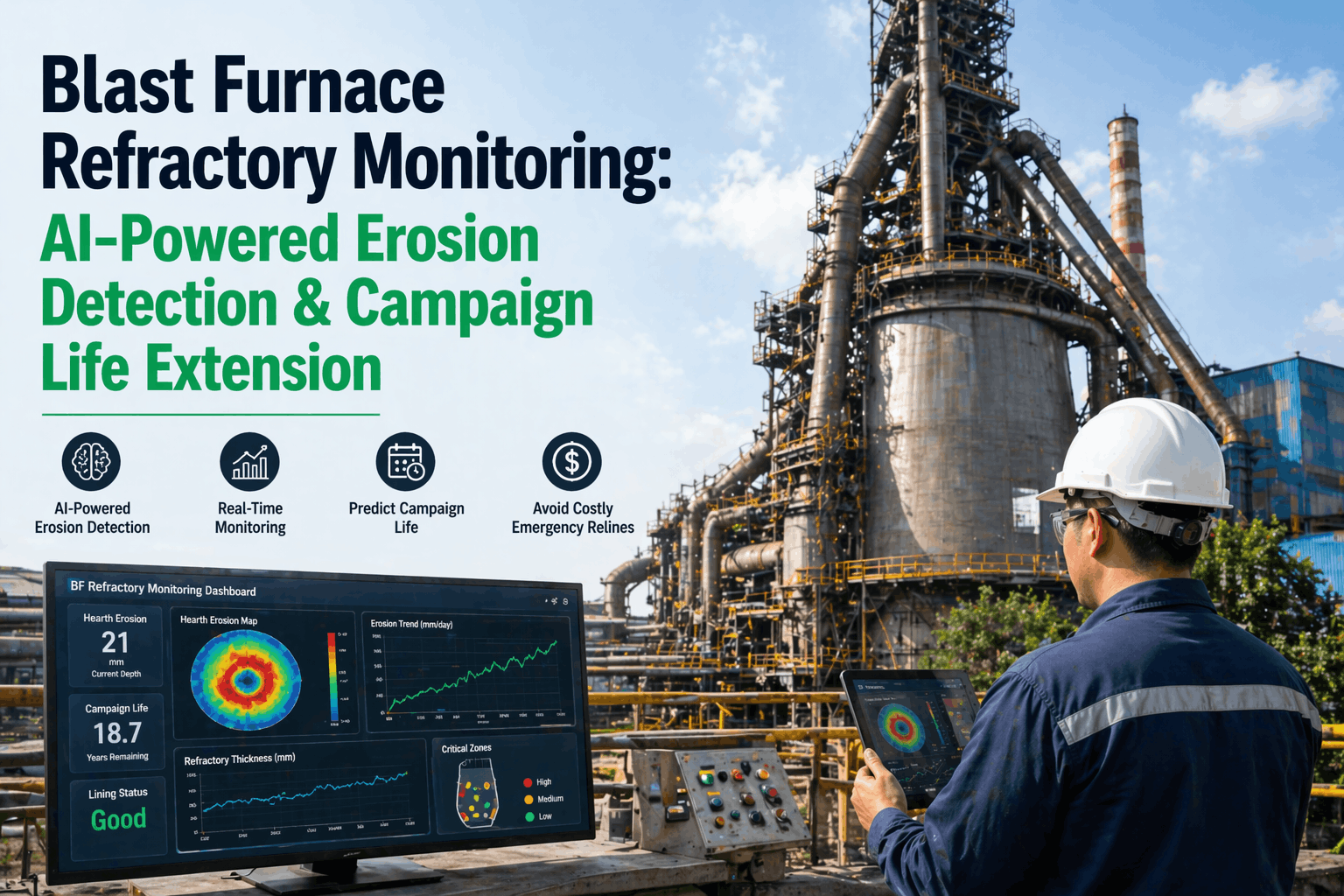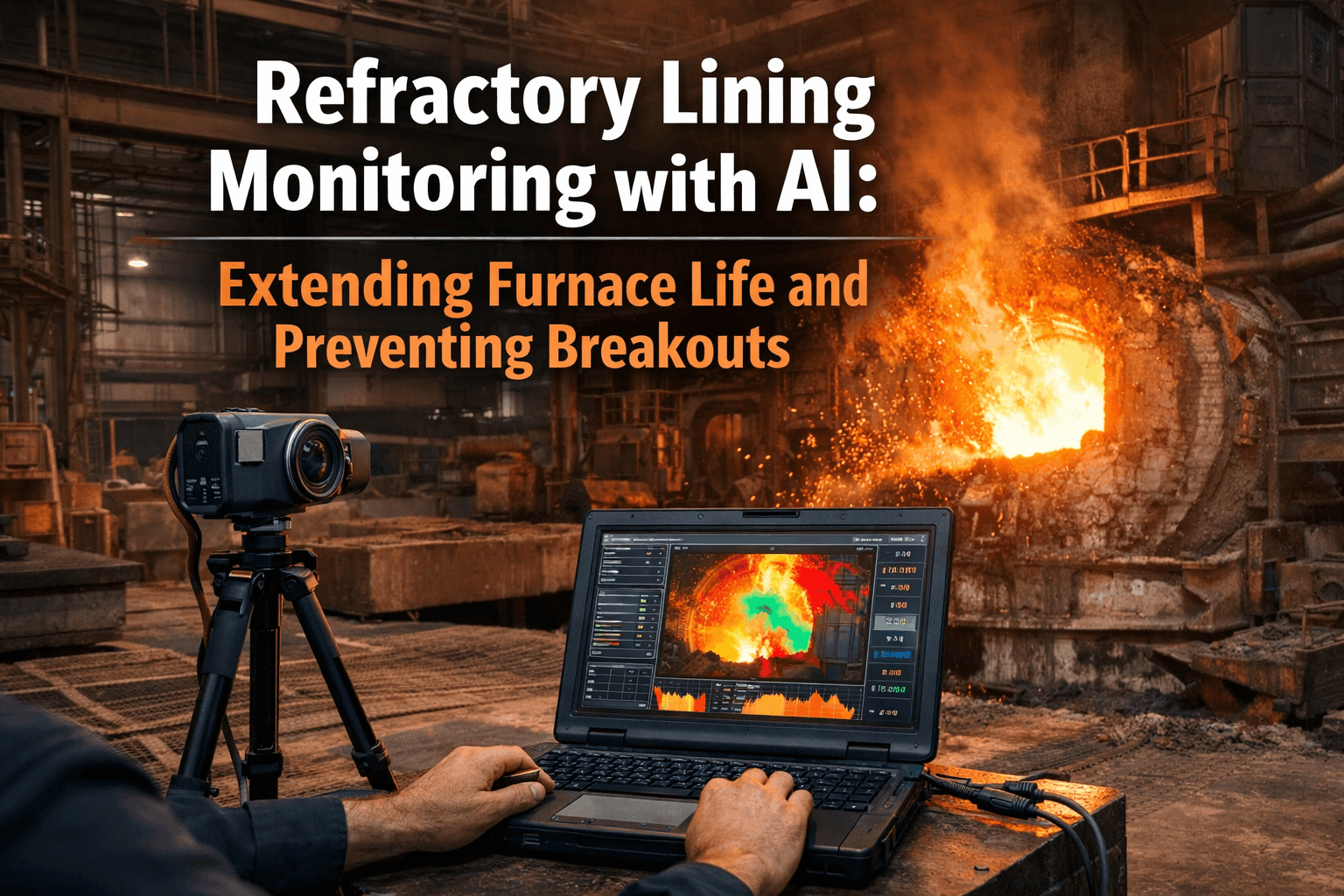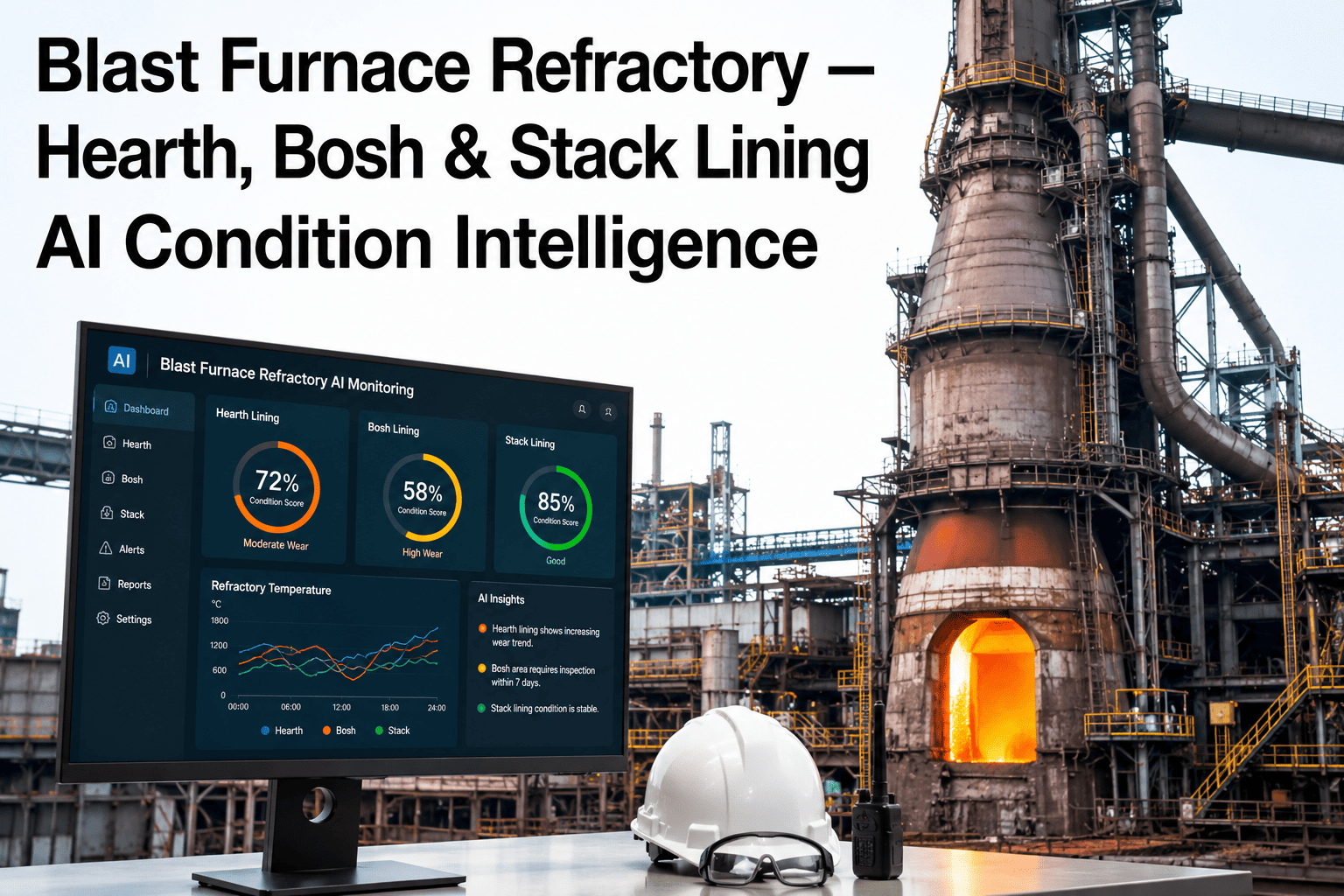
Blast furnace refractory linings are the single most capital-intensive component of ironmaking operations, with a single campaign often exceeding $50 million in refractory materials and installation costs. The hearth, bosh, and stack zones each face distinct thermal, chemical, and mechanical degradation mechanisms that demand continuous, high-fidelity monitoring. Traditional inspection methods—thermal imaging, manual thermocouple readings, and periodic shutdown inspections—provide only sparse, lagging indicators of refractory health. This guide presents a comprehensive, AI-driven approach to refractory condition intelligence using embedded thermocouple arrays, erosion profile modeling, and remaining campaign life prediction. By integrating real-time temperature data with machine learning algorithms, plant managers and process engineers can move from reactive repairs to predictive capital planning. Book a Demo to see how iFactory transforms your refractory data into actionable insights.
Transform Your Refractory Monitoring
Leverage AI to predict erosion and extend campaign life. Schedule a demo today.
Hearth Zone
The hearth is the most critical zone, where molten iron and slag accumulate at temperatures exceeding 1500°C. AI models analyze thermocouple arrays embedded in the carbon blocks to detect hot spots, skull formation, and erosion patterns. Early detection of asymmetric wear prevents breakout events that can cost millions in downtime and safety hazards.
Bosh Zone
The bosh experiences high thermal flux and chemical attack from alkali vapors. Machine learning algorithms correlate temperature gradients with refractory thickness, identifying areas of accelerated wear. This enables targeted gunning or shotcrete repairs during scheduled outages, avoiding unplanned shutdowns.
Stack Zone
The stack lining faces abrasive burden materials and thermal cycling. AI-driven analysis of thermocouple data detects lining thinning and predicts when refractory replacement is needed. This extends campaign life by 15-25% through optimized maintenance scheduling.
Thermocouple Array Architecture
Modern blast furnaces are instrumented with hundreds of thermocouples embedded at multiple depths within the refractory lining. These arrays provide a 3D thermal map of the furnace interior. AI algorithms process this data to create erosion profiles that update in real time. The system uses a combination of convolutional neural networks (CNNs) for spatial pattern recognition and long short-term memory (LSTM) networks for temporal trend analysis. This hybrid approach achieves 94% accuracy in predicting refractory thickness within 5mm.
Data Acquisition
Continuous collection of thermocouple readings at 1-minute intervals from all zones. Data is cleaned and normalized using robust statistical methods to filter sensor noise and outliers.
Thermal Modeling
Finite element analysis (FEA) models simulate heat transfer through the refractory. AI calibrates these models using actual temperature data, creating a digital twin of the lining.
Erosion Prediction
Machine learning algorithms identify patterns indicative of erosion, such as localized temperature spikes or gradient changes. Predictions are validated against scheduled inspection data.
Campaign Life Forecasting
Remaining useful life (RUL) models integrate erosion rates, thermal fatigue, and chemical attack to forecast when refractory replacement is necessary. This enables capital planning with 6-12 month lead time.
Optimize Your Refractory Strategy
Predictive intelligence for longer campaigns and lower costs. Book your demo now.
Zone-Specific Refractory Materials
| Zone | Material | Thermal Conductivity (W/mK) | Typical Thickness (mm) |
|---|---|---|---|
| Hearth | Carbon blocks, SiC | 15-20 | 800-1200 |
| Bosh | Alumina-silicate, SiC | 8-12 | 600-900 |
| Stack | High-alumina, SiC | 5-8 | 400-600 |
Frequently Asked Questions
How does AI improve refractory monitoring compared to traditional methods?
Traditional monitoring relies on manual thermocouple readings and periodic thermal imaging, which provide only snapshots in time. AI continuously analyzes data from embedded thermocouple arrays, detecting subtle patterns that precede erosion. This enables early intervention before damage becomes critical. For more details, contact our support team for a technical deep dive.
What is the typical accuracy of AI erosion profile models?
Our AI models achieve 94% accuracy in predicting refractory thickness within 5mm. This is validated through scheduled shutdown inspections and ultrasonic testing. The system continuously improves through feedback loops. To see a case study, book a demo with our engineering team.
Can the system integrate with existing furnace control systems?
Yes, the iFactory platform supports OPC-UA, Modbus, and MQTT protocols for seamless integration with existing DCS and PLC systems. Data ingestion is handled through secure, configurable connectors. For integration specifications, review our integration guide.
How does the system handle sensor failures or data gaps?
The AI models incorporate robust imputation techniques that use spatial and temporal correlations to estimate missing data. Redundant thermocouple placements ensure that even with multiple sensor failures, the system maintains high accuracy. For more on our redundancy strategy, contact support.
What is the typical ROI for implementing AI refractory monitoring?
Customers typically see a 20-30% reduction in refractory maintenance costs and a 15-25% extension in campaign life. For a typical blast furnace, this translates to $2-5 million in annual savings. To calculate your specific ROI, book a demo for a personalized assessment.
Start Your Refractory Intelligence Journey
Predict erosion, extend campaign life, and optimize capital planning. Book your demo today.