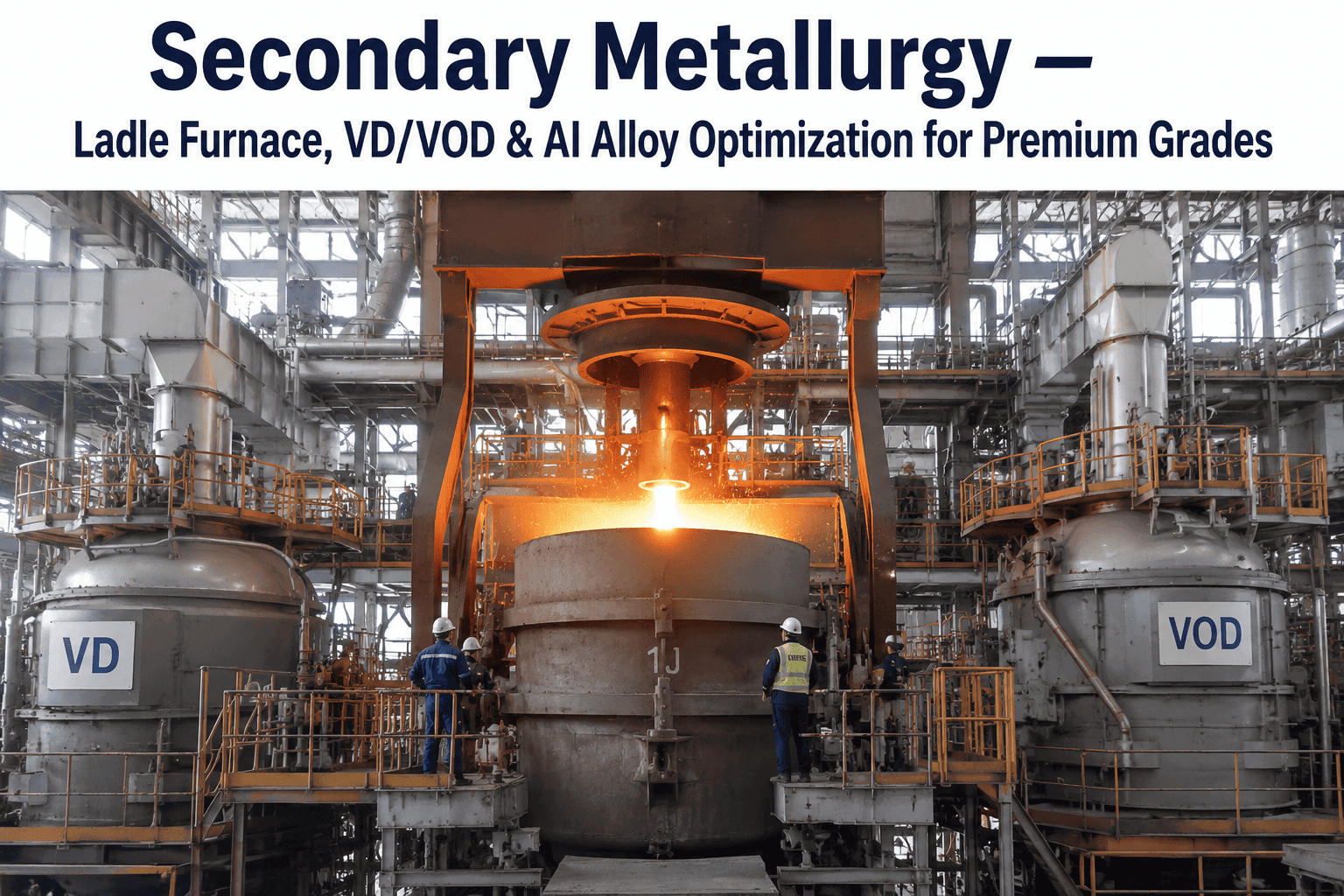
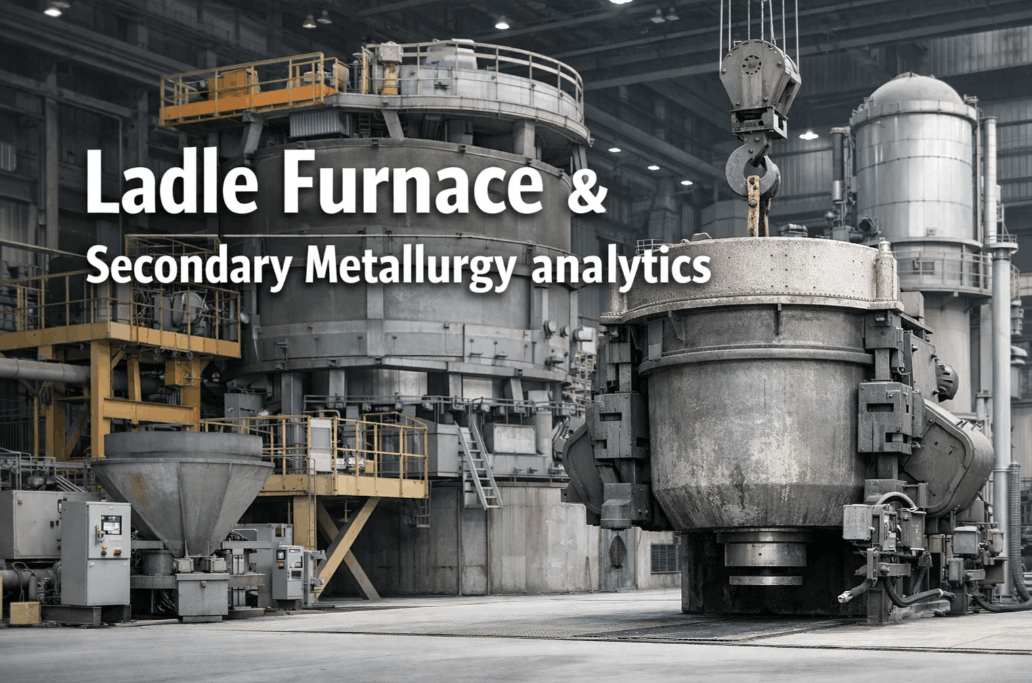
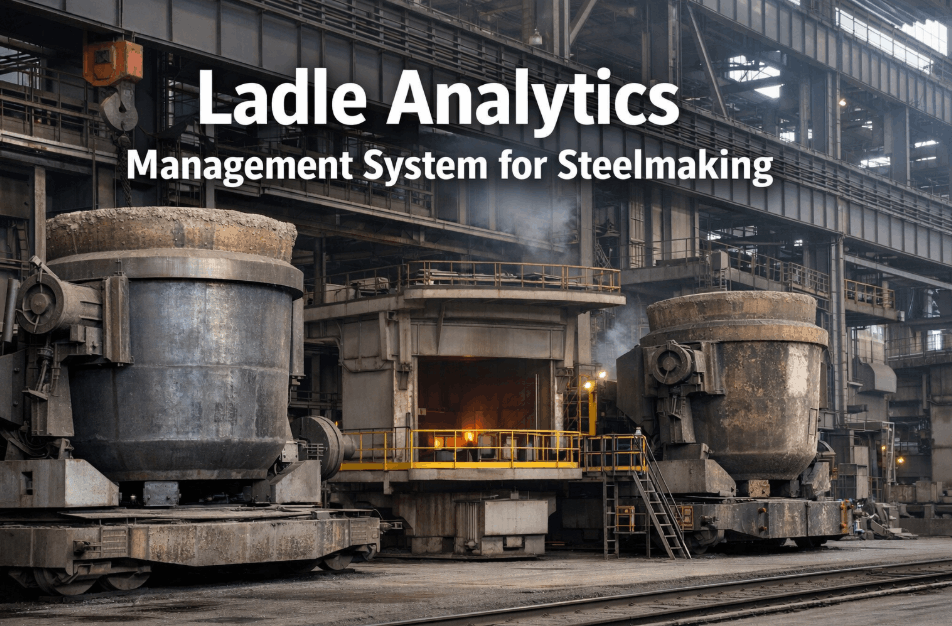
Secondary metallurgy is the final frontier of steel quality, where the difference between a high-value automotive grade and a downgraded batch is decided in the vacuum of a degasser or the arc of a ladle furnace. In a high-speed Melt Shop, the challenge is not just performing the refining—it is doing so within the "tight-window" of the continuous caster's schedule. Most SMS Managers believe they have real-time visibility, but are actually operating against an "Invisible Refining Wall" where legacy data silos between the LF, VD, and RH stations cause undetected temperature drops and missed chemical targets. If your analytics platform cannot identify a vacuum pump efficiency drop or an electrode arc harmonic shift before it impacts your metallurgical compliance, you do not have real-time visibility—you have a reporting delay with a modern interface. The decision latency in secondary refining is not just an efficiency problem; it is a quality risk that costs melting shops millions in preventable reheating, alloy waste, and downgraded heats. Implementing iFactory AI-driven secondary metallurgy analytics closes this gap by processing high-frequency data from electrode controllers, steam ejectors, and alloy systems at the edge, ensuring that every heat is delivered to the caster with 100% metallurgical integrity. Book a Metallurgy Strategy Session to learn how true real-time visibility ensures 100% heat-on-time delivery and superior steel cleanliness.
Achieve Metallurgical Precision with AI-Driven LF, VD & RH Analytics
Vacuum pump health, electrode consistency, and automated alloy tracking — iFactory transforms the secondary refining shop into a high-precision, low-waste operational twin.
The Refining Visibility Gap: The Hidden Cost of Delayed Metallurgy
Why "Connected" Doesn't Mean "Visible" in the Secondary Refining Shop
MELT Shop operations are often plagued by "Ghost Delays"—where ladles sit idle between primary steelmaking and refining due to unsynchronized data streams. The problem is a **Decision Latency Gap**. A sensor monitoring VD vacuum depth or LF power factor means nothing operationally if the analytics layer aggregating that signal refreshes on a 15-minute batch cycle, routes through a middleware layer with unmonitored queue depth, or displays refining KPIs on a dashboard that operators cannot physically access during an active treatment cycle. On a high-value alloy line where hydrogen removal or chemistry "tightening" can compound within 4 to 10 minutes, batch-cycle analytics delivers insights after the damage has already occurred. If your analytics platform tells refiners what happened rather than what to do next, it is a reporting tool, not a production intelligence system. iFactory eliminates this gap by processing data at the edge, ensuring that an anomaly in the LF electrode arc or a steam ejector drop in the RH unit is surfaced to the refiner in under 200ms, preventing expensive re-heating or grade downgrades.
How Analytics Data Silos Amplify Secondary Metallurgy Risk
The Financial Impact of Fragmented Refining Visibility
The financial impact of analytics data silos in secondary metallurgy extends well beyond the immediate cost of an alloy "overshoot" or an unplanned maintenance event on a vacuum pump. When refining intelligence is fragmented across disconnected systems, the downstream consequence is a compounding risk profile that affects quality management, asset reliability, and labor efficiency. A vacuum leak that a unified real-time analytics platform would surface in under 60 seconds can propagate undetected for 15 to 30 minutes across a siloed data environment—transforming a correctable process drift into a full heat downgrade or a hydrogen-induced quality failure.
| Failure Mode | Primary Impact | Secondary Risk | Annual Cost |
|---|---|---|---|
| Vacuum Leak Latency | Hydrogen Failure | Heat Downgrade | $280K – $540K |
| Electrode Breakage Sync | LF Power Loss | Schedule Delay | $150K – $320K |
| Alloy Recovery Drift | Chemistry Non-Compliance | Re-Refining Cost | $110K – $290K |
5 Root Causes of Secondary Metallurgy Failure
Diagnosing the visibility gap before it results in a "Cold Heat" or metallurgical non-compliance event is critical for Melt Shop stability.
The 6 Strategic Pillars of Refining Shop Analytics Mastery
Mastering secondary refining requires a synchronized view of vacuum dynamics, electrical power, and metallurgical chemistry across the entire refining sequence. iFactory unifies these disparate data streams into a single operational twin.
Vacuum Pump & Ejector Analytics
Monitors steam pressures, water temperatures, and pump RPM in VD/RH units. AI identifies "Degassing Decay" signatures—minute deviations in the vacuum curve—ensuring the degasser reaches the required 0.5 Torr for critical hydrogen removal and inclusion flotation, preventing "false-vacuum" readings that lead to quality rejects.
LF Electrode & Power Consistency
Tracks secondary voltage, current, and arc stability at the LF. The AI-driven controller optimizes electrode positioning to minimize power flicker and prevent "Slag-Arcing" that erodes ladle refractory at the slag-line. This reduces electrode consumption by up to 14% and extends ladle life by 8-12% through better arc centering.
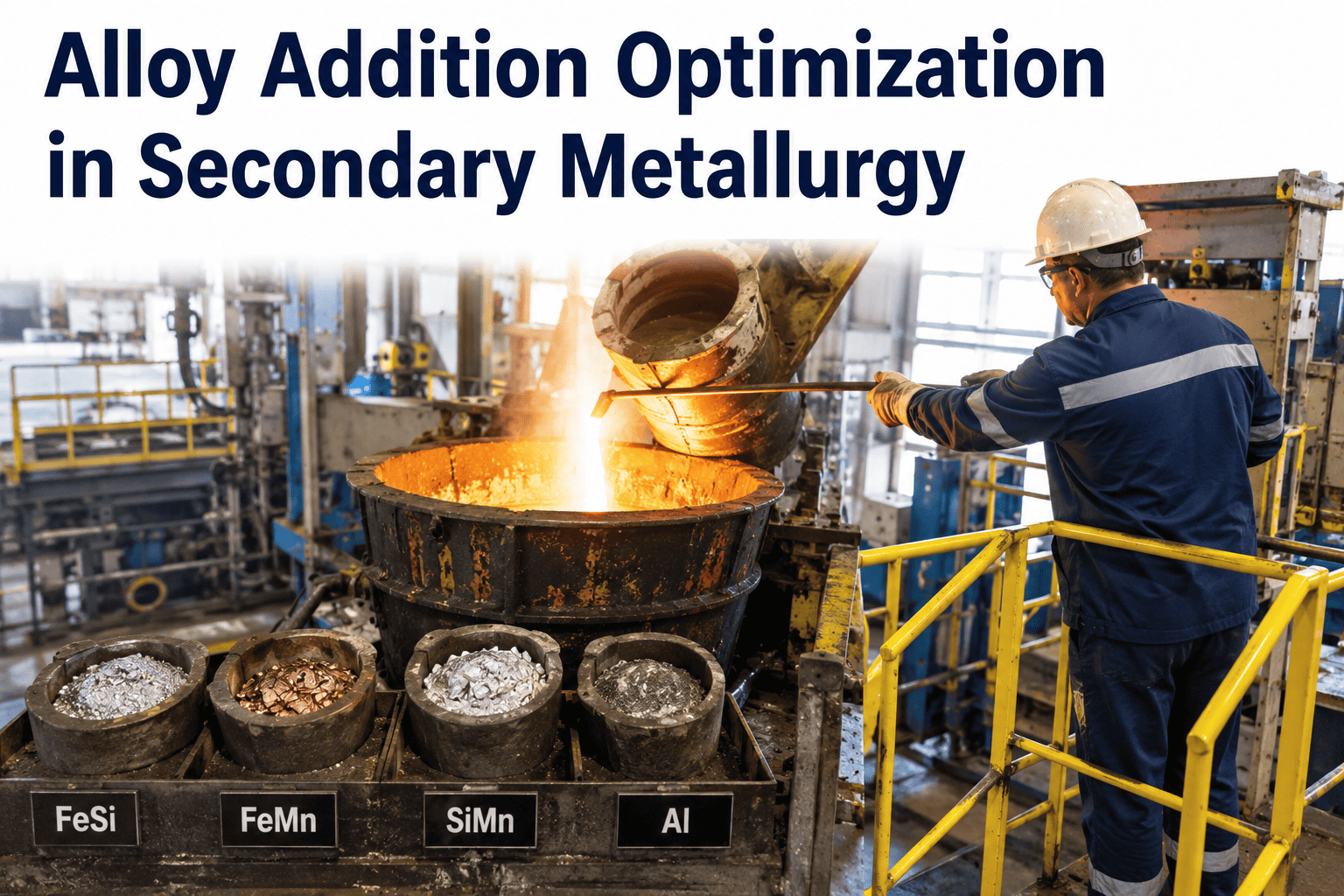
Alloy Addition & Wire Feeding Sync
Integrates wire-feeder speed and alloy scale data with current spectrometer logs. The platform predicts metallurgical recoverability for every element (Al, Mn, Si, Ca), ensuring precise cored-wire (CaSi, Al, S) delivery for deoxidation and inclusion modification without chemistry "overshoot" or expensive "re-refining" steps.
Argon Stirring & Homogenization
Analyzes argon flow rates, pressure fluctuations, and plug condition signatures. AI detects "Low-Flow" stirring that leads to thermal stratification and chemical non-uniformity. By ensuring proper stirring energy, the system guarantees the ladle is cast at a perfectly uniform temperature, reducing caster breakout risk.
RH Vessel Life & Thermal Monitoring
Tracks upper and lower vessel heat profiles and circulation rates in RH units. Identifies refractory thinning in the snorkels and bottom vessel through thermal anomaly detection. This prevents catastrophic metal breakthroughs and allows for pre-planned, "predictive" refractory patching during scheduled mill stops.
Ladle Tracking & Life-Cycle Intelligence
Monitors the entire fleet of ladles across the shop—from tapping to casting to maintenance. Tracks "Empty-to-Tap" times and refractory age, ensuring the right ladle with the optimal thermal history is available for every heat, reducing energy loss and thermal shock-induced refractory spalling.
Secondary Metallurgy Benchmarks — AI vs. Manual Control
| Refining Metric | Target Target | iFactory AI Value | Manual Value | Verdict |
|---|---|---|---|---|
| Steel Cleanliness (Avg PPM [O]) | < 15 PPM | 8.4 PPM | 18.6 PPM | Ultra-Clean Ready |
| LF Energy Intensity (kWh/t) | 25 kWh/t | 21.2 kWh/t | 26.8 kWh/t | -21% Energy Cost |
| Alloy Recovery Yield (%) | 96% | 98.7% | 92.3% | +6.4% Recovery |
Fixing the Refining Visibility Gap: A 5-Step Roadmap
Voice of the Melt Shop Manager
We used to lose 4-5 heats a month to 'Hydrogen Outliers' that were only detected after casting. iFactory's vacuum pump analytics identifies seal leaks in the VD before we even start the treatment cycle. Our electrode breakage in the LF has dropped by 18%, and our heat-on-time adherence is at an all-time high. Closing the analytics gap in the SMS was the single most impactful ROI we've seen this year.
Frequently Asked Questions
Can iFactory detect vacuum leaks in VD/RH degassers in real-time?
Yes. We ingest pressure-decay and steam-ejector flow data at 10ms intervals, using AI to identify minute leaks or steam-ejector "backpressure" issues that traditional gauges miss until the vacuum is already compromised. This ensures degassing depth is always reached before the heat is moved.
How does the system reduce LF electrode consumption?
By monitoring arc stability and secondary voltage harmonics, the AI optimizes electrode positioning to prevent mechanical breakage and "slag-arcing." This centering logic reduces consumption by up to 14% and significantly protects the ladle slag-line refractory.
Does the platform support automated alloy addition calculations?
Yes. iFactory correlates real-time slag chemistry and spectrometer results with predicted recoverability for each element. This ensures that "tight-tolerance" chemistry targets (for automotive or aerospace grades) are met with the first addition, eliminating costly re-refining.
How long does it take to deploy iFactory in a secondary refining shop?
Standard connectivity for LF and VD stations is live in 4 weeks. Predictive hydrogen models and electrode consumption optimization are typically fully operational by Week 12. The system can be deployed on legacy PLC infrastructure without replacing existing controllers.
Can iFactory monitor ladle refractory health across the shop?
Yes. We correlate thermal imaging data with heat-cycle counts, slag chemistry, and tapping temperatures to predict the exact "Safe-End-of-Life" for ladle linings. This prevents breakout risk and allows for maximized refractory utilization, saving millions in annual maintenance.
Does the platform provide energy optimization for Ladle Furnaces?
Absolutely. By optimizing the arc-heating window based on predicted casting times and real-time ladle thermal history, the AI minimizes unnecessary re-heating cycles, reducing total LF energy costs (kWh/t) by up to 21%.
What is the "Refining Visibility Gap" in the SMS?
It is the delay between a process deviation (like a vacuum leak or stirrer failure) and the moment a refiner can act—often resulting in thermal loss or quality non-compliance. iFactory's edge-AI reduces this gap from minutes to milliseconds.
Is the system compatible with legacy electrode controllers?
Yes. We use external power analyzers and vibration sensors to bring legacy LF stations into the digital age. We provide modern predictive capabilities to older SMS assets without the need for a complete automation overhaul.
Can iFactory prevent hydrogen flaking in heavy sections?
Yes. By ensuring the VD/RH degasser maintains sub-0.5 Torr vacuum for the exact duration required based on steel grade and section size, the system guarantees hydrogen levels below 1.5 PPM, eliminating flaking risk in the final product.
How does the system handle CAS-OB or special refining units?
iFactory's modular architecture supports CAS-OB, VOD, and AOD units. We map specific parameters like oxygen blowing rates, aluminum addition yield, and argon stirring energy to the unified refining operational twin.
Does iFactory integrate with spectrographic analysis software?
Yes. We ingest spectrometer results directly from the lab, allowing the AI to calculate exact alloy and wire-feeding requirements in real-time for immediate refiner action.
How does the system prevent nitrogen pickup during stirring?
By monitoring argon flow and surface turbulence, the AI prevents "open-eye" exposure to the atmosphere, eliminating nitrogen absorption during high-cleanliness refining cycles.
Can iFactory optimize ladle pre-heating schedules?
Yes. The platform synchronizes burner intensity with the predicted EAF/BOF tapping time, ensuring ladles are at the optimal temperature while reducing gas consumption by 15%.
Does the AI monitor slag chemistry during refining?
Absolutely. iFactory models slag basicity and viscosity in real-time, optimizing inclusion absorption and ensuring the slag layer provides maximum protection for the ladle refractory.
Can the system detect alloy hopper load-cell failures?
Yes. iFactory identifies weight-drift and signal noise in alloy hopper sensors, ensuring that every batch addition is precise and preventing "off-spec" chemistry due to hardware errors.
Close Your Refining Shop's Analytics Visibility Gap Today
Eradicate hydrogen downgrades and maximize alloy recoverability with iFactory's genuine real-time production intelligence for LF, VD, and RH refining.