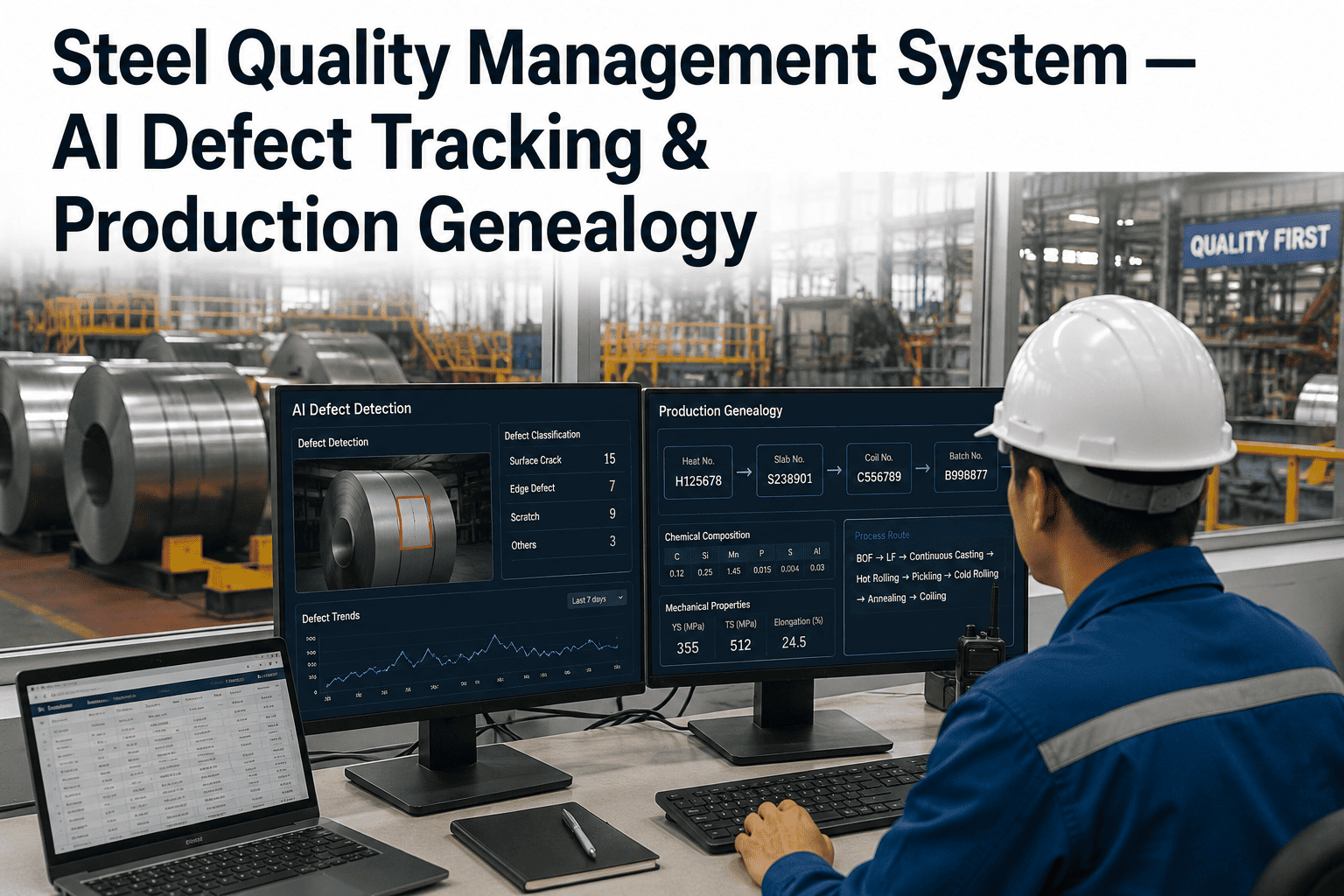
Zero-defect steel manufacturing was once considered an engineering impossibility — a theoretical target useful for motivating teams but never achievable in the physical reality of a hot rolling mill producing at 900 metres per minute. That view changed when AI-powered vision inspection systems crossed the 99.7% detection threshold and, more importantly, when they were connected to a closed-loop quality system that could act on detections in real time. A defect detected at the surface inspection camera but communicated to the process control system 4 seconds later is still a defect in the finished coil. True zero-defect manufacturing requires detection, classification, root cause correlation, and process correction to happen within the same production cycle — before the next coil is rolled on the same machine, with the same parameters, producing the same defect again. iFactory's AI Vision Inspection platform integrates all four elements: deep learning detection at 99.7% accuracy, automatic root cause correlation to PLC process parameters, real-time feedback to the process control system, and per-coil quality disposition — creating the closed-loop quality system that makes sub-10 PPM defect rates achievable in steel production. Seventeen iFactory deployments across hot rolling, cold rolling, and coated product lines have now demonstrated that <10 PPM surface defect rates are not theoretical. They are operational.
Zero-Defect Steel Manufacturing: How Vision AI Makes It Possible
From 3,400 PPM to <10 PPM surface defects — the closed-loop AI quality system that connects vision inspection, PLC root cause, and real-time process correction in one platform.
The Zero-Defect Journey in Steel — Four PPM Milestones
Zero-defect manufacturing is not a single event — it is a journey measured in PPM (parts per million defective units). Most steel plants start between 2,000–5,000 PPM. World-class is <100 PPM. True zero-defect target is <10 PPM. Each milestone requires a different intervention, and iFactory's AI vision system evolves with the plant through all four stages. Benchmark your current PPM — iFactory assessment in 5 days.
Deploy AI vision cameras. Achieve 99.7% detection immediately. Defect map per coil generated from Day 1.
Enable PLC parameter correlation. iFactory traces each defect to the exact furnace temperature, roll force, or speed deviation that caused it.
Activate real-time process feedback. iFactory sends parameter adjustment signals to L2/MES within 2 seconds of defect detection — before the next coil starts.
AI predictive model forecasts defect risk from incoming slab chemistry, furnace profile, and roll condition — adjusting parameters before defect window opens.
The Closed-Loop Quality System — How iFactory Connects Detection to Prevention
Defect detection alone reduces PPM by 60–70%. The remaining 30–40% requires a closed loop — where detection triggers root cause analysis, which triggers process correction, which prevents the next defect. iFactory is the only platform that closes all four stages of this loop automatically.
AI Detection
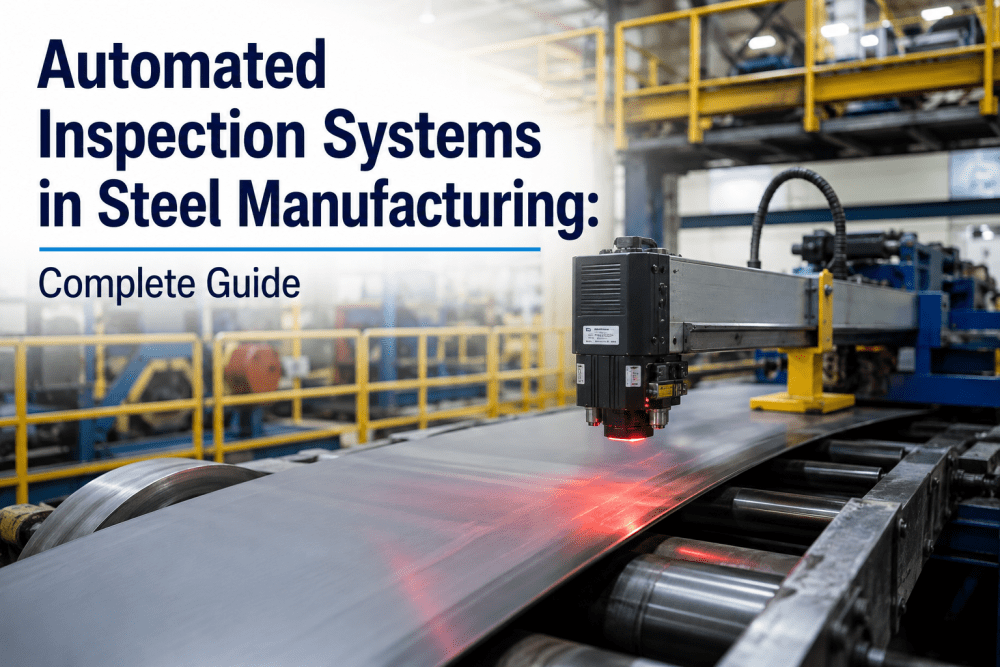
Line-scan cameras inspect 100% of strip surface at full production speed. Deep learning model classifies defect type, size, position, and severity in <2ms per frame. Zero false negatives on Critical-class defects.
Root Cause Correlation
Every detected defect is correlated with PLC parameters at exact time of occurrence — furnace zone temperature, roll force profile, cooling rate, strip tension. Root cause identified automatically within 2 seconds of detection.
Process Correction
iFactory sends corrected parameter set to MES/L2 within the same production cycle. Operator sees advisory on HMI. For pre-configured defect-parameter pairs, correction can be applied automatically to next coil without operator input.
Predictive Prevention
iFactory's defect prediction model uses incoming slab/coil material data, current equipment condition, and process parameter trends to forecast defect risk before the coil enters the mill — enabling pre-emptive parameter adjustment.
PPM Reduction Trajectory — 2.4 MTPA Cold Mill Over 18 Months
Verified PPM data from a 2.4 MTPA cold rolling mill in Maharashtra across 18 months of iFactory AI Vision deployment. PPM measured on finished coil shipments — customer-facing defect rate.
Before vs After — Zero-Defect Programme at 2.4 MTPA Cold Mill
What the Quality Director Said at 18-Month Review
We went from 41 customer quality incidents in the year before iFactory to zero in our last 5 months of operation. 3,420 PPM to 7 PPM. Not because we hired better inspectors — we actually have fewer inspectors now. Because we closed the loop: every defect tells us which process parameter caused it, and the system corrects it before the next coil. That is what zero-defect manufacturing actually means in practice.
Frequently Asked Questions
Is <10 PPM actually achievable in hot rolling, or only in cold rolling?
Hot rolling is harder — higher speeds, higher temperatures, more defect types — but <10 PPM has been achieved in hot strip mill inspection with iFactory. The key enabler is not inspection accuracy (which is the same in both processes at 99.7%) but root cause correlation: hot rolling defects have more process variables involved, so the correlation model requires more PLC data points. Our hot strip mill deployments typically reach <50 PPM in 12 months and <15 PPM in 18 months.
How does iFactory's closed-loop system connect to our existing L2/MES system for process corrections?
iFactory integrates with L2 systems via OPC-UA, REST API, or direct database connection depending on the MES vendor. For pre-validated defect-parameter correction pairs, iFactory can write corrected setpoints directly to the L2 reference table. For new correction recommendations, iFactory displays the advisory on the process operator HMI with one-click acceptance. System integrator support is provided for all major MES vendors used in Indian steel plants.
How long does it take to reach <100 PPM from a typical starting point of 3,000+ PPM?
The trajectory depends on the starting defect mix and how quickly root causes can be eliminated. From 3,000+ PPM, our deployment data shows: <1,000 PPM within 60 days (detection improvement alone), <500 PPM by Month 4–5 (top root causes eliminated), <100 PPM by Month 8–10 (closed loop operating). Faster plants reach <100 PPM in 5–6 months when root cause data is actionable quickly.
What happens when a new defect type appears that the AI model hasn't seen before?
iFactory's active learning system flags unclassified anomalies for human review. The quality engineer classifies and labels the new defect type, and the model is retrained. New defect types typically reach 95%+ detection accuracy within 200–400 labelled examples — achieved in 7–15 days of operation depending on defect frequency. Unclassified anomalies are never ignored — they are held in the "Unknown" category and reviewed daily.
Close the Quality Loop with iFactory AI Vision
We'll map your current PPM by defect type and show you the exact root cause-correction pairs that will move the needle fastest.