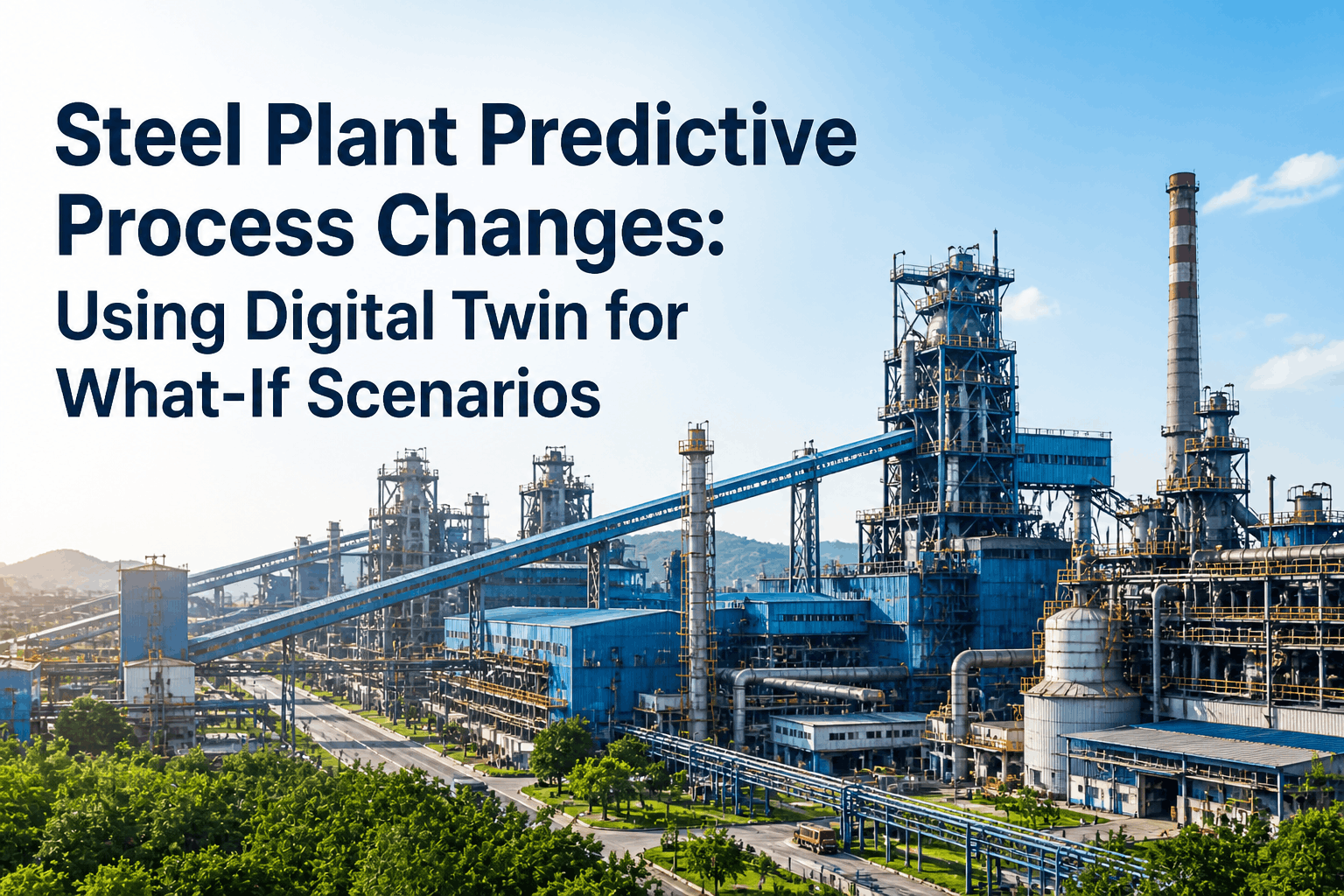
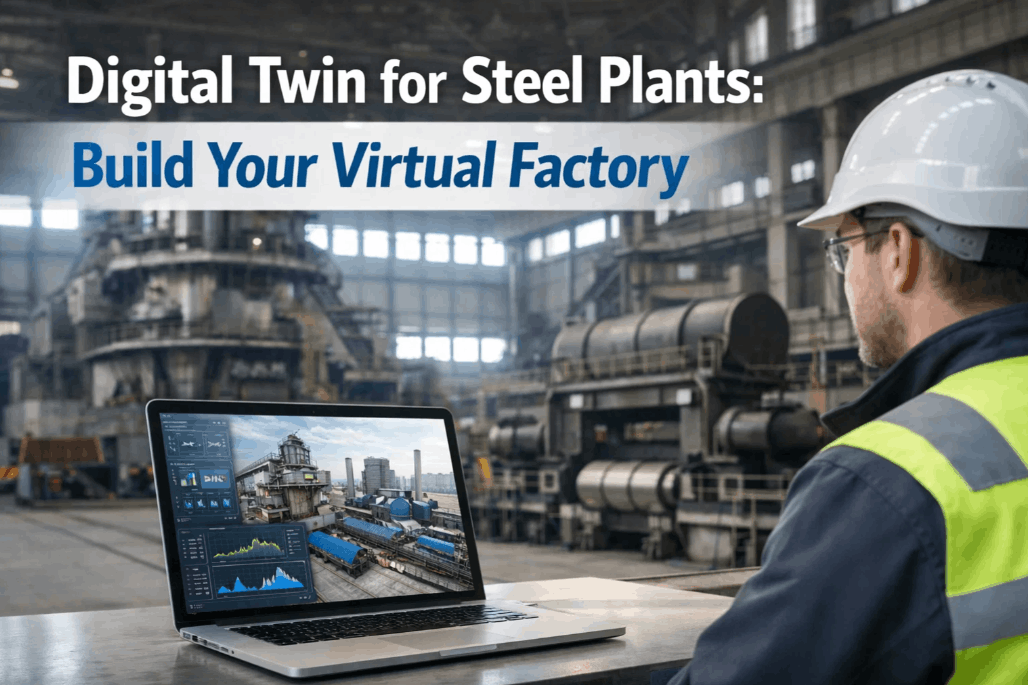
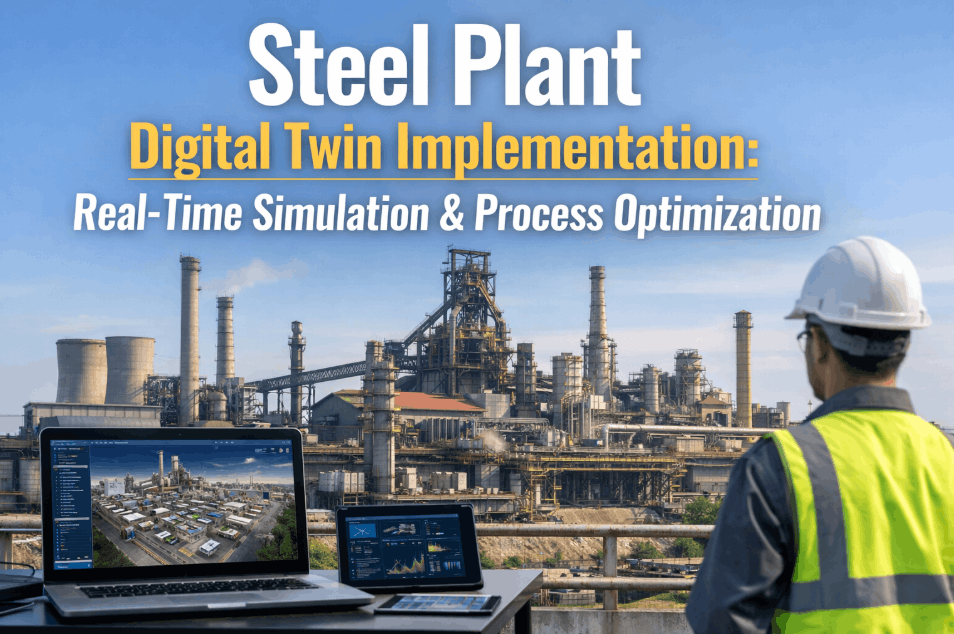
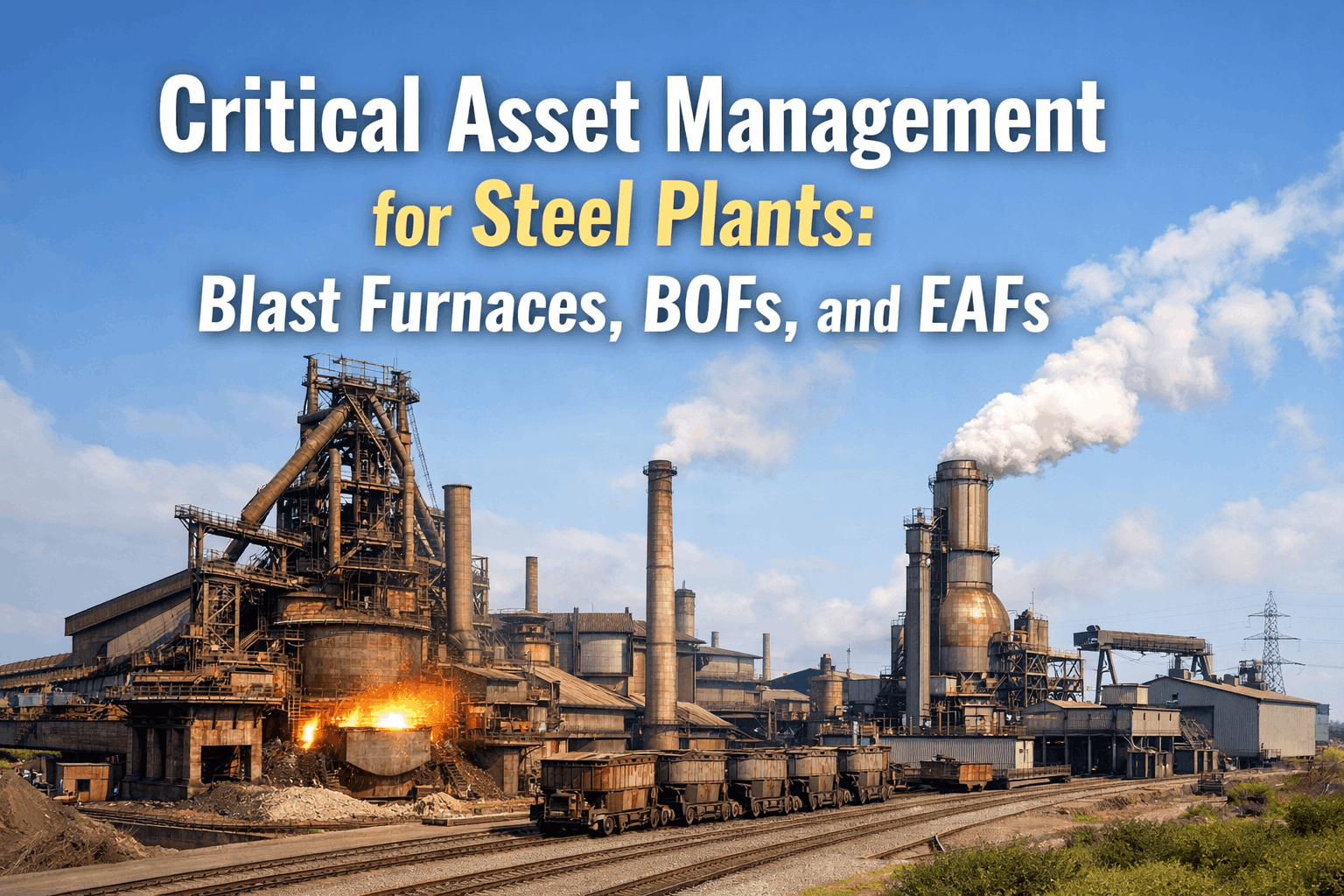
Heavy industry is undergoing a structural shift from responsive control to predictive simulation. In a steel plant, testing a new rolling schedule or adjusting blast furnace burden distribution in the physical world carries immense financial risk and potential for millions lost in downgraded product or equipment damage. A Digital Twin solves this by creating an exact, live, virtual replica of your physical assets. By ingesting real-time data from PLCs, SCADA systems, and IoT sensors, the Digital Twin allows metallurgists and plant managers to simulate scenarios, detect anomalies before failures occur, and optimize energy consumption. iFactory's Digital Twin Integration brings this Industry 4.0 capability to legacy steel mills, proving that you don't need to rebuild your plant to digitize it.
Digital Twin Technology for Steel Plants: From Concept to Implementation
Build virtual replicas of your blast furnaces and rolling mills to reduce energy consumption by 10% and simulate optimizations with zero operational risk.
Why Physical Trial-and-Error is Costing You Millions
Optimizing a steel plant is extremely complex. Changing a parameter at the Continuous Casting Machine affects the upstream BOF schedule and the downstream Reheating Furnace. Physical trial-and-error often leads to unplanned bottlenecks. Simulate before you operate.
Simulating the Core Domains of Your Steel Plant
iFactory provides domain-specific digital replicas that mirror actual thermodynamic and mechanical logic of your facility in real-time.
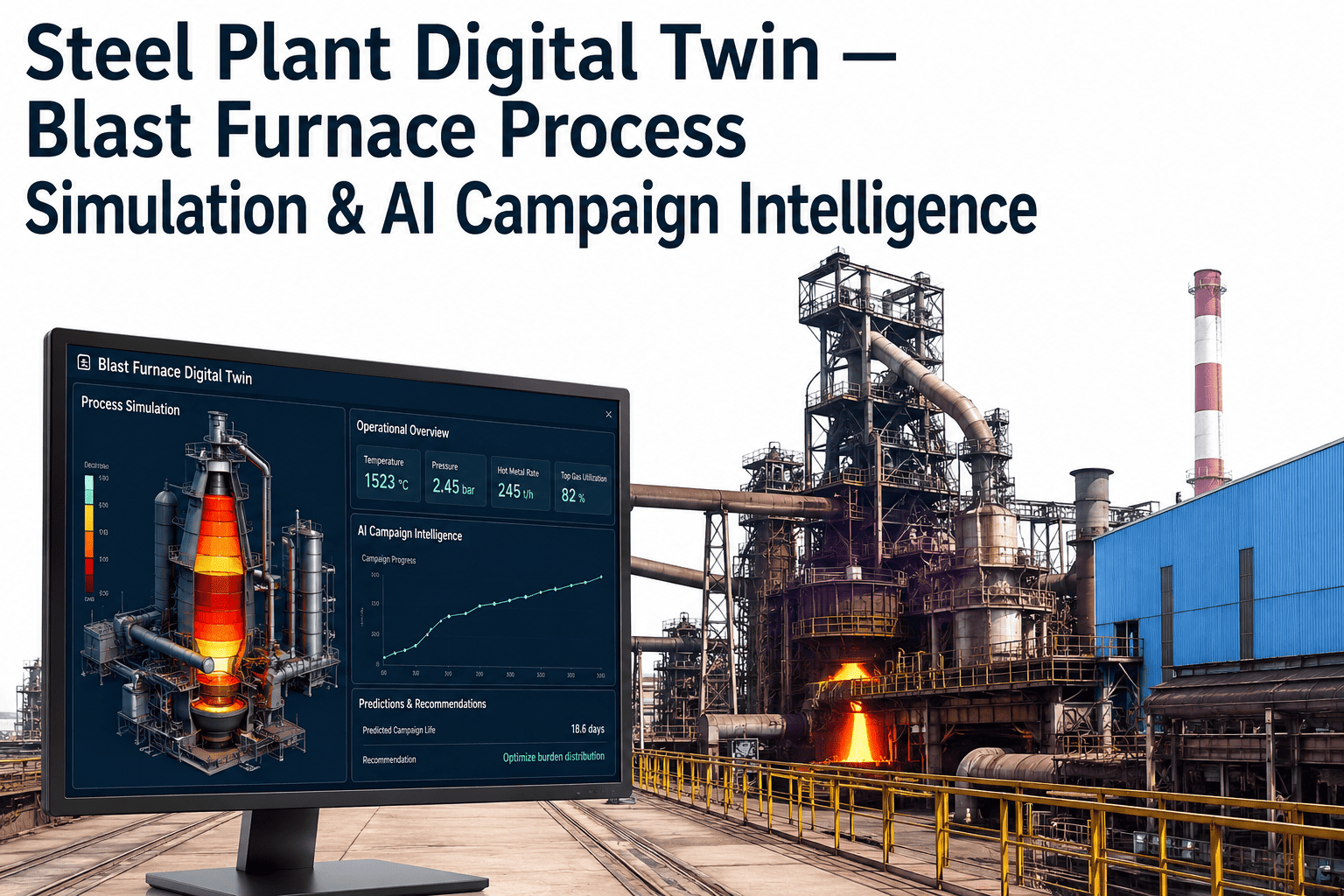
Blast Furnace Twin
- Internal gas flow and thermal mapping based on shell sensors
- Burden distribution simulation anticipating cohesive zone changes
- Hot metal temperature prediction prior to cast
Reheating Furnace Twin
- Calculates billet/slab core temperature continuously
- Predicts thermal soaking time required based on real fuel mix
- Simulates burner firing adjustments for maximum gas efficiency
Rolling Mill Master Twin
- Simulates material spread and roll force for different steel grades
- Predicts motor torque limits and cobble risks during speed ramp-ups
- Virtual testing of new pass-designs before changing physical rolls
Logistics & Scheduling Twin
- Models crane conflicts and ladle transfer speeds
- Simulates continuous casting sequence combinations
- Identifies pacing bottlenecks between melt shop and rolling stages
The Three Steps to Creating a Steel Plant Digital Twin
A digital twin is built layer by layer. The iFactory infrastructure deploys without interrupting physical production.
- Integrate physical PLCs via OPC-UA/MQTT
- Sync historian data to establish historical baselines
- Map actual sensor tags to virtual node inputs
- Construct thermodynamic equations for the asset
- Train AI models on historical patterns
- Calibrate virtual outputs against live plant realities
- Run offline scenario test benches
- Inject hypothetical parameters (e.g., fuel changes)
- Deploy predictive alerts back to the SCADA system
From Reactive to Predictive Management
Our biggest issue with the reheating furnace was fuel waste during delays. When the rolling mill halted for 10 minutes, manual burner adjustments were always a guess. Deploying the iFactory Digital Twin meant we had a live view of the billet core temperature. The virtual twin automatically simulated the exact burner turndown ratio required to keep the billets hot without wasting blast furnace gas. That single implementation paid for the software in three weeks.
Frequently Asked Questions
Do we need a brand new plant to install a Digital Twin?
No. iFactory is designed for retrofitting. As long as your assets have basic PLC controls or SCADA coverage, we pull that data into the cloud simulator. We augment blind spots with wireless IIoT sensors without requiring rewiring.
How accurate is the virtual simulation compared to reality?
Accuracy typically exceeds 96%. We use closed-loop AI training—which means the digital twin constantly compares its predictions against the actual outcomes logged by sensors, refining its own equations dynamically over time.
Can the Digital Twin alter physical machine controls?
By default, it acts in 'Advisory Mode', displaying recommendations to human operators. Once trusted, it can be switched to 'Closed-Loop Control', directly sending optimized setpoints back to the PLC.
See a Digital Twin in Action
Book a technical demo to see real-world steel process simulations and explore deployment feasibility.
-for-steel-plants-digital-compliance-framework.png)