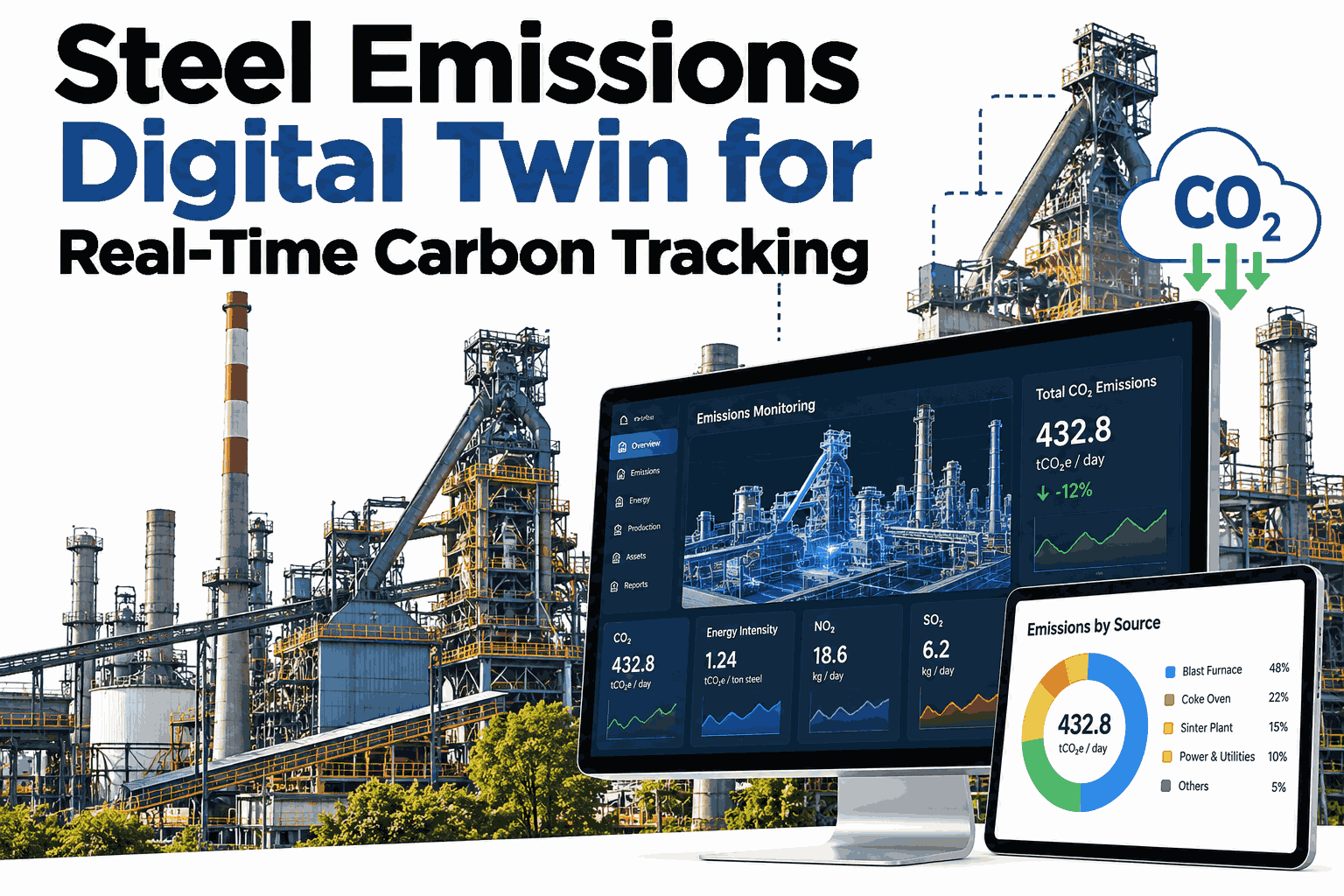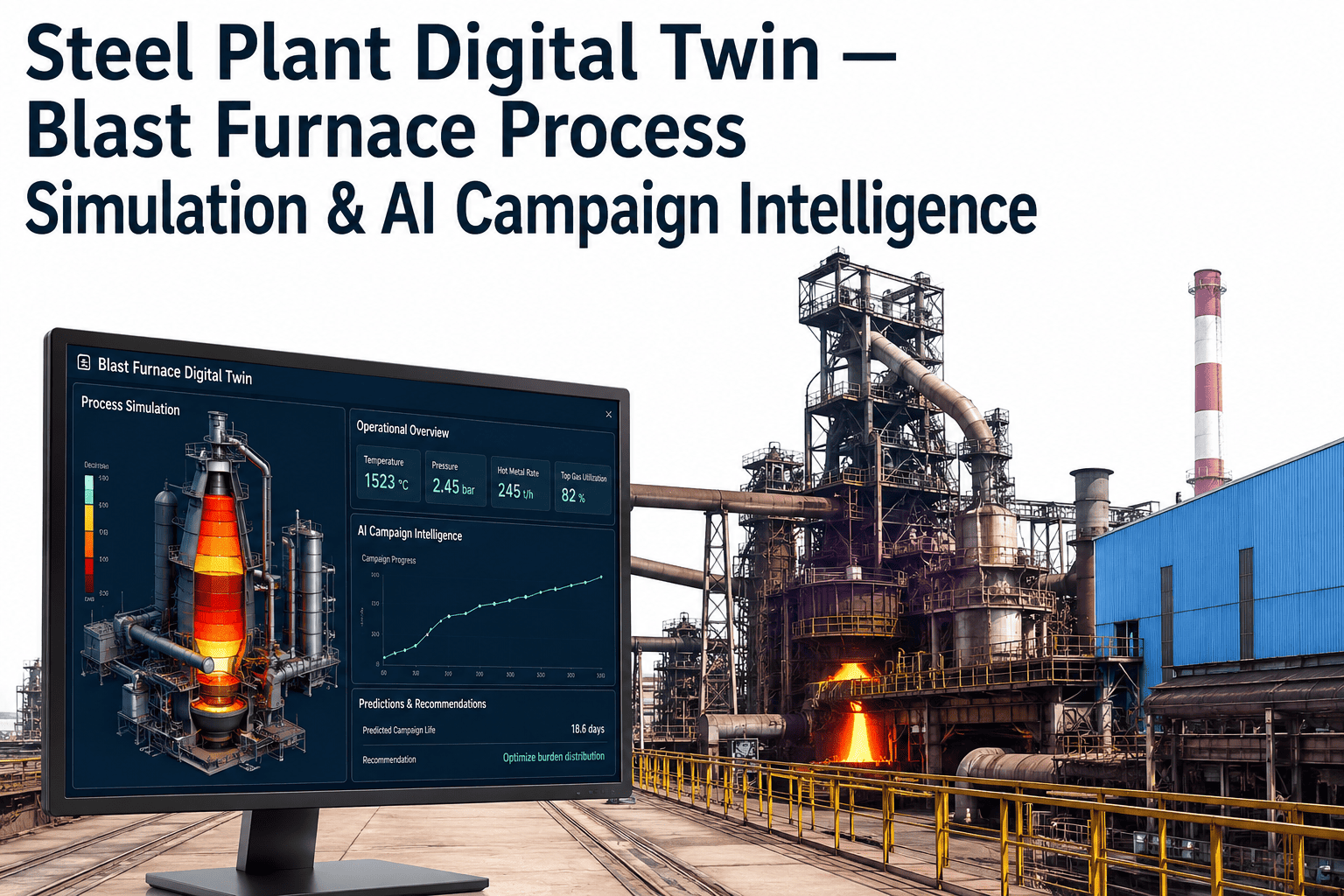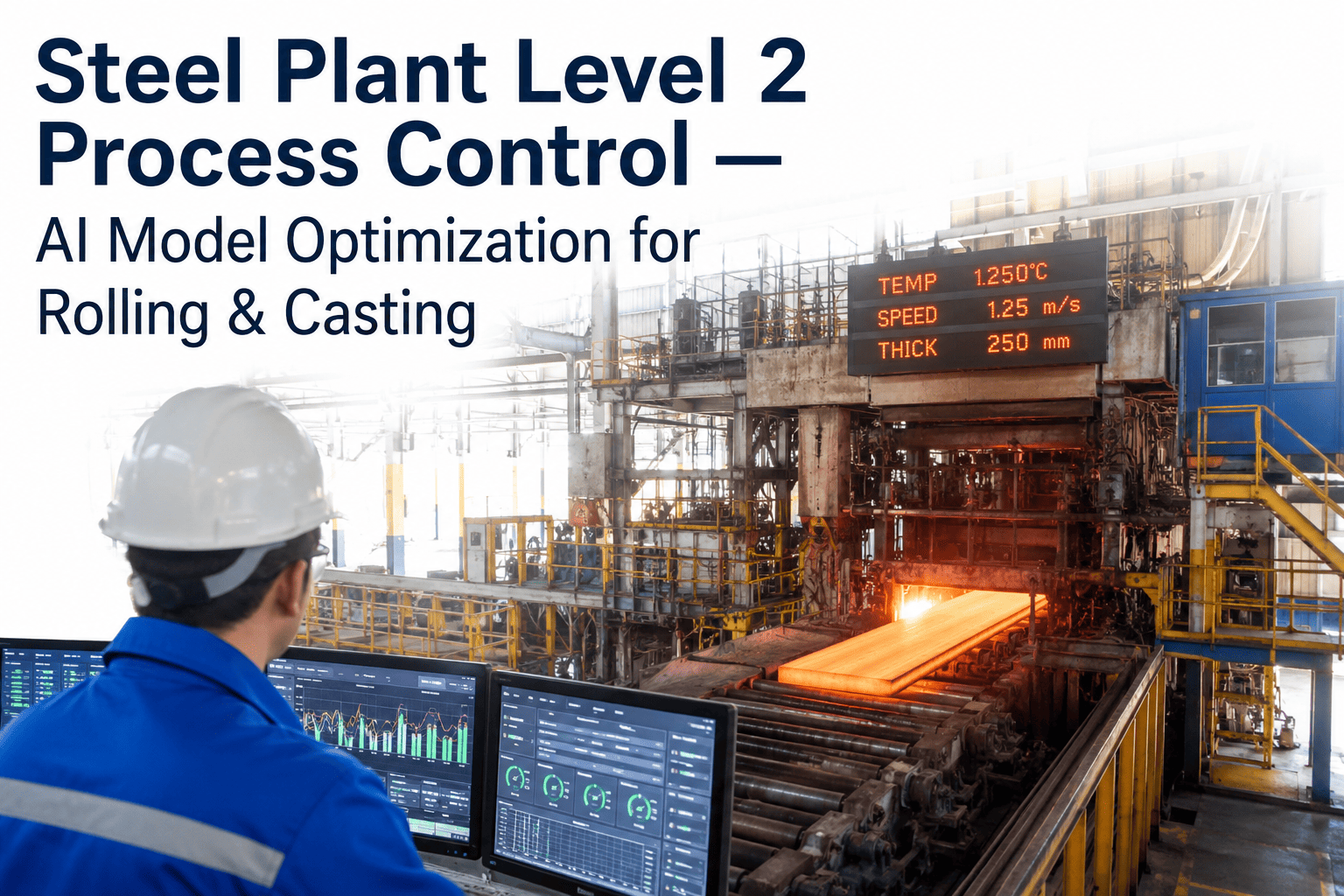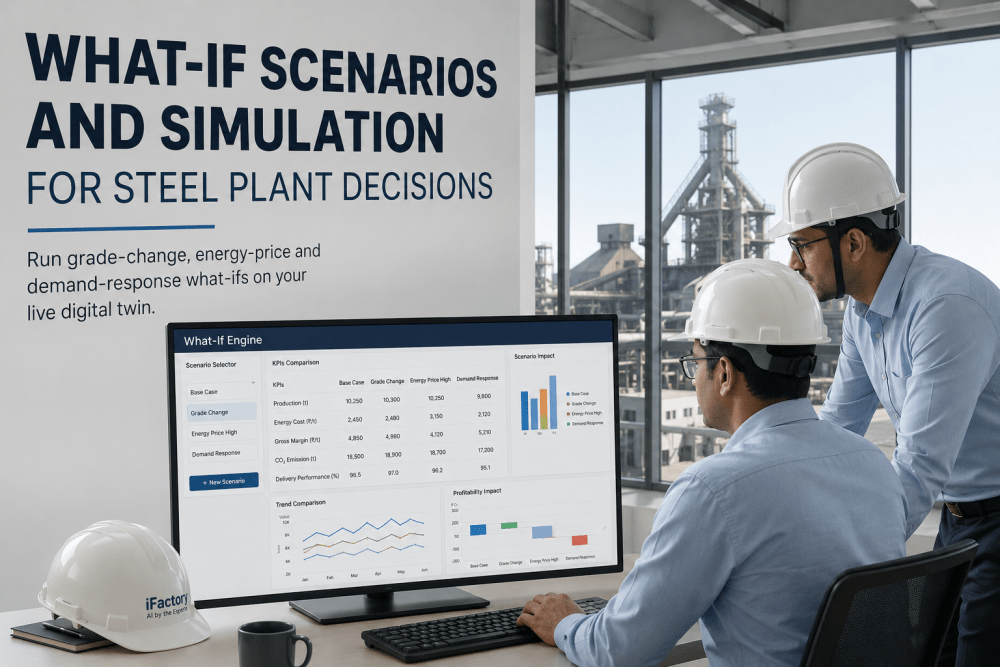
A digital twin is not a dashboard, a 3D model, or a historical data replay. A genuine steel plant digital twin is a physics-based, real-time simulation of your entire production system — continuously calibrated against live sensor data from PLC, SCADA, and IoT devices — capable of predicting the outcome of any operational change before it is made on the physical plant. When blast furnace operators ask "what happens to hot metal temperature if we reduce coke rate by 15 kg/tHM?" the digital twin runs the simulation in seconds and shows the downstream impact on BOF heat balance, continuous caster steel temperature, and rolling mill entry temperature — before a single kilogram of coke is reduced. iFactory's Digital Twin Simulation platform is the operational intelligence layer that transforms steel plants from reactive operators to predictive optimisers — reducing energy consumption by 8–12%, improving yield by 0.4–0.8%, and eliminating the trial-and-error that costs millions in suboptimal operating practice.
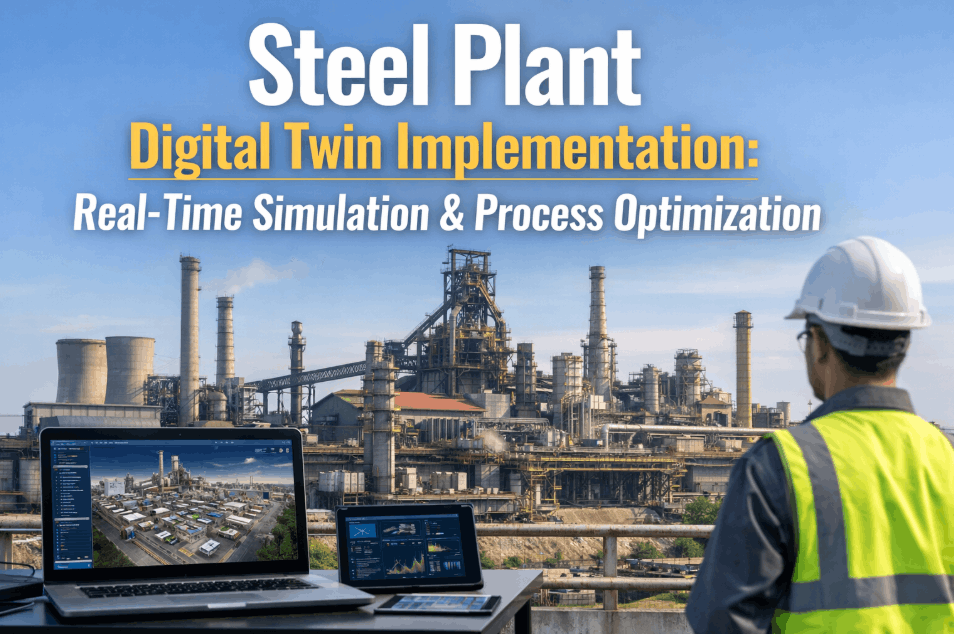
Steel Plant Digital Twin Implementation: Real-Time Simulation & Process Optimization
Physics-based real-time simulation, what-if scenario modelling, bottleneck identification & predictive process analytics — the full iFactory Digital Twin for integrated steel production.
What Makes a Genuine Digital Twin — The Four Layers
Most "digital twins" in steel are actually dashboards with historical data. A genuine physics-based digital twin has four distinct layers — each essential to delivering real-time simulation capability. Schedule a digital twin readiness assessment to see which layers your plant already has and where the gaps are.
What iFactory's Digital Twin Covers — Process Unit by Process Unit
iFactory's Digital Twin Simulation covers every major process unit in an integrated steel plant — with dedicated physics models per unit that connect into a plant-wide simulation. Each model is configured with the plant's actual equipment parameters and calibrated against operating data.
Blast Furnace
Raceway combustion, burden descent, hot metal temperature prediction, coke rate optimisation, gas utilisation efficiency
BOF Steelmaking
Oxygen blow model, heat balance prediction, end-point carbon and temperature, slag regime optimisation, trim alloy calculation
Continuous Casting
Solidification model, mould heat transfer, strand temperature profile, bulging risk prediction, segregation index forecasting
Reheating Furnace
Combustion efficiency model, slab temperature uniformity prediction, energy per tonne optimisation, zone-by-zone temperature setpoint recommendation
Hot Strip Mill
Finishing temperature model, roll force prediction, gauge and profile control, cooling section optimisation, mechanical property prediction
Energy & Utilities
Gas balance simulation, WHR optimisation, captive power dispatch, peak demand prediction, SEC real-time calculation per unit
Real What-If Questions iFactory's Digital Twin Answers in <10 Seconds
The most valuable capability of a digital twin is not showing what is happening — it is predicting what will happen if something changes. iFactory's scenario engine runs these questions instantly — replacing weeks of trial-and-error with seconds of simulation.
Digital Twin Implementation — The 4-Phase iFactory Roadmap
A full-plant physics digital twin is not deployed overnight. iFactory's structured 4-phase implementation delivers value at each phase — so the plant is seeing ROI from Month 3, not Month 18.
PLC, SCADA, and IoT sensor integration. Equipment hierarchy configured. Historical data loaded and quality-validated. Data pipeline tested at 60-second refresh.
First physics model deployed — typically BF or reheating furnace. Calibrated against 6 months of historical data. Prediction accuracy validated before going live.
All process unit models connected — BF, BOF, caster, reheating furnace, HSM, energy. Cross-unit what-if scenarios enabled. Bottleneck analysis and throughput optimisation go live.
AI optimisation layer deployed — recommending setpoint changes automatically, scheduling production campaigns, and managing energy dispatch. Closed-loop optimisation with operator override.
What a VP Operations Said
Before the digital twin, every operational change was a trial. We'd try a coke rate reduction, run it for a week, measure the downstream impact, and adjust. The cost of that trial-and-error across one year was enormous — in suboptimal heats, in quality misses, in energy waste. Now we simulate the change in 8 seconds and know the cascade effect before we touch a single setpoint. The first year we saved ₹38 crore from optimisations we would never have dared to try without the twin showing us the outcome first.
Frequently Asked Questions
How does the digital twin stay calibrated to the real plant — won't it drift over time?
iFactory's digital twin uses continuous calibration — comparing model predictions against actual sensor readings every hour and adjusting model coefficients automatically. A model drift alert triggers if prediction error exceeds threshold, prompting a human recalibration review.
What PLC and SCADA systems does iFactory's digital twin connect to?
iFactory integrates with Siemens S7 and TIA Portal, ABB System 800xA, Honeywell Experion, Rockwell PlantPAx, and Yokogawa CENTUM — via OPC-UA, Modbus, and direct historian connections. Custom integration is available for legacy systems.
How long does a full BF-BOF-caster digital twin take to deploy and calibrate?
Data integration and first single-unit model (typically BF or reheating furnace) take 10–14 weeks. Full plant-wide twin integration covering all major process units takes 20–28 weeks, depending on data quality and PLC access.
What prediction accuracy does iFactory's digital twin achieve for BOF end-point temperature?
BOF end-point temperature prediction accuracy is typically ±8–12°C at 95% confidence — compared to ±25–35°C with manual sub-lance measurement-based control. Carbon prediction accuracy is ±0.02–0.03% C, enabling direct tapping without secondary measurement in many heats.
See the iFactory Digital Twin Running on Your Process
Demo built around your BF-BOF-caster-HSM process, equipment data, and operating conditions.