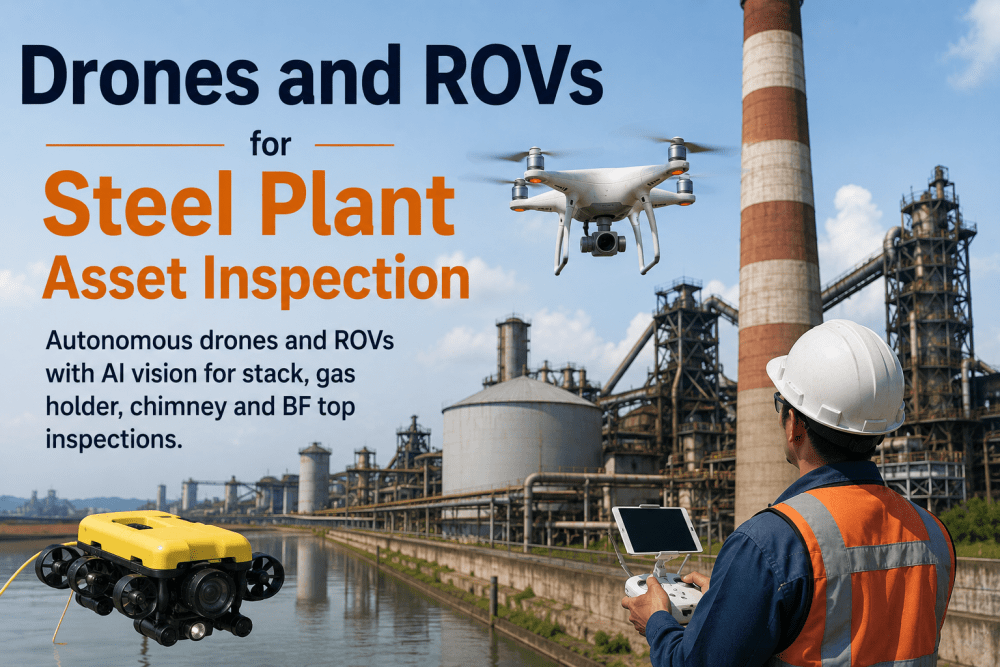
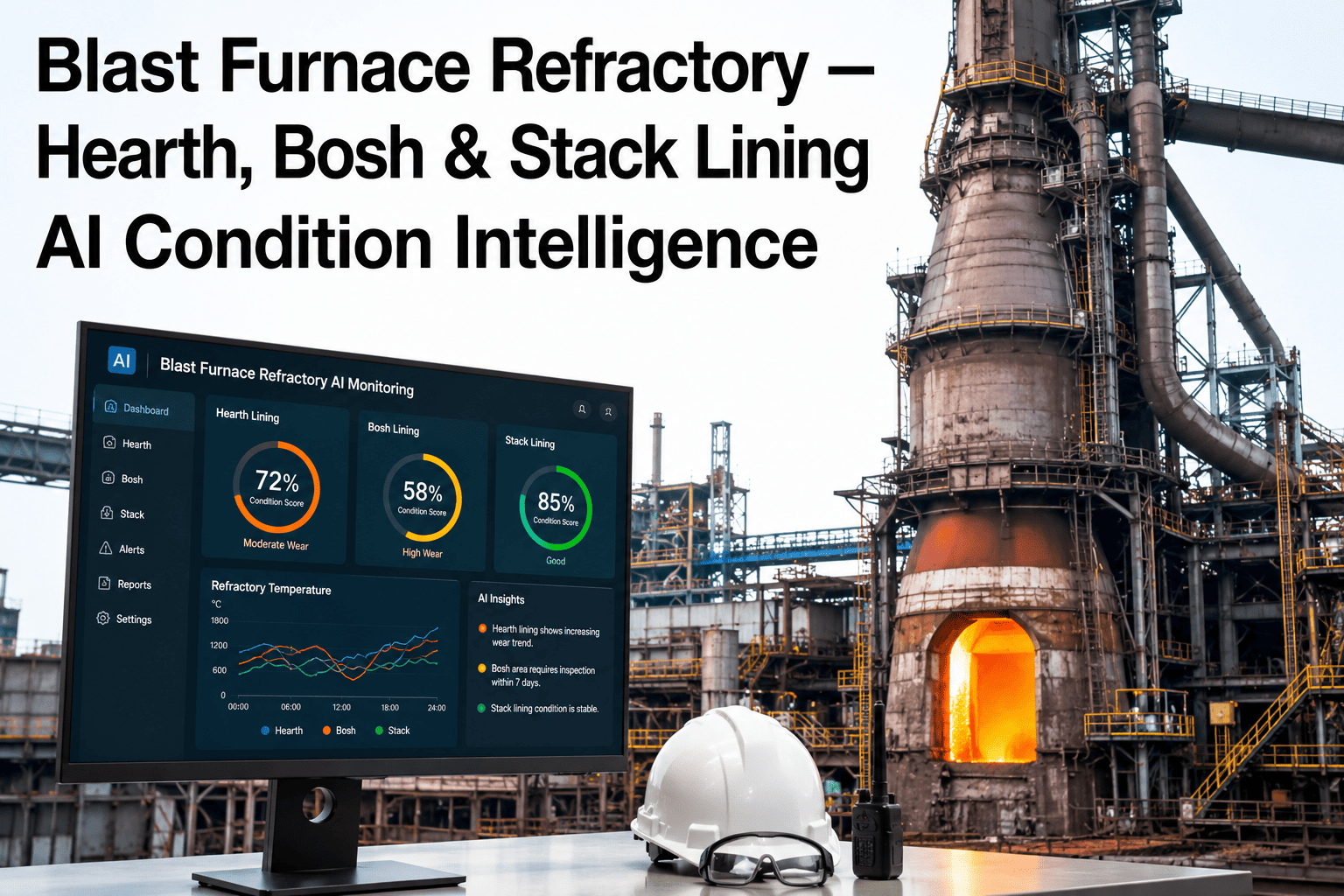
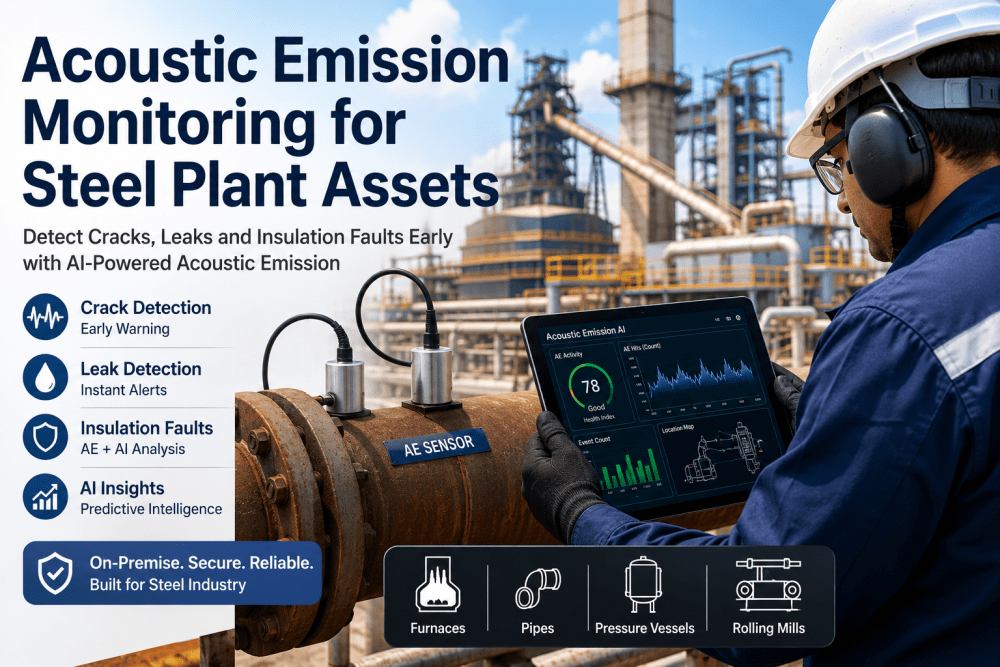
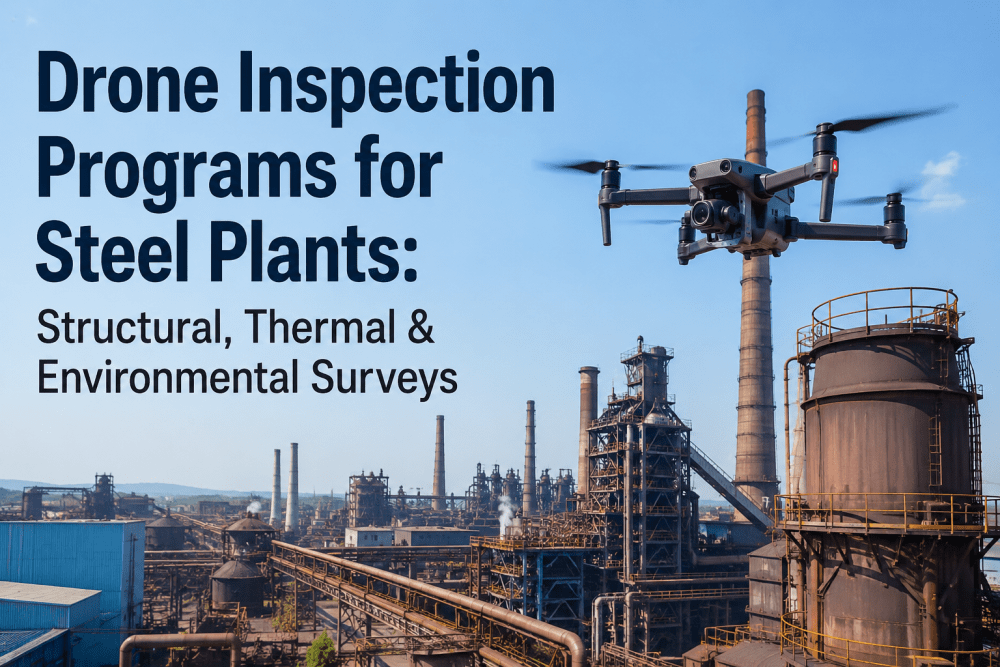
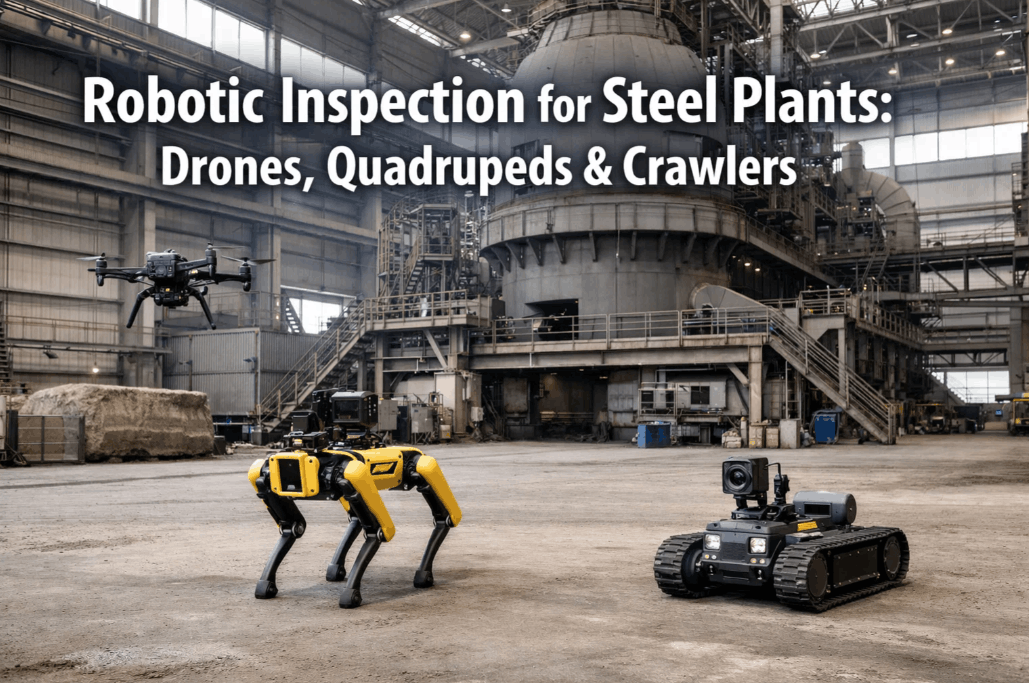
Steel plant asset inspection has traditionally required scaffolding, crane-supported baskets, or rope-access teams working at heights exceeding 100 feet — each approach carrying documented safety risks, significant labor costs, and extended production downtime while inspection access is established and removed. AI-powered drones and remotely operated vehicles eliminate these constraints entirely, deploying autonomous aerial and ground-based platforms with high-resolution cameras, thermal imaging sensors, and LIDAR scanners that capture comprehensive asset condition data without requiring a human inspector to leave the ground. When combined with AI vision analytics that detect corrosion, cracking, deformation, and thermal anomalies from captured imagery, the result is inspection coverage that is safer, faster, more consistent, and more data-rich than any manual inspection method available today. Book a Drone Inspection Technology Review to see how iFactory's AI vision platform transforms steel plant asset inspection data into actionable condition assessments.
The pressure to modernize steel plant inspection programs is driven by the convergence of workforce safety priorities, aging asset infrastructure, and compressed outage schedules that leave no room for extended scaffolding and rope-access work windows. Plants that continue relying on traditional inspection methods accept slower turnaround, higher direct labor costs, and the inherent variability of human-dependent defect detection. Shifting to autonomous drone and ROV inspection with AI vision analytics delivers measurable improvements across every dimension of asset integrity management — from inspection cycle time and cost per inspection to defect detection consistency and compliance documentation completeness.
80%
Reduction in inspection labor hours using autonomous drone and ROV platforms
60%
Cost savings vs scaffolding-based inspection at steel plant elevated assets
0
Safety incidents across 500+ industrial drone inspections at operating steel facilities
95%+
AI vision defect detection accuracy on drone-captured visual and thermal imagery
Critical Steel Plant Assets That Require Advanced Inspection Approaches
Steel plants contain a diverse inventory of elevated, confined, and high-temperature assets that are difficult to inspect using conventional methods. Each asset class presents unique inspection challenges — extreme heights, hazardous atmospheres, restricted access, or continuous operation requirements — that make traditional scaffolding, rope access, or manned basket inspection impractical, dangerous, or economically unsustainable. Autonomous drones and ROVs equipped with AI vision analytics address each of these inspection challenges with platform-appropriate sensor payloads and flight or traversal modes that match the specific asset geometry and environment.
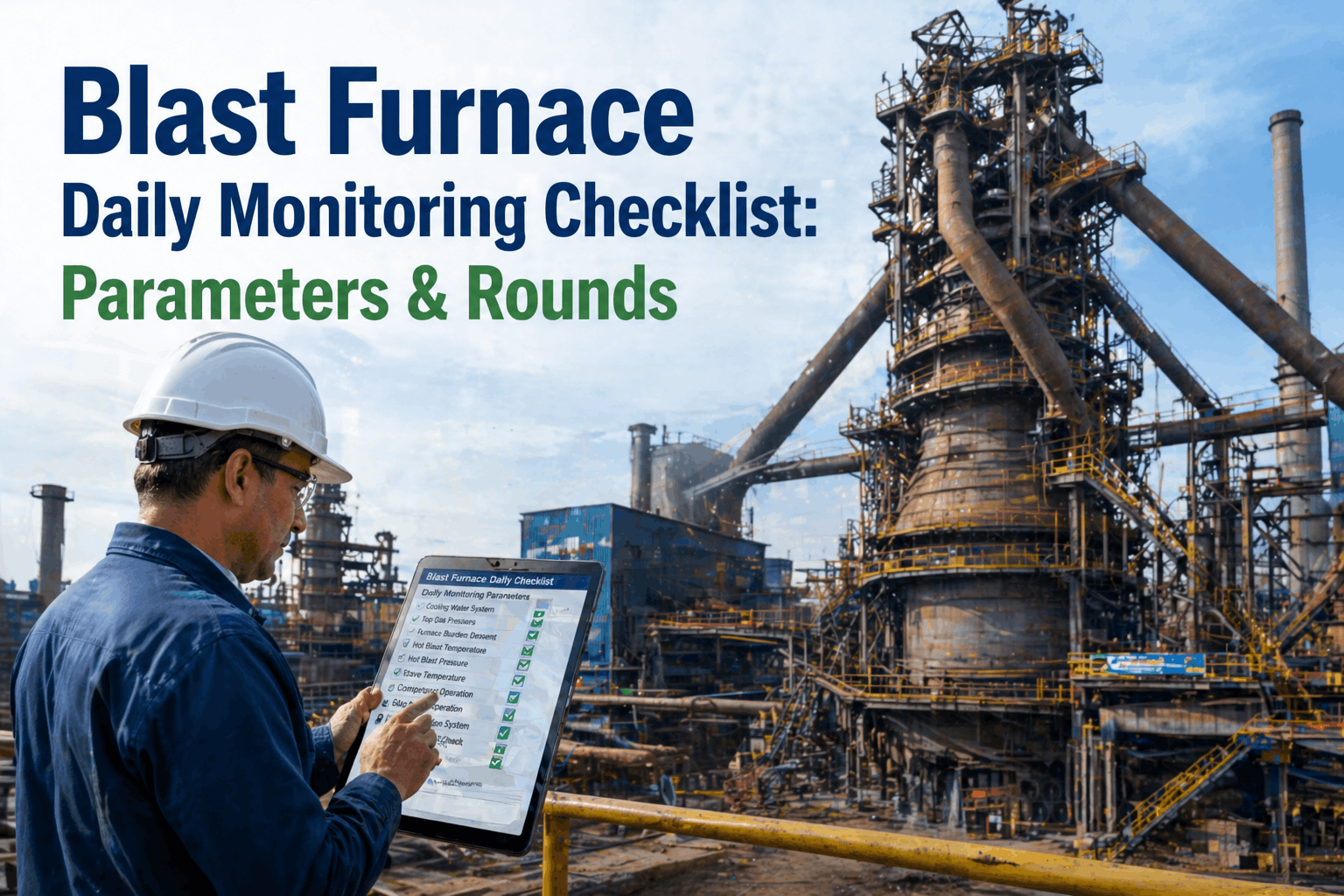
Blast Furnace Top Inspection
Drone-based inspection of BF top equipment, downcomer, and bleeder valves eliminates the need for outage-dependent scaffolding at heights exceeding 200 feet. Thermal imaging reveals refractory degradation and gas leak patterns invisible to standard visual inspection.
High Value
Gas Holder Integrity Assessment
ROV and drone platforms access gas holder interior and exterior surfaces for corrosion mapping, seam integrity verification, and coating condition assessment — without requiring degassing or confined space entry that would otherwise demand weeks of preparation.
High Value
Chimney Stack and Flue Inspection
Autonomous drones ascend steel and concrete chimney stacks capturing high-resolution imagery of liner condition, cap integrity, and external corrosion — covering 300-foot stacks in a single flight that would require multiple days of rigging for rope access.
High Value
Elevated Steel Structure Assessment
Drones inspect structural steel members, crane runways, pipe racks, and elevated walkways for corrosion, bolt loosening, and section loss — documenting conditions that rope-access teams would need weeks to cover across an integrated steel mill.
Medium Value
Raw Material Stockpile Surveying
Fixed-wing and multirotor drones conduct volumetric surveys of iron ore, coal, and limestone stockpiles — generating accurate inventory data without requiring personnel to traverse unstable material surfaces or operate heavy equipment near stockpile edges.
Medium Value
Conveyor and Transfer Point Inspection
Crawler ROVs and tethered drones inspect conveyor systems, transfer chutes, and tripper decks for belt wear, idler condition, and spillage accumulation — reducing conveyor-related unplanned downtime by 40% through early defect detection.
Medium Value
Drone and ROV Inspection Methods: Capabilities Compared
No single inspection method is optimal for every steel plant asset class. The most effective asset integrity programs deploy a layered approach — matching inspection method to asset geometry, access constraints, and inspection frequency requirements. The comparison below maps the key capabilities and limitations of each approach across the dimensions that matter most to steel plant maintenance and reliability teams. Assets with complex geometries or confined access requirements often benefit from a combination of drone, ROV, and targeted rope access deployed based on the specific inspection objective.
Method
How It Works
Safety Risk
Coverage Speed
Data Quality
Best Fit
Scaffolding and Manned Access
Physical structure erected around the asset. Inspectors access elevated areas with handheld gauges and cameras.
High — fall risk, structural collapse, extended time at height
Slow — days to weeks for scaffold erection and removal
Autonomous UAVs fly pre-programmed inspection routes with visual, thermal, and LIDAR sensor payloads.
Low — no personnel at height, remote operation from safe distance
Fast — hours for complete multi-asset coverage across an entire plant area
Superior — consistent, AI-analyzed, fully annotated, and digitally archived
Routine and emergency inspection across all above-ground assets
Crawler ROVs for Confined Spaces
Tracked or magnetic-wall ROVs navigate ducts, flues, boiler tubes, and tight-clearance areas with camera and sensor payloads.
Low — eliminates confined space human entry
Moderate — traversal speed constrained by terrain and surface conditions
Good — sensor data collected from previously inaccessible asset interiors
Boiler tubes, flue gas ducts, pipe interiors, gas holder internals
See how a layered drone, ROV, and AI vision inspection program compares to your current asset integrity approach. Book a 30-minute Drone Inspection Technology Review with iFactory's steel plant asset integrity team.
How AI Vision Analytics Transforms Drone-Captured Inspection Data
Capturing high-resolution imagery from a drone or ROV is only the first step. The transformative value of autonomous inspection is realized when AI vision models analyze that imagery to detect, classify, and quantify defects that would be missed by even experienced human inspectors reviewing the same footage. iFactory's AI vision platform processes drone-captured visual and thermal data through deep-learning models trained on steel plant asset conditions — detecting pitting corrosion, crack propagation, refractory loss, thermal anomalies, and structural deformation with 95%+ accuracy and delivering findings within hours of flight completion.
01
Mission Planning and Flight Path Automation
Inspection engineers define asset-specific flight paths using plant 3D models and BIM data. Waypoints, altitude constraints, and sensor configurations are programmed to ensure consistent coverage across every inspection cycle. No manual piloting required — the drone executes the same precise path every inspection, eliminating the variability inherent in human-piloted flights.
02
Autonomous Data Capture with Multi-Sensor Payloads
The drone or ROV executes its programmed mission capturing synchronized visual, thermal infrared, and LIDAR data. Thermal imaging reveals refractory degradation, gas leaks, and electrical hot spots invisible to standard cameras. LIDAR generates precise 3D point clouds for deformation analysis. All data is geotagged and timestamped for precise defect localization.
03
AI Vision Analysis and Defect Detection and Classification
iFactory's deep-learning models process every frame of captured imagery, detecting and classifying defects — corrosion pitting, crack propagation, refractory spalling, thermal anomaly patterns, coating delamination, and structural deformation. Each detected defect is measured, annotated, and assigned a severity score based on trained defect morphology models specific to steel plant asset classes.
04
Automated Report Generation and CMMS Integration
Inspection findings are compiled into structured reports with annotated imagery, defect measurements, severity classifications, and location data — automatically formatted for direct integration with the plant's CMMS as work order attachments or inspection records. No manual report writing. No transcription errors. No delayed findings.
05
Repeat Inspection Comparison and Degradation Trending
Each subsequent inspection flight follows the same programmed path, generating imagery that is automatically registered against prior inspection data. AI models detect changes in defect dimensions, progression rates, and new defect emergence — enabling condition-based maintenance planning based on measured degradation trends rather than calendar-based inspection intervals.
Deploy Autonomous Drone and ROV Inspection with AI Vision Analytics
iFactory's AI vision platform transforms drone and ROV inspection data into actionable asset condition insights — delivering 95%+ defect detection accuracy, 80% faster inspection cycles, and fully documented digital inspection records that strengthen your asset integrity program without increasing personnel exposure to elevated and confined-space hazards.
Measurable Safety, Cost, and Coverage Improvements
The transition from traditional inspection methods to autonomous drone and ROV inspection with AI vision analytics produces measurable improvements across every dimension of asset integrity program performance. The following outcomes are drawn from documented deployments at integrated steel mills and mini-mill operations that have integrated autonomous inspection into their routine asset integrity programs.
80%
Faster Inspection Cycle
Complete multi-asset inspection coverage in hours versus days or weeks required for scaffolding and rope-access methods across elevated steel plant assets.
60%
Lower Inspection Cost
Direct cost reduction from eliminated scaffolding rental, reduced labor hours, shorter outage durations, and zero rope-access team mobilization fees per inspection campaign.
0
Safety Incidents
Zero lost-time safety incidents recorded across autonomous drone and ROV inspection deployments at operating steel plants — no falls, no confined space entries, no energized equipment contact.
95%+
Defect Detection Accuracy
AI vision model accuracy for corrosion, cracking, thermal anomaly, and deformation detection on drone-captured imagery validated against ground-truth inspection data from steel plant assets.
300 ft
Max Inspection Height
Autonomous drone coverage of chimney stacks, BF tops, and elevated structures up to 300 feet without scaffolding, crane baskets, or rope-access rigging requirements.
48 hrs
Flight-to-Report Turnaround
From flight completion to delivered inspection report with AI-analyzed defect annotations, severity classifications, and CMMS-ready documentation — enabling same-week maintenance planning.
12:1
Speed ratio of drone inspection vs scaffolding for equivalent elevated asset coverage
500+
Industrial drone inspection missions completed at operating steel facilities
100%
Digital inspection record capture — every flight generates a complete, auditable asset condition archive
AI Vision
Defect Detection Engine
Deep-learning models trained on steel plant asset conditions for 95%+ detection accuracy
Autonomous
Flight Operations
Pre-programmed inspection paths with no manual piloting for consistent repeat coverage
Multi-Sensor
Data Fusion
Visual, thermal, and LIDAR data synchronized for comprehensive condition assessment per pass
Digital Twin
Asset Archive
Every inspection generates a geotagged, time-stamped digital record for degradation trending
Building the Business Case for Autonomous Inspection
Making the transition from traditional inspection methods to autonomous drone and ROV inspection requires a structured business case that accounts for direct cost savings, safety improvements, inspection cycle acceleration, and long-term asset degradation intelligence. The following checklist maps the key evaluation criteria that steel plant reliability and asset integrity teams use to justify autonomous inspection program investment to plant management and corporate stakeholders.
Autonomous Inspection Business Case Evaluation Checklist
Direct Cost Comparison: Calculate total annual inspection cost for scaffolding, rope access, and manned basket methods — including labor, equipment rental, outage time value, and mobilization fees — versus autonomous drone and ROV program costs including platform acquisition or service contract and AI analytics subscription.
Safety Incident Risk Reduction: Quantify the elimination of elevated work, confined space entry, and heavy equipment exposure from the inspection program. Document current incident rates for traditional inspection methods and map the risk reduction achieved by transitioning to remote autonomous platforms.
Outage Duration Impact: Map every inspection activity on the plant outage critical path and calculate the outage day reduction achievable by replacing scaffolding-dependent inspections with drone flights that require zero setup and teardown time.
Data Quality and Consistency: Compare the inspection data output of traditional methods — subjective inspector notes, selective photo documentation — against AI-analyzed drone inspection data with 100% coverage, consistent capture parameters, and automated defect measurement and severity classification.
Degradation Trending Capability: Evaluate the value of year-over-year repeat inspection data that enables precise measurement of corrosion progression, crack propagation rates, and refractory loss — enabling condition-based maintenance planning that extends asset life and reduces unplanned outages.
Regulatory and Compliance Documentation: Assess the completeness of your current inspection documentation for regulatory review. Autonomous inspection generates fully geotagged, time-stamped, AI-analyzed inspection records that satisfy the most rigorous audit requirements and provide defensible asset condition evidence.
Building your autonomous inspection business case? Book a 30-minute Drone Inspection Technology Review with iFactory's steel plant asset integrity team for a site-specific ROI analysis and deployment roadmap.
Expert Review: What Steel Plant Asset Integrity Teams Get Right and Wrong About Drone Inspection
The biggest mistake I see steel plant reliability teams make when evaluating drone inspection is treating it as a camera-on-a-drone problem rather than an AI-analytics problem. Any drone can fly up to a chimney and take a picture. The question is whether the inspection platform can process that image to detect a 2-millimeter crack in a refractory-lined downcomer at 200 feet, classify it by severity, measure its progression since the last inspection, and deliver that finding to the CMMS as a work-ready notification. If the answer to that question is no — if the inspection still requires a human to review every frame of footage — then the drone is a transportation device, not an inspection solution. The platforms that deliver real ROI are the ones where the AI does the inspection and the drone is just the sensor delivery system.
Asset Integrity Program Director
Integrated Steel Mill Operations, 22 Years — API 580/581 Certified
The other gap I encounter is the assumption that autonomous inspection replaces every traditional method. It does not — and it should not. There are specific inspection requirements at steel plants that still require physical contact: ultrasonic thickness verification at a corroded pipe support, magnetic particle inspection of a welded repair, bolt torque verification on a flange. The winning approach is layered — drone and ROV AI vision inspection for routine condition assessment, coverage, and trend monitoring, with targeted rope access or manned inspection deployed only where physical contact is required. The plants that get this right reduce their inspection costs by 50–60% while actually improving coverage, because the budget they free up by eliminating blanket scaffolding goes directly to the targeted contact inspections that matter most.
Reliability Engineering Manager
Mini-Mill and Plate Operations, 18 Years — CMRP, CRL Certified
Frequently Asked Questions
Industrial drones and ROVs currently inspect blast furnace top structures, gas holder interior and exterior surfaces, chimney stacks and flues, elevated structural steel, conveyor systems, stockpile volumes, and general steel plant infrastructure up to 300 feet. Crawler ROVs access boiler tubes, flue gas ducts, and pipe interiors that are inaccessible to aerial platforms.
AI vision models trained on steel plant asset conditions consistently achieve 95%+ defect detection accuracy, exceeding human visual inspection performance for corrosion pitting, crack detection, and thermal anomaly identification. AI models detect defects at pixel-level resolution, apply consistent classification criteria across every inspection, and do not experience the fatigue or attention variability that affects human inspectors during extended elevated work sessions.
Yes. Autonomous drones operate during active production with minimal disruption. Flights are pre-programmed to avoid active crane zones, hot metal transfer paths, and high-traffic areas. Thermal imaging and visual data capture are unaffected by ambient production conditions. Most steel plants conduct drone inspections during normal production windows without requiring production rate reductions or equipment shutdowns for inspection access.
Most steel plants achieve positive ROI within the first two inspection cycles — typically 6 to 9 months — through direct cost savings from eliminated scaffolding and rope access, reduced outage duration, and lower labor requirements. Annual inspection cost reductions of 50–60% versus traditional methods are standard. Contact iFactory for a site-specific ROI projection based on your plant's asset inventory and current inspection spending.
Each inspection generates a complete digital record including high-resolution visual imagery, thermal imaging data, LIDAR point clouds, AI-detected defect annotations with measurements and severity classifications, geotagged defect locations, and a structured inspection report formatted for CMMS integration. Repeat inspections produce year-over-year degradation trend data showing defect progression rates and new defect emergence.
Autonomous Drone and ROV Inspection — Full AI Vision Capability, Zero Elevated Work Risk
iFactory's AI vision platform transforms drone and ROV inspection data into actionable asset condition intelligence for steel plant elevated assets, confined spaces, and critical infrastructure — delivering 95%+ defect detection accuracy, 80% faster inspection cycles, and complete digital inspection records that strengthen your asset integrity program without increasing personnel exposure to height and confined-space hazards.
Conclusion: Autonomous Inspection Is the Standard for Modern Steel Plant Asset Integrity
The economic and safety case for autonomous drone and ROV inspection with AI vision analytics at steel plants is well-established and no longer speculative. The 60% cost reduction versus scaffolding, the elimination of elevated work and confined space entry risks, the 12:1 speed advantage in asset coverage, and the 95%+ AI defect detection accuracy are measured outcomes from operating steel plants that have integrated autonomous inspection into their routine asset integrity programs. The technology is deployable today, with ROI timelines measured in months, not years, and with deployment models that accommodate plants of any size, asset configuration, or regulatory environment.
Steel plants that continue relying on traditional inspection methods are accepting costs, risks, and coverage gaps that are no longer necessary. The choice is not between safety and capability. The right autonomous inspection platform — with AI vision analytics, multi-sensor data capture, and digital record generation — delivers both. Book a Drone Inspection Technology Review to see how iFactory's AI vision platform transforms steel plant asset inspection at your facility.