Citizen Data Scientist Training for Steel Plant Workforce
By Hazel Green on June 20, 2026
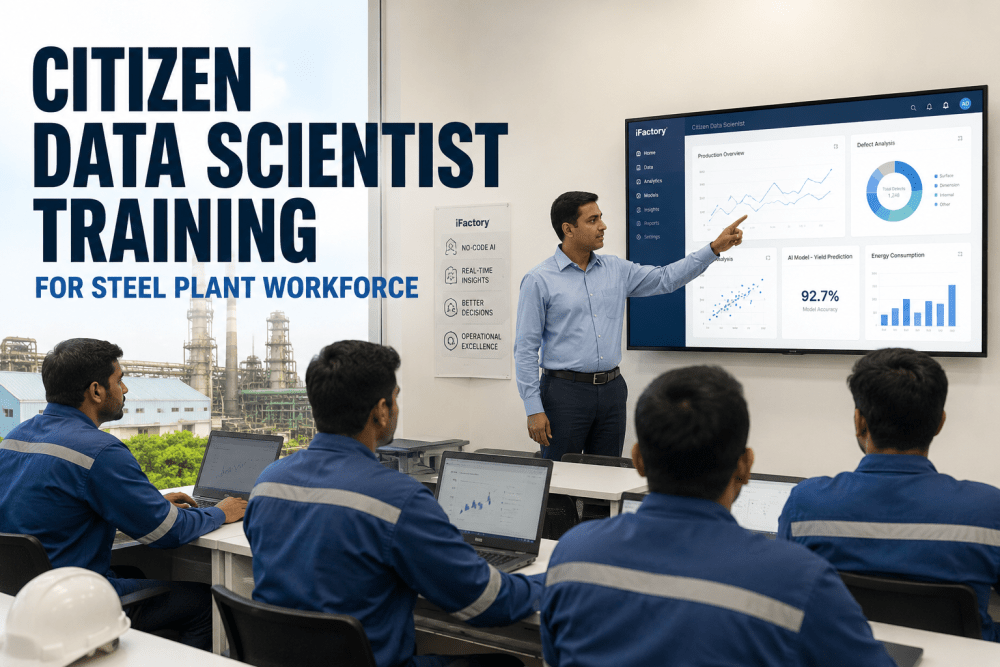
The most valuable data analytics capability a steel plant can develop is not a centralized data science team — it is the ability of every operator, technician, and process engineer on the mill floor to ask and answer their own questions about process data without writing a single line of code. This is the citizen data scientist model, and it is the fastest-growing workforce development strategy in industrial manufacturing worldwide. The gap between the data that steel plant control systems generate every second and the data that operators actually use to make decisions is the single largest untapped source of process improvement in most mills — and closing that gap does not require hiring data scientists. It requires equipping the existing workforce with no-code AI tools, augmented reality training, and the data literacy foundation to use them effectively. Book a Citizen Data Scientist Program Review to see how iFactory's no-code AI platform and AR training suite transform steel plant operators into data-driven process improvers.
The steel industry faces a structural workforce challenge that will not be solved by hiring alone. The average age of experienced process engineers in U.S. steel mills is over 50, and the technical knowledge transfer from the retiring generation to new entrants is inconsistent and incomplete. At the same time, the volume of process data available from DCS historians, LIMS systems, and quality databases has grown exponentially — but the workforce trained to extract insights from that data has not kept pace. The citizen data scientist model addresses both problems simultaneously: it captures the experiential knowledge of senior operators and encodes it into no-code analytics templates that newer operators can use immediately, and it provides the data literacy training that enables every operator to participate in process improvement rather than relying on a bottlenecked central engineering team.
40%
Faster defect diagnosis and root cause identification by operators using no-code AI analytics tools
3.2×
Return on investment from structured workforce AI upskilling programs at integrated steel mills
85%
Of operators report improved job satisfaction and engagement after adopting no-code analytics tools
55%
Reduction in quality issue escalation to engineering — operators resolve root causes independently
The Four Pillars of Citizen Data Scientist Training
A successful citizen data scientist program rests on four capability pillars that must be developed in sequence — data literacy, no-code analytics tools, AR-assisted learning, and guided deployment with safety guardrails. Each pillar builds on the previous one, and each requires specific platform capabilities that go beyond generic online training or off-the-shelf analytics software. The most effective programs deploy iFactory's integrated learning and analytics platform that serves as both the training environment and the production analytics tool — eliminating the transfer gap between what operators learn in training and what they use on the mill floor. Schedule a platform review to see the complete citizen data scientist training environment configured with your plant's process data.
Data Literacy Foundation
Operators learn to read and interpret control charts, understand process capability indices, identify common-cause versus special-cause variation, and recognize data quality issues before they lead to incorrect conclusions. Training uses the plant's own process data — no generic examples.
Foundation
No-Code AI Analytics Tools
iFactory's drag-and-drop analytics interface allows operators to build process monitoring dashboards, set up statistical process control charts, create correlation analyses, and deploy anomaly detection models — all without writing code. Models are trained on historical plant data and deployed with one click.
Core Capability
AR-Assisted Learning and Coaching
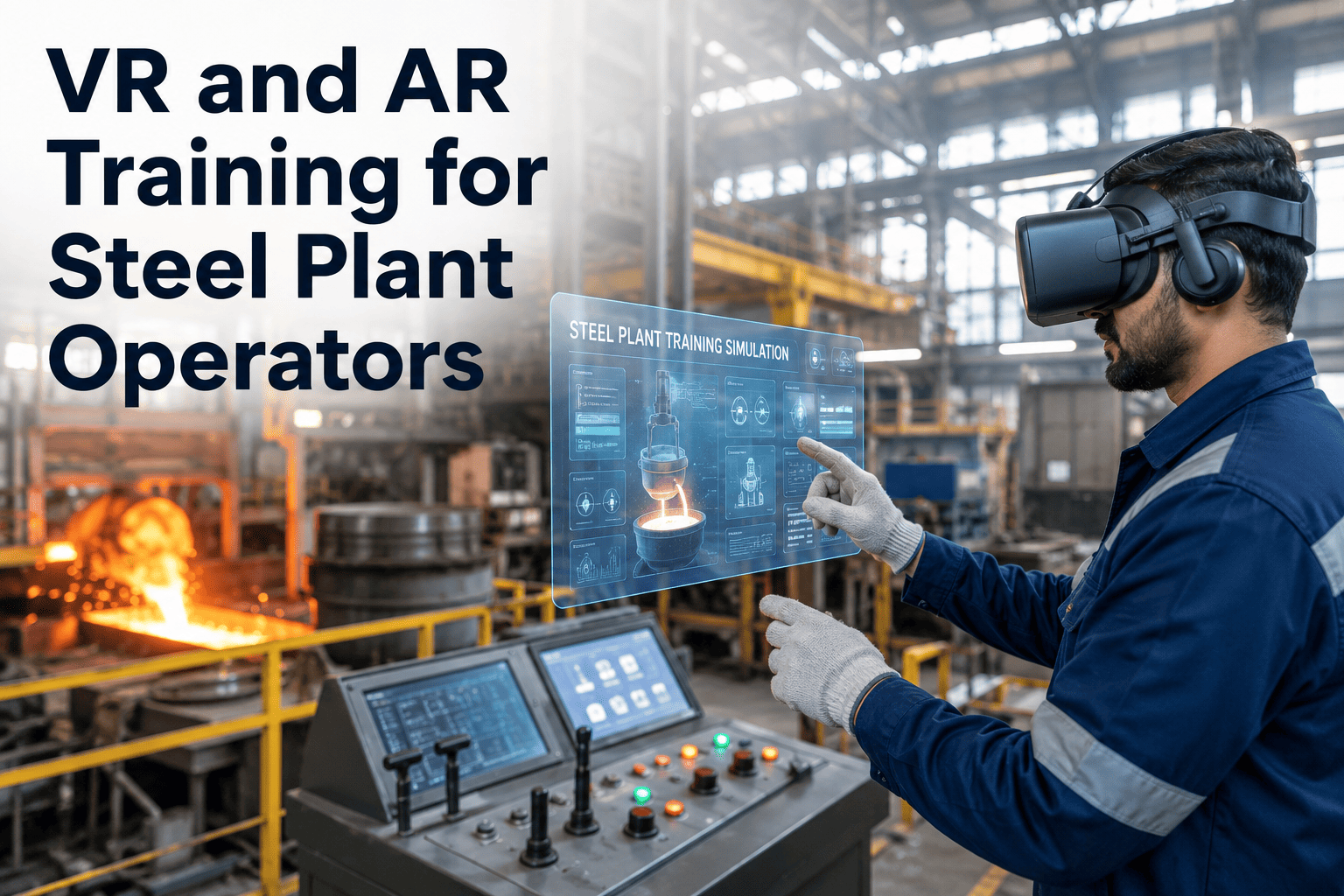
Augmented reality overlays guide operators through analytics workflows directly on the mill floor — showing which data source to select, which chart type to use for each analysis, and how to interpret the results. Experienced operators record best-practice workflows that new operators access through AR headsets or tablets.
Accelerator
Guided Deployment with Guardrails
Operator-built models and dashboards are deployed in a controlled sandbox that validates outputs against known process limits before they go live. Senior process engineers review and approve models for production use. The platform enforces data access permissions — operators see only the data they are authorized to use.
Governance
Training Methods Compared: Building Data Skills That Stick
The effectiveness of a citizen data scientist program depends on the training methods used to develop data literacy and analytics skills. Traditional classroom training alone does not produce sustained behavior change — skills decay within weeks if not reinforced by daily use. The most effective programs combine structured foundational training with hands-on practice in the production analytics environment, supported by AR-assisted coaching that provides just-in-time guidance exactly when and where operators need it.
Training Method
How It Works
Time to Competency
Skill Retention at 6 Months
Scalability
Best Fit
Traditional Classroom
Instructor-led sessions covering statistical concepts, process data analysis, and quality tools. Offline from production systems.
4–6 weeks to basic competency
38–45% — rapid decay without daily reinforcement in the production environment
Limited by instructor availability and classroom capacity. Difficult to schedule around shift rotations.
Foundational theory, regulatory training, new hire orientation
Online LMS Modules
Self-paced digital courses with video, quizzes, and simulated exercises. Accessible on any device.
6–8 weeks — self-paced, completion varies widely
42–50% — slightly better than classroom due to self-paced review capability
Highly scalable across multiple shifts and plant sites. Content available 24/7.
AR headset or tablet overlays guide operators through analytics workflows in the actual production environment. Best practices recorded by senior operators available on demand.
2–3 weeks — learning occurs during normal work, not in separate training sessions
78–85% — skills are reinforced by daily use in the production context where they are applied
Scalable through AR content library. Each senior operator records workflows once — accessed by all new operators.
Process-specific analytics workflows, troubleshooting procedures, new operator onboarding
No-Code Sandbox Practice
Operators build and test analytics models using real plant data in a protected sandbox environment. Immediate feedback from the platform on model quality and data validity.
1–2 weeks to build first production-quality model
90%+ — skill is reinforced every time the operator uses the tool to answer a process question
Fully scalable — the sandbox is available to every operator on every shift with no additional instructor capacity required.
Building and deploying process monitoring dashboards, creating SPC charts, root cause analysis
How the Citizen Data Scientist Program Works in Practice
The transition from operator to citizen data scientist follows a structured progression that builds capability incrementally. iFactory's program is designed to produce the first operator-built analytics model within four weeks of program launch — not months into a theoretical training curriculum. Every phase produces a measurable output that contributes directly to plant process improvement while the operator is still learning.
01
Data Literacy Foundation — Understanding Process Data
Operators learn to identify data sources, understand measurement scales, recognize data quality issues, and interpret basic statistical summaries. Training uses the plant's own process historian data — operators analyze real Blaine fineness trends, furnace temperature profiles, and mill power consumption patterns from their own plant during the first session.
02
No-Code Tool Introduction — First Analytics Model
Using iFactory's drag-and-drop interface, operators build their first process monitoring dashboard — selecting data sources, configuring SPC charts with correct control limits, and setting alert thresholds. The platform validates each configuration against statistical best practices and provides real-time feedback on chart selection and limit calculation.
03
Guided Practice — Root Cause Analysis with Plant Data
Operators apply their new skills to a real plant quality event — a recent scrap occurrence, off-spec shipment, or process upset. Using the no-code tools, they identify the root cause by correlating process variables, building cause-and-effect diagrams, and validating their findings against the plant's quality system data.
04
Independent Model Building and Deployment
Operators identify their own process improvement opportunity — a recurring quality deviation, an efficiency opportunity, or a maintenance prediction challenge — and build an analytics model to address it independently. The model is submitted for peer review through the platform's governance workflow before deployment to production.
05
Certification and Continuous Learning
Operators achieve citizen data scientist certification after successfully deploying three approved analytics models. Certified operators become mentors for new program participants — recording AR workflow guides that capture their best practices for the next cohort. The program is self-sustaining after the first certified cohort graduates.
Build Your Citizen Data Scientist Workforce — First Model in Four Weeks
iFactory's no-code AI analytics platform and AR-assisted training program transforms steel plant operators into data-driven process improvers — delivering measurable process improvement from the first training cohort while building a self-sustaining analytics culture across every shift.
The citizen data scientist model produces measurable improvements in both workforce capability and process performance. The following outcomes are drawn from steel plant workforce development programs that have deployed iFactory's no-code analytics platform and AR training suite across operator, technician, and process engineer populations.
40%
Faster Defect Diagnosis
Reduction in time from quality deviation detection to root cause identification by operators using no-code correlation analysis and SPC tools on the mill floor.
55%
Fewer Engineering Escalations
Quality issues resolved by operators at the process level without escalation to central process engineering — freeing engineers for higher-value improvement work.
3.2×
Upskilling ROI
Measured return on citizen data scientist program investment within 12 months — driven by scrap reduction, fewer escalations, and increased process improvement throughput.
92%
Skill Retention
Analytics skill retention at 6 months post-certification — compared to 45% retention from classroom-only training — achieved through daily use in the production environment.
4 Weeks
To First Operator Model
Average time from program launch to first operational analytics model built and deployed by a program participant — no data science background required.
85%
Participant Satisfaction
Program participants reporting that citizen data scientist training improved their job satisfaction, engagement, and confidence in process decision-making.
75%
Of operators achieve citizen data scientist certification within the first program cohort — meeting the defined model deployment and peer review criteria
12 hrs
Average time per month saved by certified operators through faster defect diagnosis and reduced escalation coordination activities
Self
Sustaining program model — certified operators become mentors and AR workflow content creators for subsequent training cohorts
No-Code
Analytics Platform
Drag-and-drop model building with no programming required — designed for mill floor operators
AR
Training Delivery
Augmented reality coaching that guides operators through analytics workflows in the production environment
Data
Literacy Built In
Structured curriculum that develops statistical thinking alongside tool proficiency
Self
Sustaining Model
Certified operators train the next cohort — program scales without additional instructor resources
Ready to build your citizen data scientist program? Book a 30-minute Citizen Data Scientist Program Review with iFactory's steel workforce development team for a site-specific ROI analysis and implementation roadmap.
Building the Business Case for Workforce AI Upskilling
Making the investment case for a citizen data scientist program requires a structured analysis that accounts for direct cost savings, productivity improvements, workforce engagement gains, and risk reduction. The following checklist maps the specific evaluation criteria that plant HR, training, and operations teams use to justify workforce AI upskilling investment.
Citizen Data Scientist Program Business Case Checklist
Current Escalation Pattern Audit: Track the number of quality and process issues escalated to engineering or management per month over the trailing 12 months. Calculate the total engineering hours consumed by operator-detectable issues. Model the 55% reduction achievable with operator-built analytics models that resolve issues at the process level.
Time-to-Diagnosis Baseline: Measure current average time from quality deviation detection to root cause identification for the most common defect types. Calculate the cost of delayed diagnosis in terms of extended off-spec production. Model the 40% reduction achievable with no-code correlation and SPC tools on the mill floor.
Training Cost Comparison: Calculate the fully loaded cost per operator of your current training approach — including classroom instructor time, travel, facility costs, and operator time away from production. Compare against the per-operator cost of the iFactory program that delivers training in the production environment with no classroom requirement.
Workforce Retention Impact: Document current turnover rates among operators and process technicians. Calculate the replacement cost per position — recruiting, hiring, and training a new operator to full productivity typically costs $45,000–$80,000 at a U.S. steel mill. Model retention improvement from increased job satisfaction and career development opportunities.
Knowledge Transfer Value: Identify the senior operators and process engineers who are within 5 years of retirement. Estimate the cost of losing their experiential knowledge when they retire — specifically, the process-specific troubleshooting knowledge that is not documented anywhere. Model the value of capturing their best practices as AR workflow guides and no-code analytics templates.
Program Scalability Assessment: Evaluate the scalability of your current training approach — how many operators per year can it certify? Compare against the self-sustaining iFactory model where certified operators become mentors and content creators, enabling the program to scale without proportional increases in instructor resources or training budget.
Expert Review: What Workforce Development Leaders Are Saying
We spent three years trying to hire data scientists for our steel plant operations team. We hired four in that period. Two left within 18 months for tech industry salaries, one transferred to corporate IT, and one is still in the role but spends most of his time cleaning data rather than building models. The citizen data scientist model changed our approach entirely. We identified twelve operators with strong process knowledge and no programming background, put them through iFactory's no-code training program, and within eight weeks they had built analytics models that identified process improvement opportunities worth $1.8 million in annual scrap reduction. These operators already understood the process — they just needed the tools to analyze the data. The ROI was undeniable, and the program has been self-sustaining since the first cohort graduated.
VP of Operations and Workforce Development
Integrated Steel Mill — 2.4M TPY Capacity, U.S. Southeast
The most important lesson we learned deploying AR training for analytics is that operators do not need — and do not want — a data science curriculum. They need to know which chart to use for a Blaine fineness trend, how to set control limits for fineness modulus, and what to do when a point falls outside the upper control limit. That is not data science. That is process knowledge with a data tool. iFactory's platform delivers that specific, contextual capability through AR overlays that show the operator exactly what to do, step by step, in the actual control room environment. Our operators went from avoiding the analytics tools to building their own dashboards within three weeks of AR deployment.
Director of Training and Organizational Development
Mini-Mill Operations — Multiple U.S. Sites, 22 Years Steel Industry HR
Frequently Asked Questions
A citizen data scientist is a mill floor operator, technician, or process engineer who uses no-code AI analytics tools to analyze process data, identify quality deviations, and build monitoring dashboards — without formal data science training or programming skills. The role combines existing process knowledge with data analytics capability, enabling operators to resolve quality issues at the process level without escalating to engineering.
No. iFactory's analytics interface uses drag-and-drop configuration with visual workflow building — no Python, no SQL, no scripting required. Operators select data sources from drop-down menus, choose chart types from visual galleries, and configure alerts through simple rule builders. The platform validates each configuration against statistical best practices and provides real-time guidance if a setting is outside the expected range.
AR training overlays step-by-step guidance directly on the operator's field of view through a headset or tablet — showing which data source to select, which chart type to use, how to interpret the results, and what action to take. Senior operators record best-practice analytics workflows that become AR content for new operators, preserving experiential knowledge that would otherwise be lost at retirement.
Most operators achieve certification within 8 to 12 weeks of program launch, with the first analytics model typically deployed in the production environment within 4 weeks. The program requires approximately 4 hours per week of structured learning and practice time, integrated into the normal work schedule rather than requiring off-production classroom sessions.
Steel mills deploying iFactory's citizen data scientist program typically achieve full cost recovery within 6 to 12 months, driven by reduced engineering escalations, faster defect diagnosis, and process improvement models built by operators that reduce scrap and rework. An ROI modeling session using your plant's specific workforce composition and production economics is available at no cost.
Citizen Data Scientist Program — No-Code Analytics, AR Training, Measurable Results.
iFactory's no-code AI analytics platform and AR-assisted training program transforms steel plant operators into data-driven process improvers — delivering faster defect diagnosis, reduced engineering escalations, and a self-sustaining analytics culture across every shift.
Conclusion: The Most Valuable Analytics Investment You Can Make Is in Your Workforce
The data that steel plant control systems generate every second already contains the answers to most quality and efficiency challenges the plant faces. The bottleneck is not data availability — it is the workforce's ability to access, interpret, and act on that data in real time. Citizen data scientist programs that equip operators with no-code analytics tools and AR-supported training close this gap faster and more cost-effectively than any data center expansion or data science hiring initiative ever could.
The operators who know the process best are the ones who should be analyzing its data. iFactory's citizen data scientist platform gives them the tools to do exactly that — no programming required, no data science degree needed, and measurable process improvement delivered within weeks of program launch. Book a Citizen Data Scientist Program Review to see how iFactory's no-code AI platform and AR training suite transforms your workforce — and your plant's performance.