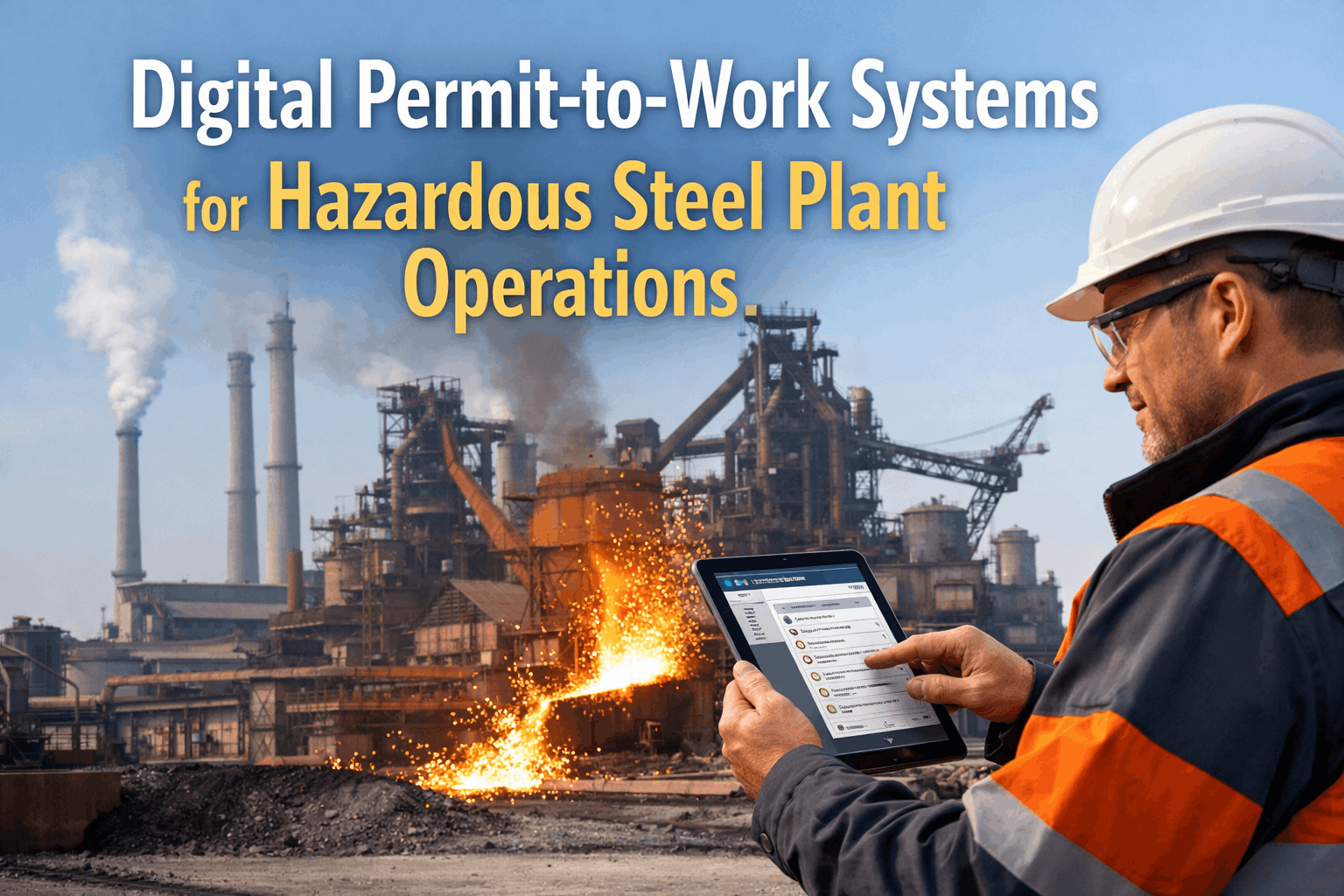
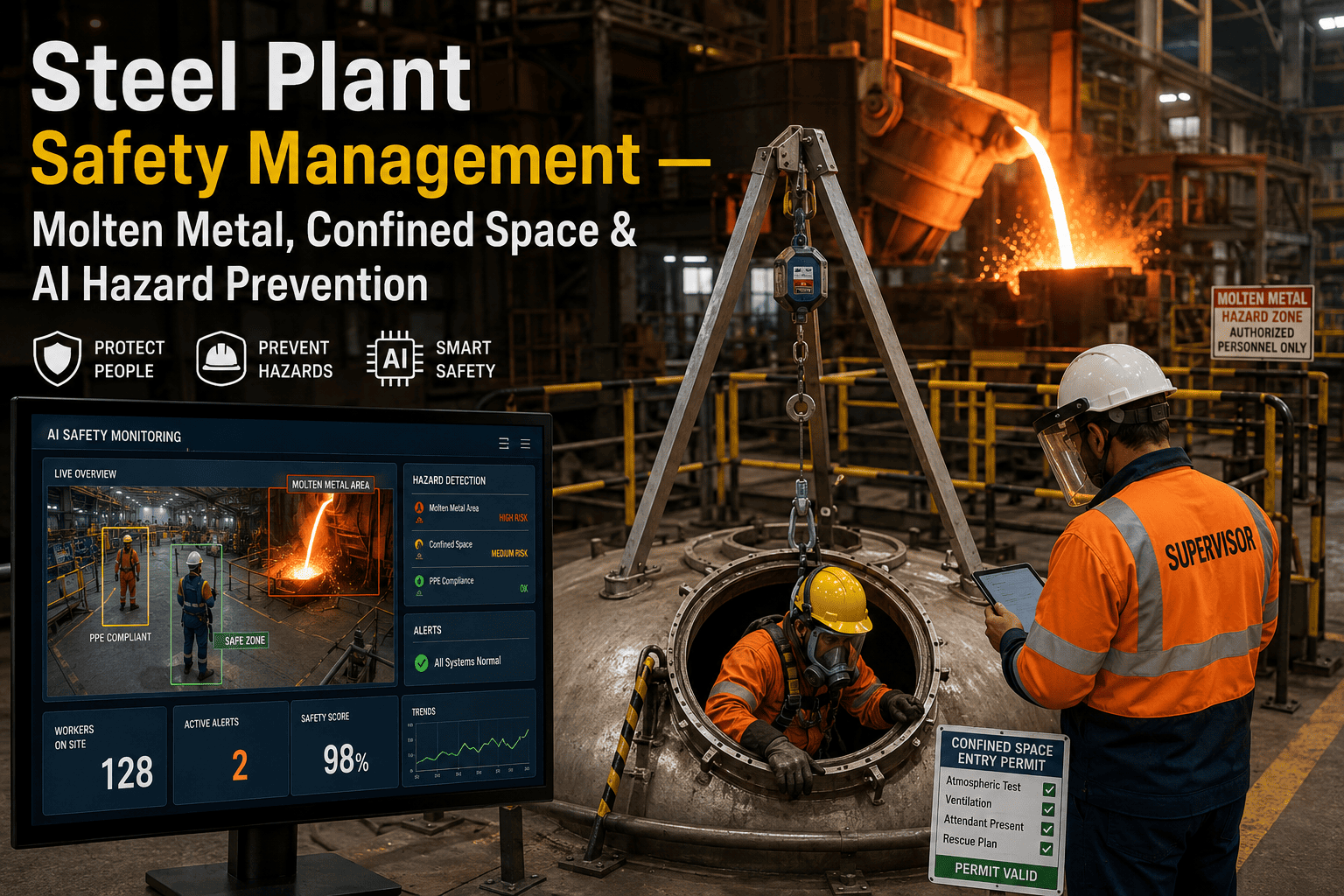
Steel plants are among the most hazardous industrial environments on earth — where workers routinely operate alongside molten metal at 1,600°C, explosive gas atmospheres in coke oven batteries, confined spaces inside blast furnaces and vessels, high-voltage electrical systems, and massive overhead crane loads. Every day, hundreds of non-routine maintenance and operational tasks require formal safety authorization through permit-to-work (PTW) systems — hot work permits near combustible atmospheres, confined space entry permits for vessel inspections, LOTO (lockout/tagout) permits for high-energy isolation, and height work permits on furnace structures. Yet across the global steel industry, the majority of these critical safety authorizations still rely on paper forms, clipboard sign-offs, and manual coordination — creating gaps where permits expire unnoticed, conflicting work activities overlap, atmospheric testing gets missed, and workers enter hazardous zones without verified authorization. OSHA penalties for serious violations now reach $16,131 per instance, with willful violations at $170,735, and steel plants with multiple violations routinely face combined fines exceeding $1 million. OxMaint's digital permit-to-work system eliminates every one of these gaps. Book a free demo and see how digital PTW protects your workforce and your compliance record.
Digital Permit-to-Work Systems for Hazardous Steel Plant Operations
Every Permit. Every Hazard. Every Worker. Digitally Controlled.
In steel manufacturing, a single missed safety authorization can result in a fatality, a regulatory shutdown, or millions in penalties. Digital permit-to-work systems replace paper-based safety management with real-time, mobile-accessible, automatically enforced safety workflows — ensuring every hot work permit, confined space entry, LOTO isolation, and height work authorization is issued, tracked, and closed with full digital audit trails. No expired permits. No conflicting activities. No unauthorized entry into hazardous zones.
Preventable With Training
Confined Space Fatality
Proper PTW Compliance
The Lethal Gaps in Paper-Based Permit-to-Work Systems at Steel Plants
Paper permits don't just create compliance gaps — they create conditions where workers die. Every gap in the paper-based PTW process represents a failure point where a fatality can occur. See how digital PTW eliminates every gap
How Digital Permit-to-Work Works in a Steel Plant Environment
OxMaint's digital PTW system manages the complete permit lifecycle — from request through risk assessment, authorization, active monitoring, and formal closure — with full audit trails at every stage.
Where Digital PTW Protects Your Workforce — Zone by Zone
Steel plants contain dozens of distinct hazard zones, each requiring different permit types and safety protocols. Digital PTW maps every zone and enforces the right controls for each one. See zone-based PTW in your demo
Blast Furnace & Hot Metal Areas — Molten Metal, Explosive Gas, Confined Spaces
Blast furnace operations involve temperatures exceeding 2,000°C, carbon monoxide-rich gas atmospheres, confined spaces inside the furnace shell during shutdowns, and work at heights on the furnace structure. Every maintenance intervention requires multiple permit types simultaneously — confined space entry, hot work, LOTO, and height work. Digital PTW manages these overlapping permits as an integrated safety package, ensuring no single control measure is missed when multiple hazards coexist.
Coke Oven Batteries — Combustible Gas, High Temperature, Chemical Exposure
Coke ovens generate combustible gas atmospheres (coke oven gas contains hydrogen, methane, and carbon monoxide), operate at extreme temperatures, and expose workers to carcinogenic emissions regulated under OSHA 1910.1029. Hot work permits near coke oven batteries require rigorous gas testing protocols. Digital PTW enforces mandatory atmospheric testing verification before any hot work permit can be authorized in coke oven zones — with test results digitally logged and time-stamped. See coke oven PTW controls
Steel Shop (BOF/EAF) — Molten Metal Spills, High Energy, Vessel Entry
Basic Oxygen Furnaces and Electric Arc Furnaces handle violent exothermic reactions with molten metal. Maintenance inside converters and ladles requires confined space entry permits with specific protocols for residual heat, atmospheric hazards, and overhead crane operations. LOTO permits must cover electrical isolation, oxygen/gas supply isolation, and hydraulic system lockout simultaneously. Digital PTW creates linked permit packages that enforce all required isolations before vessel entry is authorized.
Rolling Mills & Reheating Furnaces — Mechanical Energy, High Voltage, Heat
Rolling mills contain massive mechanical energy in rotating equipment, high-voltage drive systems, hydraulic accumulators, and reheating furnaces with gas-fired atmospheres. LOTO procedures are complex — a single rolling mill stand may have 15+ energy isolation points across electrical, hydraulic, pneumatic, and gravity energy sources. Digital PTW ensures every isolation point is documented, verified, and photographed before work authorization proceeds. Explore rolling mill LOTO management
Gas Networks & Utilities — Invisible Killer, Plant-Wide Exposure
Steel plant gas networks carry blast furnace gas (CO-rich), coke oven gas (H₂-rich), and converter gas through miles of pipework at varying pressures. Gas leaks are often invisible and odorless. Any maintenance on gas networks requires specialized permits with mandatory gas detection, breathing apparatus provisions, and exclusion zones. Digital PTW integrates with gas detection systems to provide real-time atmospheric data that automatically suspends active permits if gas levels exceed safe thresholds.
Electrical Systems & Substations — Arc Flash, High Voltage, Stored Energy
Steel plant electrical systems operate at voltages from 415V to 132kV. Arc flash incidents at high-voltage switchgear can be fatal. Electrical work permits require verified isolation, tested dead confirmation, and arc flash boundary calculations. Digital PTW enforces a strict sequence — isolation request, switching confirmation, voltage testing, earthing application — each step requiring digital sign-off before the next can proceed. No shortcuts. No missed steps. See electrical PTW controls live
Paper-Based PTW vs. Digital Permit-to-Work — The Safety Gap
What Makes OxMaint Digital PTW Purpose-Built for Steel Plants
Generic PTW software doesn't understand blast furnaces, coke oven gas, or multi-energy LOTO on rolling mills. OxMaint is built for the specific hazard profile of steel manufacturing. See the platform live
Spatial Conflict Detection Engine
Every permit is tagged to a physical zone within your plant. When a new permit is requested, the system cross-references all active permits in the same and adjacent zones — flagging conflicts between hot work and confined space entry, between crane operations and ground-level work, and between gas network maintenance and any ignition source. Conflicting permits cannot be simultaneously active without explicit safety officer override with documented justification.
Mandatory Safety Gate Enforcement
Digital PTW enforces a strict sequence of safety gates — each step must be completed with documented evidence before the permit advances to the next stage. Incomplete atmospheric test results block confined space authorization. Missing LOTO verification blocks work commencement. Expired worker certifications block permit assignment. No workarounds, no shortcuts, no "we'll fill it in later." The system makes it physically impossible to skip a safety step.
Mobile-First for Field Operations
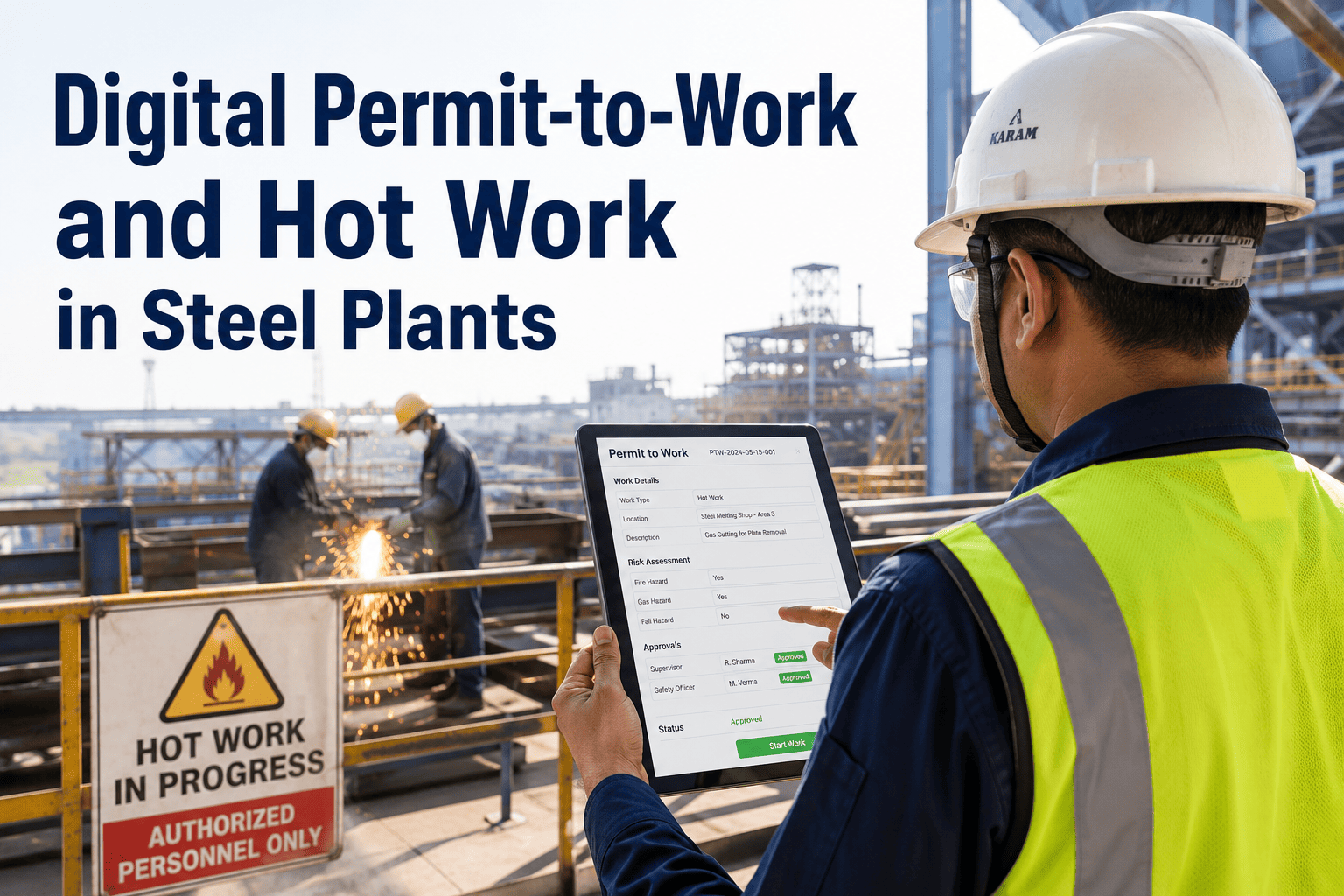
Steel plant safety officers, area supervisors, and maintenance technicians work on the plant floor — not at desktop computers. OxMaint's mobile app works on smartphones and tablets with offline capability for areas with poor connectivity. Permits are requested, approved, monitored, and closed from the field. Photo documentation of isolations, atmospheric test results, and site conditions is captured directly through the app and attached to the permit record.
CMMS Integration — Permits Linked to Work Orders
Every permit-to-work is linked to its corresponding maintenance work order in OxMaint CMMS. When a work order is created for blast furnace tuyere replacement, the system automatically identifies required permit types (confined space, hot work, LOTO, height work) and initiates the PTW workflow. Permit status is visible on the work order — maintenance cannot proceed until all required permits are active and valid. This closes the gap between maintenance planning and safety execution.
The Business Case for Digital PTW in Steel Plants
Digital permit-to-work delivers measurable returns across safety performance, regulatory compliance, operational efficiency, and financial risk reduction.
| Impact Area | Paper-Based PTW | OxMaint Digital PTW | Improvement |
|---|---|---|---|
| Safety Incidents | Permit gaps cause near-misses & injuries | Enforced safety gates, zero shortcuts | 42% incident reduction |
| OSHA Compliance | Missing records, $1M+ combined fines | Complete audit trails, instant retrieval | 100% audit readiness |
| Permit Processing Time | 30–60 min per permit with paper chase | Mobile request → approval in minutes | 70% faster processing |
| Shutdown Safety Coordination | 500+ permits on paper during shutdowns | Digital dashboard, real-time conflict map | Zero permit conflicts |
| Worker Qualification Gaps | Expired certifications go unnoticed | Auto-verification blocks unqualified workers | 100% workforce compliance |
| Liability Exposure | $1.6M avg cost per confined space fatality | Enforced atmospheric testing & entry protocols | Documented duty of care |
Let our steel plant safety specialists show you how digital PTW eliminates compliance gaps and protects your workforce. Get your free safety compliance assessment
Deploy Digital PTW Without Disrupting Production — Your Roadmap
Digital PTW deploys alongside your existing operations — no shutdowns, no IT overhauls. Get a deployment timeline scoped to your plant.
| Phase | Focus Area | Timeline | Key Deliverables | Safety Win |
|---|---|---|---|---|
| 01 Configure | Zone mapping, permit templates, approval workflows | Weeks 1–2 | Digital permit templates, zone hierarchy | Conflict detection active |
| 02 Integrate | CMMS linkage, worker qualification database | Weeks 3–4 | WO-permit linking, cert tracking live | Auto-qualification checks |
| 03 Train & Launch | Safety officer, supervisor & technician training | Weeks 5–6 | Mobile app deployed, all users trained | Paper-free PTW operations |
| 04 Optimize | KPI dashboards, analytics, continuous improvement | Month 3+ | Safety KPI reporting, trend analysis | Data-driven safety culture |
Every Permit Type & Hazard Category Managed
OxMaint digital PTW covers every permit type required for steel plant operations — from routine hot work to complex multi-energy isolations. See all permit types in a demo
Everything You Need to Know About Digital PTW for Steel Plants
What is a digital permit-to-work system and why do steel plants need one?
A digital permit-to-work system replaces paper-based safety authorization forms with mobile-accessible, electronically managed workflows that control hazardous work activities. Steel plants need digital PTW because they operate multiple extreme hazard types simultaneously — molten metal, explosive gas, confined spaces, high voltage, and work at heights — often in adjacent zones where permit conflicts can be fatal. Digital PTW provides automatic conflict detection, mandatory safety gate enforcement, real-time permit monitoring, and complete audit trails that paper systems fundamentally cannot deliver. Book a demo to see the difference.
What types of permits does the system manage?
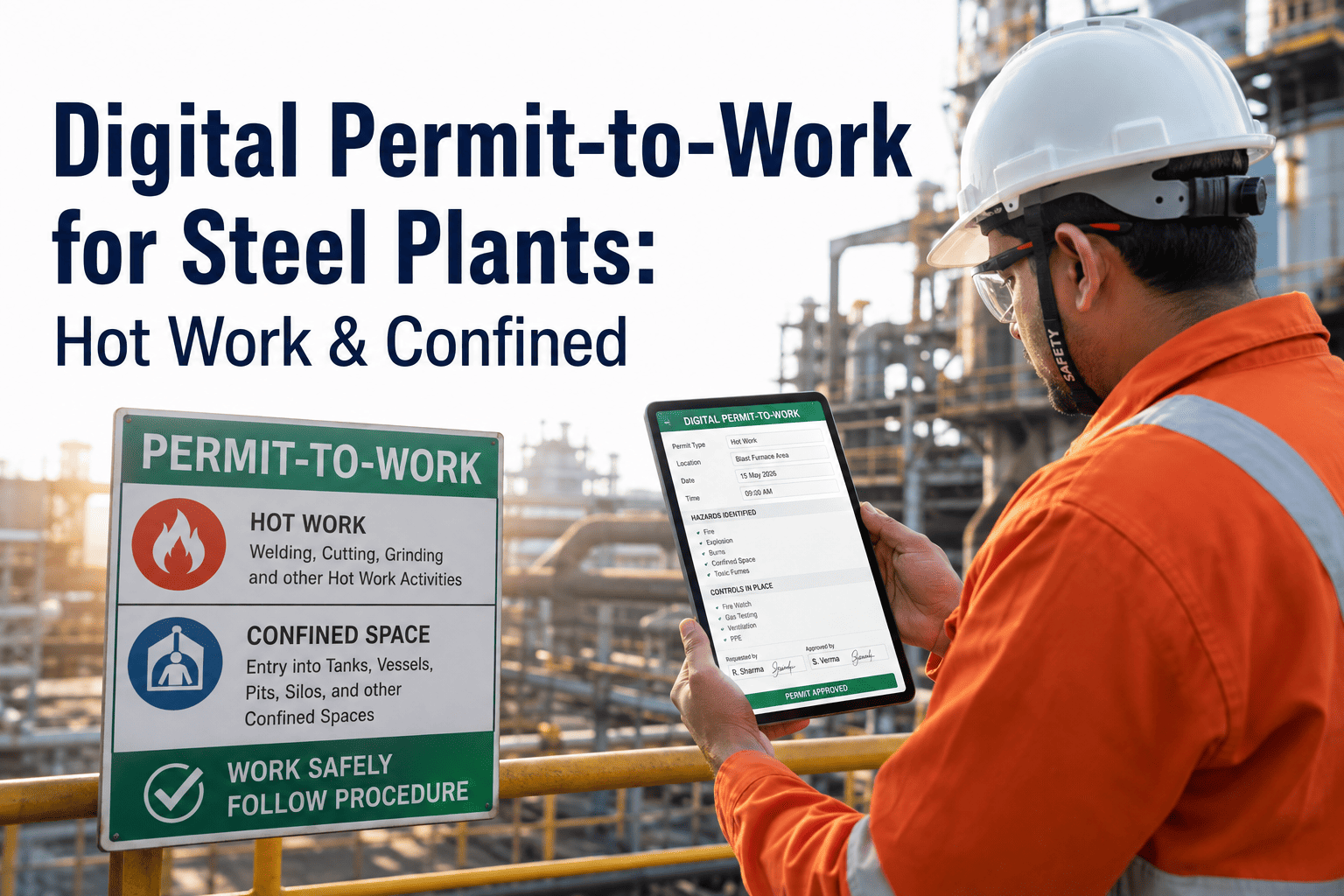
OxMaint manages all standard permit types required in steel plant operations: hot work permits (welding, cutting, grinding near combustible atmospheres), confined space entry permits (vessels, tanks, furnace interiors), LOTO/energy isolation permits (electrical, hydraulic, pneumatic, gas, gravity), work at height permits (scaffolding, furnace structures), electrical work permits (high-voltage switching, arc flash zones), excavation permits, crane and lifting operations permits, gas network maintenance permits, chemical handling permits, and contractor work permits. Each permit type has configurable templates with steel-specific hazard checklists. See all permit types in your demo
How does conflict detection work between simultaneous permits?
Every permit is tagged to a physical zone within your plant. When a new permit request is submitted, the system instantly cross-references all currently active permits in the same zone and adjacent zones. It checks for incompatible activity combinations — hot work cannot coexist with confined space entry in the same area, crane operations exclude ground-level work beneath the load path, gas network maintenance excludes all ignition sources within the exclusion radius. Conflicting permits are flagged before authorization and cannot proceed without explicit safety officer override with documented justification.
Can the system enforce mandatory safety steps that cannot be skipped?
Yes — this is the core value of digital PTW over paper. The system enforces mandatory safety gates at each stage of the permit lifecycle. Atmospheric test results must be entered and within safe limits before confined space entry is authorized. Every LOTO isolation point must be individually documented with photo evidence before work authorization proceeds. Worker certifications are auto-verified against the qualification database — expired certifications block permit assignment. Incomplete mandatory fields block the permit from advancing. The system makes it physically impossible to skip a safety step. See safety gate enforcement live
How does digital PTW handle large-scale shutdown events with hundreds of permits?
Steel plant shutdowns can involve 500–2,000 individual work orders with hundreds of concurrent permits across multiple hazard zones. OxMaint provides a real-time shutdown dashboard showing every active permit by zone, type, and status — with visual conflict mapping that prevents dangerous overlaps. Permit coordinators see the entire shutdown safety picture from a single screen. Expiring permits trigger automatic alerts. Shift handovers include complete active permit status. No permit gets lost, forgotten, or overlooked in the complexity of a major shutdown event.
Does the mobile app work in steel plant environments with poor connectivity?
Yes. OxMaint's mobile app is designed for harsh industrial environments with inconsistent connectivity. The app works fully offline — permits can be requested, safety checks completed, photos captured, and approvals processed without an internet connection. Everything syncs automatically when connectivity returns. The app is designed for use with gloves, in bright sunlight, and on ruggedized devices suited to steel plant conditions. See the mobile experience in your demo
How does this help with OSHA compliance and audits?
Digital PTW produces complete, timestamped, searchable audit trails for every permit ever issued — including who requested it, who approved it, what safety checks were completed, what atmospheric test results were recorded, which isolation points were verified, and when the permit was formally closed. When an OSHA inspector asks for confined space entry records or LOTO documentation, you retrieve them in seconds instead of searching filing cabinets. Steel plants using digital PTW report audit preparation time dropping from weeks to hours.
How long does implementation take and does it disrupt production?
Most steel plants go from initial configuration to fully operational digital PTW in 6 weeks with zero production disruption. Zone mapping and permit template configuration takes 2 weeks. CMMS integration and worker qualification database setup takes 2 weeks. Training and go-live takes 2 weeks, with paper and digital systems running in parallel during the transition period. By Month 3, the system is fully optimized with safety KPI dashboards and trend analytics driving continuous improvement. Get your deployment timeline
Every Paper Permit Is a Safety Gap. Close Them All — Digitally.
Your steel plant workforce faces extreme hazards every shift. Paper-based permit systems create the gaps where fatalities, injuries, and regulatory violations occur. Let our steel plant safety specialists show you how digital PTW eliminates every gap — in a free, no-obligation 30-minute demo tailored to your specific plant hazards and operations.
-for-steel-plants-digital-compliance-framework.png)

