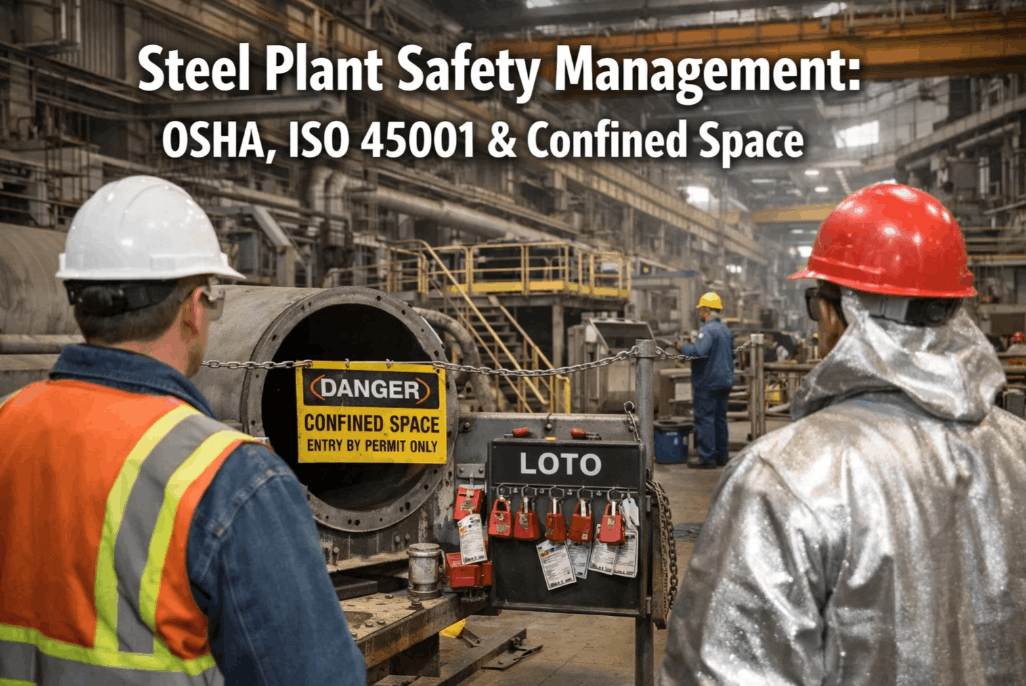
Confined space fatalities are among the most preventable deaths in industrial settings — and steel plants are among the highest-risk environments for confined space incidents. Blast furnace interiors, hot metal runners, ladle pits, underground cable tunnels, sinter plant hoppers, cooling tower basins, and storage tanks all qualify as permit-required confined spaces under OSHA 29 CFR 1910.146 and equivalent regulations across the UK (PUWER/ACOP L101), Germany (DGUV), and Australia (WHS Regulations). In a steel plant with hundreds of confined spaces and thousands of entry events per year, managing permits on paper — with handwritten entry logs, manual atmospheric checks, and radio-based rescue coordination — creates unacceptable gaps between what the permit says and what is actually happening inside the space. iFactory's Digital Permits and Safety Monitoring platform closes these gaps with real-time permit management, live atmospheric monitoring integration, and digital entrant tracking across every confined space in the plant.
Steel Plant Confined Space Entry Management: Digital Permit & Safety Monitoring
Complete digital CSE permit lifecycle — atmospheric monitoring integration, real-time entrant tracking, rescue plan management, and audit-ready documentation across every confined space.
Every Confined Space Type in a Steel Plant — And the Specific Hazards
Steel plants contain more confined space types than almost any other industry — each with distinct atmospheric, thermal, and mechanical hazards. Schedule a confined space inventory assessment to ensure every PRCS in your plant is classified, registered, and covered by iFactory's digital permit system.
Blast Furnace Interior
Highest-risk CSE in steel. Entry during relining requires maximum isolation, 4-gas monitoring, SCBA, and continuous buddy checks. Rescue plan must be pre-positioned.
Ladle Pit / Hot Metal Runner
Entry for refractory work requires cooling period verification, oxygen monitoring, and full thermal PPE. Atmospheric confirmation required before every entry event.
Underground Cable / Gas Tunnels
Continuous gas monitoring required throughout entry. Fixed detectors at entry point plus portable 4-gas monitor for every entrant. Ventilation mandatory before entry.
Sinter Plant Hoppers / Bins
Full isolation of all feeding conveyors and discharge gates before entry. Entrant harness and retrieval line mandatory. Standby person must maintain visual contact.
Cooling Tower Basin
Chlorine and biocide exposure risk. Water removal and ventilation prior to entry. PPE includes chemical-resistant suit and respiratory protection.
Gas Holder / Storage Vessels
Full purge and nitrogen inerting verification before entry. Continuous 4-gas monitoring. Hot work strictly prohibited. Emergency extraction fan mandatory at entry.
How iFactory Manages the Complete CSE Permit Lifecycle
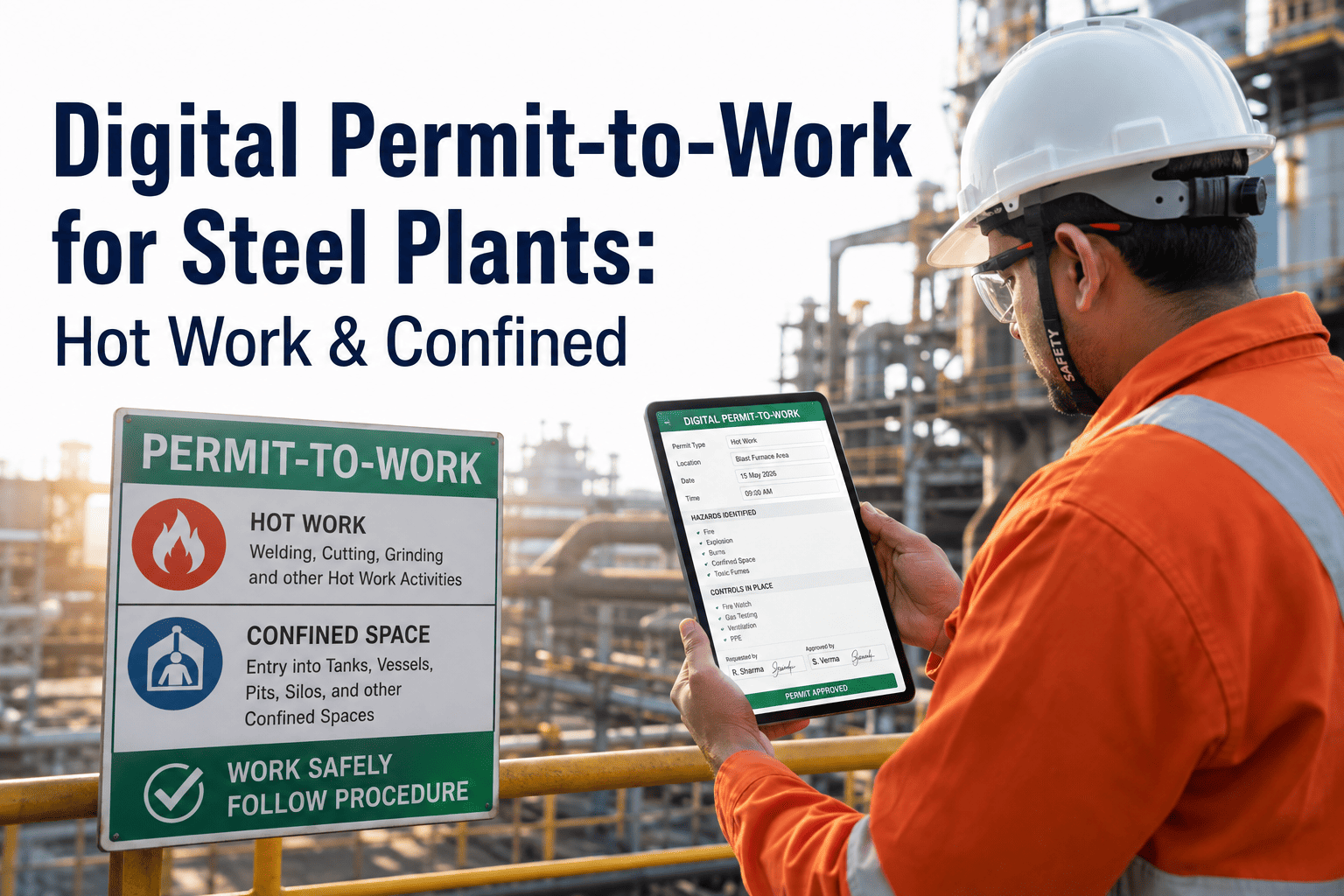
iFactory replaces paper permits with a fully digital CSE system — from space hazard register to permit issue to live atmospheric monitoring to rescue plan activation to permit close-out. Every step is timestamped, photo-evidenced, and stored for audit. Talk to our safety compliance team about configuring iFactory for your specific confined space inventory.
Supervisor selects the confined space from iFactory's digital hazard register — pre-populated with space classification, historical atmospheric data, isolation requirements, and required PPE.
4-gas monitor readings (O₂, CO, H₂S, LEL) logged directly into the digital permit — with pass/fail auto-check against iFactory's configurable thresholds per space type. Entry blocked if any reading fails.
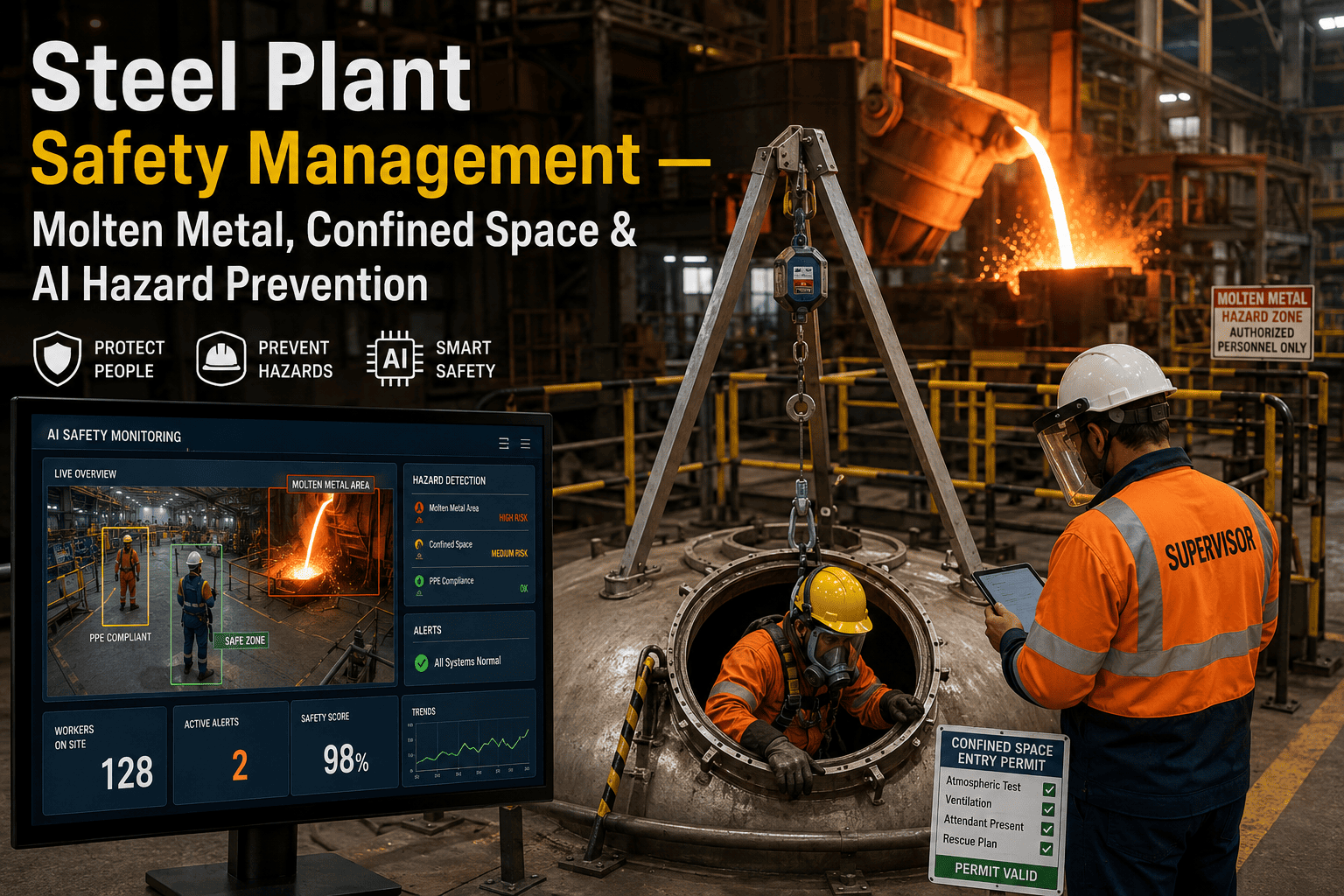
Every entrant scanned in on entry — name, role, entry time, PPE checklist confirmed. Standby person registered digitally. iFactory dashboard shows every person inside every active confined space in the plant, in real time.
Fixed CEMS and personal gas monitor readings fed to iFactory dashboard. If any atmospheric reading exceeds safe limits during entry, all entrants are immediately alerted via standby person notification and supervisor mobile alert.
Exit scan confirms all entrants have exited. Supervisor digitally closes the permit. Full entry record — all atmospheric readings, entrant names, times, PPE used — auto-archived for OSHA audit in iFactory's compliance record.
Confined Space Entry Checklist — All Captured Digitally by iFactory
Every item in a OSHA 29 CFR 1910.146 or UK ACOP L101 confined space entry procedure is captured digitally — with photo evidence, timestamps, and automatic permit block if any item fails.
- Space isolated — all energy sources LOTO'd
- Atmosphere tested — O₂, CO, H₂S, LEL logged
- Ventilation operational — confirmed before entry
- Rescue equipment positioned at entry point
- Entry permit issued and authorised digitally
- Entry supervisor assigned and signed off
- Attendant / standby person registered
- All entrants trained — CSE, rescue, gas monitor
- Rescue team identified and available
- Emergency services contact confirmed
- Atmospheric readings logged every 30 min
- Periodic entrant check-in confirmed by standby
- Exit count matches entry count — all out confirmed
- Permit closed and archived — supervisor sign-off
- Space re-secured — isolation points restored
Before vs. After — Confined Space Safety at a 5,000-Employee Steel Plant
Results from an integrated steel plant in Australia after 14 months on iFactory Digital Permits and Safety Monitoring. Verified by EHS leadership and external WHS compliance audit.
What an EHS Manager Said
Before iFactory, I had no way to know at any given moment how many people were inside confined spaces across the plant. Now I can see it on my phone in real time. When our WHS auditor asked to see the last 12 months of confined space entry records, I exported them in 4 minutes. He said that was the most complete CSE documentation he'd seen in 20 years of auditing steel plants.
Frequently Asked Questions
How does iFactory track entrants inside confined spaces in real time?
Entrants are registered via QR code scan at the entry point on entry and exit. The iFactory dashboard shows every person inside every active confined space plant-wide — updated in real time as people enter and exit.
Can iFactory integrate with gas detection equipment for atmospheric monitoring?
Yes. iFactory integrates with fixed CEMS detectors and major portable gas monitor brands via Bluetooth or direct data export — automatically logging readings to the digital permit and alerting supervisors if limits are exceeded.
Does iFactory block permit issue if pre-entry checks are incomplete?
Yes. The digital permit system requires all mandatory pre-entry steps — atmospheric test, LOTO confirmation, PPE check, rescue plan — to be completed before the permit is issued. Incomplete permits cannot be approved.
How does iFactory support rescue plan management?
Rescue plans are stored digitally per confined space — pre-populated with rescue team contacts, equipment location, and emergency services numbers. The standby person can activate the rescue plan from their mobile device in a single tap.
Is the confined space permit data accepted for OSHA and WHS compliance audits?
Yes. All permit records — atmospheric readings, entrant names, entry/exit times, supervisor sign-off — are archived with full audit trail in iFactory. Exported in PDF or CSV format for any compliance audit requirement.
See Digital CSE Permits Live on Your Plant
Demo built around your confined space inventory and permit requirements.

-for-steel-plants-digital-compliance-framework.png)