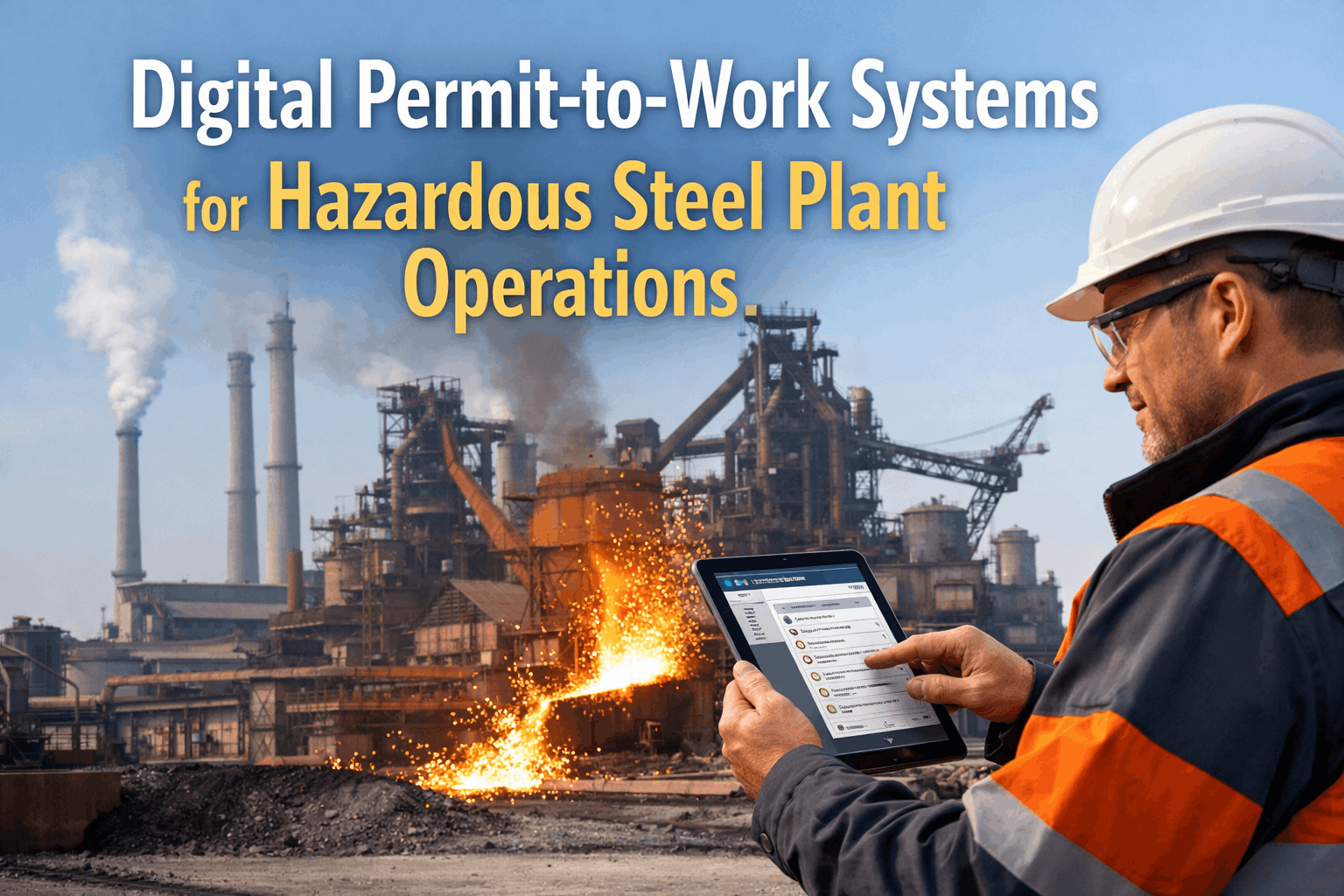
Achieving zero Lost Time Incidents for 365 consecutive days is not an accident — it is the result of systematic change in how safety is managed, measured, and acted upon every single shift. A 4,200-employee integrated steel plant in western India had a Lost Time Incident Frequency Rate (LTIFR) of 1.84 per million man-hours worked — nearly double the global steel industry best-practice benchmark of 1.0 — when they began their safety transformation with iFactory. Over 18 months, by replacing paper permits with digital workflows, introducing mobile near-miss reporting, deploying AI camera monitoring at high-risk zones, and creating a daily safety KPI dashboard visible to every level of management, the plant eliminated Lost Time Incidents entirely — maintaining a zero-LTI record for 14 consecutive months while simultaneously reducing their Total Recordable Incident Rate by 76%.
How Digital Safety Management Achieved Zero LTI for 365 Days at a Steel Plant
4,200-employee integrated steel plant · 18-month safety transformation · LTIFR 1.84 → 0.00 · verified by third-party safety audit.
Before the Transformation: LTIFR 1.84 and a Safety System Held Together by Paper
The plant's safety challenges were not unique — they were systemic. Paper permits were filled in after the fact. Near-misses went unreported because the reporting process took 45 minutes on paper forms. Safety inspections were completed on schedule in the records, but not always in reality. Schedule a safety system assessment to identify where your plant has the same gaps.
Four Changes That Eliminated Lost Time Incidents in 18 Months
The zero-LTI result was driven by four simultaneous changes — each addressing a specific systemic gap in the existing safety management system. None alone would have achieved the result. Together, they changed the safety culture at every level of the plant.
Digital Permit-to-Work — All 1,200+ Permits per Month
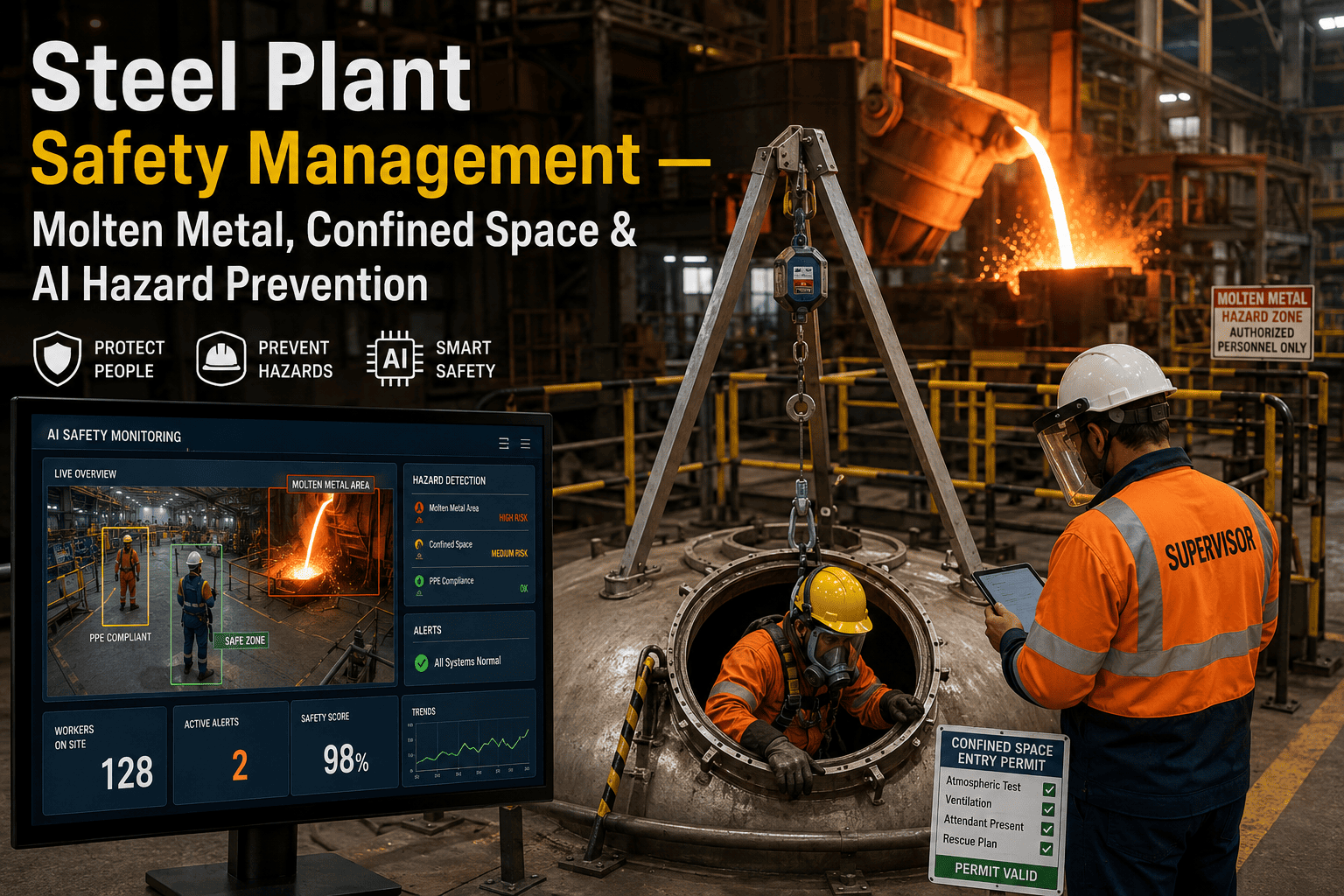
Every permit — confined space, hot work, LOTO, working at height, electrical isolation — moved to iFactory's digital system. Permits geo-stamped, time-locked, and blocked if any pre-task check failed. Backdating became impossible. Permit completion rate went from 61% to 99% in 6 weeks.
Mobile Near-Miss Reporting — 2 Minutes, Any Device
Paper near-miss forms replaced with a 2-minute mobile report. Hazard category pre-selected, photo attached, location GPS-tagged. Near-miss reports increased 14× in the first quarter — revealing systemic hazards that the paper system had completely hidden from management.
AI Camera Safety Monitoring at 24 High-Risk Zones
AI cameras deployed at EAF tap floor, molten metal bays, BF cast house, slag pits, confined space entries, and crane travel paths. PPE violations, zone intrusions, and unsafe acts detected in real time — supervisor alerted within 30 seconds. Camera alerts replaced reactive incident investigation with proactive intervention.
Daily Safety KPI Dashboard — Visible to Every Manager
Every safety KPI — permit completion, near-miss count, overdue inspections, open corrective actions, PPE violation trend — visible on a live dashboard updated every shift. MD and department heads received a daily 7am safety summary. Leadership visibility changed accountability at every level.
LTIFR Month-by-Month — From 1.84 to Zero in 18 Months
Each quarter brought a measurable reduction as the four iFactory modules progressively took effect. The zero-LTI milestone was first achieved at Month 9 — and maintained for every subsequent month through the end of the case study period.
Complete Safety Performance — Before vs. After 18 Months on iFactory
All metrics verified by the plant's third-party safety auditor and management leadership at Month 18. Results cover all 4,200 employees across all production departments.
What the Managing Director Said
Before iFactory, my safety report every Monday told me what had already gone wrong the previous week. Now my safety dashboard tells me — at 7am every morning — how many near-misses were reported yesterday, how many corrective actions are overdue, and whether any high-risk permits had exceptions. The shift from lagging to leading indicators is what drove the zero-LTI result. Safety went from something we investigated to something we managed.
Frequently Asked Questions
Why did near-miss reporting increase 14× after iFactory — were there suddenly more hazards?
No — the hazards were always there. The 2-minute mobile report removed the barrier of a 45-minute paper process. More near-misses captured meant more systemic hazards identified and corrected before they became incidents.
How did daily safety KPI visibility change leadership behaviour?
Department heads could see their area's overdue corrective actions and permit exceptions in real time. When leadership could see it, they acted. Corrective action close rate went from 43% to 97% within three months of the dashboard going live.
How was the zero-LTI result independently verified?
The plant's third-party safety auditor (Bureau Veritas) verified the LTIFR calculation at Month 18 using iFactory incident data cross-checked against HR absence records and medical treatment logs. The zero-LTI result was confirmed as accurate.
How long did it take to see measurable improvement after deploying iFactory?
Near-miss reporting improvement was immediate — from Day 1 of mobile forms. Permit completion rate reached 99% by Week 6. Measurable LTIFR reduction was visible at the end of Q1 (Month 3). Zero-LTI was first achieved at Month 9.
Can iFactory's safety system work for plants with multi-language workforces?
Yes. iFactory supports multi-language interfaces including Hindi, Gujarati, Telugu, Tamil, Arabic, and English — with permit forms, safety checklists, and near-miss reports available in the worker's preferred language.
See What Digital Safety Management Can Do for Your Plant
Demo built around your current safety KPIs, incident history, and permit volumes.

-for-steel-plants-digital-compliance-framework.png)