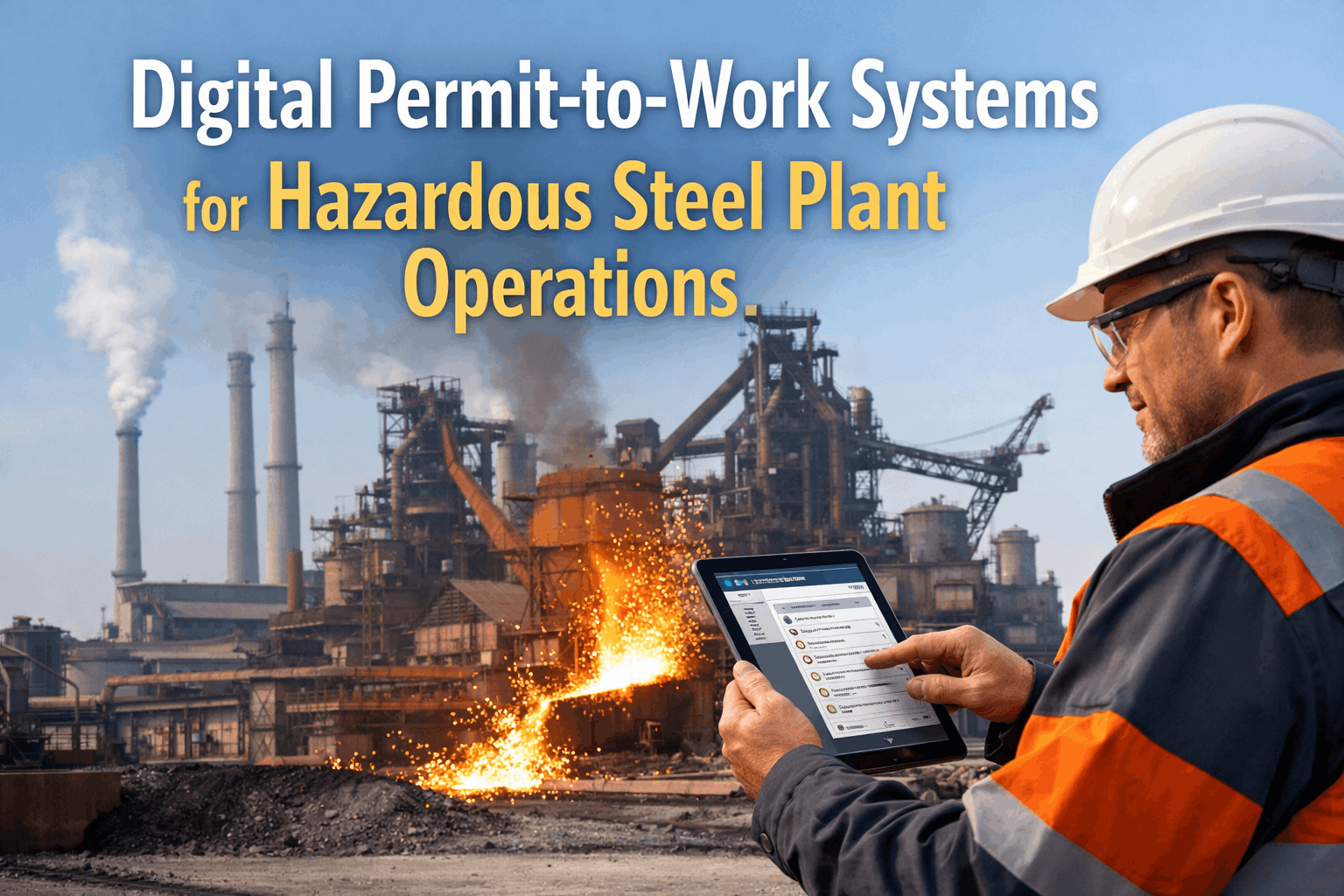
A steel plant issues dozens of work permits before a single shift is halfway through — hot work on a header pipe, confined space entry into a pickling tank, lockout on a rolling mill drive, a fall-protection sign-off on a gantry walkway. Each of these permits exists because a specific worker died doing that specific task somewhere else first, and the paperwork was written afterward to make sure it did not happen again. The trouble is that paper and clipboard systems decay under the exact pressure they were built to withstand — a shift change, a missing supervisor, a permit that quietly expires while the work underneath it keeps going. iFactory replaces that decay with a digital permit-to-work system that enforces sequence, expiry, and authorization automatically, across hot work, confined space, energy isolation, and work at height.
Safety Analytics · Permit-to-Work
One Digital Permit System for Every High-Risk Task on the Floor
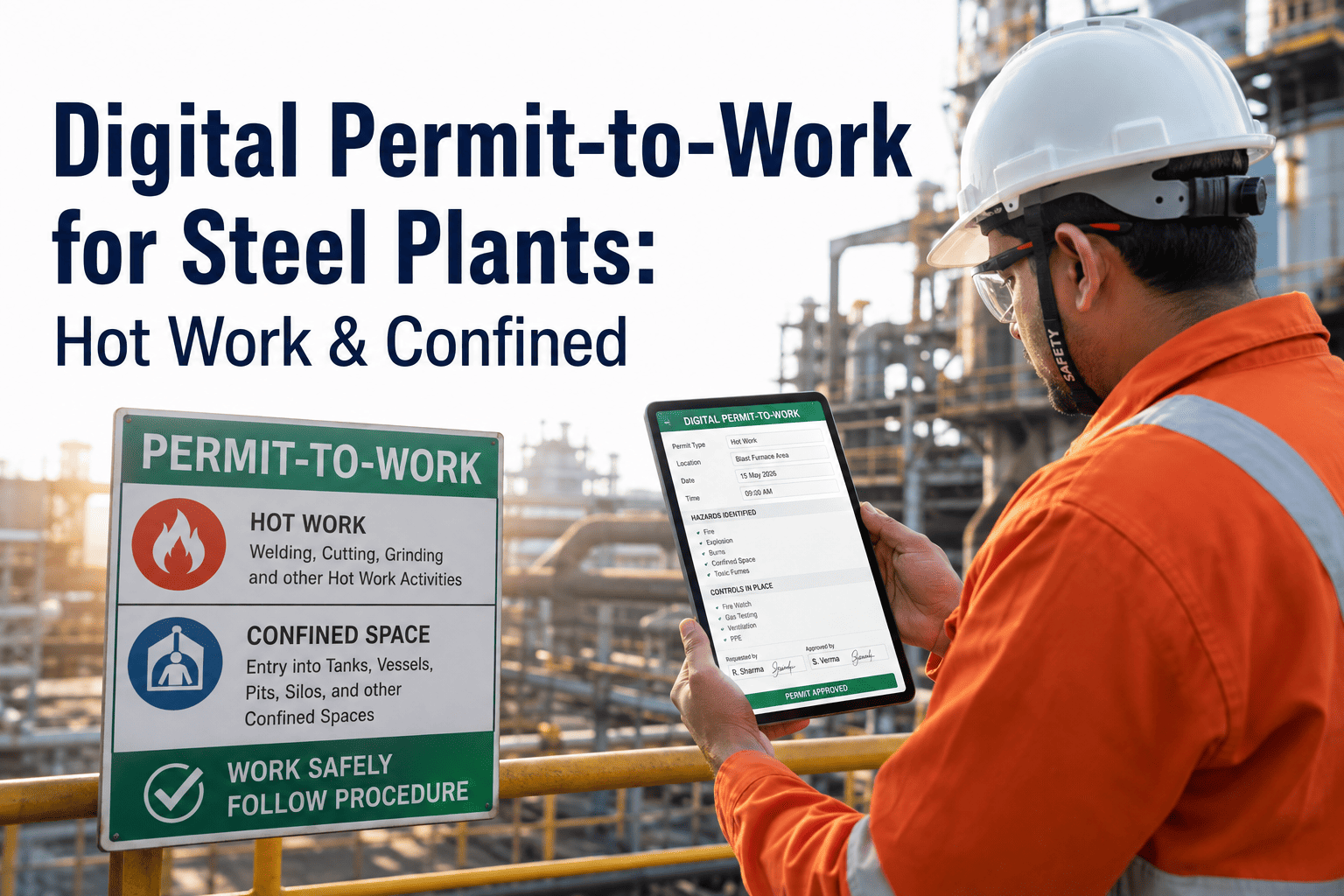
Hot work, confined space entry, energy isolation, and working at heights each carry their own approval chain, their own hazard checks, and their own failure history. iFactory runs all four through a single enforced digital workflow so no permit goes live without every step actually completed.
Why This Is Not Paperwork
The Cost of a Permit Step That Gets Skipped
Permit-to-work requirements exist because the underlying tasks are among the most dangerous work performed in any plant. The figures below, drawn from OSHA and Bureau of Labor Statistics reporting cited across current industry safety analysis, describe why hot work, confined space entry, and lockout compliance carry some of the strictest documentation requirements in general industry — and why enforcement, not just the existence of a written policy, is what determines whether a permit protects anyone.
4+
Deaths per 1,000 workers over a career in welding, cutting, and brazing roles
1,030
Confined space fatalities recorded by BLS across a recent nine-year period
60%+
Of confined space deaths are untrained rescuers, not the original entrant
2,554
Lockout/tagout citations issued industry-wide in a single recent year
120
Estimated deaths prevented annually where LOTO is followed correctly
$170K+
Maximum penalty per willful OSHA violation tied to permit failures
Risk Concentration
Where Permit Failure Actually Puts People at Risk
Not every permit category carries the same downstream risk when a step is skipped. The chart below sets the share of fatalities or citations tied to each failure pattern side by side, which is why hot work, confined space, and lockout enforcement get the strictest digital controls in the workflow below.
Confined space deaths that are untrained rescuers
Confined space fatalities involving contractor crews
LOTO's rank among most-cited OSHA standards
Hot work fatality risk relative to general industry average
Where Paper Systems Break
Five Points Where a Clipboard Permit Quietly Stops Protecting Anyone
Every plant that runs paper or hybrid permit systems has watched the same failure pattern repeat. It is rarely a single dramatic mistake — it is a sequence of small gaps that stack until the permit on the clipboard no longer describes the actual state of the job. Understanding where those gaps form is what makes the case for enforcement software rather than another laminated form.
1
Shift handover drops the permit
The outgoing supervisor briefs the incoming one verbally, the physical permit stays in a drawer, and the new shift either re-issues from memory or assumes the job is still authorized when conditions have already changed.
2
Expiry is tracked by memory, not by system
A hot work permit valid for one shift is still taped to the panel three shifts later because nobody was assigned to pull it down, and the fire watch requirement that expired with it goes unnoticed.
3
Isolation points get signed off before they are verified
A lockout checklist gets initialed as complete because the pattern is familiar, not because every energy source on that specific asset was actually isolated and tested that day.
4
Concurrent permits on the same equipment go unnoticed
A confined space entry is authorized in a vessel while a separate crew is issued a hot work permit on the line feeding that same vessel, and nothing in a paper system cross-checks the two before both proceed.
5
The audit trail exists only if nothing goes wrong
After an incident, investigators need to reconstruct who approved what and when — and a stack of paper forms with illegible timestamps is a poor foundation for that reconstruction, regulatory or internal.
From Policy to Enforcement
A Permit Should Not Be Valid Just Because It Was Signed
iFactory ties every permit to live conditions — isolation verification, gas readings, fire watch presence, and time expiry — so a permit that should no longer be active cannot silently keep authorizing work.
Four Permit Classes, One System
The High-Risk Work Categories Every Steel Plant Runs Daily
Hot work, confined space entry, energy isolation, and working at heights each have a distinct regulatory basis and a distinct hazard profile, but they overlap constantly on a real job — a vessel entry that also requires lockout of an agitator, a hot work task performed from an elevated platform. A digital system built for one category in isolation misses these overlaps. iFactory issues all four from the same permit engine so cross-permit conflicts are caught automatically rather than left to whoever happens to notice.
Hot Work
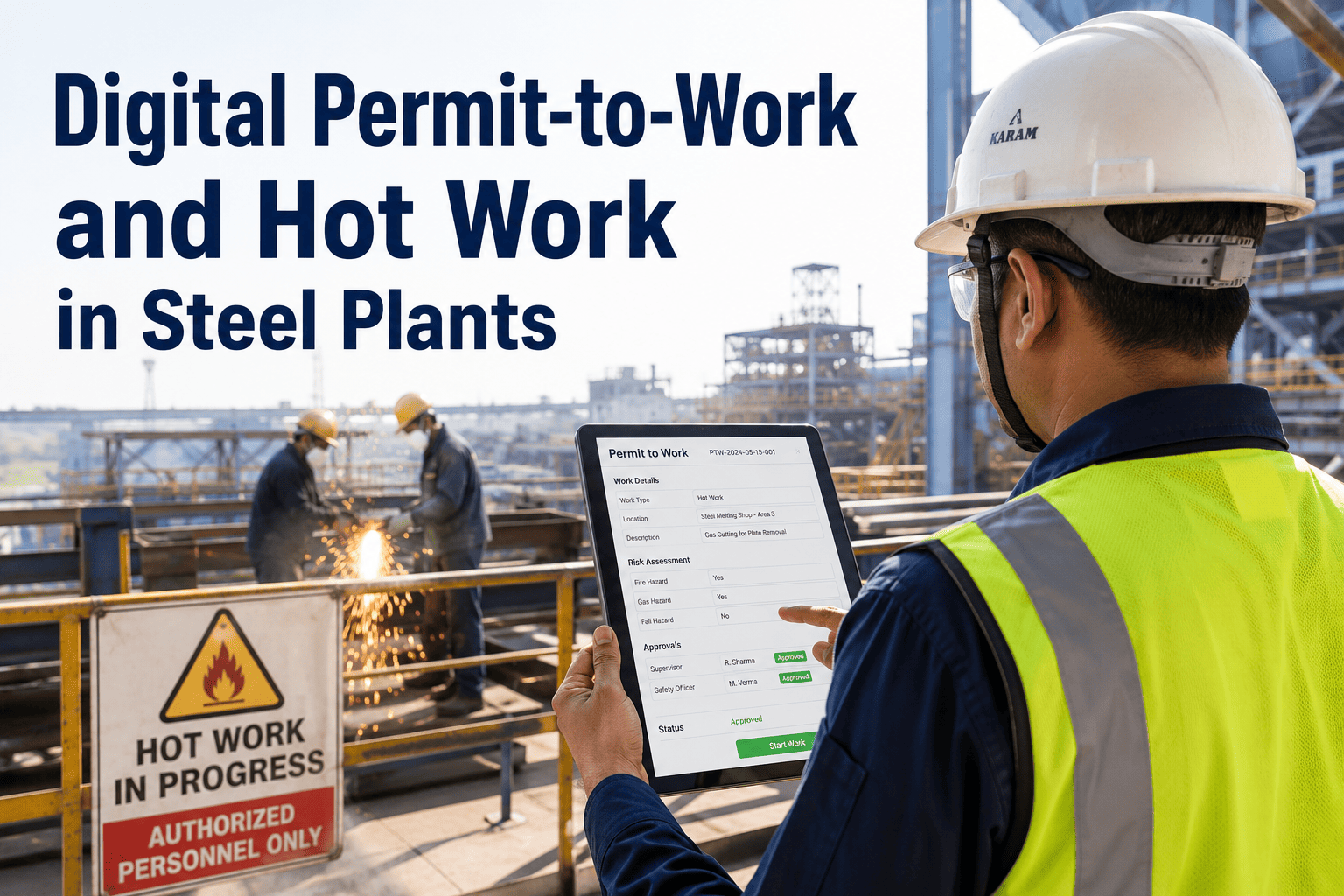
Welding, cutting, grinding, and brazing near combustible material or in confined structural steel. Requires area survey, fire watch assignment, and post-work monitoring under standards such as 29 CFR 1910.252 and NFPA 51B.
Confined Space Entry
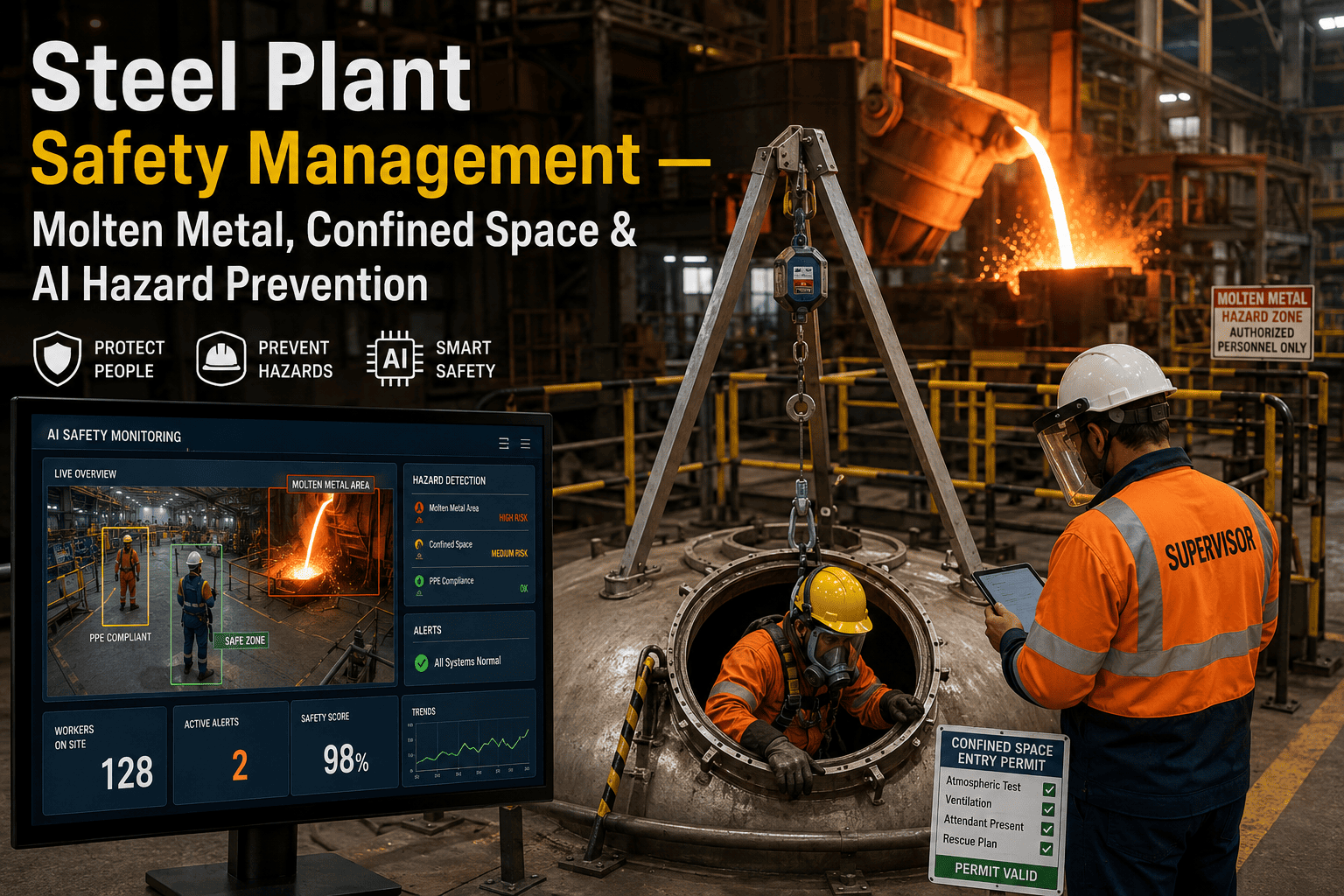
Entry into vessels, pits, ladles, and tanks with restricted egress and potential atmospheric hazard. Governed by 29 CFR 1910.146, requiring atmospheric testing, attendant assignment, and a documented rescue plan before entry.
Energy Isolation
Lockout and tagout of electrical, hydraulic, pneumatic, and stored-energy sources before maintenance. Governed by 29 CFR 1910.147, one of the standards most frequently cited in general industry inspections.
Working at Heights
Work performed on gantries, furnace platforms, roof structures, and scaffolds above standard fall-protection thresholds. Requires anchor point verification, harness inspection, and rescue plan documentation before access is granted.
The Digital Workflow
Seven Stages Between a Work Request and an Active Permit
A digital permit is not a PDF version of the paper form — it is a workflow where each stage has to be completed by the responsible role before the next stage becomes available. This is what removes the possibility of a permit reaching the floor with a step quietly skipped, because the system will not generate an active permit until every prior stage carries a verified sign-off.
01
Work Request Logged
Requesting supervisor submits the task, location, and equipment involved, automatically flagging which permit types apply based on the work description.
02
Hazard Identification
System pulls known hazards tied to that specific asset and location from prior incident and inspection history, surfacing them before the permit is drafted.
03
Isolation and Precondition Checks
Lockout points, atmospheric readings, fire watch assignment, and barricade placement are entered and time-stamped by the field team performing them.
04
Cross-Permit Conflict Check
The system checks active and pending permits on the same equipment or adjacent zones, blocking issuance if a conflicting task is already authorized.
05
Authorization
Designated approvers sign off digitally, with role-based permission ensuring only qualified personnel can authorize each specific permit category.
06
Active Monitoring
Permit status is visible in real time to the crew, supervisor, and safety office, with automatic expiry countdown and renewal prompts before the window lapses.
07
Closeout and Record
Permit closure requires field confirmation the area is restored and hazards cleared, and the complete timestamped record is archived for audit.
Regulatory Alignment
How the Digital Permit Maps to the Standards Auditors Check
Inspectors and internal auditors are ultimately checking whether the paperwork reflects what actually happened on the floor. A digital system's advantage is that its record is generated by the actions taken, not typed up afterward from memory — which changes the quality of what an auditor is reviewing.
29 CFR 1910.252
Welding, Cutting, and Brazing
Requires area surveys and fire watch for hot work outside designated areas. Digital permits log survey completion and fire watch assignment against the specific timestamp of the work.
29 CFR 1910.146
Permit-Required Confined Spaces
Requires atmospheric testing, attendant assignment, and rescue planning before entry. The digital permit will not activate without all three logged and current.
29 CFR 1910.147
Control of Hazardous Energy (LOTO)
Requires verified isolation of every energy source before work begins. Field-entered lock and tag data ties directly to the specific asset's isolation points on record.
29 CFR 1926.501
Fall Protection Duty to Have
Requires fall protection above the applicable height threshold. Height-work permits capture anchor point verification and harness inspection before floor access is granted.
Where This Belongs
Facilities Running High-Frequency, High-Consequence Permits
Digital permit-to-work delivers the strongest return in operations where dozens of high-risk tasks run in parallel every shift, across a mix of contractor and internal crews who may not share the same institutional memory of site-specific hazards.
Integrated Steel and EAF Plants
Blast furnace, converter, and rolling mill maintenance runs continuous hot work, confined vessel entry, and energy isolation across overlapping crews and shifts.
Turnaround and Outage Contractors
Short-duration outages bring in large contractor headcounts unfamiliar with plant-specific hazards, making enforced digital checks more critical than during routine operation.
Refineries and Petrochemical Sites
Combined hot work and confined space entry near process piping carries fire and explosion risk that has driven some of the strictest permit cultures in industry.
Heavy Fabrication Shops
Continuous welding and cutting operations alongside overhead crane and confined vessel work create daily overlap between hot work and other permit categories.
Common Questions
Frequently Asked Questions
Does a digital permit system replace the qualified personnel who currently approve permits on paper?
No — the same roles that approve permits today keep that authority in the digital system, and role-based permissions ensure only qualified personnel can sign off on a given permit category. What changes is that the system will not let a permit advance to the next stage until the required sign-off actually happens, and it keeps every approval timestamped rather than relying on a signature that can be added after the fact. Sites typically find the approval workload becomes faster once supervisors are not chasing paper forms across shifts.
What happens if the network or a tablet fails while a permit is active in the field?
Field devices cache the active permit locally, so a temporary connectivity loss does not invalidate work already underway or block the crew from viewing the current permit status and expiry countdown. Once connectivity restores, updates sync automatically. For sites with persistent connectivity gaps in specific zones, a hybrid rollout with printed backup for that zone is a normal part of implementation planning, and
support can walk through the right configuration for your specific site layout.
How does the system prevent two conflicting permits from being active on the same equipment at once?
Every permit is tied to a specific asset and zone identifier, and the system checks active and pending permits against that identifier before issuing a new one. If a confined space entry is active inside a vessel, a hot work permit on the feed line into that same vessel is flagged for supervisor review rather than issued automatically. This cross-check is one of the most common gaps in paper-based systems, since no clipboard naturally surfaces a conflict happening in a different part of the plant.
Can contractor crews use the system without extensive training on our specific platform?
Yes — the field-facing interface is built around the same permit steps contractors already follow on paper, so the learning curve is largely about the device rather than a new safety process. Contractor onboarding typically includes a short walkthrough during site induction, and the system can restrict contractor access to only the permit types and zones relevant to their scope of work, reducing the chance of confusion during first use.
How long does implementation take for a plant with multiple permit types already in use on paper?
Initial rollout for a single permit category, commonly hot work or confined space, typically runs four to eight weeks including site configuration, hazard library setup for existing assets, and crew onboarding. Adding the remaining permit categories on the same platform moves faster since the approval hierarchy and asset data are already in place.
Book a demo to scope a rollout sequence against your current permit volume.
Stop Trusting the Clipboard
Make Every Permit Prove Itself Before It Goes Live
iFactory turns hot work, confined space, energy isolation, and height-work permits into an enforced digital workflow, closing the gaps where paper systems quietly stop protecting the crew.
-for-steel-plants-digital-compliance-framework.png)