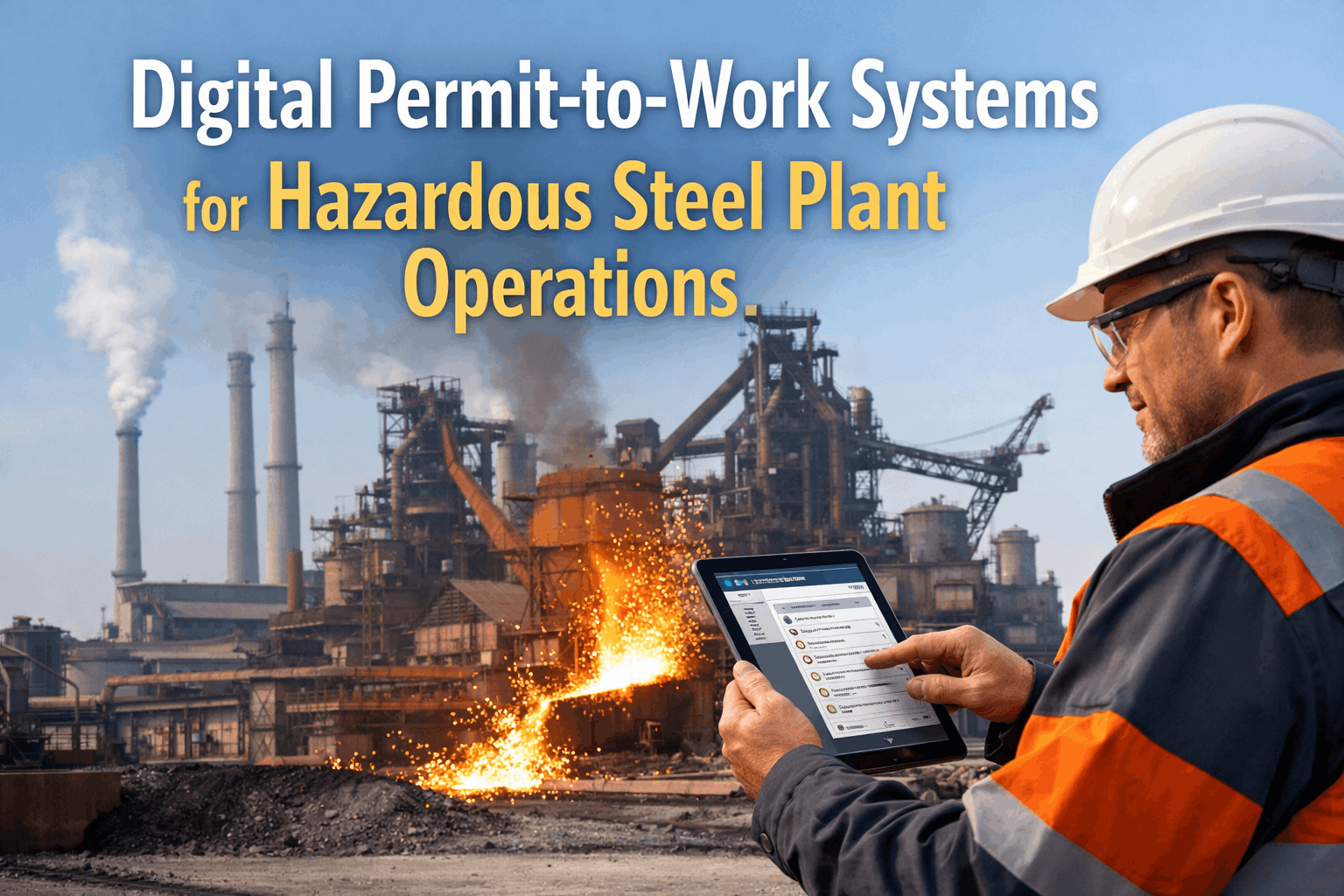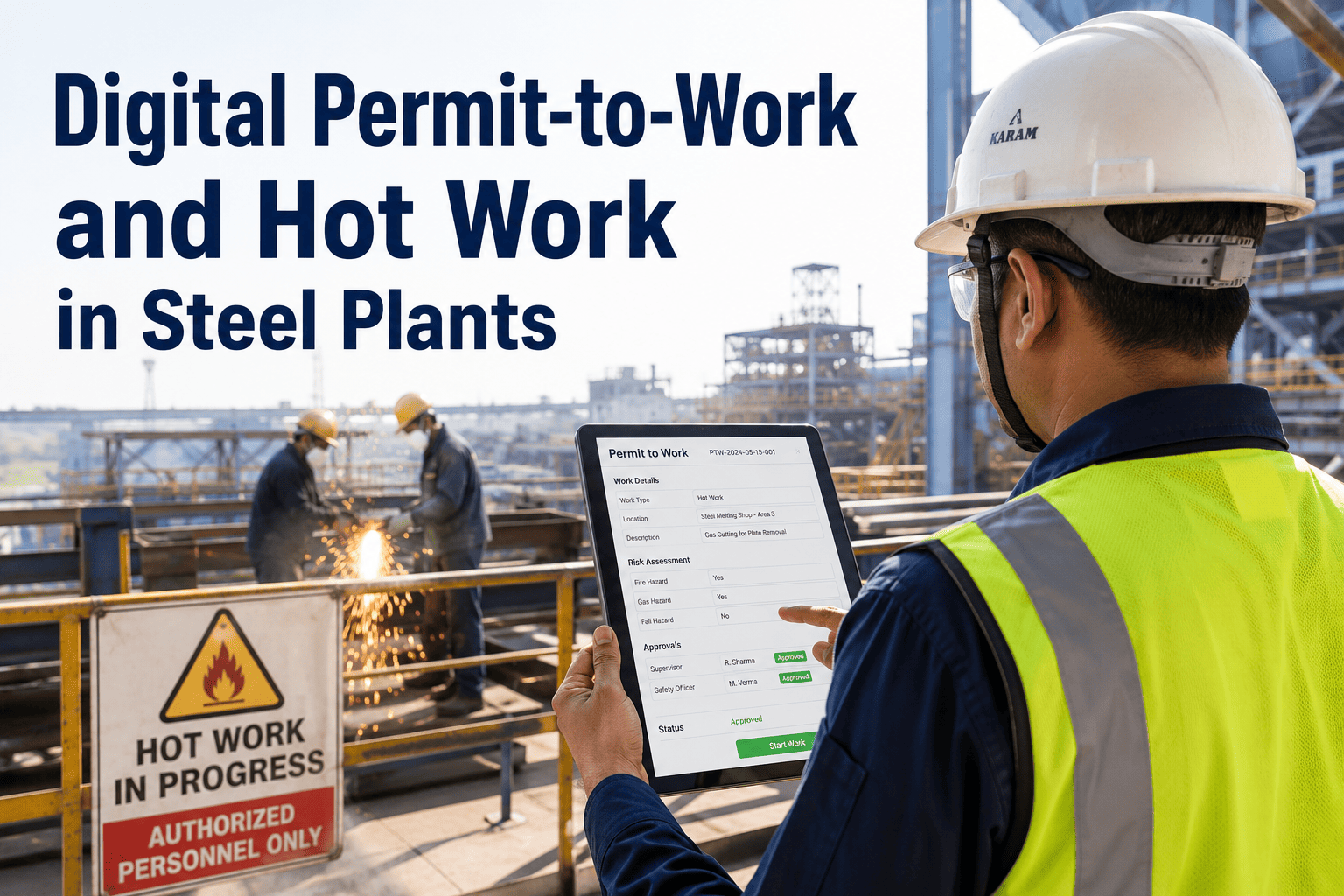
Every steel plant runs 50 or more hot work, confined space, and lockout tasks in a single day, and every one of those tasks depends on a permit that was supposed to be checked against every other permit open on the floor at the same time. In most plants that cross-check still happens in someone's head, not in a system, which means a hot work permit can be sitting active ten feet from an unrelated confined space entry with nobody connecting the two until an incident forces the question. Paper permit books do not flag overlapping isolations, do not expire on their own, and do not know that a gas reading crossed a threshold an hour after a welder started cutting. iFactory's AI turns the permit-to-work process into a live, enforced workflow instead of a signature on a clipboard, and you can book a demo to see it run a conflict check against your own current permit board.
A Paper Permit Pinned Near a Furnace Is Not a Safety Control — It's a Gap Waiting to Be Found
iFactory's AI routes, cross-checks, and audits every hot work, confined space, and LOTO permit across your steel plant in real time, flagging overlapping hazards before an area authority ever signs off.
The Permit Book Tells You What Was Authorized This Morning, Not What Is Happening on the Floor Now
A permit-to-work process only works if it reflects the real, current state of the plant, and a paper log updates only when someone remembers to walk over and write in it. Studies of process safety accidents have consistently found permit-to-work breakdowns among the recurring root causes behind serious incidents, and that failure rate has not meaningfully improved even as plants added more paperwork on top of the same manual process. The pattern behind most of those breakdowns is not carelessness. It is a system that was never designed to keep up with the pace of a working plant, where a dozen permits can be issued, amended, and closed across a single shift while conditions on the ground shift underneath every one of them.
Handwritten forms in a hot, dusty steel plant environment do not survive well either. Pages get smudged near a caster, torn on a platform, or simply left in a truck when a shift changes hands, and when an auditor or safety officer later asks for evidence of a specific permit, the honest answer is often that the paperwork no longer exists in any usable form. That gap becomes the single most cited weakness in ISO 45001 and OSHA compliance reviews, because inspectors are not asking whether your plant intends to follow procedure. They are asking for the record that proves it did, on a specific day, for a specific task.
How the AI Catches the Overlap a Manual Review Would Miss
Steel plants contain dozens of active hazard zones on any given shift, and the risk is rarely a single permit done badly. It is two permits, each individually correct, colliding in the same physical space at the same time. The AI maps every active permit to its zone and continuously checks new requests against what is already running there, using the plant's own layout rather than a generic hazard map that treats every facility the same way.
This is where a manual review structurally runs out of capacity. An area authority approving a hot work request has no reliable way to know, from memory alone, every other permit currently open across a plant that may span several hundred meters and dozens of separate crews. The AI does not rely on memory. It checks the full live permit board every time a new request comes in, which means the zone conflicts shown below are exactly the kind of overlap that a busy supervisor, doing their best under time pressure, would have every reason to miss.
See Your Own Permit Board Cross-Checked Live
Bring a snapshot of your current active permits and watch the AI flag conflicts in real time during the call.
Permit Failures Are Not a Paperwork Problem — They Show Up as Citations and Incidents
Regulators do not treat permit-to-work gaps as an administrative footnote. Lockout and tagout violations alone generate thousands of citations across manufacturing every year, and the financial exposure for a single willful violation now runs well into six figures before any incident even occurs. Once a fatality is involved, the exposure moves from regulatory fines to criminal liability, which is exactly why permit-to-work is treated as a frontline control rather than a compliance checkbox in every major process safety framework.
Hot Work Is Never a One-Person Job — the AI Coordinates All Three Roles Digitally
A hot work permit is only as safe as the coordination between the person doing the work, the person who authorized it, and the person watching for fire risk while it happens. Paper systems assume that coordination will occur informally through shouted updates and a signature, which works fine on a quiet shift and fails quietly on a busy one, when three roles are each juggling several tasks at once and a verbal handoff gets compressed into a nod. The digital workflow makes each role's responsibility explicit and tracked, so accountability does not depend on everyone remembering their part under pressure.
Requests the permit, confirms the work scope, and receives real-time alerts if plant conditions change while the job is underway.
Reviews the AI-generated risk assessment and any flagged conflicts before approving, with every decision timestamped to a named person.
Confirms presence at fixed intervals through the mobile app, with an automatic supervisor alert triggered if a check-in is missed.
Every Permit Type a Steel Plant Runs, Mapped to Its Own Checklist
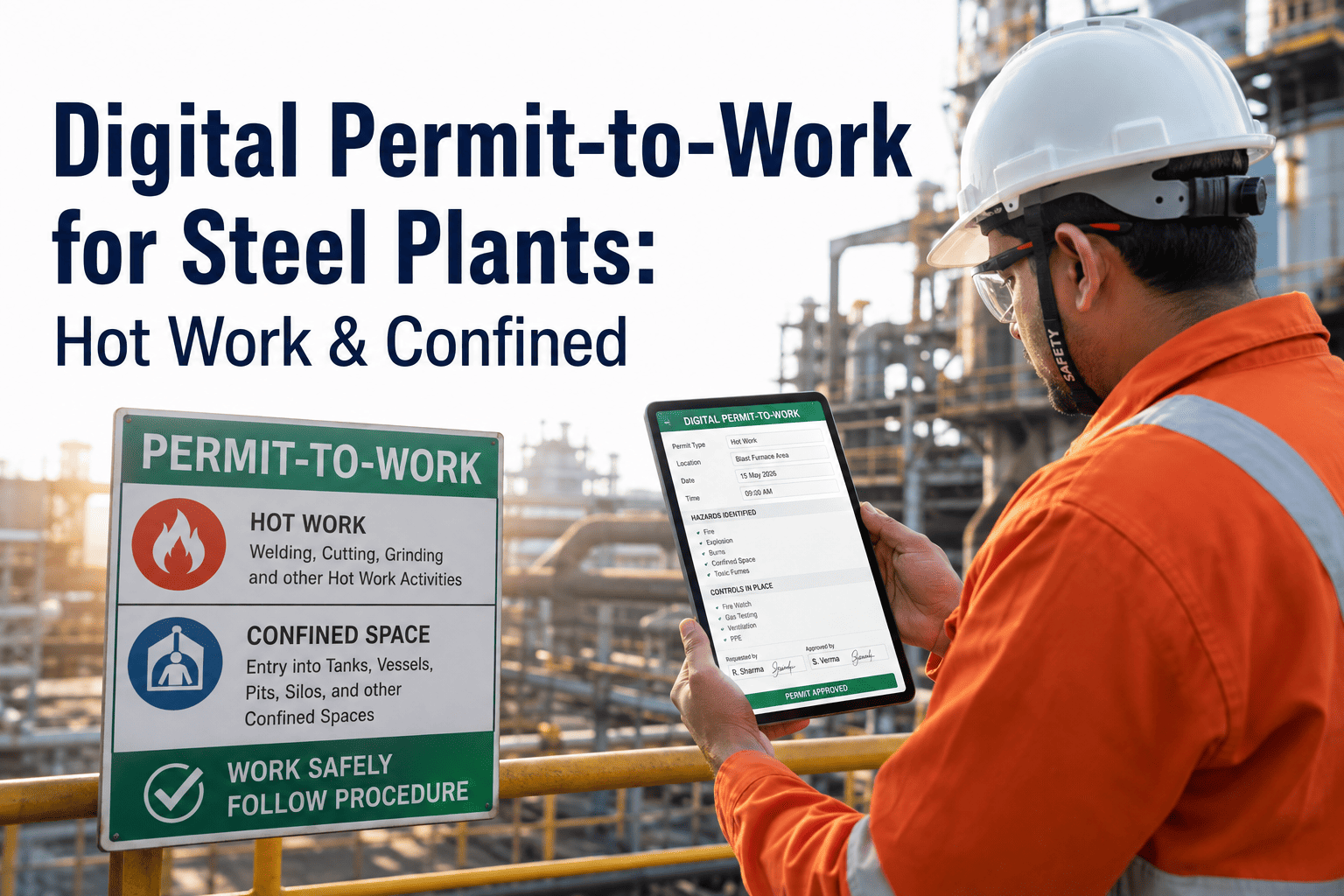
Different permit types carry different hazard checklists, and treating them all with one generic form is exactly what lets critical steps slip through on a busy shift. A confined space entry and a work-at-height permit have almost nothing in common in terms of what needs to be verified before work starts, yet a generic paper template often forces both into the same handful of checkboxes. The table below shows how the AI configures distinct checks and automatic triggers by permit type, so each one enforces the specific safeguards it actually needs.
| Permit Type | Primary Hazard Checked | Automatic Trigger |
|---|---|---|
| Hot Work | Ignition sources near combustible material | Fire watch interval check-in every 15 minutes |
| Confined Space Entry | Atmospheric composition and entrapment risk | Gas reading refresh before entry is authorized |
| Lockout / Tagout | Stored or residual energy release | Permit blocked from closing until every lock is verified removed |
| Work at Height | Fall protection and dropped object risk | Harness inspection photo required before approval |
What Changes After Steel Plants Move Permit-to-Work Off Paper
The figures below reflect outcomes tracked after steel plants replaced paper permit books with AI-enforced digital workflows, measured against each plant's own prior compliance and incident records.
From Paper Book to Live Permit Board in Four Steps
Moving an entire plant off paper permits sounds like a bigger project than it actually is, mostly because most rollouts try to digitize every permit type at once instead of starting with the ones that matter most and expanding from there. The sequence below is the one that gets a working, inspection-ready system on the floor fastest.
Map Your Zones and Permit Types
Every hazard zone in the plant is mapped along with the permit types and checklists that apply to it.
Connect Sensors and Access Systems
Gas detectors, atmospheric monitors, and access control feed directly into the permit workflow for automatic condition checks.
Roll Out Hot Work and LOTO First
The highest-frequency permit types go live first, typically within the first two to three weeks of rollout.
Expand to Confined Space and Height Work
Remaining permit types are added once the core workflow is running cleanly on the floor.
Questions EHS Teams Ask Before Digitizing Permit-to-Work
The Gap Between a Paper Permit and a Digital One Is the Gap Between Hope and Evidence
A signature on a paper form tells you that someone, at some point, believed a task was safe to start. It does not tell you whether that belief still holds an hour later when conditions on the floor have changed, and it does not tell you whether another permit opened nearby has quietly turned a controlled task into an overlapping hazard. That gap is where the failures that investigators find after serious incidents almost always live.
iFactory's AI closes that gap by keeping every permit, every isolation point, and every fire watch check-in live and cross-checked continuously instead of reviewed once at approval and forgotten. The result is not just a cleaner audit trail, though that matters when an inspector asks for evidence. It is a permit system that actually reflects what is happening on your plant floor right now, which is the only kind of permit system that was ever supposed to exist.
The plants that get the most out of this shift are rarely the ones treating it as a one-time software rollout. They are the ones that start with their highest-frequency, highest-risk permit types, let the workflow run cleanly for a few weeks, and then expand it zone by zone until the entire permit board, not just the paperwork behind it, reflects what is actually happening on the floor. That sequencing is deliberate, and it is the fastest path from a filing cabinet full of signed forms to a system your safety team can trust without having to double-check it.
Replace the Permit Book With a System That Actually Watches the Floor
iFactory's AI cross-checks every hot work, confined space, and LOTO permit across your plant in real time. Book a demo and bring your own permit board.
-for-steel-plants-digital-compliance-framework.png)