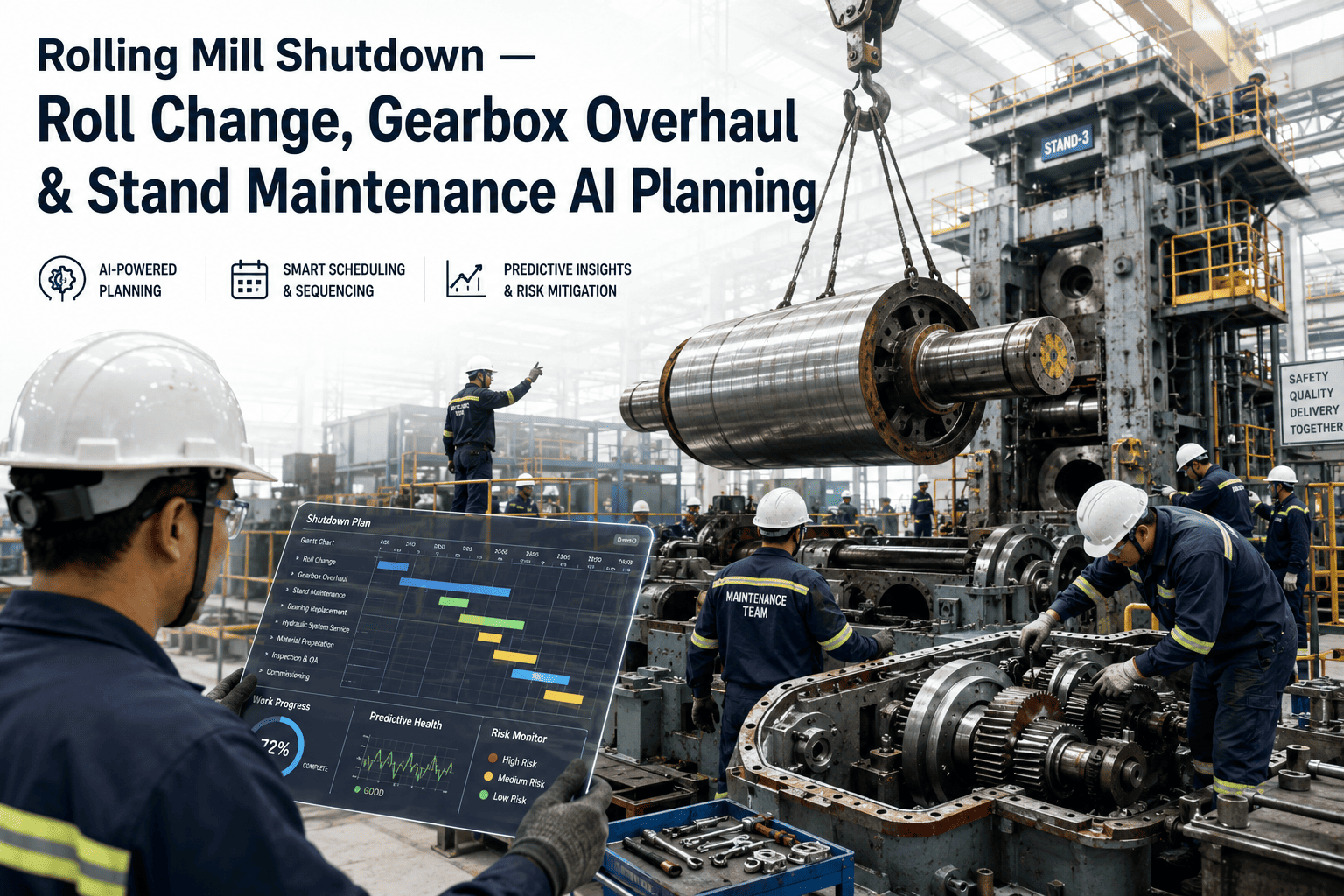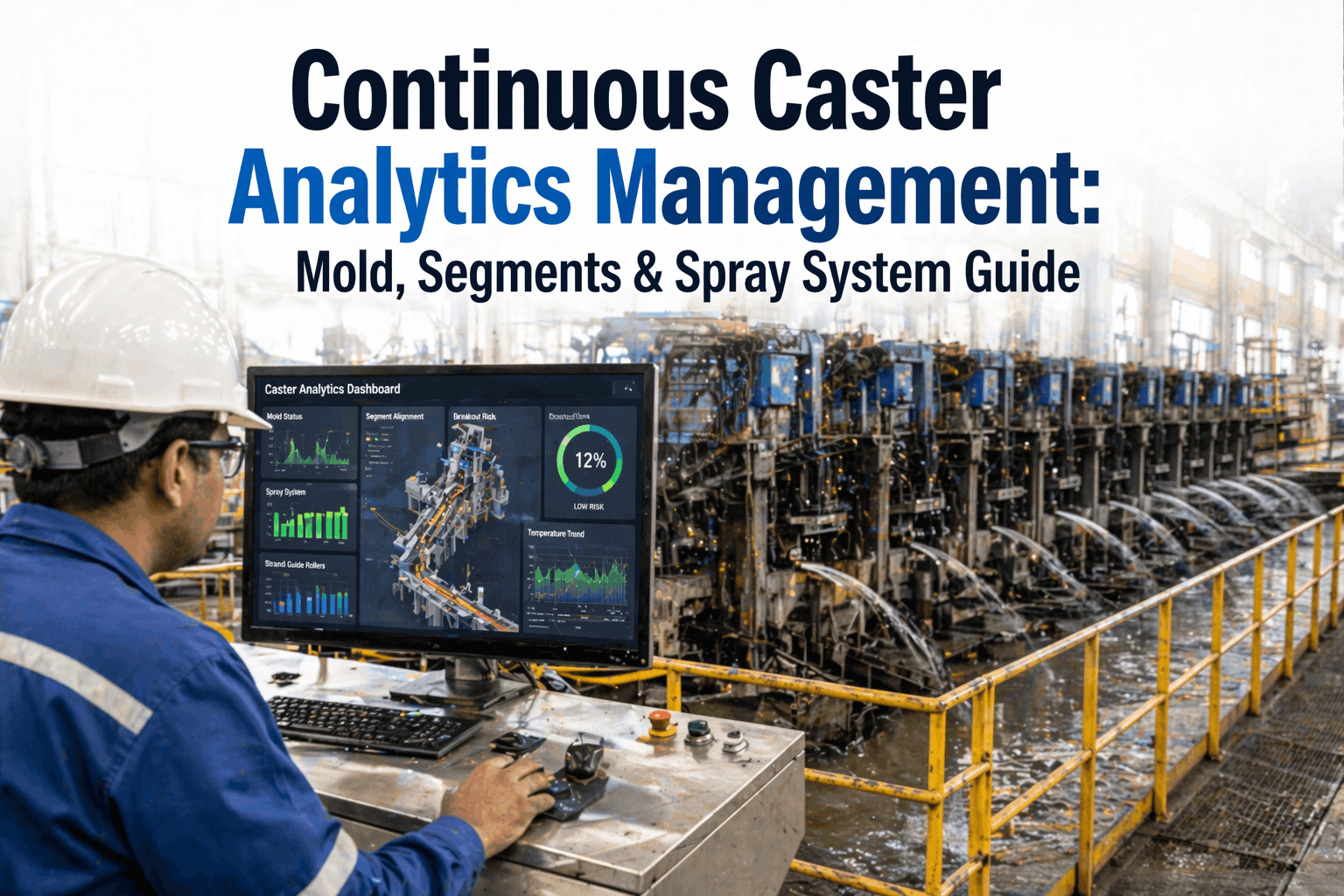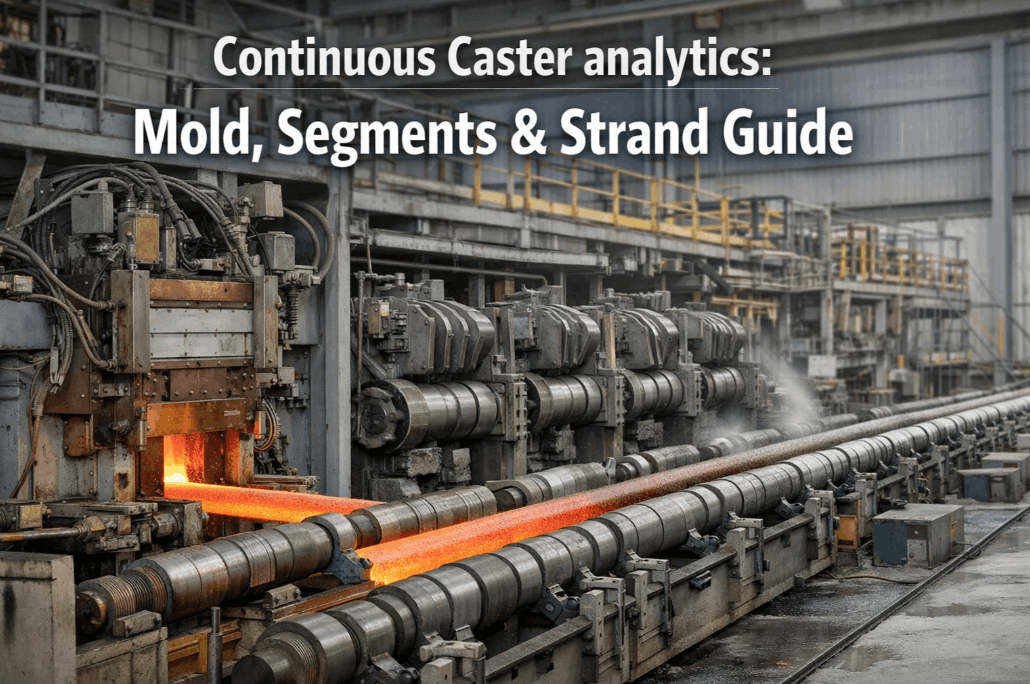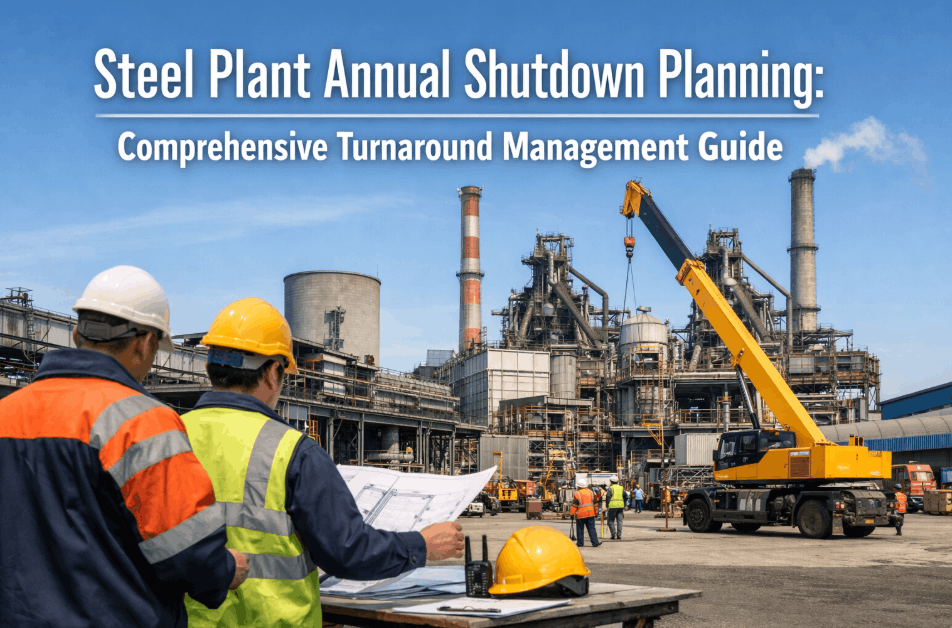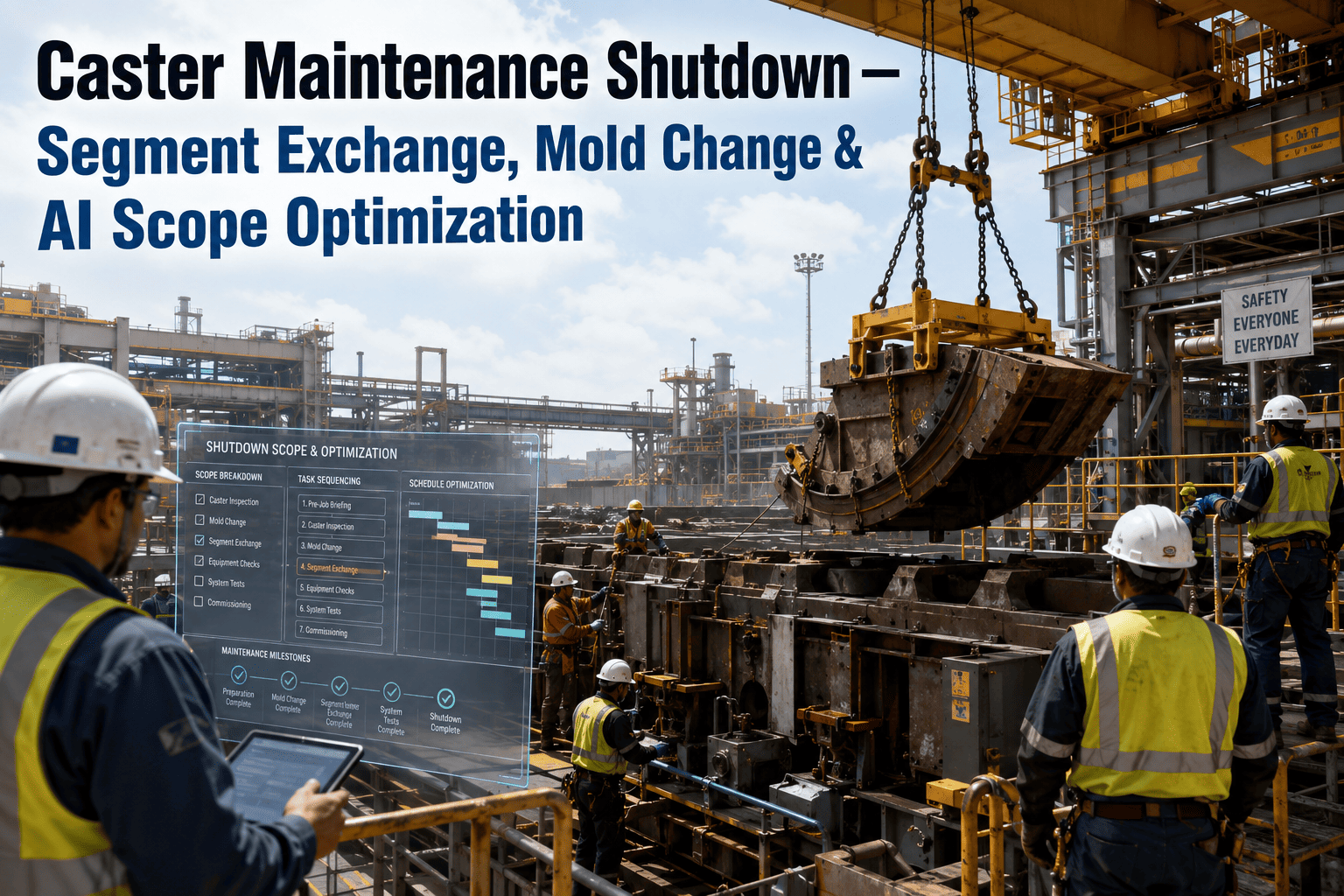
In the high-stakes environment of continuous casting, every minute of unplanned downtime translates directly into lost tonnage, delayed orders, and eroding margins. Yet, the most complex and capital-intensive maintenance events—the full caster shutdown for segment exchange, mold replacement, and secondary cooling overhaul—have historically been planned using static spreadsheets, tribal knowledge, and conservative timelines that leave millions of dollars in production capacity on the table. Modern steelmakers are now turning to AI-driven predictive maintenance and dynamic scheduling to compress these shutdown windows without compromising on quality or safety. This comprehensive guide explores how artificial intelligence transforms the planning and execution of caster maintenance shutdowns, from initial scope definition through to restart validation. Whether you are an operations director seeking to reduce turnaround time by 30% or a maintenance engineer looking to optimize segment exchange sequences, this document provides the technical framework, data-driven strategies, and actionable checklists needed to execute a flawless caster outage. Book a Demo to see how iFactory's AI platform can digitize your shutdown planning today.
Transform Your Shutdown Planning with AI
Leverage machine learning to sequence segment exchanges, mold changes, and cooling maintenance for minimal turnaround time. Achieve 20-40% reduction in caster outage duration.
The Anatomy of a Caster Shutdown: Beyond the Checklist
A continuous caster shutdown is not a single event but a meticulously orchestrated sequence of interdependent work packages. The primary scope typically includes segment exchange (replacing worn roller segments that directly affect strand geometry and product quality), mold change (swapping the copper mold assembly to accommodate different product sizes or restore surface quality), and secondary cooling system maintenance (inspecting and replacing nozzles, pipes, and control valves that govern heat extraction). Each of these work packages has its own critical path, resource requirements, and quality acceptance criteria. Traditional planning treats them as isolated tasks, leading to idle time, resource conflicts, and extended outages. AI-driven planning, by contrast, models the entire shutdown as a dynamic system where the sequence of segment exchanges can be optimized to minimize mold change downtime, and cooling maintenance can be performed in parallel with structural work without compromising safety. This holistic view enables operations directors to compress the overall shutdown window by 20-40% while ensuring that every component is restored to OEM specifications. The key lies in using historical data from previous shutdowns—including actual task durations, failure modes, and quality outcomes—to train predictive models that suggest the optimal sequence and resource allocation for the current caster state.
Segment Exchange: The Critical Path to Strand Alignment
Segment exchange is the most time-consuming and technically demanding element of a caster shutdown. Each segment, weighing several tons, must be precisely aligned to maintain strand straightness and prevent breakout risks. The traditional approach involves removing segments in a fixed order (usually from the mold downward), replacing them one by one, and performing laser alignment after each installation. This linear process can take 5-7 days for a six-strand caster. AI optimization breaks this bottleneck by analyzing wear patterns across all segments using data from condition monitoring systems (vibration, temperature, and torque sensors). The algorithm identifies which segments are most critical to strand quality and can be replaced in parallel without causing alignment interference. For example, if segments 2 and 4 on strand A show similar wear profiles, they can be exchanged simultaneously using separate crane teams, cutting the exchange time by 40%. Furthermore, machine learning models predict the optimal pre-alignment settings for each new segment based on the actual geometry of the adjacent segments, reducing the number of laser alignment iterations from an average of 3 to just 1. This precision not only saves hours but also improves restart quality, as the strand is closer to ideal alignment from the first cast. The iFactory platform integrates with your existing CMMS and alignment tools to provide real-time guidance during the exchange, flagging any deviation from the optimal sequence and suggesting corrective actions.
Parallel Execution
AI identifies non-conflicting segment pairs for simultaneous exchange, reducing critical path length by up to 50%. Historical data shows 23% reduction in total exchange time.
Predictive Wear Analysis
Using vibration and thermal data, the model forecasts which segments will reach end-of-life before the next planned shutdown, enabling proactive procurement and reducing emergency exchanges.
Laser Alignment Optimization
AI-driven pre-alignment settings reduce laser iterations by 66%, saving 4-6 hours per strand and ensuring first-cast quality within tolerance.
Mold Change: Minimizing Downtime with AI Sequencing
Mold change is often scheduled immediately after segment exchange, but the two activities share critical resources like cranes and skilled fitters. Traditional planning treats them as sequential, leading to idle crane time while segment alignment is verified. AI sequencing models the entire resource pool—cranes, fitters, welders, and quality inspectors—and optimizes the start time of mold change to overlap with the final alignment checks of segment exchange. This parallelization can save 8-12 hours per shutdown. Additionally, the AI analyzes mold wear data from the previous campaign (copper thickness, corner radius, and surface roughness) to recommend the optimal mold type and cooling pattern for the next product mix. This ensures that the new mold is not just a like-for-like replacement but is tailored to improve surface quality and reduce breakouts for the specific grades to be cast. The iFactory platform provides a digital twin of the mold assembly, allowing the maintenance team to pre-assemble and test the mold offline while the caster is still running, further compressing the online change window. By integrating with your production schedule, the AI can also recommend delaying a mold change by a few days if a high-value order is imminent, balancing maintenance risk against production revenue.
AI-Optimized Shutdown Sequence vs. Traditional Planning
| Activity | Traditional Duration (hours) | AI-Optimized Duration (hours) | Savings |
|---|---|---|---|
| Segment Exchange (6 strands) | 144 | 96 | 33% |
| Mold Change | 24 | 16 | 33% |
| Secondary Cooling Maintenance | 48 | 32 | 33% |
| Alignment & Quality Checks | 36 | 18 | 50% |
| Total Shutdown | 252 | 162 | 36% |
Secondary Cooling Maintenance: The Hidden Efficiency Leak
Secondary cooling system maintenance is often treated as a low-priority task that can be performed at any time during the shutdown. However, poorly maintained nozzles and uneven spray patterns are a leading cause of surface defects and breakouts in the weeks following a restart. AI-driven maintenance planning elevates cooling system work to a critical path activity by linking nozzle condition data (flow rate, spray angle, and clogging level) to historical quality metrics. The model identifies which spray zones have the highest impact on product quality for the upcoming cast and prioritizes their maintenance. For example, if the next order is for high-strength automotive grades requiring tight cooling control, the AI will schedule full nozzle replacement in the foot roll zone, while less critical zones may only require inspection. This targeted approach reduces cooling maintenance time by 30% while improving restart quality. Additionally, the AI recommends optimal cooling patterns for the first few heats after restart, compensating for any residual misalignment or mold condition, ensuring that the first slab meets customer specifications. The iFactory platform continuously monitors cooling system performance during the shutdown using portable flow meters and thermal cameras, providing real-time feedback to the maintenance team and updating the digital twin for future planning.
Step-by-Step AI-Enhanced Shutdown Execution
Data Ingestion & Condition Assessment
Collect real-time data from segment vibration sensors, mold thermocouples, and cooling flow meters. AI models assess current wear state and predict remaining useful life for each component.
Scope Optimization & Sequence Generation
AI generates an optimized shutdown scope, identifying which segments to exchange, which mold to install, and which cooling zones to maintain. The sequence is designed to minimize critical path and resource conflicts.
Resource & Logistics Planning
Model assigns cranes, fitters, welders, and inspectors to each task, considering skill levels and availability. Spare parts are verified against inventory and ordered if needed.
Real-Time Execution & Adaptation
During shutdown, AI monitors progress via IoT sensors and manual check-ins. If a task takes longer than expected, the model dynamically re-sequences remaining work to minimize overall delay.
Quality Validation & Restart Optimization
After all work is complete, AI analyzes alignment data, cooling spray patterns, and mold condition to validate readiness. It recommends optimal casting parameters for the first heats to ensure defect-free production.
Ready to Slash Your Caster Turnaround Time?
Implement AI-driven shutdown planning and see 30%+ reduction in outage duration. Our platform integrates with your existing systems and delivers measurable ROI from the first shutdown.
Risk Mitigation: How AI Prevents Shutdown Failures
Every shutdown carries inherent risks: unexpected part failures, discovery of additional damage, or misalignment that delays restart. AI mitigates these risks through predictive analytics and scenario simulation. Before the shutdown begins, the model runs thousands of Monte Carlo simulations, each with different assumptions about task durations and failure probabilities. It identifies the most likely bottlenecks and suggests contingency plans, such as pre-positioning spare segments or cross-training fitters to handle multiple tasks. During execution, the AI continuously compares actual progress against the plan and alerts the shutdown manager if a task is deviating beyond a threshold. For example, if a segment bolt is found to be seized, the model recalculates the remaining schedule and may recommend switching to a different segment first to keep the crane busy. This adaptive approach reduces unplanned extensions by 50% and ensures that restart targets are met even when unexpected issues arise. The iFactory platform also maintains a digital log of all deviations and their resolutions, building a knowledge base that improves future shutdown plans.
Monte Carlo Simulation
Run 10,000+ scenarios to identify high-risk tasks and develop contingency plans. Proven to reduce unplanned delays by 45%.
Real-Time Anomaly Detection
AI monitors sensor data and task progress, flagging deviations in real time. Alerts include recommended corrective actions based on historical solutions.
Knowledge Capture
Every shutdown generates structured data on failures, workarounds, and best practices. This feeds the AI model for continuous improvement of future plans.
Quality Readiness: Ensuring First-Cast Success
The ultimate measure of a successful shutdown is the quality of the first slabs produced after restart. Traditional approaches rely on conservative casting parameters and gradual ramp-up, often resulting in several heats of off-grade material. AI-driven quality readiness assessment uses data from the shutdown itself—final alignment measurements, mold condition, cooling spray uniformity—to predict the optimal casting parameters for the first heat. The model generates a customized startup recipe that includes casting speed, mold oscillation frequency, and secondary cooling flow rates, all tuned to compensate for any minor deviations from ideal conditions. This reduces the time to achieve prime quality by 60%, from an average of 8 heats to just 3. Furthermore, the AI continuously refines the recipe based on real-time quality feedback from the first slabs, adjusting parameters for subsequent heats. This dynamic control ensures that even if the shutdown did not achieve perfect alignment, the casting process can still produce acceptable quality, minimizing waste and maximizing throughput. The iFactory platform provides a dashboard showing predicted quality metrics for each heat of the restart, allowing operators to make informed decisions about product release.
Frequently Asked Questions
How does AI determine which segments to exchange during a shutdown?
The AI model analyzes historical condition monitoring data from each segment, including vibration levels, bearing temperatures, and roller wear patterns. It correlates this data with past quality issues and breakout events to identify which segments are most likely to cause defects in the upcoming production campaign. The model also considers the cost of exchanging a segment versus the risk of running it to the next scheduled shutdown. The output is a prioritized list of segments recommended for exchange, along with a confidence score. This data-driven approach ensures that only segments that truly need replacement are touched, avoiding unnecessary work and reducing shutdown scope. For more details on how our algorithm works, contact our support team.
Can the AI platform integrate with our existing CMMS and alignment tools?
Yes, the iFactory platform is designed for seamless integration with leading CMMS systems (SAP, IBM Maximo, Infor) and alignment measurement tools (API, Easy-Laser). We provide standard API connectors and can develop custom interfaces for legacy systems. During the shutdown, data flows automatically from alignment sensors and maintenance logs into the AI model, which updates the schedule and quality predictions in real time. This eliminates manual data entry and ensures that the digital twin always reflects the current state. To discuss your specific integration requirements, book a demo with our engineering team.
What kind of ROI can we expect from implementing AI-driven shutdown planning?
Our customers typically see a 20-40% reduction in total shutdown duration, translating to 3-5 additional production days per year per caster. For a mid-size steel plant with two casters, this can mean $2-4 million in additional revenue from increased output. Additionally, the reduction in off-grade material during restart saves $200,000-$500,000 per year in scrap and rework costs. The platform also reduces overtime labor costs by optimizing task sequencing and resource allocation. Most customers achieve full payback within the first two shutdowns. For a personalized ROI analysis based on your plant's data, schedule a consultation.
How does the AI handle unexpected discoveries during the shutdown, such as damaged components?
The AI platform is built to handle dynamic changes. When a maintenance team discovers unexpected damage (e.g., a cracked roller or worn bearing), they log it in the system via a mobile app. The AI immediately recalculates the remaining schedule, considering the new task's duration, required resources, and impact on the critical path. It may recommend reordering subsequent tasks to minimize delay, such as performing the repair while another team completes a parallel activity. The model also checks spare parts inventory and can automatically order replacements if needed. This adaptive capability has been shown to reduce the impact of unexpected discoveries by 50%, keeping the shutdown on track. For more information on our real-time adaptation features, visit our support page.
What training is required for our maintenance team to use the AI platform?
The iFactory platform is designed with an intuitive interface that requires minimal training. Most maintenance teams become proficient in 2-3 days. We provide on-site training for shutdown managers, planners, and supervisors, covering the use of the mobile app for task logging, the dashboard for monitoring progress, and the simulation tools for scenario planning. Our support team also offers ongoing virtual assistance during the first few shutdowns to ensure a smooth transition. The platform's AI models learn from your team's behavior and preferences over time, further reducing the learning curve. To schedule training for your team, book a demo and we will tailor a training program to your needs.
Optimize Your Next Caster Shutdown with AI
Don't leave millions in production capacity on the table. Our AI platform helps you plan, execute, and validate caster shutdowns with unprecedented efficiency and quality assurance.