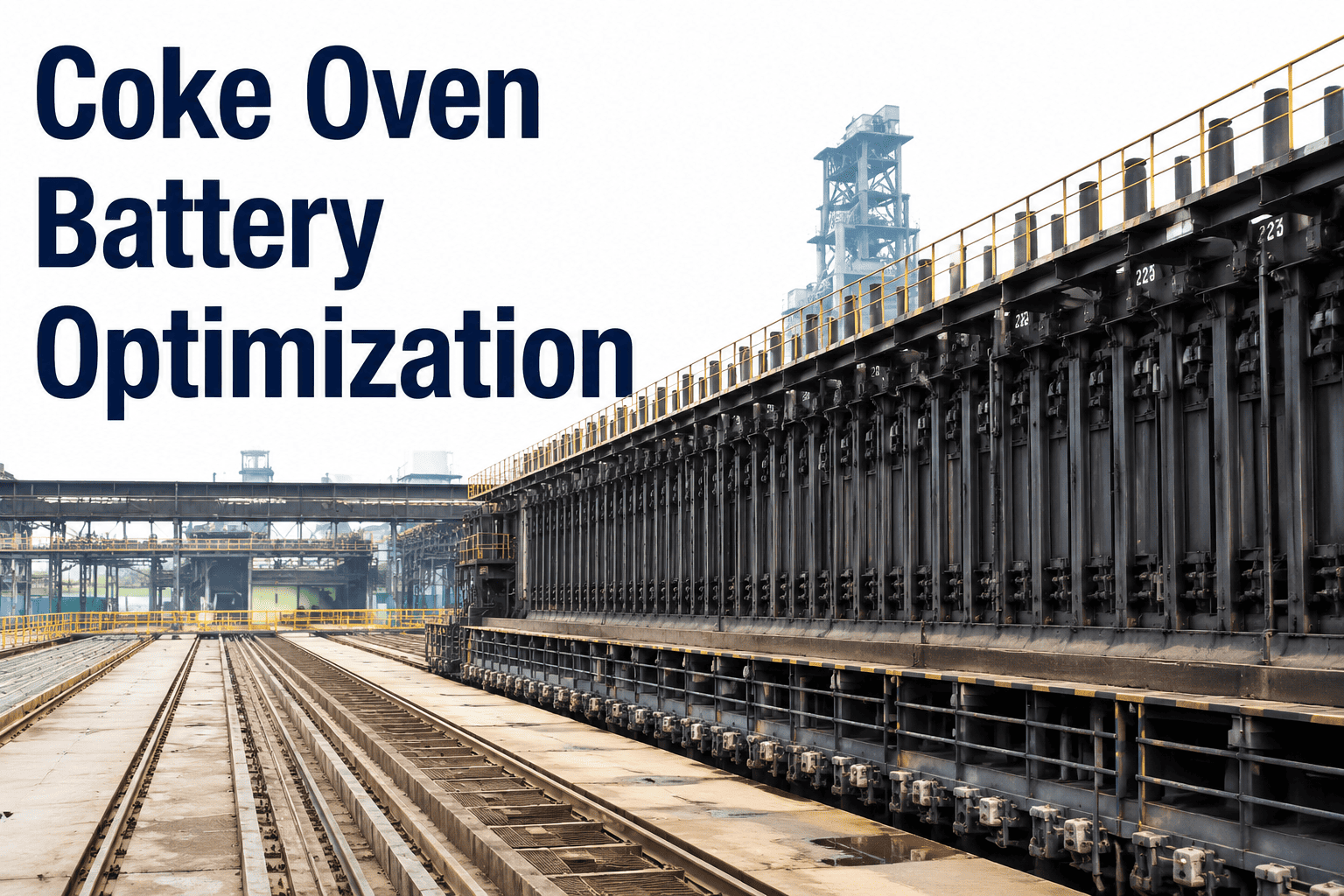
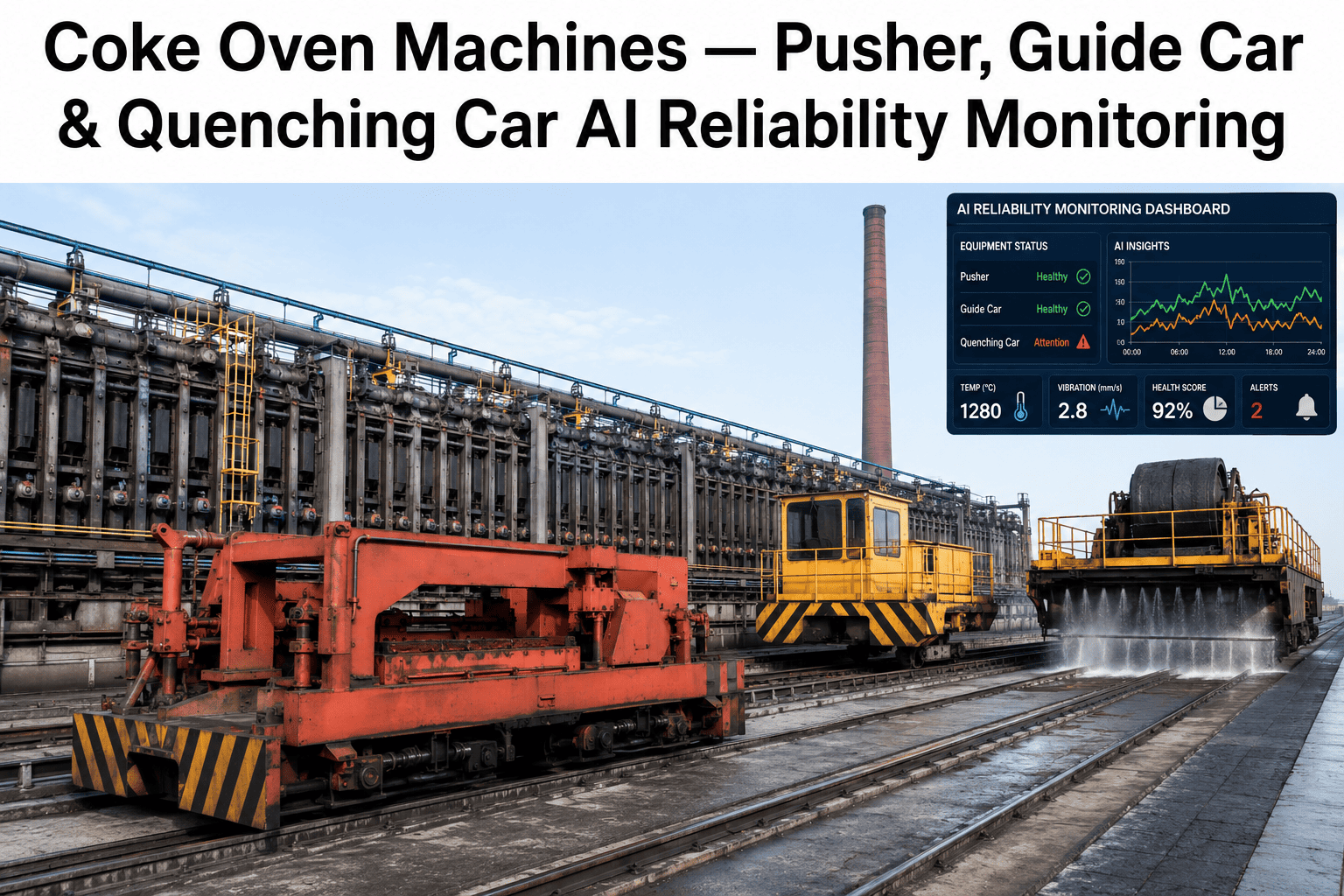
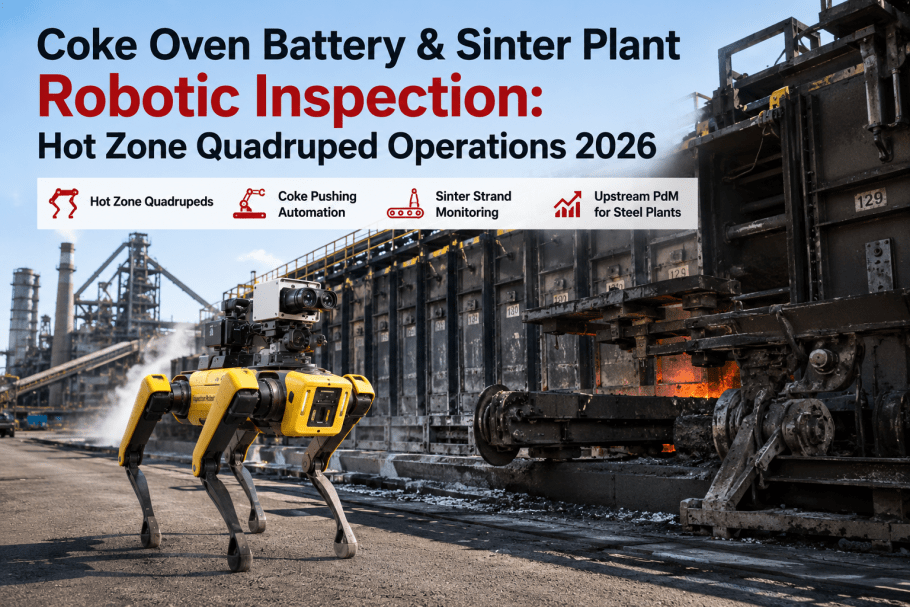
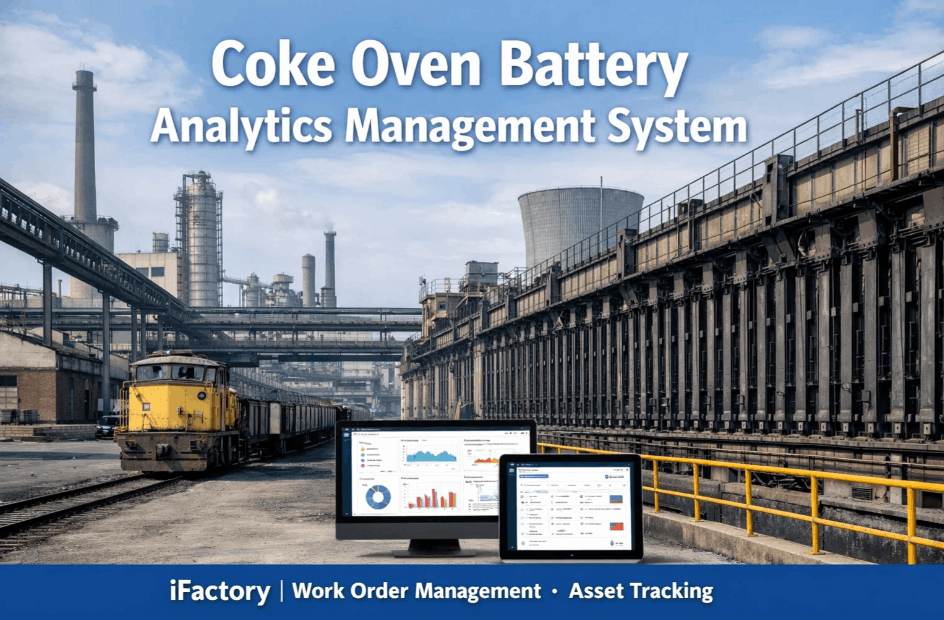
Operating a coke oven battery is a relentless, 24/7 chemical and thermodynamic balancing act. Pushing thousands of tons of high-strength metallurgical coke requires orchestrating massive, precisely timed machinery—charging larry cars, extreme-force pusher rams, and quench cars—all operating against a backdrop of 1300°C silica refractory walls. When a battery ages, controlling fugitive emissions from degrading door seals and stabilizing erratic heating flues becomes intensely difficult. A single 'sticker' (a failed push caused by green coke or ruined wall bricks) can warp the pusher ram and permanently shear the oven wall structure. To govern these massive capital assets, ironmakers are abandoning manual pyrometer checks and shift-logs in favor of integrated coke oven battery analytics. By networking hydraulic pusher telemetry, cross-wall thermal indices, and visual emission tracking into one unified AI dashboard, longevity is mathematically secured. Book a demo to align your battery operations with uncompromising predictive intelligence.
COKEMAKING RELIABILITY PLATFORM
Secure Your Coke Battery Analytics on a Unified Mobile Dashboard.
Integrate heating flue thermal cycles, pusher machine hydraulic amps, and raw door seal emission tracking to guarantee maximum CSR (Coke Strength after Reaction) with zero wall failures.
Why Analog Cokemaking Degrades Battery Lifespans
The destructive forces acting on a coke oven battery operate silently across years. Coke oven doors expand and contract violently under intense thermal shifting, degrading the critical 'knife-edge' seals. When operators manually inspect doors, fugitive gas leaks frequently go undocumented until environmental agencies issue massive compliance fines. Concurrently, heating control is often dictated by legacy algorithms lagging behind the actual raw coal blend chemistry. If the heating flues uniformly under-bake the coal, the resulting 'green push' generates incredibly weak coke, destroying blast furnace permeability down the line. Worse, pushing green coke creates massive friction against the silica brick walls, physically tearing the refractory structure apart.
Over-firing poses an equal threat. If the underfire gas sequence runs too hot to compensate for poor coal density, the silica brick physically melts internally. Advanced coke oven AI software removes the human guesswork. By tracking hydraulic pushing effort against active thermal wall mapping, the software isolates precise mechanical and thermodynamic degradation zones before severe capital damage triggers.
To properly bake a 40-ton coal charge, the vertical flues must fire sequentially with perfect reversing valve logic. Tracking precise cross-wall temperatures ensures silica bricks remain below their melting point while guaranteeing optimal CSR.
The pusher machine is the ultimate diagnostic tool. Charting the exact hydraulic amperage required to execute a push perfectly identifies swelling coal blends, excessive wall carbon buildup, or severe refractory spalling.
Leaking doors destroy energy efficiency and trigger regulatory shutdowns. Vision AI modeling and shift-based checklist tracking natively forces maintenance crews to execute precise door jamb cleaning and knife-edge alignments.
The byproduct plant must pull exactly the right negative pressure on the collector main. Tracking exhauster fan vibration and primary cooler delta-Ts prevents deadly positive pressure gas-kicks from blowing the water seals.
The Predictive Pipeline: Analyzing the Battery Lifecycle
Moving an active 60-oven battery away from reactive maintenance requires intercepting failure sequences before the pusher ram hits the coal. When facility directors schedule an integration roadmap, we overlay edge analytics directly across existing SCADA networks to isolate failing machinery autonomously.
Passive Ingestion of Pushing Telemetry
The software continuously tracks the PLC logic of the pusher ram. We graph the precise baseline hydraulic pressure profile across the horizontal travel path. Any sudden deviation—a spike in pushing resistance—is instantly flagged as a 'hard push', directing operators to inspect that specific oven wall for carbon buildup or internal brick shearing.
Reversing Valve & Underfire Optimization
Cokemaking relies on precise 20-30 minute reversing cycles to continuously swap combustion and exhaust flow through the flues. The AI maps the mechanical sequence of the reversing winches against active gas flow meters, warning maintenance of sluggish tie-rod movements before air/gas mixtures destabilize.
Quench Car Reliability Tracking
If the quench locomotive fails mid-push, glowing coke dumps directly onto the track rails causing catastrophic fires. The system natively monitors the thermal limits of the traction motor drives and dynamic braking resistors on the hot car locomotive, generating targeted maintenance tasks before locomotive thermal tripping occurs.
Mobile Door Repair Workflow Control
When AI or human inspectors tag a door for fugitive leaks, the work order hits the mechanical tablet instantly. Analytics measure exactly how fast the specialized door-repair bay turns the equipment around—tracking knife-edge replacements and structural straightening to ensure the battery operates exactly at 100% door capacity.
Tracking Critical Machine Dependencies During the Push
Battery operations live and die on the synchronized availability of four massive moving systems: the Coal Larry Car, the Pusher Machine, the Door Machine (Coke Side), and the Quench Locomotive. If one fails, the entire high-temperature sequence halts.
Tracking the extreme start/stop amperage loads on the AC/DC traction motors. Warning of failing contactors or degraded wheel-tread wear before a track derailment paralyzes the discharge sequence.
If the coal-charging car drops 2 tons less than required into the oven, extreme oven top-space generates violent explosive gas pressures. The AI maps load-cell drift natively.
The Pressure Relief Valves (PRV) controlling the bleeding of raw coke oven gas must operate seamlessly. Tracking actuator hysteresis prevents deadly gas kicks onto the battery top.
Monitoring the laser/encoder alignment of the pusher and door machines. A millimeter misalignment when extracting a massive coke side door instantly shears the refractory jamb.
Graphing temperature gradients across the oven roof to ensure decoking air sequences successfully burn off thick carbon stalactites before they physically block the charging sequence.
In the byproduct zone, mapping liquor wash flow rates against the raw gas temperature. Catching failing spray nozzles to prevent corrosive tar buildup from choking the primary lines.
The Financial Framework: ROI on Coke Battery Software
Replacing a degraded coke oven wall physically requires shutting off the affected gas flues, bracing adjacent ovens, and manually laying new silica bricks inside severe heat conditions—costing massive capital in lost production. Eliminating 'hard pushes' preserves the margin mathematically. Schedule a financial model review to evaluate the asset lifecycle impact.
Predicting green-coke swelling limits before pushing guarantees the mass shrinks cleanly off the walls, entirely preventing stalled rams and sheared refractory events.
By preventing over-firing melting and under-firing abrasive friction, the pristine silica condition extends the overall battery replacement necessity outwards significantly.
Tightly controlling knife-edge tolerances and oven door leakage prevents disastrous environmental penalties connected to raw coke-oven gas emissions.
Maintaining absolute uptime on pusher and quencher machinery ensures the shift hits its strict 'Daily Push Total' target, stabilizing blast furnace fuel supply.
Global Benchmark Matrix: Coke Engineering Tolerances
Cokemaking survives entirely on disciplined process constraints. Deviating from strict thermal and mechanical alignment baselines guarantees eventual structural catastrophe. Our edge dashboards pull operating batteries precisely back into target boundaries.
| Cokemaking Sub-System | High-Risk 'Danger Zone' Indicator | World-Class Operation Baseline | AI Platform Control Mechanism |
|---|---|---|---|
| Pusher Machine Load | Amperage spikes +20% over baseline | Uniform flat-curve amperage push | Logs peak thrust automatically; issues wall-inspection tickets immediately upon hard-push. |
| Flue Cross-Wall Temp | Massive differential (>50°C variance) | Stable ±10°C uniform gradient | Maps pyrometer drops to detect internal regenerator checker-brick gas blockages. |
| Oven Door Jamb Sealing | Visible black fugitive smoke (>20 secs) | 100% sealed post-luting adjustment | Forces mechanical door teams to log exact knife-edge replacement torque schedules. |
| Quench Tower Delta | Excessive moisture retention in coke | Perfect 4-5% moisture target | Validates quench pump flow volume and timing sequences to prevent green or soaked pushes. |
| Exhauster Bypass PRV | Erratic swinging negative pressures | Locked perfectly at ±2 mm WC | FFT vibration analysis applied to exhauster turbine bearings predicting choke failures. |
Challenges Executing Battery Tracking Systems
The Extreme Mobility Environment
A battery is highly volatile; dirt, heat, and raw gas corrode standard monitoring equipment. Moving machines (pushers, Larry cars) cannot rely on frail physical networking. Deploying hardened 5G or robust industrial wireless meshes is mandatory for sending high-density hydraulic telemetry back to the AI cloud continuously.
Correlating Coal Blends to Wall Damage
Running cheap high-expansion coal destroys walls. The software must correlate the specific batch ID dropped from the coal bunker with the hydraulic push data 18 hours later. If not precisely linked, engineers will erroneously blame the pusher machine for a coal-blend swelling problem.
Environmental Door Maintenance Gaps
Workers adjusting heavy doors frequently skip aligning the bottom knife edges due to extreme ambient heat. Mobile edge applications force photographic checkpoint sign-offs or lock out the work safety permit until fully validated—ensuring human fatigue doesn't dictate severe environmental risk.
Frequently Asked Questions: Coke Battery Analytics
How exactly does AI track hydraulic pusher data?
We pipe the high-speed data stream straight from the pusher machine PLC. By mapping the cylinder pressure over the exact 15-meter horizontal travel length, the algorithm outputs a curve graph. A sudden bump in the curve explicitly reveals exactly where the brick is spalling inside the wall.
Why are oven door leaks so heavily penalized?
Raw coke oven gas (COG) contains extreme levels of carcinogenic sweeping compounds (benzene, toluene). If the door seal degrades, environmental cameras flag the black fugitive emission, leading directly to federal compliance fines that can easily reach millions for repeat violations.
Can we install this on 40-year-old battery equipment?
Yes. Even if the pusher machine is operated via legacy analog contactors, we retrofit non-invasive CT amp-clamps on the main motor feeds to synthesize a push-profile curve without rewriting massive legacy PLC logic arrays.
What happens when a 'sticker' occurs?
A sticker is an aborted push. The coke expands violently against the walls and will not move. High-thrust pushing will buckle the silica walls outward entirely. Predicting green coke baking temps and halting the pusher via an automated interlock saves the oven from mechanical destruction.
COKE OVEN ASSET INTELLIGENCE
Demand Complete Visibility Into Your Cokemaking Lifecycle.
iFactory's predictive analytics layer correlates pusher performance, door seal emission checklists, and cross-wall thermal targeting into a singular truth—ensuring battery operations remain brutally efficient without stripping away wall brick.