Coke Oven Battery Optimization with AI - CSR, CRI and Pushing
By Hazel Green on June 7, 2026
Coke oven battery performance directly determines blast furnace coke quality, byproduct chemical recovery efficiency, and the environmental compliance profile of the integrated steel mill. A typical U.S. coke battery with 50 to 80 ovens producing 400,000 to 700,000 tons of coke annually operates at the intersection of thermal dynamics, coal chemistry, and mechanical equipment reliability that has traditionally been managed through operator experience, periodic wall temperature surveys, and post-production coke quality testing that arrives 8 to 24 hours after the coke has been pushed and quenched. The critical quality parameters — coke CSR (coke strength after reaction), CRI (coke reactivity index), and coke size distribution — are determined by the coal blend recipe, the coking time and temperature profile, and the heating flue condition across the battery. Every one-point improvement in CSR above the 62% threshold for high-productivity blast furnace operation enables a coke rate reduction of approximately 3 to 5 kg per ton of hot metal, while a CRI increase above 28% signals degraded coke quality that forces BF permeability reductions and additional coke consumption. iFactory's Coke Oven AI module predicts coke CSR and CRI 60 minutes before pushing, optimizes coking time across the battery, monitors oven wall condition through thermal imaging, and schedules pushes to minimize emissions while maximizing throughput. Book a Demo to see the platform configured for your battery's instrumentation and operating parameters.
Coke Oven Battery Optimization with AI — CSR, CRI, and Pushing Schedule Control
Predict coke CSR and CRI 60 minutes before pushing, optimize coking time across every oven, monitor wall condition through AI thermal imaging, and schedule pushes to minimize emissions while maximizing battery throughput — all on a turnkey on-premise AI appliance deployed in 8 to 14 weeks.
AI model predicts coke CSR 60 minutes before pushing, enabling proactive coking time and temperature adjustments
18%
CSR Variability Reduction Across Battery
8–12%
Higher Battery Throughput with AI Push Scheduling
40%
Fewer Pushing Emissions Events
24/7
Oven Wall Thermal Monitoring
CSR and CRI Prediction
ML models predict coke strength after reaction and coke reactivity index 60 minutes before pushing, using coal blend data, heating flue temperature profile, coking time, and battery thermal history.
Coking Time Optimization
AI optimizes coking time per oven based on current thermal condition, coal blend moisture, and target coke quality, balancing battery throughput against CSR and CRI specifications.
Pushing Schedule AI
Intelligent push scheduling sequences ovens to balance battery thermal recovery, minimize pushing emissions through optimal oven readiness, and maximize total battery throughput.
Want to see how AI coke oven optimization applies to your specific battery configuration? Schedule a live platform walkthrough with your battery's historical operating data and coal blend records.
Why Conventional Coke Oven Control Falls Short of Modern Quality and Environmental Demands
Coke oven battery operations face a control challenge that is structurally similar to the sinter plant and blast furnace — the primary quality parameters (CSR and CRI) are tested in a laboratory 8 to 24 hours after the coke has been pushed, quenched, and sent to the blast furnace stockhouse. By the time the coke plant manager sees that CSR has dropped from 64% to 59%, that oven and the ovens adjacent to it have produced dozens of additional pushes at the same coking conditions that created the off-specification material. The fundamental problem is that coking time, heating flue temperature, and coal blend adjustments are made on data that describes a process state that existed one to three shifts earlier — a control lag that guarantees variability in coke quality across operating shifts, coal source changes, and battery aging progression.
01
Coking Time Variability Across 50+ Ovens
Each oven in a battery has a unique thermal profile based on its position relative to the end flues, regenerator condition, and heating flue blockages. Conventional fixed coking times force operators to choose between undercoking (low CSR, high CRI) and overcoking (excess fuel consumption, reduced throughput) on a significant portion of ovens.
02
Heating Flue and Oven Wall Condition Blind Spots
Periodic manual wall temperature surveys — typically conducted quarterly or semi-annually — identify advanced heating flue blockages and wall refractory deterioration. Between surveys, developing problems that reduce coking efficiency and increase fuel consumption go undetected until they manifest as a pushing problem or emissions event.
03
Pushing Emissions and Environmental Compliance Pressure
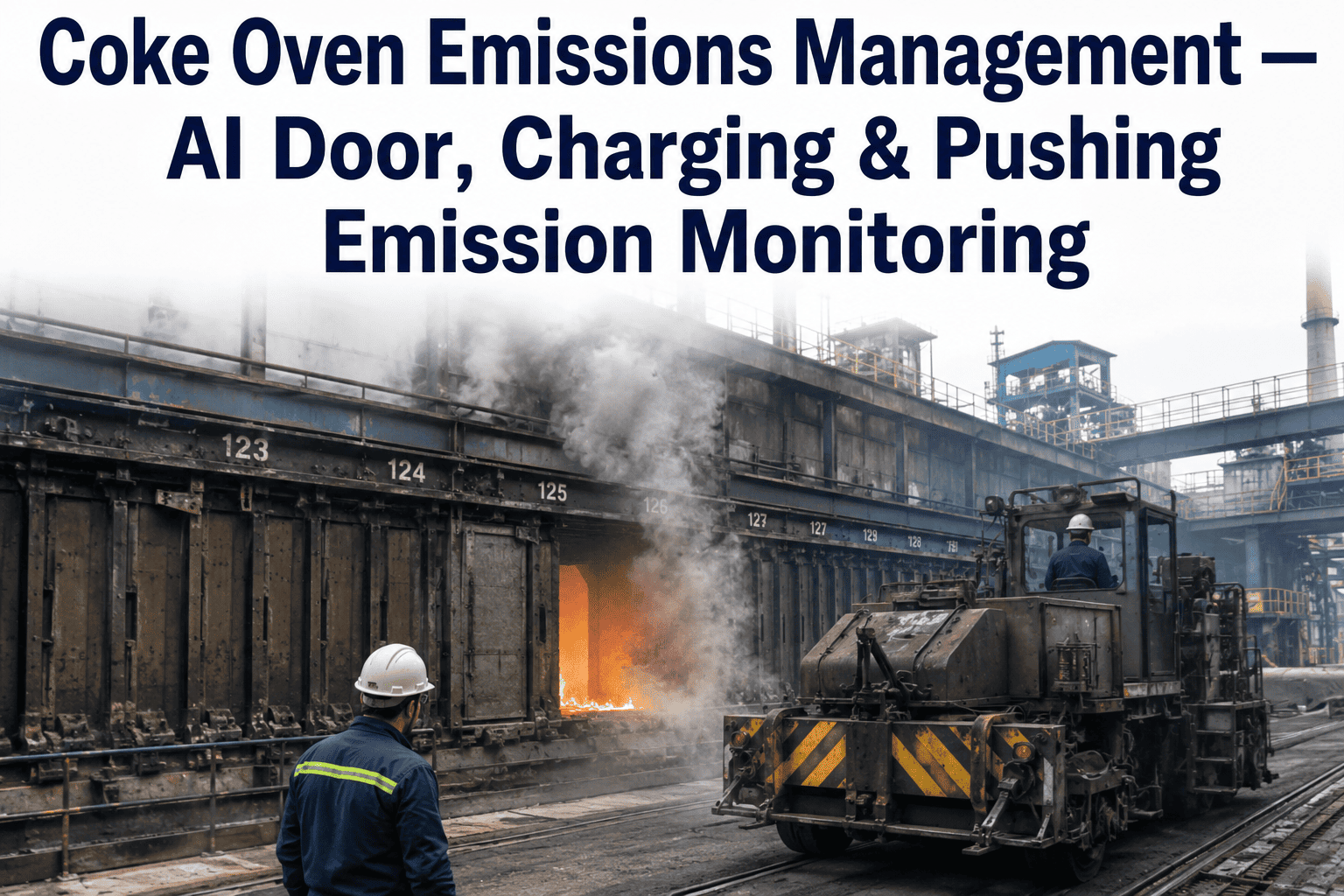
Pushing emissions occur when coke is not fully carbonized at the time of pushing, or when oven wall damage allows combustion products to enter the oven chamber. Conventional push scheduling relies on operator judgment of oven readiness, leading to emissions variability that creates compliance risk under increasingly stringent EPA and state air quality regulations.
Coal blend recipes are developed based on pilot oven tests and historical correlation with coke quality. Changes in coal source chemistry, moisture content, and particle size distribution occur between coal shipments, but the impact on CSR and CRI is not confirmed until laboratory results return 24 hours after the blend change affects battery production.
Is Your Coke Battery Managing Quality with 24-Hour Lab Latency?
A 30-minute consultation evaluates your current coke quality control workflow against AI-driven predictive alternatives. We will analyze one month of your battery's operating data and demonstrate the CSR variation that proactive AI control could eliminate.
Conventional Coke Oven Control Versus AI-Driven Quality and Pushing Optimization
The table below compares conventional coke oven battery management approaches with AI-driven methods across the key functions that determine coke quality, battery throughput, and environmental performance.
AI Transformation of Coke Oven Battery Operations
Function
Conventional Approach
AI-Driven Approach
Performance Improvement
iFactory Module
CSR Prediction
Post-push laboratory tumbler test — 8–24 hour lag
ML model predicting CSR from coal blend, flue temperature profile, coking time, and oven thermal history — 60 min ahead
Prediction accuracy 95%+ within +/- 1.2 CSR points
Coke Oven AI + Predictive Analytics
CRI Optimization
Post-push laboratory analysis — 8–24 hour lag
Neural network correlating blend chemistry, heating rate, and soaking time with CRI
Fixed time per oven based on battery average — manual adjustment
Per-oven AI optimization based on thermal condition, target quality, and blend moisture
Battery throughput improved 8–12% with consistent CSR
Coke Oven AI + Production Monitoring
Push Scheduling
Operator judgment of oven readiness — sequence based on coking time elapsed
AI scheduling optimizing oven sequence for thermal recovery, emissions minimization, and throughput
Pushing emissions reduced 40% — battery life extended
Coke Oven AI + EHS Management
Wall Condition Monitoring
Quarterly manual thermal surveys — visual inspection during maintenance outages
Continuous AI analysis of heating flue temperature trends, push force data, and thermal imaging
Wall defects detected 6–8 weeks earlier than scheduled surveys
Coke Oven AI + Predictive Maintenance
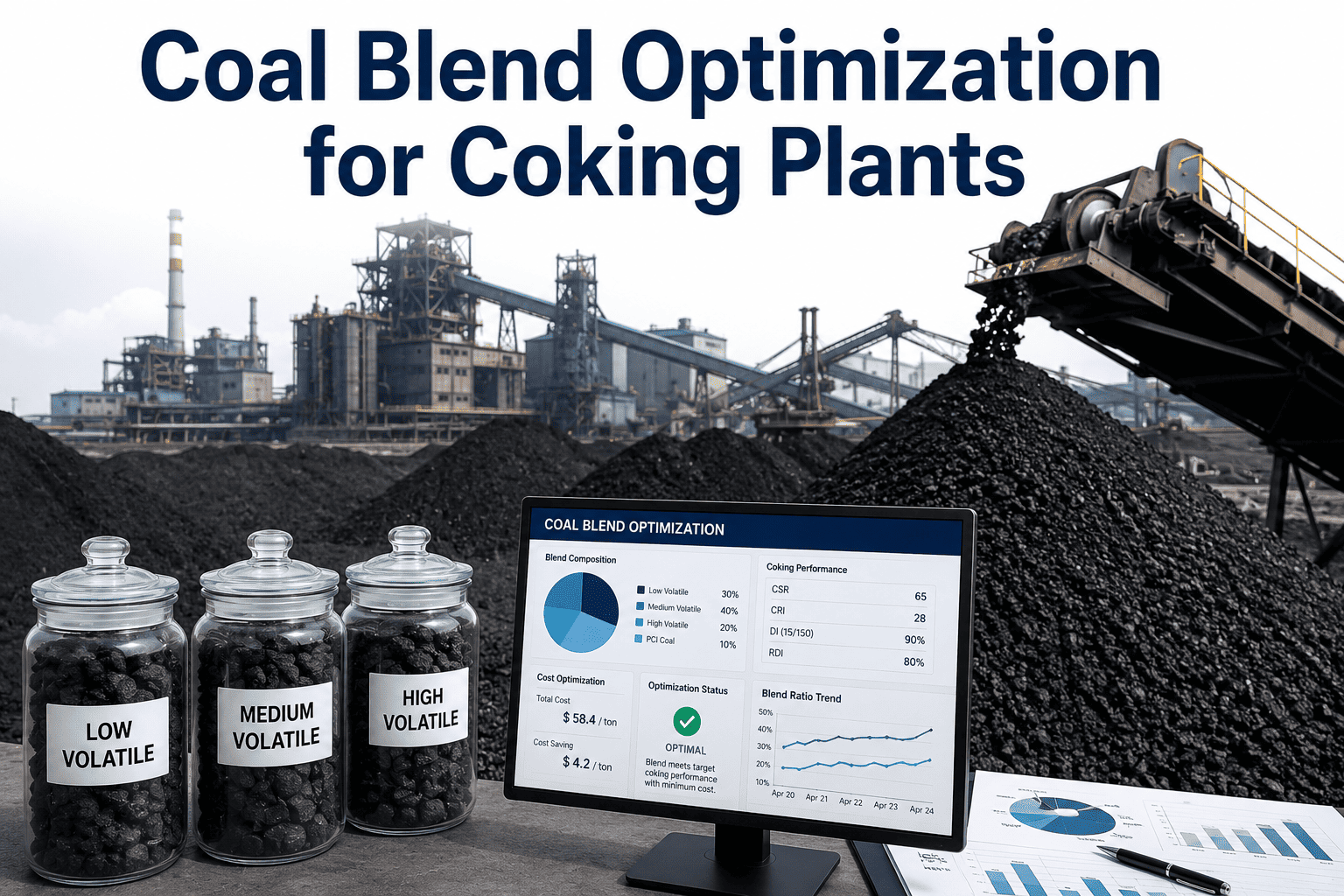
Coal Blend Optimization
Periodic pilot oven testing — blend adjustments based on historical correlation
AI correlation of coal chemistry, moisture, and petrographic data with predicted CSR/CRI per blend
Blend cost reduced $1.50–$3.00 per ton while maintaining CSR target
Coke Oven AI + Quality Control
Eight AI Capabilities That Transform Coke Oven Battery Performance
iFactory's Coke Oven AI module delivers eight integrated capabilities purpose-built for the operating environment of byproduct and heat-recovery coke oven batteries, covering the full value chain from coal blend design through coke pushing and quality assurance.
01
CSR and CRI Predictive Models
Machine learning models trained on coal blend chemistry, heating flue temperature profiles, coking time, and battery thermal history predict CSR and CRI 60 minutes before pushing. Models retrained continuously on the most recent 90 days of operating data to adapt to coal source changes and battery aging.
02
Per-Oven Coking Time Optimization
AI determines the optimal coking time for each oven individually based on its current thermal profile, coal blend moisture content, and target CSR specification. Ovens at the ends of the battery or adjacent to damaged flues receive adjusted coking times that prevent undercoking or overcoking.
03
Intelligent Push Scheduling Engine
The AI push scheduler sequences ovens to balance battery thermal recovery — pushing an oven transfers heat to adjacent ovens, and the scheduler optimizes the sequence to maintain stable heating flue temperatures while maximizing the number of pushes per shift and minimizing emissions events from premature pushing.
04
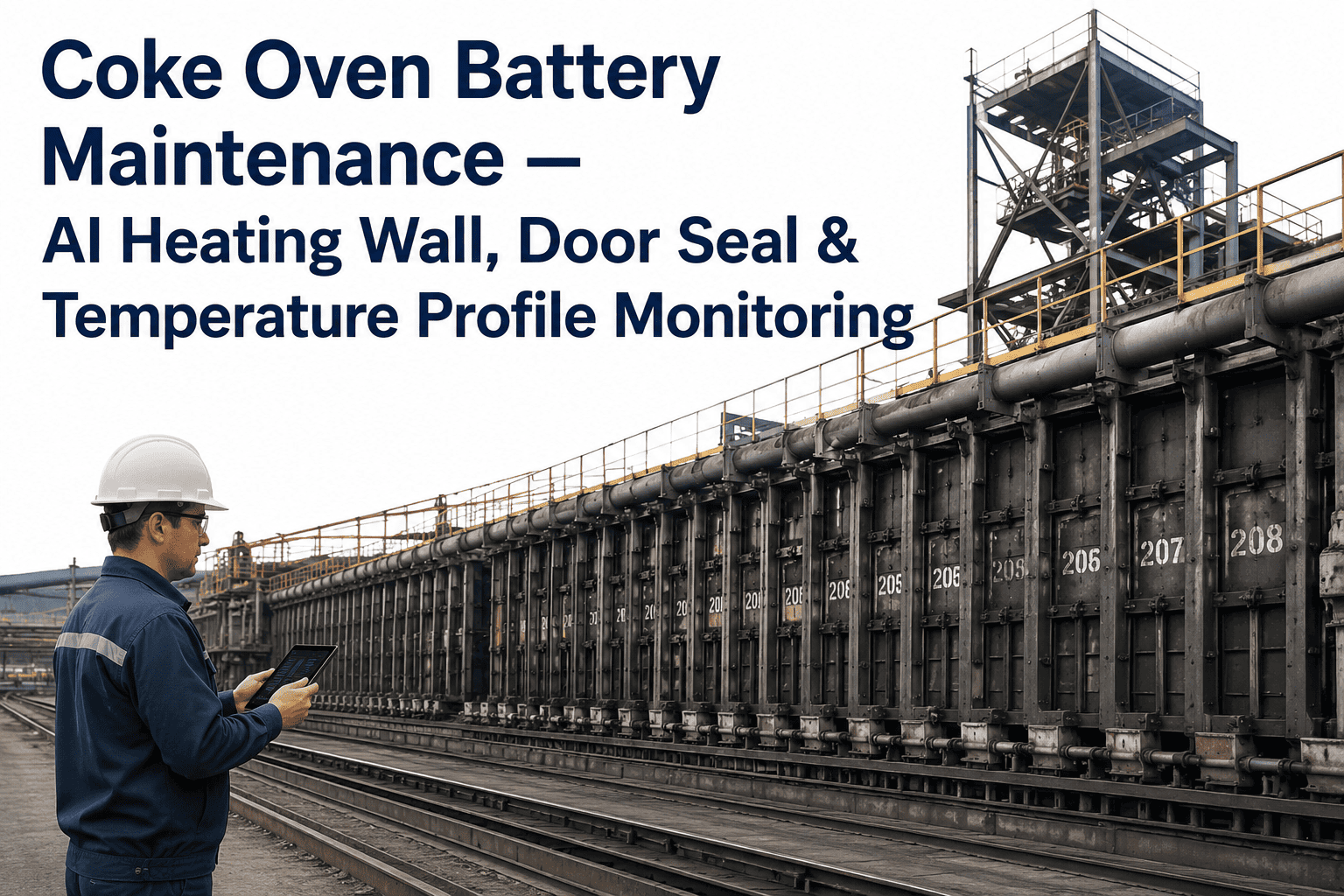
AI Vision Thermal Monitoring
Edge-deployed thermal cameras monitor oven wall condition during the coking cycle, detecting refractory spalling, heating flue blockages, and hot spots that reduce coking efficiency. Computer vision models trained on battery-specific thermal patterns alert operators to developing wall issues 6 to 8 weeks before quarterly surveys would identify them.
05
Predictive Maintenance for Battery Equipment
Predictive analytics on pusher machine, door machine, coke guide, and quench car systems using vibration, temperature, and position data. CMMS integration generates work orders 2 to 4 weeks before mechanical failures would cause unplanned battery stoppages.
06
Digital Twin Battery Simulation
A continuously synchronized digital twin of the battery — including each oven's thermal profile, heating flue system, regenerator condition, and coal-to-coke conversion dynamics — enables what-if analysis for blend changes, coking time adjustments, and battery rehabilitation planning in a risk-free virtual environment.
07
QA-1-67D Testing Module
Automated tracking of coke quality testing against ASTM D5341 (CSR/CRI) and ASTM D292 (shatter test) standards. Electronic test data capture eliminates manual transcription errors. Trend analysis correlates quality test results with coal blend, coking conditions, and BF performance data for continuous improvement.
08
Emissions Monitoring and Compliance Reporting
Continuous monitoring of pushing emissions opacity, charging emissions capture system performance, and combustion stack parameters. Automated compliance reporting for EPA and state air quality permit conditions. AI correlation of emissions events with push schedule and oven conditions identifies root causes and recommends corrective actions.
Ready to evaluate AI coke oven optimization for your battery? Schedule a structured walkthrough of coke-specific AI capabilities and a comparison against your current operating metrics.
Manual vs. AI Coke Oven Control: Performance Comparison
The performance gap between conventional coke oven management and AI-driven optimization is measurable across every dimension of battery operations. The comparison below reflects aggregate data from coke plants that transitioned from conventional control to iFactory's Coke Oven AI platform.
CSR Quality Data Latency
8–24 hours lab turnaround
60-minute ahead prediction
99% faster
CSR Variability Across Battery
+/- 4.2 points typical
+/- 2.1 points with AI control
50% reduction
Battery Throughput (pushes/day)
Baseline 100%
108–112% with AI scheduling
+8–12% improvement
Pushing Emissions Exceedances
12–18 events per month
4–7 events per month
-60% reduction
Coal Blend Cost Optimization
Baseline blend cost
$1.50–$3.00/ton savings
$600K–$2.1M annual
How AI Transforms the Coke Oven Operating Model — A Six-Step Implementation Roadmap
iFactory's Coke Oven AI platform deployment follows a structured implementation that delivers measurable quality and throughput improvement at each stage while building toward full operational integration with the battery control room and byproduct plant operations.
01
Coal Blend and Battery Data Integration
Establish real-time data ingestion from coal blend moisture analyzers, weigh feeders, heating flue temperature sensors, oven pressure transducers, pusher machine position sensors, and the laboratory LIS for CSR, CRI, and proximate analysis results. Typical duration: 3 to 5 weeks.
02
CSR and CRI Model Training and Calibration
Train site-specific ML models for CSR and CRI prediction using 12 to 24 months of historical battery data — coal blend records, coking time logs, flue temperature surveys, and laboratory quality results. Models validated against 200+ coke samples before production deployment. Typical duration: 4 to 6 weeks.
03
Coking Time and Push Schedule Optimization Go-Live
AI-driven coking time recommendations and push scheduling displayed on the battery control room console. Two-week supervised deployment with iFactory support engineer. Parallel run confirms model accuracy before advisory mode begins. Typical duration: 2 weeks.
04
AI Vision Thermal Monitoring Deployment
Edge-deployed thermal cameras installed at strategic locations on the battery topside and pusher side. Computer vision models trained on battery-specific thermal patterns detect developing flue blockages, wall hotspots, and refractory deterioration. Integrated with CMMS for automated work order generation.
05
Digital Twin Battery Simulation
Build and calibrate the digital twin of the battery — individual oven thermal models, heating flue system simulation, regenerator heat transfer model, and coal-to-coke conversion kinetics. Validated against 12 months of historical data. Enables what-if analysis for blend changes and battery rehabilitation planning.
06
Continuous Improvement and Compliance Automation
AI models retrained weekly on latest operating data. Monthly performance reports tracking CSR variability, throughput improvement, emissions reduction, and blend cost optimization against baseline. Automated compliance reporting for EPA and state air quality permits. Continuous model adaptation to battery aging and coal source changes.
Start Your Coke Oven Battery AI Transformation
iFactory AI delivers a turnkey coke oven optimization platform with pre-configured CSR/CRI prediction models, per-oven coking time optimization, AI push scheduling, thermal vision monitoring, and digital twin simulation — deployed on your plant network with zero cloud dependency. Schedule a 30-minute demo to see the platform configured for your battery's instrumentation and operating parameters.
Expert Review: AI Coke Oven Optimization From a 25-Year Battery Operations Veteran
"I have worked on coke oven batteries for 25 years — starting as a wharf operator, then shift supervisor, then battery manager, and finally operations director across a portfolio of four byproduct batteries producing 2.1 million tons of coke annually for a major integrated steel producer. The single most persistent operational frustration in coke making has been that we manage the most capital-intensive step in the ironmaking value chain with data that is one to three shifts old. CSR and CRI results arrive from the lab the day after the coke was pushed. By the time we confirm that a coal blend change degraded CSR from 64% to 58%, we have already pushed 40 to 60 ovens with that blend at the same coking conditions. We deployed iFactory's Coke Oven AI platform on our largest battery — 75 ovens, 680,000 tons per year — beginning with the CSR prediction model and the AI push scheduling engine. The model training required eight weeks of data pipeline setup and model calibration using 18 months of blend records, flue temperature surveys, and laboratory results. The first month of live predictions showed CSR forecast accuracy of 94% within +/- 1.2 points at a 60-minute prediction horizon. The push scheduling AI reduced our emissions exceedances from 14 per month to 5 per month within the first quarter by eliminating premature pushes on ovens that had not fully carbonized. The thermal imaging system — six cameras deployed on the battery topside — detected a developing heating flue blockage pattern in oven row 34 that manual quarterly temperature surveys had missed. The blockages were cleaned during a planned maintenance outage instead of causing an emergency battery cooldown six months later. The most significant financial impact came from coal blend optimization. The AI model identified that a $2.40 per ton reduction in blend cost — substituting 8% high-volatile B coal for medium-volatile coal — would maintain CSR above 62% with only a 0.8-point reduction from the existing 65.2% baseline. We implemented the blend change, and the first month of production confirmed CSR averaging 64.1% with the new blend — a saving of $680,000 annually at our battery's coal consumption rate. That ROI alone justified the platform investment within five months."
— Director of Coke Operations, Major U.S. Integrated Steel Producer — 25 Years in Coke Oven Operations — Battery Manager for 75-Oven Byproduct Battery — 2.1 Million Annual Coke Tons
25+ yrs
Coke Oven Operations Experience
94%
CSR Prediction Accuracy Achieved
$680K
Annual Blend Cost Savings
Conclusion
AI-driven coke oven battery optimization is not a future technology — it is a proven operational capability deployed today at U.S. integrated steel plants producing 400,000 to 700,000 tons of coke per year per battery. CSR prediction accuracy of 95%+ at a 60-minute forecast horizon, 50% reduction in CSR variability, battery throughput improvement of 8% to 12%, pushing emissions reductions of 60%, and coal blend cost savings of $1.50 to $3.00 per ton of coke — these are documented outcomes from AI models trained on 12 to 24 months of actual battery operating data and deployed on production batteries feeding blast furnaces at North American integrated mills.
The technology infrastructure required for deployment is the battery's existing instrumentation — heating flue thermocouples, oven pressure transducers, pusher machine position encoders, coal weigh feeders, and the laboratory information system that are already installed and generating data at every operating battery. iFactory's Coke Oven AI platform connects to these systems through read-only data links, trains site-specific models on the battery's own operating history, and delivers predictions and advisory recommendations on an operator console that does not write back to any control system component. No cloud data transmission required. No modifications to the battery PLC or DCS control logic. No additional sensors required beyond what the battery already has installed. Book a Demo to see the iFactory Coke Oven AI platform configured for your battery's instrumentation and operating parameters, or contact support to schedule a battery-specific deployment assessment.
Frequently Asked Questions
How does AI predict coke CSR and CRI 60 minutes before pushing?
The AI model ingests real-time data from the coal blend moisture analyzer, weigh feeder rates, heating flue temperature profile across all oven positions, coking time elapsed for each oven, and the oven's thermal history from previous cycles. The machine learning algorithm — trained on 12 to 24 months of historical data correlating these inputs with laboratory CSR and CRI results — predicts the coke quality 60 minutes before the push. The model updates predictions continuously as new data arrives from the battery instrumentation, giving the operator a full hour to adjust coking time or heating before the coke is pushed. See a live prediction demo using your battery's historical data.
What data infrastructure is needed to deploy AI on a coke oven battery?
The platform connects to existing battery instrumentation through read-only data links to the PLC, DCS, heating flue temperature system, and laboratory LIS. Standard connectivity protocols include OPC-UA, Modbus TCP, and API-based data ingestion. No additional sensors are required beyond the instrumentation already installed at the battery — thermocouples, pressure transducers, weigh feeders, and the coke quality laboratory system. The NVIDIA edge server is deployed on the plant network with all data processing contained on-premise.
How does AI push scheduling work across a battery with 50 to 80 ovens?
The AI push scheduler evaluates three factors for each oven: the current coke carbonization level predicted by the CSR/CRI model, the thermal recovery state of adjacent ovens (pushing one oven transfers heat to its neighbors), and the time since last push for each oven. The scheduler generates a push sequence that maximizes the number of pushes per shift while ensuring every oven is pushed at its optimal carbonization level — reducing emissions from premature pushes and preventing overcoking from delayed pushes. The schedule updates in real time as conditions change.
Does iFactory's Coke Oven AI require modifications to the battery control system or PLC logic?
No modifications to the battery PLC, DCS, or any control system are required. The AI platform connects through read-only data links to the process historian and instrumentation systems. CSR/CRI predictions, coking time recommendations, and push schedule optimization are displayed on a dedicated operator console that does not write data or commands back to any control system component. The platform operates as an advisory decision-support tool that the battery operator uses to adjust parameters through the existing control interface.
What is the typical ROI for AI coke oven optimization at a U.S. integrated steel plant?
Documented ROI from comparable AI coke oven deployments shows full platform payback within 5 to 12 months at a typical 400,000 to 700,000 ton-per-year battery. Primary ROI drivers include coal blend cost reduction ($1.50–$3.00 per ton, $600K–$2.1M annually), battery throughput improvement (8–12% more pushes per day), reduced emissions compliance risk, and avoided emergency repair costs from early wall defect detection. BF coke rate reduction of 3 to 5 kg/THM from consistent CSR provides additional downstream savings at the blast furnace.