Cooling water systems are the invisible lifeline of steel manufacturing. From the high-velocity mold cooling in a continuous caster to the massive thermal loads of a blast furnace staves and rolling mill work-rolls, water is the primary vehicle for heat removal. However, operating in the harsh environment of a steel mill leads to rapid degradation: mineral scaling, metallic corrosion, and bio-fouling can choke heat exchangers and seize pumps in a matter of weeks. Cooling water system analytics for steel manufacturing have evolved from manual titration and visual inspections to continuous, AI-driven thermal and chemical modeling. A 5% decrease in heat transfer efficiency on a primary mold cooler doesn't just waste energy—it risks a "Breakout" event that can destroy equipment and halt production for days. Understanding your obligations around Water Network KDEs, Critical Tracking Events (CTEs), and digital chemistry logs is the only way to eliminate the "Thermal Blind Zones" that currently threaten your asset longevity and production yields.
What Is Cooling Water System Analytics for Steel?
Cooling water analytics is the deployment of real-time thermal modeling and causal AI to monitor the health, efficiency, and chemistry of a plant's cooling infrastructure. Unlike standard monitoring, which only tracks tank levels, iFactory’s platform defines a mandatory, standardized approach to tracking Key Data Elements (KDEs) across Critical Tracking Events (CTEs) in the water chain—from intake and chemical treatment through primary circulation pumping, heat extraction at the asset, and final evaporation at the cooling towers.
The Scope Document for Cooling Water covers open-recirculating systems, closed-loop critical cooling, and direct spray cooling for molds and rolls. If your facility manages high-heat assets like EAFs, Casters, or HSMs, these analytics are the prerequisite for preventing equipment overheating, reducing chemical spend, and optimizing pump energy consumption. Schedule Your Free Demo with our thermal intelligence team.
Understanding CTEs: Critical Tracking Events in Cooling Water
Critical Tracking Events are the defined moments in the water circulation chain where performance and safety records must be created. For steel mill utility directors, the most operationally significant CTEs are:
Water Intake & Treatment (Chemistry Stabilization)
The point where makeup water enters and chemicals are dosed. Required KDEs include pH, conductivity, hardness, and biocidal levels. iFactory calculates the Langelier Saturation Index (LSI) in real-time to prevent scaling.
Primary Pumping & Circulation (Energy Phase)
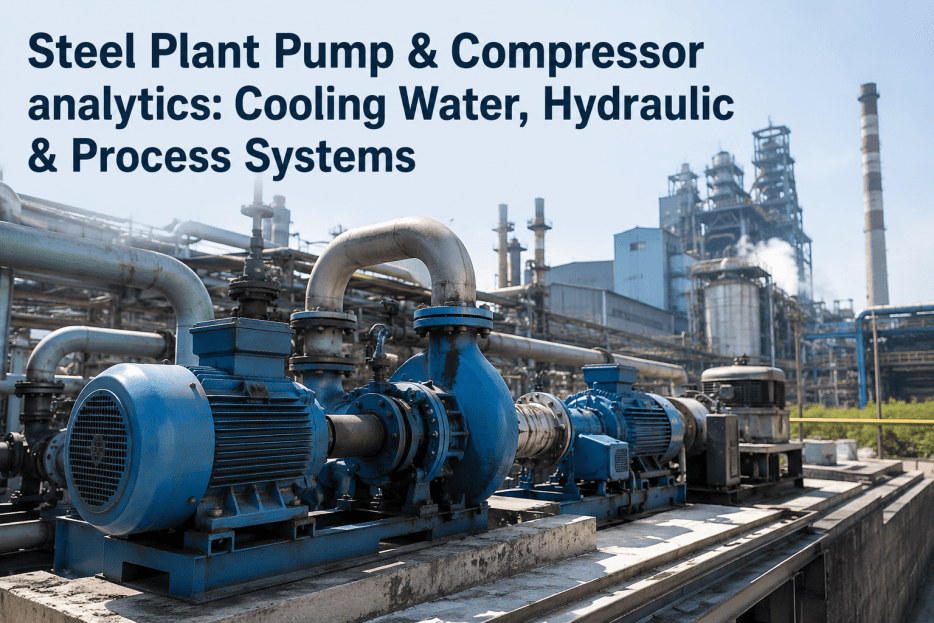
The movement of water through the plant. A critical CTE where pump efficiency KDEs are vital. iFactory identifies pump cavitation and impeller wear by correlating power draw with flow/head transients.
Heat Exchange & Extraction (The Asset Interface)
The point where water removes heat from the steel or equipment. Key KDEs: Approach temperature, Delta-T, and Delta-P across exchangers. iFactory detects fouling precisely when the heat transfer coefficient begins to drop.
Filtration & Side-Stream Cleaning
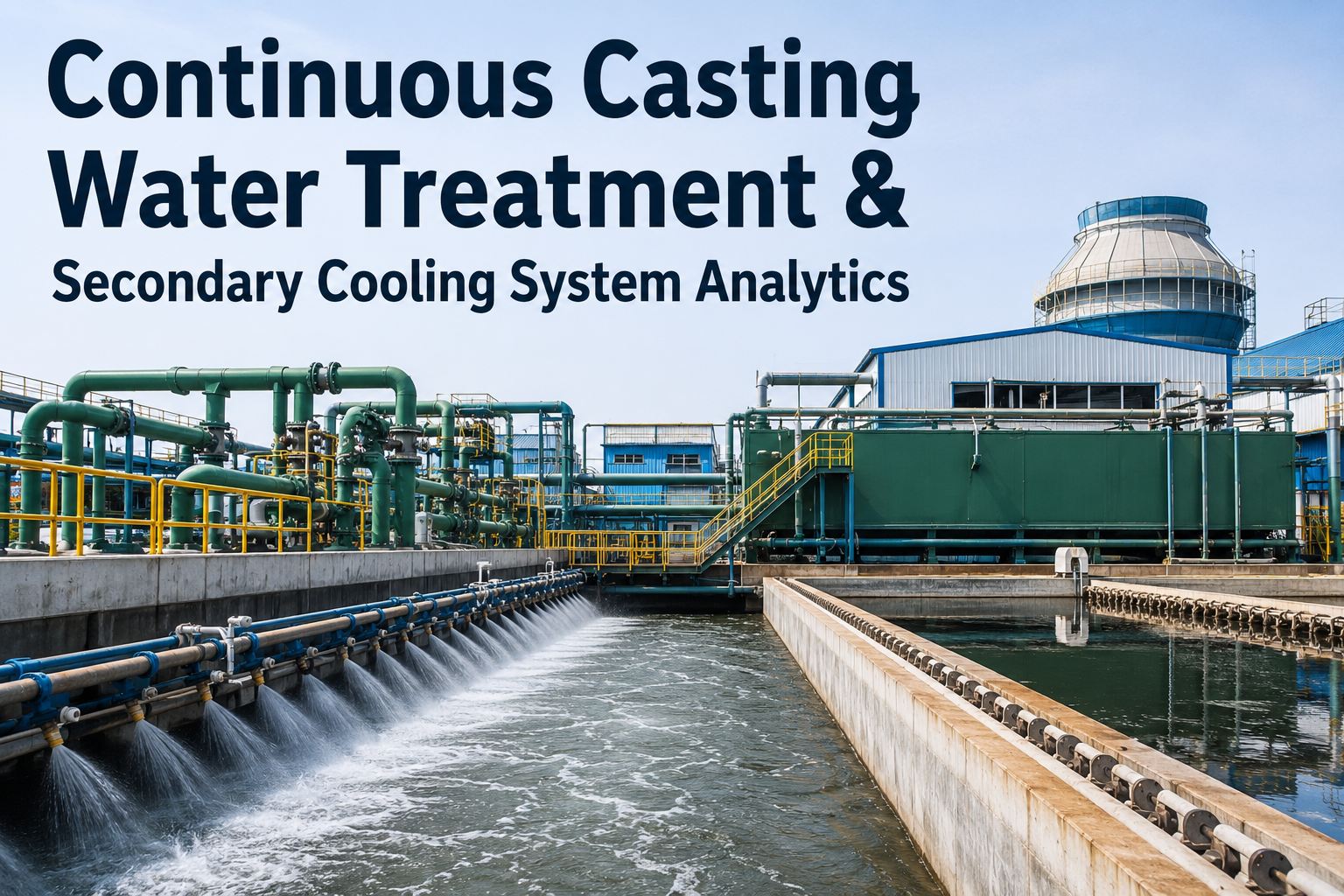
Removal of scale pits and metallic particulate. Required KDEs include filter backwash frequency and turbidity. iFactory monitors for 'Particulate Breakthrough' that can clog narrow spray nozzles in the rolling mill.
Evaporative Cooling (Cooling Towers)
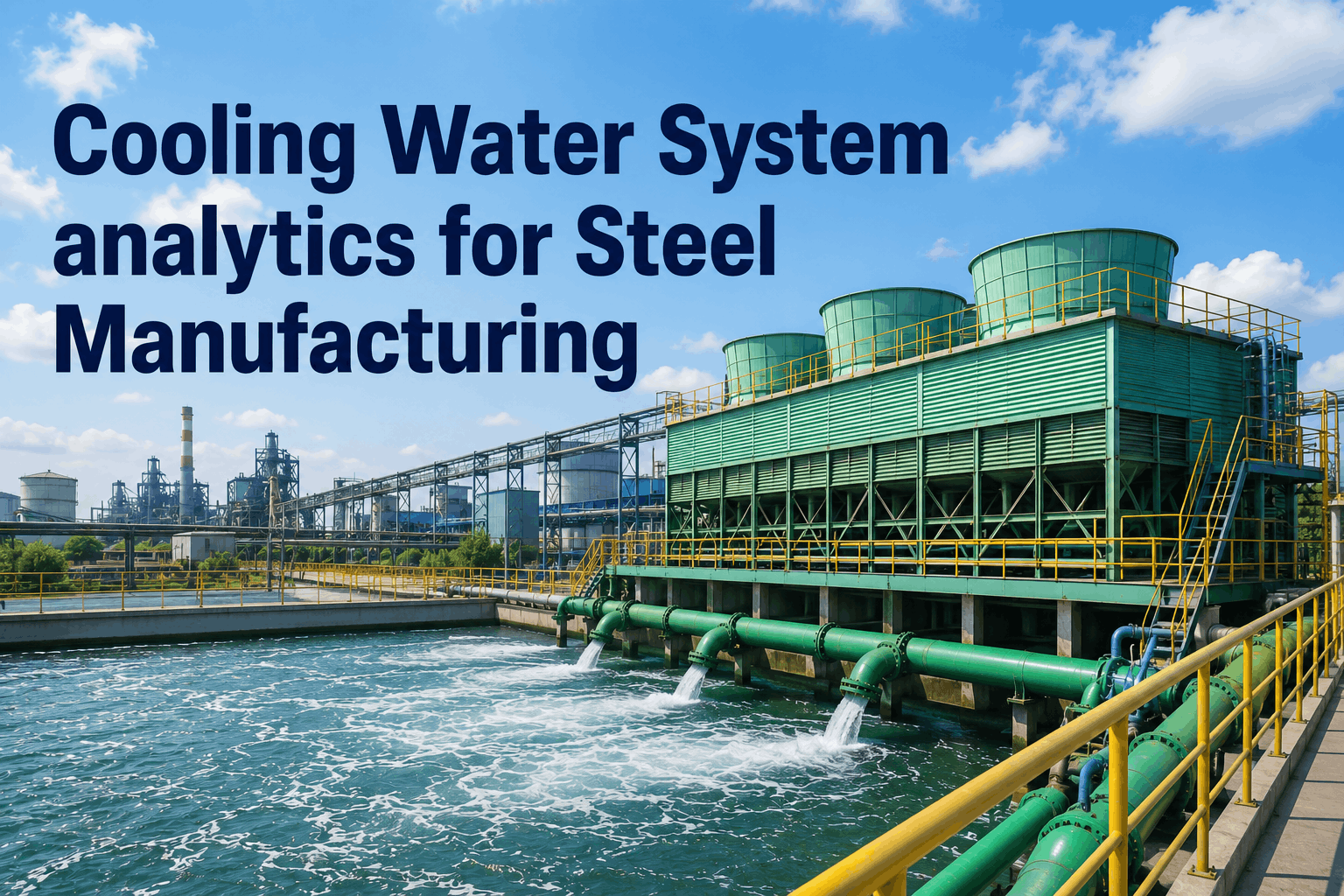
The release of heat to the atmosphere. Required KDEs include Tower Range, Approach, and Fan Vibration. iFactory automates the Legionella safety log and fan health tracking. Schedule Your Free Demo for tower optimization.
Key Data Elements (KDEs): What Your Water Records Must Capture
Key Data Elements are the specific data points that must be recorded at each Critical Tracking Event. The practical compliance challenge for most water directors is not knowing what KDEs are required; it is building operational systems that capture them consistently across thousands of meters of piping. Book a demo to see how iFactory maps KDE capture to your existing water network instrumentation.
| CTE | Required KDEs | Performance Trigger? | Who Must Monitor |
|---|---|---|---|
| Treatment | pH, Conductivity, LSI, Oxidant Potential (ORP) | Yes — Notify on Corrosion Risk | Water Chemists |
| Circulation | Pump Vibration, Motor Power, Flow, Discharge Pressure | Yes — Notify on Pump Wear | Utility Engineers |
| Extraction | Asset Temp, Water In/Out Temp, Flow Rate, Exchanger Delta-P | Yes — Notify on Fouling | Production Managers |
| Filtration | Turbidity, Backwash Count, Suspended Solids KDEs | Yes — Notify on Nozzle Risk | Maintenance Teams |
| Evaporation | Wet Bulb Temp, Cold Water Temp, Fan Power, Basin Level | Yes — Notify on Efficiency Loss | Energy Dispatchers |
Water Treatment Record Retention & Environmental Audit Readiness
Modern industrial environmental standards (like ISO 14001) require covered entities to retain water chemistry and discharge records for a minimum of five years. Records must be maintained in a format that is retrievable on demand. This "Minute-Level" production requirement is the compliance standard that exposes the most significant operational gaps in plants relying on manual titration logs or paper-based chemical reports.
The rule does not mandate electronic records—paper logs are technically permissible—but the need for instantaneous correlation during an investigation makes paper-only systems extremely high-risk. A director with 24 months of paper logs cannot realistically produce a complete and accurate "Corrosion Chain" for a specific heat exchanger failure within the 2-minute window required during an active audit. Book a demo to see how iFactory's safety system structures record retention to meet international water standards.
In an active thermal investigation, your facility must produce all relevant KDE records across every applicable CTE. This means your system must be able to: (1) identify all exchangers associated with the asset, (2) retrieve all Delta-P and Delta-T transients linked to those assets, (3) trace backward to chemical dosing and forward to cooling tower approach, and (4) compile these into a readable efficiency report. For facilities managing 50,000+ cubic meters of water per hour, manual compilation is not operationally viable without a purpose-built analytics system.
AI-Driven Analytics for Water Reliability: How Technology Closes the Gap
Manual and spreadsheet-based water monitoring fails on three fronts: they cannot identify early-stage heat transfer fouling, they cannot reliably predict pump impeller erosion, and they cannot produce complete water treatment chains during a regulatory audit. AI-driven platforms address each of these failure points through automated data capture and causal thermal modeling. Book a demo to see iFactory's AI-driven water module in action.
Autonomous Fouling & Scaling Detection
Integrated with thermal sensors, AI-driven platforms capture Heat Transfer KDEs automatically—identifying sub-millimeter scaling layers that prevent effective cooling and risk asset burn-through.
Predictive Pump Efficiency Mapping
Intelligent pump engines automatically link power consumption KDEs to flow transients—identifying cavitation and internal wear months before a catastrophic pump seizure halts the mill.
Instant Environmental Audit Reporting
On-demand safety reports compile complete chemistry and treatment histories for any water sector—in minutes, not days. Records are formatted to international standards, ensuring 100% compliance.
Autonomous Chemical Dosing Optimization
Built-in chemical modeling tools allow Utility Directors to simulate dosing ratios, identifying the most efficient treatment blend based on real-time conductivity and pH KDEs, reducing chemical spend by 15%.
Cooling Water Reliability Gaps: Where Steel Mills Are Most at Risk
Based on industry analysis of steel mill water infrastructure readiness assessments, the following compliance and reliability gaps appear most frequently.
Building a Water Reliability Roadmap: A Step-by-Step Approach
For Utility and Production Directors, the roadmap from reactive firefighting to autonomous thermal management has five operational phases.
Network Scoping: Map Your Critical Thermal Path
Audit every primary pump station, heat exchanger, and cooling tower. Document which sectors trigger safety obligations and at which point each CTE applies. Output: a facility-specific water path map.
KDE Gap Analysis: Assess Current Sensor Density
For each in-scope CTE, compare the data your current SCADA captures against the KDEs required for fouling and pump safety. Identify fields that are missing, like sub-second flow or Delta-P. Output: a KDE gap register for water reliability.
Thermal Threshold & Fouling Design
Design a fouling-detection schema that meets safety requirements: unique exchanger identification and autonomous cleaning triggers. Integrate this into your existing SCADA logic. Output: a documented thermal response procedure.
Technology Integration & Chemical Skid Deployment
Select and deploy a technology platform capable of automated KDE capture and 2-minute record production. Integrate with existing VFDs and chemical dosing skids. Output: a deployed water analytics system.
Mock Environmental Audit & Safety Validation
Conduct a minimum of two mock audit exercises—one forward trace from a treatment spike to all exchangers, and one backward trace from a tower failure to the pump station. Output: validated audit-readiness certification.
Frequently Asked Questions: Cooling Water Analytics
How does AI detect heat exchanger fouling in steel plants?
AI continuously calculates the 'Heat Transfer Coefficient' by correlating water In/Out temperatures with flow rate and Delta-P. By comparing this to the 'Clean Baseline' KDE, it identifies scaling layers as thin as 0.1mm that are invisible to standard temperature sensors.
What are KDEs and CTEs in cooling water systems?
Critical Tracking Events (CTEs) are key points in the water chain (e.g., treatment, pumping, exchange). Key Data Elements (KDEs) are the specific data points recorded at these events, such as LSI (Langelier Saturation Index), Pump Power, or Exchanger Delta-P.
Can iFactory predict cooling water pump failures?
Yes. By monitoring the 'Best Efficiency Point' (BEP) in real-time and correlating vibration with flow transients, the AI identifies impeller erosion and bearing fatigue precursors months before a catastrophic pump seizure.
What is "LSI Monitoring" and why does it matter for steel?
The Langelier Saturation Index (LSI) predicts if water will be scale-forming or corrosive. In the high-heat assets of a steel mill, keeping water in a non-scaling state is vital to prevent 'Hot Spots' that lead to asset burn-through.
How does the platform help with Legionella safety?
iFactory integrates with ORP and biocide dosing skids. It maintains a continuous, digital safety log of chemical levels and tower temperatures, providing an audit-ready "Minute-Level" trail for Legionella compliance.
Can the platform reduce pump energy costs?
Yes. By using real-time asset load KDEs to modulate VFD pump speeds, the system ensures you are only circulating the exact volume of water required for cooling, typically reducing pump energy spend by 12–18%.
What is "Nozzle Clogging" prevention in rolling mills?
In rolling and mold cooling, narrow spray nozzles must be kept clear of scale. iFactory monitors the turbidity and filtration KDEs, alerting maintenance to backwash or nozzle checks before product quality is impacted.
How do I get a cooling water reliability audit for my plant?
iFactory offers a structured 14-day water network integrity audit. Our engineers will establish a thermal and chemistry baseline for your primary HPUs and towers, delivering a structured ROI roadmap for autonomous management. Schedule Your Free Demo to begin.