Steel plants contain some of the most hazardous industrial environments imaginable — molten metal at 1,600°C, explosive gas networks carrying carbon monoxide-rich blast furnace gas, confined spaces inside furnace shells, high-voltage electrical systems, massive overhead crane operations, and chemical exposure risks across dozens of interconnected production zones. When an incident occurs — a molten metal spill, a gas leak a structural failure, a fire, or an explosion — the response must be immediate, coordinated, and precisely executed. Yet the majority of steel plants still manage emergency response through paper-based plans stored in filing cabinets, radio communication chains that break down under stress, and evacuation procedures that haven't been drilled in months. With OSHA penalties for willful safety violations reaching $170,735 per instance and steel plants routinely facing combined fines exceeding $1 million, the gap between paper plans and digital response frameworks is measured in lives and dollars. OxMaint's digital emergency response platform transforms paper plans into live, mobile-accessible, automatically coordinated response systems — connecting gas detection, personnel tracking, incident command, and regulatory reporting into a single platform. Book a free demo and see how digital emergency response protects your plant and your people.
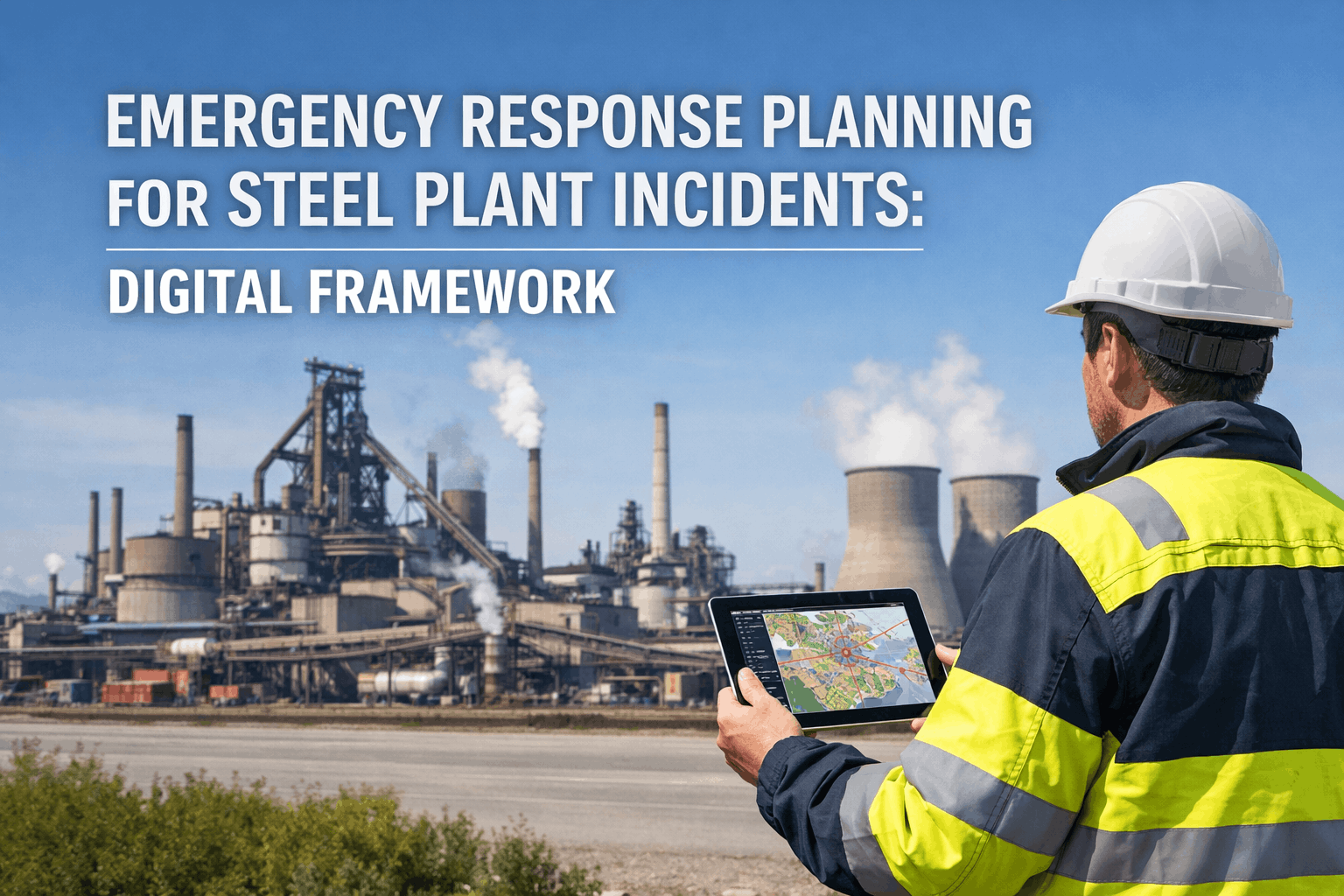
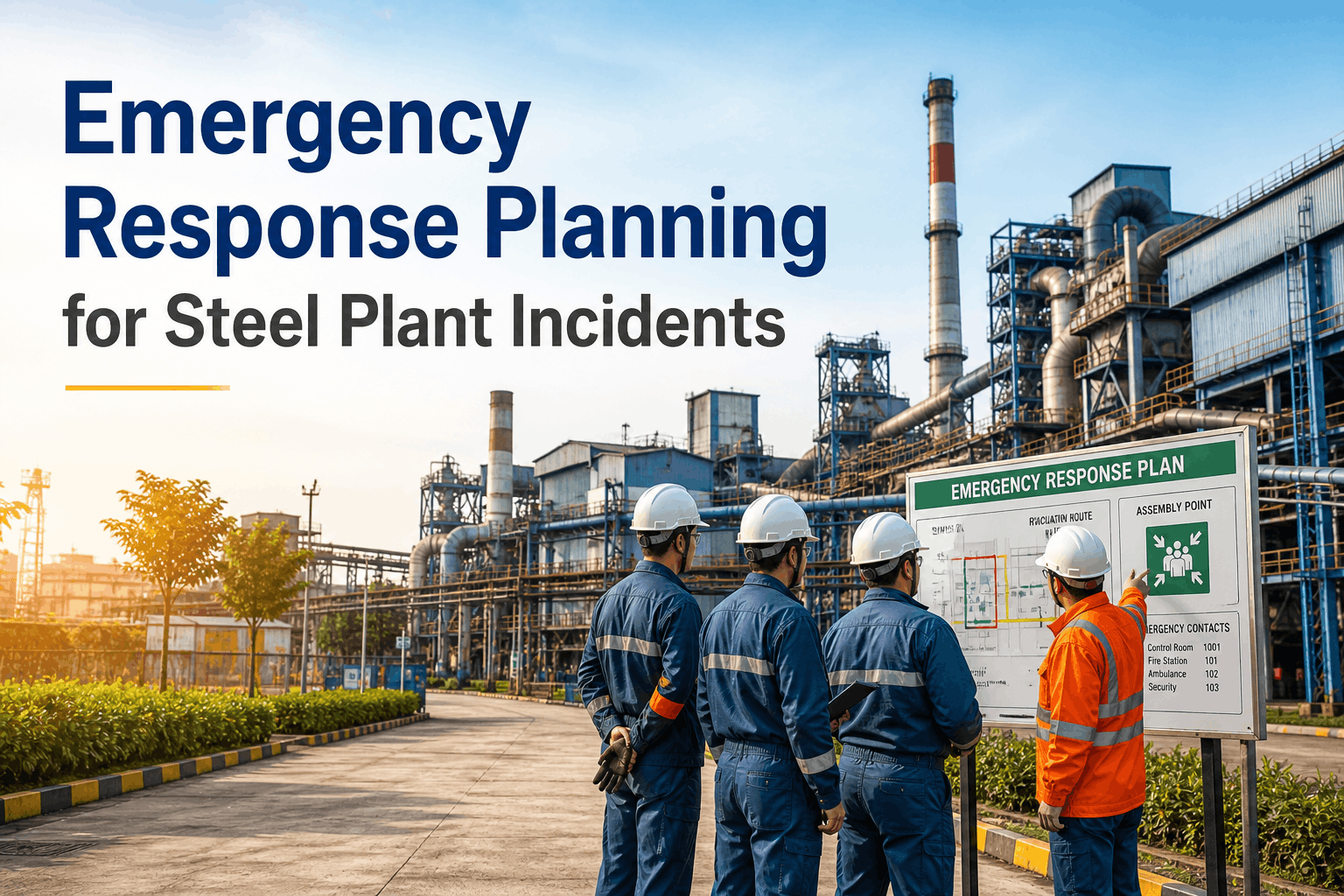
Emergency Response Planning for Steel Plant Incidents: Digital Framework
When Seconds Decide Outcomes — Paper Plans Aren't Fast Enough.
In a steel plant emergency, the first 5 minutes determine whether an incident is contained or becomes a catastrophe. Digital emergency response frameworks replace static paper plans with live, sensor-integrated, mobile-coordinated systems that automatically detect hazards, alert the right people, guide evacuation routes, track personnel locations, and document every action for regulatory compliance — all in real time, before the first responder even arrives on scene.
The Incidents Your Emergency Plan Must Cover — Every Scenario, Every Zone
Steel plants face a unique combination of extreme hazards that no other industry concentrates in a single facility. Your digital emergency framework must address every one.
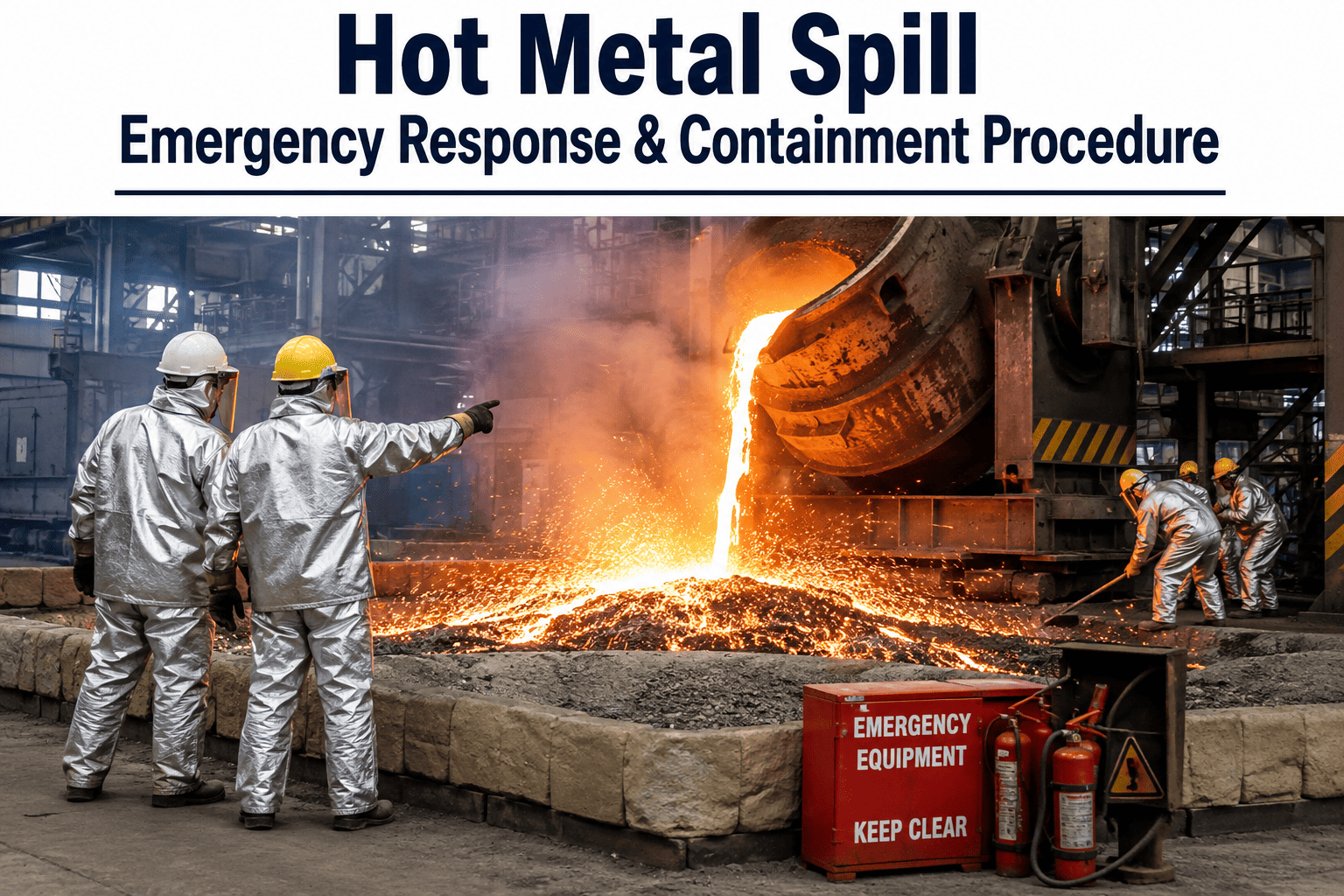
Molten Metal Spill / Breakout
Ladle failure, caster breakout, or BOF/EAF vessel breach releasing molten steel at 1,600°C. Immediate evacuation of affected zones, fire suppression activation, exclusion perimeter establishment, and medical emergency response for burn injuries.
Gas Leak / Explosion
Blast furnace gas (CO-rich), coke oven gas (H₂-rich), or converter gas release. Carbon monoxide is invisible and odorless — a gas leak can incapacitate workers in minutes. Requires immediate gas detection alerts, breathing apparatus deployment, area isolation, and downwind evacuation.
Electrical Arc Flash / Failure
Arc flash incidents at high-voltage switchgear (415V–132kV) can be instantly fatal. Plant-wide blackout from electrical failure halts production across all units. Requires LOTO verification, electrical isolation confirmation, and coordinated restart procedures. See electrical emergency protocols
Structural Collapse / Crane Failure
Crane structural failure, dropped loads, building collapse from thermal damage, or refractory failure. Trapped worker rescue protocols, structural integrity assessment, and load stabilization before any rescue entry.
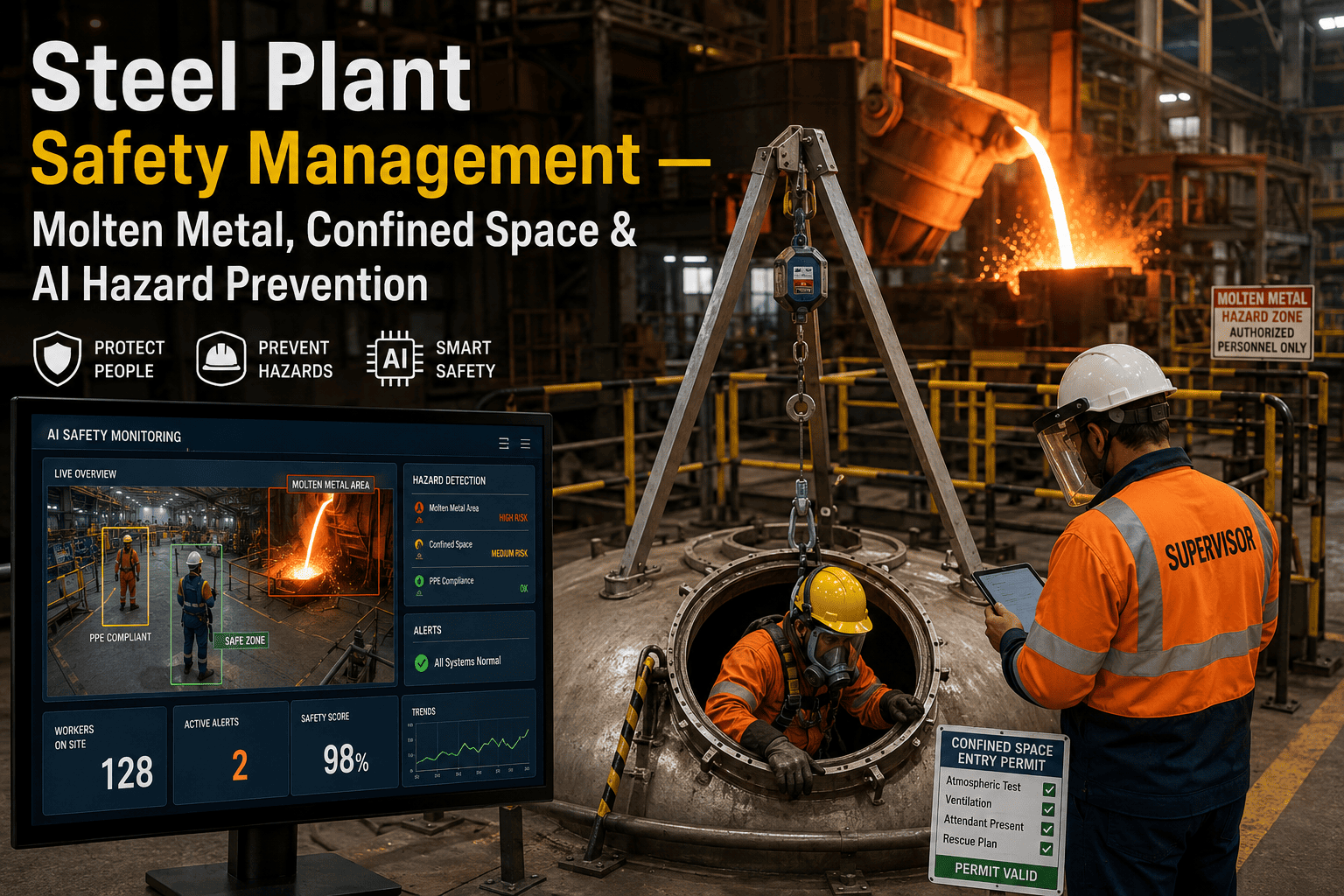
Confined Space Emergency
Worker collapse inside blast furnace shell, vessel, tank, or duct during shutdown maintenance. Atmospheric hazard (O₂ depletion, CO exposure), heat stress, or physical injury. Requires trained rescue team, atmospheric monitoring, and permit-controlled entry for rescuers.
Chemical Spill / Environmental Release
Hydraulic oil spill, acid release from water treatment, or hazardous waste containment breach. Environmental compliance reporting requirements, containment procedures, and community notification obligations. Explore environmental response modules
Paper Emergency Plans vs. Digital Response Framework
What a Digital Emergency Response Platform Delivers for Steel Plants
OxMaint connects hazard detection, personnel safety, incident command, and compliance into one platform — purpose-built for the extreme hazard environment of steel manufacturing. See the platform live
Automated Hazard Detection & Alerting
Integrates with gas detection systems, fire alarms, temperature sensors, and structural monitoring to automatically trigger emergency protocols when thresholds are exceeded. Alerts are classified by severity and routed to the correct response teams simultaneously — no radio chain delays, no single points of failure.
Real-Time Personnel Tracking & Mustering
Know exactly who is in every zone of your plant at all times. When an incident triggers evacuation, the system instantly identifies who is in the affected zone, tracks movement toward muster points, and flags missing personnel within seconds — not the 20+ minutes a manual headcount requires. See personnel tracking live
Digital Incident Command Dashboard
Incident commanders see a live operational picture — active hazard zones, personnel locations, resource deployment status, response team assignments, and timeline of all actions taken. Task assignment, resource requests, and mutual aid coordination happen through the platform, creating a single source of truth during the chaos of a real emergency.
Dynamic Emergency Playbooks
Pre-configured, scenario-specific response playbooks for every incident type — molten metal spill, gas leak, electrical failure, confined space rescue, fire, structural collapse. Each playbook defines step-by-step actions, responsible roles, required resources, and escalation triggers. Playbooks adapt in real time based on incident severity and location.
Compliance & Regulatory Reporting
Every alert, action, communication, and decision is automatically logged with timestamps, personnel IDs, and outcome records. OSHA incident reporting, PSM compliance documentation, environmental release notifications, and post-incident investigation reports are generated from the live data — eliminating the weeks of manual reconstruction that paper-based systems require. See compliance reporting
Drill Scheduling & Performance Analytics
Schedule and execute emergency drills digitally — with automatic response time measurement, participation tracking, gap analysis, and improvement recommendations. Compare drill performance across shifts, departments, and scenarios. Identify which teams meet response benchmarks and which need additional training. OSHA requires documented drill records — digital systems provide them automatically.
Anatomy of a Digital Emergency Response — Minute by Minute
How the digital framework transforms response from the moment a hazard is detected.
Hazard Detected
Gas sensor, temperature monitor, or fire detection system triggers threshold alarm. Digital framework classifies incident severity based on sensor data and location context.
Alerts Dispatched
Simultaneous push alerts to incident commander, area safety officer, affected zone personnel, medical team, and plant management. Specific playbook activated based on incident type and zone.
Personnel Accounted
Real-time tracking identifies all personnel in the affected zone. Dynamic evacuation routes pushed to mobile devices. Muster point tracking begins. Missing personnel flagged instantly.
Incident Command Active
Digital command dashboard live with hazard zone map, personnel locations, response team deployment, and resource status. Task assignments dispatched to response teams with specific instructions.
Response Teams Deployed
Rescue, fire, medical, and hazmat teams en route or on scene with full situational awareness. Mutual aid notifications sent to external services if escalation required. Every action logged automatically.
Containment Achieved
Hazard isolated, affected zones secured, all personnel accounted for, medical response underway. Incident commander has complete operational picture for ongoing management. Full digital record in progress for regulatory compliance. See the response timeline in your demo
Implementing Digital Emergency Response — Without Disrupting Operations
Digital emergency response deploys alongside your existing operations and integrates with your current safety infrastructure. Get a deployment plan for your plant
Weeks 1–3 · Hazard Mapping & System Integration
Map all plant zones by hazard type and severity. Integrate existing gas detection, fire alarm, and SCADA systems. Configure alert routing and escalation chains. Load personnel rosters and zone assignments.
Weeks 4–5 · Playbook Configuration & Mobile Deployment
Configure scenario-specific emergency playbooks for every incident type. Deploy mobile app to safety officers, area supervisors, incident commanders, and response team leaders. Configure personnel tracking systems.
Weeks 6–8 · Training, Drills & Validation
Hands-on training for all response roles. Execute digital emergency drills for each scenario type. Measure response times against benchmarks. Identify gaps and optimize playbooks based on drill data.
Month 3+ · Full Operations & Continuous Improvement
Full digital emergency response operations. Quarterly drill schedule with performance analytics. Continuous playbook updates based on incident data and near-miss analysis. Regulatory audit-ready documentation at all times.
Every Emergency Scenario & Response Capability Managed
Frequently Asked Questions — Digital Emergency Response for Steel Plants
How does a digital emergency response system differ from our existing paper-based plans?
Paper plans are static documents that sit in filing cabinets until someone retrieves them during a crisis — by which time the first critical minutes have already passed. A digital framework is a live, sensor-integrated system that automatically detects hazards, classifies incident severity, dispatches alerts to all response teams simultaneously (in under 60 seconds), tracks personnel locations in real time, provides dynamic evacuation routing, and documents every action with timestamps for regulatory compliance. The difference is the gap between reading about what to do and having the system do it automatically. See the digital difference in a demo
Does this integrate with our existing gas detection and fire alarm systems?
Yes. OxMaint's digital emergency response platform integrates with all major gas detection systems, fire alarm panels, SCADA systems, and building management systems via standard industrial protocols (Modbus, BACnet, OPC-UA). When a gas detector triggers a threshold alarm, the digital framework automatically classifies the incident, activates the appropriate playbook, and dispatches alerts — no manual relay required. The platform supplements existing detection with enhanced response coordination, personnel tracking, and compliance documentation.
How does real-time personnel tracking work in a steel plant environment?
Personnel location is tracked through badge-based RFID/BLE systems, wearable devices, or smartphone-based positioning. Zone-level accuracy identifies which area each worker is in (blast furnace, melt shop, rolling mill, utilities). When an incident occurs, the system instantly generates a list of all personnel in the affected zone and adjacent zones, tracks movement toward designated muster points, and flags anyone who hasn't been accounted for — in seconds rather than the 20+ minutes a manual headcount takes. See personnel tracking in action
What happens during a communication failure (e.g., radio dead zones, network outage)?
The platform is designed for resilience in harsh industrial environments. Mobile devices cache emergency playbooks and zone maps offline. Local alarm systems (sirens, strobes, PA) activate independently of the network. Edge computing nodes at critical plant locations process alerts locally even during network disruption. Multi-channel alerting ensures messages reach responders via push notification, SMS, email, PA system, and visual alerts simultaneously — if one channel fails, others continue.
How does this help with OSHA PSM and regulatory compliance?
OSHA's Process Safety Management standard (1910.119) requires documented emergency action plans, trained response teams, regular drills, and post-incident investigation records. Digital emergency response provides all of this automatically — every alert, response action, personnel location, and decision is timestamped and stored. Drill performance data, training records, and incident reports are audit-ready at all times. When OSHA inspectors arrive, you produce complete digital documentation in minutes instead of weeks of paper reconstruction.
How long does it take to implement and does it disrupt production?
Most steel plants achieve full digital emergency response within 8 weeks — hazard mapping and system integration in weeks 1–3, playbook configuration and mobile deployment in weeks 4–5, and training with validation drills in weeks 6–8. Implementation runs alongside normal operations without production disruption. Sensor integrations connect to existing detection systems, and the platform deploys on standard mobile devices and plant networks. Get your deployment timeline
When the Next Incident Happens — Will Your Response Be Measured in Seconds or Minutes?
In a steel plant emergency, every second counts. Digital emergency response frameworks detect hazards automatically, alert responders instantly, track every person in every zone, and document everything for compliance — all before paper plans can even be retrieved from the filing cabinet. See it in action.

-procedures-for-steel-plant-equipment-digital-management-system.png)
