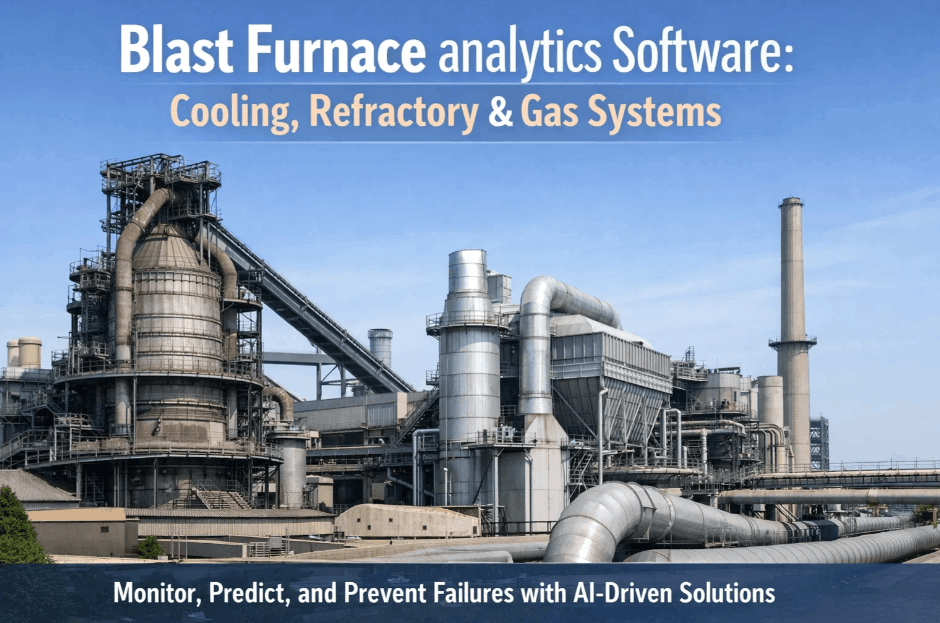
The blast furnace (BF) is the undisputed beating heart of an integrated steel mill. When it operates smoothly, downstream continuous casters and hot strip mills shatter production tonnage records. However, a primary failure inside the BF—such as a catastrophic hearth refractory breakout, unpredicted cooling stave destruction, or a severe gas cleaning system choke—represents the ultimate metallurgical nightmare, costing facilities upwards of $2 million to $5 million in direct thermal damage and halted shipments. Because the extreme internal environment reaches 2000°C+, operators rely exclusively on external instrumentation. Modern ironmaking facilities are abandoning chaotic, manual thermal tracking matrices in favor of unified blast furnace analytics software. This AI-driven edge layer autonomously ingests thousands of embedded thermocouple heat indices and water flow delta-Ts continuously, predicting massive critical failures weeks before structural collapse. Book a demo to align your ironmaking infrastructure with absolute thermal predictability.
IRONMAKING PREDICTIVE PLATFORM
Secure Your Blast Furnace Variables on a Single Intelligence Dashboard.
Integrate dense cooling stave heat mapping, hearth refractory erosion trending, and top gas cleaning pressure analytics mathematically to guarantee zero catastrophic BF breakouts.
Why the "Black Box" of Blast Furnace Operations is Too Expensive to Guess
For decades, monitoring the health of a blast furnace campaign required heavy reliance on manual spreadsheets tracking cooling water volume and massive guesswork regarding the actual internal iron boundary layer (the skull). If a copper cooling stave loses water flow momentarily, localized boiling creates a vapor jacket, blinding the thermocouple and rapidly eroding both the stave and the surrounding refractory brick. Because operators cannot physically see inside the shaft, legacy ironmaking analytics often fail to correlate a slight pressure drop in the gas cleaning scrubber with a massive impending thermal runaway inside the bosh.
Operating a blast furnace efficiently means walking a razor-thin mathematical line extending equipment lifespan. Replacing a burnt-out stave requires shutting down the furnace wind, drilling through the shell, and risking a 'furnace chill' that takes extreme oxygen firing and weeks of labor to recover from. Purpose-built blast furnace software strips away the guesswork, utilizing multivariate AI mapping to lock down every critical sub-system into one unified compliance matrix.
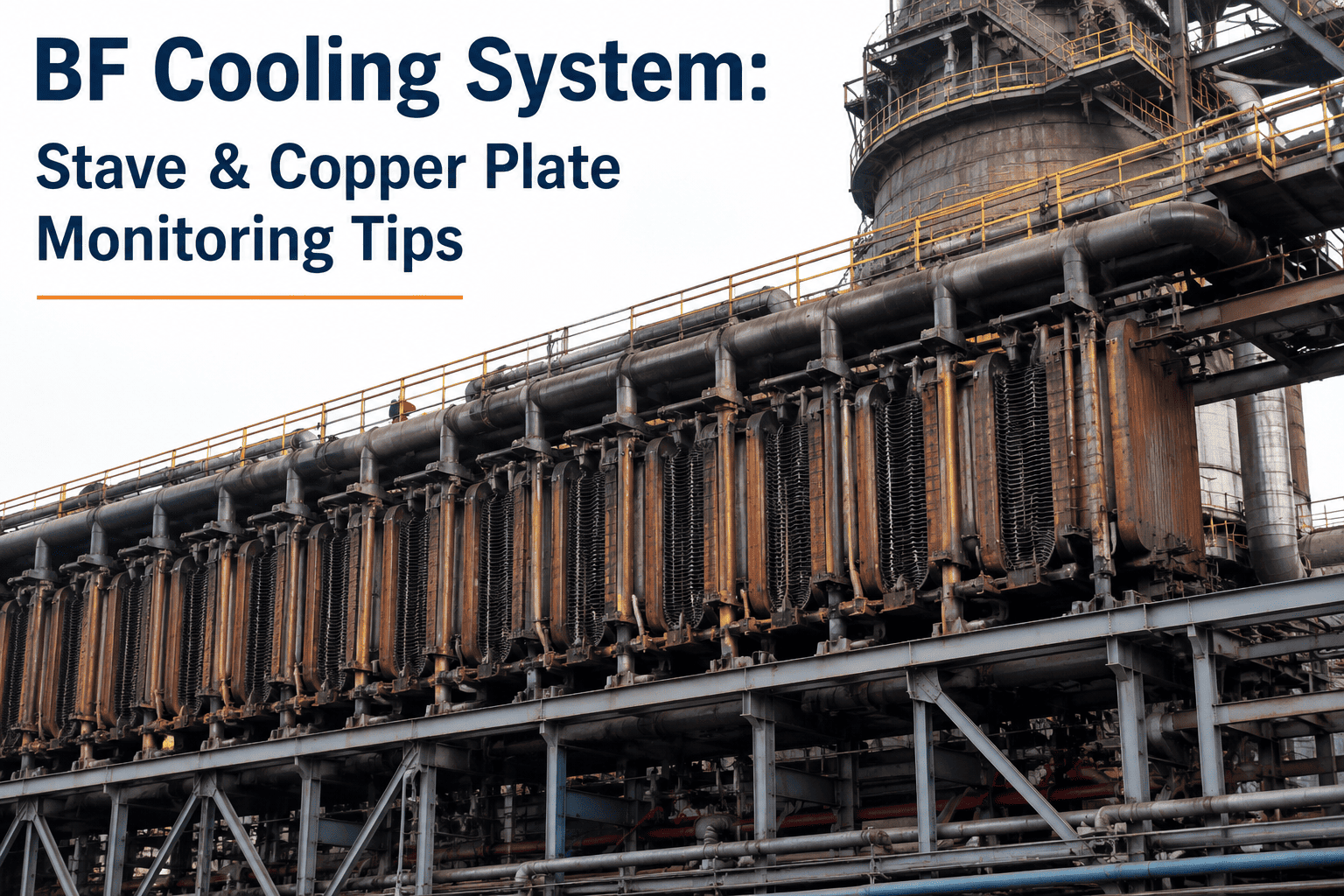
Copper and cast-iron staves absorb the most chaotic heat loads. Calculating specific thermal load per stave (using Flow x Delta Temperature) instantly identifies failing circuits or vapor-film boiling states long before the stave shell actually cracks and leaks water into the hearth.
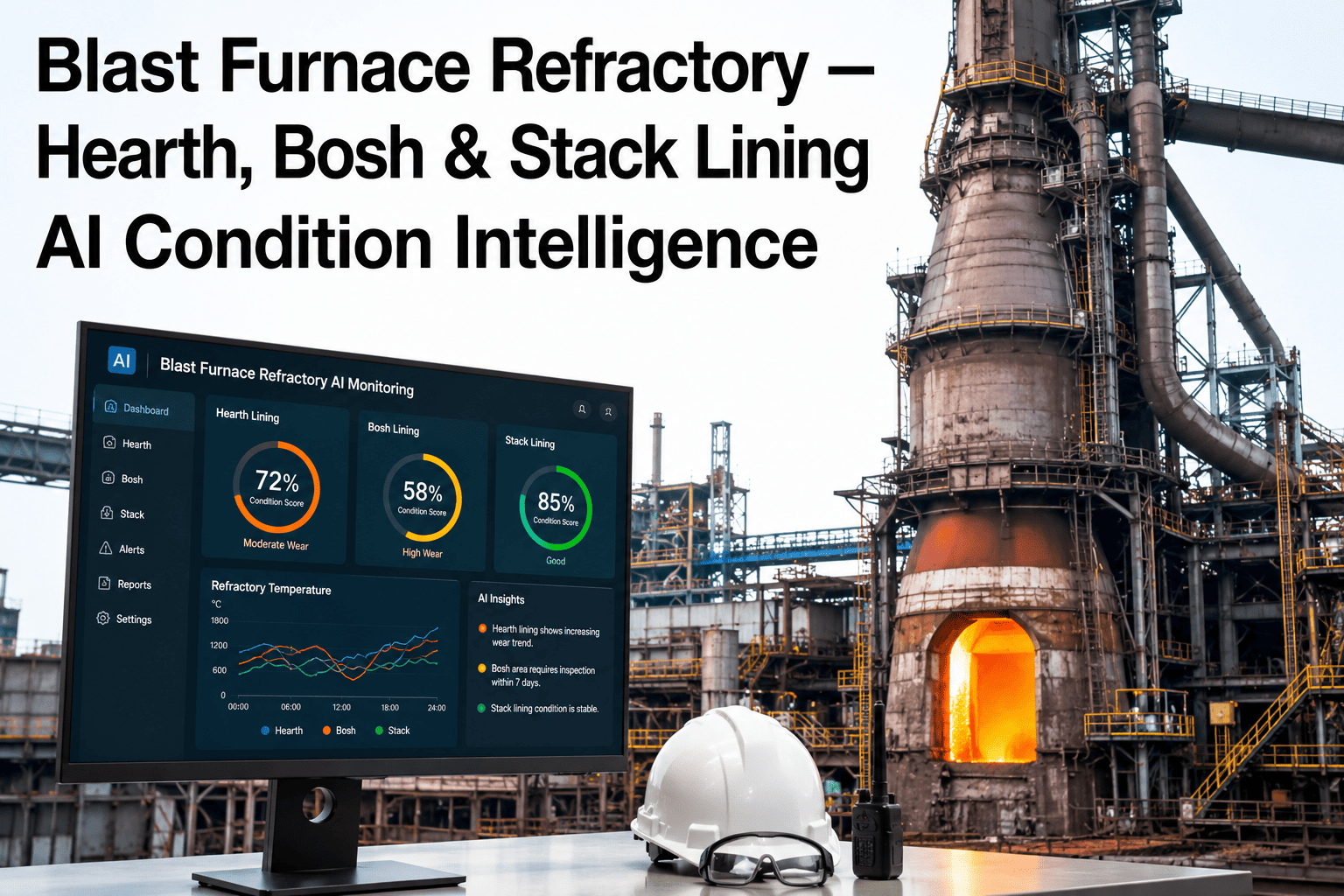
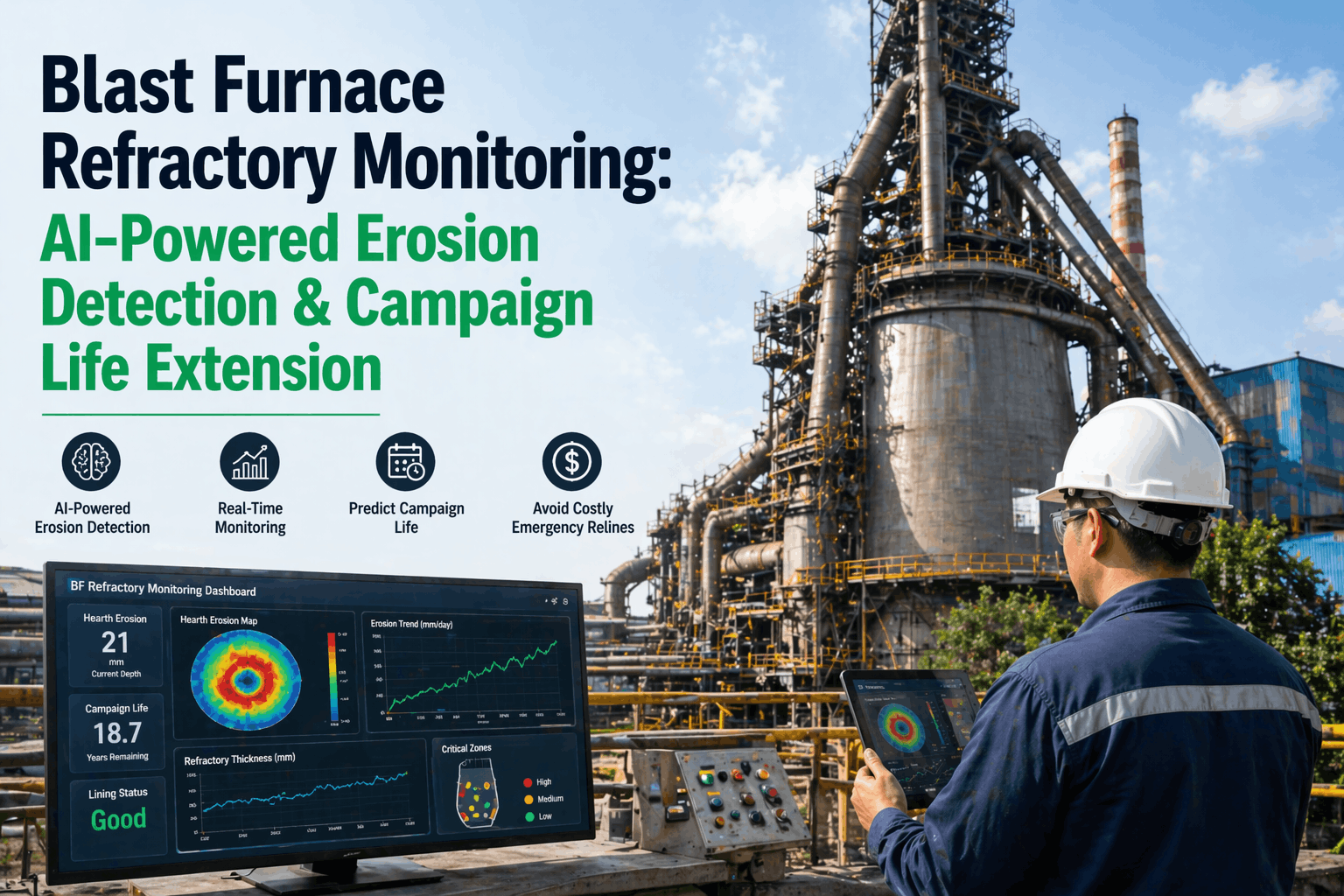
By aggregating hundreds of embedded hearth pad thermocouples into a live 3D mathematical model, the AI algorithm actively calculates the remaining thickness of the carbon refractory lining, preventing molten iron from dissolving through the base foundation.
Top gas scrubbers, dustcatchers, and demisters handle wildly abrasive, high-pressure, dust-laden gas. Predictive vibration and pressure tracking algorithms ensure massive blower fans and Top Gas Pressure Recovery Turbines (TRT) do not choke under sudden particulate overload.
Tracking the exact volume of blast wind, supplemental oxygen, and pulverized coal injection (PCI) at the tuyere level. Live vibration and thermal cameras catch failing taphole mud-gun mechanics hours before they botch a critical cast during the molten tapping cycle.
Mapping Advanced Blast Furnace AI Integration
Protecting a blast furnace with a complex analytics ecosystem necessitates flawlessly capturing high-density data off Level 1 systems without stalling operational controls. When enterprise companies book a demo, we deploy a targeted passive listening phase that instantly maps thermocouple signals cleanly out of the noise.
Passive SCADA Thermocouple Mapping
The platform taps directly into the existing PLC architecture via OPC-UA to map the spatial coordinates of every single embedded stave and hearth thermocouple into a unified 3D visualization. We establish the 'normal' thermal threshold band for each specific cooling zone based on historical blast wind parameters without requiring any new hardwiring.
Correlative Delta-T and Water Volume Modeling
Monitoring stave water alone isn't enough. The AI continuously correlates inlet temperature vs outlet temperature (Delta-T) against the exact water velocity to generate a live "Heat Flux" value. When a stave registers high flow but zero Delta-T, the system instantly flags a loss of refractory skull coverage protecting that copper jacket.
Hearth Wear 3D Algorithmic Interpolation
Hearth breakouts are catastrophic. The engine utilizes advanced heat-transfer modeling (taking into account the thermal conductivity of specific carbon blocks and ramming mixes) to solve the inverse heat conduction problem—visually outputting the precise centimeter depth of remaining solid iron "skull" dynamically.
Top Gas Blower FFT Vibration Anchoring
Scrubber exhaust fans run at massive RPMs under immense particulate duress. Complex vibration analysis (FFT) actively hunts for bearing micro-fractures, rotor imbalance driven by dust adherence, and alignment drifts. An automated alert prioritizes lubrication scheduling to save the turbomachinery before a failure chokes the furnace.
Preventing the Million-Dollar Steel Crisis: Scenario Realities
Generic CMMS logic routes 'PM checklists'. Dedicated blast furnace monitoring actively hunts metallurgical destruction parameters. These are actual operational saves executed by the system within the intense architecture of the primary ironmaking lifecycle.
The Blind Water Leak Prevention
An aging cast-iron stave developed a micro-fissure, slowly leaking water into the furnace bosh. Rather than letting the water crack the surrounding refractory via intense steam expansion, the system noted a 0.2% drop in stave return-water volume over 48 hours, routing an immediate alert to isolate the cooling loop with nitrogen gas.
Gas Cleaning Scrubber Save
A primary differential pressure sensor on the internal wet scrubber registered slightly higher friction resistance despite static fan speeds. The AI correlated the resistance explicitly to a failing water spray nozzle. Mechanics swapped the targeted nozzle during a tapping lull, preventing a $600K clogged duct blowout.
Catching the 'Elephant Foot' Wear
Hearth refractory erosion frequently targets the lower corner of the pad (the elephant foot). As a specific cluster of four thermocouples spiked dramatically during a high-wind period, the 3D model simulated a dangerously thin remaining carbon barrier, prompting operators to immediately alter burden composition and push ilmenite (titanium) to rebuild the protective layer.
Tuyere Burn-Out Evasion
Tuyeres command extreme localized heat loads from the blast wind and PCI lances. A sudden shift in cooling water Delta-T triggered a hard warning that the tuyere tip refractory had melted free. Overriding conventional delays, operators isolated the specific tuyere wind feed instantly, saving the blowpipe assembly from catastrophic destruction.
Operational Impact & Capital Preservation ROI
CFOs evaluating blast furnace analytics are not chasing percentage points—they are building ironclad insurance policies protecting continuous cast profitability. An integrated health tracking grid creates massive, undeniable hard-dollar capital retention. Schedule an architecture meeting to view the financial math directly related to your campaign life cycle.
Meticulously tracking and nursing the critical carbon hearth lining prevents the necessity of a $50M+ complete furnace reline procedure from occurring exactly on the legacy 15-year calendar date.
Automated inverse heat modeling visually maps the invisible molten boundary mathematically, stripping away operator guesswork regarding the condition of highly stressed cooling staves.
Catching a failed cooling circuit prevents water from hitting liquid iron, aggressively circumventing massive thermodynamic steam explosions and multi-day chilled furnace restart delays.
Digitizing stave Delta-T limits fully eliminates pencil-whipped thermal check sheets, releasing mechanics to execute actual wrench-time repairs instead of walking massive endless inspection routes.
Complex Tracking Compliance Matrix for Core BF Operations
Protecting the campaign lifespan demands rigorous adherence to multi-variable algorithms. We monitor every element across the massive ironmaking structural stack simultaneously without generating false-positive alerting loops.
| Integration Zone | Primary Analyzed Variables | Metallurgical Threat Defeated | AI Analytical Action |
|---|---|---|---|
| Cooling Stave Circuitry | Water flow rate, Inlet/Outlet ΔT, Pressure loss | Cooling tube burn-through, Refractory loss | Maps continuous Heat Flux to identify rapid formation of vapor-insulation films. |
| Hearth Base & Pad | Multi-depth thermocouple arrays, Casting temps | Molten iron breaching the shell (Breakout) | 3D numerical modeling tracking 'skull' dissolution at the elephant foot corner. |
| Top Gas Scrubbers | Differential pressure, Wash water flow, TRT vibration | Gas choke, Scrubber blockage, Blower destruction | Cross-correlates dust load vs fan vibration to trigger high-pressure nozzle decoking washes. |
| Tuyere & Blowpipe Assembly | Blast wind delta-T, PCI blockage mapping, Flow limits | Tuyere tip melting, Hot gas flashback | Isolates wind-flow abnormalities indicating internal water leakage directly into the raceway. |
| Hot Blast Stoves | Dome temp cycles, Checker brick vibration, Gas mix ratio | Thermal stress fracturing, Incomplete gas combustion | Optimizes the blast cycle duration autonomously based on actual thermal saturation data. |
Common Technical Hurdles in BF Software Implementations
The Extreme Data Velocity Problem
A primary blast furnace can easily hold over 2,000 embedded thermocouples, logging thermal shifts every minute. Basic asset management software crashes completely when attempting to run 3D heat-loss algorithms on this scale. Our edge servers bypass CMMS API bottlenecks, running raw SCADA algorithms natively.
Alarm Flooding From Normal Burden Drops
When fresh burden drops into the furnace shaft, thermal spikes are mathematically guaranteed to jump briefly. We tune the AI to explicitly recognize the burden cycle timing, ignoring the calculated thermal shock 'noise' so operators are only alerted to true system degradation.
Legacy Thermocouple Degradation
Over a 10-year campaign, internal thermocouples inevitably short out, burn up, or drift in accuracy. The analytical software must cross-check data, autonomously recognizing when a probe has drifted mathematically by comparing it against neighboring cooling staves, automatically ghosting out bad data strings from the algorithm.
Frequently Asked Questions: Blast Furnace Operations
Why is tracking Delta-T mathematically superior to just tracking water output temperature?
If inlet water from the main cooling tower flashes warmer due to a hot summer day, the outlet temperature spikes universally. Delta-T strictly measures the precise thermal load extracted from the iron, ignoring baseline summer/winter cooling variance completely.
How accurately can blast furnace AI truly predict a hearth refractory breakout?
By utilizing inverse heat transfer mechanics across hundreds of hearth thermocouples, the visualization cleanly maps the solid iron "skull" boundary down to highly accurate centimeter thresholds, giving managers weeks of runway to push titanium-rich ore to heal the weak spot.
Does installing this tracking platform require modifying our PLC or SCADA code?
Absolutely not. We execute passive data integration via OPC-DA/UA or strictly listening hardware protocols. The AI dashboard generates isolated SAP work orders independently, bringing exactly zero risk of disturbing the Level 1 operational control loops governing the furnace wind.
What happens when a copper cooling stave completely loses water feed?
Without intense rapid cooling, the internal copper stave melts almost instantaneously, dropping thousands of gallons of water directly into molten iron. This initiates high-velocity thermal cracking of refractory linings. Predictive AI flags dropping flow limits well before vaporization causes sudden flow halts.
IRONMAKING CAPEX PRESERVATION
Refuse to Guess the Health of Your Deep Iron Core.
iFactory's predictive analytics suite natively decodes the thermal, structural, and mechanical reality inside your blast furnace. Safeguard your campaign lifespan, protect your cooling targets, and eliminate catastrophic margin-killing breakouts completely.