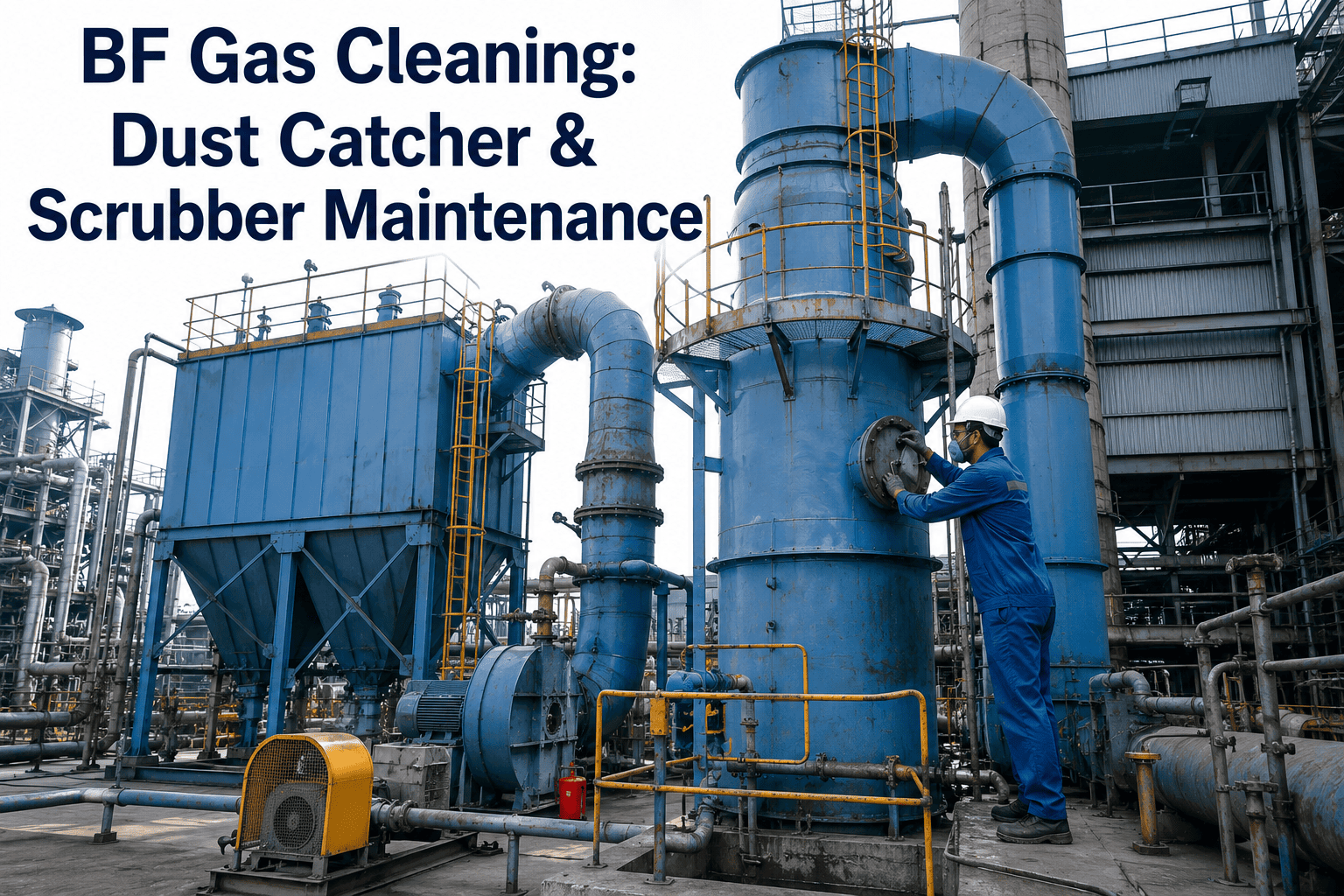
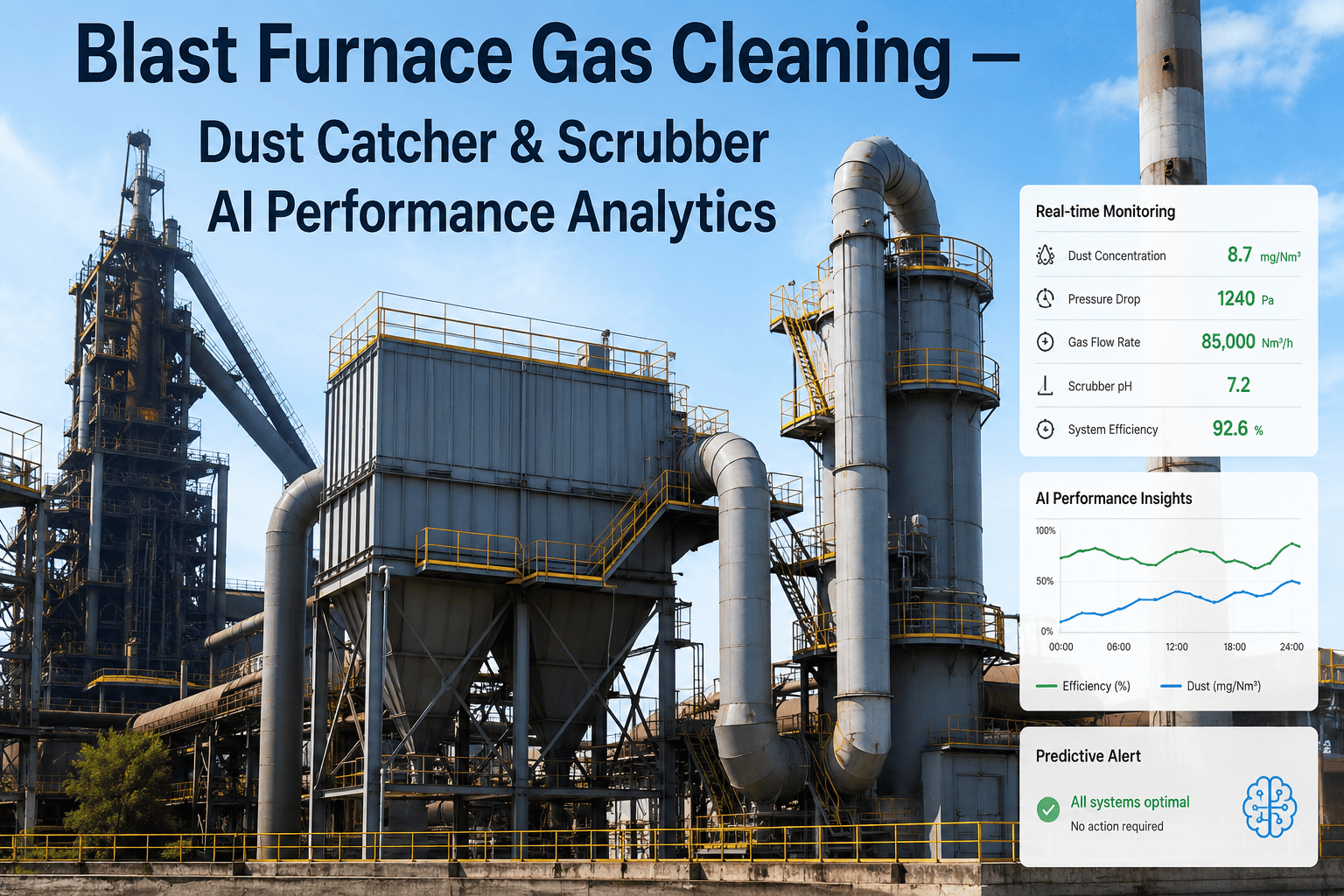
Blast furnace gas leaves the top of the furnace loaded with fine dust, and that gas is far too valuable as a fuel source for the plant's stoves, boilers, and power generation to simply flare or vent, which is exactly why the gas cleaning train exists as one of the more consequential systems on the entire site. A dust catcher, scrubber, or gas holder running below its designed removal efficiency does not usually shut the furnace down, it quietly pushes particulate into downstream equipment, into emissions reporting, and into gas quality that other consumers on site now have to compensate for. iFactory connects the gas cleaning train's pressure, flow, and level instrumentation into one monitored view so degradation in any single component shows up as a trend rather than a surprise during an environmental audit. If you want to see this applied to your own gas cleaning system, book a demo.
BLAST FURNACE · GAS CLEANING · ENVIRONMENTAL COMPLIANCE
Keep BF Gas Clean Enough to Trust, Every Cycle
iFactory monitors dust catcher, venturi scrubber, and gas holder performance together so particulate breakthrough, pressure loss, and gas quality drift are caught before they reach a downstream user or an emissions report.
THE CLEANING TRAIN
Three Stages Between Raw Gas and Recoverable Fuel
Raw blast furnace gas passes through a sequence of cleaning stages before it is fit to burn in stoves, boilers, or a power generation turbine, and each stage removes a different fraction of the particulate load carried out of the furnace top.
STAGE ONE
Dust Catcher
A large gravity settling vessel removes the coarsest particulate first, dropping the heaviest dust out of the gas stream before it ever reaches finer cleaning equipment downstream.
STAGE TWO
Venturi Scrubber
Water injected at a throat constriction captures fine particulate the dust catcher could not remove, using pressure drop across the venturi as the primary driver of cleaning efficiency.
STAGE THREE
Gas Holder
Cleaned gas is buffered here to balance the mismatch between furnace generation and downstream consumption, and holder level swings reveal supply-demand imbalance across the whole gas network.
Removal efficiency compounds through the train, which means a small underperformance at the dust catcher stage puts a heavier particulate load on the scrubber than it was sized for, and a scrubber running past its design load can pass particulate through to the gas holder and out to consumers who were never meant to see it. This cascading effect is why gas cleaning trains are best monitored end to end rather than stage by stage in isolation.
PROCESS FLOW
Following the Gas From Furnace Top to Clean Fuel Header
Understanding where instrumentation sits along this flow path clarifies what each reading is actually telling you about the stage it monitors.
1
Furnace Top Gas Offtake
→
→
3
Venturi Scrubber Washing
→
→
5
Clean Gas Header to Users
Pressure drop across the dust catcher, differential pressure across the venturi throat, and gas holder level and pressure together form a diagnostic picture of the whole train's health. A change at any single point in this sequence is worth investigating against the readings immediately upstream and downstream of it, since gas cleaning problems rarely stay isolated to the stage where they started.
MAINTENANCE REQUIREMENTS BY STAGE
What Each Component Actually Needs to Stay Effective
| Component |
Primary Wear Mechanism |
Key Monitoring Signal |
Typical Maintenance Action |
| Dust Catcher |
Refractory erosion, dust accumulation at hopper |
Inlet/outlet pressure drop, hopper level |
Scheduled dust removal, periodic refractory inspection |
| Venturi Scrubber |
Throat erosion, nozzle plugging, liner wear |
Differential pressure across throat, water flow rate |
Nozzle cleaning, throat inspection, liner replacement |
| Mist Eliminator |
Fouling from carried-over solids |
Pressure drop rise across eliminator bank |
Wash cycle adjustment, physical cleaning at outage |
| Gas Holder |
Seal wear, structural fatigue from cycling |
Level cycling range, seal leak detection |
Seal inspection, structural survey per schedule |
The venturi scrubber deserves particular attention because its cleaning efficiency depends directly on the pressure drop the gas experiences crossing the throat, and that pressure drop is itself a function of both gas flow rate and throat geometry. Erosion or partial plugging changes the throat's effective geometry, which shows up as a pressure drop that no longer tracks flow rate the way it did when the scrubber was clean, a signature that is straightforward to trend but easy to miss without continuous logging.
WHY THIS MATTERS BEYOND MAINTENANCE
The Compliance and Recovery Stakes of Gas Cleaning
Emissions Compliance
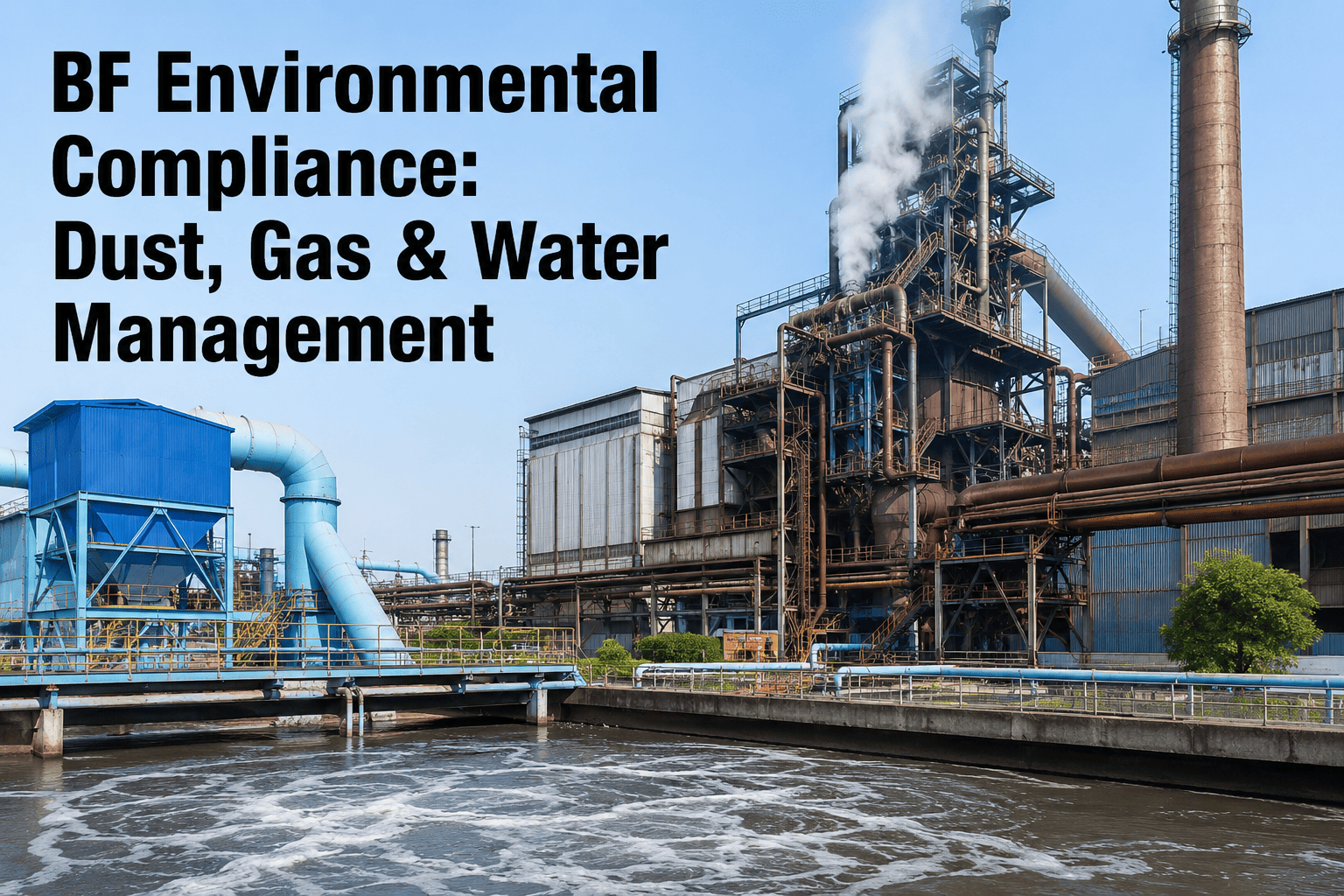
Particulate breakthrough from an underperforming cleaning train can push stack emissions from downstream combustion equipment toward or past regulatory limits, turning a mechanical issue into a compliance exposure.
Fuel Value Recovery
Blast furnace gas represents a significant recoverable fuel stream, and any gas lost to flaring because the cleaning train cannot keep pace directly reduces the site's total fuel value recovery.
Downstream Equipment Life
Particulate that passes through the cleaning train accelerates erosion in stove burners, boiler tubes, and turbine components, converting a gas cleaning shortfall into equipment wear across the site.
These three consequences rarely get discussed together because they sit in different departments' reporting, environmental compliance, energy management, and mechanical maintenance, even though they all trace back to the same gas cleaning train performance. Bringing the underlying instrumentation data into one view is what makes that shared root cause visible instead of three separate teams independently investigating symptoms of the same problem.
COMMON FAILURE PATTERNS
What Usually Goes Wrong First
Venturi Nozzle Plugging
Scale or debris in the wash water supply gradually restricts nozzle flow, reducing water coverage across the throat and cutting particulate capture without any obvious alarm condition.
Dust Catcher Hopper Bridging
Fine dust can bridge across a hopper opening rather than flowing freely, silently reducing effective settling capacity while level instrumentation may still read as if the hopper were clearing normally.
Gas Holder Seal Leakage
Wear at the moving seal interface lets clean gas escape slowly, a loss that is easy to overlook against total gas volume but adds up meaningfully over a full campaign.
Water Chemistry Drift
Scrubber water quality changing over time, from recirculation buildup or makeup water variation, changes scrubbing effectiveness in ways that are invisible without dedicated water quality tracking alongside pressure data.
DEPLOYMENT
How iFactory Builds a Gas Cleaning Monitoring System
iFactory integrates with the pressure, flow, level, and water quality instrumentation already installed across your gas cleaning train, adding trend analysis and cross-stage correlation that individual field instruments and a basic control system display cannot provide on their own.
What Gets Built
End-to-end pressure drop trending across all cleaning stages
Venturi throat performance correlation with flow rate
Gas holder level and seal condition tracking
Emissions-relevant particulate breakthrough alerting
Rollout Timeline
Weeks 1–3: Instrumentation audit and system integration
Weeks 4–6: Baseline trend capture across stages
Weeks 7–9: Dashboard go-live and team training
FREQUENTLY ASKED QUESTIONS
What Plants Ask Before Upgrading Gas Cleaning Monitoring
Will this replace our dust catcher or venturi scrubber, or work alongside them?
iFactory works alongside your existing dust catcher, scrubber, and gas holder rather than replacing them, connecting to the pressure, flow, and level instrumentation already installed across the train. The value is in correlating readings across all three stages into one trend picture, something individual field instruments and a standard control system display are not built to do on their own.
Book a demo to review compatibility with your current gas cleaning instrumentation.
Can this actually help us catch particulate breakthrough before it shows up in emissions data?
Yes, by tracking the pressure drop signature across each cleaning stage against its own historical baseline, a developing performance shortfall at the dust catcher or scrubber becomes visible as a trend well before particulate breakthrough would be confirmed through periodic emissions sampling. This gives maintenance and environmental teams a lead-time window to intervene rather than discovering the issue after the fact.
Contact our support team to discuss early breakthrough detection for your train.
How does scrubber water chemistry factor into this, since that's not always something we track closely?
Water chemistry drift changes venturi scrubbing effectiveness independently of mechanical wear, which means a pressure-only monitoring approach can miss a real performance decline if the root cause is on the water side rather than the equipment side. Bringing water quality readings into the same trend view as pressure and flow data closes this gap and helps distinguish a mechanical issue from a water chemistry issue instead of guessing between the two.
Book a demo to see how water chemistry integrates into the monitoring picture.
Our gas holder seals have leaked before — can this catch that earlier next time?
Gas holder seal wear typically shows up first as a subtle change in how holder pressure and level behave relative to known gas generation and consumption rates, a pattern that is difficult to catch by watching level alone but becomes clearer when level, pressure, and flow balance are trended together over time. Catching this drift early gives maintenance teams a planned repair window instead of an unplanned outage when the leak becomes obvious.
Contact our support team to discuss seal condition tracking for your gas holder.
What's the realistic timeline to see useful trend data after setup?
Baseline trends across the cleaning train typically become meaningful within four to six weeks of data collection, enough time to capture normal operating variation across different furnace production rates and burden conditions. Full deployment to a trained, alerting-enabled system generally completes within about nine weeks, though early diagnostic value often appears well before that point once initial trend patterns are established.
Book a demo to set expectations against your specific gas cleaning setup.
CLEAN GAS, PROTECTED EQUIPMENT, PROTECTED COMPLIANCE
See Your Whole Gas Cleaning Train in One Trend Picture
iFactory connects dust catcher, scrubber, and gas holder data so degradation is caught early, before it reaches downstream equipment or an emissions report.