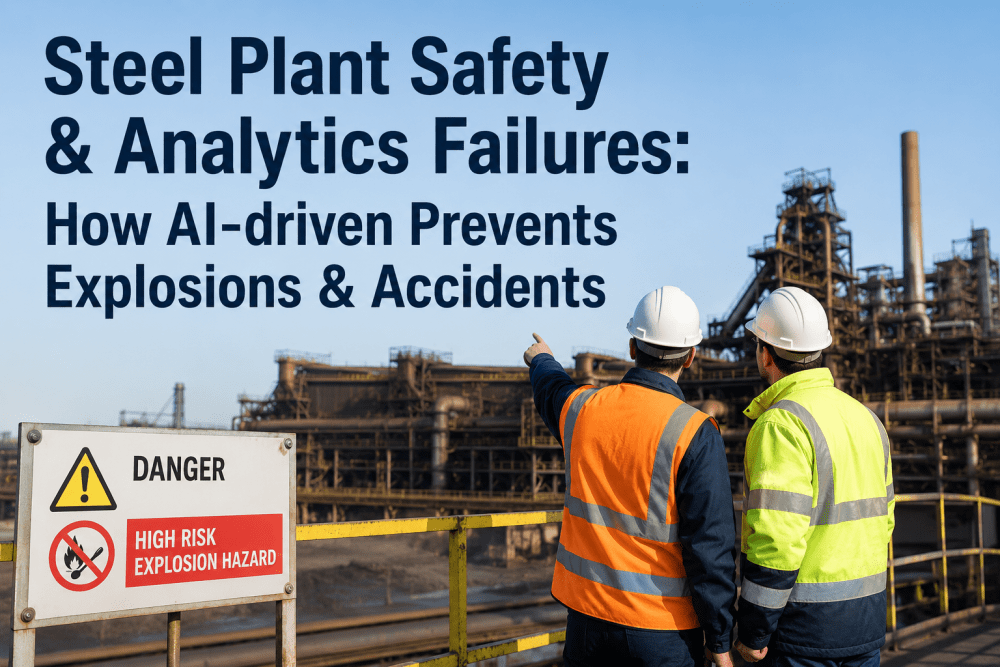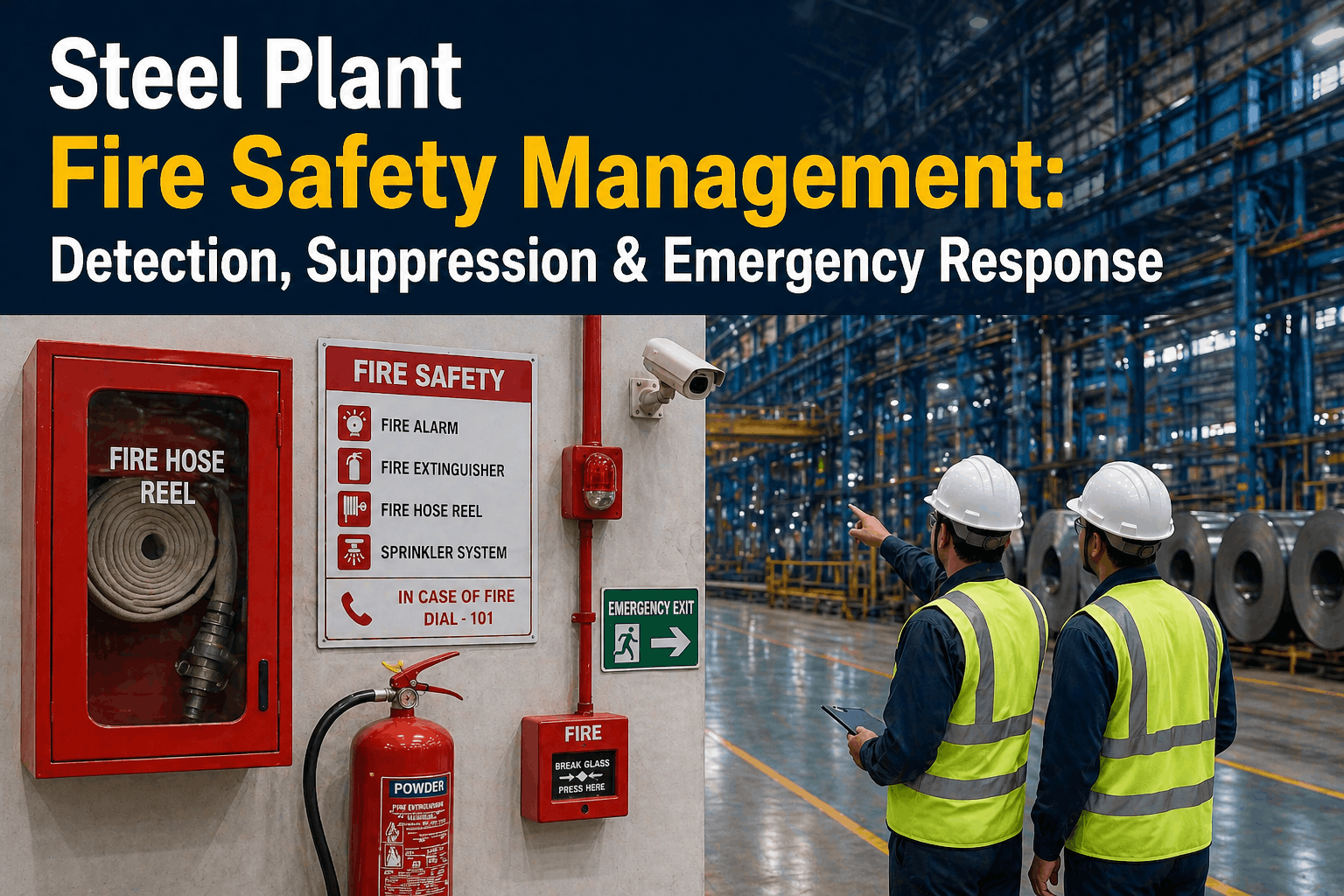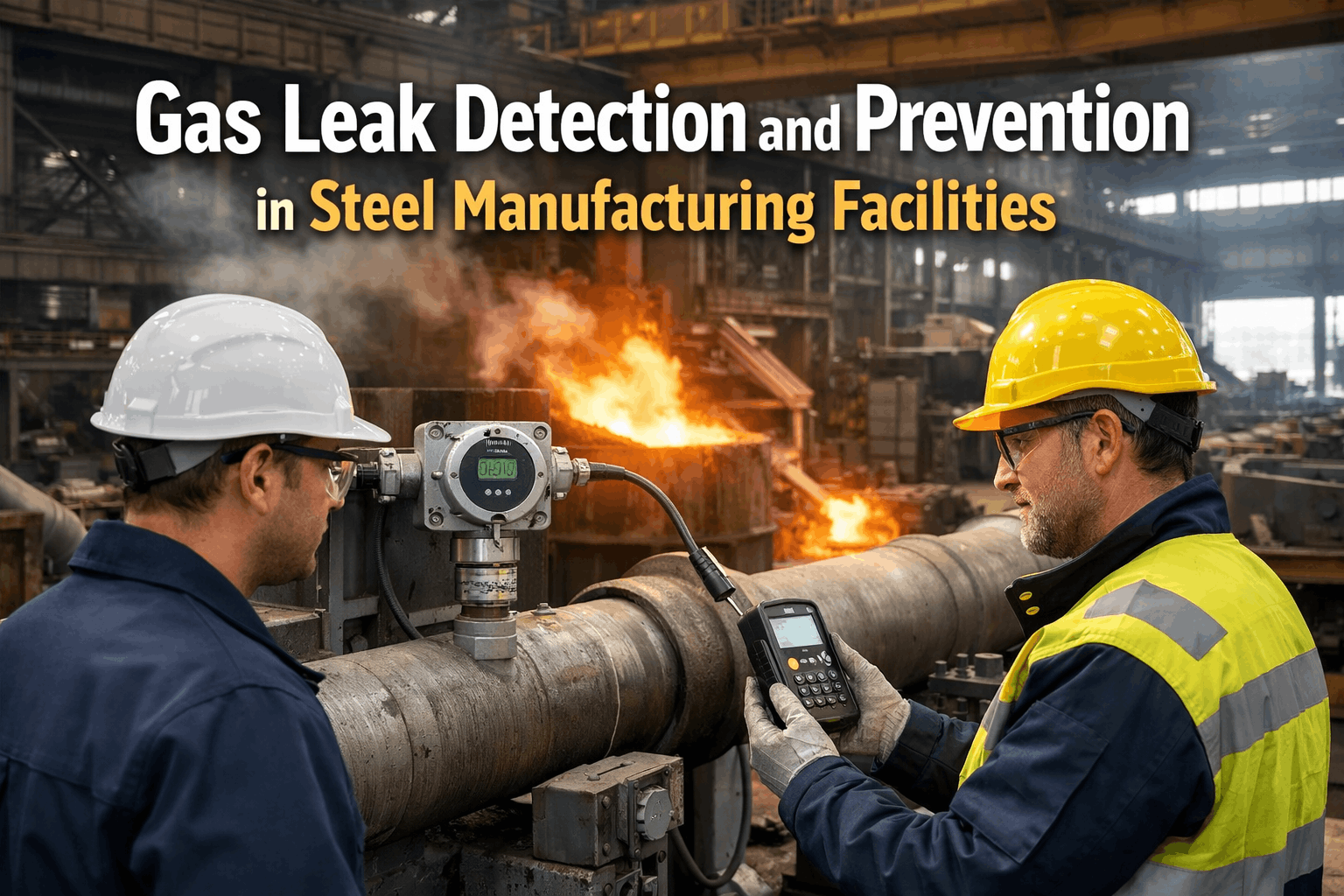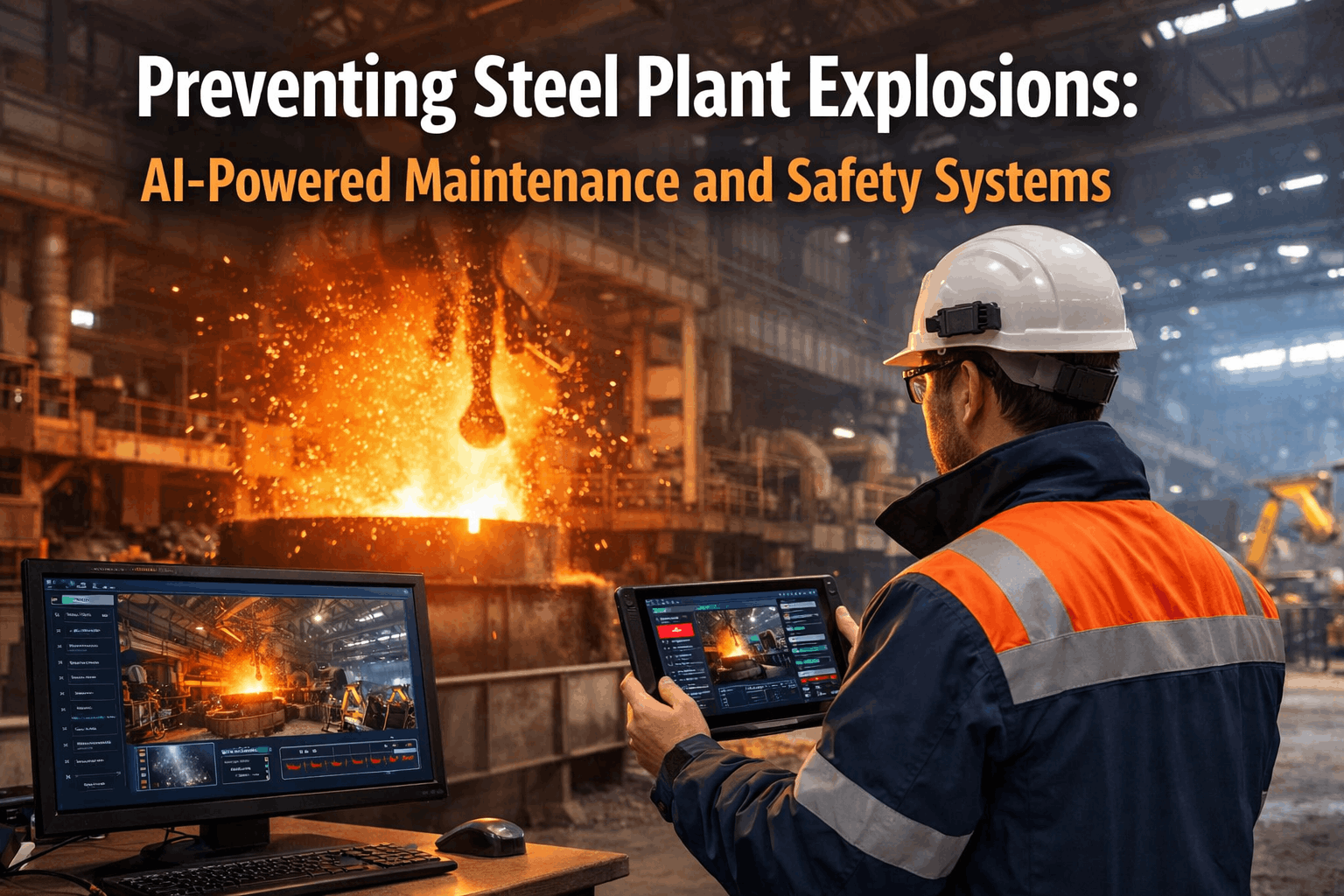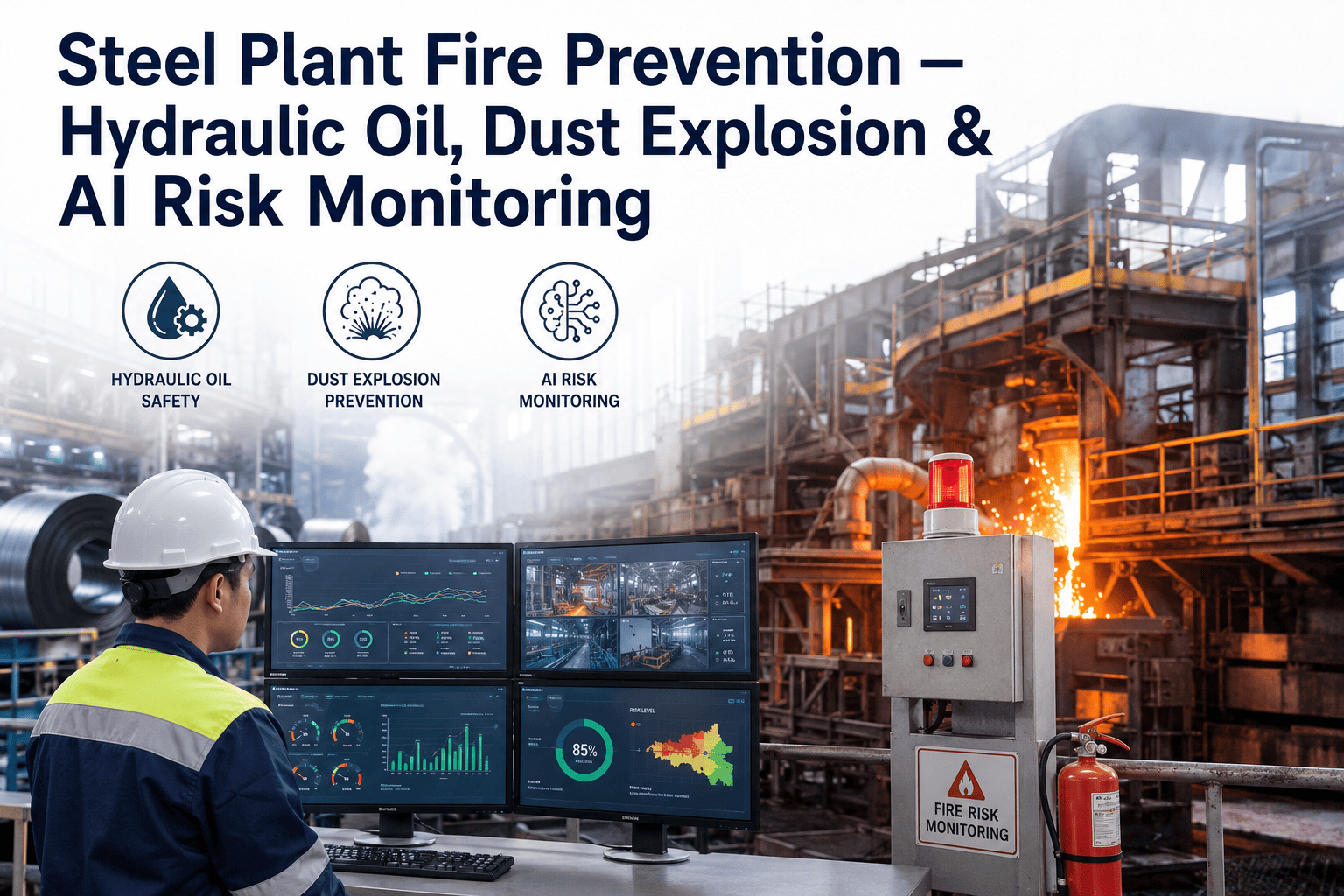
Steel plants are among the most fire-prone industrial environments due to the convergence of high-temperature processes, pressurized hydraulic oil systems, and combustible dust clouds. A single undetected hydraulic oil leak near a hot rolling mill can ignite within seconds, while accumulated metallic dust in baghouses poses an explosive hazard that has devastated facilities worldwide. Traditional fire prevention methods rely on manual inspections and fixed-point detectors that miss slow-developing risks. This article presents a comprehensive, data-driven approach combining AI-powered continuous monitoring of hydraulic oil leaks, combustible dust accumulation, and hot surface proximity to dramatically reduce fire and explosion incidents. By integrating real-time sensor data with machine learning algorithms, EHS managers can shift from reactive firefighting to predictive prevention, safeguarding both personnel and production uptime. Book a demo to see iFactory's AI monitoring in action.
Hydraulic Oil Fire Prevention
Hydraulic systems operate at pressures up to 5000 psi. A pinhole leak can atomize oil into a fine mist that ignites instantly on contact with hot surfaces above 200°C. AI monitors pressure drops, temperature spikes, and flow anomalies to detect leaks before they become catastrophic.
Combustible Dust Explosion Control
Steel production generates fine metallic dust from grinding, cutting, and finishing operations. When suspended in air at concentrations above the minimum explosive concentration (MEC), a single spark can trigger a devastating explosion. AI-driven dust level monitoring ensures concentrations stay below 25% of the lower explosive limit (LEL).
Hot Surface Proximity Alert
Rolling mills, furnaces, and ladles have surface temperatures exceeding 1000°C. Combustible materials like oil, grease, and dust must be kept at a safe distance. Thermal imaging combined with AI detects when any flammable material enters a danger zone, triggering immediate alerts.
Anatomy of a Steel Plant Fire: The Hydraulic Oil-Dust Domino Effect
Undetected Leak
A hydraulic hose near the rolling mill develops a micro-crack. Oil seeps out at a rate of 0.5 liters per hour, forming a thin film on the floor and equipment.
Oil Atomization
The leak contacts a hot roller surface at 400°C. The oil instantly vaporizes and ignites, creating a fireball that spreads to nearby hydraulic lines.
Dust Cloud Ignition
The fire disturbs accumulated metallic dust on overhead beams and in ductwork. The dust cloud reaches explosive concentration and ignites, causing a secondary explosion that propagates through the plant.
Catastrophic Failure
The combined fire and explosion damage structural supports, rupture additional oil lines, and disable fire suppression systems. The plant faces weeks of downtime and potential loss of life.
AI Monitoring Technologies for Steel Plant Fire Prevention
Oil Leak Detection Sensors
Ultrasonic and capacitive sensors monitor hydraulic lines for pressure drops and fluid presence. AI algorithms distinguish between normal operational fluid movement and leaks, reducing false alarms by 95%.
Dust Cloud Cameras
High-speed infrared cameras with AI image analysis detect dust cloud formation in real time. The system measures particle density and alerts when levels approach 50% of the LEL.
Thermal Imaging Arrays
Fixed thermal cameras monitor hot surfaces across the plant. AI software tracks temperature gradients and identifies when combustible materials enter exclusion zones, triggering automated shutdowns or suppression activation.
Predictive Analytics Engine
Machine learning models integrate data from all sensors to predict failure points. The system learns from historical incidents and current operating conditions to forecast high-risk scenarios up to 72 hours in advance.
Prevent the Domino Effect
iFactory's AI platform monitors hydraulic oil leaks, dust accumulation, and hot surface proximity in real time. Schedule a demo to see how predictive alerts can prevent fires before they start.
Traditional vs. AI-Powered Fire Prevention
| Parameter | Traditional Methods | AI Monitoring |
|---|---|---|
| Detection Speed | Minutes to hours (manual rounds) | Milliseconds (real-time sensors) |
| Leak Sensitivity | Visible puddles or major pressure drops | Micro-leaks as small as 0.1 L/hr |
| Dust Monitoring | Weekly visual inspections | Continuous particle density tracking |
| Hot Surface Alerts | Manual thermal camera sweeps | Automated 24/7 thermal imaging |
| False Alarm Rate | High (ambient changes trigger detectors) | Low (AI filters environmental noise) |
| Predictive Capability | None | 72-hour risk forecasting |
Frequently Asked Questions
How does AI detect hydraulic oil leaks before they cause fires?
AI systems use a combination of ultrasonic sensors that detect the high-frequency sound of escaping fluid, capacitive sensors that measure changes in dielectric constant near hydraulic lines, and flow meters that track deviations from normal operating parameters. The machine learning model continuously analyzes this data, learning the unique signature of each hydraulic circuit. When a micro-leak begins, the system identifies the anomaly within milliseconds and cross-references it with temperature data from nearby hot surfaces. If the leak is in proximity to a heat source above 200°C, the system escalates the alert to a critical fire risk. This allows maintenance teams to repair the leak before atomization occurs. Contact iFactory support for integration details.
What is the minimum explosive concentration (MEC) for steel dust, and how does AI keep it below that threshold?
The MEC for fine steel dust varies between 40 to 120 grams per cubic meter depending on particle size and shape. AI monitoring systems use laser diffraction sensors and optical dust monitors to measure the actual concentration in real time. The system is calibrated to trigger a warning when concentration reaches 25% of the MEC, and a critical alarm at 50%. This provides ample time to activate dust collection systems, adjust ventilation, or shut down processes that generate dust. The AI also predicts dust accumulation rates based on production schedules and historical data, enabling proactive cleaning before levels become dangerous. Book a demo to see dust monitoring in action.
Can AI monitoring distinguish between normal hot surface operation and a fire risk?
Yes, AI models are trained on thousands of hours of thermal imaging data from steel plant environments. They learn the normal temperature profiles of rolling mills, ladles, and furnaces, including variations during startup, shutdown, and different product runs. When a thermal camera detects an abnormal hotspot, the AI analyzes the temperature gradient, rate of change, and spatial context. For example, a gradual increase on a roller surface during a product change is normal, but a sudden spike near a hydraulic line is flagged as a fire risk. The system also tracks the presence of combustible materials using computer vision, so if oil or dust is detected near a hot surface, the risk level is automatically elevated. Learn more about iFactory's thermal AI.
How does AI reduce false alarms compared to traditional fire detectors?
Traditional fire detectors in steel plants are plagued by false alarms from steam, ambient temperature fluctuations, welding sparks, and normal dust movement. AI reduces false alarms by using multi-sensor fusion and contextual awareness. Instead of relying on a single sensor threshold, the AI considers inputs from temperature, pressure, vibration, humidity, and visual data simultaneously. It learns to ignore transient events like a welding spark that lasts less than a second, but reacts to a sustained temperature rise near a hydraulic line. The system also uses location-based rules: a temperature spike near a furnace is treated differently than the same spike near a hydraulic pump. This reduces false alarm rates by up to 95%, ensuring that plant personnel take every alert seriously. Schedule a demo to see how iFactory minimizes false alarms.
What is the implementation timeline for AI fire prevention in an existing steel plant?
Implementation typically occurs in three phases over 8 to 12 weeks. Phase one involves a site audit to identify high-risk areas: hydraulic systems near hot processes, dust collection points, and confined spaces. Sensors and cameras are installed during phase two, which takes 2 to 4 weeks depending on plant size. The AI model is trained on site-specific data during this period. Phase three is the calibration and validation phase, where the system runs in parallel with existing fire detection to fine-tune algorithms and eliminate false alarms. After go-live, iFactory provides ongoing support and model updates. The entire process is designed to minimize production disruption, with most installations completed during scheduled maintenance windows. Contact iFactory support for a customized implementation plan.
Ready to Eliminate Fire Risks in Your Steel Plant?
iFactory's AI platform provides real-time monitoring of hydraulic oil leaks, dust explosions, and hot surface proximity. Protect your people and production with predictive fire prevention.