Steel manufacturing facilities operate with some of the most hazardous gas environments in any industry — blast furnaces generating deadly carbon monoxide, coke ovens releasing volatile organic compounds, and basic oxygen furnaces producing explosive hydrogen mixtures. A single undetected gas leak can kill workers in minutes, trigger catastrophic explosions, and shut down production lines for weeks. Yet most steel plants still rely on periodic manual gas testing rounds and aging fixed-point detectors with slow response times. In 2026, AI-powered continuous gas monitoring integrated with CMMS platforms is transforming how steel facilities detect, prevent, and respond to gas hazards — shifting from deadly reactive responses to intelligent, life-saving prevention. iFactory's AI platform brings this transformation to your steel facility. Book a free consultation and discover how integrated gas leak detection and CMMS prevents incidents before they become disasters.
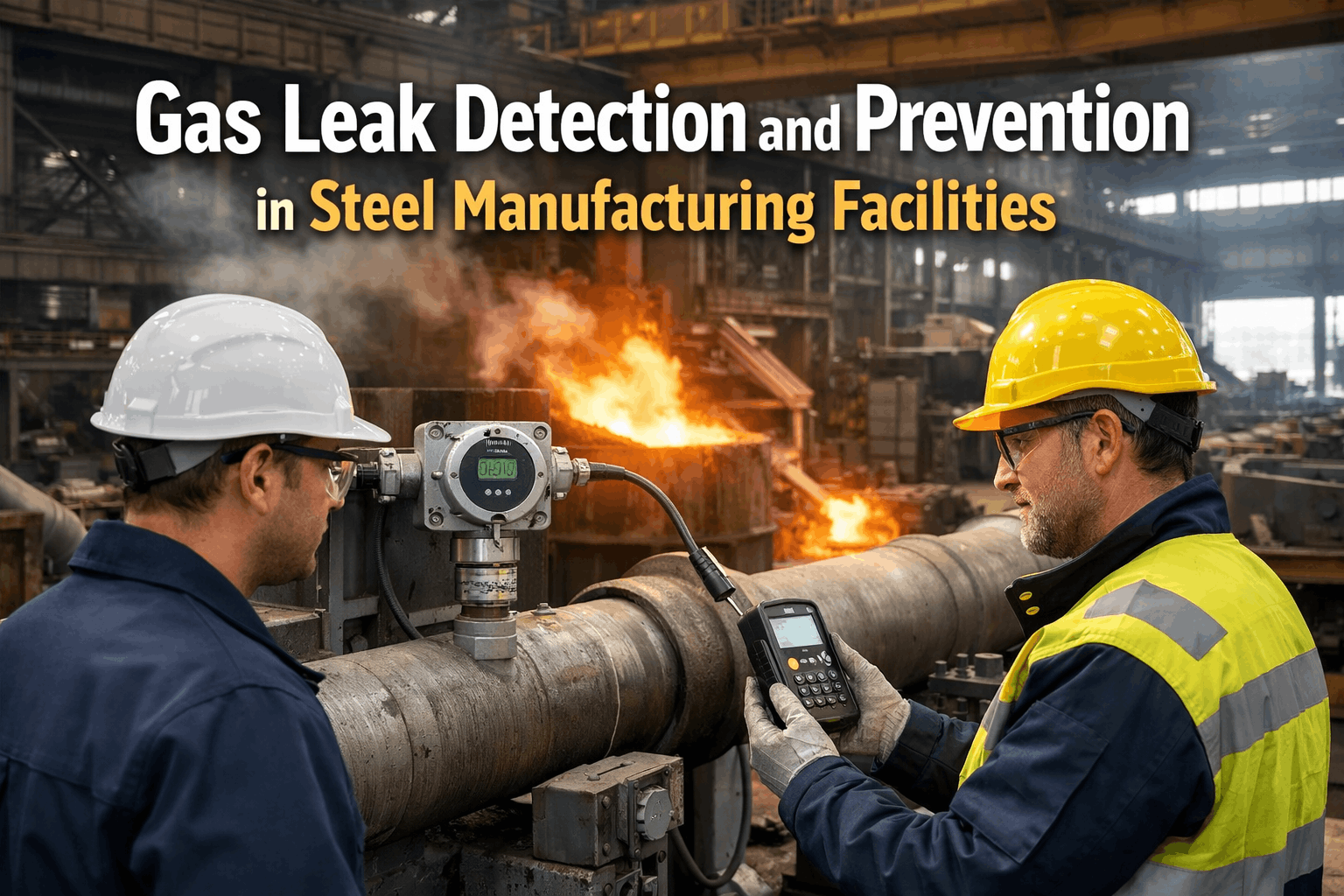
Gas Leak Detection and Prevention in Steel Manufacturing Facilities
Detect. Prevent. Protect.
Steel plants produce and handle carbon monoxide, hydrogen, blast furnace gas, coke oven gas, and natural gas — every one of them capable of killing workers or triggering explosions within minutes of an undetected leak. This guide covers how AI-powered gas detection systems integrated with intelligent CMMS platforms create a continuous safety net that identifies leaks in seconds, dispatches response teams automatically, and prevents the conditions that cause leaks in the first place.
Linked to Gas Exposure
Response Time Target
Gas Explosion Incident
Why Gas Leaks in Steel Plants Are So Dangerous — And So Costly
Steel manufacturing creates a uniquely hazardous gas environment. Here is what goes wrong when detection and prevention systems fail.
Critical Gas Hazard Zones in a Steel Manufacturing Facility
Every stage of steelmaking produces or handles hazardous gases. Understanding where and why these gases accumulate is the foundation of effective detection and prevention.
| Zone | Primary Gases | Hazard Type | Typical Concentration Risk | Detection Priority |
|---|---|---|---|---|
| Blast Furnace Area | CO, CO2, BF Gas | Toxic + Explosive | CO up to 30,000 ppm at source | Critical |
| Coke Oven Battery | COG, H2, CH4, Benzene | Toxic + Explosive + Carcinogenic | Multiple LEL-level gases | Critical |
| Basic Oxygen Furnace | CO, O2 deficiency | Toxic + Asphyxiant | CO spikes during blowing cycle | Critical |
| Gas Holder/Storage | BFG, COG, Mixed Gas | Explosive + Toxic | Full concentration stored gas | Critical |
| Gas Pipeline Network | BFG, COG, Natural Gas | Explosive + Toxic | Flange and valve leak points | Critical |
| Electric Arc Furnace | CO, NOx, VOCs | Toxic | CO during melting cycle | High |
| Rolling Mill Area | Natural Gas, CO | Explosive + Toxic | Reheat furnace gas supply | High |
| Confined Spaces | CO, H2S, O2 deficiency | Toxic + Asphyxiant | Accumulation in vessels/ducts | Critical |
Our safety engineers will map every hazard zone and detection gap in a free consultation.
How AI-Powered Gas Leak Detection Works in Steel Plants
From sensor to alert to automated response — a six-layer defense system that eliminates the gaps where traditional detection fails.
Multi-Technology Gas Detection Grid
Deploy a layered sensor network combining fixed-point electrochemical detectors, open-path infrared beam sensors for large area coverage, ultrasonic leak detectors for pressurized pipelines, and portable wireless monitors for maintenance crews entering confined spaces. Each technology covers the blind spots of the others.
Real-Time Data Aggregation at the Source
Edge computing gateways installed in each hazard zone aggregate sensor readings locally — performing initial anomaly detection, filtering false positives from steam or dust interference, and transmitting validated data to the central AI platform with sub-second latency. Edge processing ensures alerts work even if the central network goes down.
Pattern Recognition and Predictive Alerting
Machine learning models analyze gas concentration trends, correlate readings across multiple sensors, factor in weather conditions (wind direction, temperature inversions), and identify leak signatures before concentrations reach alarm thresholds. The AI distinguishes between normal process gas fluctuations and genuine leak events — reducing false alarms by up to 85%.
Automated Emergency Dispatch via CMMS
When a confirmed leak is detected, the CMMS automatically creates an emergency work order, dispatches the nearest gas safety team, activates local alarm beacons and PA announcements, notifies shift supervisors and the safety officer, and initiates zone evacuation protocols — all within 15 seconds of detection.
Source Isolation and Ventilation Control
Integration with plant control systems enables automated response actions — closing gas isolation valves, activating emergency ventilation fans, shutting down ignition sources in the affected zone, and rerouting gas supply through bypass lines. Automated containment buys critical minutes while the response team arrives.
Predictive Maintenance to Prevent Future Leaks
Every leak event feeds back into the AI system — identifying which equipment types, pipeline sections, valve models, and operating conditions produce leaks. The CMMS generates predictive maintenance work orders for at-risk components before they fail, shifting from detecting leaks to preventing them entirely.
What Your Gas Detection and CMMS Integration Must Deliver
Effective gas leak prevention in steel plants requires more than standalone detectors. These four capabilities transform detection into a complete prevention system.
Continuous Calibration Monitoring
The AI platform tracks sensor drift, response time degradation, and calibration status for every detector in the network. When a sensor begins drifting outside tolerance, a calibration work order is auto-generated in the CMMS — eliminating the 42% of detectors that typically operate outside spec.
Regulatory Compliance Automation
Automatically generates and stores documentation required by OSHA, EPA, ATEX/IECEx, and local regulatory bodies. Bump test logs, calibration certificates, incident reports, and exposure records are maintained digitally — ready for inspection at any time without scrambling through filing cabinets.
Worker Exposure Tracking
Personal gas monitors connected to the platform track individual worker exposure levels across shifts. Time-weighted average (TWA) and short-term exposure limit (STEL) calculations run continuously — alerting supervisors before any worker exceeds permissible limits and logging exposure history for occupational health records.
Emergency Response Integration
Connects gas detection with plant-wide emergency systems — fire suppression, PA announcements, muster point tracking, and emergency services notification. The CMMS serves as the central command hub during a gas incident, tracking response actions, crew locations, and all-clear confirmations in real time.
Need these capabilities for your steel facility? Book a free safety assessment demo and see the system configured for your specific gas hazard zones.
Traditional Gas Detection vs. AI-Integrated CMMS Prevention
Gas Safety in Steel Manufacturing — The Numbers
The steel industry is under increasing pressure to modernize gas detection as regulatory scrutiny intensifies and insurance costs climb.
| Metric | Traditional Detection | AI-Integrated CMMS | Improvement |
|---|---|---|---|
| Detection-to-Alert Time | 2–8 minutes | <15 seconds | 95% faster |
| False Alarm Rate | 60–75% of all alarms | <12% of alarms | 85% reduction |
| Sensor Calibration Compliance | 58–70% in spec | >98% in spec | 40% improvement |
| Leak-to-Containment Time | 15–45 minutes | <5 minutes | 80% faster |
| Preventable Leak Incidents | Baseline | 65–75% fewer | 70% reduction |
| Regulatory Audit Readiness | Days of preparation | Instant digital access | 100% ready |
Our steel safety engineers will audit your current detection gaps in a free consultation.
Implementation Roadmap — From Audit to Autonomous Gas Safety
A typical steel plant gas detection upgrade runs 12–20 weeks depending on facility size and existing sensor infrastructure.
| Phase | Focus | Timeline | Key Deliverables | Risk Mitigated |
|---|---|---|---|---|
| 01 Audit | Gas hazard mapping, sensor gap analysis | 1–2 weeks | Hazard zone map, gap report | Blind spot failures |
| 02 Design | Sensor network architecture, CMMS integration plan | 2–3 weeks | Detection grid design, integration spec | Coverage gaps |
| 03 Install | Sensor deployment, edge gateway setup | 3–5 weeks | Live sensor network, edge processing | Detection latency |
| 04 Integrate | CMMS connection, emergency system linkage | 2–3 weeks | Auto work orders, valve integration | Manual response delays |
| 05 Train | AI model calibration, staff training | 2–4 weeks | Tuned AI models, trained response teams | False alarm fatigue |
| 06 Operate | Autonomous monitoring, continuous improvement | Ongoing | Predictive work orders, compliance reports | Reactive relapse |
Gas Detection Solutions by Steel Plant Configuration
Integrated Steel Mills (BF-BOF Route)
The highest gas hazard profile — blast furnace gas, coke oven gas, BOF gas, and mixed gas all present simultaneously. Requires the most comprehensive multi-technology detection grid with automated valve isolation and gas holder monitoring. Regulatory compliance for OSHA PSM and EPA RMP is mandatory.
Electric Arc Furnace (EAF) Mini Mills
Lower gas hazard profile than integrated mills but still significant — CO generation during melting, natural gas supply to ladle furnaces and reheat furnaces, and oxygen storage areas. Focus on melt shop ventilation monitoring, natural gas leak detection on supply lines, and confined space entry safety.
Specialty and Stainless Steel Plants
Specialty processes like AOD (Argon Oxygen Decarburization) and VOD (Vacuum Oxygen Decarburization) introduce additional gas hazards including argon displacement (asphyxiation risk) and hydrogen generation. Detection systems must monitor for oxygen deficiency alongside toxic and combustible gas presence.
Not Sure What You Need?
Every steel facility has a unique gas hazard profile based on process configuration, age of infrastructure, and regulatory jurisdiction. Our steel safety engineers will conduct a free hazard assessment and recommend the detection architecture matched to your specific risk zones.
Gas Types and Equipment Monitored in Steel Facilities
Gas Leak Detection and Prevention in Steel Plants — Key Questions Answered
What gases are most dangerous in a steel manufacturing facility?
Carbon monoxide (CO) is the most lethal — odorless, colorless, and produced in massive quantities by blast furnaces and BOF converters. Blast furnace gas (20–28% CO) and coke oven gas (5–7% CO plus hydrogen) are both toxic and explosive. Oxygen deficiency from nitrogen or argon purging creates silent asphyxiation risk in confined spaces. Benzene from coke oven emissions is a proven carcinogen with long-term health impacts even at low concentrations.
How does AI reduce false alarms in gas detection?
AI cross-correlates readings across multiple sensors, factors in environmental conditions (steam, dust, temperature), analyzes concentration trends rather than single-point readings, and learns the normal gas fluctuation patterns of your specific facility. This context-aware analysis reduces false alarms by 85% compared to traditional threshold-only detectors — eliminating the alarm fatigue that causes workers to ignore alerts. See AI detection in a live demo.
Can the system integrate with our existing gas detectors?
Yes. The platform integrates with all major gas detection manufacturers via standard protocols including 4-20mA analog, Modbus, HART, and wireless ISA100/WirelessHART. Your existing fixed-point detectors can be connected to the AI platform without replacement — though our audit may identify coverage gaps that require additional sensors in specific zones.
How does the CMMS handle sensor calibration management?
The system tracks calibration schedules for every sensor, monitors real-time sensor health metrics (response time, baseline drift, signal noise), and auto-generates calibration work orders before sensors fall out of spec. Bump test and calibration results are logged digitally against each sensor asset — creating a complete compliance audit trail accessible instantly during regulatory inspections.
What happens during a confirmed gas leak event?
The system executes a pre-configured response sequence within 15 seconds: emergency work order creation, safety team dispatch via mobile push, local alarm and PA activation, zone evacuation notification, automated gas isolation valve closure (where integrated), ignition source shutdown in affected area, and real-time incident command dashboard for supervisors. Every action is timestamped for post-incident investigation and regulatory reporting.
How does predictive maintenance prevent gas leaks?
The AI analyzes historical leak data, equipment age, corrosion rates, vibration patterns on pipeline supports, valve cycling counts, and environmental factors to identify which components are approaching leak risk. Predictive work orders are generated for gasket replacements, valve overhauls, pipeline inspections, and flange retorquing before failures occur. Plants typically see 65–75% fewer leak incidents within the first year. See predictive gas safety in action.
What regulatory standards does the system support?
The platform supports compliance with OSHA Process Safety Management (PSM), EPA Risk Management Program (RMP), ATEX/IECEx for explosive atmospheres, ISA/IEC 61511 for safety instrumented systems, and NFPA 72 for alarm systems. All calibration records, incident logs, exposure data, and inspection reports are stored digitally with tamper-proof timestamps. Get a compliance readiness assessment.
Ready to Eliminate Gas Leak Blind Spots in Your Steel Facility?
Every undetected gas leak is a potential fatality and a potential catastrophe. Join steel manufacturers who have reduced detection time by 95%, cut false alarms by 85%, and prevented 70% of leak incidents through AI-integrated gas safety. Let our steel safety engineers show you exactly how — in a free, no-obligation 30-minute assessment.