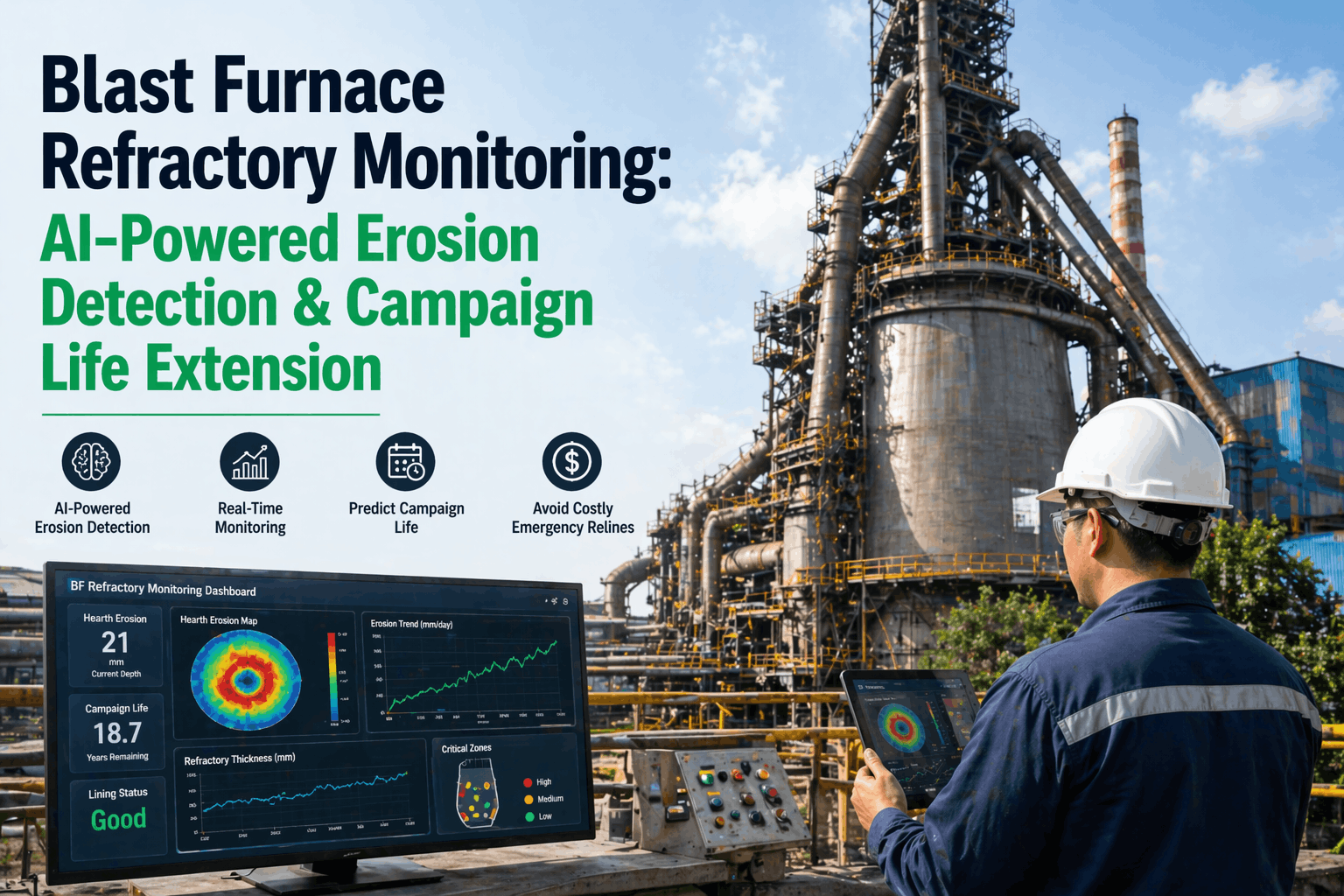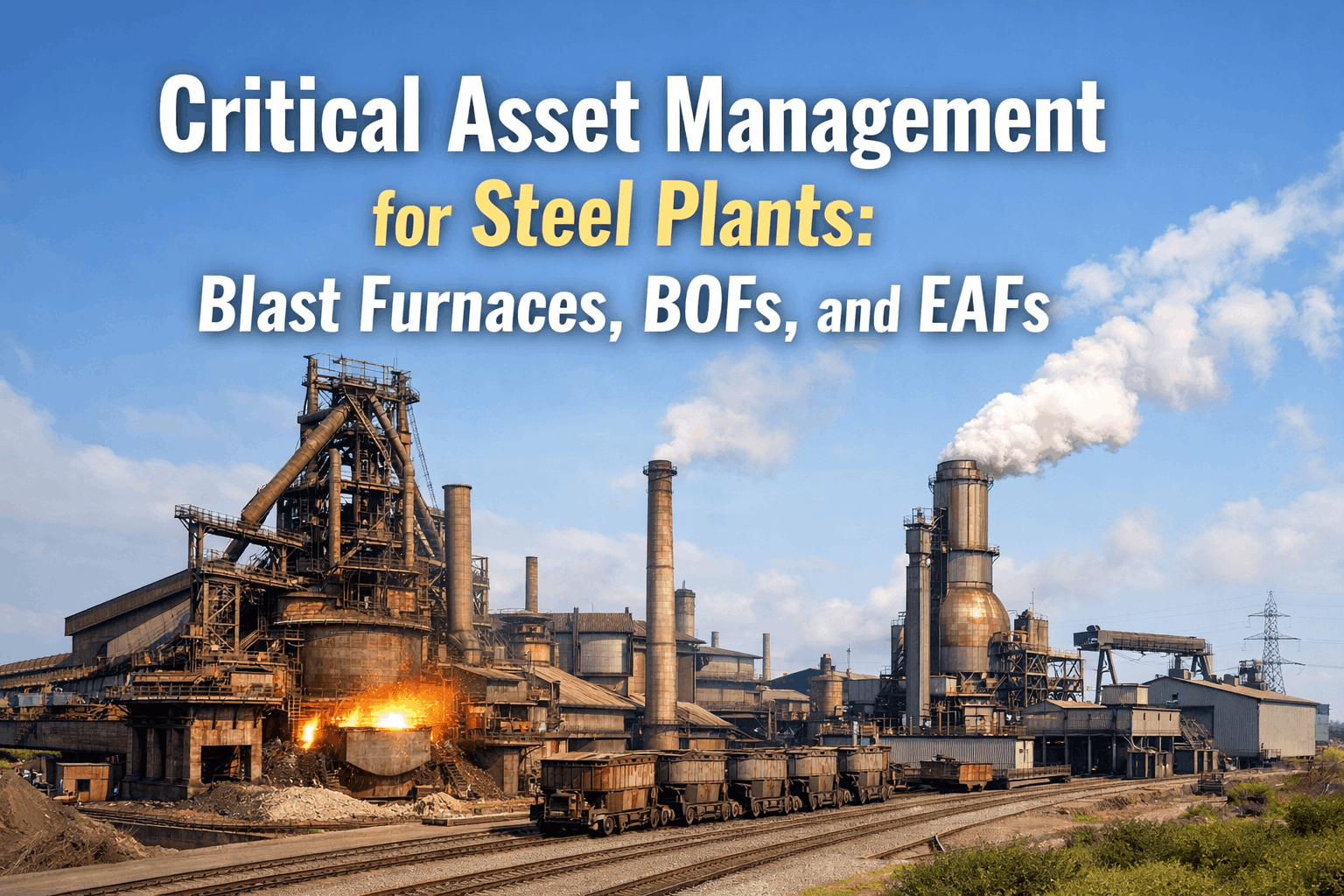
Steel plants are among the most capital-intensive industrial operations on earth — a single blast furnace represents an investment of $200 million to over $1 billion, and the full facility footprint spans coke ovens, sinter plants, BOF converters, continuous casters, rolling mills, reheating furnaces, and hundreds of ancillary systems operating around the clock at extreme temperatures. Yet across the global steel industry, a quiet crisis is compounding: infrastructure underinvestment and deferred maintenance are silently eroding asset life, inflating emergency repair costs, triggering unplanned shutdowns that cost over $500,000 per hour, and pushing plants toward catastrophic failures that can halt production for weeks or months. The Siemens True Cost of Downtime report found that unscheduled downtime now saps 11% of annual revenue from the world's largest industrial companies — and steel plants, with their extreme operating conditions and interdependent process chains, are among the hardest hit. OxMaint's CMMS platform gives steel plant engineering teams the tools to quantify deferred maintenance risk, prioritize capital allocation and shift from reactive firefighting to predictive asset management. Book a free consultation and discover how to close the maintenance gap before it closes your production line.
Infrastructure Underinvestment in Steel Plants: The Hidden Cost of Deferred Maintenance
The Maintenance You Skip Today Becomes the Shutdown You Can't Afford Tomorrow.
Every dollar of deferred maintenance in a steel plant doesn't disappear — it compounds. Skipped refractory inspections become emergency relines. Deferred rolling mill bearing replacements become catastrophic seizures during peak production. Neglected cooling system maintenance becomes a blast furnace campaign cut short by years. The steel industry allocates 15–20% of its operational budget to infrastructure and facility maintenance — but when margins tighten, maintenance is the first budget line cut and the last one restored. This guide quantifies the true cost of that decision and shows exactly how to reverse it.
Unplanned Downtime
Blast Furnace Reline
to Unscheduled Downtime
How Deferred Maintenance Silently Destroys Steel Plant Value
Deferred maintenance in steel plants isn't a savings strategy — it's a compounding liability. Every skipped inspection, postponed repair, and delayed replacement accelerates degradation across interconnected systems. See how CMMS quantifies your deferred maintenance risk
How Deferred Maintenance Cascades Through Interconnected Steel Plant Systems
Steel production is a chain — blast furnace, steel shop, caster, and rolling mill operate in sequence. When one asset degrades, the entire chain suffers.
Where Deferred Maintenance Hits Hardest — Critical Steel Plant Assets
Every major asset in an integrated steel plant carries distinct deferred maintenance risks. Understanding where the compounding costs accumulate is the first step to reversing them. Schedule a demo to see asset-level risk mapping in OxMaint.
Blast Furnace — $200M–$1B Asset, 20-Year Campaign at Stake
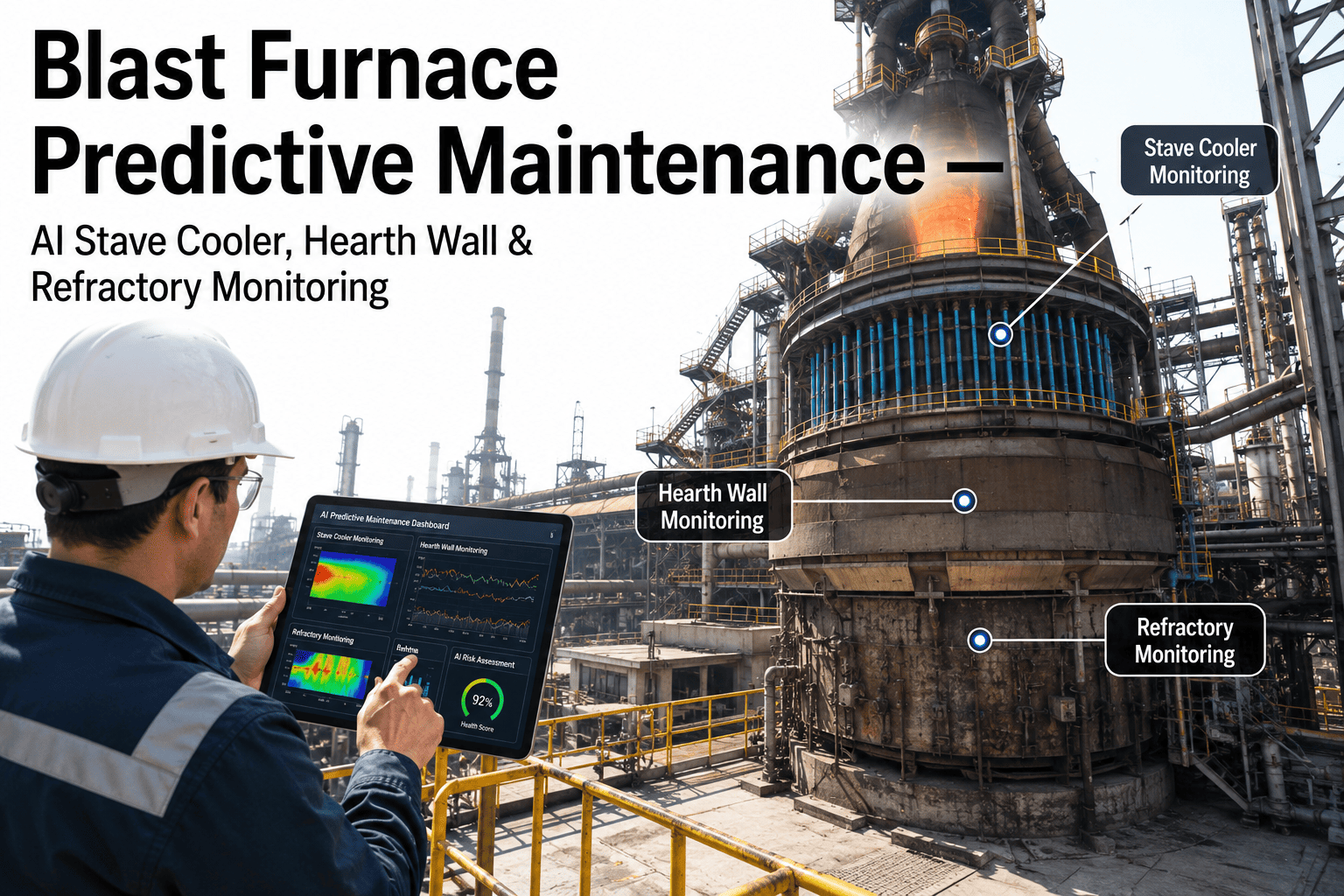
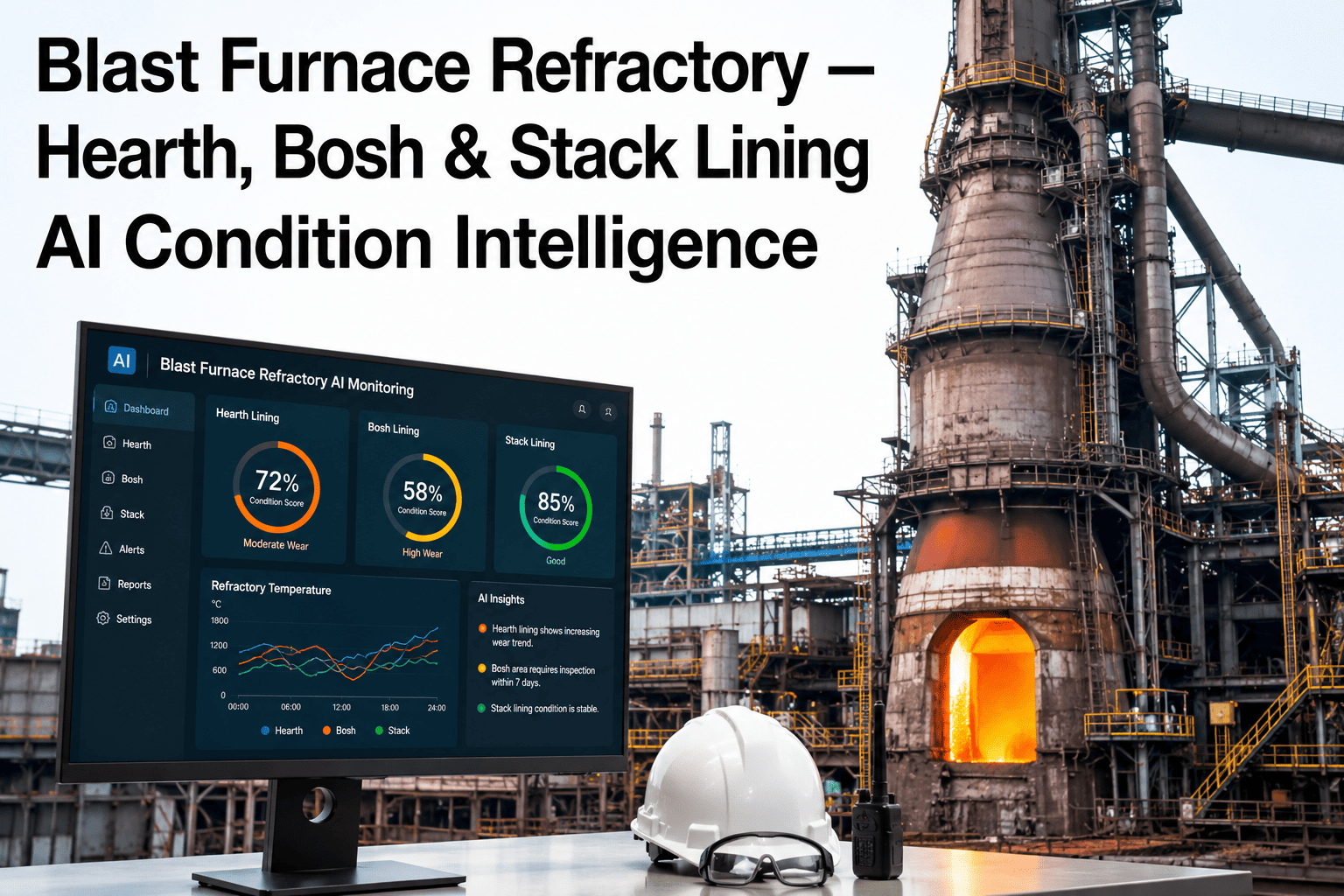
The blast furnace is the single most valuable and maintenance-critical asset in any integrated steel plant. Operating continuously at temperatures exceeding 2,000°C, it faces relentless wear from corrosive slag, abrasive burden materials, and constant thermal cycling. Deferred refractory monitoring, cooling system neglect, and hearth protection delays shorten campaign life — the difference between a 12-year and 20-year campaign is maintenance management excellence. Each additional year of campaign life defers the $100M+ reline cost while maintaining full production.
Coke Ovens & Sinter Plant — The Upstream Supply Chain
Coke ovens operate under extreme temperatures with combustible gas atmospheres. Deferred door seal maintenance leads to gas leaks, environmental violations, and explosion hazards. Sinter plant equipment — including coolers, crushers, and conveyors — feeds the blast furnace directly. A crusher breakdown from deferred bearing replacement can disrupt material flow to the blast furnace, triggering production curtailment across the entire plant. See upstream asset tracking in action
BOF / EAF Steelmaking — Refractory & Vessel Integrity
Basic Oxygen Furnaces and Electric Arc Furnaces handle molten metal at extreme temperatures with violent chemical reactions. Deferred refractory lining inspections risk vessel breakthrough — one of the most dangerous and costly failure modes in steelmaking. Deferred maintenance on oxygen lances, electrode systems, charging equipment, and slag handling creates production bottlenecks that ripple through the entire downstream process chain.
Continuous Caster — Where Solidification Meets Precision
Continuous casters solidify molten steel into slabs, blooms, or billets at precisely controlled rates. Deferred maintenance on mold oscillation systems, spray cooling nozzles, roller segments, and hydraulic systems causes surface quality defects, breakouts, and strand failures. A breakout — where molten steel escapes the strand — is one of the most dangerous and expensive incidents in steelmaking, causing hours of downtime and potential equipment damage. Explore caster maintenance management
Rolling Mills & Reheating Furnaces — The Finishing Line
Rolling mills transform semi-finished steel into finished products through extreme mechanical forces. Deferred bearing replacements, roll grinding schedules, hydraulic system maintenance, and lubrication programs cause surface defects, dimensional non-compliance, and catastrophic bearing seizures during production. Reheating furnaces, if not maintained, consume excess fuel and produce inconsistent slab temperatures that compromise final product quality.
Utilities & Infrastructure — The Invisible Backbone
Water treatment systems, gas networks, electrical distribution, compressed air systems, cranes, ladle handling equipment, and environmental control systems form the invisible backbone of every steel plant. Deferred maintenance on these utility systems doesn't cause headlines — it causes the slow, steady degradation of everything they support. A water treatment failure affects cooling across the entire plant. An electrical failure blacks out production lines. Crane breakdowns halt material movement. See full plant utility tracking in OxMaint
Deferred Maintenance vs. Proactive CMMS — The Financial Reality
Quantifying Deferred Maintenance — The Numbers Steel Plant Leaders Need to See
The financial case for proactive maintenance in steel plants is overwhelming — the data shows that preventive programs deliver returns that far exceed their investment.
| Cost Category | Deferred / Reactive Approach | CMMS-Driven Proactive Approach | Impact |
|---|---|---|---|
| Unplanned Downtime | $500K+/hour, 8+ day events | Planned stops, minimized duration | 40–60% reduction |
| Blast Furnace Campaign | 12–15 year campaigns, early relines | 20+ year campaigns with condition monitoring | $100M+ reline deferral |
| Repair Costs | 3–5x premium for emergency work | Standard rates, planned procurement | 25–35% cost reduction |
| Energy Efficiency | Degraded equipment inflates 30–40% energy share | Optimized equipment at design efficiency | 8–15% energy savings |
| Safety Incidents | Worn components, deferred inspections, higher risk | Condition-based safety maintenance | 50–70% incident reduction |
| Shutdown Planning | Chaotic, reactive, paper-based coordination | 500–2,000 work orders managed digitally | 30% shorter shutdowns |
Let our steel industry specialists analyze your maintenance backlog and show you the true cost of your deferred maintenance — and exactly how to reverse it. Get your free deferred maintenance assessment
How CMMS Reverses the Deferred Maintenance Cycle in Steel Plants
OxMaint CMMS provides the digital backbone that makes proactive, condition-based maintenance possible across every asset in your integrated steel plant. See the platform in action
Deferred Maintenance Backlog Visibility
OxMaint quantifies your entire deferred maintenance backlog — every skipped PM, every postponed inspection, every asset running past its service interval. Dashboard views show the financial exposure of your current backlog, organized by asset criticality, failure probability, and production impact. Plant managers and CFOs can see the true cost of deferral — not as a vague risk, but as a quantified liability with specific dollar values attached to each deferred action.
Condition-Based Maintenance Intelligence
Integrates with your existing process data — cooling water flows, stave temperatures, hearth thermocouples, vibration sensors, oil analysis results — to trigger maintenance based on actual equipment condition rather than fixed calendars. Most blast furnaces already collect 80–90% of the monitoring data needed for predictive maintenance. The missing link is connecting process data to maintenance decision-making — exactly what OxMaint delivers.
Shutdown Planning & Execution Management
A typical intermediate blast furnace shutdown involves 500–2,000 individual work orders, 150–400 maintenance personnel, $2–8 million in direct costs, and 7–21 days of lost production. OxMaint manages shutdown scope, scheduling, resource allocation, safety permit tracking, and real-time progress monitoring — reducing shutdown duration by up to 30% and ensuring every planned repair actually gets completed.
Capital Planning & Budget Justification
CMMS data transforms maintenance budget requests from opinion-based estimates into evidence-based business cases. Equipment condition trends, failure history, repair cost accumulation, and remaining useful life projections give maintenance managers the ammunition to defend budgets against cuts. When finance asks "why do we need this money?", the CMMS provides the documented answer showing exactly what will fail, when, and what it will cost.
From Deferred Maintenance Crisis to Predictive Asset Management — Your Roadmap
A phased approach that delivers measurable ROI at every stage while building toward full plant-wide predictive maintenance. Get a deployment plan scoped to your plant.
| Phase | Focus Area | Timeline | Key Deliverables | ROI Milestone |
|---|---|---|---|---|
| 01 Assess | Deferred maintenance audit, asset criticality ranking | Weeks 1–3 | Backlog quantification, risk heat map | True cost visibility |
| 02 Digitize | Digital work orders, PM schedules, asset registry | Weeks 4–8 | Paperless operations, automated scheduling | 20% downtime reduction |
| 03 Connect | Condition monitoring integration, sensor data feeds | Months 3–6 | Condition-based work orders, trending | Predictive alerts live |
| 04 Optimize | AI predictive models, shutdown optimization, full plant | Month 7+ | Campaign extension, budget optimization | 30%+ failure reduction |
Every Asset Tracked — Complete Steel Plant CMMS Coverage
OxMaint manages maintenance for every asset across your integrated steel plant — from raw material handling to finished product dispatch. See your plant mapped in a demo
Everything You Need to Know About Deferred Maintenance in Steel Plants
What is deferred maintenance and why is it so dangerous in steel plants specifically?
Deferred maintenance is the accumulated gap between what should be invested to maintain, repair, and preserve plant infrastructure and what is actually spent. In steel plants, it's uniquely dangerous because of the extreme operating conditions — temperatures exceeding 2,000°C, corrosive slag, molten metal, explosive gas atmospheres — and the deeply interconnected nature of production systems. A deferred bearing replacement on a conveyor doesn't just risk that conveyor; it can starve the blast furnace of raw materials and curtail the entire plant. Every deferred action compounds — refractory that could have been repaired with gunning eventually requires a full reline. Book a demo to see how OxMaint quantifies deferred maintenance risk.
How much does unplanned downtime actually cost a steel plant?
Steel and metallurgy sectors experience average hourly downtime costs exceeding $500,000. For a blast furnace, even a minor unplanned repair requires a minimum of 8 days — 4 days cooling, 1 day repair, 3 days restart — representing millions in lost production. Unlike a planned shutdown with its 30+ step, multi-week procedure, an emergency stop causes severe operational damage: slag enters tuyeres and bustle mains, requiring extensive recovery. Full blast furnace relines, when forced prematurely, cost $15–40 million in direct costs plus $50–150 million in lost production — totaling over $100 million. Schedule a consultation to assess your downtime exposure.
How does CMMS help extend blast furnace campaign life?
CMMS integrates with existing process monitoring — the 4,000+ data points your Level 1 and Level 2 systems already collect, including cooling water flows, stave temperatures, hearth thermocouples, gas compositions, and blast parameters. By connecting this process data to maintenance history on each specific asset, the system builds equipment-specific degradation models that predict refractory wear, identify cooling system inefficiencies, and trigger targeted repairs at exactly the right time. Top-performing furnaces achieve 20+ year campaigns through this approach — each additional year defers the $100M+ reline cost. Visit our Support Center for blast furnace case studies.
What does a typical shutdown look like with vs. without CMMS?
A typical intermediate blast furnace shutdown involves 500–2,000 individual work orders, 150–400 maintenance personnel, $2–8 million in direct costs, and 7–21 days of lost production. Without CMMS, this is managed through paper-based coordination, whiteboard tracking, and radio communication — leading to missed tasks, schedule overruns, and safety permit gaps. With OxMaint, every work order is digitally scheduled, assigned, and tracked with safety permit dependencies, real-time progress monitoring, and automatic escalation of delayed tasks. Plants report up to 30% shorter shutdown durations. See shutdown management live
How do I justify the maintenance budget when leadership wants to cut costs?
This is the core problem deferred maintenance creates — and exactly what CMMS solves. OxMaint provides documented evidence: equipment condition trends, failure history and escalating repair costs, remaining useful life projections, and quantified risk exposure for every deferred maintenance item. When finance asks why you need the budget, you present dashboards showing that deferring $500K in planned maintenance creates $2–3M in probable emergency repair costs within 18 months. The data speaks louder than opinion. Get the data to defend your budget
Does CMMS work for both integrated (BF-BOF) and mini-mill (EAF) steel plants?
Yes. OxMaint supports both integrated BF-BOF route and EAF mini-mill operations. Integrated plants benefit from campaign-life management for blast furnaces, coke ovens, and sinter plants, along with the full downstream production chain. EAF mini-mills benefit from electrode management, scrap yard optimization, transformer and furnace refractory tracking, and rolling mill maintenance management. The asset hierarchy and maintenance workflows are configured to match your specific plant layout and process route.
How quickly can we implement CMMS in a running steel plant?
OxMaint deploys in Week 1 with digital work orders replacing paper logs — no production disruption required. Condition monitoring integration follows in Month 3–4 by connecting to your existing sensor infrastructure. AI predictive models begin generating failure predictions by Month 7. By Month 12, your plant operates with comprehensive condition intelligence driving every maintenance decision and shutdown plan. The platform costs less than one hour of unplanned downtime. Get your deployment timeline
What safety benefits does CMMS provide for steel plant operations?
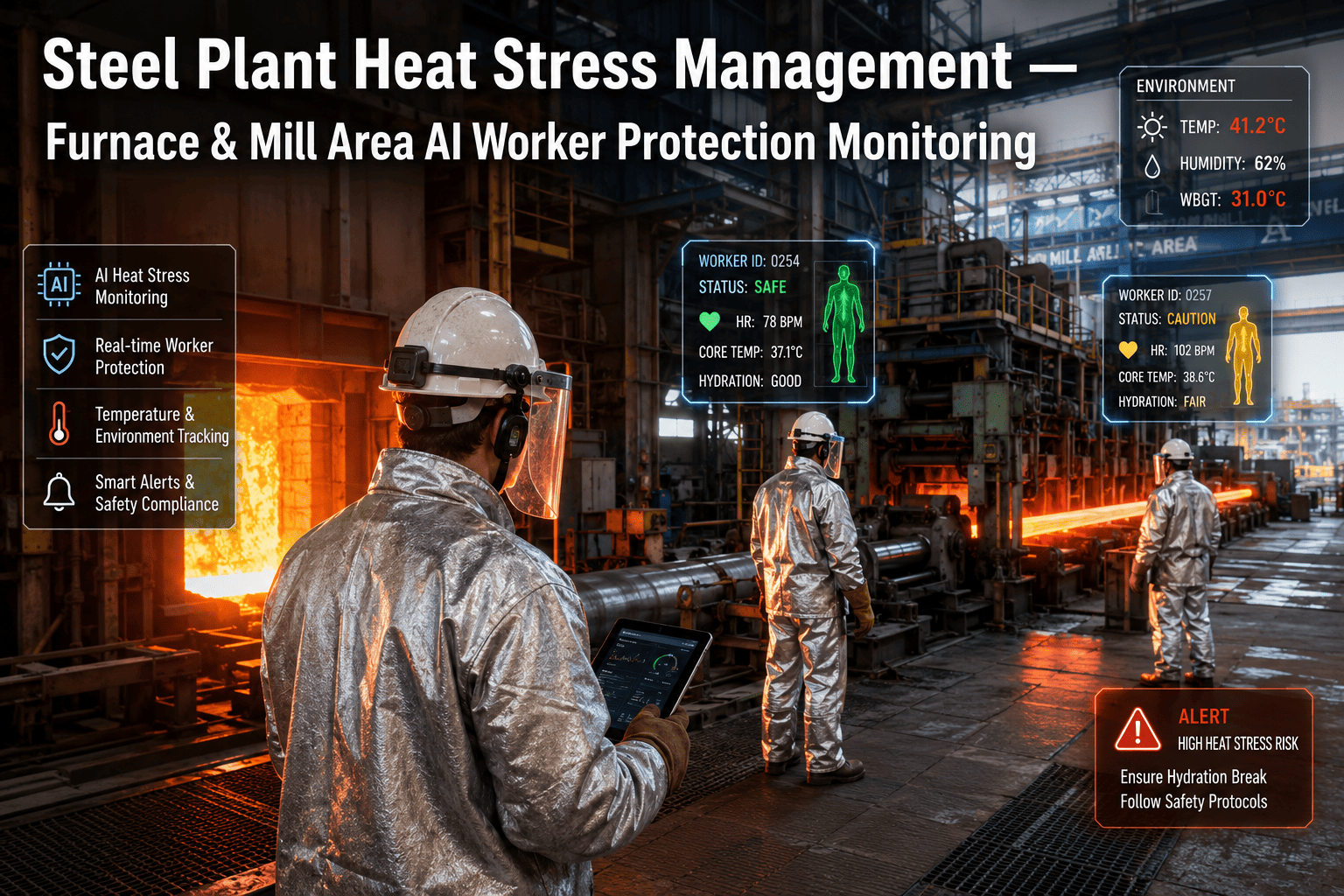
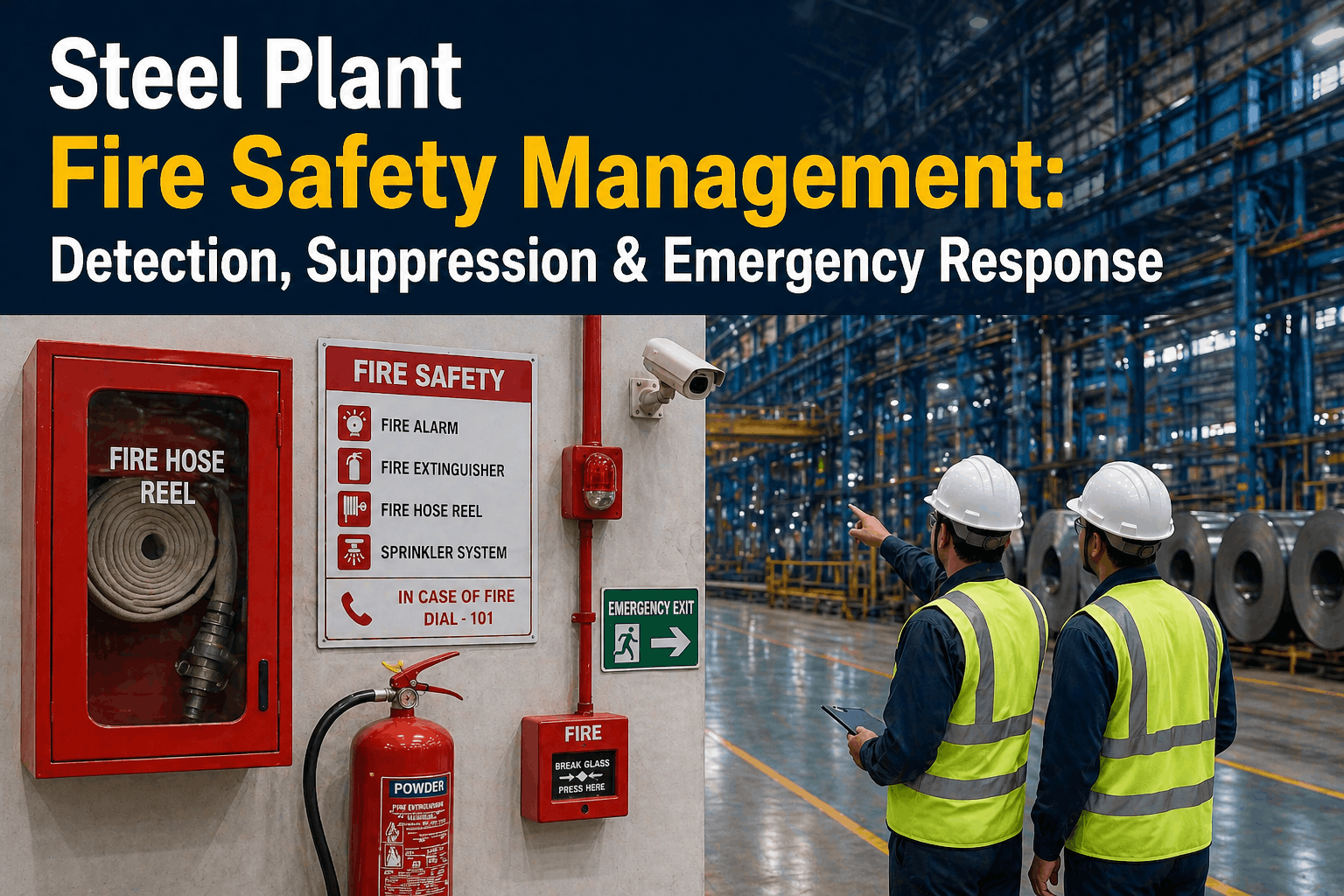
Steel plants present extreme safety hazards — molten metal spills, explosive gas atmospheres, confined spaces, working at heights, and high-energy systems. OxMaint manages safety compliance through mandatory safety permit requirements embedded in every work order (confined space, hot work, LOTO, fall protection), safety permit tracking with expiration times and automatic renewal triggers, safety inspection holdpoints at critical stages, and complete digital audit trails for regulatory compliance. Deferred maintenance directly increases safety risk — CMMS closes that gap by ensuring safety-critical maintenance is never skipped or delayed.
Stop the Deferred Maintenance Cycle Before It Stops Your Production
Every dollar of deferred maintenance compounds into $3–5 of future emergency costs. Every skipped inspection shortens asset life. Every postponed repair brings your next unplanned shutdown closer. Let our steel industry specialists assess your deferred maintenance backlog and show you exactly how CMMS transforms it from a hidden liability into a managed, predictable budget line — in a free, no-obligation 30-minute consultation.